What Causes Brake Fluid to Turn Black: Practical Guide and Tips
Brake fluid usually turns dark because it has absorbed moisture, broken down from heat, or picked up rubber, metal, and other contaminants inside the braking system. A slight amber or brown color can develop with age, but fluid that looks black deserves prompt inspection because it may indicate contamination or deteriorating components.
If you are asking what causes brake fluid to turn black, the short answer is that the fluid is no longer clean and stable. The color alone does not identify one exact fault, so the condition of the fluid, the brake pedal, and the vehicle’s maintenance history all matter.
Why Brake Fluid Turns Black
Brake fluid circulates through the master cylinder, brake lines, hoses, calipers, wheel cylinders, and sometimes an ABS hydraulic control unit. Over time, it is exposed to heat, pressure, moisture, and the materials used to seal those components. Several conditions can make it appear dark.
Moisture absorption
Most vehicles use glycol-based DOT 3, DOT 4, or DOT 5.1 brake fluid. These fluids are hygroscopic, meaning they naturally absorb moisture from the air. Water can enter through the reservoir vent, microscopic openings in hoses and seals, or during careless handling.
As moisture accumulates, the fluid can become darker and less effective. Water also lowers the fluid’s boiling point, increasing the risk of vapor formation during severe braking. Under those conditions, the brake pedal may feel soft or spongy because vapor compresses more easily than liquid.
Moisture does not always make fluid immediately black. It commonly contributes to gradual chemical breakdown, internal corrosion, and the release of particles that eventually make the fluid look brown, gray, or nearly black.
Heat and oxidation
Brake fluid is repeatedly heated when the vehicle slows down. High temperatures are normal, but frequent hard braking, towing, mountain driving, dragging brakes, or a seized caliper can create excessive heat.
Heat accelerates oxidation and chemical degradation. Oxidized fluid becomes darker and may develop a burnt appearance or odor. Severe heat can also damage rubber seals and hoses, adding more debris to the fluid.
A dark color combined with a burning smell, a soft pedal, or brakes that remain partly applied is more concerning than color alone. Those symptoms can point to overheating or a mechanical problem that is continuing to damage the fluid.
Rubber seal and hose deterioration
Brake systems contain rubber seals, flexible brake hoses, piston seals, and reservoir components. As these parts age, they can shed fine particles or break down internally. The particles mix with the fluid and make it appear very dark.
In some cases, a deteriorating rubber hose can separate internally. The hose may restrict fluid movement, allowing pressure to reach a brake but preventing it from releasing normally. A damaged seal can also allow air or moisture into the system.
If the fluid looks black and contains suspended specks, sludge, or stringy material, a simple fluid exchange may not be enough. The source of the debris should be found before the system is returned to service.
Internal corrosion
Moisture in brake fluid can corrode steel brake lines, caliper pistons, wheel cylinders, and other internal parts. Corrosion creates fine rust-colored or dark particles that circulate through the system.
Corrosion may be more advanced in a vehicle that has been stored for a long time, driven in a humid climate, or maintained infrequently. It can damage sealing surfaces and create leaks, especially around calipers, wheel cylinders, and the master cylinder.
Black fluid does not prove that a specific part is corroded, but it is a reason to inspect the system rather than simply judging the fluid by its reservoir color.
Contamination or incorrect fluid
Brake fluid can become contaminated by dirt, oil, grease, cleaning chemicals, water, or fluid from an unsuitable container. Even a small amount of petroleum-based product can damage brake-system seals because brake fluid and petroleum products are not compatible.
Using the wrong brake fluid is another serious possibility. DOT 5 silicone fluid is different from glycol-based DOT 3, DOT 4, and DOT 5.1 fluids. They should not be mixed unless the vehicle manufacturer specifically allows it. The correct specification is printed on the reservoir cap or listed in the owner’s manual.
Dark fluid after recent brake work may result from an unclean service procedure, a contaminated funnel, or a component that was already deteriorating. The repair history can help identify the likely cause.
What Color Is Normal?
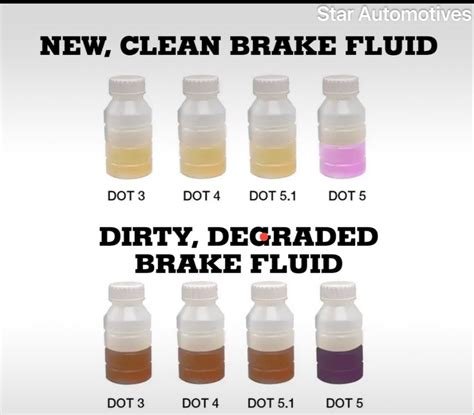
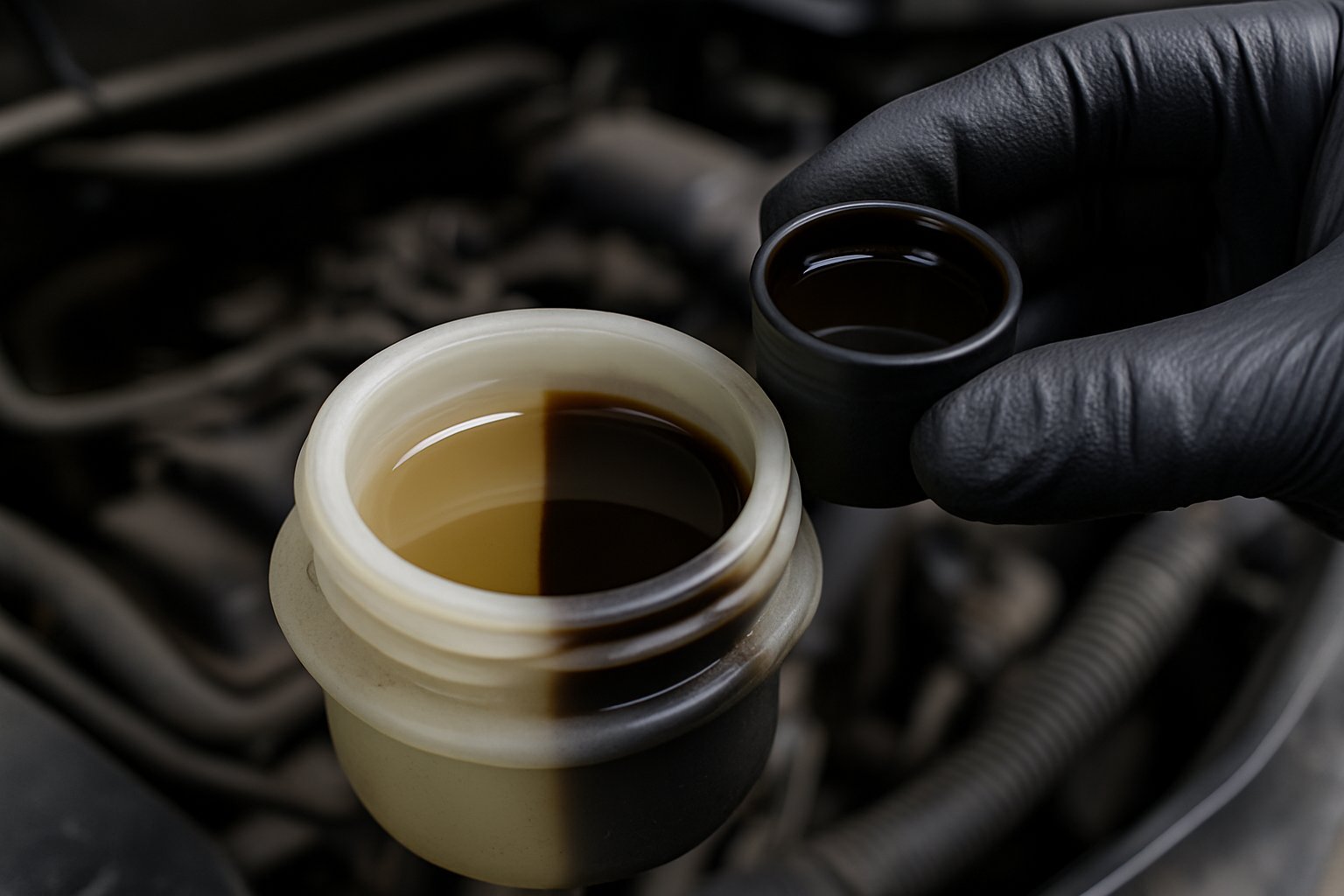
New brake fluid is commonly clear to pale amber, although the exact appearance varies by type and manufacturer. A small amount of darkening over time can be normal because fluid ages as it absorbs moisture and experiences heat cycles.
Fluid that is brown, cloudy, gray, or black is not in the same condition as fresh fluid. A technician should pay closer attention when the fluid looks like used engine oil, contains visible particles, has a thick consistency, or forms sludge at the bottom of the reservoir.
The reservoir can also create a misleading impression. A dirty or yellowed plastic reservoir, residue on the cap, or shadowing around the tank may make the fluid look darker than it is. For that reason, color should be checked under good lighting and confirmed with a proper inspection.
Brake fluid test strips or an electronic moisture tester can provide additional information, but they do not identify every problem. A moisture reading may be acceptable while the fluid still contains rubber debris or corrosion particles. Conversely, color by itself cannot accurately measure the fluid’s boiling point or moisture content.
Is Black Brake Fluid Dangerous?
Black brake fluid should be treated as a maintenance and safety warning, not as a harmless cosmetic change. The fluid may still transmit hydraulic pressure, but its condition can indicate reduced boiling-point protection, internal corrosion, or damaged seals.
The risk is greater if any of these symptoms are present:
- A soft, spongy, sinking, or unusually low brake pedal
- Longer stopping distance or inconsistent braking
- A brake warning light or ABS warning light
- Brake fluid leaking near a wheel, line, or master cylinder
- One wheel that smells hot or feels much warmer than the others
- Visible sludge, flakes, rust-colored particles, or separated material
- A reservoir level that keeps dropping
A vehicle with a serious brake symptom should not be driven merely because the fluid level is full. A full reservoir does not rule out contaminated fluid, a failing seal, a restricted hose, or a hydraulic leak.
Does Black Fluid Mean the System Needs a Flush?
Often, yes. A brake fluid flush, also called a fluid exchange, removes old fluid and replaces it with the correct new fluid. The procedure typically pushes fresh fluid through the system until fluid without the old discoloration exits at each service point.
However, flushing is not a substitute for diagnosis. If the fluid is black because a caliper seal, hose, master-cylinder seal, or other component is deteriorating, the faulty part must be repaired or replaced. Otherwise, the new fluid can become contaminated again.
A technician may recommend inspecting or servicing the following areas:
- The master-cylinder reservoir and cap
- Rubber brake hoses and their internal condition
- Calipers, wheel cylinders, and piston seals
- Steel lines for rust, leaks, or restricted sections
- The ABS hydraulic unit when contamination is severe
- Fluid at multiple brake bleeder screws, not only in the reservoir
Bleeding the brakes and flushing the system are related but not identical. Bleeding is commonly performed to remove trapped air, while a flush is intended to replace aged or contaminated fluid. A service can accomplish both, but the technician should use a procedure appropriate for the vehicle’s brake and ABS system.
What to Do When Brake Fluid Looks Black
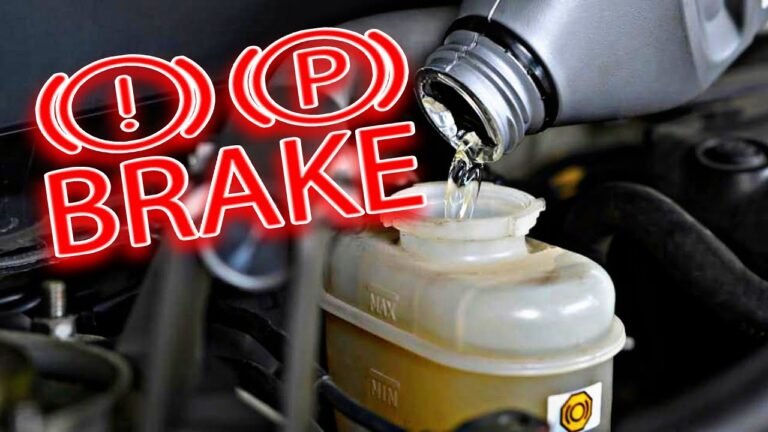
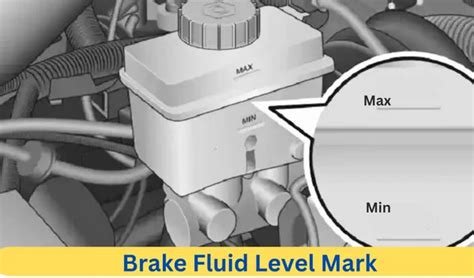
Start by checking the fluid without opening the hydraulic system unnecessarily. Park on level ground, allow hot components to cool, and compare the fluid’s appearance with the specification in the owner’s manual. Do not touch the fluid with dirty tools or pour it into a container that previously held oil or chemicals.
Look for a low level, wetness around the master cylinder, residue near brake lines, and signs of leakage at the wheels. Do not assume that adding fluid solves the problem. A low level can result from worn brake pads, a leak, or another hydraulic fault.
If the fluid is clearly black or contaminated, arrange an inspection and likely fluid exchange. Ask the repair professional to determine whether the dark material is only aged fluid or evidence of seal, hose, corrosion, or component damage.
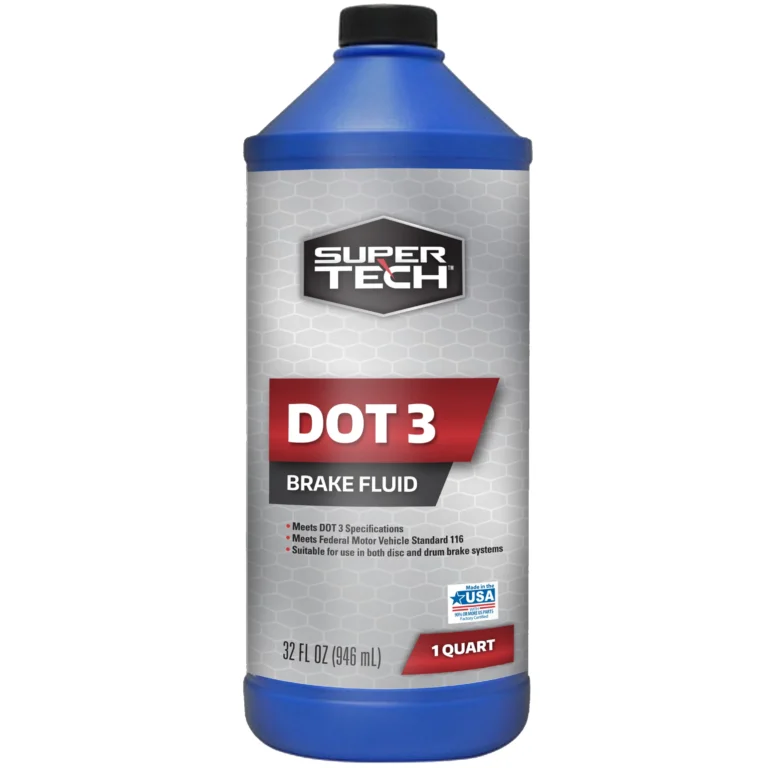
Use only the fluid specification listed by the vehicle manufacturer. Keep the container sealed until use, because opened brake fluid can absorb moisture from the air. Never reuse drained fluid, and never substitute engine oil, transmission fluid, power steering fluid, or another chemical.
After service, the brake pedal should feel firm and consistent, and the vehicle should stop without pulling or unusual noise. If the pedal remains soft, sinks while held, or warning lights remain on, the vehicle needs further diagnosis before normal driving.
When Professional Service Is Necessary
Brake fluid service is not a good area for guesswork. A basic fluid replacement may appear simple, but air introduced into the hydraulic system can reduce braking performance. Some vehicles also require a scan tool or a specific procedure to move fluid through the ABS unit.
Professional inspection is especially important when the fluid is black rather than merely light brown, when visible debris is present, or when the vehicle has any pedal, leak, overheating, or warning-light symptom. The inspection should identify the cause before the system is flushed.
Do not continue driving if the pedal suddenly becomes soft, the brakes fail to release, fluid is leaking rapidly, or the vehicle requires excessive pedal travel to stop. In those situations, arrange safe transportation to a qualified repair facility instead of relying on a fluid top-off.
How to Help Prevent Dark Brake Fluid
Follow the vehicle manufacturer’s recommended brake-fluid service interval, even when the fluid level appears normal. The interval varies by vehicle, fluid type, climate, and driving conditions, so a general schedule cannot replace the owner’s manual.
Keep the reservoir cap and surrounding area clean before opening it. Use a sealed container of the correct fluid, and avoid leaving the reservoir open longer than necessary. During routine maintenance, inspect the fluid level, color, and any visible sediment.
Regular brake inspections also help identify heat, leaks, worn components, and damaged hoses before they contaminate a larger portion of the system. Prompt repairs reduce the chance that a small seal or hose problem will spread debris through the master cylinder and ABS components.
Conclusion
Understanding what causes brake fluid to turn black starts with recognizing the main possibilities: moisture, heat, oxidation, rubber breakdown, corrosion, and outside contamination. Slight darkening can occur as fluid ages, but black fluid, particles, sludge, or brake symptoms call for an inspection and usually a properly performed flush. Use the manufacturer-specified fluid, investigate the source of contamination, and treat any change in brake pedal feel or stopping performance as urgent.