Different Types of Brake Pads: Materials, Pros, Cons, and Uses
Most passenger vehicles use one of four common pad-material families: ceramic, semi-metallic, organic, or low-metallic. Ceramic pads favor quiet, clean street use; semi-metallic pads handle heat and heavy duty well; organic pads favor low cost and softer operation; low-metallic pads add stronger bite to an organic-style base.
Choosing the wrong compound can change pedal feel, noise, dust, heat behavior, rotor wear, and service life. A pad made for a light commuter may not be a smart fit for repeated mountain towing, while a high-metal-content pad can create more noise and dark dust than a driver wants on a quiet daily car.
Matching the material to the vehicle’s original brake design and real driving use gives more predictable braking. It can also reduce nuisance squeal, unnecessary dust, rapid pad wear, and rotor damage caused by using a friction compound outside the job it was made to handle.
U.S. brake-pad formulations have also changed for environmental reasons. The EPA’s Copper-Free Brake Initiative called for reducing copper in motor-vehicle brake friction material to less than 5% by weight by 2021 and 0.5% by 2025, while also targeting materials such as lead, mercury, cadmium, and asbestiform fibers.
For drivers comparing different types of brake pads, the main groups are ceramic, semi-metallic, non-asbestos organic (NAO), and low-metallic NAO. Specialty products such as carbon-fiber ceramic, severe-duty, and track compounds build on those broad families rather than creating a simple ranking from worst to best.
What stood out to me in current manufacturer information is that the material name is only a starting point. Two ceramic pads can use different friction recipes, and two semi-metallic pads can behave differently under heat. The sections below explain each type, their tradeoffs, and which use cases fit them best.
What Brake Pads Are Made Of
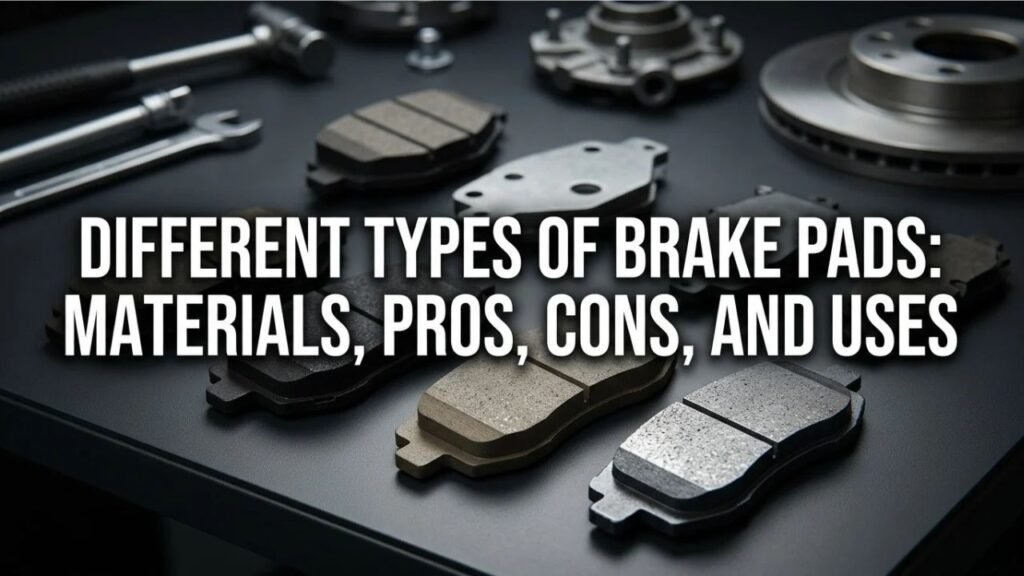
A brake pad has a steel backing plate with a friction material attached to it. When the caliper presses the pads against the rotor, friction converts the vehicle’s motion into heat.
The friction material is not made from one ingredient. It is usually a recipe containing fibers, fillers, abrasives, lubricants, binders, and other compounds. Changing that recipe changes how the pad behaves when cold, hot, wet, dusty, lightly loaded, or repeatedly braked.
Ceramic Materials
Ceramic pads use ceramic-based fibers and fillers, plus other friction modifiers. Modern low-copper formulas may use little or no copper compared with older recipes.
The material tends to create fine, lighter-colored dust and is often tuned for low noise. That makes ceramic pads common on passenger cars where comfort and clean wheels matter. Current Bosch and Brembo guidance places ceramic compounds mainly in quiet, low-dust street applications.
Metallic Ingredients
Semi-metallic and low-metallic pads use metals such as iron, steel, or other metallic particles mixed with binders, lubricants, abrasives, and nonmetallic materials.
Metal helps move heat away from the friction surface and can produce strong bite. The tradeoff is that more metallic content often means more audible noise, darker dust, and greater rotor wear.
Organic Fibers and Resins
NAO pads use non-asbestos fibers with resin and other friction ingredients. Depending on the formula, the fibers may include aramid, glass, rubber, carbon, or other synthetic and natural materials.
They are often softer and quieter than aggressive metallic compounds, but they can wear faster when exposed to repeated heavy braking or high heat.
Key Takeaway: Brake-pad behavior comes from the entire friction recipe, not one ingredient printed on the box.
Different Types of Brake Pads Compared
The four broad passenger-vehicle categories have distinct strengths, but none is automatically best for every car.
| Brake Pad Type | Noise | Dust | Heat Handling | Rotor Wear | Common Use |
| Ceramic | Usually low | Usually low and light-colored | Good for normal street use | Usually low to moderate | Daily commuting, comfort |
| Semi-metallic | Moderate to high | Usually more and darker | Strong | Moderate to higher | Trucks, towing, spirited driving |
| Organic/NAO | Usually low | Moderate | Lower under repeated heat | Usually low | Light vehicles, basic street use |
| Low-metallic NAO | Moderate | Moderate to high | Better than basic organic | Moderate | Street driving needing stronger bite |
Actual behavior can vary by manufacturer, vehicle, rotor material, and friction formula. Treat the table as a general pattern rather than a promise for every part number.
Ceramic Brake Pads
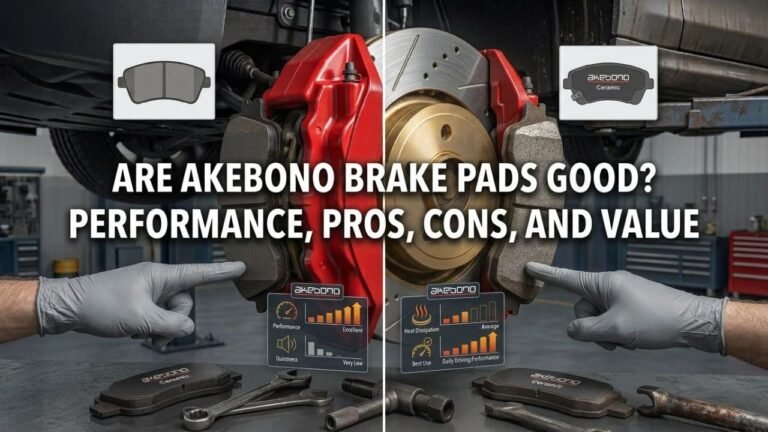
Ceramic brake pads are a common premium street choice. They are designed around quiet operation, stable everyday braking, long wear, and lower visible wheel dust.
Current manufacturer guidance from Bosch and Brembo places ceramic pads mainly in commuting and comfort-focused use, especially where low dust and quiet braking matter. Some ceramic lines also target performance sedans and SUVs, but the exact compound has to match the application.
Advantages of Ceramic Brake Pads
Ceramic pads are often quieter than semi-metallic pads because their friction mix and vibration behavior are tuned for street comfort. Their dust is usually finer and lighter in color, so it is less obvious on alloy wheels.
They can also provide smooth pedal response across normal road temperatures. Many ceramic compounds are rotor-friendly, though rotor wear still depends on the exact pad recipe and operating conditions.
Disadvantages of Ceramic Brake Pads
Ceramic pads usually cost more than basic organic or economy semi-metallic pads. Some compounds also give less aggressive initial bite than a performance-oriented metallic pad.
A comfort-focused ceramic pad is not automatically a good towing or track pad. Repeated high-energy stops can demand a friction material made for higher sustained temperatures.
Best Uses for Ceramic Pads
Ceramic pads suit many commuters, family cars, crossovers, and drivers who place low noise and cleaner wheels high on the list.
I would start with the vehicle maker’s original friction type. If the car came with ceramic pads and the factory braking behavior was good, a quality ceramic replacement is often the simplest path to similar road manners.
Key Takeaway: Ceramic pads are strongest for quiet street use, low visible dust, smooth braking, and long service on vehicles that do not live under severe brake heat.
Semi-Metallic Brake Pads
Semi-metallic pads mix a meaningful amount of metal with graphite, resin, abrasives, lubricants, and other friction materials. They are widely used on vehicles that need strong braking across a broad temperature range.
The metal content helps move heat through the pad and backing plate. That trait makes semi-metallic compounds common on trucks, SUVs, performance cars, and vehicles that tow or carry heavy loads.
Advantages of Semi-Metallic Brake Pads
Semi-metallic pads can provide strong initial bite and stable braking during repeated stops. They also tend to tolerate higher brake temperatures well.
There is a large range inside this category. One formula may be tuned for an everyday pickup, while another is made for police, fleet, towing, or performance use.
Disadvantages of Semi-Metallic Brake Pads
More metal can mean more vibration, squeal, and dark brake dust. Some aggressive compounds also wear rotors faster than softer ceramic or organic pads.
Cold behavior can vary by formula. A pad made for very high temperatures may feel less responsive during gentle street driving before it reaches its intended working range.
Best Uses for Semi-Metallic Pads
Semi-metallic pads make sense for trucks, towing, mountain driving, heavier SUVs, performance-oriented street cars, and applications where heat control matters more than spotless wheels.
My preference is to choose semi-metallic when the vehicle maker or pad manufacturer calls for it, rather than switching to ceramic only because ceramic sounds more premium.
Key Takeaway: Semi-metallic pads favor heat tolerance, strong bite, and demanding use, with more noise, dust, and possible rotor wear as common tradeoffs.
Organic or NAO Brake Pads
Organic brake pads are more accurately called non-asbestos organic, or NAO, in modern automotive use. They replaced older asbestos-containing friction materials.
NAO compounds use fibers, fillers, lubricants, and resins with relatively little metal. The resulting pad is often softer than a semi-metallic compound.
Advantages of Organic Brake Pads
Organic pads can be quiet and gentle on rotors. They are also often among the lower-cost replacement choices.
Their softer friction behavior can suit light vehicles used for ordinary commuting, especially when the original brake system was designed around an NAO compound.
Disadvantages of Organic Brake Pads
The softer compound generally wears faster than ceramic or many semi-metallic formulas. It can also produce more dust and lose friction sooner when repeatedly exposed to high brake temperatures.
For a heavy truck, repeated towing, steep descents, or frequent aggressive stops, a basic organic pad may not have the heat capacity or wear resistance wanted for the job.
Best Uses for Organic Pads
Organic pads fit light-duty passenger vehicles, modest driving, and budget-focused replacement where the application calls for this material family.
I would not choose them simply because they are inexpensive. The part should still match the vehicle’s brake system and intended use.
Key Takeaway: Organic pads favor quiet, softer street behavior and lower purchase price, but they generally give up heat tolerance and wear life.
Low-Metallic NAO Brake Pads
Low-metallic NAO pads start with an organic-style friction base and add a smaller amount of metal to improve friction and heat transfer.
They are common in many European-style applications and are also sold in the U.S. aftermarket. Brembo currently describes its low-metallic car pads as using roughly 10% to 50% metal by compound weight, showing how broad this category can be.
Advantages of Low-Metallic Pads
Adding metal can produce stronger bite and better heat control than a basic organic pad. This can give a firm, direct brake feel during repeated street stops.
The material can work well on cars designed around more assertive friction behavior.
Disadvantages of Low-Metallic Pads
The added metal often creates more dust and noise than ceramic pads. Rotor wear can also be higher depending on the abrasive package and driving conditions.
Drivers replacing a low-metallic OE pad with a very quiet ceramic alternative may notice a change in pedal feel even if both parts fit correctly.
Best Uses for Low-Metallic Pads
Low-metallic pads suit street cars that need stronger friction and heat behavior than basic organic compounds without moving to a high-metal-content severe-duty pad.
They are also worth checking when the original pads on a European vehicle were low-metallic and the driver wants factory-like response.
Key Takeaway: Low-metallic pads bridge organic and semi-metallic behavior, giving stronger bite and heat control with more dust and noise than most ceramic pads.
Carbon-Fiber Ceramic and Other Specialty Brake Pads
Specialty names can make pad shopping confusing because they often describe a modified friction recipe rather than a completely separate material family.
Carbon-fiber ceramic, severe-duty, track, fleet, and EV-specific pads are examples.
Carbon-Fiber Ceramic Pads
Carbon-fiber ceramic pads usually use carbon fibers inside a ceramic-based friction compound. Street versions often target low dust, quiet operation, and stronger heat behavior than a basic comfort pad.
They are not the same as carbon-carbon racing brakes or carbon-ceramic rotors. The words on the package describe the pad compound, not an exotic rotor system.
Track and Racing Pads
Track pads are made for repeated high-energy braking and high rotor temperatures. Their friction curve may favor hot operation over quiet, low-dust street behavior.
A race compound can squeal, dust heavily, wear rotors faster, or feel poor when cold. For that reason, a pad that performs well on a circuit is not automatically a better street pad.
Severe-Duty and Towing Pads
Towing and severe-duty compounds focus on repeated heat, vehicle mass, and fade resistance. They may use semi-metallic or other reinforced formulas.
Check the exact manufacturer’s duty rating rather than relying on a material name. A carbon-fiber ceramic pad made for a commuter and one made for towing can share a label while using different recipes.
EV-Specific Pads
Electric vehicles may use friction brakes less often because regenerative braking handles part of routine deceleration. That creates a different challenge: corrosion resistance and consistent operation after long periods of light friction-brake use.
Some EV-specific pads and rotor packages are built around low noise, corrosion control, and reduced particle emissions. They still need to match the vehicle’s original brake design.
Key Takeaway: Specialty labels describe a target use or modified compound, so the exact duty rating matters more than the marketing term by itself.
Which Type of Brake Pad Is Best?
There is no single best brake-pad material for every vehicle.
The best choice is the pad that matches the vehicle’s brake system, weight, rotor design, driving heat, noise expectations, and factory friction requirements.
For Daily Driving
Ceramic pads are a strong starting point for many passenger cars because they tend to be quiet and create less visible dust.
If the vehicle came with organic or low-metallic pads and the factory feel was good, staying close to that original friction family may give a more familiar pedal response.
For Towing and Heavy Loads
Semi-metallic or severe-duty pads are often a stronger match because they tolerate repeated heat well.
Check the pad maker’s towing or severe-duty application notes. Do not use a comfort-oriented ceramic pad for heavy towing unless the manufacturer rates that exact compound for the job.
For Performance Street Driving
A performance ceramic, low-metallic, or semi-metallic pad can work, depending on vehicle weight and brake temperatures.
Look for a street-performance compound rather than a pure race pad if the car spends most of its life on public roads.
For Quiet Braking and Clean Wheels
Ceramic is usually the material family to check first.
Pad shims, rotor condition, caliper hardware, and installation quality also affect noise, so changing material cannot fix every squeal.
Key Takeaway: Match the friction material to the job: ceramic for comfort, semi-metallic for heat and heavy duty, organic for light basic use, and low-metallic for stronger street bite.
Does Brake Pad Material Affect Rotor Wear?
Yes. Different friction compounds can change rotor wear, though material family alone does not predict the exact wear rate.
A harder or more abrasive pad may remove rotor material faster. A softer compound may protect the rotor but wear its own friction material sooner.
Heat also matters. A rotor that repeatedly runs hot can develop cracks, glazing, hard spots, or thickness variation regardless of the label on the pad.
The rotor and pad form a friction pair. For that reason, I would avoid choosing pads by pad life alone. A very long-lasting pad is not much of a bargain if it creates poor cold response, heavy noise, or unnecessary rotor wear on that vehicle.
Does Brake Pad Material Affect Stopping Distance?
It can, but the relationship is not as simple as buying the most aggressive pad.
A friction compound changes bite, friction stability, temperature response, and fade resistance. Tires, ABS, road grip, rotor size, calipers, brake fluid, vehicle mass, and brake balance also influence stopping distance.
NHTSA does not set a federal motor-vehicle safety standard specifically for individual aftermarket brake pads. Federal standards regulate complete vehicle brake systems instead, and aftermarket pads remain subject to safety-defect recall rules.
A pad should therefore be judged as part of the complete brake system, not as a stand-alone stopping-distance upgrade.
How to Choose Between the Different Types of Brake Pads
Start with the original application rather than shopping by the most expensive material.
- Check the vehicle’s factory friction type or an OE-equivalent replacement listing.
- Confirm the exact year, make, model, engine, axle, and brake package.
- Decide how the vehicle is used: commuting, towing, mountain driving, fleet work, or performance street use.
- Compare noise, dust, heat range, rotor wear, and cost.
- Check if the pad includes the correct shims, wear indicators, and hardware.
- Inspect rotor condition and caliper movement before installing new pads.
- Follow the pad maker’s bedding or burnishing instructions.
Avoid changing compounds to solve a mechanical problem. A sticking caliper, rusty bracket, seized slide pin, damaged hose, or rough rotor can make a premium pad wear badly.
Safety Tip: Replace disc-brake pads as an axle set. If the brake pedal feels abnormal, fluid is leaking, a caliper is seized, or the rotor is below its service limit, repair the fault before driving.
Conclusion
The different types of brake pads used on passenger vehicles are mainly ceramic, semi-metallic, organic/NAO, and low-metallic NAO, with specialty compounds built for towing, racing, EVs, or other specific jobs.
Ceramic pads usually favor quiet braking and cleaner wheels. Semi-metallic pads favor heat control and stronger heavy-duty behavior. Organic pads suit light use and lower-cost replacement, while low-metallic pads add more bite and heat tolerance to an organic-style base.
I would start with the friction family specified for the vehicle, then adjust only when the new pad is rated for the way the car is actually driven. Material names are useful, but exact formulation, application, rotor condition, and installation quality have just as much influence on the result.
FAQs About Brake Pad Types
What are the four main types of brake pads?
The four broad passenger-vehicle categories are ceramic, semi-metallic, non-asbestos organic (NAO), and low-metallic NAO. Specialty pads such as carbon-fiber ceramic, towing, fleet, or track compounds are usually modified versions of those broader friction families.
Which brake pad type is best for daily driving?
Ceramic pads are a strong choice for many daily drivers because they tend to run quietly and create less visible wheel dust. The vehicle’s original friction material still matters. If the factory pads gave good pedal feel and wear, an OE-equivalent compound is a safe starting point.
Which brake pads stop the best?
No material wins in every condition. Semi-metallic and performance low-metallic pads can provide strong bite and handle high temperatures well, while ceramic pads can deliver stable street braking with less noise and dust. Tire grip and the complete brake system also limit stopping distance.
Are ceramic brake pads better than semi-metallic?
Ceramic pads are often better for quiet commuting and cleaner wheels. Semi-metallic pads are often better for towing, heavier vehicles, repeated heat, or drivers who prefer stronger initial bite. The correct choice comes from the vehicle and duty cycle rather than price alone.
Are organic brake pads safe?
Quality organic pads are safe when they are made for the vehicle and used within their intended duty. Their main limits are faster wear and lower tolerance for repeated high heat compared with many ceramic or semi-metallic compounds.
What brake pads create the least dust?
Ceramic pads usually create less visible dust than semi-metallic and low-metallic pads. Their dust also tends to be lighter in color. The exact amount still changes with pad formulation, rotor condition, vehicle mass, and driving style.
Can I switch from semi-metallic to ceramic brake pads?
Sometimes, but check that the ceramic pad is approved for the exact vehicle and driving use. Switching can change pedal feel, cold bite, dust, noise, heat behavior, and rotor interaction. Heavy towing or severe-duty use may favor staying with the specified metallic compound.
What type of brake pad lasts the longest?
Ceramic pads often have long service life during normal street use, but no material has a fixed lifespan advantage on every vehicle. Vehicle weight, traffic, hills, towing, caliper condition, rotor surface, and driving style can outweigh the material label.