Will Low Brake Fluid Cause Pedal to Go to Floor: Complete Guide
Yes, low brake fluid can cause the brake pedal to go to the floor, but it is usually a symptom of a larger problem rather than the root cause itself. This article explains the mechanical chain of events that connects fluid level to pedal height, the conditions where this symptom appears, and the critical safety steps you should take before driving again.
Brake fluid does not compress. When you press the pedal, that force is transferred through the fluid to the calipers and wheel cylinders. If the fluid level drops too low, air can enter the hydraulic system, and because air is compressible, the pedal loses its firm resistance and sinks toward the floor.
The real question is why the fluid is low in the first place, because a properly sealed brake system should never lose fluid.
The Hydraulic Link Between Fluid Level and Pedal
Your brake system relies on a simple but unforgiving principle: hydraulic pressure requires an incompressible medium. Brake fluid serves that role perfectly, but only when the system is completely full and free of air bubbles. When fluid volume drops below the minimum threshold, the master cylinder cannot generate enough pressure to engage the brakes properly.
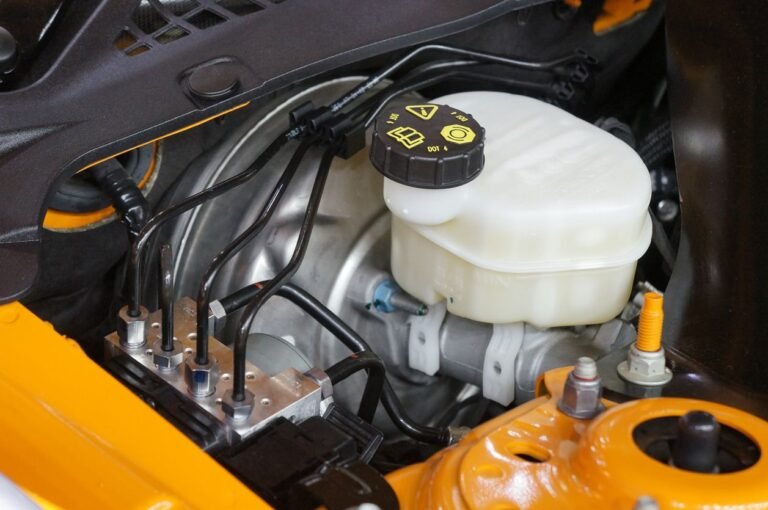
The master cylinder sits at the top of the braking circuit, directly connected to the pedal through a pushrod. Inside the master cylinder are reservoirs that hold fluid for both the front and rear brake circuits. When you press the pedal, the pushrod moves a primary piston, which forces fluid out of the reservoir, down the brake lines, and into the calipers or wheel cylinders.
This movement pushes the brake pads or shoes against the rotors or drums.
If the reservoir is low, the piston may not have enough fluid to draw from. Instead of pushing fluid, the piston pushes air. Air compresses easily under pressure, so the pedal travels much further before any braking force reaches the wheels.
In severe cases, the pedal goes almost completely to the floor before you feel any resistance.
Why Low Fluid Creates a Soft or Sinking Pedal
A low fluid level does not directly change the mechanical linkage of the pedal. The pedal still moves the same pushrod the same distance. What changes is the resistance you feel under your foot.
With normal fluid levels, the pedal stops after about one to two inches of travel because the fluid cannot compress and the brake pads have already contacted the rotors.
When fluid is low, the master cylinder pulls air into the system. That air collects in the highest points of the brake lines, usually near the master cylinder or the ABS modulator. Each time you press the pedal, you compress that air instead of moving fluid.
The pedal feels spongy at first, then progressively sinks lower as the air compresses further. If enough air has entered, the pedal will reach the floor before the brakes engage fully.
Another scenario involves a failing master cylinder internal seal. Even with adequate fluid in the reservoir, a worn seal allows fluid to leak past the piston internally. The pedal then sinks slowly to the floor while you hold steady pressure.
This condition can happen with normal fluid levels, but low fluid often accelerates the problem because the system has less reserve volume to compensate for the leak.
Common Causes of Low Brake Fluid
Low brake fluid never happens by itself. The system is sealed, so fluid loss indicates a leak or severe wear. Identifying the source is essential because simply topping off the fluid will not fix the underlying issue and may mask a dangerous condition.
External Leaks at the Calipers or Wheel Cylinders
The most common cause of low fluid is an external leak. Calipers contain sliding pistons with rubber seals that can fail over time. When a seal cracks or tears, fluid escapes past the piston and drips onto the brake pads or the inside of the wheel.
You may notice a puddle under the car, usually near a wheel, or a greasy film on the inside of the tire.
Wheel cylinders, found in drum brake systems, have similar rubber cups that can fail. A leaking wheel cylinder deposits fluid on the brake shoes and inside the drum. This not only lowers the fluid level but also contaminates the friction material, reducing braking effectiveness.
Damaged Brake Lines or Hoses
Rubber brake hoses flex with suspension movement and can develop cracks, bulges, or pinholes over time. Metal brake lines run along the underbody and can corrode, especially in regions that use road salt. A small hole in a line may leak slowly, allowing the fluid level to drop over weeks or months.
You might not see a puddle if the leak occurs while driving, because the fluid sprays onto the road or undercarriage.
Worn Brake Pads and Automatic Fluid Level Drop
As brake pads wear down, the caliper pistons must extend further to maintain contact with the rotor. This extension pulls additional fluid from the master cylinder reservoir into the caliper. The fluid level naturally drops as the pads thin.
This is a normal condition, not a leak, but it can trigger a low-fluid warning light.
However, worn pads alone rarely cause the pedal to reach the floor. The fluid level drops only by the volume of the extended pistons, which is small. If your pedal goes to the floor with worn pads, you likely have a separate issue such as air in the lines or a failing master cylinder.
Failed Master Cylinder
The master cylinder can fail internally or externally. An external leak appears as fluid dripping from the firewall area or along the booster. An internal failure allows fluid to bypass the piston seals, so pressure never builds properly.
This produces a pedal that slowly sinks to the floor under steady pressure, even when the reservoir is full.
How to Check Your Brake Fluid Level Safely
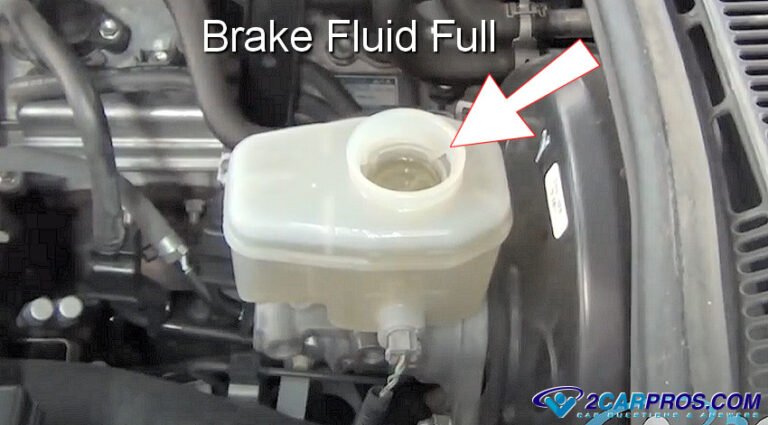
Before you assume low fluid is the cause of a floor pedal, you need to verify the level and condition of the fluid. Park on a level surface, turn off the engine, and wait for the vehicle to cool. Open the hood and locate the master cylinder reservoir, which is usually mounted on the driver’s side firewall near the brake booster.
The reservoir is translucent plastic with minimum and maximum markings. If the fluid is below the minimum line, you have a low-fluid condition. If the reservoir is completely empty, air has almost certainly entered the system, and a simple top-off will not restore proper pedal feel.
Check the fluid color as well. Fresh brake fluid is clear to light amber. Dark brown or black fluid indicates contamination or age, which can degrade internal seals and lower the boiling point.
Contaminated fluid should be flushed, not just topped off.
What to Do If the Pedal Goes to the Floor
If your brake pedal sinks to the floor while driving, do not continue driving. Pull over safely as soon as possible and call for professional assistance. Braking distance increases dramatically when the pedal travels to the floor, and you may lose the ability to stop quickly in an emergency.
If the pedal goes to the floor only when the engine is running but feels firm when the engine is off, the issue may involve the brake booster or a vacuum leak, not just fluid level. This distinction matters because the booster provides power assist, and a failed booster can change pedal feel without any fluid loss.
Step 1: Do Not Drive the Vehicle
A floor pedal means you have lost a significant portion of your braking capability. Even if the brakes seem to work at the very bottom of the pedal travel, you cannot predict when they will fail completely. Have the vehicle towed to a repair shop rather than risking a drive.
Step 2: Inspect for Visible Leaks
Look under the vehicle for puddles or drips. Check the inside of each wheel for wetness or dark streaks. Inspect the master cylinder area for fluid residue.
If you find a leak, do not attempt to drive the vehicle even after adding fluid, because the leak will continue.
Step 3: Add Fluid Only as a Temporary Measure
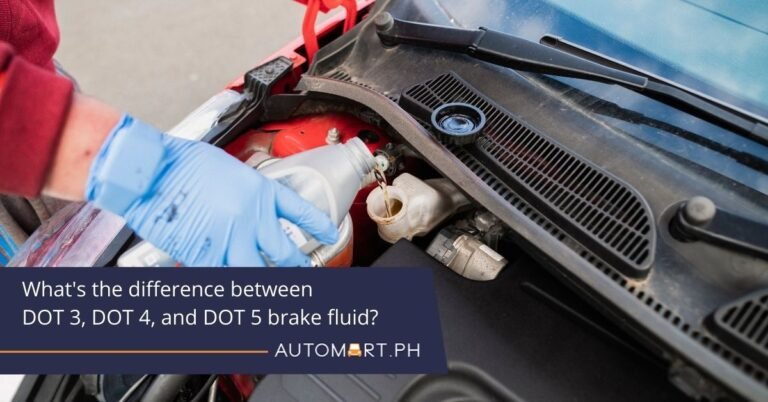
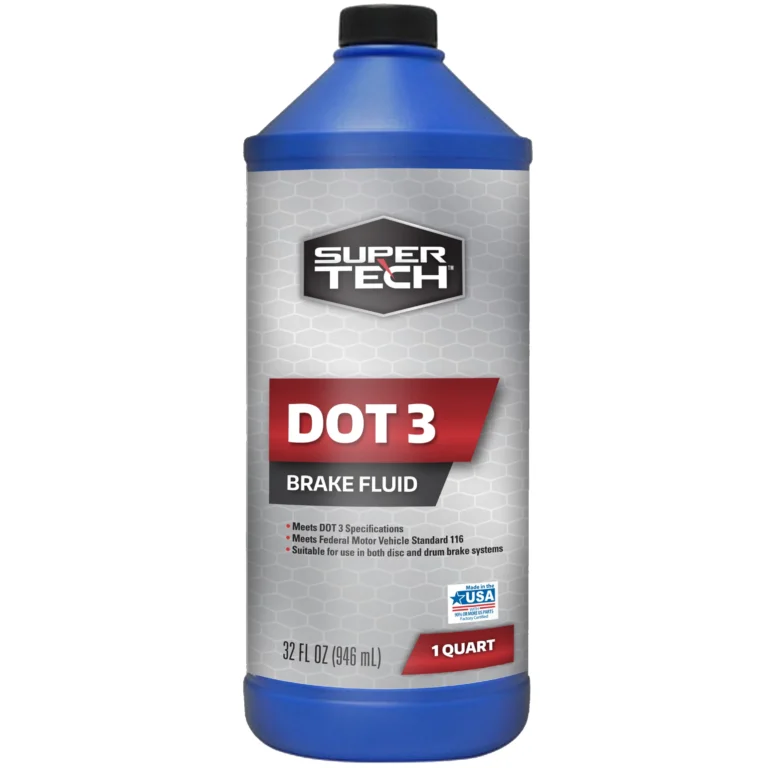
If you must move the vehicle a short distance to a safe location, you can add the correct type of brake fluid to bring the level up to the maximum mark. Use the fluid type specified in your owner’s manual, usually DOT 3 or DOT 4. Do not mix different types unless the manual allows it.
This is only a temporary measure to get the vehicle off the road, not a repair.
Step 4: Have the System Bled and Inspected
After the fluid level is corrected, the system must be bled to remove trapped air. Brake bleeding requires opening the bleeder valves at each caliper or wheel cylinder while someone presses the pedal. This process forces air out of the lines.
A professional mechanic will also pressure-test the system to find the source of the leak and inspect the master cylinder, calipers, wheel cylinders, hoses, and lines.
Why Topping Off Fluid Is Not Enough
Many drivers assume that adding brake fluid will solve a sinking pedal. It will not, unless the only issue was a marginally low reservoir with no air ingestion. Once air enters the hydraulic system, it remains trapped in the lines or the master cylinder.
Adding fluid raises the reservoir level but does not push the air out.
Air must be removed through bleeding. Without bleeding, the pedal will remain soft or low even with a full reservoir. Furthermore, if the low fluid was caused by a leak, the new fluid will simply leak out as well, leaving you with the same problem and a contaminated braking system.
The only safe approach is to find and repair the leak, replace any damaged components, refill the system with fresh fluid, and bleed all four brake circuits. This restores the hydraulic integrity that keeps the pedal firm and the brakes responsive.
When Low Fluid Is Not the Cause
There are situations where the pedal goes to the floor but the fluid level is normal. Recognizing these cases prevents you from chasing the wrong problem.
Failed Brake Booster
The brake booster uses engine vacuum to multiply pedal force. If the booster diaphragm fails, you lose power assist. The pedal may feel hard and require excessive effort, or it may sink if there is an internal vacuum leak.
Fluid level remains normal because the booster operates on vacuum, not hydraulic pressure.
Rear Brake Adjustment Issues
In drum brake systems, the rear brakes have an automatic adjuster that compensates for shoe wear. If the adjuster fails, the shoes move too far away from the drum. The pedal must travel further to push the shoes outward, which can make the pedal feel low or sink toward the floor.
The fluid level stays normal because no fluid is lost.
Air in the System from a Previous Repair
If brake work was performed recently and the system was not bled correctly, air remains trapped in the lines. This produces a soft or low pedal regardless of fluid level. The fix is a proper bleed, not adding fluid.
Safety Precautions and Professional Help
Brake failure is a leading cause of avoidable accidents. If you experience a pedal that goes to the floor, treat it as an emergency. Do not rely on the emergency brake as a substitute for hydraulic braking, and do not pump the pedal repeatedly if it sinks, as this can worsen the condition.
A qualified mechanic should inspect the entire braking system, including the master cylinder, brake lines, hoses, calipers, wheel cylinders, and ABS components. They will measure fluid level, check for leaks, test pedal feel, and perform a pressure bleed if necessary. Brake fluid is hygroscopic, meaning it absorbs moisture over time, so a complete flush is recommended if the fluid is old or contaminated.
Conclusion
Low brake fluid can absolutely cause the pedal to go to the floor, but the fluid level is rarely the original problem. A leak, worn seals, or air in the hydraulic system is almost always behind the drop in fluid, and topping off the reservoir will not restore a firm pedal. If your brake pedal sinks, stop driving immediately, inspect for visible leaks, and have the system professionally bled and repaired.
Your safety depends on a fully sealed, air-free hydraulic circuit, and any compromise in that circuit demands immediate attention before you get back on the road.