How to Bypass a Brake Caliper? Why You Shouldn’t Do It
A failed brake caliper can leave you searching for a quick way to get the vehicle moving again, especially if the wheel is dragging, overheating, or the caliper is leaking. That sometimes leads people to wonder whether one caliper can simply be disconnected or bypassed while the remaining brakes continue working.
You should not bypass a brake caliper and drive the vehicle. Disabling one wheel’s brake can seriously reduce braking stability, increase stopping distance, and interfere with ABS and brake balance.
If you are researching how to bypass a brake caliper, the safer answer is to repair or replace the failed component rather than trying to remove one brake from the hydraulic system. Modern braking systems are designed so all four wheel brakes work together. Altering the hydraulic circuit by blocking a brake line, disconnecting a caliper, or otherwise preventing one wheel from braking can make the vehicle pull sharply during braking and may cause partial or complete brake-system failure.
There are safe ways to deal with a stuck, leaking, or damaged caliper, but those solutions involve diagnosing the actual fault, replacing the defective parts, bleeding the hydraulic system correctly, or transporting the vehicle without driving it.
How to Bypass a Brake Caliper Safely
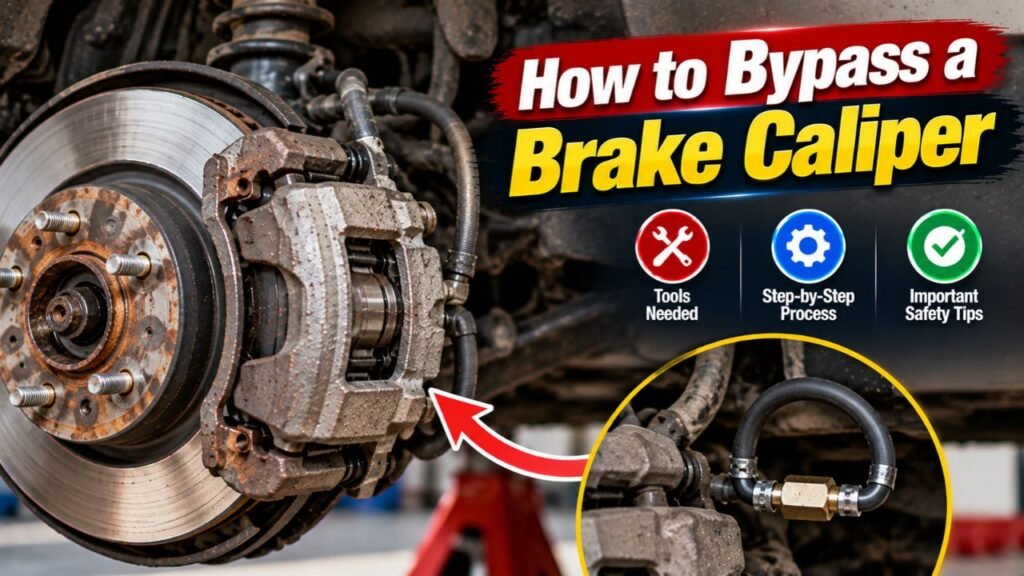
There is no recommended procedure for how to bypass a brake caliper for normal road use.
A brake caliper is part of the vehicle’s primary safety system. Disabling it changes how braking force is distributed between the wheels and can make the vehicle unpredictable during an emergency stop.
Do not attempt to make a vehicle drivable by:
- Capping or blocking a brake hose to one wheel
- Pinching a flexible brake hose
- Removing brake pads
- Disconnecting a caliper from the hydraulic system
- Plugging a brake line with improvised hardware
- Driving with a leaking caliper
- Driving with a seized caliper intentionally disabled
If a caliper failure makes the vehicle unsafe to drive, the correct solution is usually repair, replacement, or towing.
What Does “Bypassing a Brake Caliper” Mean?
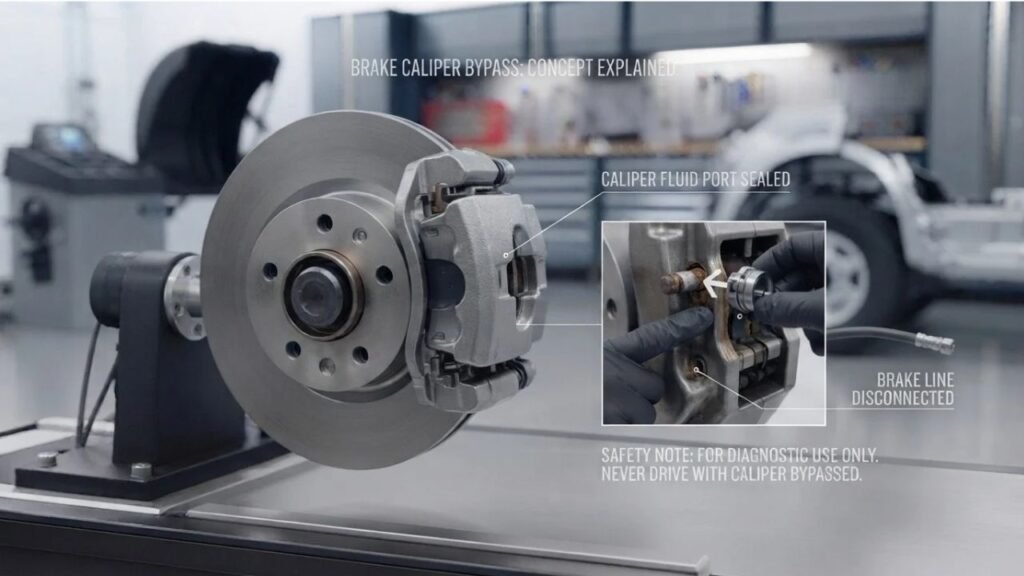
People use the term in several different ways.
It may refer to trying to:
- Stop brake fluid from reaching one caliper
- Prevent one caliper from applying
- Disconnect a damaged brake hose
- Temporarily disable a locked wheel
- Remove one caliper from the hydraulic circuit
- Keep driving after a caliper leak
All of these approaches have the same basic problem: one wheel no longer provides the braking force the vehicle was designed to use.
Brake systems are engineered around a specific balance between the front and rear brakes and between the left and right sides of the vehicle.
Removing one caliper from that system upsets that balance.
Why Bypassing One Brake Caliper Is Dangerous
The vehicle may still appear to stop with three functioning brakes, but that does not make it safe.
The Vehicle Can Pull During Braking
If one front caliper is disabled, the opposite front brake may generate much more stopping force.
This can cause the steering wheel and vehicle to pull toward the side with the functioning brake.
The effect can become much stronger during:
- Emergency braking
- Wet-road driving
- High-speed braking
- Uneven road surfaces
- Towing
- Cornering
A strong brake pull can make the vehicle difficult to control.
Stopping Distance Can Increase
Every functioning brake contributes to decelerating the vehicle.
Removing one brake reduces the system’s available braking capacity.
The difference may not seem dramatic during gentle braking, but emergency stopping performance can be significantly affected.
Brake Balance Is Changed
Vehicles are designed with a specific front-to-rear brake balance.
Front brakes typically handle a large share of braking because vehicle weight transfers forward when slowing down.
Disabling a front caliper can therefore have an especially serious effect on braking behavior.
ABS and Stability Control May Be Affected
Modern vehicles use wheel-speed sensors and electronically controlled systems such as:
- ABS
- Traction control
- Electronic stability control
These systems assume the hydraulic brakes are functioning normally.
Disabling one brake can cause unusual wheel behavior and may interfere with how the vehicle responds during hard braking.
Can You Cap a Brake Line and Drive?
Capping a brake line to disable one wheel is not an appropriate road-going repair.
Even if the rest of the hydraulic system appears to retain pressure, the vehicle’s braking balance has been intentionally altered.
Improvised plugs or fittings can also leak or fail under hydraulic pressure.
Brake systems generate substantial pressure, and only components designed and approved for brake service should be used.
If a brake line or hose is damaged, replace the defective component before driving.
Can You Pinch a Brake Hose to Stop a Leaking Caliper?
No. A flexible brake hose should not be pinched, clamped, or crushed as a way to disable a brake for driving.
This can:
- Damage the internal hose structure
- Create an internal restriction
- Cause the hose to fail later
- Prevent the brake from releasing properly
- Leave unpredictable braking behavior
Brake hoses are safety-critical parts.
If a hose is damaged, it should be replaced.
Can You Drive With One Brake Caliper Disconnected?
You should not.
A vehicle with one caliper intentionally disconnected may still move and stop, but braking performance can become unpredictable.
Possible problems include:
- Pulling to one side
- Increased stopping distance
- Brake-warning lights
- Fluid loss
- Reduced pedal pressure
- ABS or stability-control problems
- Overloading the remaining brakes
The safer choice is to repair the brake or transport the vehicle.
What If the Caliper Is Seized?
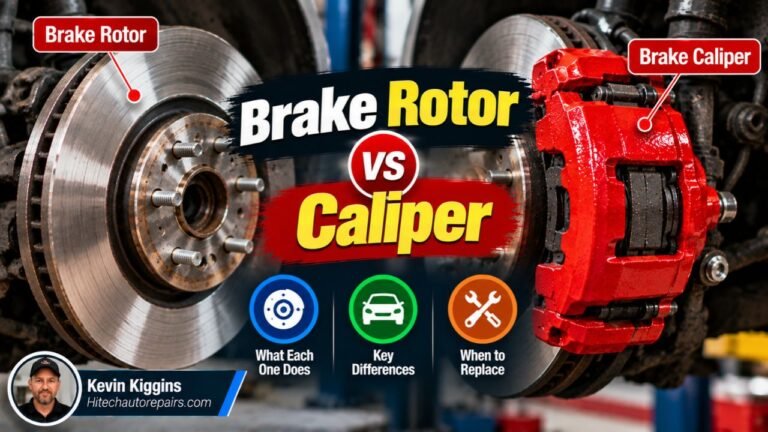
A seized caliper can keep a brake pad pressed against the rotor even after you release the brake pedal.
Common symptoms include:
- One wheel getting extremely hot
- Burning smell
- Vehicle pulling
- Poor acceleration
- Excessive brake dust
- Premature pad wear
- Reduced fuel economy
- Smoke near a wheel in severe cases
Do not bypass the caliper.
Instead, identify why it is sticking.
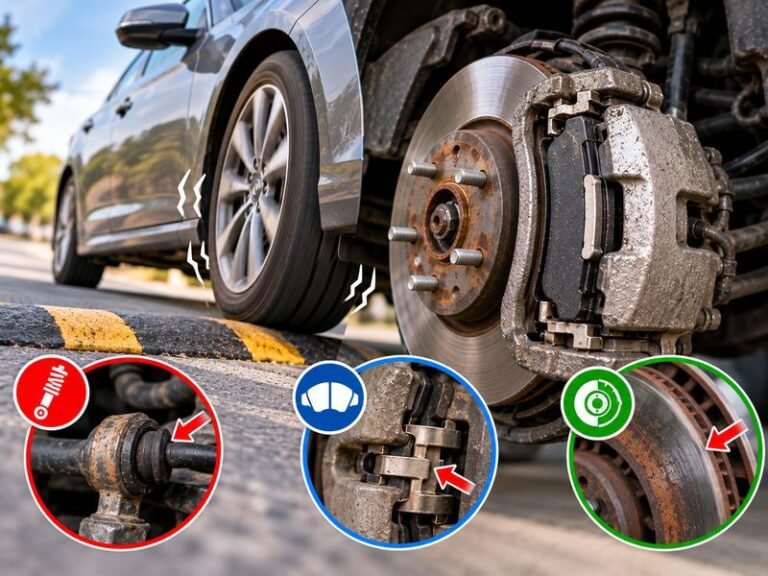
Common Causes of a Stuck Brake Caliper
Several components can cause a brake to remain applied.
Seized Caliper Piston
Corrosion or damaged seals can prevent the piston from retracting correctly.
The caliper may need rebuilding or replacement.
Stuck Slide Pins
Floating calipers need lubricated guide pins that move freely.
A seized slide pin can prevent the caliper from releasing evenly.
Collapsed Brake Hose
A brake hose can fail internally and act like a one-way valve.
Hydraulic pressure may reach the caliper when you press the pedal but fail to return properly when you release it.
This can make the caliper appear defective even when the piston itself is functional.
Corroded Brake Hardware
Rust around brake-pad contact points can prevent the pads from moving freely.
The pads may remain pressed against the rotor.
Parking Brake Mechanism Problems
Some rear calipers have an integrated mechanical or electronic parking brake.
A seized cable, internal mechanism, or electronic parking-brake fault can keep the rear brake applied.
What If the Brake Caliper Is Leaking?
A leaking caliper should be repaired immediately.
Brake fluid may leak from:
- Piston seal
- Bleeder screw
- Brake hose connection
- Damaged caliper housing
Fluid loss can lower hydraulic pressure and eventually affect more than one brake.
A soft or sinking brake pedal can indicate a serious hydraulic problem.
Do not attempt to solve a leaking caliper by blocking the line and continuing to drive.
Replace or professionally rebuild the defective caliper and bleed the braking system according to manufacturer procedures.
What If a Caliper Fails Far From Home?
If the brake system has a serious fault, the safest option is to avoid driving the vehicle.
Depending on the situation, you may be able to:
- Call roadside assistance
- Arrange a tow
- Have a mobile mechanic inspect the vehicle
- Replace the caliper where the vehicle is safely parked
Trying to improvise a brake bypass merely to reach home or a repair shop can turn a manageable mechanical failure into a serious safety risk.
Can You Temporarily Free a Sticking Caliper?
Sometimes a sticking brake may release after the vehicle cools, but that does not mean the problem has been fixed.
A brake that sticks once can stick again without warning.
If the problem is caused by:
- A seized piston
- Restricted brake hose
- Corroded bracket
- Frozen slide pin
- Parking-brake fault
the faulty component should be repaired before normal driving resumes.
Do not treat temporary release as a permanent repair.
Should You Replace the Caliper or Rebuild It?
The answer depends on the caliper’s condition.
Replacement May Be Better When
Consider replacing the caliper if it has:
- Severe corrosion
- Seized piston
- Damaged housing
- Heavy rust around the piston bore
- Repeated sticking
- Significant fluid leakage
Replacement calipers are commonly available as new or remanufactured assemblies.
Rebuilding May Be Possible
Some calipers can be rebuilt using new:
- Piston seals
- Dust boots
- Pistons
- Internal components
However, brake-caliper rebuilding requires proper inspection and assembly.
If the piston bore or housing is badly corroded, replacement may be more appropriate.
Should You Replace Both Calipers?
Brake calipers are not automatically required to be replaced in pairs in every situation.
If only one caliper has failed and the other is in good condition, replacing the defective unit may be acceptable.
However, inspect the opposite side for:
- Similar corrosion
- Sticking
- Fluid leaks
- Damaged boots
- Uneven pad wear
- Similar age and condition
Brake pads should normally be replaced as an axle set if replacement is required.
Do You Need to Bleed the Brakes After Caliper Replacement?
Yes, when the hydraulic brake hose or line has been disconnected, air can enter the braking system.
The system must then be properly bled.
Brake bleeding removes trapped air from the hydraulic circuit.
Air compresses much more easily than brake fluid, which can create:
- Soft brake pedal
- Excessive pedal travel
- Reduced braking response
Always follow the vehicle manufacturer’s specified brake-bleeding procedure.
Some modern ABS systems may require special procedures or scan-tool functions.
Can a Bad Brake Hose Look Like a Bad Caliper?
Yes.
A deteriorated flexible brake hose can develop an internal restriction.
When you press the brake pedal, high hydraulic pressure may force fluid through the restriction and apply the caliper.
When you release the pedal, the fluid may not return easily.
The brake stays partially applied.
This condition can look almost identical to a seized caliper.
That is why replacing the caliper without diagnosing the hose can sometimes fail to solve the problem.
Can You Drive With a Slightly Sticking Caliper?
It is not a good idea.
A dragging brake generates continuous heat.
That heat can damage:
- Brake pads
- Rotor
- Caliper seals
- Wheel bearing
- Brake fluid
- Nearby components
Extreme brake heat can also reduce braking performance.
If one wheel becomes noticeably hotter than the others, have the cause diagnosed before continuing normal driving.
Signs a Brake Caliper Needs Immediate Attention
Stop and inspect the braking system if you notice:
- Brake fluid leaking near a wheel
- Smoke from a wheel
- Strong burning smell
- Extremely hot wheel or rotor
- Vehicle pulling severely while braking
- Brake pedal suddenly becoming soft
- Brake warning light with braking problems
- Grinding or severe dragging
- Caliper visibly damaged
Do not keep driving simply because the vehicle can still move.
Proper Alternatives to Bypassing a Brake Caliper
Instead of disabling the caliper, choose the repair that matches the fault.
| Problem | Proper Response |
| Seized piston | Replace or rebuild caliper |
| Stuck slide pins | Service or replace pins/bracket |
| Damaged hose | Replace brake hose |
| Fluid leak | Repair leak and bleed system |
| Worn pads | Replace pads as an axle set |
| Damaged rotor | Replace or service rotor as appropriate |
| Parking-brake fault | Repair parking-brake mechanism |
| Severe corrosion | Replace affected brake components |
The goal should be to restore the complete brake system rather than remove part of it from operation.
Can You Remove a Caliper Just to Move the Vehicle Around a Shop?
A disabled or incomplete braking system should not be used for normal driving.
In a controlled repair environment, technicians may move or position a disabled vehicle using specialized equipment or other procedures appropriate to the shop.
That is very different from operating the vehicle on public roads.
If a caliper has been removed, the brake pedal should not be pressed unless the repair procedure specifically accounts for it because the piston can be pushed out of the caliper.
Why a Brake Caliper Should Never Hang by the Hose
If you remove a caliper during repair, support it with a suitable hook, hanger, or wire.
Do not let it hang from the flexible brake hose.
The weight of the caliper can damage the hose internally or externally.
An internally damaged hose can later cause:
- Leaks
- Restrictions
- Brake dragging
- Hose failure
Supporting the caliper properly is a simple but important brake-service practice.
Brake Caliper Repair Safety
Brake work directly affects vehicle safety.
Before performing brake repairs:
- Park on a stable, level surface.
- Use proper wheel chocks.
- Lift the vehicle at approved points.
- Support it with appropriately rated jack stands.
- Never rely on a hydraulic jack alone.
- Use correct replacement parts.
- Keep brake friction surfaces free of oil and grease.
- Follow fastener torque specifications.
- Use the correct brake fluid.
- Bleed the brakes correctly.
- Verify a firm brake pedal before moving the vehicle.
If you are unsure how to diagnose or repair a hydraulic braking problem, have a qualified technician perform the work.
FAQs About How to Bypass a Brake Caliper
Can I bypass a brake caliper temporarily?
You should not bypass a brake caliper for road use, even temporarily.
Disabling one brake changes braking balance and can reduce vehicle control during braking.
Can I block the brake line going to one caliper?
Blocking a brake line is not an appropriate repair for a vehicle that will be driven.
Replace the defective caliper, hose, or line instead.
Will a car still stop with only three brakes?
It may still produce braking force, but that does not make it safe.
The vehicle can pull to one side, take longer to stop, and behave unpredictably during emergency braking.
Can I pinch the brake hose to disable a stuck caliper?
No.
Pinching a brake hose can damage it internally and is not a safe road repair.
What should I do if my caliper locks up while driving?
Safely stop the vehicle as soon as practical and avoid continuing to drive if the brake is severely dragging or overheating.
Have the braking system inspected or tow the vehicle.
Can a brake caliper suddenly fail?
Yes.
A caliper piston, seal, slide pin, hose, or related brake component can fail or seize.
Routine brake inspection can help identify developing problems before complete failure.
Is it cheaper to bypass a bad caliper than replace it?
Bypassing is not a safe alternative.
A replacement or remanufactured caliper may cost more initially, but restoring proper braking is necessary for safe vehicle operation.
Can ABS compensate for a disabled brake caliper?
No.
ABS can modulate hydraulic pressure at functioning brakes, but it cannot restore braking force from a caliper that has been intentionally disabled or disconnected.
Conclusion
If you are searching for how to bypass a brake caliper, the safest answer is not to bypass it for normal driving. A vehicle’s braking system depends on properly functioning brakes at every wheel, and intentionally disabling one caliper can cause pulling, longer stopping distances, hydraulic problems, and unpredictable braking behavior.
A stuck, leaking, or damaged caliper should be diagnosed and repaired rather than removed from the braking circuit. Depending on the cause, the correct fix may involve replacing the caliper, servicing slide pins, replacing a restricted brake hose, repairing the parking-brake mechanism, or bleeding the hydraulic system.
If the vehicle cannot be driven safely because of a caliper problem, transporting it by tow is far safer than attempting a temporary brake bypass.