Why Won’t Brake Caliper Retract? Causes and Fixes Explained
A brake caliper piston normally moves outward when you press the brake pedal and must be pushed or rotated back into the caliper when installing new brake pads. If the piston refuses to retract, forcing it harder is not always the right solution.
The caliper may be corroded, the brake hose may be trapping hydraulic pressure, or the piston may use a screw-in parking-brake mechanism instead of a simple push-in design.
If your brake caliper won’t retract, the most common reasons are a seized or corroded piston, a screw-in rear piston being pushed instead of rotated, an electronic parking brake that is not in service mode, trapped hydraulic pressure from a restricted brake hose, or contamination inside the caliper.
Determining the cause matters because a piston that will not move can indicate more than a difficult brake-pad replacement. A sticking caliper may keep the brake partially applied, causing excessive heat, rapid pad wear, pulling, rotor damage, and reduced fuel economy.
The correct repair depends on the brake design. Many front calipers simply compress inward, while some rear calipers need to be rotated as they retract. Vehicles with an electronic parking brake (EPB) may require a service procedure or scan tool before the piston can safely be pushed back.
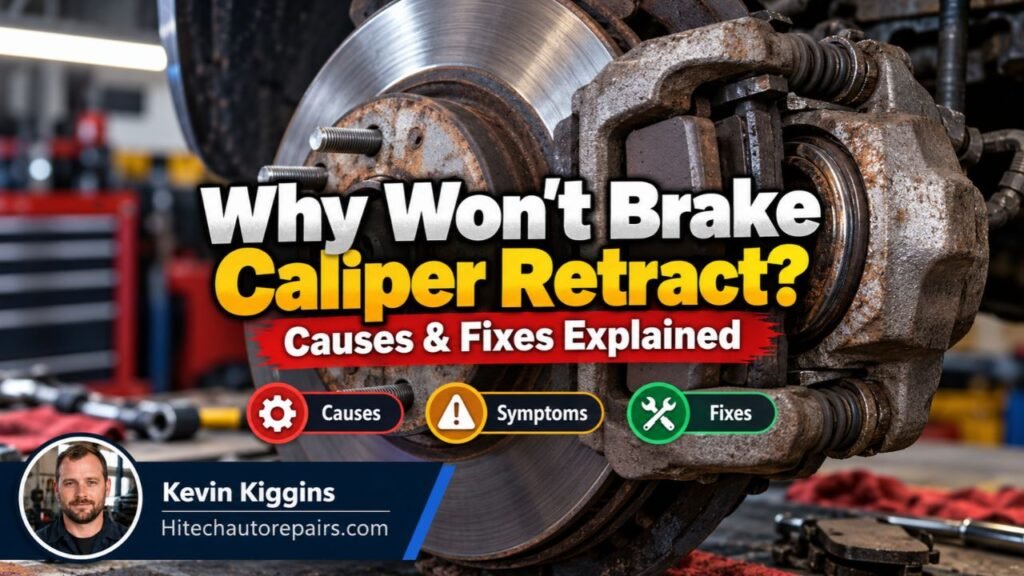
This guide explains why a brake caliper piston may refuse to retract, how to identify the type of caliper you have, what diagnostic clues to look for, and when replacing the caliper is safer than trying to force the piston back in.
Why Won’t Brake Caliper Retract?
If you are asking why won t brake caliper retract, the first thing to determine is whether the piston is actually supposed to be pushed straight inward.
There are several common possibilities:
- The caliper piston is seized from corrosion.
- The rear piston must be rotated while being compressed.
- The electronic parking brake is still engaged.
- The brake hose is internally restricted.
- The piston is cocked or misaligned in the bore.
- Dirt or corrosion is binding the piston.
- The caliper’s parking-brake mechanism is seized.
- Hydraulic pressure cannot return to the master cylinder.
- The piston has extended too far.
- You are using the wrong compression tool or technique.
Do not assume that applying more force will solve the problem.
A healthy push-in piston should normally retract with controlled pressure. If extraordinary force is required, stop and diagnose the reason.
First, Determine What Type of Caliper You Have
Brake calipers do not all retract the same way.
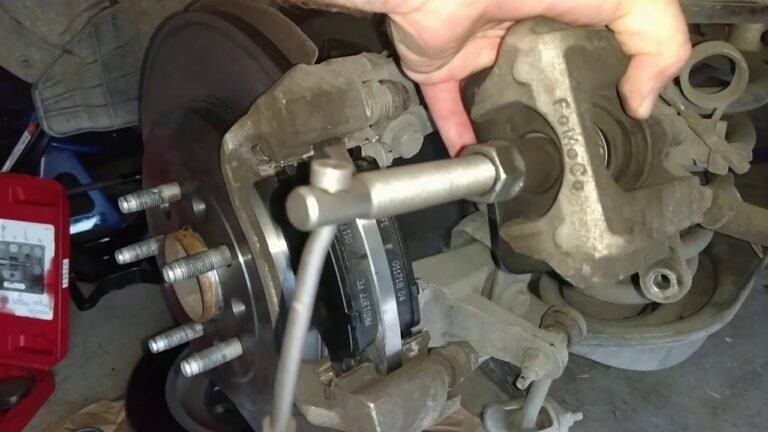
Before using a C-clamp, piston compressor, or wind-back tool, identify the caliper design.
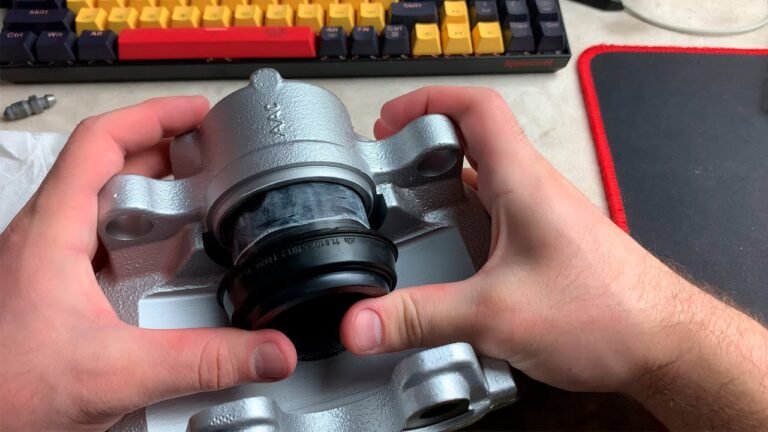
Push-In Caliper Piston
Many front brake calipers use a simple hydraulic piston that retracts by being pushed straight back into the bore.
A brake piston compressor or suitable caliper tool is commonly used.
The piston should move gradually under steady pressure.
Screw-In Rear Caliper Piston
Many rear calipers combine the hydraulic brake and mechanical parking brake into the same assembly.
These pistons often cannot simply be pushed straight inward.
Instead, the piston must be rotated while being compressed.
You may notice slots, grooves, or small notches in the piston face where a wind-back tool fits.
Trying to force one of these pistons straight inward can damage the internal parking-brake mechanism.
Electronic Parking Brake Caliper
Vehicles with an electronic parking brake may use an electric motor mounted on the rear caliper.
Before replacing the pads, the parking-brake mechanism may need to be placed in service mode or maintenance mode.
Depending on the vehicle, this may require:
- A dashboard procedure
- A scan tool
- A manufacturer-specific sequence
Do not force an EPB caliper piston inward until you know the correct procedure for that vehicle.
A Seized Caliper Piston Is a Common Cause
Corrosion is one of the most common reasons a piston will not retract.
The caliper piston sits close to the wheel, where it is exposed to:
- Water
- Road salt
- Dirt
- Heat
- Brake dust
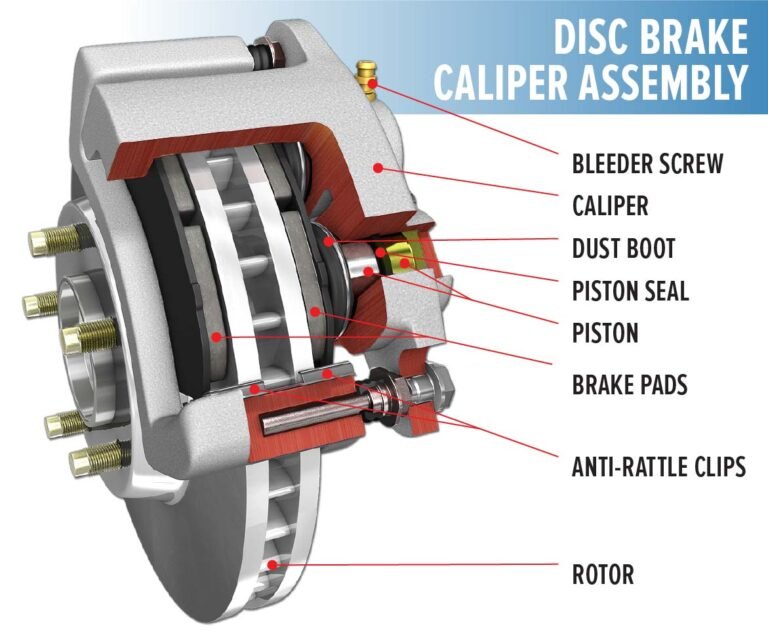
A rubber dust boot protects the exposed portion of the piston. If that boot tears or becomes displaced, moisture can reach the piston surface.
Rust can then develop between the piston and caliper bore.
A severely corroded piston may become almost impossible to push back.
Signs of a Seized Piston
Possible signs include:
- Piston will not move with normal compression force
- Torn or missing dust boot
- Visible rust around the piston
- One wheel becoming very hot
- Brake pad wearing much faster than expected
- Vehicle pulling
- Brake dragging after pedal release
- Burning smell near the wheel
If the piston is heavily corroded or pitted, replacing the caliper is usually more reliable than forcing the piston back and reusing it.
The Rear Piston May Need to Be Rotated
This is one of the easiest problems to mistake for a seized caliper.
If a rear piston uses an integrated parking-brake mechanism, pushing directly on it may accomplish almost nothing.
A caliper wind-back tool applies inward pressure while rotating the piston.
Rotation direction varies by design.
Some pistons rotate clockwise. Others may require a different procedure.
Do not guess based solely on another vehicle you have worked on.
Consult vehicle-specific service information before forcing the piston.
Electronic Parking Brake May Need Service Mode
An EPB caliper can appear completely seized when the real problem is that the electric parking-brake actuator has not been retracted.
Many vehicles require the EPB system to be placed in a maintenance position before brake service.
Attempting to compress the piston without doing this may damage:
- Electric motor
- Reduction gears
- Internal screw mechanism
- Caliper piston
- Electronic parking brake assembly
If your rear caliper has an electrical connector and motor attached to it, verify the correct EPB service procedure before continuing.
A Collapsed Brake Hose Can Trap Pressure
A piston that refuses to retract is not always mechanically seized.
The flexible brake hose can deteriorate internally.
In some cases, fluid can travel toward the caliper when you press the brake pedal but cannot return easily afterward.
The damaged hose effectively acts like a one-way valve.
This can leave hydraulic pressure trapped in the caliper.
Possible symptoms include:
- Brake remains applied
- Wheel becomes hot
- Vehicle pulls
- Piston is difficult to compress
- Caliper releases when hydraulic pressure is relieved
A restricted brake hose can look perfectly normal on the outside.
What Happens If the Piston Moves When the Bleeder Is Opened?
This can be an important diagnostic clue.
If the piston will not retract normally but becomes much easier to push when the bleeder screw is opened, hydraulic pressure may be trapped upstream of the caliper.
Possible causes include:
- Internally restricted brake hose
- Blockage in the hydraulic circuit
- Master cylinder problem
- ABS hydraulic issue in less common cases
Opening the bleeder is not a substitute for repairing the fault.
If pressure is being trapped, the source of the restriction needs to be diagnosed.
Brake fluid will also escape when the bleeder is opened, and air may enter the system, so proper bleeding will be required afterward.
Stuck Caliper Slide Pins Can Be Confusing
Slide pins do not directly prevent the piston itself from retracting into the caliper bore.
However, a stuck slide pin can make the caliper difficult to remove or make the brake appear seized.
A floating caliper must move freely along its guide pins.
If the pins are:
- Rusted
- Dry
- Bent
- Corroded
- Stuck
the caliper may remain pressed toward one side of the rotor.
During brake service, inspect the piston and the slide pins separately.
You can have a perfectly movable piston and completely seized slide pins—or both can be stuck at the same time.
The Piston May Be Cocked in the Bore
A piston needs to move squarely into the caliper bore.
If pressure is applied unevenly, the piston can tilt slightly and bind.
This is more likely when:
- Using an undersized clamp
- Pressing only one edge of the piston
- Working with a multi-piston caliper
- The piston is already partly corroded
Apply pressure evenly across the piston face with an appropriate tool.
For multi-piston calipers, retracting one piston can sometimes force another piston outward, so special care is needed.
The Piston May Have Extended Too Far
If the brake pedal was pressed while the caliper was removed and nothing was between the piston and caliper, the piston may extend much farther than intended.
It can even come completely out of the bore.
A piston that has moved too far may:
- Damage the seal
- Become misaligned
- Leak brake fluid
- Refuse to retract normally
Do not simply force a displaced piston back into the caliper.
The seal and piston need to be inspected, and the caliper may require rebuilding or replacement.
Rust Behind the Piston Seal Can Cause Binding
The hydraulic piston seal sits in a groove inside the caliper.
On older or heavily corroded calipers, rust can develop around or behind the seal groove.
Corrosion can push the seal inward against the piston.
The piston may then become increasingly difficult to move even if its visible surface appears acceptable.
This condition often indicates that the caliper needs rebuilding or replacement.
Cleaning only the exposed piston will not correct corrosion inside the seal groove.
A Damaged Dust Boot Can Lead to Piston Seizure
The piston dust boot has an important preventive role.
It protects the piston and bore from:
- Water
- Salt
- Dirt
- Sand
- Road debris
A small tear may allow contamination to reach the piston.
Initially, the brakes may work normally.
Over time, corrosion can develop beneath the boot until the piston becomes difficult to retract.
If you see a damaged boot during pad replacement, inspect the piston carefully rather than simply compressing it and installing new pads.
Brake Fluid Contamination Can Damage Caliper Seals
Brake hydraulic systems require the correct brake fluid.
Petroleum-based products such as engine oil, power-steering fluid, or certain lubricants can damage rubber brake seals.
Contaminated seals may:
- Swell
- Become soft
- Bind against the piston
- Leak
If widespread brake-fluid contamination is suspected, replacing one caliper may not solve the problem because seals throughout the hydraulic system may have been affected.
Professional diagnosis is appropriate in that situation.
Why a New Caliper May Not Retract
Even a recently installed caliper can be difficult to retract.
Possible causes include:
- Wrong caliper for the vehicle
- Rear piston requires rotation
- EPB not placed in service mode
- Installation damage
- Defective remanufactured caliper
- Restricted old brake hose
- Incorrect parking brake adjustment
Do not automatically assume a new part cannot be faulty.
Verify the installation and hydraulic system before continuing.
Can an Overfilled Brake Fluid Reservoir Stop the Piston From Retracting?
Usually, the reservoir itself is not the primary reason a piston becomes mechanically stuck.
However, when you compress caliper pistons, brake fluid moves back toward the master cylinder reservoir.
If the reservoir is already filled to the maximum level, fluid may overflow.
Before retracting multiple pistons, check the reservoir level.
Brake fluid can damage automotive paint, so clean spills promptly according to appropriate procedures.
Do not remove excessive fluid unless needed, and never allow the reservoir to run empty during brake service.
Can the Master Cylinder Prevent Caliper Retraction?
It is possible, although less common than piston corrosion or a restricted brake hose.
The brake hydraulic system contains small return or compensation passages that allow pressure to release when the pedal is released.
Problems involving the master cylinder or pedal adjustment can prevent pressure from fully returning.
A technician may diagnose this by determining where pressure is trapped in the hydraulic circuit.
If multiple wheels are dragging rather than just one, the diagnosis may extend beyond an individual caliper.
How Much Force Should It Take to Retract a Caliper?
There is no useful universal force specification because caliper size, seal design, age, and tool leverage vary.
The important point is that a normal push-in piston should generally move with steady, controlled tool pressure.
If you are straining heavily or bending tools, stop.
Excessive resistance suggests:
- Wrong piston retraction method
- Seized piston
- Trapped pressure
- Corrosion
- Mechanical parking-brake issue
Using more force can damage the caliper instead of fixing it.
How to Diagnose a Caliper That Won’t Retract
Use a logical sequence rather than immediately replacing parts.
1. Identify the Caliper Design
Determine whether the piston:
- Pushes straight in
- Rotates while compressing
- Uses an electronic parking brake
This eliminates one of the most common mistakes.
2. Inspect the Piston and Dust Boot
Look for:
- Rust
- Torn rubber
- Fluid leakage
- Pitting
- Dirt
- Heat damage
Heavy corrosion strongly suggests caliper replacement or rebuilding.
3. Inspect the Slide Pins
Make sure the caliper guides move independently and smoothly.
A stuck pin needs attention even if the piston itself is good.
4. Apply Correct Retraction Pressure
Use the correct tool and apply steady, even pressure.
Do not use impact tools or uncontrolled force.
5. Consider Trapped Hydraulic Pressure
If the piston remains immovable, hydraulic restriction becomes one possible cause.
A qualified technician can isolate the hose, caliper, and upstream hydraulic components.
Should You Open the Bleeder When Compressing a Caliper?
Brake-service practices differ depending on the vehicle and manufacturer procedure.
Some technicians open the bleeder while retracting the piston so old fluid exits at the caliper rather than being pushed backward through the hydraulic system.
Others retract the piston normally while monitoring the master-cylinder reservoir.
Follow the service procedure for the specific vehicle, especially on vehicles with:
- ABS
- Electronic stability control
- Electronic parking brakes
- Specialized hydraulic systems
If you open the bleeder, make sure air is not introduced and bleed the brakes properly afterward.
Can You Use a C-Clamp to Retract the Caliper?
A C-clamp can work on some simple push-in calipers, but it is not appropriate for every design.
Do not use a C-clamp to force:
- Screw-in rear pistons
- EPB pistons without the proper service procedure
- Multi-piston calipers without understanding piston movement
- A severely seized piston
A dedicated brake caliper piston compressor provides better control.
Rear screw-in pistons normally require a wind-back tool.
Can You Use Channel-Lock Pliers?
Using pliers directly on the piston is generally a poor choice.
Pliers can:
- Damage piston surfaces
- Tear dust boots
- Apply uneven pressure
- Cause the piston to cock
Damage to the piston surface can later damage the hydraulic seal.
Use an appropriate brake service tool instead.
What If Only One Piston Won’t Retract on a Multi-Piston Caliper?
Fixed multi-piston calipers require special attention.
As one piston moves inward, hydraulic pressure can push another piston outward.
You may need to restrain the other pistons with suitable blocks or tools while retracting them gradually.
If one piston remains completely stuck while the others move normally, that piston may be corroded or seized.
Forcing only the stuck piston can damage seals or cause another piston to come out.
When Should the Caliper Be Replaced?
Replacement is often the safest option when you find:
- Heavily rusted piston
- Deep piston pitting
- Torn boot with severe corrosion
- Brake fluid leakage
- Seized parking-brake mechanism
- Damaged piston bore
- Severe internal corrosion
- Repeated sticking after previous repair
A caliper rebuild can be appropriate when suitable parts are available and the metal components remain within serviceable condition.
For many common vehicles, a complete replacement or professionally remanufactured caliper is more practical than rebuilding a badly corroded unit.
Can You Drive With a Caliper That Won’t Retract?
You should not continue normal driving if a caliper is confirmed to be sticking or dragging.
A stuck piston can keep the pad pressed against the rotor.
Continued driving can cause:
- Brake overheating
- Accelerated pad wear
- Rotor damage
- Wheel bearing damage
- Pulling
- Reduced fuel economy
- Brake fade
If the wheel becomes extremely hot, you smell burning material, or smoke appears, stop driving the vehicle.
Have it repaired or transported before continued use.
Common Mistakes When a Caliper Won’t Retract
Forcing a Screw-In Piston Straight Back
This can damage the parking-brake mechanism.
Identify the piston design first.
Ignoring an Electronic Parking Brake
An EPB caliper may require service mode before piston retraction.
Using More Force on a Seized Piston
If normal tool pressure does not move the piston, diagnose the cause rather than increasing leverage indefinitely.
Installing New Pads With a Sticking Caliper
New pads will not solve a seized piston.
They may quickly overheat or wear unevenly.
Assuming the Caliper Is Bad Without Checking the Hose
A collapsed hose can keep hydraulic pressure trapped at the caliper.
Damaging the Dust Boot During Compression
Make sure the boot does not twist, pinch, or tear as the piston moves inward.
FAQs About Why Won’t Brake Caliper Retract
Why won’t my front brake caliper piston push back?
A front piston that will not push back may be seized from corrosion, cocked in the bore, or held outward by trapped hydraulic pressure.
Most front pistons push straight inward, but always verify the specific caliper design.
Why won’t my rear brake caliper retract?
Many rear calipers require the piston to rotate while it is pushed inward because of the integrated parking-brake mechanism.
Vehicles with electronic parking brakes may also require service mode before the piston can retract.
How do I know if the caliper piston is seized?
A seized piston usually requires excessive force or will not move at all using the correct retraction procedure.
Visible rust, a torn dust boot, brake drag, overheating, or uneven pad wear provide additional clues.
Can a bad brake hose keep the caliper from retracting?
Yes.
An internally collapsed brake hose can trap hydraulic pressure inside the caliper, keeping the brake applied and making piston compression difficult.
Why does the caliper retract when I open the bleeder?
If the piston becomes easier to retract when the bleeder screw is opened, hydraulic pressure may have been trapped in the caliper.
A restricted brake hose or another upstream hydraulic issue should be investigated.
Do I have to twist a brake caliper piston to retract it?
Some rear calipers do require simultaneous rotation and compression.
Do not twist a piston unless that is the specified procedure for the particular caliper.
Can I force a stuck caliper piston back with a C-clamp?
You should not force a piston that will not move with reasonable pressure.
First determine whether the piston must rotate, whether an electronic parking brake is involved, and whether the piston or hydraulic system is seized.
Should I replace a caliper if the piston will not retract?
Replacement is often appropriate when the piston is badly corroded, pitted, leaking, or mechanically seized.
If the problem is caused by a brake hose or incorrect retraction procedure, replacing the caliper alone may not solve it.
Conclusion
If you are wondering why won t brake caliper retract, start by identifying the caliper design before applying more force. A conventional front piston may simply push inward, while many rear pistons must be rotated, and electronic parking brake systems may require a specific service mode.
If you are using the correct procedure and the piston still refuses to move, inspect for corrosion, a damaged dust boot, trapped hydraulic pressure, a restricted brake hose, or a seized parking-brake mechanism.
Do not force a severely stuck piston or install new pads over an unresolved caliper problem. A dragging or seized brake can quickly create excessive heat and damage additional components. When the piston or caliper is heavily corroded, leaking, or mechanically damaged, replacing the caliper is generally the safer repair.