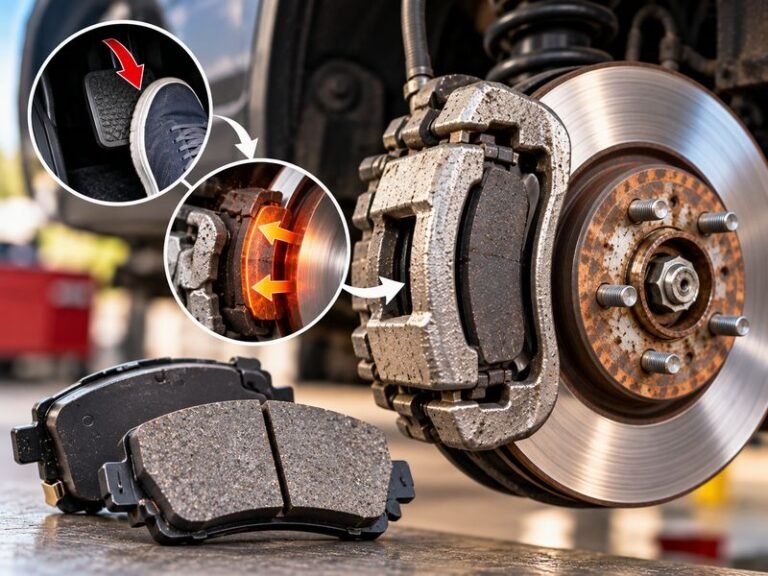
How Long Will 6mm Brake Pads Last? What Drivers Should Expect
A 6mm brake pad is usually still serviceable, and a rough planning range is about 10,000–20,000 more miles for many passenger vehicles. That is only an estimate. Stop-and-go traffic, vehicle weight, hills, towing, pad material, caliper condition, and your past wear rate can shorten or extend the remaining life.
Treating 6mm as a fixed mileage countdown can lead to replacing good pads too early or running them thinner than intended. Pad thickness tells you how much friction material remains, but it does not show how quickly your vehicle uses each millimeter.
A better estimate comes from combining the 6mm measurement with your vehicle’s own wear history. If you know the original pad thickness, mileage when the pads were installed, and current mileage, you can estimate how many miles each millimeter has lasted and project the remaining service life.
For U.S. driving context, Federal Highway Administration data for 2024 shows an average of 11,071 miles traveled per registered motor vehicle. A pad that truly has 10,000–20,000 miles left could therefore represent close to one or two years of driving for a vehicle near that national average, though brake wear is driven heavily by stopping frequency and conditions, not mileage alone.
In my research, the most useful answer to how long will 6mm brake pads last was not a single mileage figure. Brake-service guidance commonly places 6mm in a usable or monitor range, while replacement planning becomes more pressing as friction material approaches roughly 3–4mm. The vehicle maker’s service limit and the actual wear pattern should take priority over a generic chart.
The sections below show what 6mm means, a realistic mileage range, a simple way to estimate remaining life from past wear, the conditions that speed up pad loss, warning signs that override the thickness reading, and when I would plan the next inspection.
How Long Will 6mm Brake Pads Last in Real Driving?
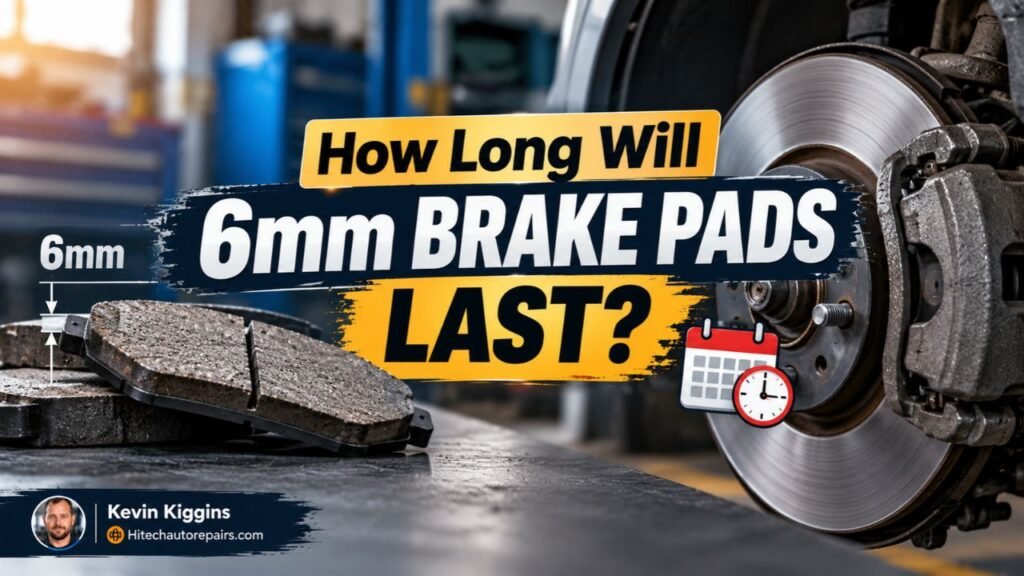
For many passenger cars and crossovers, about 10,000–20,000 miles is a reasonable planning estimate for pads measured at 6mm. Some vehicles may use the remaining material in fewer miles, while highway-driven vehicles with gentle braking may go beyond that range.
The reason the estimate is broad is simple: brake pads wear from braking events and heat cycles. Two cars that each travel 12,000 miles can have very different pad wear if one spends most of those miles cruising on highways and the other spends them in dense city traffic.
A 6mm measurement also does not mean the pad has exactly half of its mileage left. New pad thickness varies by vehicle and pad design, and the point at which the manufacturer calls for replacement can vary too.
| 6mm Pad Situation | Practical Expectation |
| Mostly highway driving, light braking | May exceed 20,000 miles |
| Mixed city and highway use | Often around 10,000–20,000 miles |
| Heavy city traffic or frequent short trips | May be closer to the lower end |
| Mountain driving, towing, heavy vehicle | Can wear much faster |
| Uneven pad wear or sticking caliper | Mileage estimate is unreliable |
Do not use this table as a replacement deadline. Use it as a planning range, then confirm wear at the next service or sooner if braking symptoms appear.
What Does 6mm of Brake Pad Thickness Mean?
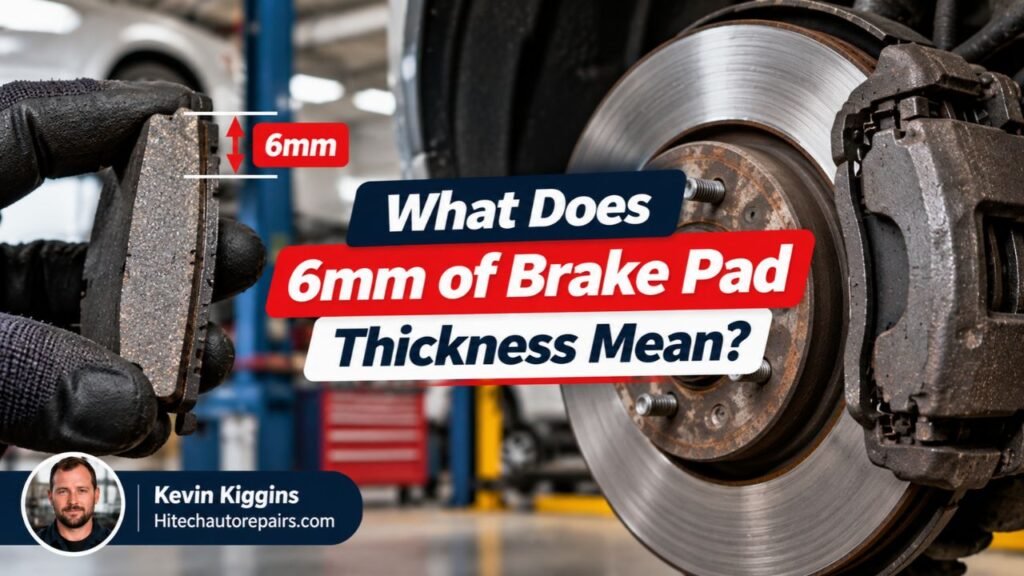
Six millimeters refers to the thickness of the friction material, not the steel backing plate. That friction material is the portion pressed against the brake rotor when you apply the brakes.
How Thick Are New Brake Pads?
Many passenger-vehicle disc brake pads start around 10–12mm of friction material, but there is no single new thickness for every vehicle. Some designs start thinner, and front and rear pads may use different dimensions.
If a pad began at 10mm and now measures 6mm, it has lost 4mm of material. That does not automatically mean 40% of its total usable mileage is gone because the final service limit may be above zero.
Is 6mm Considered Low?
In most ordinary passenger-vehicle situations, 6mm is not an immediate replacement reading by itself. It is better viewed as a mid-wear measurement that deserves tracking.
Many repair shops begin discussing replacement more seriously around 3–4mm, but the service specification for your exact vehicle should decide the limit. Certain vehicles use wear sensors or wear-indicator tabs that provide another warning before the friction material is fully consumed.
Measure the Inner and Outer Pads
A visible outer pad reading of 6mm does not prove every pad on that axle has 6mm remaining. The inner pad can wear at a different rate due to caliper movement, piston action, corrosion, or slide-pin problems.
This is one detail I would not skip. If one pad measures 6mm and its paired pad is already much thinner, the thinner pad controls the service decision.
Key Takeaway: A 6mm reading usually means usable friction material remains, but the lowest pad measurement on the axle and the vehicle-specific service limit matter more than a generic percentage estimate.
How to Estimate How Many Miles Your 6mm Brake Pads Have Left
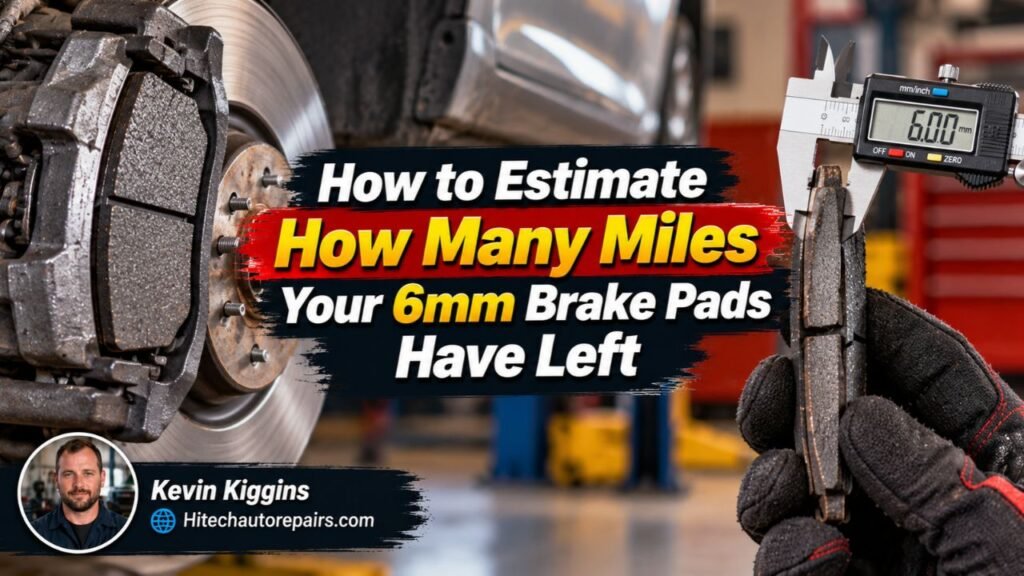
Your own wear history gives a better projection than a universal mileage chart. The calculation is simple if you know when the pads were installed and their starting thickness.
Step 1: Work Out How Much Pad Material Has Worn Away
Subtract the current thickness from the starting thickness.
Example:
10mm starting thickness − 6mm current thickness = 4mm worn
If those pads have traveled 28,000 miles, divide mileage by material worn:
28,000 miles ÷ 4mm = 7,000 miles per millimeter
Step 2: Decide on a Planning Thickness
Suppose you plan to replace the pads at 3mm after checking the vehicle’s service information.
6mm current thickness − 3mm planning thickness = 3mm remaining
Then multiply the remaining material by the historical wear rate:
3mm × 7,000 miles per mm = 21,000 estimated miles remaining
That estimate assumes driving conditions, brake operation, load, and pad wear remain similar.
Step 3: Use Time Only as a Secondary Estimate
If you drive 12,000 miles each year, a 21,000-mile estimate works out to about 21 months. If you drive only 6,000 miles a year, the same mileage could span roughly three and a half years.
Time alone is a weak predictor because corrosion, seized slides, rotor condition, and long periods of low use may change how the brakes age.
Key Takeaway: The best mileage estimate comes from your own measured wear rate: miles driven divided by millimeters already worn, then multiplied by the usable millimeters remaining.
What Can Make 6mm Brake Pads Wear Out Faster?
Pad wear varies because braking converts vehicle motion into heat. More frequent stops, higher loads, or brake-system faults create more heat and friction at the pad surface.
Stop-and-Go City Driving
City driving usually creates more brake applications per mile than steady highway travel. Traffic lights, intersections, congestion, and short trips keep the brakes working repeatedly.
A commuter who drives 8,000 city miles may use more pad material than another driver covering a much higher highway mileage.
Heavy Vehicles, Cargo, and Towing
A heavier vehicle carries more kinetic energy at a given speed. The brakes must absorb more energy when slowing the vehicle, which can raise brake temperatures and pad wear.
Towing adds another load. Trailer brakes, if fitted and set correctly, share part of the work, but the tow vehicle’s braking system still sees greater demands than it does when lightly loaded.
Hills and Frequent Hard Braking
Long descents and repeated hard stops build heat quickly. Drivers in hilly areas may see faster pad wear than drivers covering similar mileage on flat roads.
Using lower gears or the vehicle maker’s recommended downhill-driving method can reduce continuous brake use on long grades.
Sticking Calipers or Slide Pins
A pad that remains lightly pressed against the rotor after you release the brake pedal can wear rapidly. A seized slide pin may also make the inner and outer pads wear at different rates.
Warning clues include one wheel running hotter than the others, a burning smell, pulling, rapid brake dust buildup, or a large difference between inner and outer pad thickness.
Rotor Condition
Deeply grooved, badly rusted, or damaged rotors can create poor contact between the pad and rotor. Rotor condition should be checked when pad wear looks uneven or braking produces vibration or noise.
Key Takeaway: Frequent braking, vehicle load, hills, heat, and brake faults can turn a normal 6mm reading into a much shorter remaining service interval.
Do Front and Rear 6mm Brake Pads Have the Same Remaining Life?
Not necessarily. Front and rear brakes do different amounts of work based on vehicle design, brake bias, weight transfer, stability-control activity, regenerative braking on hybrids and EVs, and driving conditions.
Why Front Pads Often Wear Faster
During braking, vehicle weight transfers toward the front axle. On many conventional passenger vehicles, the front brakes handle a larger share of the stopping work.
That can make a 6mm front pad reach its replacement point sooner than a 6mm rear pad on the same vehicle.
Why Rear Pads Can Wear Faster on Some Vehicles
Rear-pad wear is not always slower. Electronic stability control can apply individual brakes, electronic parking-brake systems can affect rear service patterns, and some vehicle calibrations use rear braking more aggressively.
Hybrids and EVs add another variable because regenerative braking may reduce friction-brake use in normal driving. Rust or sticky hardware can then become a larger part of the wear picture.
Compare Axles Separately
Treat front and rear readings as separate maintenance items. If the fronts are 6mm and rears are 8mm, estimate each axle from its own wear history rather than assigning one replacement date to all four wheels.
Key Takeaway: A 6mm front pad and a 6mm rear pad may not have the same mileage left, so track each axle by its own wear rate and condition.
When Should You Replace 6mm Brake Pads?
A clean, even 6mm reading usually does not call for immediate replacement on its own. I would record the measurement and plan a recheck rather than replace pads solely because they reached 6mm.
Replace Based on the Vehicle’s Limit, Not a Universal Number
Manufacturer service limits vary. A shop may recommend replacement before the absolute service limit so the pads do not reach the end of their usable material between inspections.
For that reason, a 3–4mm reading is often treated as a planning zone, but your vehicle’s repair information, wear sensor, and actual pad condition carry more weight.
Replace Sooner if Wear Is Uneven
If one pad is much thinner than the others, replacing pads without fixing the cause may lead to the same problem again.
A technician should check caliper slides, piston movement, pad hardware, rotor condition, and related components when abnormal wear is present.
Do Not Wait for a Mileage Estimate if Warning Signs Appear
Have the brakes inspected promptly if you notice:
- Grinding or harsh metal-on-metal noise
- A brake warning or pad-wear message
- Pulling to one side during braking
- A burning smell near a wheel
- One wheel becoming unusually hot
- Brake pedal changes
- New vibration during braking
- A pad already close to the vehicle’s service limit
Noise alone does not prove pad thickness because rust, hardware, debris, or rotor issues can also create sound. Grinding paired with very thin friction material needs quick attention.
Key Takeaway: Evenly worn 6mm pads usually call for monitoring, while thin paired pads, abnormal heat, uneven wear, warning messages, or braking changes can justify earlier service.
How Often Should 6mm Brake Pads Be Rechecked?
If your pads are at 6mm and wearing evenly, checking them at the next scheduled tire rotation or routine service is a sensible approach for many drivers. A shorter interval makes more sense for heavy city driving, towing, mountain use, or a vehicle that has already shown fast pad wear.
A measurement history is far more useful than a single inspection. Write down the date, odometer reading, and thickness for each axle.
For example, if a front pad falls from 7mm to 6mm over 7,000 miles, you now have a vehicle-specific wear rate. If it falls from 7mm to 6mm in only 2,000 miles, the next inspection should come much sooner.
Do not assume wear will stay perfectly linear. Driving patterns change, and brake faults can appear between inspections.
Can You Drive Safely With 6mm Brake Pads?
In general, 6mm of evenly worn friction material is not considered an end-of-life reading for a typical passenger vehicle. The rest of the brake system still needs to be in sound condition.
Thickness alone cannot confirm that the brakes are safe. Rotor damage, fluid leaks, sticking calipers, contaminated pads, damaged hoses, warning lights, or unusual pedal behavior can require service even with thick pads.
If a mechanic reported 6mm during routine maintenance and gave no other brake warning, that usually means you have time to plan rather than an immediate pad-replacement emergency. Ask for the inner and outer measurements on both sides of the axle if the inspection report does not show them.
Conclusion
For the question how long will 6mm brake pads last, a practical estimate is often around 10,000–20,000 more miles, with a wide margin in either direction. Six millimeters usually represents serviceable material, but it cannot predict mileage by itself.
The strongest estimate comes from comparing current thickness with the pad’s starting thickness and the miles already driven. City traffic, towing, hills, vehicle mass, hard braking, rotor condition, and caliper faults can all change the rate.
I would record the 6mm reading, inspect all pads on the axle, and use the next thickness measurement to calculate the real wear rate. If the brakes develop grinding, abnormal heat, pulling, warning messages, or a much thinner paired pad, deal with that condition rather than waiting for the mileage estimate to run out.
FAQs About 6mm Brake Pad Remaining Life
Is 6mm Good for Brake Pads?
Yes, 6mm is generally a usable thickness for many passenger-vehicle brake pads if wear is even and the braking system has no faults. It is not usually an immediate replacement measurement by itself.
The exact judgment still depends on the vehicle maker’s service specification, the thickness of the other pads, rotor condition, and how quickly the pads have been wearing.
How Many Miles Are Left on 6mm Brake Pads?
A rough planning range is 10,000–20,000 miles for many vehicles, but that figure is not guaranteed. Heavy city traffic, hills, towing, hard braking, or a sticking caliper can cut the mileage.
Use your previous thickness readings and odometer history for a more vehicle-specific estimate.
What Percentage of Brake Pad Life Is 6mm?
There is no accurate universal percentage. If a pad started at 10mm and you plan replacement at 3mm, its usable range is 7mm. At 6mm, 3mm of that usable range remains above the 3mm planning point, which is about 43% in this example.
Change the starting thickness or replacement point and the percentage changes too.
Should I Replace Brake Pads at 6mm?
Usually not based on thickness alone. Evenly worn 6mm pads can often remain in service while you track their wear.
Replacement may make sense sooner if one pad is much thinner, a caliper is sticking, the rotors need related work, a wear warning appears, or the vehicle maker specifies a different service point.
How Long Will 6mm Front Brake Pads Last?
Front pads at 6mm may last around 10,000–20,000 miles in many cases, but front brakes often do more stopping work on conventional vehicles. Heavy traffic and repeated hard braking can move that estimate lower.
Compare the current measurement with an older front-pad measurement for a stronger prediction.
Can 6mm Brake Pads Last Another Year?
Yes, they can. The answer depends on annual mileage and wear rate. A driver covering 6,000 highway-heavy miles may easily have a different outcome from someone driving 18,000 miles in stop-and-go traffic.
A recheck during routine service gives more confidence than using calendar time alone.
At What Thickness Should Brake Pads Be Replaced?
Many shops start planning replacement around 3–4mm, while exact service limits vary by vehicle. Some systems also use mechanical or electronic wear indicators.
Use the specification for your exact year, make, model, and brake package rather than treating one thickness as universal for every car.
Can Brake Pads Go From 6mm to Worn Out Quickly?
Yes. A sticking caliper, seized slide pin, heavy towing, mountain driving, repeated hard stops, or an abrupt change in driving conditions can speed up wear.
If one wheel becomes unusually hot, the vehicle pulls during braking, or pad thickness becomes uneven, have the brake system inspected instead of relying on the original mileage estimate.