Can You Change Just One Brake Caliper: Important Facts Explained
A brake caliper does not automatically need to be replaced in pairs. In many vehicles, changing one failed caliper is acceptable if the replacement matches the original and the other caliper on the same axle is inspected carefully.
However, replacing only one is not always the best repair. The condition of the opposite caliper, the age of the brake components, the reason for failure, and the vehicle manufacturer’s service instructions all matter when deciding can you change just one brake caliper.
Can You Change Just One Brake Caliper?
Yes, you can usually change just one brake caliper. A caliper is an independent component mounted at each wheel, so one damaged or seized unit can be removed and replaced without automatically replacing the caliper on the opposite side.
This differs from brake pads. Brake pads should normally be replaced on both sides of the same axle so braking remains balanced. Rotors are also commonly replaced or resurfaced in pairs on one axle. Calipers, however, are not universally required to be replaced as axle pairs.
A single-caliper replacement is generally reasonable when:
- Only one caliper is leaking, seized, cracked, or physically damaged.
- The opposite caliper moves correctly and shows no signs of corrosion or leakage.
- The replacement caliper is the correct part for the vehicle and wheel position.
- The brake pads and rotor are still suitable or are replaced as needed.
- The hydraulic system can be properly bled after the repair.
The important point is that “replace one” does not mean “inspect only one.” Both brakes on the same axle must be checked because they work together to slow the vehicle evenly.
When Replacing One Caliper Makes Sense
A single replacement is often appropriate when the failure is isolated. For example, one caliper may develop a fluid leak from its piston seal, while the opposite caliper remains in good operating condition. One caliper can also be damaged by an impact, contaminated by corrosion, or found with a broken bleeder screw.
Replacing one can make financial and mechanical sense when the other side is relatively new or has already been inspected and serviced. Installing two new calipers is not automatically safer if one functioning caliper is in good condition and the new parts are of different quality or design.
A single-caliper repair may also be suitable when a professional inspection shows that one piston is sticking but the other caliper has a clean piston, smooth slide pins, intact dust boots, and no uneven wear. In that situation, replacing the defective unit and servicing the related brake components may resolve the problem without unnecessary parts replacement.
Cases that require more caution
Be more cautious if the vehicle has high mileage, severe rust, or a history of neglected brake maintenance. Calipers on the same axle often experience similar heat, moisture, road salt, and wear. If one old caliper has seized, the other may not be far behind even if it has not failed yet.
The opposite caliper deserves closer attention when the failed unit caused:
- A brake pad to wear much thinner than the pad on the other side.
- A hot wheel, burning smell, smoke, or discoloration.
- Pulling during braking.
- Repeated brake-fluid contamination or overheating.
- Uneven rotor wear, deep scoring, or blue heat marks.
These symptoms can indicate a broader problem rather than a single defective caliper. Replacing only the obvious part could leave an underlying restriction, installation error, or hydraulic fault unresolved.
Why a Caliper May Need Replacement
Not every brake problem requires a complete caliper. A technician should identify the actual failure before parts are ordered.
Common caliper failures
A leaking piston seal is a direct reason to replace or rebuild a caliper. Brake fluid around the piston, inside the wheel, or on the brake pads is unsafe and usually means the seal or caliper bore is no longer reliable.
A seized piston can keep the pad pressed against the rotor. This creates constant friction, excess heat, rapid pad wear, and sometimes a vehicle that pulls to one side. A piston can also seize in a retracted position, causing poor braking from that wheel.
Slide pins may stick because of corrosion, damaged boots, dried lubricant, or incorrect grease. A stuck slide pin does not always mean the entire caliper must be replaced. If the caliper body and piston are sound, the slide hardware may be cleanable or replaceable.
The caliper may also be replaced when the bleeder screw is broken or cannot be opened, although the correct repair depends on whether the screw can be safely removed. Physical cracks, damaged mounting points, or badly corroded bores generally justify replacing the complete unit.
Other parts can imitate caliper failure
A restricted brake hose can act like a bad caliper. An internally damaged hose may allow pressure to reach the caliper but prevent pressure from releasing normally. The result can be a dragging brake that returns even after the caliper is replaced.
A problem with the master cylinder, ABS hydraulic unit, parking-brake mechanism, or contaminated brake fluid can also affect braking. For that reason, a diagnosis should include the hose, fluid, slide mechanism, piston movement, and pad fit rather than assuming the caliper is the only fault.
What Must Match on the Replacement Caliper
The replacement must be correct for the vehicle, axle, and wheel position. A left-side and right-side caliper may look similar but have different bleeder-screw locations, hose connections, mounting geometry, or parking-brake arrangements.
Use a caliper designed for the exact vehicle configuration, including engine, trim, brake package, and production variation when applicable. The replacement should match the original in piston design, mounting style, fluid connection, and compatibility with the brake pads and rotor.
Do not install a caliper with the bleeder screw below the fluid inlet. The bleeder must be positioned so air can escape from the highest point of the caliper. A caliper installed on the wrong side may physically fit but remain difficult or impossible to bleed correctly.
It is also wise to avoid mixing incompatible caliper designs across the same axle. The vehicle may operate with one new and one older caliper, but both should provide comparable piston area, pad contact, and mechanical operation. The manufacturer’s specifications take priority over appearance or assumed interchangeability.
Should Both Calipers Be Replaced in Pairs?
Replacing both calipers on an axle is sometimes a sensible preventive repair, but it is not a universal rule. Pair replacement is more attractive when both calipers are the same age, both show corrosion, or one has failed after long-term exposure to harsh conditions.
It can also be practical when the opposite caliper has sticking slide pins, a damaged dust boot, uneven piston movement, or significant rust. Replacing both may reduce the chance of paying for another brake repair soon after the first one.
On the other hand, replacing both calipers may add unnecessary cost when the second unit is in excellent condition and the problem is clearly isolated. New calipers should not be installed merely to make the parts appear symmetrical. The decision should be based on condition, reliability, and the total brake-system inspection.
Some remanufactured calipers may have different finishes or hardware than the original, but appearance alone is not a reason to replace the opposite side. Function and correct specification are more important than identical appearance.
What Happens to the Pads and Rotor?
Replacing one caliper requires inspecting the pads and rotor on both sides of that axle. If the failed caliper dragged, the pad on that side may be worn, glazed, overheated, or contaminated with brake fluid. Pads contaminated with brake fluid should not be reused.
Brake pads should generally be replaced as an axle set, not one pad or one side at a time. Installing a new pad on only one side can create different friction characteristics and uneven braking. The new pads must also be compatible with the existing or replacement caliper.
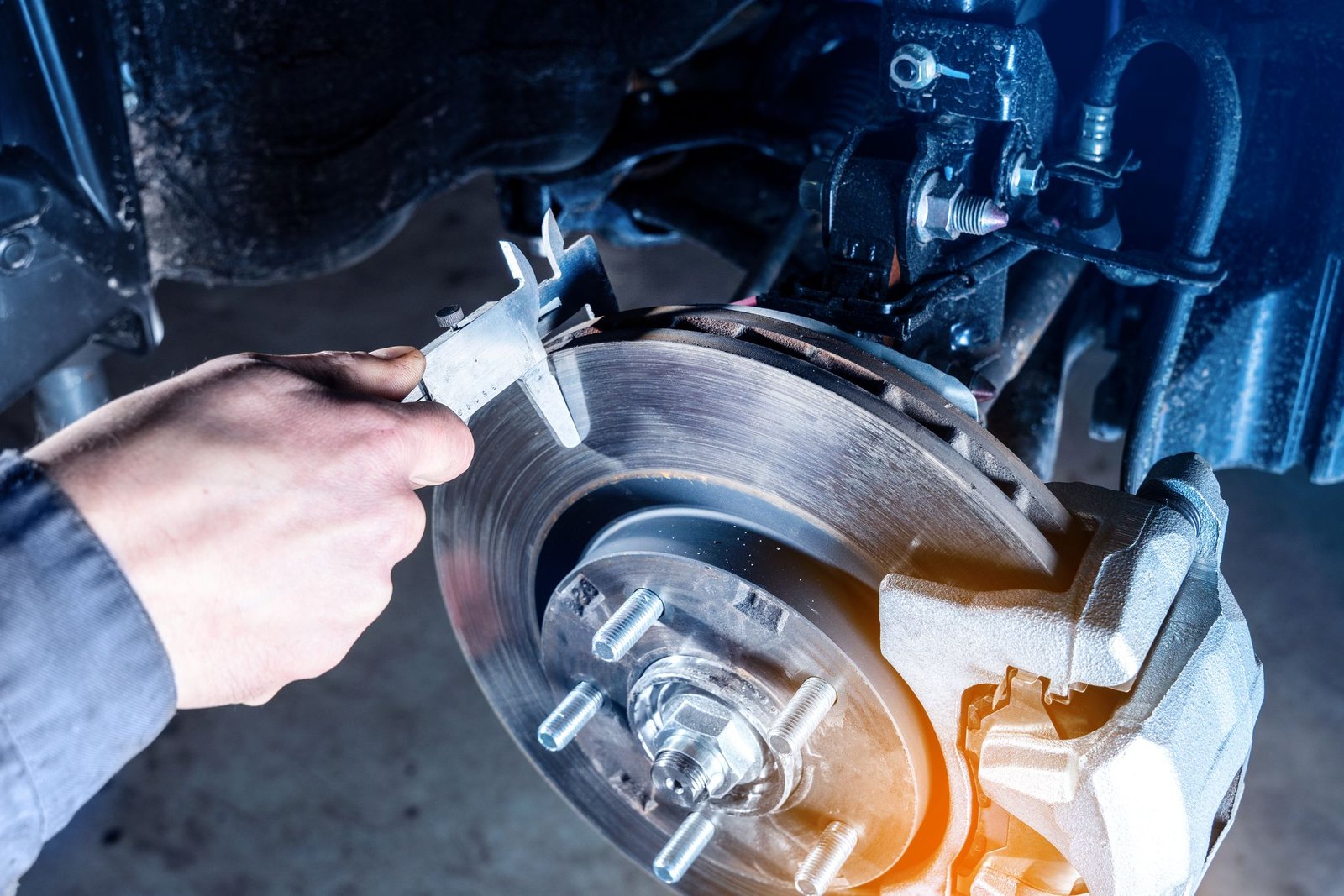
The rotor should be measured against the manufacturer’s minimum thickness specification and checked for cracks, severe scoring, heat damage, and uneven deposits. A rotor that has been heavily overheated or damaged by a dragging caliper may need replacement. When rotors are replaced, they are normally replaced on both sides of the same axle.
A lightly worn rotor may remain serviceable after one caliper is replaced, but the final decision should be based on measurements and condition rather than appearance alone. A new caliper cannot correct a rotor that is already below specification.
Important Steps After Replacing One Caliper
A caliper replacement is not complete when the new part is bolted on. The hydraulic system must be restored and tested correctly.
- Inspect the brake hose and fittings. Confirm that the hose is not twisted, cracked, leaking, or internally restricted.
- Install the correct hardware. Use the proper sealing washers, guide-pin parts, clips, and mounting bolts. Follow the specified torque values.
- Fill with the correct brake fluid. Use the type listed for the vehicle and keep dirt or other fluids out of the reservoir.
- Bleed the brake system. Air introduced during caliper removal must be removed. The required bleeding order varies by vehicle.
- Check for leaks. Inspect the hose connection, bleeder screw, piston area, and master-cylinder reservoir.
- Verify pedal feel. The pedal should become firm and remain firm under steady pressure. A soft or sinking pedal requires further diagnosis.
- Check wheel rotation and pad movement. The wheel should not remain abnormally locked or drag heavily after the brake is released.
Some vehicles require a scan tool for an ABS bleeding procedure, especially when air may have entered the ABS hydraulic unit. Vehicles with an electronic parking brake may also require a service mode or calibration procedure before the rear caliper can be removed or adjusted.
Bleeding and fluid safety
Brake fluid damages paint and can irritate skin. Keep the reservoir from running dry during bleeding, and use clean equipment. Do not rely on pumping the pedal if the manufacturer specifies a pressure bleeder, scan-tool routine, or other procedure.
Never drive the vehicle if the brake pedal is soft, the fluid level continues to fall, a warning light remains on, or the repaired wheel shows signs of leakage. A short road test should begin at low speed in a safe area, with checks for pulling, noise, vibration, unusual heat, and proper brake operation.
When Professional Service Is the Safer Choice
Brake work should be handled by a qualified technician when the caliper is seized in place, the brake line is damaged, the bleeder screw will not open, or the vehicle has electronic parking-brake or ABS requirements that are not fully understood.
Professional service is especially important if the vehicle pulled sharply, lost brake fluid, overheated a wheel, or has a pedal that remains soft after bleeding. Those symptoms may point to more than a simple caliper replacement.
If a home repair is performed, use a service manual or reliable repair information for the exact vehicle. Support the vehicle with properly rated jack stands, never work under a vehicle supported only by a jack, and follow the specified tightening procedures. Brake components are safety-critical, so uncertainty about the diagnosis or bleeding process is a reason to stop rather than guess.
Conclusion
In many cases, can you change just one brake caliper has a straightforward answer: yes, if only one caliper has failed and the opposite side passes a careful inspection. Match the replacement correctly, inspect the pads, rotor, hose, and slide hardware, bleed the system completely, and confirm a firm pedal and balanced braking before returning the vehicle to normal driving.