Signs of Worn Brake Pads: 8 Symptoms You Should Never Ignore
Worn brake pads commonly cause persistent squealing, grinding, visibly thin friction material, a pad-wear warning light, changes in stopping response, vibration, uneven braking, or abnormal wear between pads. Grinding and major braking changes deserve fast attention because the friction material may already be gone or another brake fault may be present.
Brake pads gradually lose material every time they press against the rotors. That wear is normal. The problem starts when the pads approach their service limit, wear unevenly, overheat, become contaminated, or continue operating after the usable friction layer has disappeared.
Catching worn pads early may prevent the metal backing plates from damaging the rotors. It also gives you a chance to find a sticking caliper or damaged hardware before a new set develops the same wear pattern.
A NHTSA hydraulic-braking safety assessment found 32,477 crashes, or 0.58% of the reviewed U.S. General Estimates System crashes, were at least partly attributed to braking issues. That figure covers brake-system problems broadly rather than brake-pad wear alone, but it shows why noticeable changes in braking deserve proper diagnosis.
The most useful signs of worn brake pads combine what you can hear, feel, and see. From the service information I reviewed, thin friction material, wear-indicator noise, uneven wear, reduced braking response, and metal-to-metal contact are among the clearest clues. Brembo currently describes pads below about 3 mm as replacement candidates in its wear guidance, while exact limits can differ by vehicle and pad design.
Some symptoms associated with low pads can also come from rotors, tires, calipers, wheel bearings, or hydraulic faults. The sections below separate the common pad-wear clues from signs that point toward a wider brake-system problem.
Signs of Worn Brake Pads You Should Check
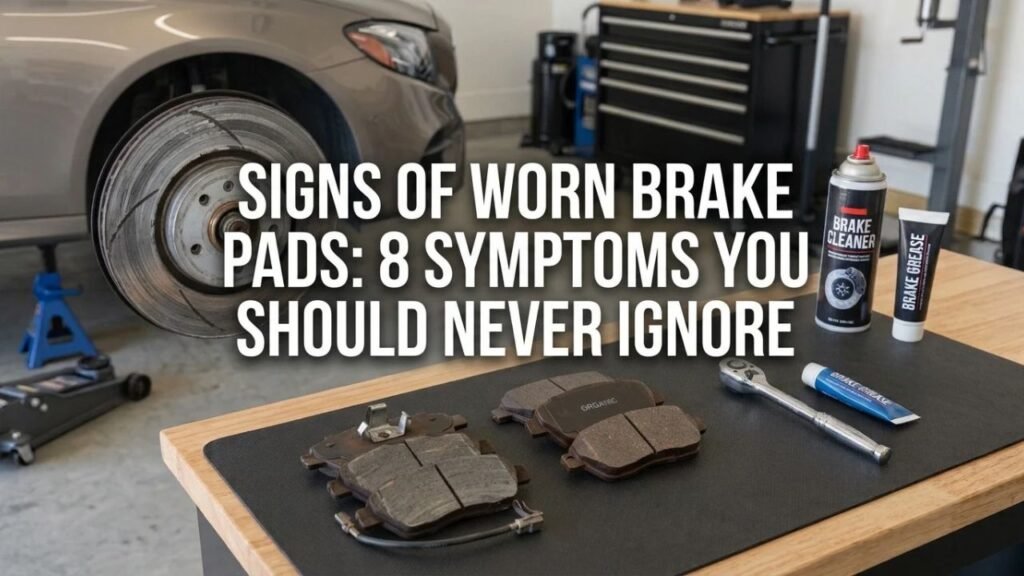
No single symptom proves that the pads are worn out. A good diagnosis combines pad thickness with noise, braking behavior, rotor condition, and the wear pattern across the axle.
1. Persistent Squealing or Screeching
A high-pitched squeal during braking is one of the better-known pad-wear warnings.
Many brake pads use a small metal wear indicator positioned near the friction material. As the pad gets thin, the indicator contacts the rotor and creates a sharp squealing sound.
Brembo lists metallic squealing and other unusual brake noise among the common warning signs of worn pads.
Not every squeal means the pads are low. Moisture, light surface rust, dust, glazing, pad formulation, or installation issues can also create noise.
A brief squeak after the car has been parked overnight may disappear after a few stops. A squeal that returns regularly during normal braking deserves a thickness check.
2. Grinding or Harsh Scraping
Grinding is much more concerning than ordinary squealing.
If the friction material wears away completely, the pad’s steel backing plate may begin rubbing against the rotor. The resulting sound can be a rough grind, scrape, or growl that becomes louder during braking.
Ferodo’s pad troubleshooting material links completely worn friction material with disc damage, high squeal, and other brake noise.
Metal-to-metal braking can cut deep grooves into the rotor. At that stage, the repair may involve rotors as well as pads.
My preference is to treat persistent grinding as a stop-and-inspect condition, not a sound to monitor for another few weeks.
3. Brake Pads Look Very Thin
The most direct visual sign is simply a lack of friction material.
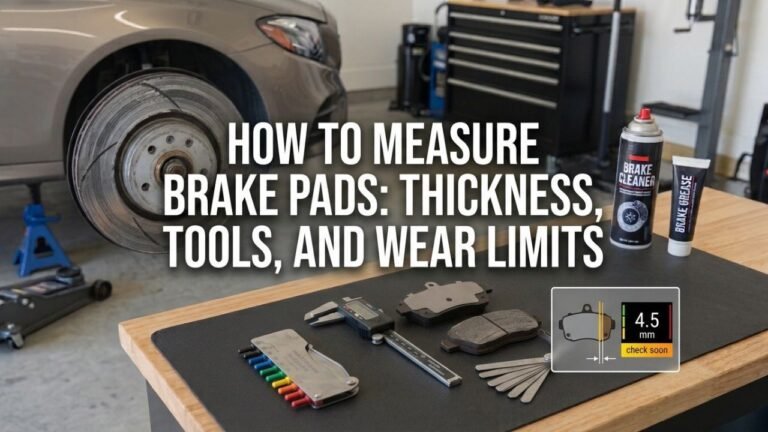
A brake pad consists of a steel backing plate and a block of friction material. Measure the friction layer only; the backing plate does not count toward usable pad thickness.
Brembo says new pads are commonly around 10–12 mm thick and identifies less than about 3 mm as replacement territory in its current wear guidance.
Another Brembo service instruction specifies replacement when remaining friction material falls below 2 mm or a wear indicator activates. That difference shows why the specification for the exact vehicle and installed pad takes priority over a universal number.
A visual check through the wheel can reveal a very thin outer pad. It may not show the inner pad clearly, so a wheel-off inspection is better when precise condition matters.
4. Brake Pad Wear Warning Appears
Some vehicles use electronic sensors instead of relying only on a mechanical squealer.
When the pad reaches a predetermined wear point, the sensor circuit changes and the vehicle displays a pad-wear warning or service message. Brembo lists the dashboard wear indicator as a common clue that the pads need attention.
Do not confuse a brake-pad wear message with every brake warning symbol.
A red brake-system warning may indicate a parking brake condition, low brake fluid, or another hydraulic problem. Check the owner’s manual for the meaning of the exact warning displayed by the vehicle.
A pad-wear warning should lead to inspection rather than an automatic assumption that all four corners need identical service.
5. Stopping Response Feels Worse
Severely worn pads may contribute to longer stopping distances or braking that feels less predictable.
Brembo lists reduced braking capability and lengthened stopping distance among symptoms associated with heavily worn brake components.
A thin pad that is still above its specified limit may continue to produce normal stopping force. The concern rises when the friction material becomes extremely low, overheated, damaged, or completely worn away.
Reduced braking response has many other possible causes, including:
- Contaminated friction surfaces
- Overheated brakes
- Damaged rotors
- Hydraulic problems
- Worn or poor-grip tires
- Brake-fluid problems
- A sticking caliper
Do not diagnose pad wear from stopping distance alone.
6. Vibration or Judder During Braking
You may feel vibration through the brake pedal, steering wheel, or vehicle body while braking.
Worn pads can be part of the problem, especially if the pads have developed uneven surfaces or are working against damaged rotors. Ferodo links some uneven pad-wear patterns with brake squeal and judder.
Pedal pulsation is often associated with rotor thickness variation or runout rather than simple low pad thickness. Suspension, wheel, tire, or hub problems can also create vibration.
If vibration appears with thin pads, deep rotor scoring, or uneven pad wear, inspect the complete brake corner rather than replacing pads without checking the rotor.
7. The Car Pulls While Braking
A vehicle that pulls left or right during braking may have unequal braking force across the axle.
One possible cause is uneven brake-pad wear. A sticking caliper piston, seized guide pin, or pad binding in its bracket can make one pad or one side of the vehicle wear faster.
Ferodo associates uneven pad wear within a set with brake noise, one-sided overheating, and pulling during braking.
Pulling can also come from tire pressure differences, suspension faults, alignment issues, hydraulic restrictions, or road conditions.
The useful clue is the combination of pulling plus an obvious pad-thickness difference.
8. One Pad Is Much More Worn Than the Others
Healthy pad wear is rarely perfectly identical, but large differences deserve attention.
On a floating caliper, compare the inner and outer pads. Then compare the left and right sides of the same axle.
If one pad is almost gone while its partner still has substantial material, a mechanical problem may be forcing that pad against the rotor.
Ferodo identifies sticking guide pins or caliper pistons among causes of abnormal wear within a pad set. Its troubleshooting guidance also links pad sticking with excessive temperature, glazing, and edge crumbling.
Replacing the pads without repairing the sticking component may cause the same problem to return.
Key Takeaway: Squealing and thin pads are common early clues. Grinding, major uneven wear, pulling, or reduced braking response suggest the pads may be severely worn or another brake component is malfunctioning.
What Worn Brake Pads Look Like
Visual inspection is one of the best ways to confirm suspected pad wear.
Normal used pads should retain a solid block of friction material attached firmly to the backing plate. The contact surface should be reasonably flat, and pad thickness should be broadly similar across the same brake assembly.
Thin Friction Material
Look between the rotor and the metal pad backing plate.
The dark friction layer should still have measurable thickness. If it looks almost as thin as a coin or is approaching the steel backing plate, measure it rather than relying on sight alone.
A brake-pad gauge can give a quick thickness reading where access permits.
Glazed Pad Surface
A glazed pad often has a hard, smooth, shiny appearance.
Ferodo identifies glazing as a pad condition that can follow high temperature or harsh braking during bedding. Heavy glazing may call for pad replacement and rotor inspection.
Light polishing on a used friction surface is not automatically a failure. A strongly glass-like surface paired with noise or braking problems deserves closer attention.
Cracks, Chips, or Crumbling
Inspect the friction material for deep cracks, missing corners, or sections breaking apart.
Ferodo’s diagnostic material lists cracked pads and edge crumbling among recognized pad faults. Caliper sticking, excess heat, or abnormal mechanical loading can contribute to these patterns.
A small factory chamfer along the pad edge is intentional and should not be mistaken for broken material.
Oil or Brake-Fluid Contamination
A contaminated pad may look wet, greasy, or unusually dark in patches.
Ferodo states that oil, grease, or brake-fluid contamination can reduce braking performance and cause pulling, and recommends finding the source and replacing the affected pad set.
Contamination is different from ordinary brake dust. The friction surface needs to stay free of lubricant and leaking hydraulic fluid.
Key Takeaway: Bad pads may look extremely thin, glossy, cracked, chipped, oily, or uneven. Condition matters alongside thickness because a damaged pad can require replacement before it reaches its normal wear limit.
How to Check Brake Pads for Wear
A quick inspection can identify obvious wear, but the inner pad and hidden rotor surface can be difficult to judge with the wheel installed.
Start With a Wheel-On Visual Check
Park on a level surface and allow the brakes to cool.
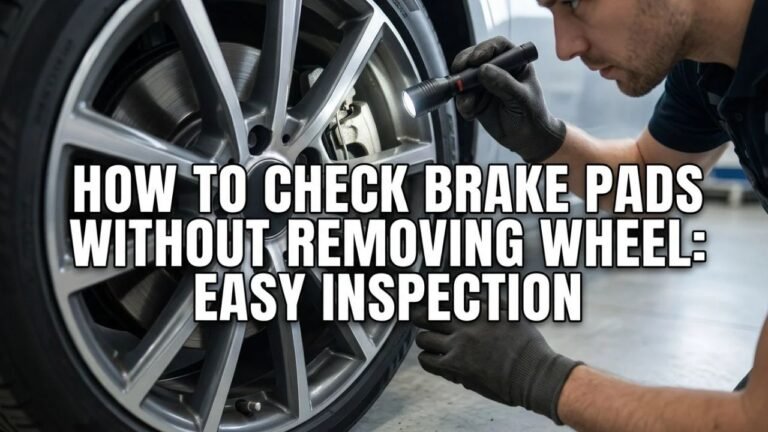
Use a flashlight through an open wheel spoke. Locate the rotor, caliper, and outer pad. Look at the friction material between the rotor and backing plate.
Check for:
- Very thin friction material
- Deep rotor grooves
- Broken pad material
- Visible contamination
- Unusual rust or damage
- A wear sensor or cable that appears damaged
This check is useful for screening. It is not enough to rule out inner-pad wear.
Inspect With the Wheel Removed
A wheel-off inspection gives a clearer view of the inner and outer pads.
Use the vehicle’s approved lifting points and properly rated support equipment. Never work around the brake assembly with the vehicle supported only by a jack.
Compare both pads at the same wheel. Then inspect the matching wheel on the other side of the axle.
Look for a large side-to-side thickness difference, taper from one end of a pad to the other, cracks, glazing, or crumbling.
Measure at the Thinnest Point
Measure only the friction material.
If the pad is tapered, use the thinnest area to judge condition rather than recording the thickest edge.
A measurement near 3 mm commonly means replacement planning should begin, but the exact service limit comes from the vehicle or pad manufacturer. Brembo’s current guidance illustrates this variation by referencing both a roughly 3 mm wear threshold in consumer guidance and a less-than-2-mm limit in a specific fitting instruction.
Key Takeaway: Check all pads rather than only the easiest outer pad to see. Measure the thinnest friction material and compare the result with the specification for the exact brake system.
Brake Pad Thickness and Replacement Timing
Thickness is useful because it provides an objective measurement, but it should not be used as the only replacement rule.
| Pad condition | General interpretation |
| Around 8 mm or more | Substantial material remains on many passenger-car pads |
| Around 5–7 mm | Used but often still serviceable |
| Around 3–4 mm | Plan replacement and check the vehicle specification |
| Around 2–3 mm | Near or within replacement range for many applications |
| Friction material gone | Severe wear; inspect rotor and caliper |
These figures are general inspection ranges, not specifications for every vehicle.
Some pads begin life thicker than others. Some use electronic sensors before reaching the lowest physical limit. Trucks, performance brakes, and specialty pads may use different designs.
Do not convert a thickness reading into an exact mileage prediction. A 4 mm pad could last much longer in highway driving than in heavy stop-and-go traffic.
What Causes Brake Pads to Wear Out Faster?
Brake-pad life changes with both driving conditions and mechanical condition.
Stop-and-Go Driving
Frequent braking uses friction material faster than steady highway cruising.
Urban traffic, delivery work, and short trips with repeated stops can shorten pad life even when annual mileage is moderate.
Towing and Heavy Loads
Extra vehicle mass means the brakes must absorb more energy when slowing down.
Repeated stops while towing or carrying heavy cargo can raise brake temperature and accelerate wear.
Mountain Driving
Long descents can keep the brakes hot for extended periods.
Riding the brake pedal down a grade can increase heat and pad wear. Follow the vehicle manufacturer’s guidance for using transmission braking and tow modes where fitted.
Aggressive Braking
Frequent hard stops create higher brake temperatures and remove pad material faster. Brembo lists aggressive driving among factors that can accelerate pad consumption.
Sticking Caliper Components
A mechanical fault can destroy pads much faster than normal driving.
If a caliper piston, slide pin, or pad sticks, the friction material may remain against the rotor after the pedal is released.
Signs may include one wheel getting much hotter, rapid one-sided wear, pulling, burning odors, glazing, or a wheel that does not rotate freely during service inspection.
Key Takeaway: Heavy braking, traffic, towing, steep grades, and dragging caliper components can all shorten pad life. Abnormally fast or one-sided wear calls for diagnosis rather than another pad set alone.
When Worn Brake Pads Need Immediate Attention
Not every low pad means the car will suddenly lose its brakes, but certain symptoms should move the inspection higher on the priority list.
Persistent metal-on-metal grinding is one of the strongest warnings. The friction material may already be gone, allowing the backing plate to damage the rotor.
A sudden soft or sinking brake pedal is another concern, though it is not a classic pad-wear symptom. It can indicate a hydraulic problem, fluid leak, overheated fluid, or master-cylinder fault.
Avoid normal driving and arrange qualified inspection if you notice:
- Sharply reduced braking force
- A pedal that sinks unusually far
- Visible brake-fluid leakage
- Severe pulling during braking
- Loud grinding
- Smoke or extreme heat at a wheel
- A serious red brake-system warning
These symptoms can involve much more than the pads.
If the only finding is a pad approaching its normal service limit and braking remains normal, replacement can usually be scheduled rather than treated as an emergency.
Can You Drive With Worn Brake Pads?
The answer depends on how worn they are and what symptoms are present.
Pads approaching their replacement limit are different from pads that are already grinding into the rotors.
If a routine inspection finds around 3 mm of material and no other brake fault, schedule replacement according to the vehicle’s service information.
If the pads are at bare metal, braking response has changed, or the vehicle has a hydraulic symptom, continuing normal driving is a poor choice.
There is no universal “safe mileage left” once pads become thin. Wear rate can change with driving conditions, and a stuck caliper can turn a small amount of remaining material into severe wear very quickly.
Conclusion
The most common signs of worn brake pads are persistent squealing, grinding, visibly thin friction material, a pad-wear warning, reduced braking response, vibration, pulling, and major differences in pad thickness.
A visual thickness check is useful, but it should include the inner and outer pads on both sides of the axle. Around 3 mm is a common point to start planning replacement, while the exact vehicle or pad specification should control the final decision.
I would pay fastest attention to grinding, bare backing plates, fluid leakage, severe uneven wear, or a major change in braking behavior. Those findings can mean the problem has moved beyond routine pad wear and may involve the rotors, calipers, or hydraulic system.
FAQs About Worn Brake Pad Symptoms
What Is the First Sign of Worn Brake Pads?
A recurring high-pitched squeal is a common early warning, especially on pads fitted with a mechanical wear indicator.
Some vehicles show an electronic pad-wear message instead. A visual thickness check is a better confirmation because not every pad squeals before reaching its replacement point.
How Do I Know If My Brake Pads Are Too Thin?
Inspect the friction material between the rotor and the pad’s backing plate and measure it if possible.
Around 3 mm often means replacement should be planned, but service limits vary. Use the specification for the exact vehicle or brake pad rather than assuming one number applies to every car.
What Do Completely Worn Brake Pads Sound Like?
Completely worn pads can create loud grinding, scraping, or growling as the steel backing plate contacts the rotor.
That noise may be accompanied by rotor scoring and poorer braking behavior. Persistent metal-on-metal grinding calls for prompt brake inspection.
Can Worn Brake Pads Cause Vibration?
They can contribute when wear is uneven or the pads are working against damaged rotors.
Pedal or steering-wheel vibration is often linked more directly with rotor variation, runout, or other mechanical problems. Inspect the pads and rotors together rather than assuming low pad thickness is the only cause.
Can Worn Brake Pads Make the Car Pull?
Uneven pad wear can contribute to pulling during braking, especially when a sticking caliper makes one side apply more braking force than the other.
Tires, suspension, alignment, and hydraulic faults can also cause pulling, so the wear pattern needs to be checked before replacing parts.
Will a Brake Warning Light Come On for Worn Pads?
Some vehicles have electronic pad-wear sensors that trigger a dedicated warning or service message.
Other vehicles have no electronic pad sensor. A general red brake warning may indicate a different problem, so check the owner’s manual for the meaning of the exact symbol.
How Long Can I Drive After Brake Pads Start Squealing?
There is no reliable mileage number.
If the sound comes from a wear indicator, the pads may be approaching their replacement point, but the remaining material and wear rate need to be checked. Inspect them soon rather than trying to estimate life from the noise.
Should I Replace Rotors When Brake Pads Are Worn?
Not automatically.
Rotors may be reusable if they remain above their minimum thickness and have an acceptable surface condition. Deep scoring, cracks, severe heat damage, or wear below the manufacturer’s limit can make replacement necessary. If the pads have ground down to bare metal, inspect the rotors closely before installing new pads.