Which Brake Fluid Is Better Dot3 or Dot4: Overview and Key Facts
People often assume that DOT 4 brake fluid is automatically better because its number is higher. In practice, DOT 4 usually offers greater heat resistance, but the best choice is the fluid type specified by the vehicle manufacturer.
If you are asking which brake fluid is better dot3 or dot4, the short answer is: DOT 4 is generally the higher-performance option, while DOT 3 is correct for vehicles designed around DOT 3. Using the wrong fluid can affect braking-system performance, maintenance intervals, and warranty coverage.
DOT 3 vs. DOT 4: The direct answer
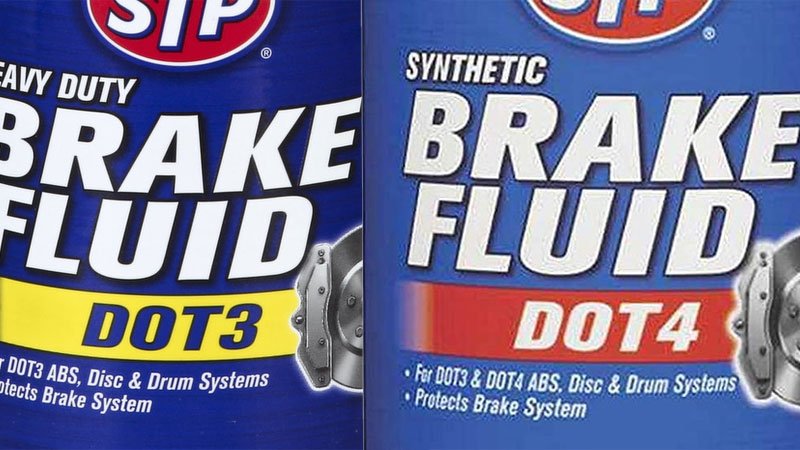
DOT 3 and DOT 4 are glycol-based brake fluids used in many cars, SUVs, and light trucks. Both are designed for hydraulic braking systems, and both absorb moisture from the air over time. The main difference is their minimum boiling-point performance.
| Brake fluid | Minimum dry boiling point | Minimum wet boiling point | Typical use |
|---|---|---|---|
| DOT 3 | 401°F (205°C) | 284°F (140°C) | Many standard passenger vehicles |
| DOT 4 | 446°F (230°C) | 311°F (155°C) | Vehicles needing more heat resistance |
These are minimum standards under U.S. Department of Transportation classifications, not a guarantee that every product performs at exactly those numbers. Product formulas can exceed the required minimums.
For a vehicle that specifically requires DOT 4, DOT 3 is not an equivalent substitute. For a vehicle that specifies DOT 3, DOT 4 may be acceptable in some cases, but the owner’s manual should control the decision.
Why DOT 4 handles more heat
Brake fluid transfers pressure from the brake pedal to the calipers or wheel cylinders. During repeated braking, especially on steep roads, at high speeds, or while towing, the fluid can become very hot.
If the fluid reaches its boiling point, it can create vapor in the hydraulic system. Unlike liquid brake fluid, vapor compresses easily. The result may be a soft or spongy pedal and reduced braking force.
DOT 4 has a higher required dry and wet boiling point than DOT 3. That gives it a larger heat margin when braking temperatures rise. The difference is most relevant in demanding driving conditions, including:
- Repeated hard stops
- Mountain driving
- Track or performance driving
- Heavy towing or hauling
- Vehicles with braking systems designed for DOT 4
For ordinary street driving, a correctly maintained DOT 3 system may never approach its boiling point. Higher boiling performance does not automatically make DOT 4 the right fluid for every vehicle.
Dry and wet boiling points explained
The dry boiling point describes new brake fluid with very little absorbed moisture. This is the number commonly printed in product specifications and marketing materials.
The wet boiling point represents fluid that has absorbed a defined amount of water. It is more relevant to an older, used braking system because brake fluid gradually takes in moisture through microscopic openings in hoses, seals, vents, and the fluid reservoir.
Water lowers brake fluid’s boiling point. It can also contribute to internal corrosion and may affect the operation of components such as calipers, wheel cylinders, brake lines, and hydraulic control units.
Because used fluid is not dry fluid, the wet boiling point is an important reason to replace brake fluid according to the manufacturer’s maintenance schedule. A new bottle of DOT 4 can provide more heat margin than DOT 3, but old DOT 4 should not be assumed to be better than fresh DOT 3 when the vehicle calls for DOT 3.
Can DOT 3 and DOT 4 be mixed?
DOT 3 and DOT 4 glycol-based fluids are generally chemically compatible and can usually be mixed in an emergency or when the vehicle manufacturer permits it. However, mixing does not upgrade DOT 3 to the full performance of DOT 4. The resulting fluid’s performance depends on the proportions, condition, and formulation of the fluids.
After mixing, the system should still be serviced with the fluid type specified for the vehicle. If the wrong fluid was added, a qualified technician may recommend draining and flushing the system rather than simply topping it off again.
Do not confuse DOT 3 or DOT 4 with DOT 5 silicone brake fluid. DOT 5 is a different formulation and should not be mixed with glycol-based DOT 3 or DOT 4. DOT 5.1 is also different by classification, although it is glycol-based and may be compatible in some applications. Compatibility must be confirmed before use.
What the vehicle manufacturer requires
The fluid specification on the reservoir cap, owner’s manual, service information, or manufacturer label is the primary guide. Look for wording such as “Use DOT 3 brake fluid,” “Use DOT 4 brake fluid,” or a more specific requirement such as low-viscosity DOT 4.
The specified fluid may be selected for more than boiling point. Brake-system engineers also consider:
- Seal and hose compatibility
- Anti-lock braking system operation
- Electronic stability-control hydraulic units
- Cold-weather viscosity
- Corrosion protection
- Brake-fluid change intervals
Some newer vehicles require a low-viscosity DOT 4 fluid for fast operation of ABS or electronic stability-control valves, particularly in cold conditions. A standard DOT 4 product is not automatically an equivalent replacement for a specified low-viscosity formula.
When the manual says DOT 3, there is no need to upgrade simply because DOT 4 has a higher boiling point. When the manual says DOT 4, use DOT 4 or the exact approved specification rather than choosing based only on price or availability.
Is DOT 4 better for everyday driving?
DOT 4 can be better for everyday driving if the vehicle is approved for it. Its higher boiling points provide additional thermal margin, and many modern vehicles are designed to use it.
That does not mean a driver will feel an immediate improvement after switching from DOT 3 to DOT 4. Brake pedal firmness, stopping distance, and overall braking behavior depend on many other factors, including brake-pad condition, rotor condition, tire grip, hydraulic leaks, air in the system, and the quality and age of the fluid.
On a vehicle specified for DOT 3, switching to DOT 4 may offer little practical benefit during normal commuting. It can also create confusion at the next service if the fluid specification is no longer clear. The correct, fresh fluid is more important than choosing the higher-numbered classification.
DOT 3 advantages and limitations
DOT 3 remains suitable for many conventional passenger vehicles. Its main advantages are availability, generally lower cost, and compliance with systems engineered for its characteristics.
DOT 3 is a reasonable choice when:
- The vehicle manufacturer specifies DOT 3
- The vehicle is used mainly for normal street driving
- The braking system is in good condition
- The fluid is fresh and stored properly
Its limitation is the lower boiling-point margin compared with DOT 4. That matters more when braking temperatures are high or when moisture has accumulated in the fluid.
DOT 4 advantages and limitations
DOT 4 provides higher minimum boiling points and is commonly selected for vehicles with greater braking demands or more modern hydraulic control systems. It is often the better choice when the manufacturer specifies it or allows it as an approved alternative.
Its limitations include the need to follow the vehicle’s exact specification and the fact that its higher dry boiling point declines as the fluid absorbs moisture. DOT 4 is not maintenance-free, and it does not correct mechanical problems such as worn brake pads, damaged hoses, or air in the system.
Some DOT 4 formulations also have different viscosity characteristics. This is why “DOT 4” alone may not provide enough information for a vehicle that calls for a special low-viscosity product.
How to choose and replace the fluid
Before buying brake fluid, verify the required DOT classification in the owner’s manual and on the reservoir cap. Buy a sealed container from a reputable manufacturer, and check that the product meets the required U.S. specification.
Brake fluid absorbs moisture after the container is opened. Do not use an old, partially used bottle simply because it still looks clean. Keep the cap closed, avoid dirt and oil contamination, and never pour fluid from a container that may have been exposed to water or other chemicals.
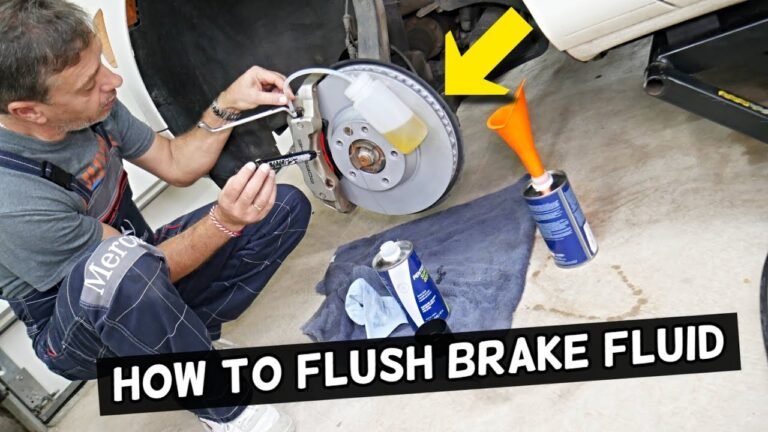
During a fluid change, the system must be bled correctly so that air is removed from every applicable brake circuit. Some vehicles require a scan tool or a specific procedure to cycle the ABS hydraulic unit. If the pedal remains soft after service, the vehicle should not be driven until the cause is identified.
Brake fluid can damage paint and irritate skin. Wipe spills promptly, use appropriate protection, and follow the product label and vehicle service instructions. If the reservoir is repeatedly low, inspect the system for a leak rather than continuing to add fluid.
Common mistakes to avoid
- Choosing by the number alone: DOT 4 is not automatically correct for every vehicle.
- Ignoring the wet boiling point: Old fluid can perform very differently from new fluid.
- Mixing incompatible types: Never add DOT 5 silicone fluid to a DOT 3 or DOT 4 system.
- Using an unspecified formula: Low-viscosity or other special requirements may matter.
- Topping off a leaking system: Low fluid can indicate worn pads or a hydraulic leak.
- Leaving the reservoir open: Exposure increases contamination and moisture absorption.
A fluid change also cannot compensate for a failing master cylinder, damaged brake hose, seized caliper, or air trapped in the lines. A soft pedal, warning light, visible leak, or reduced braking performance requires prompt inspection.
Conclusion
DOT 4 is generally better than DOT 3 for heat resistance because it has higher minimum dry and wet boiling points. However, the answer to which brake fluid is better dot3 or dot4 depends on the vehicle’s approved specification. Use fresh fluid that matches the owner’s manual, maintain it at the recommended interval, and never substitute a different DOT type without confirming compatibility.