What Type of Brake Pads Are Best? Ceramic, Metallic, or Organic
For most daily-driven cars and crossovers, ceramic brake pads are the best all-around choice because they are quiet, produce light-colored dust, wear well, and give smooth street braking. Semi-metallic pads are the better fit for towing, heavy vehicles, mountain driving, and repeated hard stops. Organic pads suit lighter-duty, budget-focused use.
Picking the wrong friction material can create trade-offs you notice every day. A pad that is great under heavy heat may make more noise and dark dust, while a quiet commuter pad may not be the best match for repeated high-load braking.
Matching the pad to the vehicle and driving pattern gives more predictable pedal feel, cleaner wheels, less unwanted noise, and a friction compound suited to the heat the brakes actually see. The vehicle maker’s pad specification and the exact brake package should come before a material preference.
Brake choice also belongs in a safety context. A 2018 NHTSA assessment using 2012 U.S. crash databases identified 32,477 crashes, or 0.58% of the General Estimates System total, as at least partly attributable to braking issues. The study did not identify brake-pad material as the cause, but it shows why brake-system condition and correct parts matter.
So, what type of brake pads are best for the average driver? In my research, ceramic pads came out as the strongest general-purpose choice for normal street use, while semi-metallic pads had the clearer advantage for heat, towing, heavier vehicles, and harder braking. Bosch and AutoZone make the same basic distinction in their current material guidance.
A material label is only a starting point. Two ceramic pads can use very different formulas, shims, backing plates, slots, chamfers, and friction modifiers. A well-engineered semi-metallic pad that matches the original brake system can be a better purchase than a cheap ceramic pad chosen only for the word “ceramic.”
The sections below compare ceramic, semi-metallic, organic, and low-metallic pads by street comfort, dust, noise, heat, rotor wear, towing, cold response, cost, and vehicle use so you can match the compound to the job.
What Type of Brake Pads Are Best for Most Drivers?
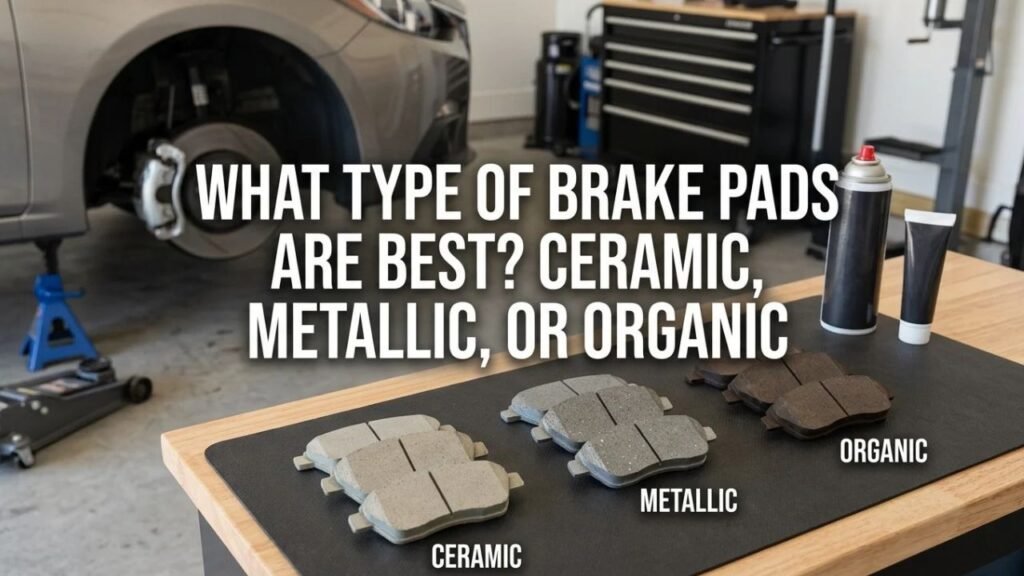
For most passenger cars used for commuting, errands, school runs, and highway travel, ceramic brake pads are usually the best starting point. They combine quiet braking, low visible dust, long wear, and steady street behavior.
That answer changes for trucks, repeated mountain descents, towing, hard performance driving, and some factory brake systems. In those cases, semi-metallic or another OE-specified compound may be the better match.
Ceramic Brake Pads
Ceramic pads use dense ceramic-based friction material blended with fibers, binders, and friction modifiers. Current formulas are built to give stable street friction with less visible dust than many metallic compounds.
Their main strengths are:
- Quiet operation
- Low visible wheel dust
- Smooth pedal feel
- Long service life in normal street use
- Low rotor wear with many quality formulas
- Stable behavior across common commuting temperatures
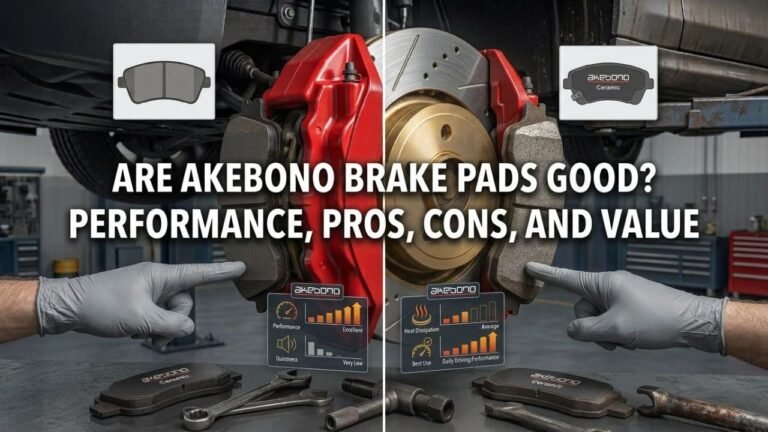
Akebono’s current ProACT ceramic line, for example, is built around low dust, low noise, low rotor wear, and vehicle-specific formulas. Bosch also describes ceramic pads as a strong match for commuting and city driving rather than severe towing or track use.
Ceramic pads cost more than basic organic pads and many semi-metallic sets. They also may not give the same cold bite or repeated high-heat behavior as a semi-metallic formula built for harder use.
For a typical sedan, crossover, minivan, or light SUV that stays on the street, ceramic is my first material to check.
Semi-Metallic Brake Pads
Semi-metallic pads blend metal content with graphite, binders, and other friction ingredients. AutoZone describes many modern semi-metallic formulas as roughly 30% to 60% metal by weight, though the exact recipe varies by product.
Their strengths include:
- Strong initial bite
- Good heat transfer
- Consistent braking under repeated hard stops
- Suitability for heavier vehicles
- Strong fit for towing and mountain driving
- Wide choice of street and performance formulas
The trade-offs are usually more dark dust, more chance of noise, and more rotor wear than a mild ceramic street pad.
I prefer semi-metallic pads when the vehicle is heavy, regularly tows, sees steep grades, or came from the factory with a metallic friction system that already works well.
Organic or NAO Brake Pads
Organic pads, often called NAO pads for non-asbestos organic, use fibers, resins, fillers, and other nonmetallic ingredients.
They are commonly quiet, soft in pedal feel, gentle on rotors, and less expensive. Their weakness is heat. Heavy repeated braking can wear them faster and produce more fade than a pad designed for higher temperatures.
Organic pads fit best when:
- The vehicle is light
- Driving is mild
- Budget matters
- Heavy towing is not part of the job
- Repeated high-temperature braking is rare
They are not my first pick for a heavy truck, mountain use, or aggressive driving.
Low-Metallic NAO Brake Pads
Low-metallic NAO pads sit between organic and semi-metallic designs. They use an organic base with a smaller amount of metal added for heat transfer and friction response.
They can give stronger bite than a soft organic pad while keeping some of the comfort of an NAO formula. The trade-off can be more dust and noise than a ceramic pad.
These are common in some European-style braking systems, where strong initial response and heat behavior may be favored over wheel cleanliness.
Key Takeaway: Ceramic is the best all-around choice for many daily drivers, semi-metallic is better for heat and heavy use, and organic fits light-duty drivers focused on cost and quiet operation.
Ceramic vs Semi-Metallic vs Organic Brake Pads
The table below shows the practical trade-offs that matter most during normal ownership.
| Factor | Ceramic | Semi-Metallic | Organic / NAO |
| Daily commuting | Excellent | Very good | Good |
| Noise | Low | Moderate | Low |
| Visible dust | Low | Higher | Low to moderate |
| Heat handling | Good | Excellent | Fair |
| Towing | Fair to good by application | Excellent | Poor |
| Heavy vehicles | Good if OE-approved | Excellent | Limited |
| Rotor wear | Usually low | Usually higher | Usually low |
| Pad life | Long in street use | Good | Shorter under heat |
| Initial bite | Smooth | Strong | Mild |
| Price | Usually higher | Mid-range | Usually lower |
| Best use | Normal street driving | Heavy-duty and hard braking | Light-duty budget use |
Bridgestone’s current comparison reaches a similar practical split: ceramic for city and street comfort, semi-metallic for higher-performance use, and organic for lower-cost light-duty driving.
The table should not override the part catalog for your car. Some vehicles are engineered around a certain friction family, and changing compounds can alter pedal feel, noise, dust, and heat behavior.
Best Brake Pad Type for Different Driving Conditions
The best material becomes easier to choose once the real use of the vehicle is clear.
Best Brake Pads for Daily Driving
For a commuter car, ceramic pads are usually my pick.
Daily driving rewards quiet stops, low dust, long wear, and smooth response more than extreme high-temperature capacity. Ceramic compounds are built around those strengths.
They are a strong match for:
- Sedans
- Crossovers
- Minivans
- Light SUVs
- Urban commuting
- Highway travel
- Mixed suburban driving
If the car originally uses semi-metallic pads and the manufacturer does not approve a ceramic conversion, staying with the OE-style friction family is the safer choice.
Best Brake Pads for Trucks and Towing
For a truck that tows or carries heavy loads, semi-metallic pads are usually the better material.
Towing turns more vehicle energy into brake heat. Semi-metallic compounds transfer heat well and can maintain stronger response through repeated stops.
A ceramic pad built for a specific truck may still be approved for towing. The deciding factor is the exact product rating and vehicle application, not the material name by itself.
For frequent towing, I would choose a severe-duty or truck-specific pad line rather than a generic commuter ceramic.
Best Brake Pads for Mountain Driving
Mountain roads create long periods of repeated braking, which raises pad and rotor temperature.
Semi-metallic pads are usually the better fit because their metal content supports heat transfer and repeated high-temperature friction.
Drivers should still use engine braking on long descents rather than riding the brake pedal continuously. No street pad should be treated as a substitute for good downhill technique.
Best Brake Pads for Performance Driving
A performance car may use semi-metallic, low-metallic, carbon-metallic, or another specialized compound.
A normal ceramic commuter pad is not the default choice for track use. Race and track pads may need high temperature before they produce their intended friction and may be noisy or dusty on the street.
Match the pad to the real use. A car that only looks sporty but spends its time commuting does not automatically need a track compound.
Best Brake Pads for Quiet, Clean Street Use
Ceramic wins this category.
Quality ceramic pads commonly produce lighter-colored dust that is less visible on wheels and use shim and friction designs aimed at low noise. Akebono and Bosch both position premium ceramic formulas around quiet street use and low dust.
If clean wheels and quiet stops matter more than hard-use heat capacity, ceramic is the clear material to check first.
Key Takeaway: Choose ceramic for normal street comfort, semi-metallic for towing and repeated heat, and a dedicated performance compound for track-style use.
Which Brake Pads Are Quietest and Make the Least Dust?
Noise and dust are often the two traits drivers notice first after a brake job.
Ceramic Pads for Low Noise
Ceramic compounds usually sit at the quiet end of the street-pad spectrum.
Their friction material tends to produce vibration at frequencies that are less noticeable to the human ear, and premium products often add multilayer shims, chamfers, and slots to control vibration further.
The pad material is only one part of brake noise. Rusted abutment clips, dry slide pins, poor rotor finish, contaminated friction material, worn hardware, or incorrect installation can make a premium pad squeal.
Ceramic Pads for Cleaner Wheels
Ceramic pads also tend to produce fine, light-colored dust that is less obvious on alloy wheels than the dark dust from many semi-metallic formulas.
Akebono promotes ultra-low dust as a core trait of its current ceramic lines, while Bosch describes ceramic pads as a good fit for drivers who want cleaner wheels.
A low-dust label does not mean zero dust. Every friction brake loses some pad and rotor material through use.
Semi-Metallic Pads Trade Cleanliness for Heat Capacity
Semi-metallic pads can create more visible dark dust and more noise, especially with aggressive formulas.
The trade is stronger heat handling and a firmer bite. For a truck or performance vehicle, that can be a better trade than keeping the wheels cleaner.
Key Takeaway: Ceramic pads are usually the best choice for low noise and low visible dust, while semi-metallic pads accept more dust and noise in exchange for stronger heat behavior.
Which Brake Pads Last the Longest?
Ceramic pads often have a long service life during normal road use, but material type alone cannot predict mileage.
Pad life changes with:
- Vehicle weight
- City traffic
- Driver braking habits
- Hills
- Towing
- Rotor condition
- Caliper condition
- Brake temperature
- Pad formula
A sticking caliper can wear out a premium ceramic pad very quickly. A light car driven mostly on highways can make an ordinary pad last much longer.
Akebono states that its current ProACT ceramic pads are built for low pad wear and low rotor wear. AutoZone also describes ceramic material as the longest-wearing of the three common street categories in normal use.
Semi-metallic pads can also last well, especially in a use case that would overheat a softer pad. Under repeated high heat, the better heat match may matter more than the material’s typical street-life ranking.
Which Brake Pads Are Easiest on Rotors?
Organic and mild ceramic pads are generally gentle on rotors.
Semi-metallic compounds contain more metal, so some formulas can wear the rotor faster. That is not automatically a defect. The pad may be trading a little more rotor wear for stronger bite and better heat behavior.
A quality ceramic street pad is often a strong pick if rotor life is one of your priorities. Akebono specifically markets rotor-friendly ceramic formulations in its current ProACT line.
Rotor condition also affects pad wear. Installing new pads against badly grooved, rusted, undersized, or heat-damaged rotors can create poor contact and shorten the life of the new friction material.
Should You Stay With the Original Brake Pad Material?
In many cases, yes.
The vehicle maker chose a friction system around vehicle weight, caliper size, rotor diameter, hydraulic balance, pedal feel, noise targets, and heat demands.
Changing from semi-metallic to ceramic can work well when a reputable pad maker lists that ceramic product as a direct application for the vehicle. Akebono, for example, offers vehicle-specific ceramic formulas that it lists as upgrades for some cars originally equipped with semi-metallic pads.
Do not choose a compound only because one type sounds more premium.
A better order is:
- Confirm the exact year, make, model, trim, axle, and brake package.
- Check the vehicle maker’s friction requirements.
- Find pads listed for that exact application.
- Compare material, noise, dust, heat capacity, and intended use.
- Choose a reputable pad line with the features that fit your driving.
That process lowers the chance of ending up with a pad that fits physically but gives the wrong braking character.
What Features Matter Besides Brake Pad Material?
Friction material gets most of the attention, but a good brake pad is more than its compound.
Shims
Shims sit behind the pad backing plate and damp vibration that can become brake squeal.
Premium pads often use multilayer steel-and-rubber or molded shims. A good shim system can make a major difference in noise control.
Slots and Chamfers
Slots divide sections of the friction block, while chamfers shape the pad edges.
Both features can change how the pad contacts the rotor and how vibration develops. OE-style slot and chamfer patterns are worth looking for in a replacement street pad.
Backing Plate and Corrosion Protection
The steel backing plate supports the friction material.
Good coating and plate construction matter in areas that see road salt, moisture, and winter corrosion. Rust buildup can affect pad fit inside the bracket.
Hardware
Some pad kits include abutment clips, wear indicators, or other hardware.
Fresh hardware is useful when the old clips are corroded, bent, or worn. Do not force a pad into a bracket because rust under the clips has reduced clearance.
Key Takeaway: Friction compound matters, but shims, chamfers, slots, backing-plate quality, corrosion protection, and hardware also affect noise, fit, and service life.
Common Mistakes When Choosing Brake Pads
The first mistake is assuming ceramic is automatically better because it usually costs more. Ceramic is a strong street choice, but a truck used for towing may be happier on a semi-metallic or severe-duty pad.
The second mistake is buying by material and ignoring fitment. Brake packages can change by trim level, wheel size, engine, axle rating, or performance package within the same model year.
Another mistake is choosing the cheapest pad for a vehicle that sees hard use. A light-duty friction formula can wear quickly or lose response when repeatedly heated.
The opposite can also happen. A track-style pad on a normal commuter may create unnecessary noise, dust, rotor wear, and poor cold behavior.
Do not ignore the rest of the brake system. New pads cannot fix seized slide pins, a sticking caliper, leaking fluid, a damaged hose, or rotors below specification.
Conclusion
For most people asking what type of brake pads are best, ceramic pads are the best all-around street choice. They fit the priorities of a typical commuter: quiet braking, low visible dust, smooth response, good wear, and mild rotor behavior.
Semi-metallic pads make more sense when heat becomes the bigger concern. Trucks, towing, mountain roads, heavy vehicles, and repeated hard stops can benefit from the stronger heat transfer and bite of a metallic formula. Organic pads fit lighter-duty, lower-cost use where severe heat is unlikely.
My recommendation is to start with the brake-pad family specified for the exact vehicle, then choose the compound that matches the way the vehicle is actually driven. A quality application-specific pad from a reputable maker is a better buy than chasing one material label across every car.
FAQs About the Best Type of Brake Pads
Are ceramic brake pads better than semi-metallic?
Ceramic pads are better for many daily drivers because they are usually quieter, cleaner, and gentle on rotors. Semi-metallic pads are better for towing, heavy vehicles, mountain driving, and repeated hard braking because they manage heat well and often give stronger initial bite. The vehicle’s approved application should decide the final choice.
What brake pads are best for daily driving?
Ceramic brake pads are usually the best fit for normal commuting and street use. They offer low visible dust, quiet stops, smooth pedal response, and long wear in typical conditions. A vehicle that came with a specialized metallic compound may be better served by the OE-style material.
What brake pads are best for towing?
Semi-metallic or severe-duty pads are usually the stronger choice for regular towing. Added trailer weight creates more heat during braking, so a compound built for repeated high-temperature use is preferred. Check the pad maker’s towing or heavy-duty rating for the exact vehicle rather than choosing only by material name.
Which brake pads make the least dust?
Ceramic pads usually make the least noticeable wheel dust. Their dust tends to be finer and lighter in color than the dark residue from many semi-metallic compounds. Dust output still varies by formula, rotor, vehicle weight, and driving style.
Which brake pads are quietest?
Ceramic and organic pads are usually quieter than aggressive semi-metallic pads. Premium ceramic pads often add multilayer shims, chamfers, and slots to control vibration. A noisy brake can also come from hardware, rotor condition, contamination, or installation rather than the friction material itself.
Do ceramic brake pads wear rotors faster?
A quality ceramic street pad is usually gentle on rotors. Many semi-metallic formulas wear rotors faster because of their higher metal content and stronger friction characteristics. Rotor wear still varies by the exact compound, brake temperature, corrosion, and driving conditions.
Should I replace semi-metallic pads with ceramic pads?
You can use ceramic pads if a reputable manufacturer lists them for your exact vehicle and brake package. A vehicle-specific ceramic conversion can reduce noise and visible dust. If the vehicle tows heavily, sees repeated high heat, or relies on a metallic OE friction design, staying with a semi-metallic or heavy-duty formula may be the better choice.