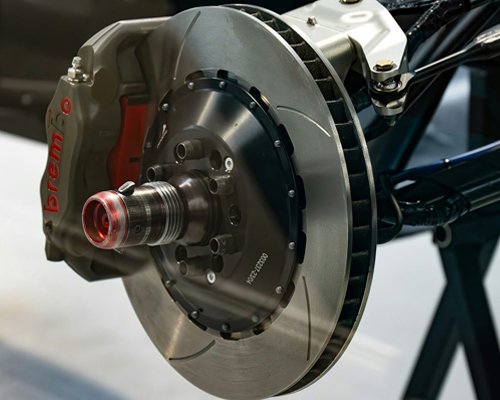
How Much Does a Brake Caliper Weigh: Detailed Guide and Facts
How heavy is a brake caliper in real-world service? Most passenger-car brake calipers weigh about 5 to 15 pounds each, although lightweight aluminum designs can weigh less and heavy-duty truck or performance calipers can weigh considerably more.
If you are researching how much does a brake caliper weigh, the most accurate answer depends on the caliper’s material, piston count, size, and whether the measurement includes brake pads, a mounting bracket, or hardware. This guide explains the practical weight ranges and how to measure the exact part.
How Much Does a Brake Caliper Weigh?
A typical automotive brake caliper weighs approximately:
- Small passenger-car caliper: 5 to 8 pounds
- Typical front floating caliper: 8 to 15 pounds
- Large fixed performance caliper: 10 to 25 pounds
- Heavy-duty truck caliper: 15 to 35 pounds or more
- Motorcycle caliper: 1.5 to 5 pounds
These are useful estimating ranges rather than universal specifications. A front caliper is often heavier than a rear caliper because front brakes handle more of the vehicle’s stopping force. A large sport-utility vehicle may also use heavier calipers than a compact sedan, even when both have disc brakes at all four wheels.
For a normal passenger vehicle, a reasonable planning estimate is about 10 pounds per caliper. That estimate usually refers to the caliper body with its piston or pistons, seals, and basic hardware, but not the brake rotor, wheel hub, or complete suspension assembly.
What Counts as the Caliper?
Weight estimates can differ because “brake caliper” may describe more than one configuration. A replacement part can be sold as a bare caliper, a loaded caliper, or a complete caliper assembly.
Bare caliper
A bare caliper is the main housing, usually with its pistons and seals installed. It may not include brake pads, pad clips, guide pins, banjo bolts, or a separate mounting bracket. This is often the lightest published weight.
Loaded caliper
A loaded caliper includes the brake pads and sometimes the pad retainers or abutment hardware. Depending on the pad material and design, the added weight may be roughly 1 to 4 pounds.
Caliper with bracket
Many floating calipers attach to a separate steel carrier or bracket. If the bracket is included, the total can be several pounds heavier than the caliper body alone. When comparing catalog listings, check whether the mounting bracket is part of the listed assembly.
The brake rotor is not part of the caliper. Rotors commonly weigh much more—often 10 to 30 pounds on passenger vehicles—so including the rotor in a shipping estimate or parts calculation will produce a substantially different number.
What Determines Brake Caliper Weight?
Material
Material is one of the strongest influences on weight. Traditional calipers are commonly made from cast iron or steel because these materials provide strength, durability, and resistance to heat. They are generally heavier than aluminum calipers.
Aluminum calipers are used when reducing unsprung mass is important. Aluminum has lower density than iron, so an aluminum housing can save weight while maintaining the required stiffness through its shape and internal structure. However, a large aluminum caliper with several pistons may still weigh more than a small cast-iron unit.
Caliper design
Most passenger vehicles use either a floating caliper or a fixed caliper.
- Floating calipers use one or more pistons on one side and slide on guide pins or a sliding mechanism. They are common on everyday vehicles and often have moderate weight.
- Fixed calipers have pistons positioned on both sides of the brake rotor. They are common on performance and heavy-duty applications and may be heavier because of their larger body and additional pistons.
Design alone does not determine the result. A compact fixed aluminum caliper could weigh less than a large cast-iron floating caliper. The material and overall brake capacity matter just as much as the operating style.
Piston count
A single-piston caliper usually weighs less than a four-, six-, or eight-piston caliper of similar size. Multiple pistons require a larger housing, extra seals, additional fluid passages, and more hardware.
Piston count is not a direct weight calculator, though. A large single-piston truck caliper can be heavier than a small four-piston aluminum performance caliper. Use it as a design clue, not as a substitute for the manufacturer’s specification.
Brake size and heat capacity
Vehicles designed for towing, high speed, or repeated hard braking generally use larger calipers. Larger calipers provide space for bigger pads and may contain more metal to manage heat and mechanical loads. That additional size increases weight.
Front calipers also tend to be larger because braking force shifts toward the front axle when a vehicle slows. Rear calipers are often smaller, although electronic parking brakes and integrated parking-brake mechanisms can add components and change the comparison.
Typical Weights by Vehicle Type
| Application | Approximate weight per caliper | Typical configuration |
|---|---|---|
| Small car or compact sedan | 5–10 pounds | Small floating front or rear caliper |
| Midsize car or crossover | 8–15 pounds | Medium cast-iron or aluminum caliper |
| Performance car | 10–25 pounds | Large fixed multi-piston caliper |
| Full-size truck or SUV | 15–35 pounds | Large heavy-duty front caliper |
| Motorcycle | 1.5–5 pounds | Compact aluminum caliper |
The figures in this table are best used for early planning, shipping estimates, and general comparison. They should not replace a vehicle-specific parts listing when exact weight is important. Different model years, trim levels, engine options, and brake packages can use different calipers.
Front Versus Rear Caliper Weight
On many cars, the front caliper weighs more than the rear caliper. The front axle normally performs most of the braking work, so the front brake package often has a larger rotor, larger pads, and a more substantial caliper.
A rear caliper may be relatively light, especially on a vehicle with front-heavy brake hardware. However, a rear caliper with an integrated mechanical parking brake can include extra levers, a screw mechanism, or an electric actuator. That equipment may narrow the weight difference or occasionally make the rear unit heavier than expected.
Electric parking-brake motors are often attached to the rear caliper. If a parts catalog lists the motor separately, confirm whether the published caliper weight includes it. This distinction matters when calculating replacement-part weight or comparing complete assemblies.
How to Find the Exact Weight
If an approximate range is not enough, use a vehicle-specific source or weigh the part directly. I would use the following process for the most reliable result.
- Identify the exact application. Record the vehicle year, make, model, trim, engine, axle position, and brake package.
- Check the manufacturer’s part listing. Look for shipping weight, net weight, or assembly weight. Confirm what components are included.
- Separate the components if needed. Note whether the measurement includes pads, the carrier bracket, guide pins, parking-brake motor, or brake hose.
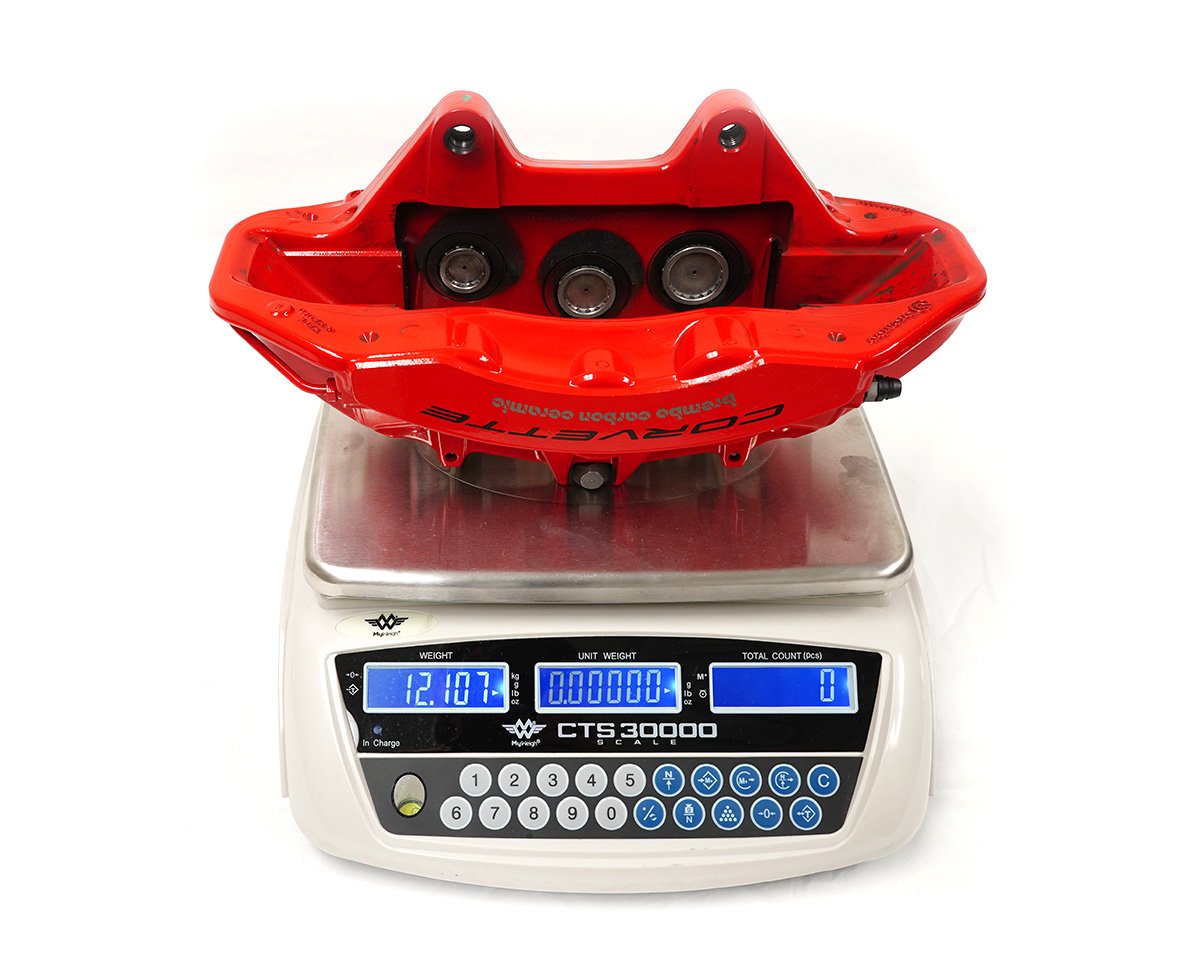
- Use a suitable scale. A digital shipping scale works well for a boxed replacement part. A hanging or bench scale can measure a removed component.
- Record the measurement description. Write down whether the caliper is empty, loaded, wet with brake fluid, or still attached to its bracket.
For a removed caliper, drain or contain brake fluid before weighing it, but do not disassemble the brake system unless the work is being performed safely and correctly. Brake fluid can damage painted surfaces, and an open hydraulic system must be properly sealed and bled before the vehicle returns to service.
For shipping, weigh the fully packaged part rather than the bare caliper. Use the box, padding, labels, and any included hardware in the measurement. Carriers charge based on actual weight or dimensional weight, so the packaged dimensions can matter as much as the caliper itself.
Caliper Weight and Vehicle Performance
Brake caliper weight contributes to unsprung mass, which is the portion of a vehicle’s weight that the suspension does not support through the springs. The caliper is mounted near the wheel, so its weight can influence how the suspension responds to bumps and changes in road surface.
Lower weight can help a suspension control wheel movement, but caliper weight is only one part of the wheel-end assembly. The rotor, wheel, tire, hub, and other brake hardware also contribute. A lighter caliper is not automatically better if it cannot provide the required clamping force, heat management, stiffness, durability, and pad capacity.
For ordinary street use, the correct vehicle-specific caliper is more important than choosing a part solely because it is lighter. Performance applications must balance weight against braking capacity and thermal demands. A heavy-duty vehicle may deliberately use a heavier caliper because its braking system must handle greater vehicle mass or towing loads.
Why Published Weights May Differ
Two legitimate listings can show different weights for what appears to be the same caliper. Common reasons include:
- One listing gives the bare caliper while another includes the bracket.
- One assembly includes brake pads and hardware.
- A rear unit includes an electric parking-brake actuator.
- The listing shows packaged shipping weight instead of net component weight.
- Different materials or piston configurations are used for the same vehicle model.
- The weight is rounded or converted between pounds and kilograms.
For reference, 1 kilogram equals approximately 2.205 pounds. A caliper listed at 4 kilograms weighs about 8.8 pounds, while a 6-kilogram assembly weighs about 13.2 pounds. Always check the unit before comparing specifications.
Remanufactured calipers can also vary slightly from new units because of replacement pistons, coatings, plugs, hardware, or included brackets. A small difference is normal, but a large difference usually means the two listings describe different configurations.
Safety and Replacement Considerations
Brake calipers are safety-critical components. Weight alone is not a valid way to determine whether a caliper will fit or perform correctly. The replacement must match the vehicle’s mounting points, rotor thickness, pad shape, hydraulic connection, piston arrangement, and parking-brake system when applicable.
Never install a caliper simply because its dimensions and weight seem close. A caliper that is too small may not provide the intended braking performance, while an incompatible caliper can interfere with the wheel, rotor, brake hose, or suspension.
If a caliper is removed, the brake hose should not be left hanging by its flexible line. Support the component appropriately, prevent contamination, and follow the vehicle manufacturer’s procedure for installation, bleeding, torque specifications, and brake-system inspection.
Conclusion
So, how much does a brake caliper weigh? Most passenger-car calipers fall near 5 to 15 pounds each, while large performance, truck, and SUV units may weigh 15 to 35 pounds or more. The exact figure depends on material, size, piston count, axle position, and whether the listing includes pads, brackets, hardware, or an electronic parking-brake actuator. For an exact answer, use the vehicle’s specific part number and confirm what the stated weight includes.