Symptoms of Bad Brake Caliper Bracket: Signs, Causes & Fixes
The symptoms of bad brake caliper bracket can include clunking or rattling noises, uneven brake pad wear, a sticking caliper, brake drag, vibration, and abnormal movement of the caliper assembly. In severe cases, damaged mounting threads or a cracked bracket can allow the caliper to move when it should remain securely positioned.
The brake caliper bracket is the metal support that holds the caliper in the correct position over the brake rotor. On many floating-caliper systems, it also supports the brake pads and contains the bores for the caliper slide pins. This means a problem that appears to be a “bad bracket” may actually involve rusted pad abutment areas, seized slide pins, damaged mounting bolts, or worn threads in the bracket.
A caliper bracket usually lasts a long time and is not considered a routine wear item. However, severe corrosion, damaged bolt holes, accident damage, incorrect installation, or neglected slide pins can eventually make replacement necessary.
Because the bracket is part of the braking system, unusual movement, damaged mounting points, or loose hardware should be addressed promptly.
Symptoms of Bad Brake Caliper Bracket
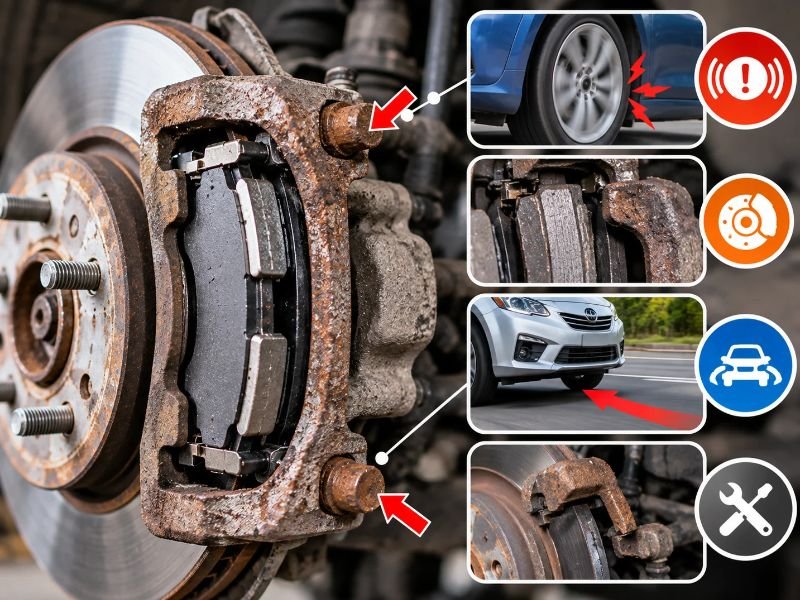
The most common symptoms of bad brake caliper bracket are unusual brake noises, uneven pad wear, sticking or dragging brakes, and visible damage or looseness in the caliper assembly.
A bracket itself is a solid metal component, so many failures are related to the parts that attach to it rather than the bracket suddenly “wearing out.”
Common warning signs include:
- Clunking or rattling over bumps
- Clicking when braking
- Uneven inner and outer brake pad wear
- Caliper movement or looseness
- Brake pads sticking in the bracket
- One wheel running hotter than the others
- Vehicle pulling during braking
- Abnormal rotor wear
- Seized or damaged slide pins
- Stripped caliper bracket bolt threads
Some of these symptoms can also come from the caliper, brake pads, wheel bearing, suspension, or rotor. A physical brake inspection is needed to identify the actual cause.
What Is a Brake Caliper Bracket?
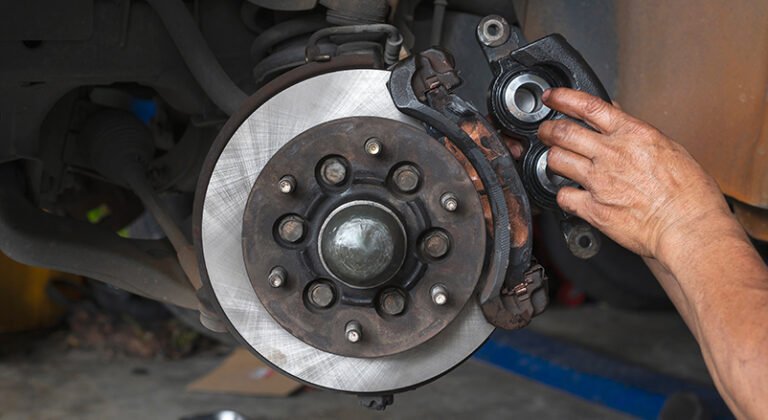
A brake caliper bracket is the structural component that positions the brake caliper around the rotor.
On a typical floating disc-brake system, the bracket is bolted to the steering knuckle or another fixed suspension component.
The brake pads usually sit inside the bracket, while the caliper slides laterally on guide pins.
When the brake pedal is pressed:
- Hydraulic pressure pushes the caliper piston outward.
- The inner brake pad contacts the rotor.
- The caliper slides on its guide pins.
- The outer pad is pulled against the opposite side of the rotor.
- Friction slows the wheel.
The bracket has to remain rigid and correctly aligned for this process to work properly.
What Does the Brake Caliper Bracket Do?
The caliper bracket performs several important functions.
It:
- Holds the caliper in the correct position
- Supports the brake pads
- Maintains pad alignment with the rotor
- Houses or supports the slide pins on many designs
- Transfers braking force into the suspension or steering knuckle
- Prevents the caliper from moving excessively
Because braking forces can be very high, the bracket and its mounting bolts must be in good condition and tightened to the correct specifications.
Clunking or Rattling From the Wheel
One possible sign of a damaged or loose caliper bracket is a clunking or rattling noise from the wheel area.
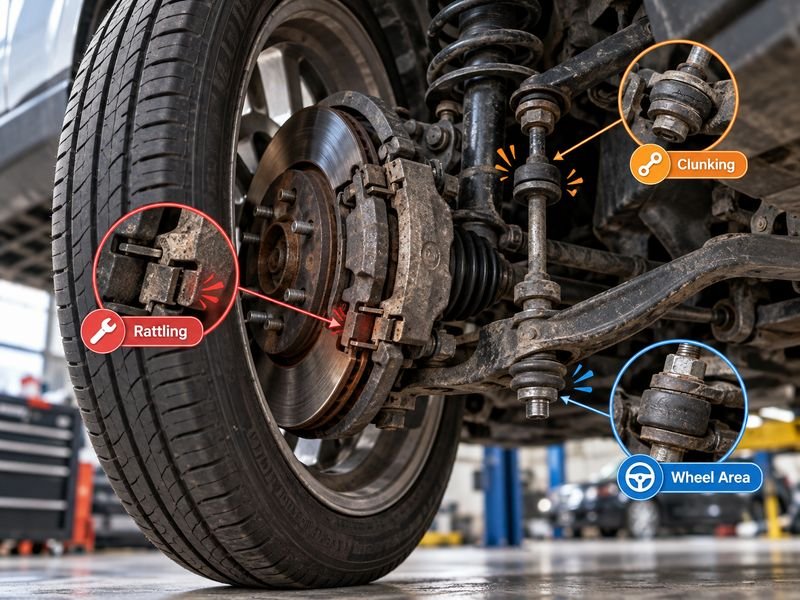
You may hear the noise:
- When driving over bumps
- When changing direction
- When first applying the brakes
- When releasing the brake pedal
A properly mounted caliper bracket should not move against the steering knuckle.
However, a clunk does not automatically mean the bracket itself is bad.
The noise could also come from:
- Loose caliper bolts
- Worn slide pins
- Missing brake pad hardware
- Loose pads
- Suspension components
- Wheel bearing play
If the bracket mounting bolts are loose, driving should be minimized until the problem is corrected.
Clicking When Applying the Brakes
A single click or knock when you first press the brake pedal can occur if brake components shift unexpectedly.
Possible bracket-related causes include:
- Excessive pad movement inside the bracket
- Missing or damaged anti-rattle clips
- Worn pad abutment surfaces
- Loose bracket mounting bolts
- Excessive caliper slide-pin play
A small amount of pad movement can be normal on some designs, but a pronounced metallic click deserves inspection.
Uneven Brake Pad Wear
Uneven pad wear is one of the most useful clues that something is preventing the caliper from moving correctly.
On a floating-caliper system, both pads should apply relatively evenly.
A bracket can contribute to uneven wear if:
- Slide pins seize inside the bracket
- Pad contact surfaces become heavily rusted
- Pads bind in the bracket
- The bracket is bent
- Guide-pin bores are damaged
For example, one pad may become much thinner than the other because the caliper cannot slide normally.
However, a seized piston can cause similar wear, so the entire caliper assembly must be checked.
Brake Pads Sticking in the Bracket
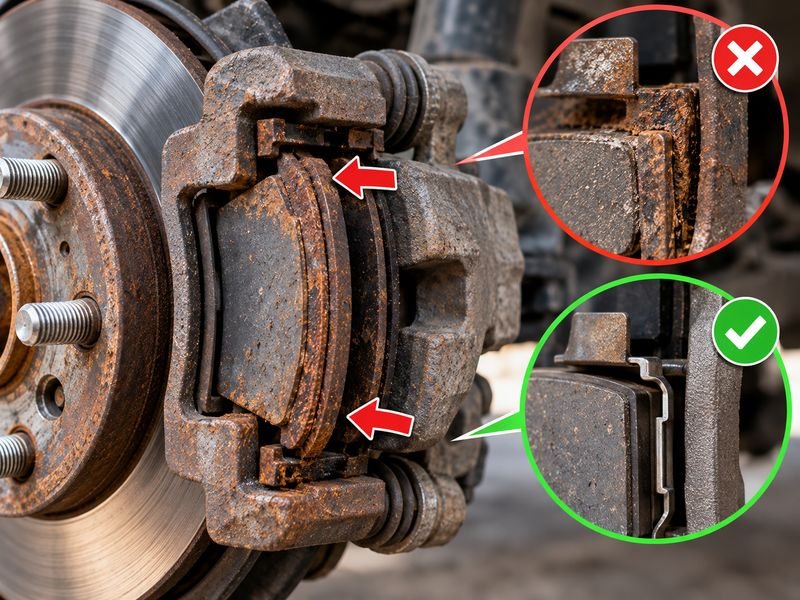
Brake pads are designed to move slightly within their mounting points as the brakes apply and release.
Rust can build up under the stainless-steel abutment clips or directly on the bracket.
This buildup can reduce clearance and make the pads bind.
A sticking pad may remain in contact with the rotor even after you release the brake pedal.
Possible results include:
- Excessive heat
- Rapid pad wear
- Poor fuel economy
- Pulling
- Burning smell
- Rotor damage
In this situation, the bracket may not be structurally broken. The problem may be corrosion on its pad-support surfaces.
One Wheel Gets Hotter Than the Others
A wheel that becomes noticeably hotter can indicate brake drag.
A caliper bracket can contribute if:
- Slide pins are seized
- Pads are rusted into the bracket
- The bracket is bent and preventing free movement
Continuous friction creates heat even when you are not pressing the brake pedal.
If one wheel is extremely hot, smoking, or producing a strong burning smell, stop driving as soon as it is safe.
Do not touch the rotor or caliper immediately because they can cause serious burns.
Vehicle Pulls to One Side During Braking
A vehicle may pull if one brake applies more or less force than the brake on the opposite side.
Bracket-related problems that can contribute include:
- Stuck pads
- Seized slide pins
- Bent bracket
- Uneven pad contact
However, pulling can also be caused by:
- Seized caliper piston
- Collapsed brake hose
- Tire problems
- Alignment issues
- Suspension wear
Therefore, vehicle pulling should not be diagnosed from symptoms alone.
Caliper Feels Loose
A brake caliper should have controlled sliding movement where designed, but it should not feel excessively loose.
Excessive movement may indicate:
- Worn slide pins
- Damaged guide-pin bores
- Missing hardware
- Loose caliper bolts
- Damaged bracket
If the bracket bolt holes or guide-pin bores are badly worn, the caliper can move more than intended.
This may produce noise and inconsistent pad contact.
Stripped Caliper Bracket Threads
Some caliper brackets contain threaded holes for caliper guide bolts or other fasteners.
If those threads become stripped, the bolt may not tighten correctly.
Possible causes include:
- Overtightening
- Cross-threading
- Installing the wrong bolt
- Corrosion
- Previous improper repairs
A bolt that cannot achieve the required torque is a serious issue.
Do not rely on a loose or partially engaged fastener to hold the brake assembly.
Depending on the design and manufacturer-approved repair procedures, the bracket may need replacement.
Cracked or Broken Caliper Bracket
A cracked bracket is less common than slide-pin or corrosion problems, but it can happen.
Possible causes include:
- Severe impact
- Accident damage
- Manufacturing defect
- Extreme corrosion
- Incorrect installation
- Improper modification
A visibly cracked brake caliper bracket should be replaced.
Because the bracket carries braking loads, welding or improvised structural repairs are generally not appropriate unless specifically supported by an approved professional repair procedure.
Can a Brake Caliper Bracket Bend?
Yes, although it is not a common normal-wear failure.
A bracket may bend from:
- Collision damage
- Severe impact
- Improper towing or lifting damage
- Incorrect installation
- Excessive force during repair
A bent bracket can change the relationship between the brake pads, caliper, and rotor.
Possible effects include:
- Uneven pad wear
- Rotor contact
- Brake drag
- Caliper misalignment
If misalignment is suspected, inspect the steering knuckle and surrounding components as well.
Seized Caliper Slide Pins and the Bracket
Many problems blamed on the caliper bracket actually originate with the caliper slide pins.
The pins allow a floating caliper to move sideways.
They normally slide through lubricated bores and protective rubber boots.
Slide pins can seize because of:
- Corrosion
- Water intrusion
- Torn boots
- Wrong lubricant
- Dried lubricant
- Lack of service
When a pin seizes, the caliper cannot center itself properly.
This can create:
- Uneven pad wear
- Brake drag
- Reduced braking force
- Excessive heat
Sometimes the pins and boots can be serviced. If the bracket bores are heavily corroded or damaged, bracket replacement may be required.
Bad Caliper Bracket vs. Bad Caliper
The bracket and caliper are separate components, although they work together.
| Problem | More Likely Source |
| Hydraulic fluid leaking | Caliper |
| Piston will not retract | Caliper |
| Slide-pin bore damaged | Bracket |
| Pad binding from rust | Bracket area |
| Bracket mounting thread stripped | Bracket |
| Piston dust boot damaged | Caliper |
| Bracket visibly cracked | Bracket |
| Caliper piston seized | Caliper |
A complete inspection is important because replacing the caliper will not fix damaged bracket mounting points, and replacing the bracket will not fix a seized hydraulic piston.
Bad Caliper Bracket vs. Bad Brake Pads
Worn brake pads normally become thin as friction material is consumed.
A bracket problem can cause abnormal pad wear patterns.
For example:
Normal wear: Both pads gradually become thinner.
Sticking pad: One pad may wear much faster.
Seized slide pin: Inner and outer pads may have significantly different thicknesses.
Poor bracket alignment: Pad contact may become uneven.
Do not assume uneven pads simply mean the pads were defective.
Inspect why the wear occurred before installing new ones.
What Causes a Brake Caliper Bracket to Go Bad?
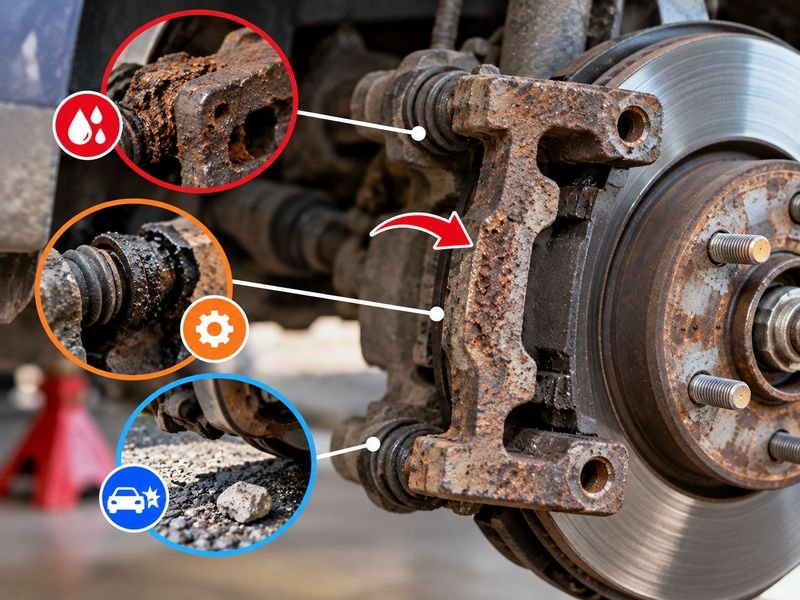
A caliper bracket is usually durable, but several factors can cause problems.
Corrosion
Rust is one of the most common issues.
It can build up around:
- Pad abutment surfaces
- Slide-pin bores
- Bolt holes
- Bracket mounting surfaces
Vehicles operated where road salt is used can develop more severe corrosion.
Incorrect Brake Service
Improper repairs can damage the bracket.
Examples include:
- Cross-threading bolts
- Overtightening bolts
- Using the wrong lubricant
- Installing pads incorrectly
- Leaving hardware out
Damaged Slide-Pin Boots
A torn boot allows water and dirt into the guide-pin bore.
Corrosion can then cause the pin to seize.
Collision or Impact
A significant impact can distort the bracket, knuckle, or surrounding suspension.
Normal Wear of Guide Surfaces
High-mileage components can sometimes develop wear at guide-pin or pad-contact areas.
This is less common than corrosion but is possible.
Can Rusty Caliper Brackets Be Reused?
Surface rust does not automatically mean the bracket must be replaced.
During brake service, technicians often clean rust from the pad-contact areas before installing new abutment hardware.
However, replacement may be appropriate if corrosion has caused:
- Severe metal loss
- Damaged mounting surfaces
- Enlarged guide-pin bores
- Structural weakness
- Threads that cannot hold proper torque
Light surface corrosion and structural deterioration are very different conditions.
How to Check a Brake Caliper Bracket
Brake inspection requires lifting the vehicle safely and removing the wheel.
If you are not comfortable working on braking systems, professional inspection is the safer option.
A technician typically checks several areas.
Inspect the Mounting Bolts
The bracket should be securely mounted.
Look for:
- Loose bolts
- Missing bolts
- Damaged bolt heads
- Cross-threading
- Stripped threads
Torque specifications vary by vehicle and should come from service information for the exact model.
Inspect the Slide Pins
Each pin should move smoothly through its expected range.
Check for:
- Rust
- Pitting
- Dryness
- Binding
- Bent pins
- Torn boots
Check Pad Movement
With the appropriate components removed, the pads should fit correctly in the bracket without excessive looseness or binding.
Rust under the hardware may need to be cleaned.
Look for Cracks or Distortion
Inspect the bracket carefully for:
- Cracks
- Bent sections
- Heavy corrosion
- Missing metal
Structural damage normally requires replacement.
Can a Bad Caliper Bracket Cause Brake Vibration?
It can contribute, but it is not the most common cause.
A damaged or loose bracket can allow abnormal caliper movement or uneven pad contact.
However, brake pedal or steering-wheel vibration is more commonly associated with:
- Rotor thickness variation
- Uneven rotor surfaces
- Wheel or tire problems
- Suspension issues
If vibration is present, the complete brake assembly should be inspected rather than replacing the bracket based only on the symptom.
Can a Bad Caliper Bracket Cause Grinding?
Yes, indirectly.
If a bracket problem causes a pad to stick and wear prematurely, the friction material can eventually wear away.
The metal backing plate may then contact the rotor, producing grinding.
Grinding can also result from:
- Completely worn pads
- Foreign debris
- Loose hardware
- Rotor damage
A grinding brake should be inspected promptly.
Can a Bad Caliper Bracket Cause Brake Drag?
Yes.
Brake drag can occur if corrosion or damage in the bracket prevents:
- Pads from moving freely
- Slide pins from moving freely
- Caliper from centering itself
However, other common causes of brake drag include:
- Seized caliper piston
- Restricted brake hose
- Parking brake problem
- Incorrect brake adjustment
The exact cause must be confirmed.
Can a Bad Caliper Bracket Cause Uneven Rotor Wear?
It can.
Uneven pad pressure may cause the rotor surfaces to wear differently.
A dragging pad may also create:
- Heat spots
- Scoring
- Discoloration
- Accelerated wear
If a bracket problem has caused severe pad or rotor damage, replacing only the bracket may not restore the brakes. The pads and rotors may also need service.
Do Caliper Brackets Need to Be Replaced With Brake Pads?
No.
Caliper brackets are not routinely replaced every time brake pads are changed.
They can normally be reused if they are:
- Structurally sound
- Properly aligned
- Not severely corroded
- Able to hold the required fastener torque
- Equipped with serviceable slide-pin bores
During a brake job, the bracket should be cleaned and inspected.
Should You Replace Caliper Brackets in Pairs?
Not necessarily.
Unlike brake pads and rotors, brackets do not automatically need replacement on both sides of an axle if only one bracket is damaged.
However, the opposite side should still be inspected for similar corrosion or wear.
Brake pads and rotors are commonly serviced in axle pairs to maintain balanced braking performance.
Can You Drive With a Bad Brake Caliper Bracket?
It depends on the defect, but a suspected loose, cracked, severely corroded, or improperly mounted caliper bracket should not be ignored.
Do not continue normal driving if:
- Caliper is visibly loose
- Bracket bolt is missing
- Threads are stripped
- Bracket is cracked
- Wheel is overheating
- Brake is grinding
- Vehicle pulls severely
- Braking feels abnormal
A minor corrosion issue discovered during routine service is different from a bracket that can no longer hold the caliper securely.
Because brakes are safety-critical, uncertain structural damage should be professionally inspected before further driving.
How Do You Fix a Bad Brake Caliper Bracket?
The repair depends on what is wrong.
Corroded Pad Contact Areas
Light corrosion can often be cleaned during a brake service.
New abutment clips may also be installed where applicable.
Stuck Slide Pins
Pins may require:
- Removal
- Cleaning
- Inspection
- Correct brake lubricant
- New boots or pins
If the bracket bore is badly damaged, replace the bracket.
Stripped Threads
The correct repair depends on the exact mounting point and manufacturer-approved procedure.
For brake hardware, improvised thread repairs are not appropriate.
If proper bolt retention cannot be guaranteed, bracket replacement may be necessary.
Cracked or Bent Bracket
Replace the bracket.
Structural damage should not be ignored.
How Much Does It Cost to Replace a Brake Caliper Bracket?
Cost varies significantly by vehicle.
On some vehicles, the bracket can be purchased separately.
On others, replacement calipers may come with brackets as a complete or semi-loaded assembly.
Cost depends on:
- Vehicle make and model
- Front vs. rear brake
- OEM vs. aftermarket part
- Whether new slide pins are included
- Labor rates
- Whether pads or rotors were damaged
If a seized bracket caused severe brake drag, the final repair may also require new pads and rotors.
How to Prevent Caliper Bracket Problems
Some failures cannot be prevented, but proper brake service can reduce many bracket-related problems.
Helpful practices include:
- Inspect slide-pin boots during brake service
- Use only brake-compatible lubricant where specified
- Clean corrosion from pad-contact areas
- Install the correct brake hardware
- Tighten bolts to proper torque
- Replace damaged guide pins
- Correct uneven pad wear rather than installing pads over the problem
In areas where road salt is common, regular brake inspections are particularly useful.
FAQs About Symptoms of Bad Brake Caliper Bracket
What are the most common symptoms of a bad brake caliper bracket?
Common signs include clunking, clicking, uneven pad wear, sticking brake pads, seized slide pins, excessive caliper movement, and brake drag.
Can a bad caliper bracket make a clunking noise?
Yes. A loose bracket, damaged guide-pin area, or excessive pad movement can create clunking or rattling. Suspension and other brake components can cause similar noises.
Can a caliper bracket cause uneven brake pad wear?
Yes. Corroded pad-contact surfaces or seized slide pins can prevent the caliper and pads from moving correctly, causing uneven wear.
How do I know if my caliper bracket is bent?
Possible clues include abnormal pad alignment, uneven wear, brake drag, and a caliper that does not sit correctly over the rotor. A physical inspection is needed for confirmation.
Can a bad caliper bracket cause the wheel to get hot?
Yes, if the problem causes the brake pads or caliper to remain in contact with the rotor. A seized piston or brake hose can cause the same symptom.
Do I need a new bracket if the slide pins are seized?
Not always. If the pins and bores can be cleaned and restored without damage, the bracket may be reusable. Severe corrosion or damaged bores can require replacement.
Can you replace only the brake caliper bracket?
Yes, on many vehicles the bracket is available separately. The caliper itself can sometimes be reused if it is functioning correctly.
Is it safe to drive with a loose caliper bracket?
No. A loose brake caliper or bracket can affect braking and potentially damage surrounding components. The vehicle should be inspected and repaired before normal driving.
Conclusion
The symptoms of bad brake caliper bracket can include clunking or clicking noises, uneven brake pad wear, brake drag, excessive caliper movement, sticking pads, and a wheel that becomes unusually hot.
The bracket itself is usually a durable metal component, so many problems originate from corrosion, seized slide pins, damaged mounting threads, worn hardware, or incorrect previous brake work rather than simple age.
If the bracket is structurally sound, cleaning the pad-contact areas or servicing the slide pins may be enough. A cracked, bent, severely corroded bracket or one with unsafe mounting threads should be replaced.
Because the brake caliper bracket helps hold the braking system securely in position, any sign of loose hardware or structural damage deserves prompt attention.