Faulty Brake Caliper Symptoms: Signs, Causes, and What to Do
A brake caliper is responsible for squeezing the brake pads against the rotor when you press the brake pedal. When the caliper works correctly, it applies pressure smoothly and then releases the pads when you take your foot off the brake.
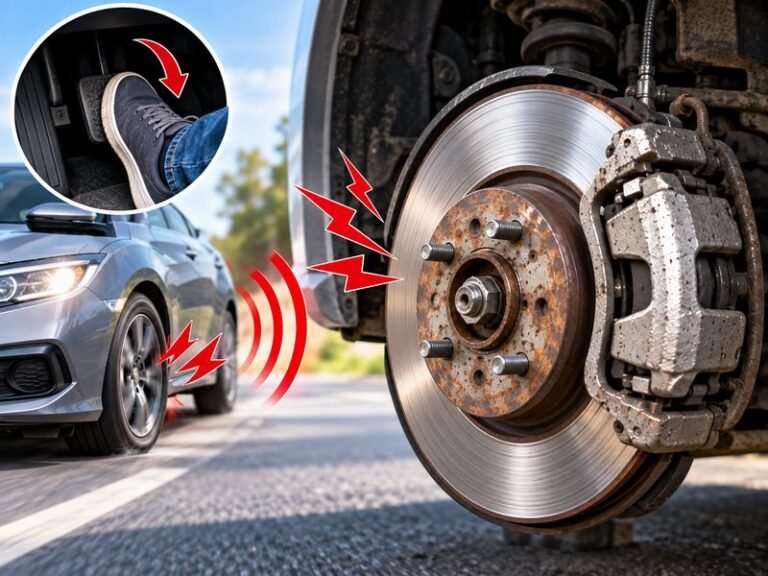
When something goes wrong, the symptoms can appear in several different ways. Common faulty brake caliper symptoms include the vehicle pulling to one side, one wheel becoming unusually hot, a burning smell, uneven brake pad wear, fluid leakage, grinding or squealing noises, and reduced braking performance.
A faulty caliper can either fail to apply the brake correctly or remain partially applied after you release the brake pedal. Both conditions can affect braking balance and may damage the pads and rotors if ignored.
Because the braking system directly affects vehicle safety, suspected caliper problems should be diagnosed promptly. This guide explains the major symptoms, what causes calipers to fail, how a bad caliper differs from worn brake pads, and when it may no longer be safe to continue driving.
What Are the Faulty Brake Caliper Symptoms?
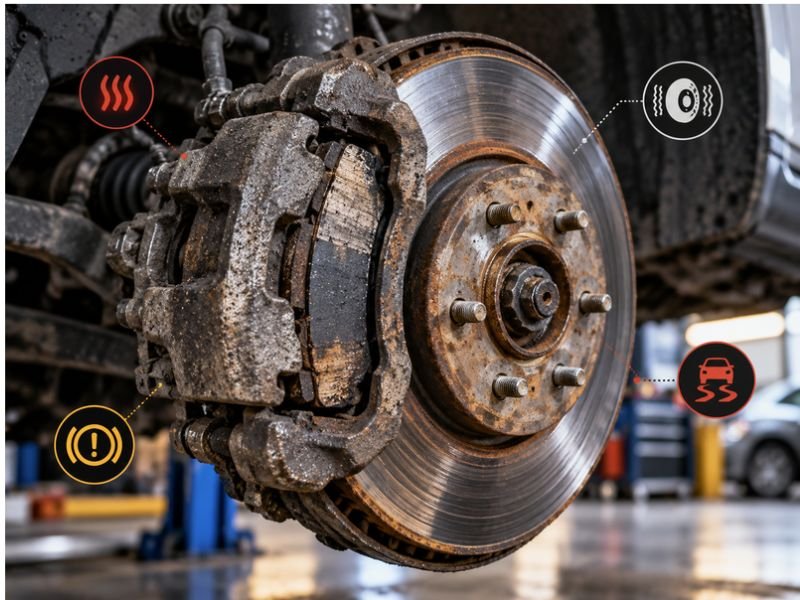
The most common faulty brake caliper symptoms are pulling to one side, excessive heat from one wheel, a burning smell, uneven brake pad wear, brake fluid leakage, unusual noises, reduced braking performance, and a feeling that the vehicle is being held back while driving.
A faulty caliper does not always produce every symptom.
The exact signs depend on how it has failed.
A caliper may become stuck in the applied position, keeping a brake pad pressed against the rotor. It can also seize in a position that prevents the pads from applying enough pressure when you brake.
The following symptoms deserve particular attention.
1. Car Pulls to One Side While Braking
One of the most recognizable signs of a caliper problem is a vehicle that pulls left or right when the brakes are applied.
Under normal conditions, the brakes on opposite sides of an axle should provide reasonably balanced braking force.
If one caliper is not applying properly, the opposite wheel may provide more braking force, causing the vehicle to pull.
A sticking caliper can create a similar problem by keeping one brake partially engaged.
Keep in mind that pulling during braking can also be caused by other issues, including:
- Contaminated brake pads
- Worn brake components
- Tire problems
- Suspension problems
- Uneven rotor condition
A pull alone does not prove that the caliper is faulty, but it is a good reason to inspect the braking system.
2. Vehicle Pulls While You Are Not Braking
A severely sticking caliper can make the vehicle pull even when your foot is completely off the brake pedal.
This happens because one brake remains partially applied.
The affected wheel creates additional resistance, which may make the vehicle drift toward one side.
You may also notice that the vehicle does not coast as freely as it normally does.
Pulling during normal driving is especially suspicious when it occurs together with excessive heat or a burning smell from one wheel.
3. One Wheel Is Much Hotter Than the Others
An abnormally hot wheel is a major sign of a dragging brake.
When a caliper piston or slide mechanism fails to release, the brake pad continuously rubs against the rotating rotor.
That friction creates heat.
After driving, the affected wheel may be significantly hotter than the other wheels.
You might notice heat coming from the wheel area without touching it.
Do not place your hand directly on a wheel, rotor, or caliper that you suspect is overheating. Brake components can become hot enough to cause serious burns.
A technician can compare brake temperatures safely using suitable equipment.
4. Burning Smell From One Wheel
A sticking brake caliper can produce a sharp burning smell after driving.
Continuous contact between the brake pad and rotor generates excessive heat, which can overheat the friction material and nearby components.
The smell may become particularly noticeable after:
- Highway driving
- Stop-and-go traffic
- Driving downhill
- Longer trips
A strong burning odor from a wheel should not be ignored.
If you see smoke or a wheel becomes extremely hot, stop driving in a safe location and have the vehicle inspected. Continuing to drive can damage the pads, rotor, brake fluid, wheel bearing, and other nearby components.
5. Uneven Brake Pad Wear
Uneven pad wear is another common clue.
Brake pads on the same axle normally wear at reasonably similar rates when the braking system is functioning correctly.
A faulty caliper may cause one pad to wear much faster than another.
For example, a sticking piston can keep the inner pad pressed against the rotor.
Sticking slide pins can prevent a floating caliper from moving correctly and cause one side of the pad set to wear excessively.
When inspecting the brakes, a technician may find:
- One pad much thinner than the other
- One wheel’s pads much more worn than the opposite wheel
- Tapered brake pad wear
- Heat-damaged friction material
Uneven wear does not always mean the entire caliper must be replaced, but it does indicate that the caliper, slides, pads, and related hardware need careful inspection.
6. Brake Fluid Leaking Around the Caliper
A brake caliper contains hydraulic brake fluid under pressure.
Rubber seals around the caliper piston keep this fluid inside the braking system.
If a seal deteriorates or the caliper becomes damaged, brake fluid can leak.
You may notice wetness around:
- The caliper
- Inside the wheel
- Brake hose connection
- Brake assembly
Brake fluid may look clear, yellowish, or darker depending on its age and condition.
A brake fluid leak is a significant safety concern because loss of fluid can reduce hydraulic pressure and braking ability.
If you suspect an active brake fluid leak, the vehicle should be inspected before normal driving continues.
7. Soft or Spongy Brake Pedal
A faulty caliper can sometimes contribute to a brake pedal that feels softer than normal.
This is particularly concerning if the caliper is leaking brake fluid.
However, a spongy brake pedal has several possible causes, including:
- Air in the brake lines
- Brake fluid leak
- Failing brake hose
- Master cylinder problem
- Problems elsewhere in the hydraulic system
A soft pedal should therefore not automatically be blamed on the caliper.
If the pedal suddenly feels significantly different or approaches the floor more than usual, have the braking system checked promptly.
8. Reduced Braking Performance
A caliper that does not apply sufficient pressure can reduce braking performance at the affected wheel.
The vehicle may take longer to stop or feel less stable under braking.
This can happen when:
- Caliper piston is seized
- Slide pins are stuck
- Brake fluid is leaking
- Pads are not making proper contact
- Caliper hardware is damaged
Because other brakes may continue working, the problem can sometimes develop gradually and be easy to overlook.
A noticeable change in stopping performance deserves immediate attention.
9. Grinding or Scraping Noise
A faulty caliper can cause accelerated brake pad wear.
If the affected pad wears completely through its friction material, metal components can begin contacting the rotor.
This may produce a grinding or scraping sound.
Grinding can quickly damage the rotor and increase repair costs.
A dragging pad can also create continuous rubbing noises while driving, even when the brake pedal is not being pressed.
Brake noises have many possible causes, so diagnosis should include the pads, rotor, caliper, hardware, and backing plates.
10. Squealing From the Affected Wheel
A sticking caliper may keep a brake pad lightly pressed against the rotor.
That constant contact can produce squealing or squeaking noises.
The noise may occur while driving rather than only when braking.
Squealing alone does not necessarily indicate a faulty caliper. Worn pads, glazed friction material, moisture, debris, and certain pad compounds can also create noise.
Squealing combined with heat and uneven pad wear is more suggestive of a sticking brake.
11. Car Feels Sluggish or Difficult to Coast
A brake that remains partially engaged creates rolling resistance.
You may feel as though the vehicle is being held back.
Possible signs include:
- Slower acceleration
- Reduced coasting distance
- Vehicle feeling unusually heavy
- Increased engine effort
- Lower fuel economy
Severe brake drag can make the problem surprisingly noticeable.
If the vehicle suddenly feels reluctant to move and one wheel is becoming hot, a sticking brake should be investigated.
12. Vehicle Moves Poorly After Being Parked
Some calipers incorporate or work with parking brake mechanisms, particularly on rear brakes.
If this mechanism becomes stuck, the rear brake may remain partially applied after the parking brake is released.
The vehicle may initially resist moving or produce a noticeable drag from one wheel.
This condition can resemble a seized caliper piston, so the entire rear brake and parking brake mechanism should be inspected.
13. Smoke From the Wheel Area
Smoke from a wheel is a severe warning sign.
A badly dragging caliper can generate enough heat to overheat the brake pad, rotor, and surrounding components.
If smoke appears:
Stop driving as soon as it is safe to do so.
Do not touch the wheel or brake components.
Allow the assembly to cool and arrange for professional inspection or towing.
Continuing to drive an overheated brake can result in substantial brake damage and reduced braking ability.
How a Brake Caliper Works
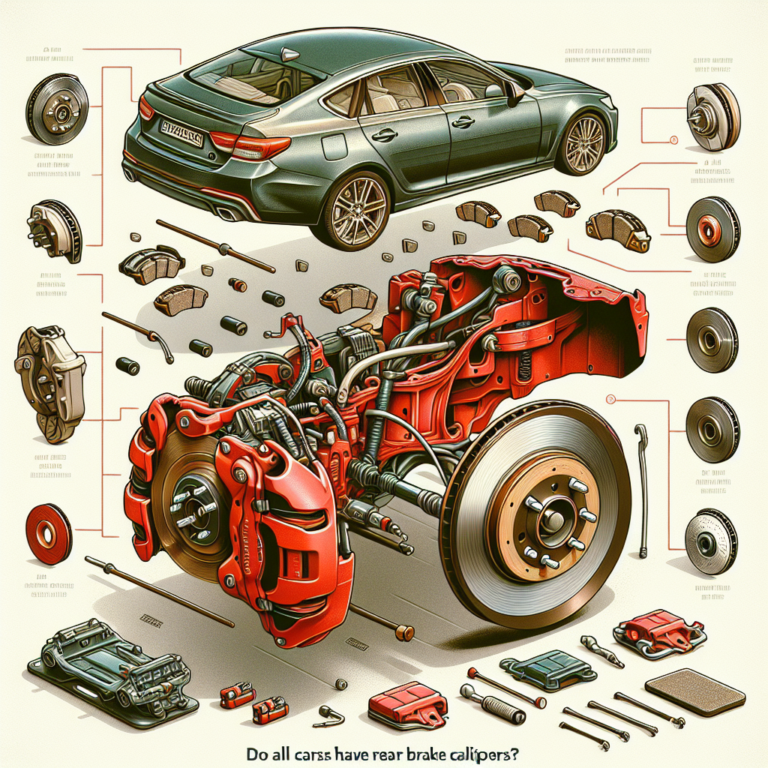
Most modern passenger vehicles use disc brakes on at least the front wheels, and many use disc brakes at all four wheels.
The main components include:
- Brake caliper
- Caliper piston
- Brake pads
- Brake rotor
- Brake hose
- Caliper slide pins on floating designs
When you press the brake pedal, hydraulic pressure moves the caliper piston.
The piston pushes the brake pads against the rotating rotor.
Friction between the pads and rotor slows the wheel.
When you release the brake pedal, hydraulic pressure drops and the pads should release enough to allow the rotor to rotate freely.
A faulty brake caliper interferes with either the applying or releasing part of this process.
Sticking vs Seized Brake Caliper
The terms sticking and seized are often used interchangeably, but they can describe different levels of the same problem.
Sticking Brake Caliper
A sticking caliper may still move but does not operate freely.
It might release slowly or intermittently.
Early symptoms can include:
- Mild pulling
- Uneven pad wear
- Increased wheel temperature
- Occasional brake drag
A sticking caliper can gradually become worse.
Seized Brake Caliper
A seized caliper is more severely stuck.
The piston, slide mechanism, or related component may have little or no movement.
A seized caliper may leave the brake continuously applied or prevent it from applying correctly.
Severe overheating and rapid brake wear can occur when the brake remains engaged.
What Causes a Faulty Brake Caliper?
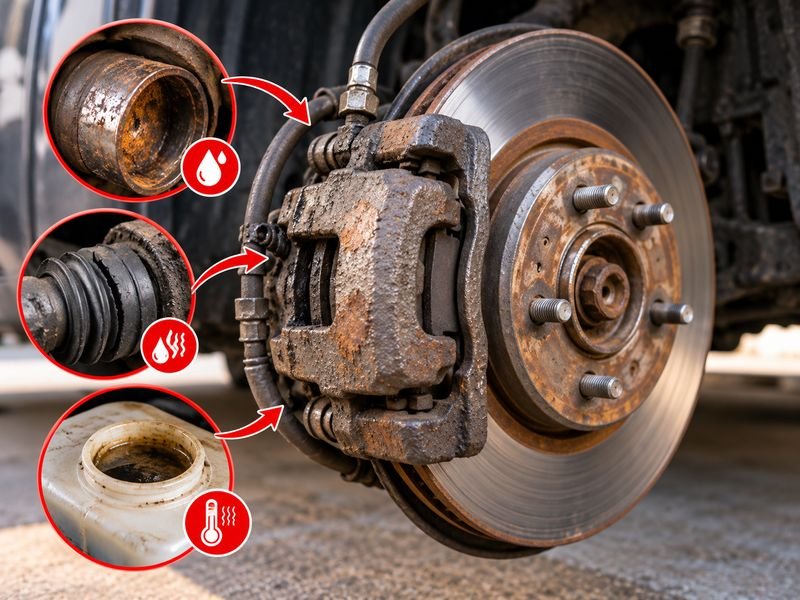
Brake calipers operate in a harsh environment near the road surface.
They are repeatedly exposed to heat, water, road salt, dirt, and temperature changes.
Several failures can result.
Corroded Caliper Piston
The piston must move smoothly inside the caliper bore.
A protective rubber dust boot helps keep moisture and contaminants away from it.
If the boot tears or deteriorates, water and road debris can reach the piston.
Corrosion may eventually cause the piston to bind.
Once that happens, it may not apply or release correctly.
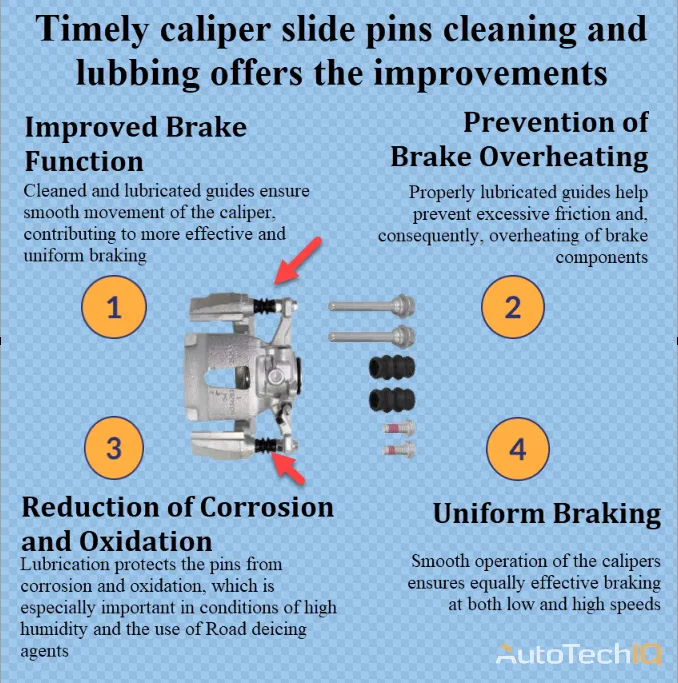
Sticking Caliper Slide Pins
Floating brake calipers move on slide pins.
These pins allow the caliper to center itself around the rotor as braking pressure is applied.
Slide pins can become stuck because of:
- Corrosion
- Damaged protective boots
- Dirt
- Old lubricant
- Incorrect lubricant
A stuck slide pin often causes uneven brake pad wear.
In some cases, properly servicing the slide mechanism solves the problem without replacing the entire caliper.
Damaged Piston Seal
The hydraulic seal around the piston is essential for containing brake fluid.
Age, corrosion, contamination, or damage can cause the seal to fail.
This may result in fluid leakage and reduced braking performance.
A leaking caliper generally needs proper repair or replacement.
Internally Damaged Brake Hose
A brake hose can sometimes fail internally while appearing reasonably normal from the outside.
The damaged hose may allow hydraulic pressure to reach the caliper but restrict fluid from returning freely afterward.
This can keep the brake applied and create symptoms very similar to a seized caliper.
For that reason, replacing a caliper without checking the brake hose can sometimes leave the original problem unresolved.
Corrosion and Road Salt
Vehicles driven in areas where road salt is heavily used can experience accelerated brake corrosion.
Corrosion can affect:
- Caliper pistons
- Slide pins
- Brackets
- Brake hardware
- Bleeder screws
Regular brake inspections are particularly useful for vehicles operating in these conditions.
Contaminated or Old Brake Fluid
Brake fluid can absorb moisture over time.
Moisture inside the hydraulic system can contribute to internal corrosion.
Following the vehicle manufacturer’s brake fluid inspection and service recommendations can help protect hydraulic components.
Faulty Parking Brake Mechanism
Some rear brake systems incorporate the parking brake mechanism into the caliper.
If that mechanism corrodes, binds, or fails to release, the rear brake can remain engaged.
This can look almost identical to a seized conventional caliper.
Faulty Brake Caliper Symptoms vs Bad Brake Pads
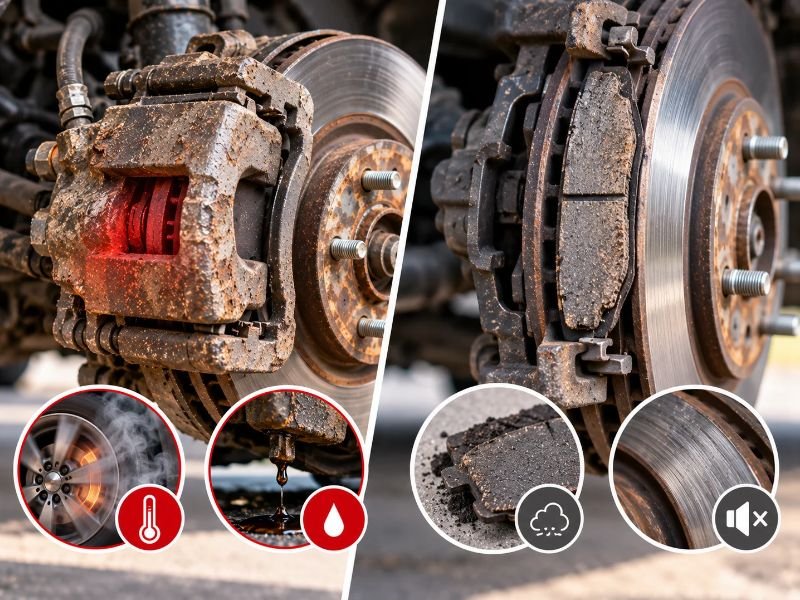
Worn brake pads and faulty calipers can produce some of the same symptoms.
This can make diagnosis confusing.
| Symptom | Faulty Caliper | Worn Brake Pads |
| Vehicle pulls to one side | Common | Possible |
| One wheel extremely hot | Common with sticking caliper | Less typical by itself |
| Uneven pad wear | Common | Possible |
| Grinding | Possible | Common when severely worn |
| Brake fluid leak | Possible | No |
| Constant brake drag | Common with sticking caliper | Less typical |
| Squealing | Possible | Common |
| Burning smell | Possible | Possible with overheating |
| Soft pedal | Possible with hydraulic problem | Usually caused by something else |
A complete brake inspection is more reliable than diagnosing the problem from a single symptom.
How Can You Tell Which Brake Caliper Is Faulty?
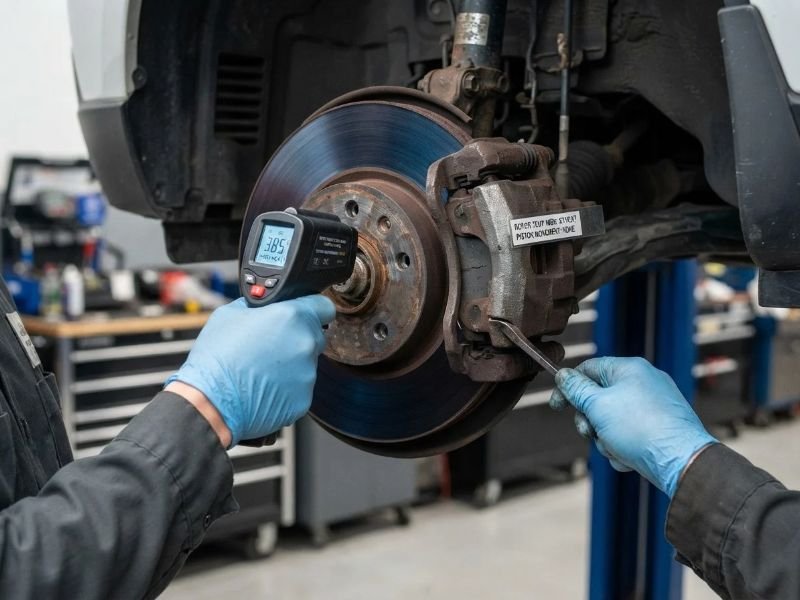
Several clues can help identify the affected wheel.
A sticking caliper may create noticeably more heat at one wheel than the others.
Brake pad inspection may also reveal unusually rapid wear at that corner.
A technician can lift the vehicle and check whether each wheel rotates freely when the brakes are released.
The inspection may also include:
- Caliper piston movement
- Slide pin movement
- Brake pad thickness
- Rotor condition
- Brake hose condition
- Fluid leaks
- Parking brake operation
Professional diagnosis becomes particularly important when the brake remains applied because a restricted brake hose can imitate a seized caliper.
Can a Faulty Brake Caliper Damage the Rotor?
Yes.
A dragging caliper keeps the pad in contact with the rotor and creates continuous friction.
Excessive heat can damage the rotor surface and may contribute to:
- Hot spots
- Glazing
- Uneven wear
- Brake vibration
- Rotor discoloration
If the brake pads wear completely through their friction material, metal-to-metal contact can severely score the rotor.
Fixing a sticking caliper early can prevent a relatively small problem from becoming a larger brake repair.
Can a Faulty Caliper Cause Brake Vibration?
Yes, although calipers are not the only cause of brake vibration.
A sticking caliper can create uneven heating and wear on the rotor.
Once the rotor no longer provides a consistent friction surface, the driver may notice vibration or pulsation during braking.
Other possible causes include rotor thickness variation, hub problems, suspension wear, or improperly installed brake components.
Can a Bad Caliper Cause the ABS Light to Come On?
A faulty caliper by itself does not necessarily turn on the ABS warning light.
ABS primarily monitors wheel-speed information and components related to anti-lock brake operation.
However, severe brake problems can sometimes occur alongside ABS-related faults.
If the ABS or brake warning light appears, retrieve the diagnostic information rather than assuming the caliper is responsible.
A red brake warning light can also indicate other serious conditions, including low brake fluid.
Can a Faulty Brake Caliper Affect Fuel Economy?
Yes, a severely dragging brake can reduce fuel economy.
The engine must work harder because the vehicle is constantly overcoming additional resistance from the partially applied brake.
You may notice:
- Reduced coasting
- Slower acceleration
- Increased fuel consumption
Fuel economy alone is not a reliable caliper diagnostic symptom, but it can accompany obvious brake drag.
Is It Safe to Drive With a Faulty Brake Caliper?
Driving with a known faulty brake caliper is not recommended.
The severity varies depending on how the caliper has failed, but the condition can worsen unexpectedly.
A sticking caliper can overheat the braking system, while a caliper that does not apply properly can reduce braking force and cause the vehicle to pull.
Stop driving and arrange appropriate repair if you experience serious symptoms such as:
- Strong pulling during braking
- Smoke from a wheel
- Severe burning smell
- Brake fluid leakage
- Very soft brake pedal
- Major loss of braking performance
- Extremely hot wheel
If safe braking ability is questionable, towing is preferable to driving the vehicle to a repair shop.
How Long Can You Drive With a Faulty Brake Caliper?
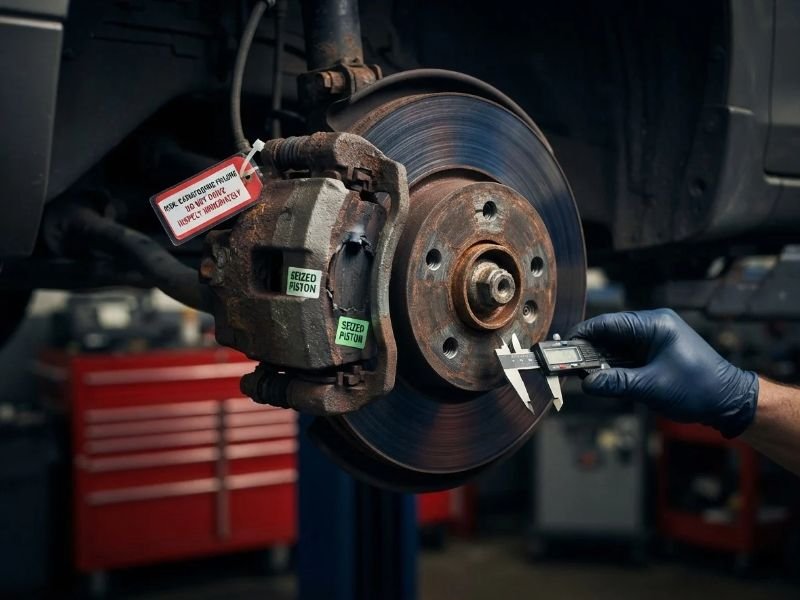
There is no safe universal mileage or time limit.
A mildly sticking brake can rapidly become hotter and more severely damaged during a longer drive, especially in traffic or on roads requiring frequent braking.
The amount of damage also depends on whether the caliper is:
- Slightly sticking
- Completely seized
- Leaking
- Failing to apply
- Causing severe overheating
Once caliper symptoms are confirmed or strongly suspected, prompt diagnosis is the safer approach.
Can a Faulty Brake Caliper Be Repaired?
Sometimes.
Whether a caliper can be serviced depends on what failed and its overall condition.
For example, a problem caused by dry or corroded slide pins may sometimes be corrected by servicing the slide mechanism and replacing damaged hardware.
A caliper with a badly seized piston, leaking seal, extensive corrosion, or structural damage may require replacement or professional rebuilding.
Brake components should not be repaired by guesswork.
The cause of the failure needs to be identified first.
Do Brake Calipers Need to Be Replaced in Pairs?
Brake calipers do not universally have to be replaced in pairs.
If only one caliper has failed and the opposite caliper is in good condition, replacing the faulty unit may be appropriate.
However, both sides should be inspected carefully because they are usually the same age and have operated under similar conditions.
Brake pads and rotors are generally serviced in axle pairs to maintain balanced braking characteristics.
A technician can determine whether replacing one or both calipers makes sense based on their condition.
What Else Should Be Replaced With a Bad Caliper?
A bad caliper can damage other brake components.
Depending on the severity of the problem, the repair may also require:
- Brake pads
- Rotor
- Caliper hardware
- Brake hose
- Brake fluid service
If one set of pads has been overheated or worn unevenly, pads on both sides of that axle are commonly replaced as a set.
Rotors should also be evaluated on both sides for thickness, damage, heat spots, and wear.
How to Help Prevent Brake Caliper Problems
Calipers are wear-related mechanical components, so no maintenance routine can guarantee they will never fail.
However, good brake maintenance can reduce avoidable problems.
Have the braking system inspected periodically, especially when replacing pads or rotors.
Caliper slide pins should move freely and use the correct brake-compatible lubricant where required.
Damaged boots should be addressed before water and contaminants cause corrosion.
Brake fluid should also be maintained according to the vehicle manufacturer’s recommendations.
Vehicles exposed to road salt or long periods of inactivity may benefit from more frequent brake inspections.
When Should You Have the Brakes Inspected?
Schedule a brake inspection if you notice any meaningful change in how the vehicle stops.
Do not wait for several symptoms to appear together.
Particular warning signs include:
- Pulling during braking
- One wheel running unusually hot
- Burning odor
- Grinding
- Fluid around the brake assembly
- Rapid or uneven pad wear
- Brake pedal feeling different
- Vehicle dragging while driving
Catching the problem early can help protect the rotor, pads, hoses, and other brake components from secondary damage.
FAQs About Faulty Brake Caliper Symptoms
What Is the Most Common Sign of a Faulty Brake Caliper?
A vehicle pulling to one side and excessive heat from one wheel are two of the most recognizable signs of a sticking brake caliper.
Uneven pad wear is another common clue found during inspection.
What Does a Bad Brake Caliper Feel Like While Driving?
The vehicle may pull, feel sluggish, resist coasting, or feel as though one brake is partially applied.
If the caliper fails to apply properly, braking may feel uneven or less effective.
Can a Bad Brake Caliper Make a Grinding Noise?
Yes.
A sticking caliper can wear a brake pad rapidly until the friction material is gone. The remaining metal components can then grind against the rotor.
Grinding can also have other causes, so the brake assembly should be inspected.
Can a Bad Caliper Cause a Burning Smell?
Yes.
A caliper that remains partially applied causes continuous pad-to-rotor friction.
The resulting heat can produce a noticeable burning odor and, in severe cases, smoke.
Will a Bad Brake Caliper Leak Fluid?
It can.
A damaged piston seal, caliper body, bleeder area, or brake hose connection can allow brake fluid to leak.
Any suspected brake fluid leak should be addressed promptly.
Can a Faulty Brake Caliper Cause Uneven Brake Pad Wear?
Yes.
A sticking piston or slide pin can keep one pad in greater contact with the rotor than the other, producing rapid or uneven wear.
Can a Bad Brake Caliper Cause the Car to Shake?
It can indirectly.
A dragging caliper may overheat or unevenly wear the rotor, which can contribute to vibration during braking.
However, brake vibration has several possible causes.
Can a Faulty Caliper Cause a Soft Brake Pedal?
A leaking caliper can contribute to a soft pedal because hydraulic fluid is being lost.
A soft brake pedal can also result from air in the brake system, hose problems, master cylinder faults, and other hydraulic issues.
Can a Seized Brake Caliper Free Itself?
A sticking brake may occasionally release temporarily, but that does not mean the problem has been repaired.
Corrosion, damaged seals, sticking slide pins, or a restricted brake hose can cause the problem to return.
The braking system should still be inspected.
How Do I Know If My Caliper or Brake Hose Is Bad?
Both can cause a brake to remain applied.
Diagnosis generally involves checking hydraulic pressure release, piston movement, hose condition, and whether the wheel frees up when pressure is released.
Because the symptoms overlap, proper brake diagnosis is preferable to replacing parts based only on symptoms.
Conclusion
The most important faulty brake caliper symptoms include pulling to one side, excessive heat from a wheel, a burning smell, uneven brake pad wear, brake fluid leakage, unusual noises, constant brake drag, and reduced braking performance.
Some faulty calipers remain partially applied, while others cannot apply enough braking pressure. Problems with slide pins, pistons, seals, brake hoses, corrosion, or parking brake mechanisms can all create similar symptoms.
Because a caliper problem can affect braking balance and generate significant heat, do not ignore noticeable changes in braking behavior. If the vehicle has severe pulling, smoke, leaking brake fluid, an extremely hot wheel, or reduced stopping ability, avoid normal driving and have the braking system inspected as soon as possible.