Where Is the Master Brake Cylinder in a Car? Location and Signs
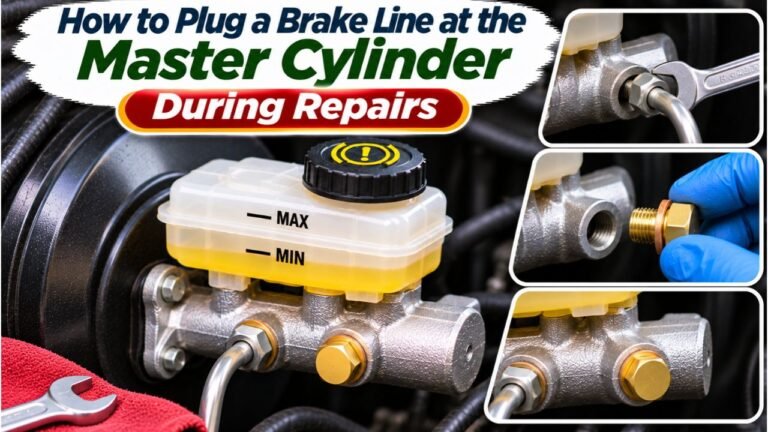
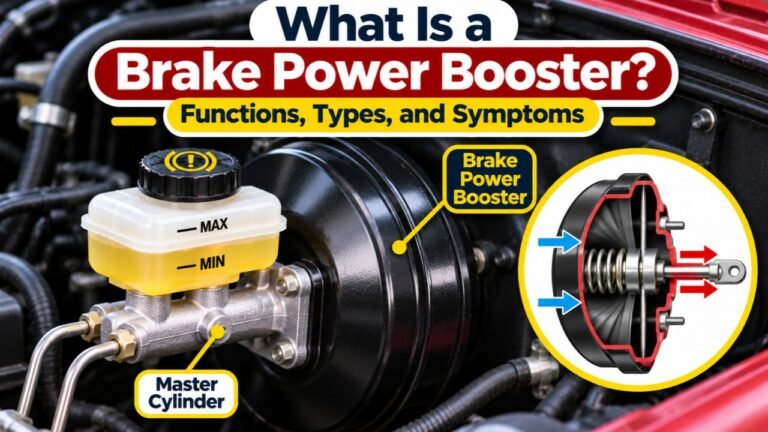
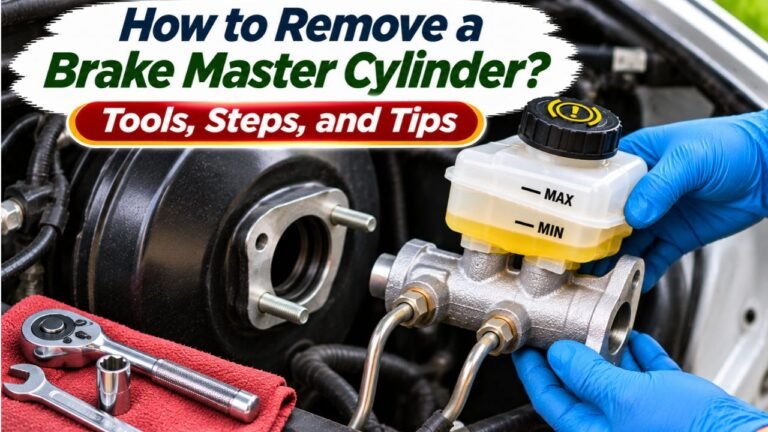
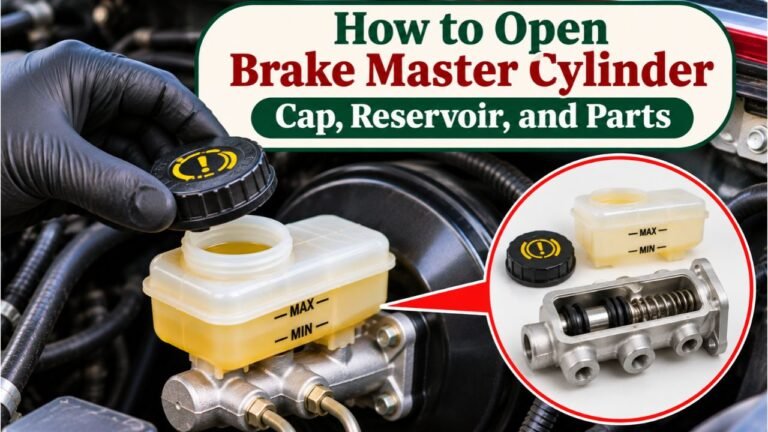
The brake master cylinder is usually located under the hood, toward the back of the engine compartment on the driver’s side, attached to the brake booster near the firewall. It is commonly positioned directly beneath the brake fluid reservoir, which is often a translucent plastic container marked with MIN and MAX lines.
In most conventional cars, the master cylinder is a relatively small metal component connected to the brake pedal through the brake booster or a mechanical linkage. It generates hydraulic pressure when you press the brake pedal, allowing the braking system to slow or stop the vehicle.
However, its exact location depends on the vehicle’s design. Right-hand-drive cars often have the assembly on the opposite side from left-hand-drive models, while some hybrid and electric vehicles use integrated or electronically controlled braking systems with different layouts.
You can usually identify the master cylinder by locating the brake fluid reservoir and following it downward toward the metal hydraulic unit.
In this article, I explain where the master brake cylinder is located, how to identify it under the hood, and how it connects to the brake booster and brake lines. I also cover different vehicle layouts, common failure symptoms, leak locations, and when professional brake service is necessary.
Where Is the Master Brake Cylinder in a Car? Quick Answer
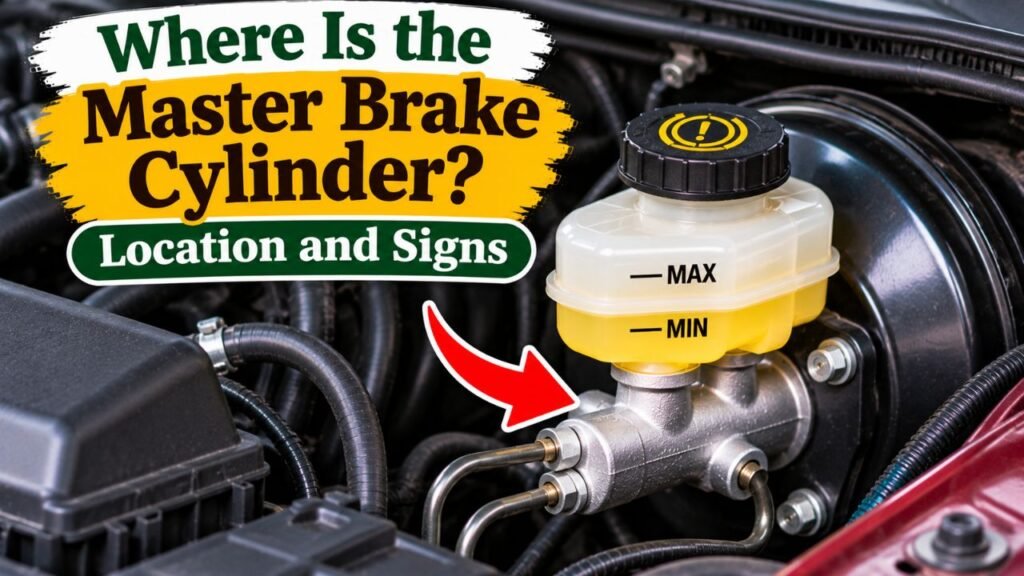
In most cars, the brake master cylinder sits at the rear of the engine compartment, mounted in front of the brake booster and close to the firewall.
The firewall is the structural partition separating the engine compartment from the passenger cabin.
This location allows the master cylinder to connect mechanically with the brake pedal while remaining accessible from the engine compartment.
Brake Master Cylinder Location Guide
| Component | Typical Location | How to Identify It |
| Brake master cylinder | Rear of engine compartment, near firewall | Metal hydraulic cylinder with brake line fittings |
| Brake fluid reservoir | Usually above the master cylinder | Translucent plastic container with fluid markings |
| Brake booster | Behind the master cylinder | Often a large round black housing |
| Brake pedal | Driver’s footwell | Pedal used to activate the brakes |
| Brake lines | Connected to master cylinder outlets | Small rigid metal hydraulic tubes |
| ABS hydraulic unit | Elsewhere in engine compartment or integrated with another assembly | Metal block with multiple brake lines and electrical connections |
| Clutch master cylinder | Near firewall on some manual cars | Smaller hydraulic cylinder linked to clutch pedal |
The CarParts.com guide to master cylinder location, reviewed by an ASE-certified master automobile technician, confirms that the master cylinder is typically located on the driver’s side of the engine bay, beneath the brake fluid reservoir and attached to the brake booster.
Is the Master Cylinder on the Driver’s Side?
Usually, yes, in conventional vehicle layouts.
For left-hand-drive cars, commonly used in the United States, the assembly is generally toward the left side of the vehicle when viewed from the driver’s seat.
For right-hand-drive cars, it is commonly positioned toward the right side.
However, packaging and hydraulic-system design can change the exact position.
Is the Master Cylinder Inside or Outside the Car?
The main hydraulic master cylinder is generally located in the engine compartment.
Its mechanical input connects to the brake pedal inside the cabin through the firewall or associated brake-assist components.
Therefore, you normally locate the master cylinder by opening the hood rather than looking underneath the dashboard.
What Does a Brake Master Cylinder Look Like?
A conventional brake master cylinder is usually a compact metal component with a brake fluid reservoir connected to its upper portion.
The body may be made from aluminum or cast iron, depending on the vehicle.
Main Visual Features
Look for these characteristics:
- A metal cylinder-shaped hydraulic body
- A plastic or metal brake fluid reservoir
- Two or more hydraulic outlet connections
- Small metal brake lines connected to the body
- Mounting hardware near the firewall or brake booster
- A brake fluid level sensor connector on some vehicles
The exact design varies.
Some master cylinders have visible cylindrical housings, while others have more compact rectangular or irregular castings.
What Color Is the Master Cylinder?
Many master cylinder bodies have a silver or gray metallic appearance.
Older components may show discoloration or surface corrosion.
The brake booster behind the cylinder is often black, although other finishes are possible.
Color alone is not a reliable way to identify the component.
What Does the Brake Fluid Reservoir Look Like?
On many modern vehicles, the reservoir is a small translucent plastic container.
It may have:
- A black or dark-colored cap
- MIN and MAX markings
- A DOT brake fluid specification
- A brake warning symbol
- An electrical fluid-level sensor connection
The reservoir usually sits above the master cylinder.
However, some vehicles use a remotely mounted reservoir connected by hoses.
How Big Is a Brake Master Cylinder?
The size depends on the vehicle.
The metal cylinder is generally much smaller than the round brake booster behind it.
Passenger cars, trucks, and specialized vehicles may use different master cylinder dimensions.
Do not rely on a universal measurement to identify it.
How to Find the Brake Master Cylinder Under the Hood
You can usually locate the master cylinder without removing any components.
The following method is intended for visual identification, not disassembly.
Step 1: Park the Car Safely
Park on level ground.
Turn off the engine and secure the vehicle.
If the engine has been running, avoid touching hot components.
Step 2: Open the Hood
Release the hood using the interior release handle.
Secure it using the support rod or the vehicle’s hood-support mechanism.
Make sure the hood cannot close unexpectedly.
Step 3: Look Toward the Rear of the Engine Compartment
Stand in front of the vehicle and look toward the windshield.
The firewall is at the back of the engine compartment.
On a typical left-hand-drive American car, the master cylinder is often toward the vehicle’s left side.
Remember that the vehicle’s left side appears on your right when you stand in front of it facing the engine.
This difference in viewing direction can be confusing.
Step 4: Find the Brake Fluid Reservoir
Look for a translucent container with brake fluid markings.
It is commonly positioned high in the engine compartment.
Check for a cap labeled DOT 3, DOT 4, or another manufacturer-specified brake fluid.
Do not confuse this reservoir with the coolant, windshield washer, or power steering reservoir.
Step 5: Look Beneath the Reservoir
In many conventional brake systems, the reservoir connects directly to the master cylinder.
Look below it for a metal body with hydraulic line connections.
That body is the master cylinder.
Step 6: Identify the Brake Booster
Look behind the master cylinder, toward the firewall.
Many vehicles have a large round brake booster.
The master cylinder is attached to the front of that booster.
However, some vehicles use hydraulic or electronic brake-assist systems rather than a conventional round vacuum booster.
Step 7: Look for the Brake Lines
The master cylinder normally has rigid metal brake lines connected to its outlet ports.
These lines carry hydraulic pressure toward other braking components.
Do not loosen or disconnect them merely to identify the cylinder.
Step 8: Verify the Location
Compare the assembly with a diagram in the vehicle’s owner’s or service manual.
If the location is unclear, use documentation for the exact year, make, and model.
Quick Identification Checklist
| What You See | What It May Indicate |
| Translucent container with MIN/MAX | Brake fluid reservoir |
| Metal housing below reservoir | Master cylinder |
| Large round housing behind cylinder | Conventional brake booster |
| Rigid metal hydraulic lines | Brake pressure connections |
| Several lines and a large electrical connector | May be ABS hydraulic unit |
| Smaller reservoir near clutch pedal side | May be clutch master cylinder |
Where Is the Brake Master Cylinder Located on Left-Hand-Drive Cars?
Most passenger cars sold in the United States use left-hand-drive configurations.
The driver sits on the left side of the vehicle.
The brake master cylinder is commonly located at the rear of the engine compartment on that side.
Typical Left-Hand-Drive Arrangement
The relationship between the main components is usually:
Brake pedal → Firewall → Brake booster → Brake master cylinder
The brake fluid reservoir is commonly positioned above the cylinder.
The brake lines connect the master cylinder to the rest of the hydraulic braking system.
Why Is It Near the Driver?
The brake master cylinder needs to receive force from the brake pedal.
Mounting it near the firewall and brake pedal allows a direct mechanical connection in many conventional designs.
The brake booster may increase the force transmitted to the master cylinder.
Is It Always in the Same Position?
No.
Even among left-hand-drive vehicles, the exact location can vary because of:
- Engine size
- Engine compartment packaging
- Brake-assist system design
- Reservoir configuration
- Vehicle platform
- Electronic braking components
On some vehicles, the assembly is partially hidden by plastic covers or surrounding components.
Where Is the Brake Master Cylinder on Right-Hand-Drive Cars?
Right-hand-drive vehicles commonly have the brake pedal and master cylinder assembly on the vehicle’s right side.
These vehicles are widely used in countries such as the United Kingdom, Japan, Australia, and India.
Does the Location Switch Sides?
Often, yes.
Because the driver’s brake pedal is on the right, the master cylinder and brake-assist components are commonly positioned near the right-side firewall.
However, some vehicles use linkages, remote-mounted components, or other packaging arrangements.
The master cylinder is not guaranteed to be directly opposite the position used in every left-hand-drive version.
Left-Hand-Drive vs. Right-Hand-Drive Comparison
| Vehicle Type | Typical Master Cylinder Position |
| Left-hand-drive passenger car | Rear of engine bay, vehicle’s left side |
| Right-hand-drive passenger car | Rear of engine bay, vehicle’s right side |
| Older car with manual brakes | Near firewall, potentially without booster |
| Modern hybrid | Depends on integrated hydraulic system |
| Modern EV | Depends on brake-assist and hydraulic design |
Always identify the vehicle’s actual layout rather than assuming that a diagram from another market matches it.
Is the Brake Master Cylinder Attached to the Brake Booster?
On many conventional vehicles, yes.
The master cylinder is mounted directly to the front of the brake booster.
The booster is attached to the firewall.
What Is a Brake Booster?
A brake booster is a device that assists the driver’s braking effort.
Many conventional vehicles use engine vacuum or another vacuum source to provide this assistance.
Other vehicles use hydraulic or electrically powered brake assistance.
What Does a Brake Booster Look Like?
A conventional vacuum brake booster is often a large, round housing.
It sits behind the master cylinder.
A vacuum hose or other connection may be attached to it.
According to NAPA’s brake booster guide, most conventional power brake boosters are located between the firewall and the brake master cylinder.
NAPA also explains that some vehicles use hydraulic brake boosters instead of vacuum-operated units.
Master Cylinder vs. Brake Booster
| Feature | Brake Master Cylinder | Brake Booster |
| Main purpose | Generates hydraulic pressure | Assists brake pedal effort |
| Typical location | In front of booster | Behind master cylinder |
| Common appearance | Smaller metal hydraulic body | Large round or other assist assembly |
| Connected to brake fluid | Yes | Depends on booster design |
| Connected to brake pedal | Through linkage or assist system | Usually mechanically linked |
| Common failure symptom | Soft or sinking pedal, hydraulic pressure loss | Unusually hard pedal or reduced assist |
These symptoms are general clues, not definitive diagnoses.
A brake booster malfunction can cause high pedal effort, while a master cylinder fault can affect hydraulic pressure.
However, other brake-system problems can produce similar symptoms.
Where Is the Brake Fluid Reservoir Compared With the Master Cylinder?
The brake fluid reservoir is generally mounted above the master cylinder.
Its purpose is to supply hydraulic fluid to the master cylinder’s internal chambers.
Is the Reservoir Part of the Master Cylinder?
It is often treated as part of the master cylinder assembly.
However, the reservoir and master cylinder are distinct components.
On many vehicles, a separate plastic reservoir attaches to the cylinder using seals or fittings.
Other vehicles use a remote reservoir connected by hydraulic-compatible hoses.
Why Is the Reservoir Above the Cylinder?
Positioning the reservoir above the master cylinder allows fluid to feed the master cylinder’s internal supply passages.
This helps maintain the hydraulic system’s fluid supply as brake components operate and wear.
Does Every Car Have a Plastic Reservoir?
No.
Many modern cars use translucent plastic reservoirs.
Some older vehicles have metal reservoirs or integrated cast housings.
The exact design depends on the vehicle.
How Full Should the Reservoir Be?
On most conventional vehicles, brake fluid should be between the MIN and MAX marks when checked according to the manufacturer’s procedure.
A level below MAX is not automatically a problem.
However, a level at or below MIN requires attention.
A gradual decrease can occur as brake pads wear, while sudden or repeated fluid loss can indicate a leak.
Do not top up repeatedly without identifying the cause.
What Does the Brake Master Cylinder Do?
The master cylinder converts mechanical force from the brake pedal into hydraulic pressure.
This pressure operates the wheel brakes.
How the Master Cylinder Works
A conventional system operates as follows:
- The driver presses the brake pedal.
- Pedal force reaches the master cylinder through the linkage or brake booster.
- Internal pistons move within the master cylinder.
- Hydraulic pressure develops in the brake circuits.
- The pressure travels through the brake lines.
- Brake calipers or wheel cylinders apply the brakes.
- The vehicle slows as friction acts at the wheels.
When the pedal is released, the hydraulic system returns toward its normal operating state.
Why Does the Master Cylinder Have Two Circuits?
Most modern passenger cars use a dual-circuit or tandem master cylinder design.
This provides two hydraulic circuits.
The arrangement is intended to retain some braking capability if one circuit develops certain faults.
However, partial braking capability does not mean the car remains safe for normal driving after a hydraulic failure.
Any suspected circuit failure requires immediate attention.
Is the Master Cylinder Responsible for All Four Brakes?
In a typical conventional hydraulic braking system, the master cylinder supplies pressure to hydraulic circuits serving the wheel brakes.
However, the exact distribution varies.
Some vehicles use diagonal circuit arrangements.
Others use front/rear circuit configurations or more complex electronic hydraulic systems.
Do not assume every vehicle has identical brake line routing.
Where Is the Master Cylinder on Hybrid and Electric Cars?
Hybrid and electric vehicles still use friction brakes and hydraulic braking components.
However, their braking systems may be more complex than those of conventional gasoline-powered cars.
Do Electric Cars Have Brake Master Cylinders?
Many do, or they use an integrated hydraulic braking unit that performs related functions.
Regenerative braking does not eliminate the need for friction brakes.
However, brake-system architecture varies by manufacturer and model.
Why Can the Master Cylinder Be Harder to Identify?
Some hybrids and EVs use:
- Electrically assisted braking
- Brake-by-wire control
- Integrated brake booster and master cylinder assemblies
- Hydraulic accumulators
- Electronic brake actuators
- Remote reservoirs
These systems may not have the familiar large round vacuum booster.
The master cylinder may be integrated into a larger assembly.
Is the Reservoir Still Under the Hood?
Often, yes, but the exact location is vehicle-specific.
Some reservoirs are partially hidden by covers or other equipment.
Use the owner’s manual to locate the reservoir.
For repair work, use the manufacturer’s service documentation.
Is It Safe to Disconnect a Hybrid Brake Master Cylinder?
Not without the correct service procedure.
Certain electronically controlled systems can build or retain hydraulic pressure even when the vehicle appears switched off.
Improper disconnection may cause injury, fluid loss, or system damage.
Specialized diagnostic equipment may be required to service or bleed the system.
For these vehicles, professional brake service is particularly important.
How to Tell the Master Cylinder From the ABS Module
The ABS hydraulic unit and brake master cylinder can look similar to someone unfamiliar with braking components.
Both can contain metal housings and hydraulic line connections.
However, they have different functions.
Brake Master Cylinder
The master cylinder generates hydraulic pressure in response to brake pedal input.
In a conventional system, it is usually connected to the brake booster and brake fluid reservoir.
ABS Hydraulic Unit
The anti-lock braking system uses valves and other components to regulate hydraulic pressure during certain braking conditions.
The ABS hydraulic unit often has:
- A metal valve block
- Several connected brake lines
- A substantial electrical connector
- A pump or motor assembly
It may be mounted elsewhere in the engine compartment.
Master Cylinder vs. ABS Module
| Feature | Master Cylinder | ABS Hydraulic Unit |
| Primary function | Produces hydraulic pressure | Regulates pressure during ABS operation |
| Connection to brake pedal | Mechanical or integrated control input | Usually receives electronic control commands |
| Common location | Near firewall and brake booster | Varies by vehicle |
| Brake fluid reservoir | Often mounted directly above | Usually separate, though designs vary |
| Brake line connections | Typically a smaller number of outlets | Often multiple inlet and outlet connections |
| Electrical connections | May have fluid-level sensor wiring | Usually has a substantial electrical connector |
In some modern integrated brake systems, these components may be combined or arranged differently.
Use a vehicle-specific diagram when the assembly is unclear.
Brake Master Cylinder vs. Clutch Master Cylinder
Manual-transmission cars may have both a brake master cylinder and a clutch master cylinder.
These are separate hydraulic devices.
Where Is the Clutch Master Cylinder?
In many manual-transmission vehicles, the clutch master cylinder is positioned near the firewall and connected to the clutch pedal.
It may have a smaller reservoir.
Some vehicles share a fluid reservoir between the brake and clutch hydraulic systems.
How Do You Tell Them Apart?
The brake master cylinder is connected to the braking hydraulic circuits.
The clutch master cylinder sends hydraulic pressure to the clutch slave cylinder or release mechanism.
Brake vs. Clutch Master Cylinder
| Feature | Brake Master Cylinder | Clutch Master Cylinder |
| Operated by | Brake pedal | Clutch pedal |
| Main function | Applies hydraulic brakes | Operates clutch release system |
| Common location | Firewall near brake booster | Firewall near clutch pedal linkage |
| Reservoir | Dedicated or shared | Dedicated or shared |
| Hydraulic connections | Brake circuits | Clutch slave/release circuit |
| Present on every car? | Conventional master-cylinder arrangement varies | Only on compatible hydraulic clutch vehicles |
Do not confuse the clutch reservoir with the brake reservoir.
Always verify which component you are inspecting.
Where Can the Brake Master Cylinder Leak From?
Master cylinders contain hydraulic seals and fluid passages.
If a seal or another component fails, fluid may escape externally or hydraulic pressure may be lost internally.
Common Master Cylinder Leak Areas
Potential leak locations include:
- Brake line fittings
- Reservoir mounting seals
- Master cylinder body
- Rear seal near the brake booster
- Hydraulic connections
- Other manufacturer-specific sealing points
The precise leak location depends on the design.
Leak Between the Master Cylinder and Booster
A rear master-cylinder seal can fail and allow brake fluid to leak toward the brake booster.
In some cases, fluid may collect inside the booster housing.
This means an internal leak may not always appear as an obvious puddle underneath the car.
Leak at Brake Line Connections
Hydraulic lines attach to the master cylinder through fittings.
Damage, corrosion, or improper service can cause leakage.
Do not tighten brake line fittings randomly without proper diagnosis.
Reservoir Seal Leak
Some plastic reservoirs connect to the master cylinder using rubber sealing grommets.
If the seals deteriorate or the reservoir is damaged, fluid may escape.
Can a Master Cylinder Fail Without an External Leak?
Yes.
Internal seal failure can allow hydraulic pressure to bypass piston seals.
This may cause a sinking brake pedal even without visible fluid loss.
However, a sinking pedal has several possible causes and requires diagnosis.
What Are the Symptoms of a Bad Brake Master Cylinder?
A faulty master cylinder may cause several braking problems.
However, these symptoms are not exclusive to master cylinder failure.
Common Warning Signs
| Symptom | Possible Explanation | What to Do |
| Brake pedal slowly sinks | Internal hydraulic pressure loss | Do not drive; arrange inspection |
| Soft or spongy brake pedal | Air or hydraulic malfunction | Professional diagnosis |
| Brake fluid loss | External leak | Inspect the hydraulic system |
| Unusual pedal travel | Hydraulic or mechanical problem | Stop driving if braking is abnormal |
| Brake warning light | Fluid level or system fault | Follow warning instructions |
| Visible fluid near booster | Possible master cylinder seal leak | Arrange brake inspection |
| Reduced braking effectiveness | Serious system problem | Stop safely and arrange towing |
| Uneven braking | Many possible brake faults | Diagnose entire brake system |
1. Sinking Brake Pedal
One possible symptom of internal master-cylinder leakage is a pedal that gradually moves farther toward the floor under steady pressure.
This can occur when hydraulic fluid bypasses internal seals.
However, other faults can cause similar behavior.
A sinking brake pedal is a serious warning.
2. Soft or Spongy Pedal
A soft pedal may indicate trapped air, fluid vapor, leakage, or another hydraulic problem.
It does not automatically mean the master cylinder needs replacement.
3. Brake Fluid Leakage
A damaged master cylinder may leak fluid.
However, leaks can also originate from hoses, lines, calipers, and wheel cylinders.
The source must be identified.
4. Brake Warning Light
Some vehicles use warning lights for low fluid or hydraulic brake-system faults.
An illuminated brake warning does not prove master cylinder failure.
The parking brake or other systems may also trigger warnings.
5. Poor Braking Performance
If hydraulic pressure is not maintained correctly, braking effectiveness may suffer.
This is a serious safety concern.
Do not continue driving with reduced stopping ability.
How to Check the Master Cylinder Without Removing It
You can visually inspect the general area without disassembling the braking system.
However, a visual inspection cannot determine whether all internal components are functioning correctly.
Basic Visual Inspection
- Park safely and switch off the vehicle.
- Open the hood.
- Locate the brake fluid reservoir.
- Identify the master cylinder beneath or connected to it.
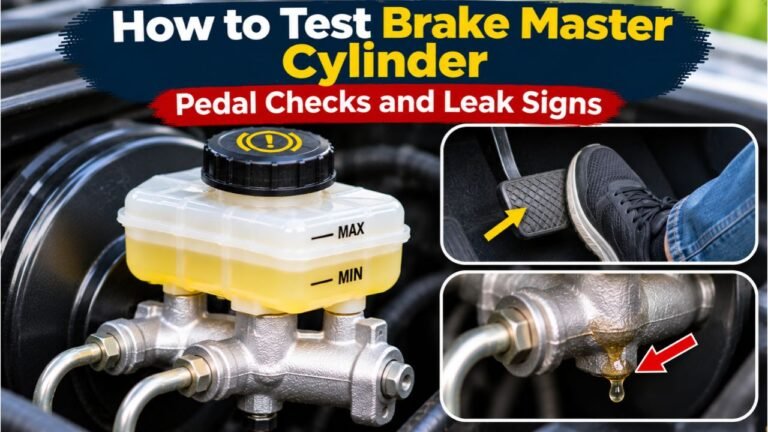
- Look for obvious fluid leakage around accessible areas.
- Inspect the reservoir level through its wall.
- Look for damaged or visibly wet connections.
- Avoid touching or disconnecting hydraulic components.
The Haynes guide to checking fluid levels on Chevrolet Equinox, GMC Terrain, and related vehicles illustrates the master cylinder’s location at the upper rear of the engine compartment and explains how the translucent reservoir allows visual fluid-level checks.
Can You Test the Master Cylinder by Pressing the Brake Pedal?
A technician may use brake pedal behavior as part of hydraulic-system diagnosis.
However, pedal feel alone cannot reliably identify the cause of a problem.
For example, a soft pedal may be caused by trapped air or another leak rather than the master cylinder itself.
Should You Disconnect Brake Lines to Test It?
Not as part of a basic inspection.
Disconnecting brake lines introduces fluid loss and may allow air into the system.
Incorrectly serviced hydraulic brakes can fail.
Pressure testing and component isolation should follow the manufacturer’s service procedures.
Can a Master Cylinder Be Bad With a Full Reservoir?
Yes.
A master cylinder may develop internal seal problems without losing fluid externally.
Therefore, a full reservoir does not guarantee that the component is functioning correctly.
Can You Drive With a Bad Brake Master Cylinder?
Do not drive a vehicle with suspected master-cylinder failure or abnormal hydraulic braking performance.
The master cylinder is a safety-critical component.
If it cannot maintain adequate hydraulic pressure, the braking system may not respond as expected.
When You Should Stop Driving
Stop safely and arrange assistance if you experience:
- A brake pedal sinking toward the floor
- A sudden change in pedal travel
- Substantial loss of braking effectiveness
- A visible hydraulic leak
- Confirmed brake fluid below the specified minimum
- A serious brake-system warning accompanied by abnormal braking
Can You Just Add Brake Fluid?
Adding fluid does not repair a leaking or internally damaged master cylinder.
The reservoir may temporarily return to the correct level while the underlying problem remains.
Do not use repeated topping up as a substitute for repair.
Will the Parking Brake Still Work?
The parking brake operates through a system that may be mechanically or electronically distinct from the primary service brakes.
However, its capability and behavior vary by vehicle.
Do not rely on the parking brake as a substitute for repairing a failed hydraulic brake system.
Should You Tow the Car?
When braking performance is compromised or a serious hydraulic fault is suspected, towing or professional roadside assistance is the safer choice.
Do not attempt to drive the vehicle to a repair shop with unreliable brakes.
Can You Replace a Brake Master Cylinder Yourself?
Replacement is possible, but it is more involved than simply removing and installing a metal component.
The brake master cylinder is part of the hydraulic braking system.
Improper replacement can introduce air, damage fittings, or prevent adequate hydraulic pressure.
What Master Cylinder Replacement May Involve
Depending on the vehicle, the service may require:
- Correct replacement part selection
- Brake fluid handling
- Hydraulic line disconnection
- Master cylinder removal
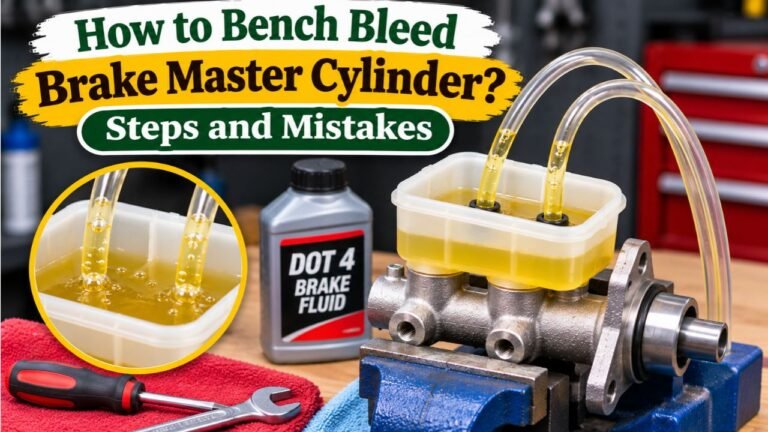
- Bench bleeding where specified
- Installation using specified torque values
- Hydraulic-system bleeding
- ABS-specific procedures
- Leak inspection
- Brake operation verification
Is Bench Bleeding Necessary?
Some replacement procedures require the master cylinder to be bench-bled before installation.
This helps remove air from the component.
However, the required procedure varies with the master cylinder and vehicle design.
Does ABS Make Replacement More Complicated?
It can.
Some ABS or electronically controlled braking systems require specialized bleeding procedures.
Certain vehicles may need diagnostic software to operate hydraulic valves during service.
Can You Replace Only the Seals?
Some master cylinders can be rebuilt using appropriate parts and procedures.
Others are generally replaced as complete units.
The decision depends on the model, component condition, parts availability, and service instructions.
Should You Use a Professional Mechanic?
For someone unfamiliar with hydraulic brake servicing, professional replacement is the safer option.
The braking system must operate correctly before the vehicle is returned to the road.
How Much Does Brake Master Cylinder Replacement Cost?
The cost varies substantially by vehicle and repair requirements.
A conventional master cylinder replacement can be less complex than replacing an integrated electronically controlled brake assembly.
Factors That Affect Replacement Cost
| Factor | Effect on Repair Cost |
| Vehicle make and model | Changes part pricing and availability |
| Master cylinder design | Conventional and integrated units differ |
| Labor access | Difficult engine-bay access increases labor |
| ABS service requirements | Specialized procedures may add work |
| Brake fluid service | Bleeding or replacement may be necessary |
| Additional damage | Leaking lines or booster contamination increases repairs |
| OEM vs. aftermarket parts | Affects replacement-part cost |
Is Replacing the Master Cylinder Expensive?
For some ordinary passenger cars, the replacement is relatively straightforward.
For others, particularly vehicles with integrated electronic brake units, parts and labor can be significantly more expensive.
A reliable estimate requires the exact vehicle details and a diagnosis.
Do You Have to Replace the Brake Booster Too?
Not automatically.
The master cylinder and booster are separate components on many conventional vehicles.
If the booster is functioning correctly and has not been damaged or contaminated, it may not require replacement.
However, a leaking master cylinder can sometimes allow fluid into the booster, which may create additional repair needs.
Should You Replace the Master Cylinder Before Diagnosing It?
No.
A soft pedal or braking problem can have multiple causes.
Replacing the master cylinder without confirming the fault may waste money and leave the actual problem unresolved.
Common Mistakes When Locating the Brake Master Cylinder
Several mistakes can make the master cylinder harder to identify.
Looking Near the Front Bumper
On most conventional vehicles, the master cylinder is at the rear of the engine compartment, not near the radiator.
Confusing the Booster With the Master Cylinder
The large round brake booster is often behind the smaller metal master cylinder.
They serve different purposes.
Assuming the Reservoir Is the Entire Master Cylinder
The reservoir stores fluid.
The master cylinder is the hydraulic component that develops brake pressure.
Looking on the Wrong Side of the Car
Left-hand-drive and right-hand-drive vehicles can have different layouts.
Use the vehicle’s steering position and actual service diagram.
Confusing the ABS Unit With the Master Cylinder
An ABS unit may have several hydraulic line connections and electrical wiring.
That does not automatically make it the master cylinder.
Confusing the Clutch and Brake Master Cylinders
Manual-transmission vehicles can have two different master cylinders.
Identify the pedal and hydraulic circuit associated with each one.
Assuming Every Car Has a Round Vacuum Booster
Some modern cars use hydraulic or electric brake-assist systems.
The conventional round booster may be absent.
Opening the Brake Reservoir Unnecessarily
Most translucent reservoirs allow an external level check.
Opening them unnecessarily can introduce moisture or dirt.
Loosening Brake Lines Just to Identify Components
Do not disconnect hydraulic components for a basic visual inspection.
This can introduce air and compromise braking.
How to Find the Exact Master Cylinder Location for Your Car
General instructions work for many vehicles, but vehicle-specific documentation is the most reliable source.
Check the Owner’s Manual
The owner’s manual often shows the location of the brake fluid reservoir in an under-hood component diagram.
However, it may not identify the master cylinder body separately.
Consult a Service Manual
A repair manual may show the complete master cylinder assembly, brake booster, hydraulic line routing, and mounting arrangement.
This is particularly useful for:
- Hybrids
- Electric vehicles
- Modern electronically controlled brake systems
- Vehicles with hidden reservoirs
- Cars with unusual engine-bay packaging
Confirm the Year, Make, and Model
Two vehicles with the same model name may have different brake system layouts across production years.
Engine options and regional configurations may also matter.
Compare a Manufacturer Diagram
Use the diagram to identify the reservoir, master cylinder, booster or assist unit, and brake line connections.
Do not rely exclusively on photographs of similar-looking vehicles.
Seek Help When Necessary
If the component is hidden or the design is unfamiliar, a qualified technician can identify it without risking damage to the braking system.
Conclusion
So, where is the master brake cylinder in a car? In most conventional passenger vehicles, it is located under the hood at the rear of the engine compartment, typically on the driver’s side near the firewall.
The master cylinder is commonly mounted directly in front of the brake booster, with a brake fluid reservoir above it.
You can usually identify the assembly by looking for the translucent reservoir, the metal hydraulic cylinder beneath it, and the rigid brake lines connected to the cylinder.
However, the exact location depends on the vehicle. Right-hand-drive cars often have a mirrored layout, while some hybrids and electric vehicles use integrated brake control systems that look different from conventional designs.
I recommend using the vehicle’s owner’s manual or service diagram whenever the assembly is not immediately visible.
If you are locating the master cylinder because of a soft pedal, brake fluid leak, sinking pedal, or brake warning light, avoid assuming that visual identification alone is enough to diagnose the problem.
The simplest way to find the master cylinder is to locate the brake fluid reservoir near the firewall and identify the hydraulic component connected beneath or behind it.
FAQs About Brake Master Cylinder Location
Where Is the Brake Master Cylinder Usually Located?
The brake master cylinder is usually located under the hood at the rear of the engine compartment, near the firewall on the driver’s side. It is commonly attached to the front of the brake booster, with the brake fluid reservoir positioned above it.
Is the Brake Master Cylinder on the Driver’s Side or Passenger Side?
Most conventional cars have the master cylinder on the driver’s side, near the brake pedal. For left-hand-drive vehicles, that is generally the vehicle’s left side. Right-hand-drive vehicles often place it on the right. However, some vehicle designs use different layouts.
Is the Brake Master Cylinder Under the Hood?
Yes, in most conventional passenger cars. It is usually accessible from the engine compartment near the firewall. The brake pedal is inside the cabin, but the master cylinder itself is normally located under the hood or incorporated into an under-hood braking assembly.
Is the Brake Fluid Reservoir the Same as the Master Cylinder?
No. The reservoir holds brake fluid and supplies it to the hydraulic system. The master cylinder contains internal pistons and develops hydraulic pressure when the brakes are applied. They are often connected as one assembly but perform different functions.
Is the Master Cylinder Connected to the Brake Booster?
Yes, in many conventional vehicles. The master cylinder is usually mounted directly to the front of the brake booster, which sits against the firewall. However, some vehicles use hydraulic or electronically controlled braking systems with different arrangements.
Can a Bad Master Cylinder Cause a Soft Brake Pedal?
Yes. Internal hydraulic leakage or other master cylinder faults can cause abnormal pedal movement or pressure loss. However, a soft pedal may also result from trapped air, brake line leaks, or other hydraulic problems. Professional diagnosis is necessary.
Can a Brake Master Cylinder Fail Without Leaking Fluid?
Yes. Internal seals can fail and allow hydraulic pressure to bypass the pistons without an obvious external leak. A sinking brake pedal is one possible symptom. However, the symptom is not exclusive to master cylinder failure.
Do Electric Cars Have a Brake Master Cylinder?
Many electric vehicles use hydraulic master cylinders or integrated hydraulic braking assemblies. Regenerative braking does not eliminate the need for friction brakes. However, some EV braking systems use different layouts and electronic controls, so the exact component location depends on the model.
How Do I Find the Master Cylinder on My Specific Car?
Start by locating the brake fluid reservoir near the firewall. Look beneath or behind it for the metal hydraulic cylinder and connected brake lines. Then confirm the assembly using the owner’s manual or a service diagram for your exact year, make, and model.