Is the Parking Brake Controlled by the Master Cylinder? Explained
No, the parking brake is not normally controlled by the brake master cylinder. In most passenger vehicles, the master cylinder operates the hydraulic service brakes, while the parking brake uses a separate mechanical cable or electronic actuator to hold the vehicle stationary. This separation allows the parking brake to function independently of normal hydraulic braking pressure.
The parking brake, also called the emergency brake, handbrake, or e-brake, may use some of the same rear-wheel components as the regular brakes. However, sharing brake pads, shoes, calipers, or rotors does not mean both systems rely on the master cylinder for operation.
Traditional parking brakes use a hand lever or foot pedal to pull steel cables. Modern electronic parking brakes use electric motors and control modules. Neither system normally requires the master cylinder to maintain hydraulic pressure while the vehicle is parked.
Understanding this distinction is important when diagnosing a parking brake that will not engage, a vehicle that rolls on an incline, or a brake pedal that feels soft.
In this article, I explain whether the parking brake is controlled by the master cylinder, how both systems operate, and which components they share. I also cover mechanical and electronic parking brakes, master cylinder failure symptoms, common parking brake problems, and how to identify the system that may need repair.
Is the Parking Brake Controlled by the Master Cylinder?
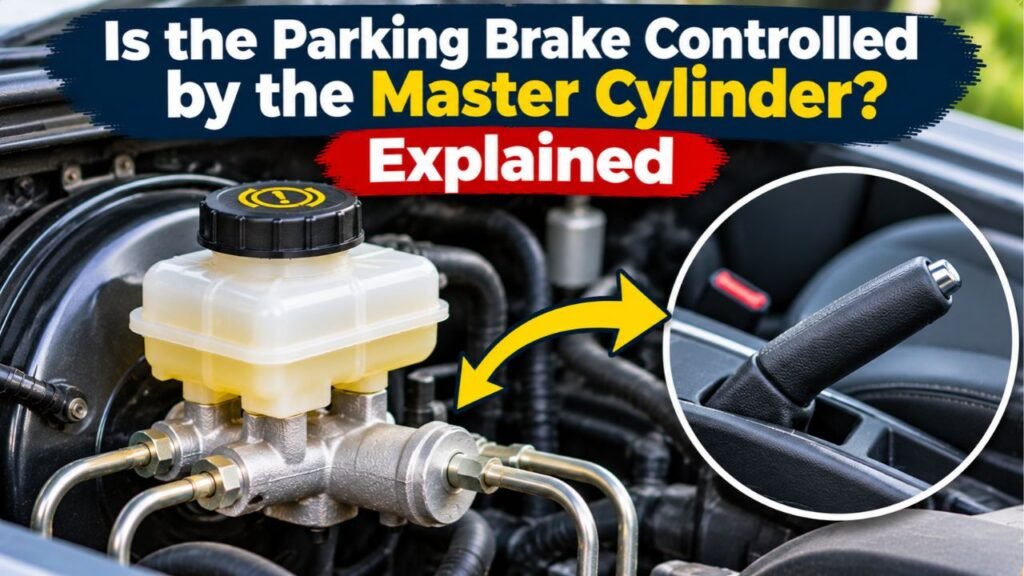
In most modern passenger vehicles, the parking brake operates independently of the master cylinder’s hydraulic pressure.
The two systems perform different functions.
The master cylinder is primarily responsible for generating hydraulic pressure when the driver presses the regular brake pedal.
The parking brake is primarily designed to prevent the vehicle from rolling after it has stopped.
Master Cylinder vs. Parking Brake
| Feature | Brake Master Cylinder | Parking Brake |
| Main purpose | Generate hydraulic braking pressure | Hold a parked vehicle stationary |
| Primary control | Brake pedal | Hand lever, foot pedal, or electronic switch |
| Operating system | Hydraulic | Mechanical or electromechanical in most cars |
| Uses brake fluid | Yes | Usually no for normal parking-brake actuation |
| Uses cables | Not for hydraulic pressure transfer | Many traditional systems do |
| Uses electric actuators | May be part of electronically assisted brake systems | Common in electronic parking brakes |
| Usually operates on | All four wheels through the service brake system | Usually rear wheels |
| Depends on master cylinder pressure | Yes, in conventional hydraulic service brakes | Normally no |
| Main function while driving | Slow and stop the vehicle | Primarily parking; emergency functions vary |
According to Ford’s official explanation of how a handbrake cable works, a conventional mechanical parking brake operates separately from the primary hydraulic braking system.
Ford also explains that newer electronic parking brakes use electrically controlled actuators instead of a conventional mechanical cable arrangement.
Why Are the Systems Separate?
The regular brake system and parking brake have different operating requirements.
The service brakes must repeatedly slow and stop the vehicle during normal driving.
The parking brake must maintain sufficient holding force after the driver releases the brake pedal.
A conventional master cylinder does not maintain the hydraulic pressure needed to hold the regular brakes applied indefinitely.
A parking brake therefore uses an independent holding mechanism.
Key Takeaway: The master cylinder generates hydraulic pressure for normal braking. The parking brake usually relies on mechanical or electromechanical force to keep the vehicle stationary.
What Does the Brake Master Cylinder Control?
The brake master cylinder is a central component of a conventional hydraulic braking system.
It converts force applied at the brake pedal into hydraulic pressure.
That pressure travels through brake lines and hoses to the brakes at the wheels.
How the Master Cylinder Works
When the driver presses the brake pedal:
- The pedal moves a pushrod or another brake-actuation mechanism.
- The master cylinder pistons move inside their bores.
- Brake fluid transmits hydraulic pressure.
- Pressure travels through the appropriate brake circuits.
- Caliper pistons or wheel cylinders apply the braking friction elements.
- The vehicle slows or stops.
In a disc brake system, hydraulic pressure moves the caliper piston and clamps the pads against the rotor.
In a drum brake system, hydraulic pressure moves the wheel-cylinder pistons, pushing the brake shoes against the drum.
The AutoZone guide to how car brakes work explains the master cylinder’s role in transferring pedal force through hydraulic fluid to the wheel brakes.
Does the Master Cylinder Control All Four Brakes?
In many conventional hydraulic passenger vehicles, the master cylinder supplies pressure to two service-brake circuits that collectively operate all four wheels.
Modern vehicles commonly use a tandem master cylinder with separate hydraulic circuits.
The circuit layout may be:
- Diagonally split.
- Front-to-rear split.
- Another manufacturer-specific arrangement.
The purpose is to preserve some braking capability if one hydraulic circuit fails.
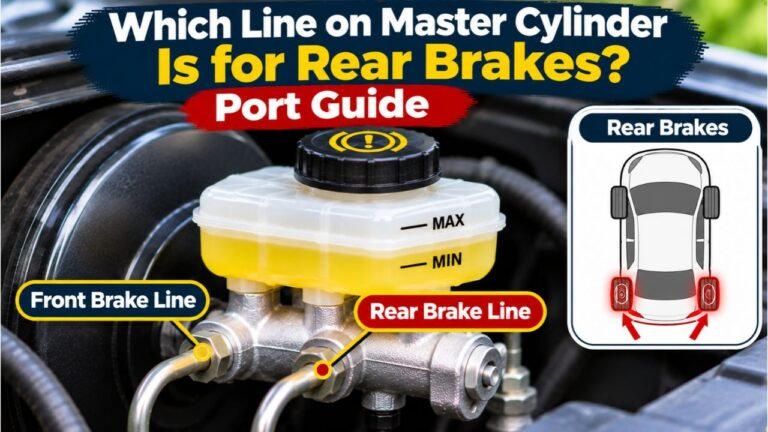
Does the Master Cylinder Control the Rear Brakes?
Yes, in a conventional hydraulic system, it supplies pressure to the rear service brakes through the appropriate hydraulic circuit.
However, that is different from operating the rear parking brake mechanism.
A rear wheel may have both:
- Hydraulic service-brake actuation.
- Separate mechanical parking-brake actuation.
The two functions may share friction components while remaining operationally distinct.
Does the Master Cylinder Control ABS?
The master cylinder supplies hydraulic pressure in many conventional ABS-equipped systems.
The ABS hydraulic control unit can then regulate pressure at individual wheels.
However, ABS operation is managed by electronic control systems, and some modern integrated braking systems use different pressure-generation arrangements.
The presence of ABS does not mean that the parking brake must operate through the master cylinder.
How Does a Mechanical Parking Brake Work?
A traditional mechanical parking brake uses a hand lever or foot pedal connected to cables and mechanical linkages.
It does not normally require hydraulic brake pressure.
Main Mechanical Parking Brake Components
The system may contain:
- Parking brake lever or pedal.
- Main parking brake cable.
- Cable equalizer.
- Left and right rear parking brake cables.
- Operating levers.
- Rear brake shoes or caliper mechanisms.
- Return springs.
- Adjustment components.
The exact arrangement depends on the vehicle.
What Happens When You Pull the Handbrake?
When the parking brake lever is pulled:
- The lever applies tension to a cable.
- The cable transfers that force toward the rear braking system.
- An equalizer may distribute force between the rear wheels.
- Mechanical linkages move the appropriate brake components.
- Brake shoes or pads press against a friction surface.
- A mechanical mechanism retains the applied position.
The brakes remain engaged until the parking brake is released.
Does a Cable Parking Brake Need Brake Fluid?
Not for its normal parking-brake actuation.
The cable transfers mechanical force directly.
However, the same rear-wheel assembly may also contain hydraulic components for normal braking.
For example, a rear caliper can use hydraulic pressure during service braking and a separate mechanical mechanism when the parking brake is applied.
What Happens When You Release the Parking Brake?
Releasing the parking brake removes the mechanical holding force.
Return springs and other components allow the brake mechanism to move away from its applied position.
If a cable is corroded, seized, or incorrectly adjusted, the parking brake may not release properly.
This can cause dragging brakes and excessive heat.
How Does an Electronic Parking Brake Work?
An electronic parking brake, commonly abbreviated EPB, replaces a conventional hand lever or foot pedal with an electronic control.
The driver typically activates it using a switch or button.
The parking brake is then applied through an electrically controlled mechanism.
Main EPB Components
Depending on the vehicle, an electronic parking brake may include:
- Parking brake switch.
- Electronic control module.
- Electric actuator motors.
- Rear brake calipers.
- Mechanical locking or screw mechanisms.
- Position or current monitoring.
- Electrical wiring.
- Relevant ABS or stability-control communication.
How an EPB Applies the Brakes
In a common caliper-mounted design:
- The driver operates the parking brake switch.
- A control module receives the request.
- The module checks relevant vehicle conditions.
- Electric motors operate mechanical mechanisms at the rear calipers.
- The mechanisms press the brake pads against the rotors.
- The parking brake remains mechanically engaged after the application is complete.
The exact process varies by manufacturer.
Does an Electronic Parking Brake Use the Master Cylinder?
Usually, the master cylinder does not provide the holding force for the applied electronic parking brake.
Instead, motors and mechanical mechanisms secure the brakes.
However, some electronic parking brake systems communicate with the ABS or electronic brake-control module.
Certain vehicles also use hydraulic service braking functions during emergency dynamic braking requests.
These features should not be confused with the normal mechanical holding function of the parking brake.
Does an EPB Work Without Brake Fluid?
The parking brake’s mechanical holding function generally does not rely on sustained hydraulic pressure.
However, this does not mean every electronic parking brake will function normally when brake fluid is absent or the service braking system has failed.
Electronic control logic, electrical power, fault conditions, and manufacturer-specific safety restrictions can affect operation.
Never assume that an EPB will compensate for a failed hydraulic brake system.
What About Automatic Parking Brake Release?
Some vehicles release the EPB automatically when certain conditions are met.
These may include:
- Driver’s door closed.
- Seat belt fastened.
- Appropriate gear selected.
- Brake pedal applied.
- Accelerator pressed.
- Vehicle ready to move.
The requirements vary by vehicle.
The master cylinder is not necessarily providing the parking-brake holding force simply because the driver must press the service brake pedal to release the EPB.
Mechanical vs. Electronic Parking Brake
Both systems are designed to hold a stationary vehicle, but they use different methods of control.
| Feature | Mechanical Parking Brake | Electronic Parking Brake |
| Driver control | Hand lever or foot pedal | Switch or button |
| Main actuation | Cable and mechanical linkage | Electric motor and mechanical actuator |
| Brake fluid required for normal holding | Usually no | Usually no |
| Depends on master cylinder pressure | Normally no | Normally no |
| Electrical power needed to apply | Generally no | Usually yes |
| Common failure | Stretched or seized cable | Actuator, wiring, or control fault |
| Maintenance | Cable, shoes, lever, adjustment | Actuators, pads, calibration, electronics |
| Automatic release | Uncommon | Available on many vehicles |
| Special service procedure | Vehicle-dependent | Often required for rear brake work |
Both systems can experience mechanical wear or damage.
The fact that an EPB uses electronics does not automatically make it more or less reliable than a cable-operated system.
Can the Parking Brake Work if the Master Cylinder Fails?
A conventional mechanical parking brake can often remain functional after a hydraulic master cylinder failure because it does not depend on hydraulic pressure to operate.
However, this doesn’t make the vehicle safe to drive.
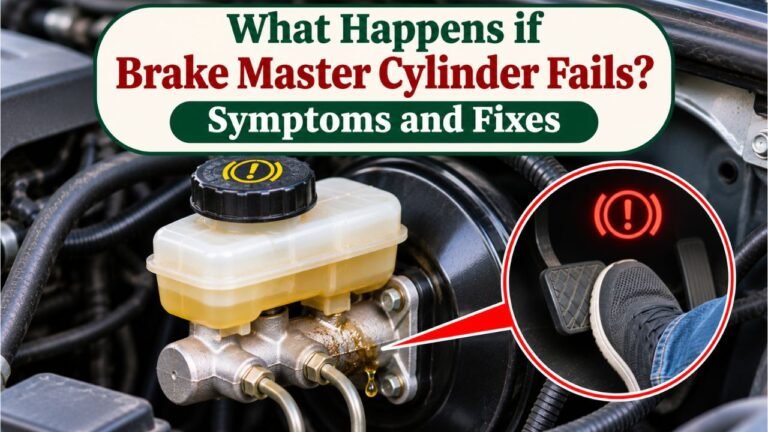
What Happens When the Master Cylinder Fails?
A master cylinder failure can reduce the hydraulic pressure needed for normal braking.
Possible symptoms include:
- Brake pedal sinking.
- Excessive pedal travel.
- Reduced braking effectiveness.
- Hydraulic fluid leakage.
- An abnormal or inconsistent pedal feel.
The severity depends on the failure.
Some hydraulic systems retain partial braking capability through an unaffected circuit.
Will the Parking Brake Still Hold the Car?
If the parking brake mechanism is independent and functioning correctly, it may still be capable of holding the vehicle stationary.
However, this depends on the parking brake’s design and condition.
A seized cable, worn parking brake shoes, failed actuator, or damaged caliper mechanism can prevent proper operation.
Can You Use the Parking Brake to Stop a Moving Car?
Some parking brakes are designed to provide limited secondary or emergency braking capability.
However, their behavior varies by vehicle.
Applying a mechanical parking brake abruptly while moving can cause rear-wheel lockup or loss of control.
Some electronic parking brakes include controlled emergency-braking functions, but their operation is manufacturer-specific.
If the service brakes fail while driving, follow the vehicle manufacturer’s emergency instructions.
Do not experiment with emergency parking brake operation during normal driving.
Should You Drive if the Master Cylinder Is Bad?
No.
A suspected master cylinder failure is a serious braking-system problem.
The parking brake is not an acceptable substitute for properly functioning service brakes.
Arrange professional inspection and appropriate towing.
Why Do Parking Brakes and Service Brakes Sometimes Use the Same Parts?
The systems can be independent while sharing certain wheel-end components.
This is particularly common at the rear wheels.
Example: Rear Drum Brakes
A rear drum brake assembly may contain:
- Hydraulic wheel cylinder.
- Brake shoes.
- Brake drum.
- Parking brake lever.
- Mechanical linkage.
- Parking brake cable.
During normal braking, hydraulic pressure from the master cylinder operates the wheel cylinder.
During parking brake application, a mechanical linkage moves the brake shoes.
The same shoes and drum provide the friction, but the force comes from different mechanisms.
Example: Rear Disc Brakes With Integrated Parking Brake
Some rear calipers incorporate a mechanical parking brake mechanism.
During service braking, hydraulic pressure moves the caliper piston.
During parking brake application, a cable-operated or electrically operated mechanism applies force through the caliper assembly.
The brake pads and rotor may be shared.
Example: Drum-in-Hat Parking Brake
Some vehicles have a small parking brake drum built into the center section of a rear disc brake rotor.
The regular service brake uses the outer disc surfaces.
The parking brake uses separate shoes against the internal drum surface.
This configuration provides distinct friction mechanisms within the same wheel assembly.
Parking Brake Designs Compared
| Rear Brake Design | Service Brake Operation | Parking Brake Operation |
| Rear drum brakes | Hydraulic wheel cylinder | Mechanical linkage operates shoes |
| Rear disc with cable-operated integrated caliper | Hydraulic caliper piston | Cable-operated caliper mechanism |
| Rear disc with electric caliper actuator | Hydraulic service brake | Motor-driven mechanical mechanism |
| Drum-in-hat rear disc | Hydraulic disc brake | Separate internal parking brake shoes |
Key Takeaway: Sharing brake hardware does not mean sharing the hydraulic master cylinder as the parking brake’s source of force.
What Does the Law Require for Parking Brake Independence?
U.S. light-vehicle braking standards establish separate requirements for service brakes and parking brakes.
Under 49 CFR § 571.135, Federal Motor Vehicle Safety Standard No. 135, covered vehicles must have a parking brake that uses a mechanical means to retain engagement.
The standard also requires the parking brake control to be independent of the service brake control.
What Does Independent Control Mean?
The driver must have a separate way to command parking brake application.
This may be a hand lever, foot pedal, or electronic switch.
It does not mean every component of the two braking systems must be physically separate.
Does an Electronic Parking Brake Meet This Requirement?
An electronically actuated parking brake can retain engagement through a mechanical mechanism.
Electrical energy may be used to apply the brake, while mechanical force retains it.
The details depend on the design.
Does This Apply to Every Vehicle?
FMVSS No. 135 applies to defined categories of light vehicles.
Other vehicle categories, including certain heavier trucks and trailers, follow different brake-system requirements.
The regulation therefore supports the distinction for covered light vehicles but should not be treated as a complete description of every brake design worldwide.
Can a Bad Master Cylinder Cause the Parking Brake Not to Work?
Generally, a defective master cylinder does not directly prevent a conventional mechanical parking brake from engaging.
However, other brake problems can affect both systems.
When the Master Cylinder Is the Problem
Typical master cylinder concerns involve hydraulic service braking.
Examples include:
- Internal seal leakage.
- External brake fluid leakage.
- Failure to maintain hydraulic pressure.
- Abnormal brake pedal travel.
These problems primarily affect the regular braking system.
When the Parking Brake Is the Problem
A parking brake that will not hold may have:
- A broken cable.
- A stretched or incorrectly adjusted cable.
- Worn parking brake shoes.
- Damaged mechanical linkages.
- A seized caliper parking-brake mechanism.
- Failed electronic actuators.
- An electrical or control-system fault.
These problems generally require parking brake diagnosis rather than master cylinder replacement.
Can Both Systems Fail at the Same Time?
Yes.
For example, damaged rear brake hardware can affect normal service braking and parking brake operation.
Severely worn rear brake components may also influence both systems when they share friction material.
An electronic control fault may affect multiple braking functions on certain vehicles.
However, simultaneous symptoms do not establish that the master cylinder controls the parking brake.
Proper diagnosis is necessary.
Signs of a Bad Brake Master Cylinder
Master cylinder problems primarily appear during normal service braking.
1. Brake Pedal Slowly Sinks
If the brake pedal gradually sinks under steady pressure, an internal hydraulic fault may be present.
A leaking master cylinder seal is one possibility.
However, other hydraulic problems can cause similar symptoms.
2. Excessive Brake Pedal Travel
A pedal that moves farther than normal may indicate inadequate hydraulic pressure or another braking-system fault.
Air in the system and external leaks should also be considered.
3. Brake Fluid Leakage
An external master cylinder leak may be visible near the master cylinder or brake booster.
However, some internal failures do not produce obvious external leakage.
4. Inconsistent Brake Pedal Feel
A master cylinder problem may cause unusual braking behavior.
However, diagnosis must distinguish hydraulic faults from ABS, caliper, hose, and other component problems.
5. Brake Warning Light
A brake warning indicator may illuminate when the hydraulic system detects certain faults.
However, the same red warning indicator may also illuminate when the parking brake is applied.
The light alone cannot identify a bad master cylinder.
Master Cylinder Symptoms vs. Parking Brake Symptoms
| Symptom | More Closely Associated With |
| Brake pedal slowly sinks | Hydraulic system or master cylinder |
| Brake fluid leaking near master cylinder | Master cylinder or nearby hydraulic component |
| Parking brake lever pulls unusually high | Cable adjustment or parking brake wear |
| Parking brake will not hold on a slope | Parking brake mechanism or friction components |
| EPB warning message | Electronic parking brake or related control fault |
| Rear brakes remain applied after parking brake release | Seized cable, actuator, or parking brake mechanism |
| Both braking functions abnormal | Requires complete braking-system diagnosis |
| Red brake warning light | May indicate parking brake status or hydraulic fault |
Important: If the regular brake pedal sinks, feels unusually soft, or braking performance is reduced, do not drive until the vehicle is inspected and repaired.
Why Is My Parking Brake Not Working?
A parking brake may fail to hold the vehicle for several reasons.
The cause depends on whether the vehicle uses a mechanical or electronic system.
Stretched or Misadjusted Parking Brake Cable
Over time, cable and linkage systems may develop excessive free play.
This can reduce the force applied to the rear brakes.
However, adjustment should follow the manufacturer’s specifications.
Overtightening a cable can cause the brakes to drag.
Broken Parking Brake Cable
A damaged or broken cable may prevent the operating force from reaching the rear brakes.
The lever may move with unusually little resistance.
Worn Parking Brake Shoes
In vehicles with separate parking brake shoes, excessive wear can reduce holding effectiveness.
The shoes may need inspection or replacement.
Seized Rear Caliper Mechanism
In an integrated rear-caliper design, the mechanical parking brake mechanism can seize or fail.
This can prevent correct engagement or release.
Corroded Mechanical Linkages
Rust and debris can restrict cable or lever movement.
This is especially relevant in vehicles exposed to road salt, water, or long periods of storage.
Failed Electronic Parking Brake Actuator
An electronic parking brake may stop working if an actuator motor or related mechanism fails.
The dashboard may display a parking brake warning.
Electrical Problems
An EPB may be affected by:
- Low battery voltage.
- Damaged wiring.
- Faulty switch.
- Control module problems.
- Failed actuator.
- Communication faults.
The exact cause requires diagnosis.
Incorrect Brake Service Procedure
Some electronic parking brake systems must be placed into service mode before rear brake pad replacement.
Improper service can damage actuators or prevent correct operation.
Follow the manufacturer-specific maintenance procedure.
Can Low Brake Fluid Affect the Parking Brake?
For a conventional cable-operated parking brake, low brake fluid does not directly control the mechanical holding force.
However, low fluid is a serious concern for the regular hydraulic braking system.
Why Would Brake Fluid Be Low?
Possible explanations include:
- Brake pad wear.
- Hydraulic leakage.
- Improper servicing.
- Damage to braking components.
A declining reservoir level should be evaluated according to the vehicle manufacturer’s instructions.
Will Adding Brake Fluid Fix a Parking Brake?
Usually not.
A parking brake that fails because of a cable, shoe, mechanical linkage, or electronic actuator will not generally be repaired by topping off the master cylinder reservoir.
What if Both Brakes Feel Weak?
If normal braking and parking brake holding performance are both abnormal, the vehicle may have multiple problems or a shared wheel-end issue.
Do not assume that adding brake fluid or replacing the master cylinder will correct everything.
Have the complete braking system inspected.
Does the Parking Brake Have Its Own Brake Fluid Reservoir?
Most passenger-car mechanical and electronic parking brakes do not have a separate brake fluid reservoir.
They rely on mechanical or electromechanical holding mechanisms.
Specialized vehicles can have different brake designs, so consult the appropriate service manual.
Does the Brake Booster Control the Parking Brake?
Normally, no.
The brake booster assists the service braking system.
It reduces the amount of pedal force needed to generate hydraulic braking pressure.
How the Brake Booster Works
A conventional vacuum brake booster uses a pressure difference to assist the driver’s pedal effort.
Other vehicles may use electric or hydraulic assist systems.
The booster acts on the service-brake mechanism.
Does the Parking Brake Need Vacuum Assistance?
A traditional mechanical parking brake does not require engine vacuum to hold the vehicle.
An electronic parking brake typically uses its own actuator mechanism.
Can a Bad Brake Booster Affect the Parking Brake?
A failed brake booster can make the regular brake pedal unusually hard to press.
However, it does not ordinarily prevent a conventional parking brake cable from operating.
An electronic system may have additional control dependencies, but the parking brake’s holding mechanism remains distinct.
Does the Parking Brake Work When the Engine Is Off?
Yes, properly functioning parking brakes are designed to hold a parked vehicle without the engine continuously running.
Mechanical Parking Brake
A hand-operated or foot-operated mechanical parking brake can normally be applied and held without the engine running.
The mechanical mechanism retains the applied force.
Electronic Parking Brake
An EPB uses electrical energy to operate its actuators.
Many vehicles can apply or maintain the parking brake with the engine off, depending on electrical power and control-system conditions.
The brake generally remains mechanically engaged once applied.
What if the Battery Dies?
A traditional mechanical parking brake can normally be operated without vehicle electrical power.
An EPB may remain applied after a loss of electrical power, but releasing or applying it may become impossible until power is restored.
The exact behavior depends on the vehicle.
Consult the owner’s manual for emergency procedures.
How to Tell Whether Your Car Has a Mechanical or Electronic Parking Brake
You can usually identify the general type by looking at its driver controls.
Hand Lever Between the Seats
A lever near the center console commonly indicates a mechanically operated parking brake.
Pulling it typically tensions cables connected to the rear brakes.
Parking Brake Foot Pedal
Some vehicles use a separate parking brake pedal near the driver’s footwell.
These often operate mechanical cables.
However, verify the design for your vehicle.
Electronic Parking Brake Switch
A small switch marked with a parking brake symbol commonly indicates an EPB.
The symbol often resembles a letter P inside a circle.
The switch sends an electrical command rather than directly pulling a cable.
Can You Identify the Rear Brake Mechanism?
Sometimes, but it may require removing a wheel or inspecting components.
For example, a rear caliper-mounted electric motor is a clue that the vehicle uses an integrated EPB.
Don’t remove brake components without the correct service information.
Best Way to Confirm
Check the owner’s manual or manufacturer service documentation.
Look for terms such as:
- Mechanical parking brake.
- Cable-operated parking brake.
- Electronic parking brake.
- Electric parking brake actuator.
- Integrated parking brake caliper.
- Drum-in-hat parking brake.
How to Diagnose Parking Brake Problems Safely
A parking brake that does not hold a vehicle is a safety concern.
Avoid testing it on a steep hill or deliberately allowing the vehicle to roll.
Step 1: Identify the Symptom
Determine whether the parking brake:
- Will not engage.
- Engages but will not hold.
- Will not release.
- Produces an electronic warning.
- Causes rear-wheel dragging.
These symptoms suggest different possible faults.
Step 2: Check the Driver Controls
For a mechanical lever or pedal, note whether its travel or resistance has changed.
For an EPB, observe any warning messages.
Do not repeatedly force a stuck control.
Step 3: Review Brake Service History
Recent rear brake pad replacement or caliper repair may be relevant.
An incorrectly completed service procedure can affect parking brake operation.
Step 4: Look for Obvious Damage
With the vehicle safely parked and secured, a technician can inspect accessible cables, linkages, and brake components.
Avoid crawling beneath an improperly supported vehicle.
Step 5: Check for Electronic Faults
An EPB fault may require diagnostic equipment.
Some systems store fault codes that identify actuator, switch, voltage, or communication problems.
Step 6: Arrange Professional Repair
A qualified technician can inspect the parking brake system and determine whether it needs adjustment, replacement parts, calibration, or repair.
Do not attempt an adjustment simply to increase holding force without checking the proper specifications.
Safety Note: If the parking brake cannot hold the vehicle, avoid parking on inclines. Secure the vehicle according to the manufacturer’s instructions and arrange repair promptly.
Can You Replace the Master Cylinder to Fix a Parking Brake Problem?
Usually, no.
Replacing a functioning master cylinder is unlikely to correct an independent parking brake fault.
When Master Cylinder Replacement May Be Necessary
A master cylinder may require repair or replacement when testing confirms:
- Internal hydraulic seal failure.
- External leakage.
- Failure to generate or retain proper pressure.
- Other component-specific defects.
These conditions primarily affect service braking.
When Parking Brake Repair Is More Appropriate
A parking brake that won’t hold may require:
- Cable replacement.
- Linkage repair.
- Adjustment.
- Parking brake shoe replacement.
- Caliper mechanism repair.
- EPB actuator replacement.
- Electronic diagnosis.
- Manufacturer-specified recalibration.
The correct repair depends on the actual failure.
What if Both Systems Need Repair?
It is possible for a vehicle to have both a hydraulic braking problem and an independent parking brake problem.
A complete inspection is necessary when symptoms overlap.
Don’t replace major braking components based only on a dashboard warning light or the assumption that the two systems share the same control mechanism.
Common Misconceptions About Parking Brakes and Master Cylinders
The Parking Brake Uses the Same Brake Fluid as the Service Brakes
Not for normal actuation in most passenger cars.
Mechanical and electronic parking brakes generally retain braking force without sustained hydraulic pressure.
The Master Cylinder Controls the Rear Parking Brake
The master cylinder controls hydraulic service braking at the rear wheels in conventional systems.
That is different from controlling the parking brake mechanism.
An Electronic Parking Brake Is Hydraulic
Not necessarily.
Many EPB systems use electric motors to apply mechanical holding force.
Some can interact with hydraulic braking controls under specific operating conditions.
A Bad Master Cylinder Makes the Handbrake Stop Working
Not normally.
A cable-operated parking brake can often remain operational after a master cylinder failure.
However, the vehicle is not safe to drive with defective service brakes.
Parking Brakes Have Completely Separate Brake Hardware
Not always.
Some systems share rear brake pads, rotors, shoes, or caliper assemblies.
The actuation method is the important distinction.
Adding Brake Fluid Repairs a Parking Brake
Usually not.
If the problem involves a cable or electric actuator, adding brake fluid will not correct it.
The Parking Brake Is Safe to Use for Normal Driving
No.
The parking brake is primarily intended to hold a stationary vehicle.
Emergency operation varies by manufacturer and should only be considered according to the vehicle’s instructions.
Conclusion
So, is the parking brake controlled by the master cylinder? No, not in most passenger vehicles. The master cylinder generates hydraulic pressure for normal service braking, while the parking brake usually uses mechanical cables or electrically operated actuators to hold the vehicle stationary.
Traditional parking brakes operate independently of brake fluid pressure. Modern electronic parking brakes commonly use motor-driven mechanical mechanisms, although they may communicate with ABS or other vehicle-control systems.
Some parking brakes share rear brake pads, shoes, or calipers with the hydraulic service brakes. However, sharing components does not mean the master cylinder controls parking brake engagement.
I recommend checking the parking brake cables, mechanical linkages, shoes, caliper mechanisms, or electronic actuators when a parking brake fails to hold the car.
If the regular brake pedal sinks or hydraulic braking performance is reduced, the master cylinder and the rest of the service braking system require inspection.
The most important distinction is that the master cylinder controls hydraulic service braking, while the parking brake generally has an independent mechanism for retaining braking force.
FAQs About Is the Parking Brake Controlled by the Master Cylinder
Is the Parking Brake Connected to the Master Cylinder?
Not normally through its actuation mechanism.
Conventional parking brakes use mechanical cables, while many modern systems use electric actuators.
However, the parking brake may share certain rear-wheel friction components with the hydraulic service brakes.
Does the Master Cylinder Control the Emergency Brake?
Usually not.
The emergency or parking brake is generally designed to retain its holding force independently of the master cylinder’s hydraulic pressure.
The exact mechanism depends on the vehicle.
Can a Bad Master Cylinder Affect the Parking Brake?
A defective master cylinder generally affects normal hydraulic braking rather than a conventional mechanical parking brake.
However, separate faults or shared rear brake component problems may cause symptoms in both systems.
Will the Parking Brake Work if the Master Cylinder Fails?
A functioning mechanical parking brake can often remain capable of holding the vehicle.
However, the parking brake is not a substitute for reliable service brakes.
Do not drive with a suspected master cylinder failure.
Does the Parking Brake Use Brake Fluid?
Most conventional mechanical and electronic parking brakes do not require brake fluid pressure to maintain their holding force.
They use cables or mechanical actuators instead.
Does an Electronic Parking Brake Use the Master Cylinder?
Typically, not for its normal parking holding function.
Many electronic parking brakes use electric motors to apply mechanical mechanisms at the rear brakes.
Some systems interact with ABS and hydraulic braking controls for special functions.
Is the Parking Brake Part of the Hydraulic Braking System?
It is part of the overall vehicle braking system but is normally designed with independent parking-brake actuation or retention.
It may share rear brake friction components with the hydraulic service brakes.
Does the Brake Master Cylinder Control the Rear Brakes?
Yes, in many conventional hydraulic systems.
The master cylinder supplies pressure to the rear service brakes.
However, the parking brake at those wheels is normally actuated separately.
Why Does My Parking Brake Not Hold the Car?
Possible causes include worn parking brake shoes, cable problems, incorrect adjustment, seized caliper mechanisms, or failed electronic actuators.
A proper inspection is needed to identify the fault.
Can Low Brake Fluid Stop the Parking Brake From Working?
Low brake fluid generally does not directly prevent a traditional mechanical parking brake from working.
However, low fluid can indicate a serious problem with the hydraulic service brakes.
Investigate the cause before driving.
Does the Brake Booster Control the Parking Brake?
Usually not.
The brake booster assists the hydraulic service brakes.
A mechanical parking brake does not normally require booster assistance.
Can You Use the Parking Brake if the Regular Brakes Fail?
Some vehicles have emergency parking brake functions, but behavior varies.
Sudden mechanical parking brake application while moving can cause loss of control.
Follow the vehicle manufacturer’s emergency instructions and never treat the parking brake as a replacement for service-brake repair.
Does an Electronic Parking Brake Need Electricity?
It generally needs electrical power to operate its actuators.
However, many EPB systems use a mechanical mechanism to remain applied after the initial activation.
Loss of electrical power may prevent application or release, depending on the design.
Is the Parking Brake Connected to ABS?
Some electronic parking brake systems communicate with the ABS or electronic stability-control module.
However, that does not mean the master cylinder normally generates the force that keeps the parking brake applied.
Can a Parking Brake Use the Same Brake Pads as the Foot Brake?
Yes.
Some integrated rear disc brake systems use the same pads and rotor for service braking and parking.
The service brakes use hydraulic pressure, while a separate mechanical or electric mechanism applies the parking brake.
Does Replacing a Master Cylinder Fix a Loose Handbrake?
Usually not.
A loose handbrake is more commonly associated with cable, linkage, adjustment, or rear brake component problems.
Replace the master cylinder only when a hydraulic fault has been confirmed.
Why Is My Parking Brake Light On?
The light may indicate that the parking brake is applied.
However, some vehicles use the same red brake warning indicator for low brake fluid or other hydraulic system problems.
Check the owner’s manual and have unresolved warnings diagnosed.
Can the Parking Brake Work With the Engine Off?
Yes.
A traditional mechanical parking brake can normally hold the vehicle without engine power.
An electronic parking brake generally maintains its applied position mechanically, although application and release requirements vary by vehicle.
Is the Parking Brake Controlled by the Brake Pedal?
Not normally.
Traditional parking brakes have a separate hand lever or foot pedal.
Electronic parking brakes use a switch, although some require the brake pedal to be pressed before they can be released.
Which Brakes Does the Parking Brake Usually Operate?
Most passenger-car parking brakes operate on the rear wheels.
However, vehicle designs vary.
Some specialized vehicles use alternative arrangements, including parking brake mechanisms mounted on drivetrain components.
Check the vehicle’s service documentation for the exact design.