Brake Caliper Pin Not Sliding: Causes, Fixes, and Safety Tips
A brake caliper pin not sliding is a common problem on vehicles that use floating or sliding brake calipers. The guide pins—also called slide pins, slider pins, or guide bolts—allow the caliper body to move sideways as you press and release the brake pedal. If one or both pins become stuck, the caliper cannot move the way it was designed to.
The problem may start with something simple, such as dried-out lubricant, but corrosion, a damaged rubber boot, a swollen rubber bushing, or a badly rusted pin can eventually lock the guide pin in place. The result may be uneven brake-pad wear, a dragging brake, excessive heat, pulling during braking, or premature rotor damage. Contaminated or seized guide components can interfere with normal floating-caliper operation and cause uneven wear and overheating.
Fortunately, many stuck slide-pin problems can be corrected without replacing the entire brake caliper. If the pin and its bore are still in good condition, cleaning the components and applying the correct rubber-safe brake lubricant may restore smooth movement. A severely corroded, bent, pitted, or permanently seized pin usually needs replacement, and sometimes replacing the caliper bracket or complete caliper assembly is the more practical repair.
This guide explains why a brake caliper pin stops sliding, how to inspect and free it, what lubricant to use, what mistakes to avoid, and how to determine whether the actual problem is the slide pin, caliper piston, or another brake component.
Why Is My Brake Caliper Pin Not Sliding?
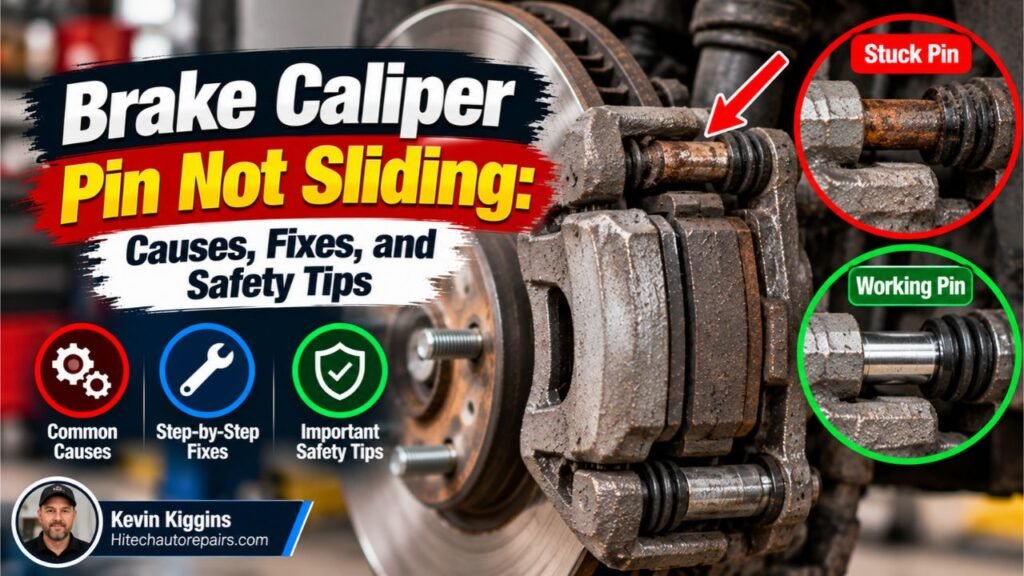
If your brake caliper pin not sliding problem has appeared during a brake job, the most likely causes are corrosion, dried or contaminated grease, a damaged dust boot, or a swollen rubber guide-pin bushing.
A healthy slide pin should generally move smoothly back and forth through its guide bore without requiring excessive force. The exact amount of resistance varies by caliper design, especially when rubber damping bushings are used.
Common causes include:
- Old grease that has dried or hardened
- Rust on the guide pin
- Corrosion inside the caliper bracket bore
- Torn or incorrectly seated rubber boots
- Water and road salt entering through damaged boots
- Rubber bushings swollen by incompatible grease
- Bent or damaged guide pins
- Pins installed in the wrong positions
- Dirt or debris inside the pin bore
- Damaged caliper bracket
Guide pins should move freely enough for the floating caliper to operate correctly. Damaged boots, contamination, and unsuitable lubricants can restrict that movement.
What Does a Brake Caliper Slide Pin Do?
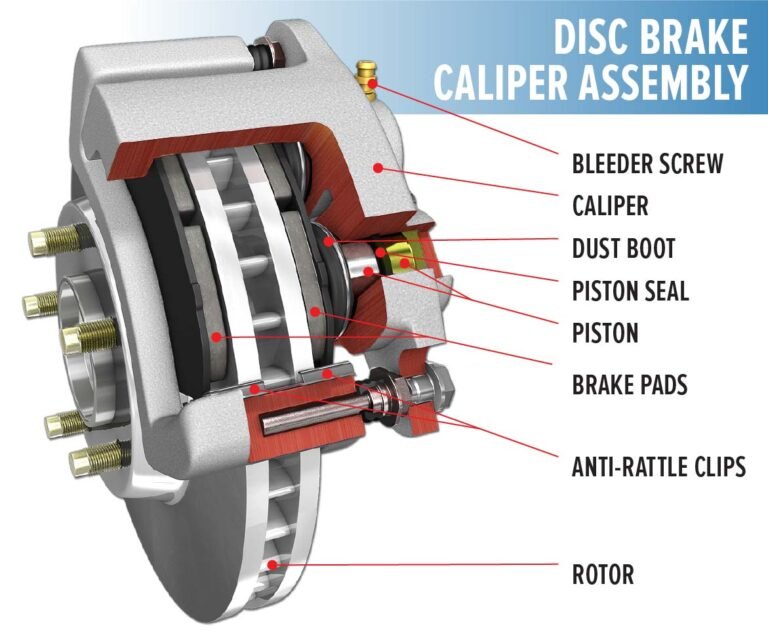
Most passenger vehicles and many light trucks use a floating brake caliper.
The caliper usually has one or more pistons on the inboard side of the rotor. When you press the brake pedal, hydraulic pressure pushes the piston against the inner brake pad.
At the same time, the caliper body slides along its guide pins. This movement pulls the outer brake pad against the opposite side of the rotor.
Both pads can therefore clamp the rotor even though the hydraulic piston is located on only one side.
When a guide pin seizes, that movement becomes restricted.
The caliper may apply unevenly or fail to release correctly, leading to abnormal pad wear and heat.
Symptoms of a Stuck Brake Caliper Pin
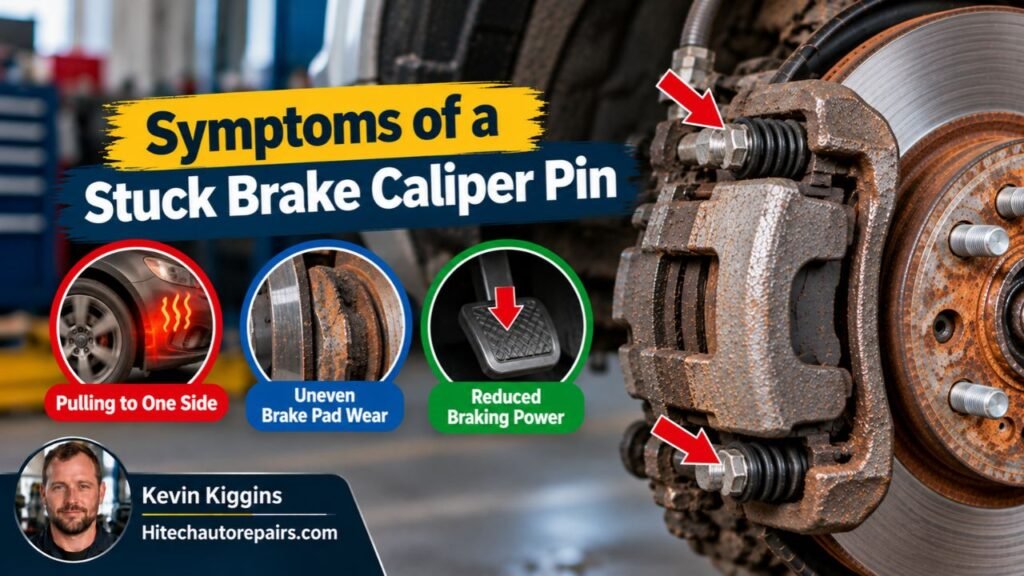
A seized slide pin does not always produce an obvious warning immediately. Sometimes the first clue appears when replacing the brake pads.
Common symptoms include:
- One brake pad wearing faster than the other
- Inner and outer pads having very different thicknesses
- Vehicle pulling while braking
- Vehicle pulling slightly while driving
- One wheel becoming unusually hot
- Burning smell after driving
- Brake drag
- Reduced fuel economy from continuous brake resistance
- Excessive brake dust on one wheel
- Brake squealing or grinding
- Rotor discoloration caused by excessive heat
- Caliper difficult to move during brake service
Uneven pad wear, increased brake temperatures, one-sided braking behavior, and abnormal noise are recognized effects of contaminated or seized floating-caliper guide components.
How Should a Caliper Slide Pin Move?
A serviceable pin should normally move smoothly through its intended travel.
It should not feel:
- Rusty
- Gritty
- Notchy
- Completely frozen
- Extremely difficult to push
- Loose from excessive wear
Do not assume both pins on the same caliper must feel identical.
Some vehicles use a rubber damping sleeve or bushing on one guide pin. That pin may naturally have slightly more resistance than the plain pin.
The important question is whether the pin moves through its intended range without binding.
How to Fix a Brake Caliper Pin That Is Not Sliding
The correct repair depends on why the pin is stuck.
For a pin that is only dirty or has dried grease, cleaning and relubricating it may be enough. If the pin is heavily rusted, pitted, bent, or damaged, replace it.
1. Park the Vehicle Safely
Park on a level, solid surface.
Set the transmission in Park or in gear for a manual transmission, and use wheel chocks where appropriate.
Loosen the wheel fasteners only as required before lifting the vehicle.
Lift the vehicle at the manufacturer-approved jacking location and support it securely with properly rated jack stands.
Never work underneath or around a raised vehicle supported only by a hydraulic jack.
2. Remove the Wheel
Remove the wheel to access the brake caliper.
This is also a good opportunity to inspect:
- Rotor condition
- Pad thickness
- Brake hose
- Caliper dust boot
- Signs of brake-fluid leakage
3. Remove the Caliper
Remove the appropriate caliper guide-pin bolts according to the vehicle’s service procedure.
Carefully lift the caliper from the bracket.
Do not allow the caliper to hang by the flexible brake hose.
Support it with a suitable hanger or wire so the hose is not stretched, twisted, or damaged.
4. Check Both Slide Pins
Try moving each guide pin individually.
One may slide normally while the other is seized.
If possible, remove and inspect the pins one at a time. On some calipers, the upper and lower pins are different and must return to their original positions.
Look for:
- Rust
- Pitting
- Discoloration
- Scoring
- Bent sections
- Damaged threads
- Damaged rubber sleeves
- Hardened grease
How to Remove a Stuck Caliper Slide Pin
A mildly stuck pin may come out by twisting and pulling it gradually.
Avoid immediately attacking the pin with excessive force.
If it does not move:
- Remove the rubber boot carefully if the design allows.
- Check whether corrosion is visible around the pin.
- Rotate the pin gently while pulling outward.
- Avoid damaging the bracket or pin bore.
- Stop if the pin is so seized that removal would require excessive force.
A pin that is rusted solid inside the bracket may make replacing the caliper bracket more practical than attempting to restore the old components.
If the pin breaks inside the bracket or cannot be safely removed, a replacement bracket or complete caliper assembly may be the appropriate repair.
Clean the Caliper Slide Pin
Once removed, wipe all old lubricant from the pin.
A reusable pin should have a smooth working surface.
Light contamination can usually be cleaned away. However, significant rust pits, deep scoring, bending, or substantial material loss are reasons to replace the pin rather than simply polish it and reinstall it.
Do not remove large amounts of metal from the pin in an attempt to make a damaged part fit again.
The guide pin must still fit its bore correctly.
Clean the Slide Pin Bore
The inside of the caliper bracket must also be clean.
If you clean only the pin but leave hardened grease and corrosion inside the bore, the pin can become stuck again.
Remove:
- Old grease
- Dirt
- Rust particles
- Other contamination
Avoid aggressively enlarging or grinding the bore.
If corrosion has severely damaged the bore, replacing the bracket may provide a more reliable repair.
Inspect the Rubber Boot
The rubber boot around the slide pin has an important job.
It helps keep:
- Water
- Road salt
- Sand
- Brake dust
- Dirt
away from the pin and guide bore.
A torn or improperly seated boot allows contamination into the sliding mechanism, which can lead to corrosion.
Replace a boot that is:
- Torn
- Cracked
- Swollen
- Hardened
- Loose
- Distorted
Installing a clean slide pin underneath a damaged boot may only provide a temporary repair.
Use the Correct Caliper Slide Pin Grease
Lubricant choice matters.
Use a brake-specific lubricant that is compatible with the rubber materials used in the caliper and approved for guide-pin service.
Some brake caliper designs require silicone-based or other synthetic, rubber-compatible lubricants. HELLA specifically warns that unsuitable lubricants can swell rubber components and recommends a suitable silicone-based lubricant for the internal guide surfaces in the applications it describes.
Do not assume an ordinary automotive grease is suitable.
Avoid substituting products such as general-purpose chassis grease unless the brake or lubricant manufacturer specifically approves the product for that application.
How Much Grease Should You Apply?
More grease is not necessarily better.
Apply a thin, even coating over the required sliding surface.
The goal is to lubricate the pin, not completely fill every empty space with grease.
Too much lubricant can:
- Make installation messy
- Contaminate nearby components
- Interfere with proper boot seating
- Create unwanted pressure in some enclosed guide-pin designs
Follow the vehicle or brake-component manufacturer’s procedure whenever available.
Most importantly, keep lubricant away from the brake-pad friction material and rotor friction surfaces.
Make Sure the Boot Seats Correctly
After reinstalling the guide pin, make sure the rubber boot is properly seated at both ends where applicable.
A boot that looks installed but is partially folded or disconnected can allow water into the bore.
Move the guide pin through its normal travel after installation.
It should move smoothly without the boot pulling free.
One Caliper Pin Has a Rubber Sleeve—Is That Normal?
Yes, on some vehicles.
One pin may have a rubber sleeve, damping bushing, or insulator, while the other pin is plain metal.
This can help reduce vibration and brake noise.
Do not automatically remove the rubber part because you think it is causing resistance.
Instead, check whether:
- The rubber is swollen
- The rubber is torn
- The pin is installed in the correct location
- The proper lubricant was used
- The manufacturer specifies different upper and lower pins
Mixing up the pins can cause binding on some caliper designs.
Why Does the Rubber Bushing Swell?
One possible reason is exposure to incompatible lubricant.
Brake rubber components are designed to work with specific materials. Certain lubricants can cause the rubber to expand or soften.
A swollen sleeve may become too large for the bore, making the pin extremely difficult to move.
If the bushing is visibly distorted, replace the affected rubber component and remove incompatible lubricant before reassembly.
Should You Use Anti-Seize on Caliper Slide Pins?
Do not use anti-seize as a universal substitute for specified caliper guide-pin lubricant.
Products intended for threaded fasteners are not automatically suitable for rubber-sealed sliding components.
Use the lubricant specified by the vehicle, caliper, or lubricant manufacturer for caliper slide pins.
Brake hardware may require different lubricants in different locations, so one product should not automatically be used everywhere.
Can You Use WD-40 on Caliper Slide Pins?
A general-purpose penetrating or water-displacing product should not replace the specified permanent slide-pin lubricant.
Even if a penetrating product temporarily helps loosen a stuck component, the guide pin still needs to be properly cleaned, inspected, and lubricated with the correct brake-specific product before normal service.
Never allow penetrating fluid or grease to contaminate the rotor or brake-pad friction surfaces.
Can a Rusty Caliper Pin Be Reused?
Light surface contamination may sometimes clean up satisfactorily.
A heavily damaged pin should be replaced.
Replace the guide pin if it has:
- Deep rust pits
- Significant scoring
- Flaking corrosion
- Bending
- Excessive wear
- Damaged threads
- A damaged damping sleeve
A smooth new guide pin is inexpensive compared with replacing another set of pads and rotors because the caliper continued to bind.
What If a New Pin Still Does Not Slide?
If a clean, correct replacement pin still binds, the problem may be inside the bracket.
Possible causes include:
- Corrosion inside the pin bore
- A swollen internal rubber component
- Wrong replacement pin
- Pin installed in the wrong position
- Damaged bracket
- Incorrect lubricant
- Debris remaining inside the bore
Do not simply grind down the new guide pin until it fits.
Determine why the correct part cannot move normally.
A badly corroded guide bore may require a replacement caliper bracket.
Do Both Caliper Pins Need to Slide?
On a typical floating-caliper design, both guide points need to allow the movement required by the design.
If one pin moves and the other is seized, the caliper may pivot or bind instead of remaining properly aligned.
That can create uneven pad contact and wear.
Always inspect both guide pins during brake service.
Stuck Slide Pin vs. Stuck Caliper Piston
A brake can remain applied even when the slide pins are working correctly.
The caliper piston can also seize.
These problems can produce somewhat different wear patterns.
Stuck Slide Pin
Possible signs include:
- Caliper will not slide freely
- One guide pin physically cannot be moved
- Uneven inner-to-outer pad wear
- Rusty or dry slide pins
Stuck Piston
Possible signs include:
- Piston difficult or impossible to retract
- Inner pad remaining heavily applied
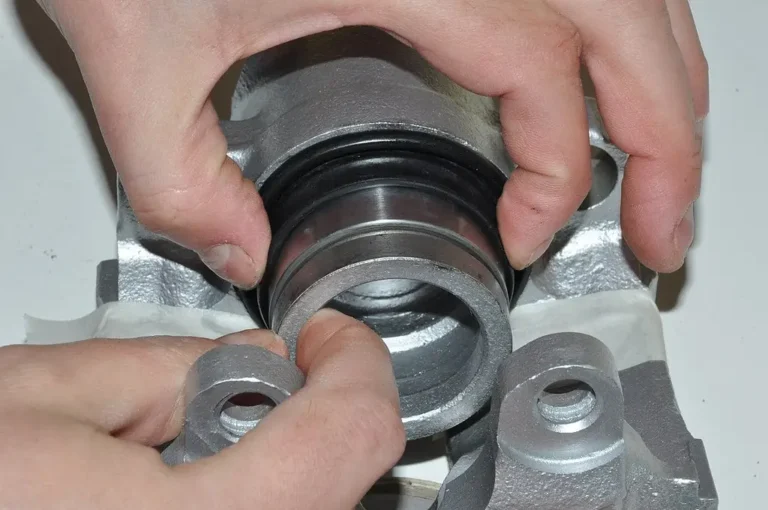
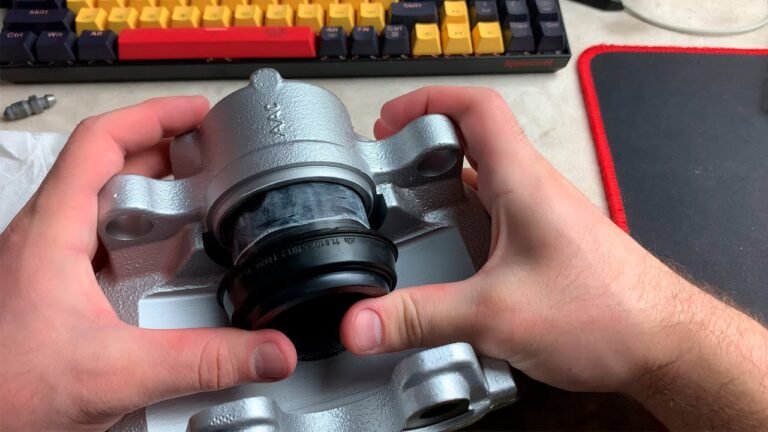
- Torn piston dust boot
- Corrosion around the piston
- Persistent brake drag even though pins move freely
Do not replace the guide pins and assume every dragging-brake problem has been solved.
A Brake Hose Can Also Cause Brake Drag
A restricted flexible brake hose can sometimes act like a one-way valve.
Hydraulic pressure reaches the caliper when the brake pedal is pressed but does not release normally afterward.
This can leave the brake partially applied even when:
- Slide pins move freely
- Caliper hardware looks normal
Diagnosing hydraulic brake restrictions requires appropriate procedures and may be better handled by a professional technician if you are unfamiliar with brake systems.
Uneven Brake Pad Wear and Slide Pins
Pad-wear patterns can provide useful clues.
If the floating caliper cannot move correctly, the inner and outer pads may wear at substantially different rates.
However, uneven wear can have more than one cause.
Also inspect:
- Pad abutment surfaces
- Pad hardware
- Caliper piston
- Rotor
- Guide pins
- Caliper bracket
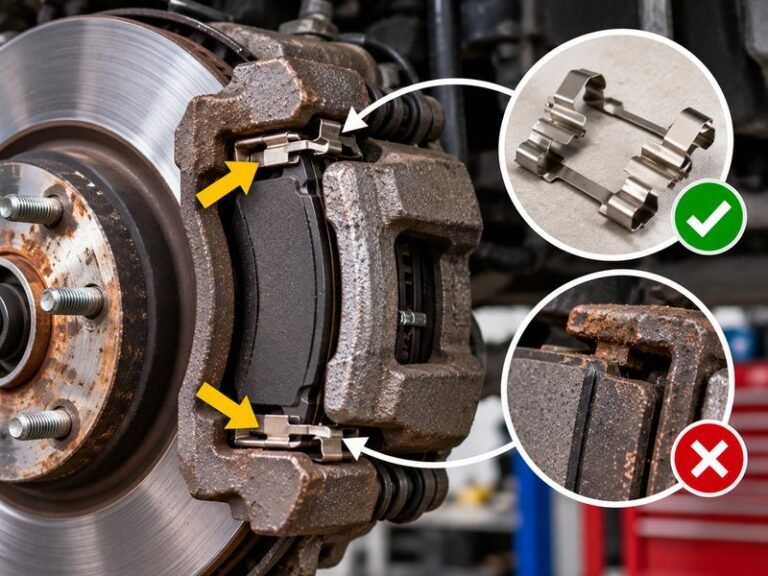
Pads themselves need to move correctly in their mounting hardware.
A perfectly lubricated slide pin cannot compensate for brake pads that are rusted tightly into the bracket.
Should You Replace the Caliper or Just the Slide Pins?
You may only need a guide-pin kit if:
- The pin is damaged but removable
- The pin bore is still serviceable
- The caliper piston works correctly
- The caliper is not leaking
- The bracket is structurally sound
Consider replacing the bracket or complete caliper when:
- Pin is permanently seized
- Pin has broken inside the bracket
- Guide bore is severely corroded
- Caliper piston is also seized
- Brake-fluid leakage is present
- Major structural corrosion exists
Replacement calipers may be sold with or without brackets, so check what is included before ordering.
Should You Replace Slide Pins on Both Sides?
Not necessarily, but inspect the brakes on both sides of the axle.
If one side has corrosion because of age, water exposure, or deteriorated boots, the opposite side may have similar problems.
You do not want to repair one seized guide pin only to discover another sticking pin shortly afterward.
Brake pads should normally be replaced as an axle set, meaning both left and right wheels on that axle receive new pads.
What Happens If You Keep Driving With a Stuck Caliper Pin?
Ignoring a seized guide pin can lead to increasingly expensive brake damage.
Possible consequences include:
- Rapid pad wear
- Uneven pad wear
- Rotor overheating
- Rotor discoloration
- Brake drag
- Reduced braking consistency
- Excessive brake dust
- Increased heat around the wheel assembly
A wheel that becomes extremely hot or produces a strong burning smell should be treated as a brake problem that needs prompt inspection rather than something to continue driving on.
Common Mistakes When Fixing Stuck Caliper Pins
Reusing a Badly Pitted Pin
New grease cannot repair missing or heavily corroded metal.
Replace a damaged pin.
Cleaning the Pin but Not the Bore
The contamination causing the problem may be inside the bracket.
Clean and inspect both surfaces.
Reusing a Torn Boot
A damaged boot allows moisture and debris back into the assembly.
Replace it.
Using the Wrong Grease
Incompatible lubricant can damage or swell rubber components.
Use a brake-specific, rubber-compatible lubricant specified for slide pins.
Mixing Up the Upper and Lower Pins
Some vehicles use different pins in the two positions.
Keep track of their locations during disassembly.
Applying Grease to the Rotor or Pads
Friction surfaces must remain clean.
Contaminated pads may require replacement depending on the type and extent of contamination.
Letting the Caliper Hang From the Hose
Support the caliper during service.
The flexible brake hose is not intended to support the caliper’s weight.
Ignoring a Sticking Piston
Free-moving guide pins do not prove that the entire caliper is healthy.
Check the piston if brake drag continues.
When Should You Have a Mechanic Repair It?
Caliper guide-pin servicing is manageable for many experienced DIYers, but brakes are a safety-critical system.
Professional service is appropriate if:
- The pin is completely seized
- The pin breaks during removal
- The bracket is badly corroded
- The caliper piston will not retract
- Brake fluid is leaking
- Brake hose damage is present
- The vehicle continues pulling after repair
- One wheel continues overheating
- You are unsure about proper reassembly or fastener torque
A brake repair should be completed correctly before the vehicle returns to normal road use.
FAQs About Brake Caliper Pin Not Sliding
Can I drive with a caliper slide pin stuck?
Driving with a known stuck caliper slide pin is not a good idea.
The brake can wear unevenly or drag, creating excessive heat and reducing predictable braking performance. Have the problem inspected and repaired promptly.
Why won’t my caliper slide pin push back in?
The bore may contain hardened grease, corrosion, or debris. A rubber bushing may also be swollen, or you may have the wrong pin or the correct pins reversed.
Do not force it into place until you determine what is causing the resistance.
Should caliper pins move easily by hand?
Generally, slide pins should move smoothly through their designed range without binding.
Some pins with rubber damping sleeves naturally feel tighter than plain pins, so the exact amount of resistance varies by design.
What is the best grease for caliper slide pins?
Use a brake-specific lubricant approved for caliper guide pins and compatible with the rubber components in your brake system.
Do not assume ordinary automotive grease is safe for the caliper’s rubber boots or bushings.
Can I just clean a seized slide pin and reuse it?
You can reuse a pin if it cleans up properly and remains smooth, straight, correctly sized, and undamaged.
Replace a pin that is deeply pitted, bent, heavily corroded, scored, or otherwise damaged.
Why does one caliper slide pin move harder than the other?
One pin may contain a rubber damping bushing that intentionally creates additional resistance.
It could also be swollen, contaminated, or corroded. Compare the components with the vehicle’s correct brake design before deciding something is wrong.
Can a stuck caliper pin cause uneven brake pads?
Yes.
Restricted guide-pin movement can prevent a floating caliper from centering and moving normally, causing the inner and outer pads to wear at different rates.
Why does my brake still drag after fixing the slide pins?
The problem may be elsewhere.
A sticking caliper piston, restricted brake hose, binding brake pads, damaged hardware, or another hydraulic issue can also cause brake drag.
Conclusion
A brake caliper pin not sliding usually points to dried lubricant, corrosion, contamination, a damaged boot, or a swollen guide-pin bushing. Start by removing and inspecting both slide pins, cleaning the pin and bore, checking the rubber components, and applying the correct brake-specific lubricant.
Do not try to save a badly rusted or damaged pin simply by adding more grease. Replace worn parts, and consider replacing the bracket if the guide bore is severely corroded.
Most importantly, confirm that the slide pins are actually the source of the problem. If the pins move freely but the brake continues dragging, overheating, or wearing pads unevenly, inspect the caliper piston, brake hose, pad hardware, and the rest of the braking system before returning the vehicle to normal use.