Why Won’t My Parking Brake Turn Off? Common Causes and Fixes
Your parking brake may not turn off because its release control is being used incorrectly, a cable or rear brake mechanism is stuck, or an electronic parking brake (EPB) has a power, sensor, or actuator fault. Sometimes the brake has already released, but the dashboard warning light stays on because another brake-system problem needs attention.
What happens when you try to release it is the best starting clue. A hand lever that refuses to lower suggests a different problem from an electric switch that flashes an error message. If the lever lowers but the car still resists moving, the mechanism at the wheels may remain engaged. Driving against a stuck parking brake can quickly overheat the rear brakes.
This guide covers common mechanical and electronic causes, practical checks you can make while parked, and what the warning lights mean. It also explains when a simple release attempt is reasonable, when repair is required, and why forcing the vehicle to move is unsafe.
Why Won’t My Parking Brake Turn Off? The Most Likely Causes
The parking brake’s design determines why it stays engaged. Traditional systems use a hand lever or foot pedal and cables; electronic systems use switches, controllers, and motorized mechanisms.
| What You Notice | Possible Cause | What to Do First |
| Hand lever will not lower | Ratchet or release-button problem | Use the correct lever-release technique |
| Foot parking-brake pedal stays down | Incorrect release action or jammed linkage | Identify the model’s release handle or pedal method |
| Control releases but car is restrained | Rusted cable, seized rear brake, or frozen shoes | Do not drive; arrange mechanical inspection |
| EPB switch does not release brake | Unmet interlock, weak battery, or electrical fault | Check brake-pedal input, power mode, and warning message |
| EPB displays a malfunction | Actuator, wiring, control, or related system fault | Arrange model-specific diagnostics |
| Parking-brake light stays on, wheels free | Fault indication or separate hydraulic brake warning | Identify the exact warning before driving |
Rusted or Seized Parking Brake Cables
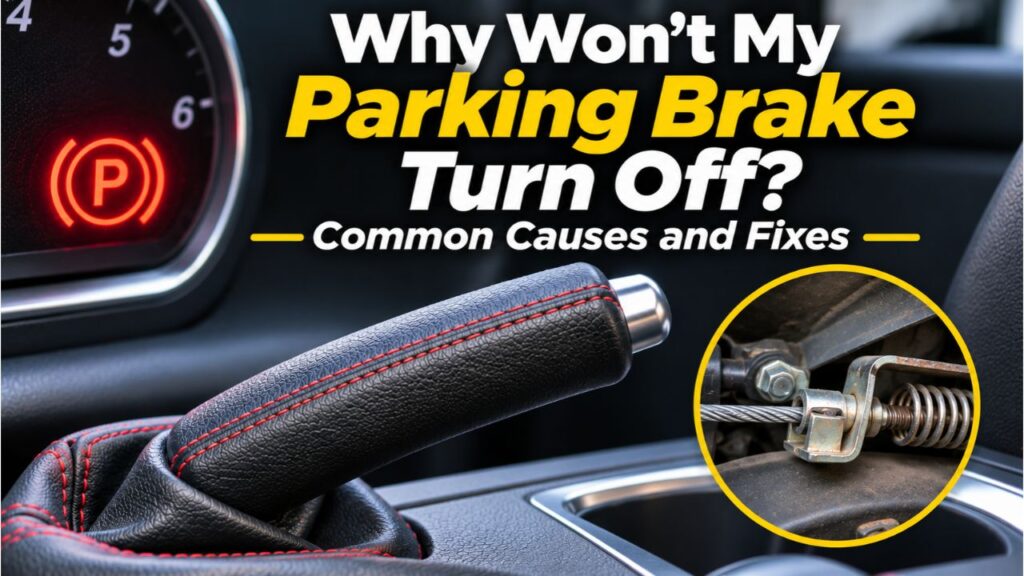
On cable-operated brakes, corrosion can develop inside the cable sheath or at the exposed linkage. Pulling the handbrake tightens the cable, but rust may prevent it from sliding back when the lever is lowered. The cabin control can appear released while one or both rear brakes remain partly applied.
AutoZone’s guide to a stuck parking brake identifies cable corrosion, frozen mechanisms, and seized rear brake parts as common causes. A badly corroded cable usually needs replacement rather than repeated force or improvised lubrication.
Frozen Parking Brake Components
After rain, washing, or wet winter driving, moisture can freeze in a cable or around the rear brake shoes. The brake may release normally when conditions are warmer but stay engaged after a freezing night. A vehicle that has sat unused for a long time can also develop rust bonding between brake friction surfaces.
Allow suspected frozen parts to warm naturally in a suitable location. Do not use a torch, pour boiling water on brake assemblies, or repeatedly accelerate to break the bond.
Rear Caliper, Drum Shoe, or Parking Brake Hardware Is Stuck
Not every stuck parking brake is a cable problem. Some rear disc brakes use a mechanical lever integrated into the caliper; others have separate parking-brake shoes inside the rotor’s hat. Drum brakes have their own return springs and linkage.
A seized caliper lever, corroded shoe hardware, or damaged return spring can prevent release at the wheel even when the driver’s control moves freely.
Electric Parking Brake Does Not Accept the Release Command
An EPB may refuse to release because the driver has not pressed the regular brake pedal, the ignition is in the wrong mode, or the car has not met its automatic-release conditions. Some systems check the driver’s seat belt, door, hood, or liftgate.
Other possibilities include a weak 12-volt battery, faulty switch, damaged wiring, seized electric actuator, or a stored brake-system fault.
How to Check a Parking Brake That Won’t Release
These checks are for a stationary vehicle. If the car has already shown unusual resistance, smoke, a burning odor, or an abnormal regular brake pedal, stop and arrange towing rather than trying another release.
Step 01: Secure the Vehicle Before Touching the Release
Stay seated and keep firm pressure on the regular brake pedal. Choose level ground when possible. For an automatic transmission, select Park according to the owner’s manual; for a manual transmission, select the appropriate gear. If the car is being inspected outside normal driving, use suitable wheel chocks as well.
Do not release the only mechanism preventing a vehicle from rolling on a steep incline. If it cannot be secured safely, arrange help before attempting anything else.
Step 02: Identify Whether You Have a Hand, Foot, or Electronic Brake
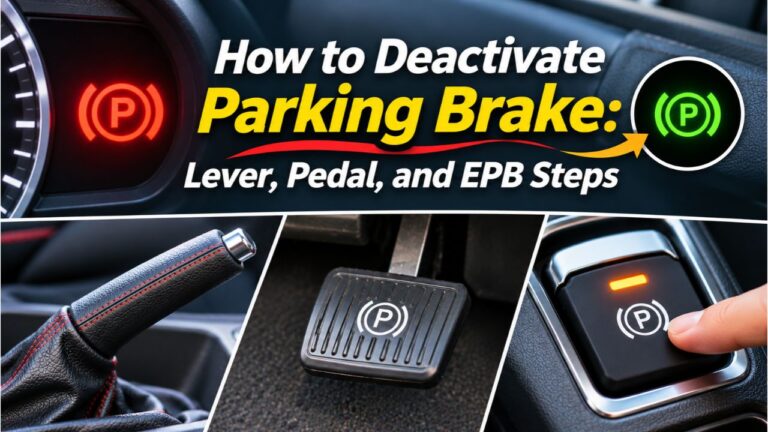
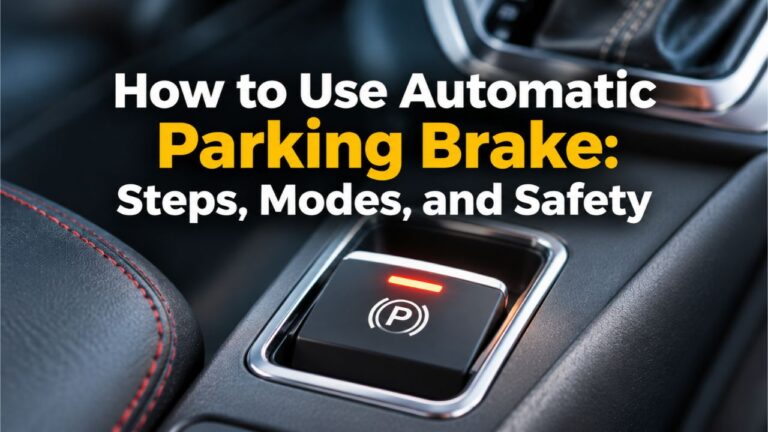
A handbrake usually has a lever with a button near the center console. A foot-operated parking brake has a smaller pedal left of the regular pedals and may have a separate release handle. An EPB commonly has a switch marked with a P inside a circle.
Consult the owner’s manual when uncertain. A normal release action for one design may be wrong for another, particularly with foot pedals that release on a second press.
Step 03: Try the Correct Normal Release Once
For a hand lever, hold the foot brake, raise the lever slightly to take pressure off its ratchet, press the release button, and lower it fully. For a foot-operated brake, use its designated release handle or pedal action.
For an EPB, use the vehicle’s required power mode, hold the service brake pedal, and operate the EPB switch in its specified release direction.
Step 04: Check EPB Interlocks and Battery Symptoms
If automatic release fails but the EPB switch still works, check that doors are fully closed, the driver is belted, and the gear and ignition state meet the owner’s manual’s requirements.
The 2026 Hyundai electronic parking brake instructions describe manual switch release with the foot brake pressed, along with model-specific seat-belt and door conditions for automatic release. They also warn that an EPB may not release when vehicle power is off. Do not assume these conditions apply identically to another make.
Dim displays, low-voltage warnings, or a recently dead battery suggest an electrical supply issue. Restore power only through the approved procedure; never apply battery voltage directly to an EPB motor.
Step 05: Read the Dashboard Message and Observe the Control
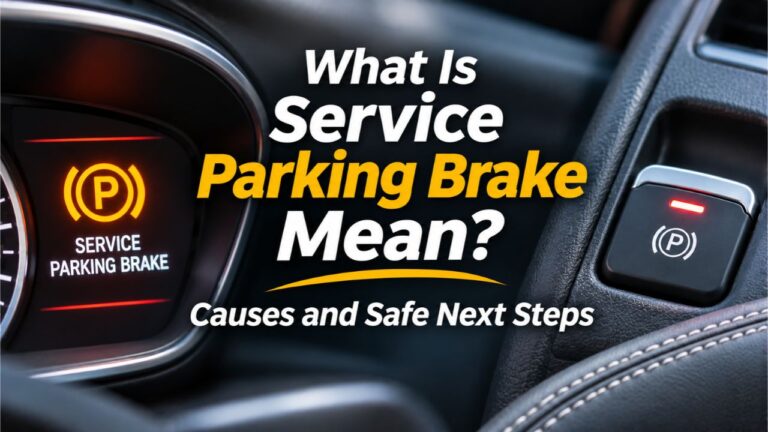
Look for a warning such as “Park Brake Not Released,” “Press Brake and Switch,” or “Service Parking Brake.” Note whether the parking-brake light goes out, stays solid, or flashes. For a mechanical brake, look to see whether the lever or pedal returns to its normal resting position.
Do not use wheel movement on a public road as a test. A control that returns correctly does not prove the rear mechanism is free, and a light that remains on may represent a different brake-system fault.
Step 06: Stop the Check if the Brake Still Appears Engaged
If the release control works but the car remains restrained, or the warning says release failed, do not increase accelerator pressure. Have a qualified technician check the cables, calipers, actuators, and electrical system.
If the vehicle cannot be made safe to move, request a tow and tell the operator that its parking brake may be locked. Some electronic systems require manufacturer-specific transport or recovery procedures.
Why an Electronic Parking Brake Won’t Turn Off Automatically
Automatic release and manual switch release are different functions. A car may refuse to release itself as you accelerate but still release normally when you press the brake pedal and operate the switch.
A genuine EPB fault may appear as an amber warning, a flashing indicator, or a specific dashboard message. The wording is model-dependent. Ford’s electric parking-brake warning-message guide distinguishes unsuccessful automatic release, a missing brake-pedal input, incomplete release, and brake-maintenance mode. Those messages require different responses.
If the brake began misbehaving after rear pad or caliper replacement, mention that history to the mechanic. Some systems need an electronic maintenance mode and specified initialization procedures. Simply clearing a dashboard message will not fix a jammed actuator or improperly serviced caliper.
Why the Parking Brake Light Stays On After Release
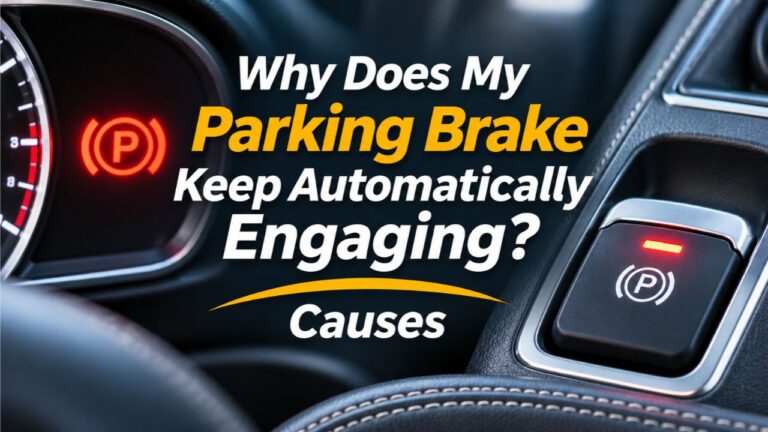
A light that will not turn off is not always proof that the parking brake remains applied. On many cars, the red BRAKE lamp can also indicate low brake fluid or another hydraulic brake-system concern. A separate amber EPB symbol may indicate a control fault. Indicator meanings vary by manufacturer.
If the hand lever is down or EPB confirms release but a red brake warning remains, check the owner’s manual and the accessible brake-fluid reservoir level without opening the cap unnecessarily. Do not assume that adding fluid will solve the problem: low fluid may reflect pad wear or a leak.
If the regular brake pedal is soft, sinks, or feels unusual, do not drive. A functioning parking-brake release does not make a separate service-brake fault safe. A damaged parking-brake position switch can also leave a status lamp on, but that diagnosis should follow a check of the actual brake condition.
Can a Parking Brake Be Stuck Even When the Lever Is Down?
Yes. Lowering a lever removes the driver’s input, but the rear mechanism must also return. A rusted cable can hold tension downstream of the lever. A seized rear caliper or parking-brake shoe assembly may remain in contact with the rotor or drum.
Clues include one rear wheel becoming abnormally hot, a burning smell, unusual rolling resistance, or a vehicle that pulls while moving. Do not touch a rotor or wheel to check the temperature, because overheated components can cause serious burns. If any of these symptoms occurred, have the brakes inspected before returning to traffic.
What If the Parking Brake Is Frozen or the Battery Is Dead?
A frozen mechanical parking brake and a powerless EPB need different solutions. A suspected ice-bound cable may release after the area warms safely, but if the mechanism still binds, corrosion or damage may be present. Avoid open flames, force, and using engine power to wrench it free.
An EPB with a depleted 12-volt battery may not have enough power to operate its release motor. Some vehicles allow the normal release after the electrical supply is restored with approved jump-start equipment. Others need a model-specific recovery procedure. There is no universal secret mechanical release cable for all electronic parking brakes.
If the car is on a slope, secure it from rolling before any service attempt. Never loosen cables or remove an electric actuator solely to make an immobilized vehicle move.
How Mechanics Fix a Parking Brake That Won’t Disengage
Repairs follow the confirmed cause, not the warning light alone. A technician may inspect the lever ratchet, pedal linkage, cable movement, rear caliper levers, drum-brake shoes, and return springs. Corroded cables or seized mechanical parts may need replacement, cleaning, or model-specific adjustment.
For an EPB, testing may include battery voltage, fuses, switch signals, wiring, actuator operation, and fault codes from the parking-brake controller. Some repairs require a scan tool and calibration after the rear brakes are serviced. The complete mechanism must apply and release properly before the repair is considered finished.
Is It Safe to Drive if the Parking Brake Won’t Turn Off?
Do not drive with an engaged or partly engaged parking brake. Friction can overheat pads, shoes, and rotors, damage seals, and reduce braking ability. Smoke or a burning odor is a reason to stop immediately in a safe location and arrange help.
If only the automatic-release convenience feature fails, but the owner-approved switch method fully releases the brake and there are no unresolved safety warnings, the vehicle may be usable according to its manual. That situation is different from a brake that physically will not release or a persistent hydraulic brake warning.
If there is any doubt about whether the wheels are free or the service brakes are functioning, leave the vehicle parked and arrange an inspection or tow.
How to Prevent Parking Brake Release Problems
Use the parking brake according to the manufacturer’s guidance and include cables, rear brake hardware, and electrical connections in routine inspections. Corrosion is more likely where road salt, rain, or long periods of storage affect the vehicle.
Keep the 12-volt battery healthy on EPB-equipped cars, and use technicians familiar with the required rear-brake maintenance procedure. Report slow release, unusual motor sounds, or new warning messages early. A brake that works intermittently may stop releasing when you need the vehicle.
FAQs About Why Won’t My Parking Brake Turn Off
Why Does My Parking Brake Light Stay On Even When the Brake Is Off?
The lamp may be indicating a low brake-fluid level, a hydraulic brake fault, or a faulty status switch rather than an engaged parking brake. Check the exact symbol and vehicle manual. Do not drive with an unresolved red brake warning or abnormal pedal.
Can a Weak Battery Keep an Electronic Parking Brake On?
Yes. An EPB actuator needs electrical power to release, and low voltage may stop it from responding. Use the manufacturer’s approved power-restoration procedure; do not wire the motor directly to a battery.
Will My Parking Brake Release if I Press the Gas Pedal?
Some EPB-equipped cars offer automatic drive-away release when safety conditions are met. Mechanical handbrakes generally do not. If the brake remains engaged, more throttle can damage the brakes, so stop rather than forcing movement.
Can Cold Weather Make a Parking Brake Stay On?
Yes. Water can freeze in parking-brake cables or around rear brake components. Allow safe warming and arrange service if the brake still binds. Do not use flames or abrupt force.
Can I Disconnect the Parking Brake Cable to Drive Home?
Do not treat cable disconnection as a routine roadside fix. It can leave the car unable to hold securely while parked, and the wheel brake may remain stuck anyway. Have the system properly repaired and verified.
Get the Parking Brake Fully Released Before Driving
If you’re asking why won’t my parking brake turn off, begin by identifying whether the release control is jammed, the rear brake remains physically applied, or an electronic system is refusing a command. A persistent dashboard lamp can also point to a separate hydraulic problem, so check its meaning rather than assuming the parking brake is still on.
Try only the correct, normal release procedure while the car is safely secured. If you notice resistance, heat, a burning smell, or an unresolved brake warning, do not force the car to move. Have the specific mechanical or electrical fault repaired and confirm that the parking brake both applies and releases normally before driving again.