Why Is My Parking Brake Not Releasing? Causes and Safe Fixes
A parking brake usually will not release because its cable or rear brake mechanism is seized, the release linkage is jammed, or an electric parking brake (EPB) cannot complete its release command. On an EPB-equipped car, low battery voltage, a failed actuator, or an unmet release condition may also be responsible.
The first clue is what happens when you operate the control. A hand lever that will not lower suggests a different fault from a lever that drops normally while a rear wheel stays locked. Similarly, an electric switch that displays a fault message needs a different approach from a brake that appears released but still drags.
Trying to drive through the resistance can overheat pads and rotors, damage parking-brake hardware, or leave the car difficult to control. A warning light can also signal a separate service-brake problem, so it should not be dismissed as a simple switch fault.
This guide covers the likely causes, a safe stationary troubleshooting sequence, the differences between mechanical and electric systems, repair options, and when towing is the right choice.
Why Is My Parking Brake Not Releasing? Common Causes
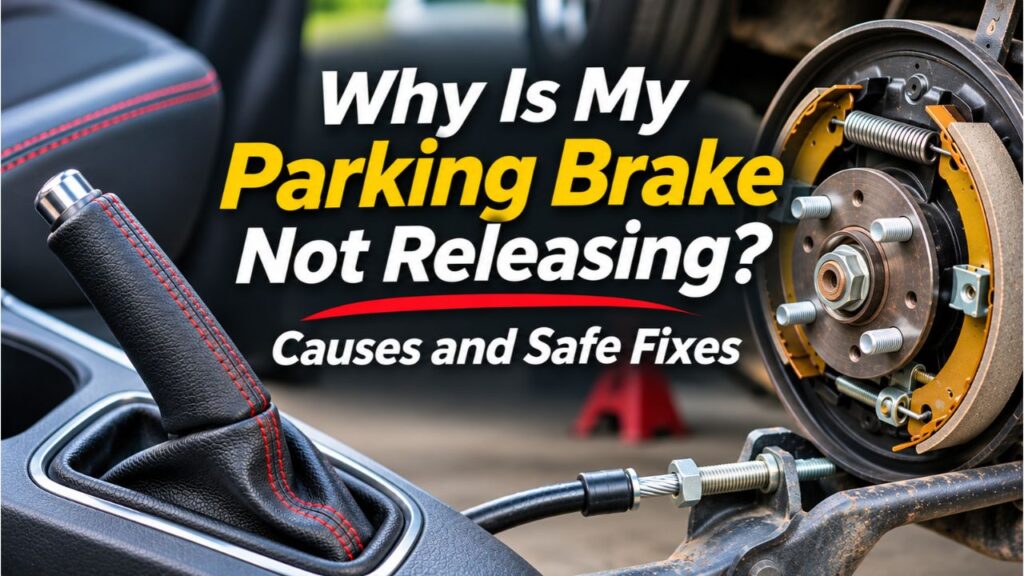
The parking brake normally holds the rear wheels through cables, dedicated brake shoes, or motor-operated caliper mechanisms. If either the driver control or the wheel-end hardware fails to return, the holding force can remain after you try to release it.
A Corroded or Seized Parking Brake Cable
On cable-operated systems, a steel cable slides inside a protective outer housing. Water and road salt can penetrate damaged seals, allowing the strands to rust and bind. The lever or foot pedal may return, but the cable can remain under tension at one or both rear brakes.
A cable that sticks intermittently may become completely seized later. Haynes Manuals’ guide to common brake problems identifies seized parking-brake cables, calipers, and rusted brake components among the causes of dragging brakes. A badly corroded cable typically needs replacement, not extra force at the handle.
Frozen Moisture Around the Cable or Brake Shoes
If the problem appeared after rain, snow, a car wash, or an overnight freeze, moisture may have frozen inside the cable housing or between friction surfaces. The driver control can seem normal while the rear brake remains stuck.
Do not pour boiling water over the brakes or use an open flame. Both approaches can damage components and may create another hazard. If the vehicle can be safely warmed in a suitable environment without moving it against locked wheels, thawing may identify the issue; a cable that repeatedly freezes still needs inspection.
A Jammed Rear Caliper, Drum Shoe, or Return Spring
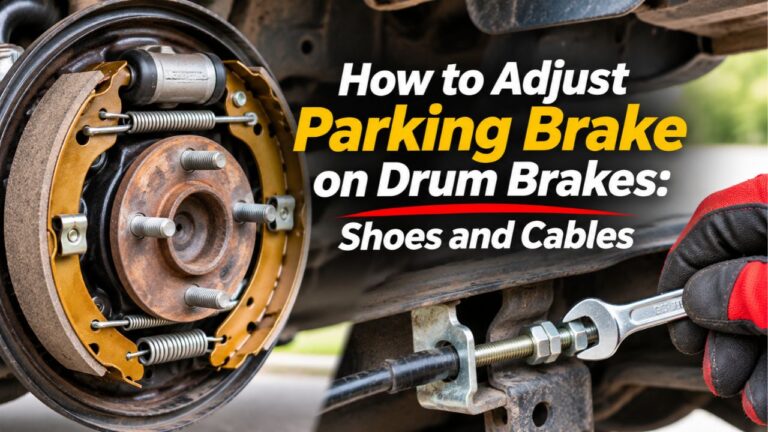
Some parking brakes pull a lever on the rear disc caliper. Others expand separate shoes inside a drum or the center of a rear rotor. Corroded pivots, stuck caliper mechanisms, damaged springs, or shoes bonded to rusty metal can prevent release.
This is especially likely after a vehicle has been parked for a long time. If only one rear wheel is restrained, a fault at that wheel becomes more likely, though a cable can also affect one side. The parking brake may be off at the dashboard while the friction parts remain applied.
Low Battery Voltage or Failed EPB Actuator
An electronic parking brake needs electrical power to command its motor. A weak or discharged 12-volt battery may prevent release, even if the parking brake was applied correctly earlier. Damaged wiring, a faulty switch, a seized motor gearbox, or a control-module fault can produce similar symptoms.
Listen for the usual actuator sound only while carrying out the normal, approved switch command. No sound can suggest an electrical problem, but hearing a motor does not prove the caliper actually released. A qualified technician may need to read EPB fault codes and command the actuators with a suitable scan tool.
Incorrect Release Procedure or Automatic-Release Conditions
An EPB may refuse a command if the vehicle is not in the required power mode or the brake pedal is not pressed. Automatic drive-away release can have additional conditions involving the driver’s door, seat belt, gear selection, and system faults.
For example, the 2025 Toyota RAV4 parking-brake owner’s instructions identify conditions for automatic release and direct drivers to use manual release when automatic release does not occur. Those conditions belong to the specified Toyota system, not every vehicle.
A Stuck Control, Incorrect Adjustment, or Damaged Linkage
A handbrake ratchet may jam, a separate foot-pedal release handle may break, or a cable adjuster may be set too tightly. If the rear brakes were recently serviced, incorrect assembly or adjustment deserves particular attention.
Do not simply loosen an adjustment nut until the wheel rotates. Excessive slack can leave the parking brake unable to hold the car later. Both full release and adequate holding force must be verified using the manufacturer’s procedure.
How to Check a Parking Brake That Will Not Release
Complete these checks while parked. They help identify whether the problem is a control issue, an electrical fault, or a brake that remains physically stuck. Do not crawl under an unsecured vehicle or put hands near moving wheels.
Step 01: Secure the Vehicle and Stop Trying to Drive
Keep your foot on the normal brake pedal, select Park if appropriate, and make sure the vehicle cannot roll. If you are on a slope, use suitable wheel chocks when they can be placed safely. Never release a parking brake from outside the driver’s seat simply to see whether the vehicle moves.
If the car is already dragging, smells hot, or cannot move normally, stop attempting to accelerate. Driving against an applied brake can generate damaging heat before the problem becomes obvious.
Step 02: Identify the Control and Use Its Normal Release Method
For a hand lever, lift it slightly, hold the release button, and lower it fully. For a foot-operated brake, either press the pedal again or use the separate release handle, whichever the vehicle requires. For an EPB, switch the vehicle to the required power mode, hold the service brake pedal, and operate the switch in its release direction.
Do not repeatedly pull or press a control that is physically jammed. Check the owner’s manual rather than guessing how a foot pedal or electronic switch works.
Step 03: Read the Parking Brake Indicator and Dashboard Message
Check whether the parking-brake symbol goes out, stays steady, or flashes. Read the full message if one appears. Some warnings mean automatic release failed, while others indicate that the system did not complete a manual release or needs service.
Ford’s electric parking brake information-message guide distinguishes instructions to press the brake and switch from warnings that the brake was not released or has malfunctioned. Interpret messages using your own model’s manual. A general red brake warning can also indicate a hydraulic fault.
Step 04: Check Whether the Lever or Pedal Returned Fully
Observe the control after the release attempt. If the hand lever remains raised or the foot pedal stays depressed, the fault may be near its ratchet, release handle, or linkage. If it returns normally but the vehicle still seems held, suspect the cable or rear brake mechanism farther along the system.
Do not assume a returned control proves the brakes are free. A corroded cable can remain tight inside its housing even after the handle lowers.
Step 05: Check for Battery or Power-Mode Problems on EPB Vehicles
If an electric switch does nothing, look for signs of a weak 12-volt battery, such as dim displays or trouble powering the vehicle. Confirm the required ignition or READY mode and keep the brake pedal pressed during the normal release command. Check for a message requesting a different action.
If the battery is discharged, follow the vehicle’s approved charging or jump-start instructions. Do not connect power directly to a parking-brake motor, remove random fuses, or attempt a universal electronic reset. Some EPBs require diagnostic assistance even after power is restored.
Step 06: Look for Signs of a Wheel-End Brake That Is Still Applied
From outside the vehicle, look for an obviously damaged cable, hanging linkage, or debris around the rear wheel area, without reaching under the car. Note whether the problem appeared after cold weather, long storage, or rear brake service. A persistent scraping sound or earlier burning smell is another warning sign.
Do not touch a wheel, rotor, or caliper that may be hot. Determining exactly which wheel is locked may require safely lifting the vehicle and inspecting brake movement; that is technician work when proper supports and procedures are unavailable.
Step 07: Stop at the Point Where Professional Diagnosis Is Needed
If the correctly operated control does not release the brake, or the wheels remain restrained despite a normal-looking control, arrange a brake inspection. A technician can inspect cable return, rear caliper levers, drum hardware, EPB actuator function, and related fault codes.
Before the vehicle is driven, the repair must restore both functions: the parking brake must release completely and still hold securely when applied. A car that rolls freely but no longer has a dependable parking brake is not repaired.
Parking Brake Symptoms and What They Usually Suggest
The symptom pattern often narrows the likely fault before parts are removed.
| What You Notice | Likely Area to Investigate |
| Hand lever will not move down | Ratchet, button, or cabin linkage |
| Lever lowers but a rear wheel stays held | Seized cable, caliper lever, or shoes |
| Foot pedal will not return | Release handle, latch, or linkage |
| EPB switch does nothing and battery is weak | Power supply or release conditions |
| EPB warning flashes or reports a fault | Actuator, wiring, switch, or control system |
| Problem begins after freezing weather | Ice or moisture in cable or wheel hardware |
| Burning smell or dragging after release | Brake friction parts remain applied |
These are clues, not final diagnoses. A conventional rear service-brake caliper can also seize independently of the parking brake, making the vehicle feel as though its parking brake is still on.
How to Fix a Parking Brake That Stays Engaged
The correct repair depends on the part that is stuck. A corroded cable generally calls for replacement and correct routing. A defective lever or release handle needs its actual broken component repaired. Rusted shoes, springs, pivots, and caliper mechanisms require inspection and replacement or approved service as appropriate.
For an EPB, the technician should first confirm battery condition and the commanded release state, then test the actuator, wiring, and fault codes. Rear caliper work may require a manufacturer-specific electronic maintenance mode. Do not force a motor-driven piston back with a clamp or manually unwind an actuator without the service instructions.
After repairs, the parking brake must be checked for holding ability, full release, drag, and warning-light behavior. Brake-fluid lines ordinarily need not be opened for a cable replacement, but hydraulic work may require bleeding under the manufacturer’s procedure.
Can You Drive With a Parking Brake That Will Not Release?
No. Do not drive if the parking brake remains stuck or a wheel drags after you try to release it. Friction material can overheat, damage rotors and calipers, and reduce braking performance. A brake that suddenly grabs or binds can also affect control.
If you smell burning or notice smoke, stop safely and keep clear of hot components. Do not spray water onto overheated brakes or try to free them with engine power. Arrange a suitable tow; tell the recovery operator that the rear wheels may be locked so the vehicle can be loaded without dragging them.
How to Prevent the Parking Brake From Sticking Again
Use the parking brake as the owner’s manual directs and have its operation checked during routine brake service. Regular use helps keep a serviceable cable mechanism moving, but it will not reverse existing corrosion or repair torn seals.
After driving through road salt or muddy conditions, normal underbody cleaning may reduce buildup around exposed parts. If the car will be stored for an extended period or parked in severe freezing conditions, follow the manufacturer’s storage and winter-parking guidance instead of applying a universal rule. Address slow release, unusual noises, or intermittent EPB warnings before the mechanism becomes completely stuck.
FAQs About Why Is My Parking Brake Not Releasing
Why Is My Parking Brake Stuck Even Though the Lever Is Down?
The cable may be seized inside its housing, or the rear caliper or parking-brake shoes may be jammed. A fully lowered lever does not guarantee that the wheel-end mechanism returned.
Can a Dead Battery Stop an Electric Parking Brake From Releasing?
Yes. Many EPB systems need adequate 12-volt power to run the release actuator. Use the manufacturer’s battery-support procedure; do not bypass the motor or switch wiring.
Can Cold Weather Make the Parking Brake Stay On?
Yes. Water can freeze in a cable sheath or around brake hardware. If it releases after thawing, inspect the components because trapped moisture or damaged seals can cause the problem again.
Why Does the Parking Brake Light Stay On After Release?
The brake may still be partly applied, the EPB may have recorded a fault, or a general brake warning may indicate another problem. Read the dashboard message and do not ignore abnormal pedal feel.
Will Accelerating Hard Release a Stuck Parking Brake?
No. Forcing the vehicle forward can overheat or damage the brakes and make it harder to control. Stop and arrange the appropriate repair or recovery.
Get the Parking Brake Fully Released Before Driving Again
If you’re asking why is my parking brake not releasing, the most likely explanations are a seized cable, stuck rear brake hardware, an incorrect release condition, or an electric parking-brake fault. Whether the control itself remains jammed or returns normally helps narrow the search.
Start with the proper stationary release procedure and dashboard messages. If the control works but a wheel remains held, or an EPB reports a malfunction, stop rather than forcing the vehicle to move.
A lasting fix restores smooth release and reliable holding when parked. Have the faulty component inspected and repaired, then confirm normal operation before returning the vehicle to the road.