How Do I Know If My Parking Brake Is On? Signs to Check Fast
Your parking brake is probably on if the dashboard shows an illuminated parking-brake symbol, a handbrake lever is raised, or a separate parking-brake pedal is latched down. In a vehicle with an electronic parking brake, look for the illuminated switch indicator or an on-screen message confirming that it is applied. Always check the owner’s manual because warning lights and controls differ by model.
The confusing part is that the red BRAKE light does not always mean the parking brake is engaged. It can also warn about low brake fluid or another braking-system problem. And an electronic parking brake can remain applied after the dashboard turns dark, so a missing light with the engine off is not proof that the brake has released.
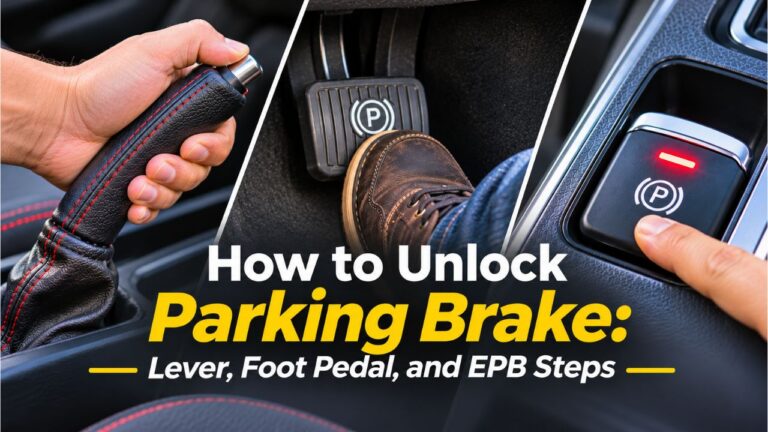
Before driving, it helps to know what your own vehicle uses: a center-console hand lever, a pedal near your left foot, or an electric switch. This guide explains how to check each type without moving the car, recognize the common symbols, confirm release, and respond when a warning light or stuck brake suggests a fault.
How Do I Know If My Parking Brake Is On? Three Main Clues
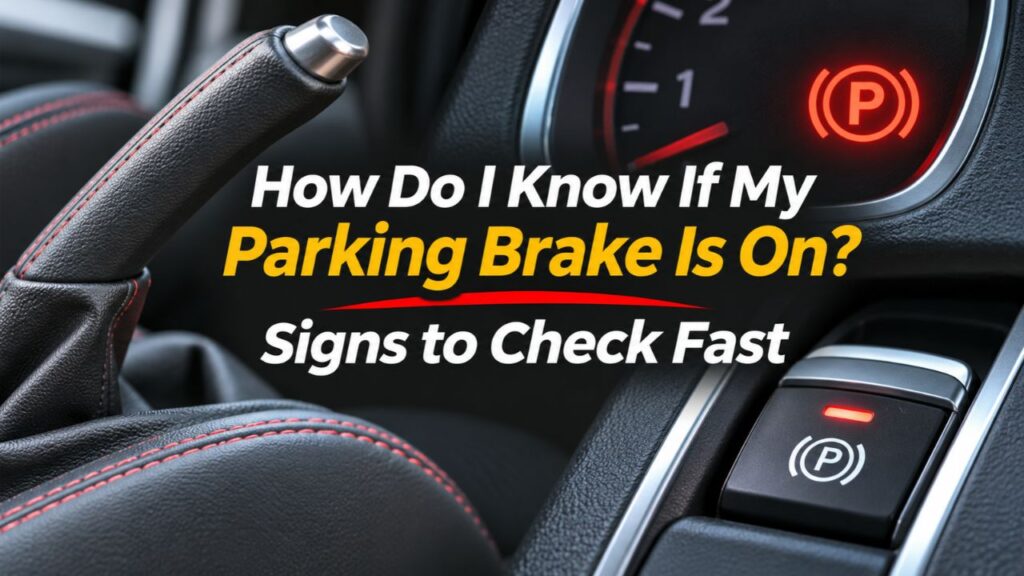
Start with the dashboard indicator, then confirm it with the actual parking-brake control and, where available, the vehicle’s status display. These checks complement one another; none requires putting the vehicle in motion.
On a mechanical handbrake, a raised lever typically means the brake is applied. On a foot-operated design, the smaller pedal may remain depressed until released. An electronic system uses an electrical command, so the switch itself usually returns to the same physical position whether the brake is on or off.
The strongest confirmation is that the proper control was used, the expected indicator appeared, and the system has no fault warning. An indicator confirms reported status, however, not how much force the parking brake is applying at the wheels.
How to Check If Your Parking Brake Is On: Step-by-Step
Step 01: Secure the Vehicle Before Checking
Keep the car stationary on firm, preferably level ground. Press and hold the regular foot brake. Place an automatic transmission in Park, or secure a manual-transmission vehicle according to its manual. On a slope, take extra precautions so the vehicle cannot roll if the parking brake is released.
Do not test engagement by easing the car downhill or stepping on the accelerator. The parking brake could release suddenly, or a stuck wheel could become damaged. Everything in this initial check can be done while the vehicle remains stopped.
Step 02: Turn on the Instrument Display and Find the Brake Symbol
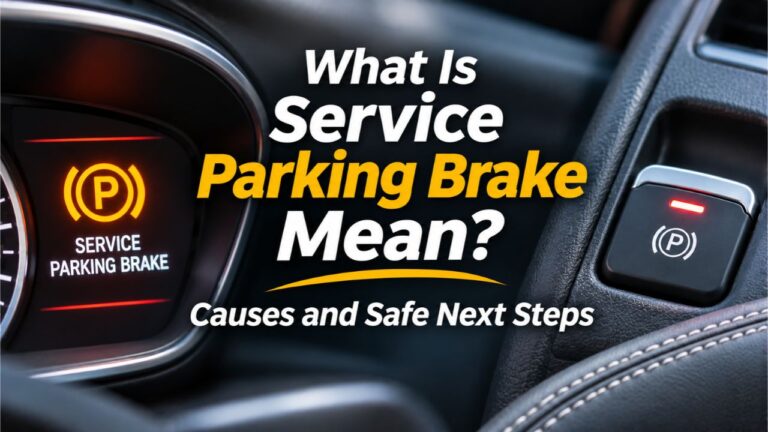
Switch the ignition or vehicle power to the mode that shows dashboard information. Look for a red circled P, a red exclamation point within a brake symbol, the word BRAKE, or a message such as Parking Brake ON. Depending on the vehicle, one of these may illuminate when the brake is engaged.
Some warning lights briefly illuminate during startup as a normal self-check. Watch whether the symbol remains on after that check rather than assuming a momentary flash means the parking brake is set.
The 2025 Honda Civic indicator guide explains that its red parking-brake/brake-system indicator illuminates when the parking brake is applied and goes out on release. The same indicator can also signal low brake fluid or a brake-system problem, which is why the next steps matter.
Step 03: Locate Your Parking-Brake Control
Check between the front seats for a hand lever, at the far-left side of the driver’s footwell for a small pedal, or on the center console or dashboard for an electronic switch. The switch often has a P inside a circle. A gear-selector button marked P may simply select transmission Park; it is not necessarily the parking-brake control.
If the control is unfamiliar, find it in the owner’s manual before touching switches. This is particularly helpful in rental vehicles and cars with electronic features that operate automatically.
Step 04: Check a Hand Lever or Foot-Operated Parking Brake
For a conventional hand lever, an elevated, latched position normally indicates that the parking brake is set. A lever lowered fully to its normal rest position typically indicates release. Do not judge the parking brake solely by how many clicks the lever made; cable condition and adjustment affect travel.
A foot-operated parking brake is a separate, smaller pedal. It may stay down while engaged and return when a release handle is pulled or a release mechanism is activated. In its owner instructions for mechanical parking brakes, Ford distinguishes hand-lever and foot-pedal controls and explains their corresponding release methods. Check the exact method for your car rather than forcing a pedal or latch.
Step 05: Confirm an Electronic Parking Brake on the Display
For an electronic parking brake, or EPB, check the illuminated indicator in the switch, instrument cluster, or driver-information display. A motor sound from the rear wheels may occur during application, but sound alone cannot confirm that the brake has finished engaging.
Some electronic systems need the ignition on and the service brake pressed to release. A few apply automatically at shutdown or when Park is selected. Do not assume those features exist on every car, even if its switch looks similar.
Step 06: Release It Correctly Before Driving
Continue holding the regular brake pedal while using the manufacturer-specified release action. A hand lever commonly requires a slight upward lift, pressing its release button, and lowering it. A foot pedal may release with a handle or a second press. An EPB commonly releases when the switch is pressed with required conditions met.
On a vehicle with a working status indicator, confirm that the parking-brake symbol or switch light goes out after release. Do not apply throttle just to see whether the car feels restrained; an engaged parking brake can overheat quickly.
Step 07: Stop if the Light, Control, or Brake Behavior Disagrees
If the lever is down but the red BRAKE lamp remains on, do not conclude that it is simply a faulty switch. The light may indicate a hydraulic brake issue. If an electronic switch reports a fault or a parking-brake pedal fails to return, avoid repeated forceful release attempts.
Check for unusual pedal feel, resistance to movement, grinding, or a hot-brake smell. If a wheel appears stuck or normal stopping performance is uncertain, leave the vehicle parked and arrange inspection or towing.
What Does the Parking-Brake Warning Light Look Like?
A red P inside a circle is a common sign of an applied parking brake. Some dashboards use a red exclamation mark inside brackets, while others illuminate the word BRAKE. The exact artwork and the color of related fault messages depend on the manufacturer.
| What You See | Likely Meaning | What to Check |
| Red circled P | Parking brake probably applied | Control position and vehicle status |
| Red BRAKE or circled exclamation | Parking brake or service-brake warning | Confirm release, then investigate persistent light |
| Amber EPB or parking-brake symbol | Possible electronic system fault | Read message and owner instructions |
| Flashing parking-brake symbol | Incomplete application or release, or a fault | Follow model-specific warning guidance |
| Parking Brake ON message | System reports the brake engaged | Check release before moving |
A startup light test can briefly illuminate several symbols at once. A flashing symbol deserves particular attention because it may indicate a problem rather than ordinary engagement.
Can the Parking Brake Be On When the Dashboard Light Is Off?
Yes. An engine-off dashboard that has gone dark cannot confirm the brake is off. A mechanical handbrake remains latched regardless of the dashboard power state. Many electronic systems also remain mechanically engaged after their status lamp times out.
For example, Toyota’s 2025 RAV4 parking-brake manual explains that the parking-brake indicator and switch indicator can remain lit briefly after the engine is switched off, then go dark even though the parking brake remains set. This behavior is model-specific.
A burned-out lamp, faulty control switch, or wiring problem can also produce a misleading indication. When the car is powered on, compare the expected indicator response with the control operation. If they do not agree, have the system checked.
Does Shifting Into Park Mean the Parking Brake Is On?
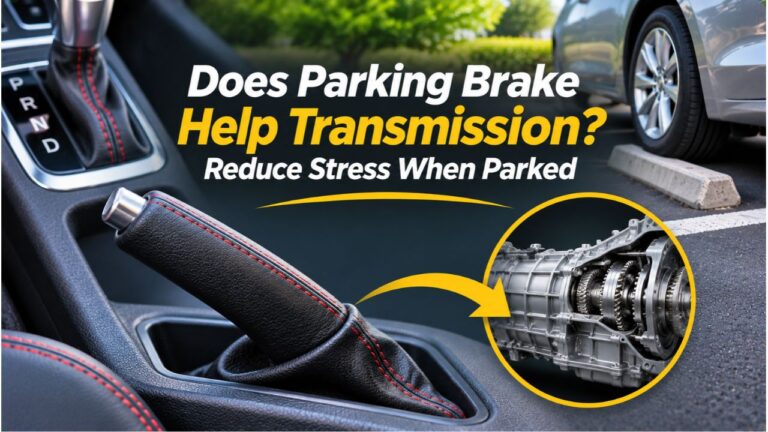
Not necessarily. In a conventional automatic vehicle, selecting Park locks a mechanism in the transmission to help prevent movement. The parking brake is a separate holding system, commonly acting through the rear brakes.
Some newer cars automatically engage their EPB when the driver selects Park or turns off the vehicle. Others do not, or their automatic mode can be changed in vehicle settings. If you see P on the gear display, it confirms the selected transmission position, not necessarily the status of the separate parking brake.
To secure the car, follow the manufacturer’s parking sequence and look for the parking-brake confirmation. On a slope, keep the regular brake applied until the transmission and parking brake have both been secured.
How Can You Tell if a Parking Brake Has Not Fully Released?
A lever or switch can appear released even though a cable, rear brake mechanism, or electronic actuator remains stuck. Possible signs include a car that resists moving normally, a warning chime, or a burning smell after an attempted departure.
Some vehicles display a message if the driver starts moving with the parking brake applied. Do not deliberately drive to trigger that warning. Excess friction can heat the rear brakes, wear friction material, and harm other components.
If you already moved the car and notice resistance or heat, stop safely. Avoid touching the wheel or brake assembly because it may be very hot. A stuck brake needs inspection before driving again, even if the dashboard indicator later turns off.
Why Is the Red BRAKE Light Still On After Release?
First verify that the lever, foot pedal, or EPB has completed the correct release procedure. A hand lever left slightly raised or a pedal that did not unlatch can keep the warning on. A flashing EPB symbol may identify a separate malfunction.
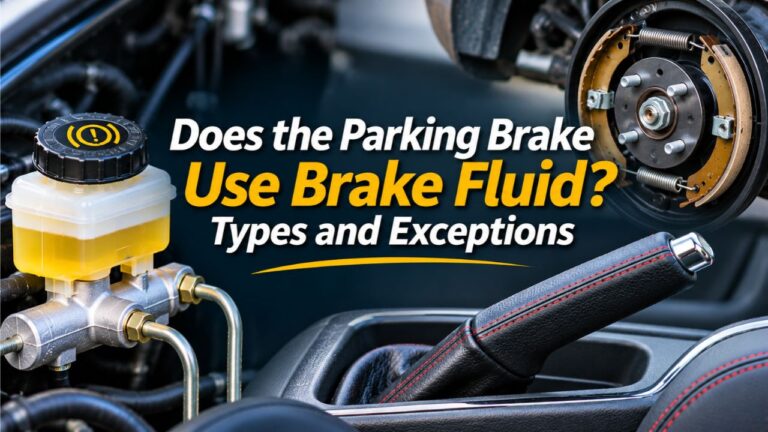
If the parking brake is definitely released but the red warning remains, low brake fluid or a service-brake problem must be considered. Fluid loss, a hydraulic defect, or certain electronic brake faults can make continued driving dangerous. A low reservoir should not be repeatedly topped off without finding the cause.
Do not disconnect the warning lamp or clear a fault code to make the warning disappear. If there is a fluid leak, a sinking or unusually soft pedal, or uncertain stopping performance, have the car towed. A mechanic can check the fluid system and determine whether the warning relates to parking-brake hardware or the main brakes.
What if the Electric Parking Brake Turns On Automatically?
Some EPB systems engage during shutdown, when a transmission is placed in Park, or after another manufacturer-defined condition. A driver may never touch the switch during normal parking. These functions make parking convenient but do not remove the need to verify that the car is secure.
Automatic release can be conditional too. A particular model may require the driver’s door closed, seat belt fastened, engine or power system running, and a driving gear selected. If those conditions are absent, the brake may stay applied even when the driver expects it to release.
Auto Hold is different from a parking brake. It is generally meant to hold the car during short stops, such as at a traffic light, although some vehicles transition from Auto Hold to the parking brake. Read the owner instructions for that interaction.
When Should a Parking-Brake Concern Go to a Mechanic?
Arrange professional inspection if the brake will not apply or release, a fault message returns, or a dashboard warning remains after the correct release. A lever that moves with almost no resistance or a pedal that will not latch may point to a cable or control problem. A working indicator does not prove the brake has enough holding force to secure the vehicle.
More urgent symptoms include a red brake warning accompanied by low fluid, poor stopping, a sinking pedal, grinding, smoke, or severe drag. Do not use a hill as a test track or attempt to free a stuck wheel with engine power. The shop can evaluate mechanical cables, wheel-end hardware, electronic actuators, sensors, and the hydraulic system as appropriate.
FAQs About How Do I Know If My Parking Brake Is On
Does a Red P Light Always Mean My Parking Brake Is On?
Usually it indicates that the parking brake is applied, but the exact symbol and fault behavior differ by model. Confirm with the control and owner’s manual, especially if the light flashes or stays illuminated after release.
Can an Electronic Parking Brake Stay On With the Car Turned Off?
Yes. An EPB can remain engaged after shutdown even when the dashboard and switch lamps have turned off. The electrical system commands application, while the holding mechanism is designed to keep the brake set.
Can I Tell if My Parking Brake Is On by How the Car Moves?
Resistance, sluggish movement, or dragging can suggest an engaged or stuck parking brake, but deliberately moving the car is an unsafe way to check. Use the dashboard, control position, and owner instructions while stationary.
Is the Parking Brake Automatically On in Every Automatic Car?
No. Park gear and the parking brake are separate. Some newer vehicles apply the electronic parking brake automatically, but traditional automatics often require the driver to set it manually.
What if the Parking-Brake Light Is Off but the Rear Wheel Is Stuck?
A seized cable, brake mechanism, or actuator can remain engaged despite the indicator being off. Do not force the vehicle to move. Have the rear brakes inspected and repaired.
Should I Drive if the BRAKE Warning Light Will Not Go Out?
Not until the cause is understood. A persistent red warning can indicate low fluid or a braking-system fault, not merely an engaged parking brake. If braking feels abnormal or fluid is leaking, arrange towing.
Make a Parking-Brake Check Part of Every Departure
If you’re wondering how do I know if my parking brake is on, use three clues together: the dashboard symbol, the lever or pedal position, and the electronic status message when available. Always remember that a brake warning light may also report a defect, and an EPB can remain applied after its indicator turns off with the engine.
Before moving, hold the service brake, release the parking brake according to the owner’s manual, and check that the warning behaves normally. If the brake sticks or its indicator conflicts with the control, have the system inspected instead of testing it by driving.