Where Does Brake Fluid Leak From Under Car? Locations and Fixes
Brake fluid can leak from a brake caliper, wheel cylinder, flexible hose, metal brake line, master cylinder, or an ABS hydraulic connection. If you notice a wet patch near a wheel, the caliper, hose, and—on drum-brake vehicles—the wheel cylinder are important places for a technician to inspect. Fluid near the middle of the vehicle may come from a damaged brake line, while fluid toward the firewall could originate at the master cylinder or its connections.
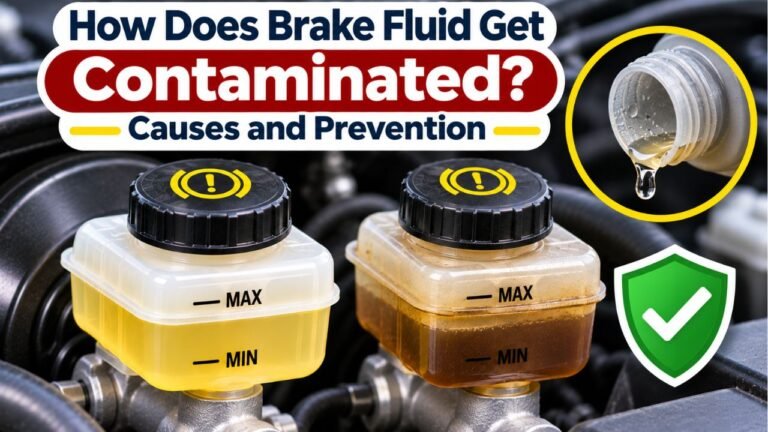
Brake fluid is typically clear to light amber when fresh and may turn brown as it ages. However, color and puddle location alone cannot establish what is leaking. Oil, coolant, transmission fluid, and even water can collect beneath a car, sometimes far from the original source.
A brake fluid leak is a safety-critical fault because lost hydraulic pressure can weaken braking or cause failure. If the reservoir is low, a red brake warning light appears, or the pedal feels soft or sinks, do not drive; arrange towing and inspection.
In this guide, I explain the most common leak locations, what different puddle positions suggest, how to check for warning signs safely, and how the underlying problem is repaired.
Where Does Brake Fluid Leak From Under Car? Quick Location Guide
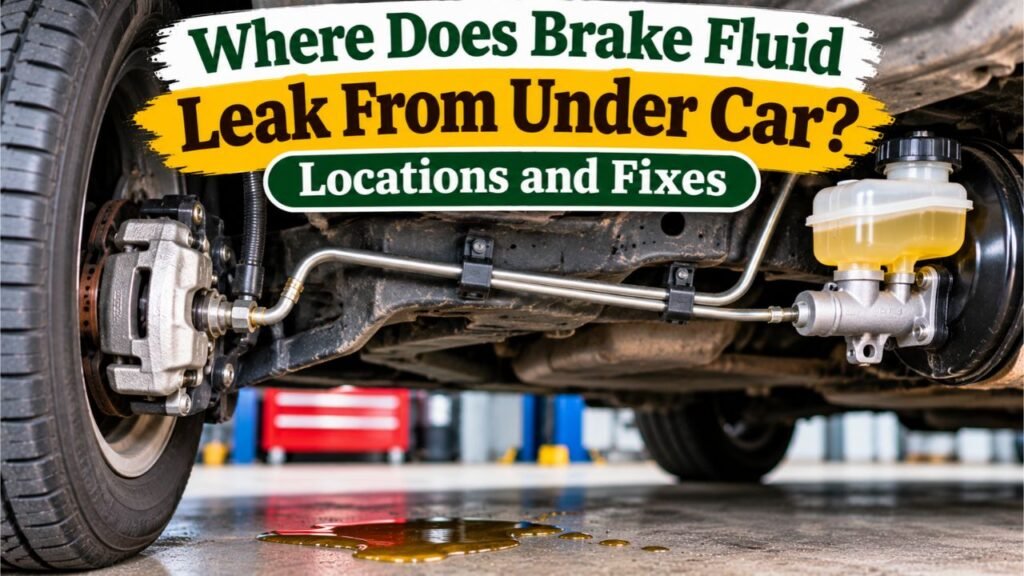
Brake fluid can escape from several points along the hydraulic braking system.
The fluid travels from the master cylinder through metal brake lines and flexible hoses to the braking components at each wheel.
A damaged component anywhere along this path can cause a leak.
Brake Fluid Leak Location Chart
| Where fluid appears | Possible leaking component | What to look for |
| Behind a front wheel | Brake caliper | Wetness around caliper or inner wheel |
| Behind a rear wheel with disc brakes | Rear brake caliper | Fluid near caliper or rotor |
| Behind a rear wheel with drum brakes | Wheel cylinder | Wet backing plate or fluid inside drum |
| Near the flexible hose at a wheel | Brake hose or connection | Damp hose, fitting, or nearby surface |
| Along the middle underside of the car | Metal brake line | Corroded tubing or wet connections |
| Beneath the rear axle area | Rear brake lines or hoses | Fluid near axle and suspension components |
| Beneath the rear of the engine compartment | Master cylinder or fittings | Wetness near firewall |
| Near the brake booster | Master cylinder rear seal | Fluid between master cylinder and booster |
| Beneath the ABS hydraulic unit | ABS assembly or hydraulic connections | Wet fittings or hydraulic components |
| Near the transmission on certain manual cars | Hydraulic clutch slave cylinder | Fluid near bellhousing or clutch hydraulics |
These locations are clues rather than confirmed diagnoses.
Brake fluid can travel along hoses, metal panels, and suspension components before reaching the ground.
A puddle may therefore appear some distance from the actual leaking component.
According to Firestone Complete Auto Care’s guide to low brake fluid, brake fluid leaks commonly leave fluid around one or more wheels, although master-cylinder leaks can sometimes remain concealed.
Key Takeaway: Check the location of the puddle, but do not assume that the component directly above it is responsible. A complete hydraulic brake inspection is necessary to confirm the source.
1. Brake Fluid Leaking From a Brake Caliper
A leaking brake caliper is one possible cause of brake fluid appearing near a wheel.
Brake calipers are part of a disc brake system.
They contain hydraulic pistons that press the brake pads against the rotor when you apply the brakes.
Seals around these pistons help keep brake fluid contained.
Where Does a Caliper Leak Appear?
A caliper leak may leave fluid:
- Behind the wheel.
- Around the caliper piston.
- On the inside of the wheel rim.
- Near the brake rotor.
- Around the lower portion of the caliper.
- On the pavement near the affected wheel.
Some leaks become visible only after the wheel is removed.
What Causes a Brake Caliper to Leak?
Possible causes include:
- Damaged piston seals.
- Corroded caliper pistons.
- Deteriorated rubber components.
- Physical damage.
- Improper assembly.
- Leaking hydraulic connections.
- Problems with the bleed valve.
Heat, age, corrosion, and component damage can contribute to seal failure.
Signs of a Leaking Caliper
Possible symptoms include:
- Brake fluid level dropping.
- Wetness near one wheel.
- Brake warning light.
- Spongy brake pedal.
- Reduced braking performance.
- Fluid contamination of the brake pads.
However, these symptoms are not exclusive to caliper leaks.
Can You Drive With a Leaking Caliper?
No.
A leaking caliper can reduce hydraulic pressure and contaminate the friction components.
Continued driving may increase the risk of brake failure.
Arrange professional inspection and repair.
How Is a Leaking Caliper Fixed?
The repair depends on the caliper design and condition.
A technician may replace the defective caliper or perform an approved repair.
Any contaminated brake pads must also be evaluated.
After the hydraulic repair, the system must be properly filled, bled, and tested.
2. Brake Fluid Leaking From a Rear Wheel Cylinder
Cars with drum brakes use hydraulic wheel cylinders.
A wheel cylinder pushes the brake shoes outward against the drum when the brakes are applied.
The cylinder contains pistons and seals that keep hydraulic fluid inside.
When these seals fail, brake fluid may leak into the drum assembly.
Where Does a Rear Wheel Cylinder Leak Appear?
Fluid may accumulate:
- Inside the brake drum.
- Around the wheel cylinder.
- On the brake backing plate.
- On the inside of a rear wheel.
- Beneath a rear tire.
In some cases, no fluid reaches the ground.
This makes a wheel-cylinder leak harder to identify without removing the brake drum.
How Do You Know if a Wheel Cylinder Is Leaking?
Possible signs include:
- A wet brake backing plate.
- Fluid inside the brake drum.
- Contaminated brake shoes.
- A falling reservoir level.
- Reduced braking performance.
- A soft or unusually long brake pedal.
An externally dry wheel does not rule out an internal drum-brake leak.
Why Is the Leak Sometimes Hidden?
The brake drum surrounds the wheel cylinder and brake shoes.
A small amount of escaping fluid may remain trapped inside the assembly.
It can also soak into brake dust or friction material.
The leak may only become visible during a brake inspection.
The CarParts.com technical article on leaking brake wheel cylinders explains that a leaking wheel cylinder can be concealed by its rubber boot or remain hidden until the brake drum is removed.
How Is a Wheel Cylinder Leak Repaired?
A defective wheel cylinder generally needs replacement or an approved repair.
Brake shoes contaminated with brake fluid may also need replacement.
The technician must then bleed the hydraulic system and verify brake performance.
Do not try to fix a wheel-cylinder leak by adding more brake fluid.
3. Brake Fluid Leaking From a Brake Line
Metal brake lines carry hydraulic fluid from the master cylinder toward the wheels.
These lines commonly run along the underside of the vehicle.
They may be attached to the body, chassis, or other structural components.
A leak can develop when a line corrodes, cracks, or becomes damaged.
Where Does a Brake Line Leak Appear?
Depending on the vehicle, fluid may appear:
- Near the middle of the car.
- Along the underside of the chassis.
- Near the rear axle.
- Behind an underbody shield.
- Along the side of the vehicle.
- Near a brake-line junction or fitting.
Brake-line routing varies among cars, trucks, and SUVs.
A puddle near the middle of the vehicle does not identify a particular line without inspection.
What Causes Brake Lines to Leak?
Common causes include:
Corrosion: Road salt, moisture, and age can damage metal brake tubing.
Physical damage: Road debris or improper repair work can damage a line.
Loose or damaged fittings: Connections may leak if seals, flare surfaces, or fittings are defective.
Abrasion: A line that rubs against another component may become worn.
Improper installation: Incorrect routing or unsuitable components can contribute to failure.
Can a Brake Line Leak Only When Braking?
Yes.
A small hydraulic leak may become more noticeable when brake pressure increases.
When the vehicle is parked and the brakes are not applied, there may be little or no visible dripping.
This does not make the leak harmless.
What Happens if a Brake Line Bursts?
A significant brake-line failure can cause a sudden loss of hydraulic pressure in the affected circuit.
The brake pedal may travel farther than normal, and stopping performance can deteriorate severely.
Although many cars have split hydraulic circuits, the remaining braking capability may be greatly reduced.
Never assume that a second hydraulic circuit makes the vehicle safe to drive with a leaking line.
How Is a Brake Line Leak Fixed?
The damaged section must be repaired or replaced using manufacturer-approved materials, fittings, and procedures.
The system must be bled and checked afterward.
Do not use ordinary rubber hose, household plumbing fittings, or leak-stopping chemicals to repair a hydraulic brake line.
4. Brake Fluid Leaking From a Flexible Brake Hose
Flexible brake hoses connect rigid hydraulic lines to moving braking components.
They allow suspension and steering movement while maintaining hydraulic pressure.
These hoses are often located near the wheels.
Where Does a Brake Hose Leak Appear?
Fluid may collect:
- Behind a wheel.
- Along the flexible hose.
- Near a metal-to-rubber hose connection.
- Around a banjo bolt or fitting.
- On a suspension component.
- Near the wheel well.
A damaged hose may leak continuously or mainly when the brakes are applied.
What Causes Brake Hose Failure?
Potential causes include:
- Age-related deterioration.
- Abrasion against nearby parts.
- Improper routing.
- Physical damage.
- Corrosion at fittings.
- Manufacturing defects.
- Damage during previous repair work.
Can a Brake Hose Leak Without Looking Broken?
Yes.
A hose may have a small crack or a leaking connection that is difficult to see.
Fluid may also travel along the hose before dripping from a lower point.
The hose’s outer appearance alone does not prove that it is safe.
How Is a Leaking Brake Hose Repaired?
A defective hose generally requires replacement with the correct part.
The technician must also inspect adjacent fittings and hydraulic connections.
After replacement, the system must be serviced and tested according to the manufacturer’s procedure.
5. Brake Fluid Leaking From the Master Cylinder
The master cylinder converts brake pedal force into hydraulic pressure.
It is typically located in the engine compartment near the firewall, although modern braking-system layouts vary.
The master cylinder contains internal pistons and seals.
Fluid can escape if certain seals or connections fail.
Where Does a Master Cylinder Leak Appear?
Possible locations include:
- Beneath the rear of the engine compartment.
- Near the firewall.
- Around the master-cylinder body.
- Below the reservoir.
- At brake-line connections.
- Between the master cylinder and brake booster.
The exact location depends on the vehicle.
Can the Master Cylinder Leak Into the Brake Booster?
Yes, on vehicles with a conventional vacuum brake booster.
A damaged rear master-cylinder seal can allow fluid to escape toward the booster housing.
Some of the fluid may accumulate inside the booster rather than reaching the ground.
This can explain why the reservoir level falls without a visible puddle.
Signs of a Master Cylinder Problem
Possible symptoms include:
- Brake fluid loss.
- A soft pedal.
- A pedal that gradually sinks.
- Unusual pedal travel.
- Visible wetness near the master cylinder.
- Fluid inside the booster on applicable vehicles.
However, the symptoms must be interpreted carefully.
A master cylinder can experience internal hydraulic pressure bypass without losing fluid externally.
An internally bypassing master cylinder may produce a sinking pedal, but internal bypass alone does not explain fluid disappearing from the reservoir.
How Is a Master Cylinder Leak Fixed?
The technician identifies whether the leak comes from the master cylinder, reservoir seals, or hydraulic connections.
The defective component is then repaired or replaced according to the manufacturer’s requirements.
If brake fluid has entered the booster, that component must also be evaluated.
6. Brake Fluid Leaking From the ABS Hydraulic Unit
Vehicles equipped with an anti-lock braking system have hydraulic components that control brake pressure.
Depending on the design, these may include valves, pumps, fittings, and hydraulic control units.
Fluid can leak from connections or damaged components.
Where Does an ABS Hydraulic Leak Appear?
The ABS hydraulic unit is commonly located in the engine compartment, although some vehicles have different arrangements.
Possible leak locations include:
- Hydraulic fittings.
- Brake-line connections.
- The hydraulic control assembly.
- Adjacent tubing.
Fluid may run along another component before reaching the ground.
Does an ABS Warning Light Mean There Is a Leak?
Not necessarily.
An ABS warning light can indicate:
- Wheel-speed sensor problems.
- Electrical faults.
- Hydraulic control issues.
- Wiring problems.
- Other system malfunctions.
A warning light alone does not confirm a brake fluid leak.
Similarly, a hydraulic leak may occur without immediately turning on the ABS warning light.
Is an ABS Leak Expensive to Repair?
It depends on the defective component.
A connection-related repair may be different from replacing an entire hydraulic control unit.
Some ABS repairs require specialized diagnostic equipment and bleeding procedures.
A qualified technician should identify the fault before recommending replacement.
7. Brake Fluid Leaking From the Reservoir or Fittings
The brake fluid reservoir stores the fluid needed by the hydraulic system.
In many vehicles, it is mounted directly on the master cylinder.
Other systems may use different arrangements.
Where Can the Reservoir Leak?
Possible leakage points include:
- Reservoir mounting grommets.
- Reservoir seams.
- Damaged plastic connections.
- Remote reservoir hoses.
- The area where the reservoir joins the master cylinder.
Fluid may run down the outside of the master cylinder before dripping beneath the car.
Can a Cracked Reservoir Cause Fluid Loss?
Yes.
A damaged reservoir can allow brake fluid to escape.
Cracks may result from impact, deterioration, or improper handling.
The appropriate repair generally involves replacing the defective component.
Can a Loose Reservoir Cap Cause a Leak?
An improperly secured or damaged cap may contribute to fluid seepage or contamination in certain situations.
However, repeated reservoir loss should never be dismissed as normal.
The entire system requires inspection.
8. Brake Fluid Leaking Near the Transmission
On certain manual-transmission vehicles, the clutch hydraulic system uses brake fluid.
Some vehicles share a reservoir between the brake and clutch systems.
Others have separate reservoirs.
Can a Clutch Leak Look Like a Brake Fluid Leak?
Yes.
A leaking clutch master cylinder, hydraulic line, or slave cylinder may release fluid beneath the vehicle.
Depending on the design, fluid may appear near:
- The transmission bellhousing.
- The clutch hydraulic line.
- The firewall.
- The clutch pedal area.
What Symptoms Can Occur?
Possible symptoms include:
- Difficulty shifting gears.
- A soft clutch pedal.
- A clutch pedal that stays low.
- Fluid near the transmission.
- A falling hydraulic fluid reservoir level.
The symptoms depend on the location and severity of the problem.
Does Every Vehicle Share Brake and Clutch Fluid?
No.
Some use separate reservoirs, and some clutch systems require mineral oil or another specified fluid.
Check the exact vehicle documentation.
Do not add brake fluid to a system that requires a different hydraulic fluid.
Brake Fluid Leaking From Front vs. Rear of Car
Puddle location can help narrow the list of possible causes.
However, the actual origin may be different from the location where fluid reaches the pavement.
Brake Fluid Leaking Near Front Driver-Side Wheel
Possible causes include:
- Front brake caliper.
- Flexible brake hose.
- Caliper bleed valve.
- Hydraulic fitting.
- Nearby brake line.
On certain vehicle layouts, fluid from the master cylinder area may also travel along nearby components.
Brake Fluid Leaking Near Front Passenger-Side Wheel
The same wheel-end components may be responsible:
- Caliper piston seal.
- Flexible brake hose.
- Brake line connection.
- Bleeder valve.
Do not assume one side is more likely to leak based solely on its position.
Brake Fluid Leaking Near Rear Driver-Side Wheel
Possible causes depend on the rear brake type.
For rear disc brakes, inspect the caliper and hose.
For rear drum brakes, the wheel cylinder is an important possibility.
Brake Fluid Leaking Near Rear Passenger-Side Wheel
Possible causes include:
- Rear caliper.
- Rear wheel cylinder.
- Flexible hose.
- Axle-area hydraulic line.
- Brake-line fitting.
Fluid running down the inner wheel or backing plate can provide a clue.
Brake Fluid Leaking From the Middle of the Car
A leak near the middle of the vehicle may involve:
- A metal brake line.
- A brake-line connection.
- An underbody hydraulic junction.
- A concealed line section.
However, fluid from other vehicle systems can also collect in the same area.
A technician must trace the fluid to its source.
Brake Fluid Leaking Near the Engine
Possible causes include:
- Master-cylinder seals.
- Reservoir connections.
- Hydraulic fittings.
- ABS hydraulic unit.
- Brake lines near the firewall.
Engine oil, coolant, and transmission fluid can also leak from this region.
Identification is essential.
How to Tell if the Fluid Under Your Car Is Brake Fluid
Not every puddle beneath a vehicle is brake fluid.
Cars contain several liquids with overlapping colors.
The location, appearance, and reservoir level can provide clues.
What Color Is Leaking Brake Fluid?
Fresh conventional brake fluid is generally clear to light amber.
As it ages, it may become yellowish-brown or darker.
Brake Fluid vs. Other Car Fluids
| Fluid | Common appearance | Typical leak area |
| Brake fluid | Clear, pale yellow, amber, or brown | Wheels, brake lines, master cylinder |
| Engine oil | Amber to dark brown or black | Engine and underbody |
| Transmission fluid | Red, amber, or brown depending on type | Transmission and related lines |
| Power steering fluid | Amber, red, or brown depending on type | Steering pump, rack, and hoses |
| Engine coolant | Green, orange, pink, yellow, or other colors | Engine, radiator, cooling system |
| A/C condensation | Clear, watery | Usually beneath the A/C drain area |
| Washer fluid | Various colors | Washer tank and hoses |
These are common patterns, not reliable identification rules.
Is Brake Fluid Oily or Watery?
Brake fluid often feels slick and has a relatively thin consistency compared with engine oil.
However, do not touch or taste an unidentified automotive fluid to determine what it is.
Some fluids can irritate skin, damage surfaces, or contain hazardous substances.
Can Brake Fluid Be Clear?
Yes.
Fresh glycol-based brake fluid is commonly clear to amber.
That can make it difficult to distinguish visually from certain other liquids.
Is Clear Water Under the Car Always a Brake Leak?
No.
Clear water beneath the car after using the air conditioner is commonly condensation.
However, if the brake fluid reservoir is low or braking behavior has changed, the fluid must not be assumed harmless.
The CarParts.com guide to identifying automotive fluid leaks explains how leak locations and fluid appearances can help distinguish brake fluid from coolant, oil, transmission fluid, and ordinary water.
Signs Your Car Is Leaking Brake Fluid
A puddle is not the only warning sign.
A hydraulic leak may create braking symptoms before significant fluid reaches the ground.
1. Brake Fluid Reservoir Level Drops
The reservoir may have MIN and MAX markings.
A significant or repeated drop can indicate a hydraulic leak.
However, gradual reservoir changes can also occur as disc brake pads wear.
The system must be inspected to distinguish these causes.
2. Soft or Spongy Brake Pedal
A soft pedal can indicate air or another problem in the hydraulic braking system.
Air may enter through a leak or during improper servicing.
However, a soft pedal has more than one possible cause.
3. Brake Pedal Sinks Toward the Floor
A pedal that sinks excessively may indicate a serious hydraulic fault.
Potential causes include:
- External brake fluid leakage.
- Internal master-cylinder pressure bypass.
- Other hydraulic-system problems.
Do not continue driving with an abnormal brake pedal.
4. Brake Warning Light Appears
A red brake warning light may indicate a low fluid level, parking-brake status, or another braking-system issue.
Check the owner’s manual.
If the warning remains illuminated, especially with abnormal braking, stop driving and seek assistance.
5. Fluid Appears Behind a Wheel
Wetness around the caliper, backing plate, or inner wheel may indicate a hydraulic leak.
However, the substance could also be grease or another automotive fluid.
A professional must confirm it.
6. Braking Performance Becomes Inconsistent
You may notice:
- Increased stopping distance.
- Unusual pedal travel.
- Reduced braking response.
- Braking that feels inconsistent.
These symptoms require immediate attention.
Do not attempt to confirm them by driving the vehicle.
7. Fluid Level Keeps Dropping After Refilling
Repeated loss is especially concerning.
Brake fluid is not consumed during normal braking.
Adding fluid without repairing a leak may temporarily conceal a dangerous problem.
How to Find a Brake Fluid Leak Under Your Car Safely
A limited visual check can help you describe the problem to a mechanic.
However, hydraulic brake diagnosis is safety-critical work.
Do not attempt pressure testing or brake-system disassembly without the correct equipment and qualifications.
Step 1: Park the Vehicle Safely
If the brakes are functioning normally and the vehicle is already parked, leave it on a level surface.
Turn off the engine.
Engage the appropriate parking precautions.
If the brakes are unreliable, do not move the vehicle unnecessarily.
Step 2: Observe the Puddle Location
Without crawling beneath the vehicle, note where the fluid appears.
Possible locations include:
- Front left.
- Front right.
- Rear left.
- Rear right.
- Middle underside.
- Beneath the engine compartment.
Take a photograph if useful.
Remember that fluid can travel before dripping.
Step 3: Check the Brake Fluid Reservoir
Locate the reservoir using the owner’s manual.
Inspect the level through its translucent wall when possible.
Avoid opening the cap unnecessarily.
If the level is below MIN or is dropping rapidly, do not drive.
Step 4: Look for Visible Wetness
From a safe position, inspect accessible areas around the wheels.
Possible warning signs include:
- Damp caliper surfaces.
- Wet brake backing plates.
- Fluid on an inner wheel rim.
- Wet hose connections.
- Visible fluid beneath the master cylinder.
Do not reach near moving components or work under an unsupported vehicle.
Step 5: Check for Brake Warning Lights
Observe any warning indicators already displayed.
A red brake warning or abnormal brake pedal increases the urgency.
Do not repeatedly start or drive the car to see whether the light disappears.
Step 6: Do Not Pressurize a Suspected Leaking System Yourself
Some repair procedures involve applying hydraulic pressure to locate leaks.
That work should be performed by a qualified technician using the correct equipment and safety procedures.
A damaged brake line may fail suddenly under pressure.
Step 7: Arrange Professional Inspection
A mechanic can inspect the complete hydraulic system safely.
If a brake fluid leak is suspected, towing is the safer option.
Important: Never crawl under a vehicle supported only by a jack. Proper lifting equipment and support procedures are essential.
What if Brake Fluid Is Low but There Is No Puddle?
A low reservoir does not always mean fluid has escaped from the system.
However, hidden leakage must also be considered.
Worn Brake Pads
As disc brake pads wear, caliper pistons extend farther.
This increases the amount of fluid held inside the calipers.
The reservoir level can gradually fall even without a leak.
However, the level should not be dismissed if it is abnormally low.
Master Cylinder Leaking Into the Booster
On applicable vehicles, a damaged master-cylinder rear seal may allow fluid into the vacuum booster.
The fluid can remain hidden inside the booster housing.
No puddle may form.
Leaking Rear Wheel Cylinder
A small wheel-cylinder leak may remain inside the drum.
The fluid may contaminate brake shoes without appearing on the pavement.
Hidden Brake-Line Leak
A damaged brake line may release fluid behind a protective panel or along a concealed underbody section.
Fluid can collect on structural surfaces rather than drip directly to the ground.
Small Pressure-Dependent Leak
Some leaks become more noticeable when the brakes are applied.
A parked vehicle may show little or no visible leakage.
Can Brake Fluid Evaporate?
Brake fluid does not normally evaporate from a properly functioning closed braking system in quantities that would explain repeated reservoir loss.
A persistent decline requires inspection.
Is It Safe to Drive With Brake Fluid Leaking Under the Car?
No. A confirmed hydraulic brake fluid leak makes the vehicle unsafe to drive.
Brake fluid transfers hydraulic pressure.
A leak can reduce the pressure available to operate the brakes.
In severe cases, braking performance can deteriorate suddenly.
What if the Leak Is Very Small?
A small leak is still a hydraulic-system defect.
It may worsen when braking pressure increases.
Do not assume that a slow drip makes the vehicle safe for a short trip.
What if the Brake Pedal Still Feels Normal?
A normal pedal does not guarantee that the hydraulic system is leak-free.
A small leak may be present before noticeable pedal symptoms develop.
What if the Car Has ABS?
ABS does not make a leaking hydraulic braking system safe.
An ABS-equipped vehicle still depends on properly functioning hydraulic components.
Can You Drive to the Mechanic After Adding Fluid?
Adding fluid does not repair the leaking component.
The fluid may escape again, and air can enter the system.
Arrange towing rather than driving a vehicle with a confirmed or strongly suspected brake fluid leak.
When Is Emergency Assistance Necessary?
Seek immediate assistance if:
- The brake pedal sinks toward the floor.
- Braking performance is reduced.
- The reservoir is below MIN.
- Fluid is visibly leaking from hydraulic components.
- A brake warning light remains on with abnormal pedal behavior.
- The vehicle cannot stop normally.
If a brake problem occurs while driving, prioritize reaching a safe stop and follow the vehicle manufacturer’s emergency procedures.
Do not resume driving until the fault is repaired.
How Does a Mechanic Find the Exact Brake Fluid Leak?
A qualified technician follows the hydraulic circuit and examines each relevant component.
The diagnostic process depends on the vehicle’s design.
Inspect the Master Cylinder and Reservoir
The technician checks:
- Reservoir condition.
- Mounting seals.
- Hydraulic fittings.
- Master-cylinder body.
- Possible leakage toward the booster.
Inspect Brake Lines
Metal brake lines are checked for:
- Corrosion.
- Physical damage.
- Wet connections.
- Deteriorated fittings.
- Improper routing.
- Hidden leakage beneath protective covers.
Inspect Flexible Hoses
The technician checks the hoses near the wheels.
Attention is given to cracks, abrasion, damaged fittings, and signs of fluid leakage.
Inspect Calipers
The calipers are examined for leakage around piston seals, hydraulic connections, and bleed valves.
Inspect Rear Drum Brakes
If the vehicle uses drum brakes, the technician may remove the drum to examine the wheel cylinder.
This can reveal leaks that were not visible externally.
Inspect the ABS Hydraulic Unit
The technician checks the hydraulic control assembly and associated fittings.
Additional electronic diagnosis may be necessary.
Perform Manufacturer-Approved Testing
The technician may use appropriate hydraulic inspections and diagnostic procedures to confirm the fault.
If the system is opened for repair, it must be serviced and bled correctly.
Verify the Completed Repair
After fixing the leak, the technician should confirm:
- The fluid level is correct.
- No hydraulic leaks remain.
- The brake pedal behaves normally.
- Required warning lights are resolved.
- Braking performance meets the manufacturer’s requirements.
The vehicle should not be returned to service with an unresolved hydraulic fault.
How Much Does It Cost to Fix a Brake Fluid Leak?
The repair cost depends on the component, the vehicle, and the labor involved.
Replacing a readily accessible flexible hose can involve different work from replacing a corroded brake line routed through the underside of a vehicle.
Brake Fluid Leak Repair Comparison
| Leaking part | Likely repair | Cost considerations |
| Brake caliper | Caliper replacement or approved repair | Parts, labor, possible contaminated pads |
| Rear wheel cylinder | Cylinder replacement | Drum access, brake shoes, bleeding |
| Metal brake line | Correct line repair or replacement | Routing, corrosion, labor |
| Flexible brake hose | Hose replacement | Fittings and accessibility |
| Master cylinder | Replacement or approved repair | Parts, labor, bleeding |
| Reservoir grommet | Seal or reservoir repair | Component access |
| ABS hydraulic unit | Diagnosis and component repair | Electronics, hydraulic complexity |
| Hydraulic clutch line | Repair of clutch hydraulic circuit | Line routing and component access |
Why Is Brake Line Repair Sometimes Expensive?
A corroded line may be difficult to reach.
Some vehicles require removal of protective panels or other components.
Corrosion may also affect nearby fittings and connections.
The final cost depends on the scope of the repair.
Does a Brake Fluid Leak Require a Flush?
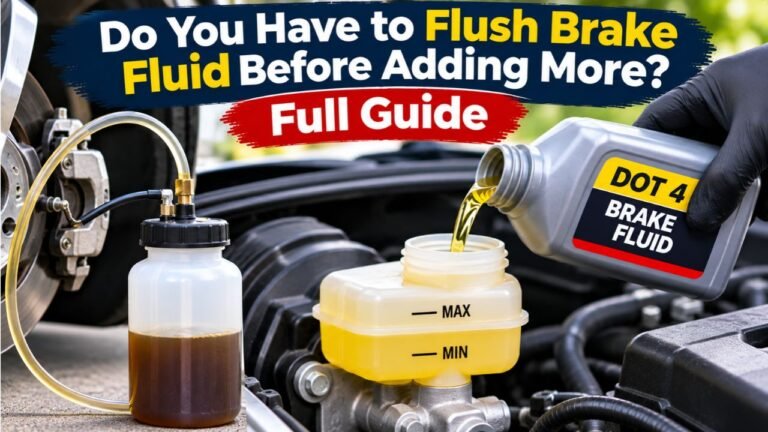
After certain hydraulic repairs, the system must be refilled and bled.
A fluid flush may also be necessary if the fluid is contaminated or replacement is due.
However, simply flushing the fluid does not repair a damaged seal or line.
Should You Get Multiple Repair Estimates?
When practical, compare estimates from qualified repair shops.
Ask each shop to identify:
- The leaking component.
- Required replacement parts.
- Labor.
- Required brake bleeding.
- Any additional contaminated or damaged parts.
- The final safety inspection.
Do not delay urgent brake repairs solely to continue driving for additional estimates.
Can You Fix a Brake Fluid Leak Yourself?
Brake hydraulic repairs are safety-critical.
Some experienced technicians and properly trained vehicle owners can perform specific repairs using the correct equipment and factory service information.
However, a mistake can reduce or eliminate braking capability.
Why DIY Repairs Can Be Risky
Possible problems include:
- Incorrect fittings.
- Improper brake-line materials.
- Damaged hydraulic connections.
- Air left inside the system.
- Incorrect brake fluid.
- Missing ABS bleeding procedures.
- Undetected leaks.
- Incorrect component installation.
For most drivers, professional repair is the safer choice.
Can You Use Stop-Leak Products?
No ordinary stop-leak additive should be introduced into a hydraulic brake system.
Brake fluid must meet precise performance and compatibility requirements.
Unapproved chemicals can damage seals or interfere with hydraulic operation.
Can You Seal a Brake Line With Tape?
No.
Tape, glue, or ordinary sealants cannot provide an appropriate repair for a pressurized hydraulic brake line.
The defective component requires a manufacturer-approved repair.
Can You Just Tighten a Leaking Fitting?
Do not assume that tightening a fitting will correct the problem.
A fitting may leak because of corrosion, damaged sealing surfaces, incorrect installation, or other defects.
Excessive tightening can cause further damage.
Have the connection inspected and repaired correctly.
How to Prevent Brake Fluid Leaks
Not every leak can be prevented, but routine inspection helps identify developing problems.
Inspect Brake Lines for Corrosion
Road salt and moisture can contribute to metal brake-line deterioration.
Vehicles operated in snowy regions deserve particular attention.
Check Flexible Brake Hoses
Hoses should be inspected for cracking, abrasion, and visible damage.
Replace damaged components according to manufacturer requirements.
Follow Brake Fluid Maintenance Intervals
Many manufacturers recommend brake fluid replacement at specified time intervals.
Glycol-based brake fluid absorbs moisture over time.
Contaminated fluid can contribute to corrosion inside hydraulic components.
Keep Brake Pads in Good Condition
As disc brake pads wear, the caliper pistons extend.
A gradual reservoir-level decline may reflect that movement.
Regular brake inspections can help distinguish normal pad wear from a leak.
Pay Attention to Warning Lights
Never ignore a brake-system warning.
Check the owner’s manual and arrange diagnosis.
Address Unusual Pedal Feel Immediately
A soft, sinking, or inconsistent pedal is not normal.
Have the braking system inspected before returning the vehicle to service.
Use the Correct Brake Fluid
Use the specification approved by the vehicle manufacturer.
Incorrect fluid can damage hydraulic components.
Keep Maintenance Records
Record brake fluid changes, brake-pad replacements, and hydraulic repairs.
This helps technicians understand the vehicle’s history when a problem develops.
Common Mistakes When Brake Fluid Leaks Under a Car
Avoid these mistakes when identifying or responding to a suspected leak.
Assuming Every Clear Puddle Is Brake Fluid
Air-conditioning condensation and other automotive fluids may appear similar.
Check the location and brake-fluid reservoir level without touching unidentified liquid.
Assuming the Puddle Is Directly Below the Leak
Fluid can travel along components before reaching the pavement.
The actual source may be farther away.
Ignoring Fluid Around One Wheel
A wet wheel or backing plate can indicate a caliper or wheel-cylinder leak.
It requires inspection.
Forgetting About Rear Drum Brakes
A wheel-cylinder leak may remain inside the drum and produce no obvious puddle.
Topping Off the Reservoir Repeatedly
Adding fluid does not repair a leak.
Repeated fluid loss requires diagnosis.
Assuming a Firm Pedal Means No Leak
A hydraulic leak may exist before the pedal feel changes.
Attempting to Seal a Brake Line
Improvised sealants or tape are not suitable for hydraulic brake repairs.
Driving to Test the Brakes
Do not take a vehicle with a suspected brake fluid leak onto the road to test its stopping ability.
Ignoring ABS Requirements
Certain hydraulic repairs require specialized ABS bleeding procedures.
Replacing Brake Fluid Without Fixing the Cause
A fluid flush cannot repair a leaking caliper, wheel cylinder, or brake line.
Using the Wrong DOT Fluid
Incorrect fluid can damage the braking system.
Follow the manufacturer’s requirements.
Waiting Until Braking Performance Deteriorates
A small leak can worsen.
Early inspection is safer than waiting for obvious brake failure.
Conclusion
So, where does brake fluid leak from under car components? The most common areas to inspect include the brake calipers, wheel cylinders, flexible brake hoses, metal brake lines, master cylinder, and hydraulic connections.
Fluid near a front or rear wheel may indicate a caliper or hose problem.
On vehicles with rear drum brakes, a leaking wheel cylinder can release fluid inside the drum assembly.
Fluid beneath the middle of the car may come from a damaged brake line, while fluid near the firewall may be associated with the master cylinder or its connections.
However, puddle location alone cannot confirm the source.
A brake fluid leak may also remain hidden inside a brake booster, underbody panel, or wheel assembly.
My recommendation is to treat unexplained brake fluid loss as an urgent braking-system problem, avoid driving with a suspected hydraulic leak, and have the complete system professionally inspected before repairs are attempted.
Replacing the defective component and properly servicing the hydraulic system are essential for restoring safe braking performance.
FAQs About Where Does Brake Fluid Leak From Under Car
Where Does Brake Fluid Usually Leak From Under a Car?
Brake fluid may leak from calipers, wheel cylinders, brake hoses, metal brake lines, the master cylinder, or hydraulic fittings. Fluid near a wheel often points toward a wheel-end component, while fluid along the vehicle’s underside may originate from a brake line.
Why Is Brake Fluid Leaking Near My Front Tire?
Possible causes include a leaking front brake caliper, flexible brake hose, bleed valve, or hydraulic connection. Fluid may collect on the inside of the wheel or drip onto the ground. Do not drive until the source has been identified and repaired.
Why Is Brake Fluid Leaking Near My Rear Tire?
A rear disc brake may leak from its caliper or hose. On a vehicle with rear drum brakes, a leaking wheel cylinder is another possibility. Fluid may remain inside the drum, making the leak difficult to see without disassembly.
Can Brake Fluid Leak From the Middle of a Car?
Yes. Metal brake lines often run along the vehicle’s underside. A corroded line, damaged fitting, or hydraulic connection may leak near the middle of the vehicle. However, other automotive fluids can also collect there.
What Color Is Brake Fluid When It Leaks?
Fresh conventional brake fluid is commonly clear to pale amber. Older fluid may appear yellowish-brown or darker. However, color alone cannot confirm that a puddle is brake fluid because several automotive liquids look similar.
Can Brake Fluid Leak Without Leaving a Puddle?
Yes. Fluid can remain inside a rear brake drum, collect inside a conventional vacuum brake booster, or accumulate on concealed components. A gradual reservoir-level decrease can also result from worn disc brake pads without any actual fluid leak.
Is It Safe to Drive a Car That Is Leaking Brake Fluid?
No. A confirmed brake fluid leak can reduce hydraulic pressure and cause unsafe braking performance. Do not rely on topping off the reservoir. Arrange towing and professional repair, especially if the fluid level is low, a brake warning appears, or the pedal feels abnormal.