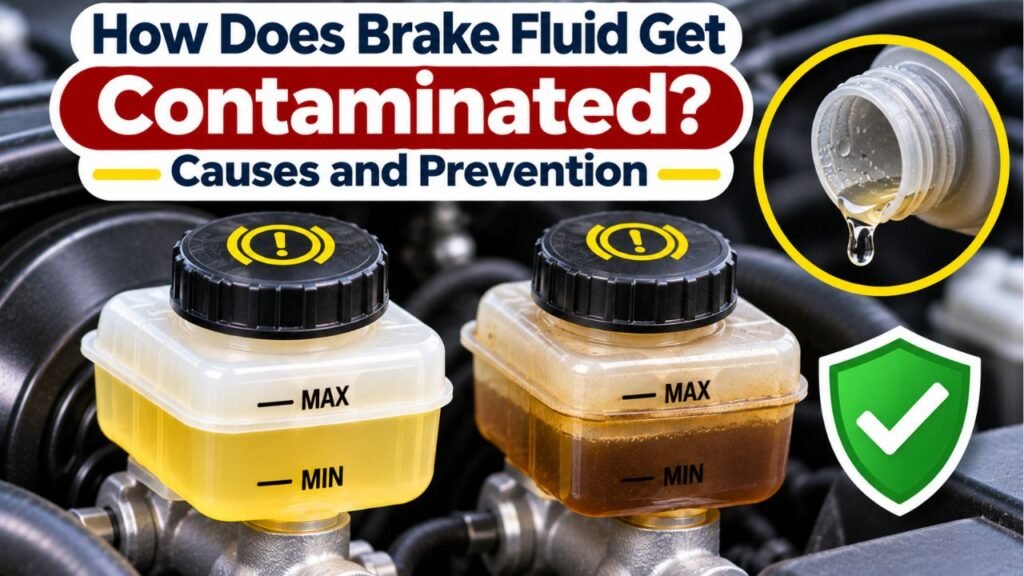
How Does Brake Fluid Get Contaminated? Causes and Prevention
Brake fluid gets contaminated when moisture, dirt, metal corrosion, degraded rubber, or the wrong automotive fluid enters the hydraulic braking system. Water is the most common long-term contaminant in glycol-based DOT 3, DOT 4, and DOT 5.1 fluids, which gradually absorb humidity through components and during service. Petroleum products such as power steering fluid or engine oil are less common but can damage rubber seals and make the brakes unsafe.
Even though brakes use a mostly closed hydraulic system, it is not perfectly isolated from humidity. Moisture can slowly pass through some rubber hoses or the reservoir arrangement. Opening the cap, using an old fluid bottle, or handling the system with unclean tools can also introduce contaminants. Rust and component wear may add particles as the system ages.
Contamination does not always change the fluid’s appearance. A soft pedal, sudden loss of braking power, dragging brakes, or unexplained low fluid calls for immediate inspection; do not keep driving when braking behavior is abnormal.
In this article, I explain the main contamination pathways, how different substances affect braking, and how professionals test fluid condition. I’ll cover when a standard flush is appropriate, when components may need replacement, and how to keep fresh brake fluid clean.
How Does Brake Fluid Get Contaminated? 8 Common Causes
Brake fluid contamination can happen gradually through normal aging or suddenly during improper servicing.
Different contaminants produce different problems, so identifying what entered the system is important before attempting repairs.
Common Causes of Brake Fluid Contamination
| Cause | How Contamination Happens | Possible Effects |
| Moisture absorption | Water vapor enters through hoses, reservoir components, or servicing | Lower boiling point and corrosion |
| Dirt and dust | Debris enters through an opened reservoir or unclean equipment | Hydraulic component wear or restricted passages |
| Rust and corrosion | Internal metal parts corrode over time | Particles and potential component damage |
| Petroleum products | Wrong fluid is accidentally added | Swollen seals and hydraulic failure |
| Incorrect brake fluid | Incompatible fluid is used during servicing | Unreliable performance and compatibility problems |
| Old or improperly stored fluid | Contaminated fluid is poured into the reservoir | Moisture and foreign material enter the system |
| Degraded internal components | Rubber seals, hoses, and other parts deteriorate | Rubber particles and debris |
| Poor maintenance practices | Unclean tools, open lines, or incorrect procedures | Moisture, dirt, incompatible chemicals, or air |
Moisture contamination is usually gradual.
Petroleum contamination, however, can cause serious problems after a single mistake.
1. Moisture Enters Through Brake Hoses and Reservoir Components
Water absorption is one of the most common ways brake fluid becomes contaminated.
DOT 3, DOT 4, and DOT 5.1 brake fluids are generally glycol-based and hygroscopic.
Hygroscopic means the fluid absorbs moisture from its surroundings.
Although the hydraulic braking system is designed to contain brake fluid, it is not necessarily completely impermeable to water vapor.
Moisture can gradually enter through certain rubber components and reservoir arrangements.
The fluid can absorb this moisture even when the vehicle is rarely driven.
According to HELLA’s technical guide to brake-fluid testing and maintenance, moisture can enter through brake hoses, seals, and reservoir components. As the water content increases, the fluid’s boiling point decreases.
This is why time-based brake-fluid replacement intervals are important.
Does Brake Fluid Absorb Water in a Sealed System?
Yes.
A braking system can retain hydraulic pressure effectively while still allowing small amounts of moisture to enter over time.
The exact rate depends on its design, component materials, environmental conditions, and fluid formulation.
A vehicle does not need an obvious hydraulic leak to experience gradual moisture contamination.
Can Humidity Make Brake Fluid Go Bad Faster?
Humidity can increase moisture exposure.
Vehicles operated or stored in humid environments may experience different moisture accumulation than vehicles in drier climates.
However, there is no reliable universal percentage of moisture absorption per year for every car.
Key Takeaway: Glycol-based brake fluid gradually absorbs moisture, even when the braking system appears to be sealed and functioning normally.
2. Dirt and Dust Enter During Brake Fluid Checks
Brake fluid can become contaminated when dirt, dust, or other debris falls into the reservoir.
This often happens during maintenance.
For example, a mechanic or vehicle owner may remove the reservoir cap without cleaning the surrounding area.
Loose dust can fall directly into the fluid.
A dirty funnel or contaminated filling tool can create the same problem.
Why Is Dirt in Brake Fluid Dangerous?
Hydraulic braking systems contain precision components.
Contaminants may affect:
- Master cylinder pistons and seals
- Brake caliper components
- ABS hydraulic valves
- Brake lines
- Wheel cylinders
Fine particles can contribute to wear or interfere with small hydraulic passages.
Modern ABS and electronic stability control systems contain components that require clean, compatible fluid.
Can Road Dust Enter Through the Brakes?
Ordinary road dust around the brake pads and rotors does not automatically enter the sealed hydraulic fluid.
Brake pad dust and brake-fluid contamination are different problems.
However, dirt may enter if hydraulic lines, bleeder screws, or other brake-system connections are opened during servicing.
How Can You Prevent Dirt Contamination?
Clean the reservoir cap and surrounding area before opening it.
Use clean, dry tools and suitable equipment.
Keep the reservoir open only as long as necessary.
Key Takeaway: Dirt contamination commonly results from improper handling or servicing rather than ordinary brake-pad dust.
3. Rust and Corrosion Develop Inside the Brake System
Metal corrosion can introduce particles into brake fluid.
Moisture is a major contributing factor.
As water accumulates, metal components may corrode.
Corrosion products can then become suspended in the fluid.
Which Components Can Corrode?
Potentially affected components include brake lines, calipers, wheel cylinders, master cylinders, and certain ABS hydraulic parts.
The extent of corrosion depends on materials, fluid condition, maintenance, and environmental exposure.
How Does Rust Contaminate Brake Fluid?
Corrosion can produce small particles that enter the surrounding hydraulic fluid.
These particles may contribute to component wear or interfere with hydraulic operation.
The process can become increasingly problematic when the system is neglected.
Moisture promotes corrosion, while corrosion adds debris.
Can Rust Make Brake Fluid Brown?
It can.
Corrosion products may contribute to reddish-brown or dark discoloration.
However, not every dark brake fluid sample contains significant rust.
Fluid aging, additives, and other chemical changes can also affect appearance.
Key Takeaway: Moisture-related corrosion can create internal debris, but color alone cannot confirm how much corrosion is present.
4. Engine Oil or Power Steering Fluid Is Added by Mistake
Petroleum contamination is one of the most dangerous brake-fluid contamination problems.
It can occur when someone accidentally pours the wrong automotive fluid into the brake reservoir.
Examples include engine oil, power steering fluid, automatic transmission fluid, and other petroleum-based products.
Conventional glycol-based brake systems are not designed to operate with these substances.
Why Does Petroleum Damage Brake Components?
Many hydraulic brake seals are manufactured from rubber materials selected for compatibility with approved brake fluid.
Petroleum products can cause these seals to swell, soften, or deteriorate.
The result may include restricted hydraulic passages, sticking components, leakage, or loss of braking performance.
AGCO Automotive’s technical article on power steering fluid in brake systems explains how petroleum contamination can swell master-cylinder seals and obstruct fluid-return passages.
This can cause brakes to drag, lock up, or fail to operate correctly.
How Does the Wrong Fluid Get Into the Reservoir?
Mistakes may happen because automotive fluid containers look similar.
Someone may confuse the brake-fluid reservoir with another reservoir or use an improperly labeled container.
A shared service funnel can also transfer incompatible residue.
Can a Small Amount of Engine Oil Contaminate Brake Fluid?
Yes.
Even relatively small quantities of petroleum contamination can damage sensitive rubber components.
The severity depends on the substance, concentration, exposure time, and affected parts.
What Should You Do if Oil Enters the Brake Reservoir?
Do not drive the vehicle.
Avoid further operation of the braking system and arrange professional assistance.
A technician must determine which components have been exposed.
A simple fluid flush may not be sufficient because petroleum contamination can damage rubber seals and other components that require replacement.
Key Takeaway: Petroleum contamination is a serious hydraulic-system problem and may require extensive repairs, not merely fresh brake fluid.
5. The Wrong Brake Fluid Is Used
Not all brake fluids are interchangeable.
Different fluids can have different base chemistries, viscosity requirements, and compatibility characteristics.
The most important distinction is between silicone-based DOT 5 and conventional glycol-based fluids.
Brake Fluid Compatibility Chart
| Fluid Type | General Chemistry | Moisture Behavior |
| DOT 3 | Glycol-based | Absorbs moisture |
| DOT 4 | Glycol-based | Absorbs moisture |
| DOT 5 | Silicone-based | Does not readily absorb moisture |
| DOT 5.1 | Glycol-based | Absorbs moisture |
| Specialized mineral hydraulic fluid | Mineral-oil-based | Different chemistry; system-specific |
DOT 5 silicone fluid must not be treated as a direct substitute for glycol-based DOT 3, DOT 4, or DOT 5.1.
Similarly, mineral hydraulic oil is not an acceptable substitute for conventional automotive DOT brake fluid.
Can DOT 3 and DOT 4 Be Mixed?
DOT 3 and DOT 4 are generally chemically miscible because both are glycol-based.
However, chemical miscibility does not prove that a mixed product meets the vehicle’s required performance specifications.
Use the brake-fluid type and any additional approvals specified in the owner’s manual.
Why Is DOT 5 Different From DOT 5.1?
DOT 5 is silicone-based.
DOT 5.1 is glycol-based.
Their similar names do not make them interchangeable.
Using an unapproved fluid can affect braking performance and component compatibility.
Key Takeaway: A fluid can be chemically compatible with another product yet still fail to meet the vehicle’s specifications. Always use the correct approved fluid.
6. Old or Improperly Stored Brake Fluid Is Added
Brake fluid may already be contaminated before it enters the vehicle.
This is particularly relevant to glycol-based brake fluid stored in a previously opened bottle.
How Does an Open Bottle Become Contaminated?
When a container is opened, humid air can contact the fluid.
Because glycol-based brake fluid is hygroscopic, it can absorb water during storage.
Exposure to dirt, cleaning chemicals, or other substances creates additional contamination risks.
Is an Unopened Bottle Different?
A properly sealed container protects the fluid from atmospheric exposure and foreign material.
However, product condition also depends on storage conditions, packaging integrity, and manufacturer recommendations.
Always check the product information before using an older container.
Can You Use Brake Fluid From Last Year?
Do not assume it remains suitable merely because the container still holds fluid.
A bottle that has been opened or stored improperly may no longer meet the desired moisture or cleanliness requirements.
The safest general practice is to use fresh, approved brake fluid from a properly sealed container.
Can You Return Used Fluid to the Bottle?
No.
Fluid removed from a vehicle may contain moisture, corrosion products, and other contaminants.
Never pour used brake fluid back into a fresh-fluid container.
Key Takeaway: Contamination can begin during storage. Use properly sealed, clean brake fluid rather than questionable leftovers.
7. Internal Rubber Seals and Components Deteriorate
Brake components can wear or deteriorate over time.
When internal seals or hoses degrade, small particles of material may enter the hydraulic fluid.
This is different from brake-pad dust, which normally remains outside the hydraulic circuit.
Which Parts Can Produce Debris?
Potential sources include:
- Master-cylinder seals
- Brake caliper seals
- Wheel-cylinder seals
- Flexible hydraulic hoses
- Other hydraulic-system components
Normal aging, contamination, excessive heat, or incompatible fluid can contribute to deterioration.
What Does Black Debris in Brake Fluid Mean?
Black particles may indicate deteriorated rubber or other internal contamination.
However, the appearance alone does not identify the material reliably.
A professional inspection may be necessary.
Does Dark Brake Fluid Always Mean Rubber Is Breaking Down?
No.
Brake fluid can darken because of chemical aging and other conditions.
A dark color is a reason to evaluate the fluid but is not proof of a specific mechanical failure.
Key Takeaway: Degrading hydraulic components can contaminate fluid with particles. A suspected internal component problem requires diagnosis, not just a cosmetic fluid change.
8. Improper Brake Repairs Introduce Contaminants
Poor maintenance procedures can introduce moisture, dirt, foreign fluids, and air into the braking system.
Examples include using unclean tools, leaving hydraulic lines open unnecessarily, or adding fluid from the wrong container.
How Do Dirty Tools Cause Problems?
A funnel or brake-fluid filling device may contain residue from a previous job.
If it was used for engine oil or another incompatible substance, that residue can contaminate the brake fluid.
Brake-fluid handling equipment should be clean and dedicated to the correct task.
Can Brake Cleaner Contaminate Brake Fluid?
Yes.
Brake cleaner is intended for specific external cleaning applications, not for addition to a brake-fluid reservoir.
Spraying cleaning solvents into open hydraulic connections or allowing residues to enter the system can cause problems.
Use cleaners only where approved by the relevant service procedure.
What About Air Entering the Brake Lines?
Air is not a chemical fluid contaminant in the same sense as water or petroleum oil.
However, trapped air is a serious hydraulic-system problem.
Air compresses more readily than brake fluid.
This can make the brake pedal feel soft or spongy.
If air enters during repair, the system must be bled using the correct vehicle-specific procedure.
Some ABS-equipped vehicles require specialized diagnostic equipment for proper bleeding.
Key Takeaway: Cleanliness and correct service procedures are essential. Improper maintenance can introduce contaminants or trapped air that compromise hydraulic operation.
How Does Moisture Contamination Affect Brake Fluid?
Moisture is especially important because it can accumulate gradually without any obvious external leak.
The primary concerns are reduced boiling resistance and corrosion.
Moisture Reduces Brake Fluid Boiling Point
Brake fluid is designed to withstand high temperatures.
When glycol-based fluid absorbs water, its boiling point generally decreases.
This becomes important during prolonged braking, repeated hard stops, or heavy vehicle loads.
Moisture Can Create Vapor Bubbles
When fluid becomes hot enough to boil, vapor may form.
Unlike liquid brake fluid, vapor is compressible.
Pressing the brake pedal may then compress vapor rather than transferring hydraulic pressure effectively.
The result can be a soft pedal and reduced braking performance.
Moisture Promotes Corrosion
Water can contribute to corrosion inside metal hydraulic components.
Corrosion may damage internal surfaces and introduce particles.
This can affect calipers, brake lines, and expensive ABS hydraulic components.
How Much Moisture Is Too Much?
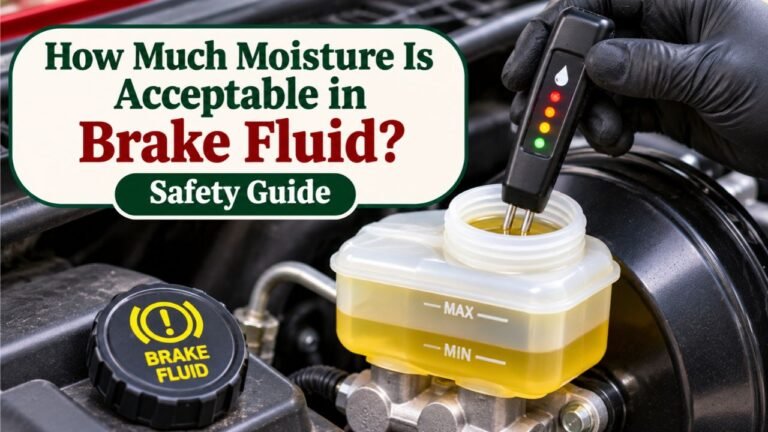
Many service guidelines treat a moisture reading around 3% as a reason to replace glycol-based brake fluid.
However, 3% is not a universal safety limit for every vehicle or every testing method.
The fluid’s actual boiling point and the manufacturer’s replacement requirements matter.
Brake Fluid Moisture Guide
| Estimated Moisture | General Interpretation |
| Under 2% | Often considered acceptable by common screening testers |
| 2–3% | Caution range; assess service needs |
| Around 3% | Common replacement trigger |
| Above 3% | Prompt professional fluid service indicated |
These are screening guidelines rather than a guarantee of braking-system safety.
Electronic moisture testers may also provide inaccurate readings for certain formulations.
Key Takeaway: Moisture lowers the boiling point and promotes corrosion. Routine brake-fluid replacement helps manage these risks.
Does Brake Fluid Get Contaminated Even if You Never Drive?
Yes.
Brake fluid can deteriorate during storage or periods of inactivity.
The most important reason is that glycol-based fluid absorbs moisture over time.
This process does not stop merely because the vehicle remains parked.
What Happens to a Parked Car?
Moisture can gradually enter through parts of the hydraulic system.
Fluid condition may change while the vehicle is stored.
If the car is kept for years without brake-fluid maintenance, corrosion and other aging-related issues can become concerns.
Does Low Mileage Mean Brake Fluid Is Still Good?
No.
A car with 5,000 miles may have older fluid than a car with 50,000 miles.
The odometer does not measure brake-fluid moisture or service age.
How Often Should You Change Fluid in a Rarely Driven Car?
Follow the manufacturer’s time-based replacement schedule.
Many vehicles have intervals of approximately two years, but requirements vary.
Some manufacturers specify different intervals or inspection procedures.
Key Takeaway: Brake-fluid maintenance is important even for vehicles that spend most of their time parked.
What Are the Signs of Contaminated Brake Fluid?
Contaminated brake fluid may produce several warning signs.
However, many of these symptoms have other possible causes.
No single symptom reliably identifies the contaminant.
Brake Fluid Contamination Symptoms Chart
| Symptom | Possible Explanation | Recommended Response |
| Dark or cloudy fluid | Aging, particles, corrosion, or other contamination | Test and inspect fluid |
| Soft or spongy pedal | Air, vapor, leaks, or hydraulic problems | Stop driving if abnormal; arrange inspection |
| Brakes drag or lock | Sticking hydraulic components, including possible swollen seals | Do not continue driving |
| Brake warning light | Low fluid or another system fault | Follow vehicle warning instructions |
| Visible debris in reservoir | Dirt, corrosion, or component deterioration | Professional assessment |
| Repeated fluid loss | Hydraulic leak or other brake problem | Prompt inspection |
| Poor braking when hot | Fluid boiling or another braking-system fault | Stop safely and arrange service |
| Swollen reservoir-cap seal | Possible petroleum contamination | Do not operate; professional diagnosis |
Can Contaminated Brake Fluid Cause a Spongy Pedal?
Yes, but not all contamination causes this symptom.
Moisture-contaminated glycol-based fluid can develop vapor when sufficiently hot.
Air trapped in the hydraulic system can also make the pedal feel spongy.
Other faults may create similar symptoms.
Can Contaminated Fluid Make Brakes Stick?
Yes.
Petroleum contamination can cause certain rubber seals to swell.
This may interfere with hydraulic pressure release.
Dragging or locked brakes can also result from mechanical problems unrelated to fluid contamination.
Does Contaminated Brake Fluid Smell Different?
Some contaminants may change fluid odor.
However, smell is not a safe or reliable method of identifying contamination.
Do not inhale brake-fluid vapors or handle unknown fluid samples unnecessarily.
Can Brake Fluid Look Clean and Still Be Contaminated?
Yes.
Water absorption is not necessarily visible.
A fluid may appear relatively clear while its boiling point has declined.
Key Takeaway: Brake-fluid appearance and pedal feel can provide clues, but reliable testing and professional inspection are needed to identify the actual problem.
How Can You Tell if Brake Fluid Is Contaminated?
A brake-fluid inspection may involve visual assessment, testing, service-history review, and examination of hydraulic components.
The correct approach depends on the suspected contaminant.
Brake Fluid Testing Methods
| Test | What It Can Reveal | Main Limitation |
| Visual inspection | Debris, cloudiness, unusual color, or separated material | Cannot confirm fluid safety |
| Moisture tester | Estimated water content | Inexpensive testers may be inaccurate |
| Boiling-point test | Thermal performance | Requires correct equipment |
| Corrosion-related test strips | Certain dissolved metal indicators | Do not identify every contaminant |
| Professional hydraulic inspection | Leaks, damaged seals, and component problems | May require disassembly |
| Laboratory fluid analysis | Specific contaminants or chemical properties | More costly and specialized |
Visual Inspection
Look through the reservoir when possible without unnecessarily opening it.
Unusual particles, cloudiness, or visible separated material may justify further investigation.
However, visual inspection does not measure the fluid’s boiling point or precisely determine its water content.
NAPA’s guide to checking brake fluid explains how moisture and corrosion can affect the hydraulic system and describes moisture and corrosion-related testing methods.
Electronic Moisture Testing
Some handheld testers estimate moisture through electrical properties.
These tools are convenient for preliminary checks.
However, fluid additives and chemistry can influence results.
A low reading does not necessarily establish that the fluid is safe.
Brake Fluid Boiling-Point Testing
Professional equipment can evaluate the fluid’s boiling behavior.
This is particularly relevant when investigating moisture-related deterioration.
The technician should follow appropriate testing procedures.
Testing for Petroleum Contamination
Suspected petroleum contamination requires a different approach.
Indicators may include swollen rubber components or fluid separation.
A professional may use appropriate inspection and testing procedures to investigate the contamination.
Do not attempt improvised testing inside the vehicle’s reservoir.
If petroleum contamination is suspected, avoid operating the braking system and arrange professional service.
Can You Test Brake Fluid at Home?
Basic visual checks may be possible without opening the reservoir.
Consumer moisture testers can provide preliminary information when used correctly.
However, determining whether a braking system is safe requires more than one test result.
Key Takeaway: The appropriate testing method depends on whether the concern is moisture, particles, chemical contamination, or hydraulic component damage.
Why Does Brake Fluid Turn Brown or Black?
Brake-fluid color can change over time.
However, discoloration is not always proof of dangerous contamination.
Common Reasons Brake Fluid Darkens
Possible causes include chemical aging, corrosion products, and particles from deteriorating internal components.
Some formulations may also change color through ordinary service-related chemical reactions.
Is Brown Brake Fluid Always Bad?
Not automatically.
Brown fluid may warrant inspection, especially when its service history is unknown.
However, the actual fluid condition cannot be determined by color alone.
A technician may need to assess its boiling point and other relevant properties.
What Does Black Brake Fluid Mean?
Very dark or black fluid can suggest significant deterioration or contamination.
However, the exact cause cannot be identified solely from color.
Inspecting the hydraulic system may reveal worn seals, internal debris, or other problems.
Can Fresh Brake Fluid Be Amber?
Yes.
Conventional glycol-based brake fluids are commonly clear to light amber.
The appearance varies by product.
Silicone-based DOT 5 has a different standardized color designation.
Should You Replace Fluid Just Because It Looks Dark?
Follow the manufacturer’s maintenance schedule and investigate unexpected discoloration.
If the fluid is overdue or contaminated, replacement is appropriate.
However, dark color alone does not establish that a particular component has failed.
Key Takeaway: Color is a useful observation, but it cannot reliably identify contaminants or measure brake-fluid performance.
Can Contaminated Brake Fluid Cause Brake Failure?
Yes.
Certain forms of contamination can compromise hydraulic braking.
The mechanism depends on what entered the system.
Moisture-Related Failure
Excessive moisture can lower boiling resistance.
During demanding braking, vapor formation can reduce effective hydraulic pressure transfer.
Petroleum-Related Failure
Petroleum products can damage rubber seals.
Swollen or deteriorated seals may interfere with pressure generation or release.
This can cause dragging brakes, locked wheels, leaks, or reduced braking capability.
Dirt and Particle Contamination
Particles can contribute to wear and may interfere with precision hydraulic components.
Problems may become particularly expensive when ABS components are affected.
Incorrect Fluid
An unapproved brake fluid may not meet the system’s chemical compatibility, viscosity, or performance requirements.
This can compromise braking reliability.
What Should You Do if Brakes Feel Abnormal?
If the brake pedal becomes unusually soft, sinks toward the floor, the brakes drag or lock, or stopping performance decreases, stop driving as soon as safely possible.
Arrange professional assistance and towing.
Do not rely on adding fresh brake fluid to correct an unknown hydraulic problem.
Key Takeaway: Contaminated fluid can contribute to serious braking problems. Any abnormal brake behavior requires prompt professional attention.
Can You Fix Contaminated Brake Fluid by Flushing It?
A proper brake-fluid exchange can address many cases of moisture-related aging or ordinary fluid deterioration, but it does not automatically repair damage caused by incompatible chemicals.
The appropriate solution depends on the type of contamination.
Moisture Contamination
When glycol-based brake fluid has absorbed excessive moisture, replacement with fresh approved fluid is generally appropriate.
The fluid should be exchanged according to the vehicle’s service procedure.
Proper bleeding may also be required.
Dirt and Minor Debris
A technician should determine whether the problem is limited to contaminated fluid or whether hydraulic components have been damaged.
Fluid replacement alone may be insufficient if particles have caused component wear or obstruction.
Rust Contamination
Corrosion-related contamination may require inspection or replacement of affected components.
Simply installing clean fluid does not repair corroded brake lines or damaged hydraulic parts.
Petroleum Contamination
This is particularly serious.
Oil contamination may cause rubber components to swell or deteriorate.
Because petroleum can affect seals and other rubber parts, a routine flush may not remove all damage.
Major hydraulic components may require replacement.
Wrong Brake Fluid
The response depends on which fluid entered the system.
Some glycol-based brake fluids are chemically miscible but may not meet the required vehicle specification.
Silicone or mineral-oil contamination presents different compatibility concerns.
A technician must identify the product and determine the correct repair.
Can You Just Add Fresh Fluid?
No.
Topping off the reservoir does not remove contaminated fluid already distributed through the hydraulic system.
If the fluid needs replacement, complete the appropriate service.
Key Takeaway: Ordinary moisture-related deterioration may be corrected through a proper fluid exchange. Petroleum contamination and damaged components can require much more extensive repairs.
How Often Should You Replace Brake Fluid to Prevent Contamination?
Brake-fluid replacement intervals vary by vehicle manufacturer.
Many vehicles specify time-based servicing.
A common interval is approximately every two years, although some manufacturers recommend shorter or longer periods.
Why Is Brake Fluid Changed by Time?
Glycol-based brake fluid absorbs moisture even when the vehicle is not regularly driven.
That makes elapsed time an important maintenance factor.
Does DOT 4 Last Longer Than DOT 3?
Not necessarily.
DOT 4 generally has higher minimum standardized boiling-point requirements than DOT 3.
However, the replacement interval depends on the exact product and vehicle specifications.
The DOT designation alone does not establish how long the fluid can remain in service.
What if You Don’t Know When the Fluid Was Changed?
Have the braking system inspected.
A professional fluid replacement may be appropriate if the service history is unknown.
Do not assume that low mileage or clear-looking fluid means replacement is unnecessary.
When Should You Replace Brake Fluid Early?
Early inspection or replacement may be appropriate when testing indicates deterioration, contamination is suspected, hydraulic repairs are performed, or the braking system shows abnormal behavior.
The correct service should address both the fluid and any underlying hydraulic problem.
Key Takeaway: Follow the manufacturer’s maintenance interval rather than relying solely on mileage, fluid color, or an inexpensive moisture tester.
How to Prevent Brake Fluid From Getting Contaminated
Preventing contamination is easier and less expensive than repairing damaged hydraulic components.
1. Keep the Reservoir Properly Closed
Avoid opening the brake-fluid reservoir unnecessarily.
Ensure the cap and seal remain in suitable condition.
2. Use Fresh, Approved Brake Fluid
Choose the exact specification required by the vehicle.
Use a properly sealed container.
3. Clean Before Opening
Remove dirt from around the reservoir cap before servicing.
Keep tools and surrounding surfaces clean.
4. Never Use Shared, Unclean Funnels
A funnel previously used for engine oil or other automotive fluids can transfer incompatible residue.
Use clean equipment dedicated to brake-fluid service.
5. Keep Other Automotive Fluids Separate
Store brake fluid away from engine oil, power steering fluid, transmission fluid, and cleaning chemicals.
Maintain clear labels and original containers.
6. Avoid Leaving Hydraulic Connections Open
During brake repairs, follow proper procedures to limit exposure to dirt and moisture.
Use the manufacturer’s service instructions.
7. Replace Brake Fluid on Schedule
Follow the vehicle’s specified replacement interval.
Routine service helps prevent excessive moisture accumulation.
8. Investigate Unexpected Fluid Loss
A dropping fluid level may reflect brake-pad wear or a leak.
Do not repeatedly top off the reservoir without identifying the cause.
9. Use Qualified Service for Complex Repairs
ABS hydraulic systems may require special procedures and diagnostic equipment.
Improper repairs can introduce air or other contaminants.
10. Keep Maintenance Records
Record the date of each brake-fluid replacement and significant hydraulic repair.
This makes it easier to identify overdue maintenance.
Key Takeaway: Proper fluid selection, careful handling, clean tools, and scheduled replacement are the most effective ways to reduce contamination risk.
Common Mistakes That Contaminate Brake Fluid
Several maintenance mistakes are avoidable.
Using Brake Fluid From an Open Container
Glycol-based fluid absorbs atmospheric moisture.
A bottle left open or improperly stored may become unsuitable for use.
Pouring Power Steering Fluid Into the Brake Reservoir
This can damage rubber seals and lead to expensive hydraulic repairs.
Do not operate the vehicle after a suspected petroleum-fluid mix-up.
Mixing DOT 5 With DOT 3 or DOT 4
Silicone-based DOT 5 should not be used as a routine replacement for conventional glycol-based fluids.
Checking Fluid With Dirty Tools
Unclean equipment can introduce particles or chemical residues.
Leaving the Reservoir Cap Open
Unnecessary exposure can introduce dirt and humidity.
Ignoring a Brake Fluid Leak
A leak is a hydraulic-system fault.
Topping off the reservoir does not correct it.
Assuming Dark Fluid Is the Only Sign of Contamination
Moisture contamination may not produce a visible color change.
Reusing Drained Brake Fluid
Used fluid should not be returned to the braking system.
It may already contain moisture and debris.
Assuming a Flush Repairs Damaged Seals
A fluid exchange does not restore rubber components damaged by petroleum contamination.
Skipping Brake Fluid Replacement
Old fluid can become contaminated even if the car is rarely driven.
Key Takeaway: Avoid contamination at the reservoir and during servicing. Incorrect fluid and petroleum residue create particularly serious risks.
Brake Fluid Contamination: What Should You Do Next?
The appropriate response depends on the suspected contaminant and whether the brakes are operating normally.
| Situation | Recommended Action |
| Brake fluid is overdue for scheduled service | Arrange an approved fluid replacement |
| Moisture test indicates deterioration | Confirm condition and replace as appropriate |
| Fluid appears dark but brakes feel normal | Review service history and have fluid assessed |
| Dirt or particles are visible | Arrange professional inspection |
| Petroleum fluid was added accidentally | Do not drive; arrange professional assessment and towing |
| Incorrect DOT fluid was used | Identify the fluid and obtain vehicle-specific service advice |
| Brake pedal is soft or sinks | Stop driving safely; arrange professional assistance |
| Brakes drag or lock | Do not continue driving; arrange towing |
| Brake-fluid level falls repeatedly | Investigate for leaks or other brake-system faults |
| Brake system was opened during repair | Follow the proper bleeding and service procedure |
For safety-critical problems, do not continue driving simply because adding fluid makes the reservoir look normal.
The condition of the entire braking system matters.
Conclusion
So, how does brake fluid get contaminated?
The most common causes include moisture absorption, dirt entering during maintenance, internal corrosion, deteriorating components, improper storage, and accidentally adding the wrong fluid.
Glycol-based DOT 3, DOT 4, and DOT 5.1 fluids naturally absorb moisture over time.
As water accumulates, boiling resistance decreases, and internal corrosion becomes a greater concern.
Dirt and metal particles can interfere with precision hydraulic components.
Petroleum products such as engine oil and power steering fluid are particularly dangerous because they can swell or damage brake-system seals.
The correct repair depends on the contaminant.
A proper brake-fluid exchange may address ordinary moisture-related deterioration, but serious chemical contamination can require component replacement.
Because fluid appearance alone cannot establish its condition, reliable testing, maintenance history, and professional inspection remain important.
To reduce contamination, use fresh approved fluid, keep the reservoir properly closed, maintain clean service equipment, and follow the manufacturer’s replacement schedule.
Most importantly, never continue driving when braking performance is abnormal or a dangerous contaminant has entered the system.
FAQs About How Brake Fluid Gets Contaminated
How Does Water Get Into Brake Fluid?
Water vapor can gradually enter through certain brake hoses, seals, and reservoir components. Moisture may also enter when the reservoir is opened or improperly stored fluid is added. Glycol-based DOT 3, DOT 4, and DOT 5.1 fluids absorb this moisture over time.
Can Brake Fluid Become Contaminated Without Opening the Reservoir?
Yes. Moisture can slowly enter through parts of an otherwise functioning hydraulic system. Internal corrosion and component deterioration may also introduce particles. This is why time-based fluid replacement is important even when the reservoir remains closed.
Can Dirty Brake Fluid Cause Brake Failure?
Yes. Moisture can lower boiling resistance, potentially allowing vapor formation during heavy braking. Petroleum contamination can damage rubber seals, while particles may interfere with hydraulic components. The severity depends on the contaminant and system condition.
What Does Contaminated Brake Fluid Look Like?
Contaminated fluid may appear dark, cloudy, or contain visible particles. However, appearance alone cannot identify the contaminant or determine whether the fluid is safe. Moisture-contaminated fluid may still look relatively clear.
Can Engine Oil Contaminate Brake Fluid?
Yes. Engine oil is petroleum-based and is incompatible with conventional glycol-based hydraulic brake systems. Even a small quantity can damage rubber components. If engine oil enters the brake reservoir, do not operate the vehicle and arrange professional assessment.
Can Brake Cleaner Contaminate Brake Fluid?
Yes. Brake cleaner is not designed to be mixed with hydraulic brake fluid. Cleaning solvents entering the reservoir or hydraulic lines can cause contamination and compatibility problems. Use cleaning products only according to the manufacturer’s approved service procedures.
Does Brake Fluid Get Contaminated Over Time?
Yes. Glycol-based brake fluid absorbs moisture during service, while corrosion and component aging may introduce additional contaminants. This can happen even when a vehicle is rarely driven. Follow the manufacturer’s brake-fluid replacement schedule.
Will Flushing Remove All Brake Fluid Contamination?
Not always. A proper fluid exchange can address many cases of moisture-related deterioration. However, petroleum contamination may damage rubber seals and other hydraulic components, requiring replacement. Corrosion or debris-related damage may also need additional repairs.