Do You Have to Flush Brake Fluid Before Adding More? Full Guide
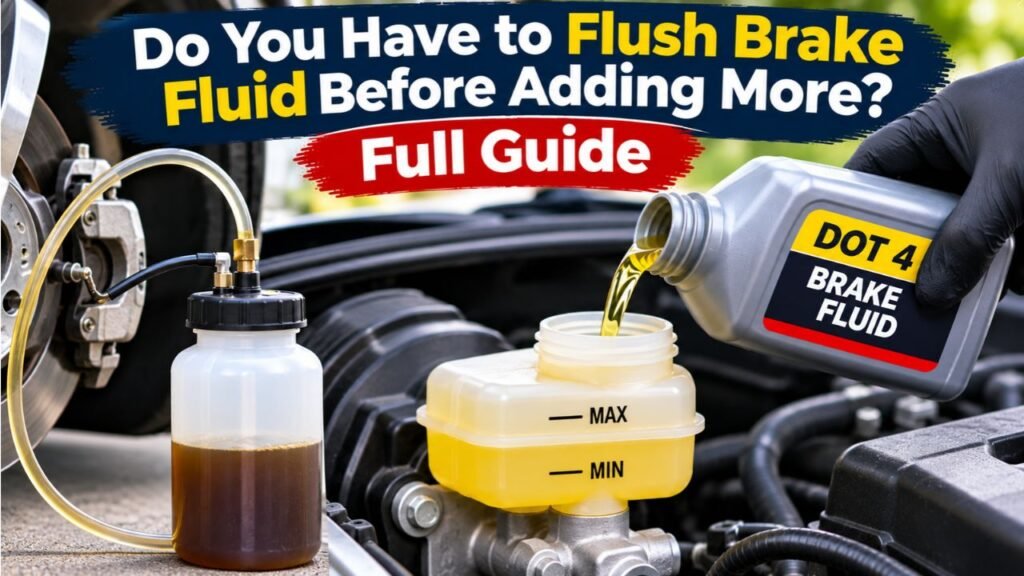
No, you usually do not have to flush brake fluid before adding more of the correct fluid to a reservoir. Topping off and flushing are different services: topping off adjusts the fluid level, while flushing replaces aging or contaminated fluid throughout the hydraulic system. But a low level should not automatically be topped up, because worn brake pads or a leak may be responsible.
As disc brake pads wear, caliper pistons move outward and more fluid remains in the calipers, lowering the reservoir level. Filling it to MAX may cause overflow when new pads are installed. A sudden drop or a level below MIN can indicate a leak, which requires inspection rather than simply adding fluid.
Manufacturers differ on topping-up instructions. Some permit adding the specified fluid below the minimum mark, while others advise against routine topping off. Always follow your vehicle’s manual and use fresh fluid from a sealed container.
In this guide, I explain when topping off is appropriate, when a complete flush is necessary, and whether bleeding is required. I’ll also cover DOT fluid compatibility, safe reservoir checks, worn-pad effects, and warning signs requiring professional brake service.
Do You Have to Flush Brake Fluid Before Adding More? Quick Answer
A brake fluid flush is not required just because you need to add a small amount of compatible fluid. However, topping off is only appropriate when the vehicle manufacturer permits it and the reason for the low level has been addressed.
The answer depends on the braking system’s condition.
When to Top Off vs. Flush Brake Fluid
| Situation | Add Brake Fluid? | Flush Needed? |
| Fluid between MIN and MAX | Usually unnecessary | Only if scheduled or fluid condition requires it |
| Slightly below MIN | Only if permitted by the manufacturer, after assessing the cause | Not automatically |
| Low because brake pads are worn | Generally avoid routine topping off | Not solely because of pad wear |
| Fluid is old or moisture-contaminated | Topping off is not an adequate solution | Yes, replace according to service requirements |
| Brake system has a confirmed leak | Do not rely on topping off | Repair first; fluid service as required |
| Wrong brake fluid was added | Do not add more fluid | Urgent professional assessment and corrective service |
| Hydraulic system has trapped air | Adding fluid alone won’t remove air | Bleeding required; flushing depends on fluid condition |
| Fluid change interval has passed | Not a substitute for replacement | Replace according to the maintenance schedule |
According to ACDelco’s brake-fluid FAQ, adding compatible fluid does not automatically require flushing or bleeding the existing fluid.
However, the company distinguishes a simple top-up from a complete fluid replacement, which requires proper fluid exchange and bleeding.
This distinction is important because opening the reservoir to add fluid is not the same as opening a hydraulic brake line.
Key Takeaway: You do not need to flush the entire system before every permitted top-up, but low fluid must be investigated before adding anything.
What Is the Difference Between Topping Off, Bleeding, and Flushing Brake Fluid?
These three procedures are commonly confused.
Although they all involve brake fluid, their purposes are different.
Brake Fluid Service Comparison
| Procedure | What It Does | Main Purpose |
| Topping off | Adds a small amount of approved fluid to the reservoir | Corrects an appropriate low-level condition |
| Bleeding | Removes trapped air from the hydraulic system | Restores proper hydraulic pressure transfer |
| Flushing or complete fluid replacement | Exchanges old fluid throughout the required hydraulic circuits | Removes aged or contaminated fluid |
What Does Topping Off Mean?
Topping off means adding fresh brake fluid to the reservoir.
It does not remove the existing fluid.
For example, if a manufacturer permits it and the level is below the specified minimum, a small amount of approved fluid may be added to return the level to the designated range.
However, adding fluid does not determine why the level became low.
What Does Bleeding Brake Fluid Mean?
Bleeding removes unwanted air from the hydraulic system.
Air can become trapped during certain brake repairs or if the hydraulic system runs too low on fluid.
Unlike brake fluid, air compresses relatively easily.
This can make the brake pedal feel soft or spongy.
Brake bleeding may be necessary after opening hydraulic lines, replacing certain components, or performing other brake-system repairs.
Simply adding fluid to the reservoir does not remove trapped air.
What Does Flushing Brake Fluid Mean?
Flushing is the process of replacing old brake fluid with fresh, approved fluid throughout the relevant hydraulic system.
A proper fluid exchange generally involves working through the required hydraulic circuits while preventing air from entering.
Some modern ABS-equipped vehicles require specific service procedures or diagnostic equipment.
Because improper bleeding can leave the brakes unsafe, a qualified technician is the better choice when the procedure is unfamiliar.
Does Adding Fluid Automatically Introduce Air?
No.
Carefully opening the reservoir cap and adding approved fluid does not automatically introduce air into the hydraulic lines.
However, if the reservoir has run dry or the hydraulic system has been opened, air may already be present.
In that situation, bleeding may be necessary.
Key Takeaway: Topping off adjusts fluid quantity, bleeding removes air, and flushing replaces old fluid. One procedure does not automatically require the others.
Why Is My Brake Fluid Low?
Before adding brake fluid, determine why the reservoir level has dropped.
Brake fluid is not normally consumed like gasoline or engine oil.
In a properly functioning hydraulic system, a lower reservoir reading commonly relates to brake wear or a leak.
1. Worn Brake Pads
As disc brake pads become thinner, the caliper pistons must extend farther to maintain contact between the pads and brake rotors.
This leaves more hydraulic fluid inside the calipers.
The reservoir level may gradually decrease as a result.
This is not necessarily a leak.
However, it may indicate that the brake pads are approaching their replacement limit.
2. Brake Fluid Leak
A hydraulic leak can cause the fluid level to fall.
Potential leak locations include:
- Brake lines
- Flexible brake hoses
- Brake calipers
- Wheel cylinders
- Master cylinder
- Hydraulic fittings
- ABS hydraulic components
Leaks can reduce hydraulic pressure and compromise braking.
A sudden or substantial decrease in fluid is particularly concerning.
3. Previous Improper Filling
The reservoir may have been left at an incorrect level during earlier service.
However, do not assume this is the cause without checking the braking system.
4. Recent Brake Repairs
Fluid levels may change during brake component replacement or hydraulic servicing.
If the reservoir level is incorrect after a repair, the system should be checked against the manufacturer’s service procedure.
How Can You Tell Whether the Problem Is Worn Pads or a Leak?
A gradual decrease alongside normal brake-pad wear may be expected.
However, the reservoir reading alone cannot reliably distinguish normal wear from a hydraulic leak.
A proper inspection may include checking brake-pad thickness, hydraulic connections, calipers, wheel cylinders, and the master cylinder.
Key Takeaway: Low brake fluid is a symptom, not a diagnosis. Find out whether it reflects normal component wear, a leak, or an earlier service problem.
Should You Add Brake Fluid When the Brake Pads Are Worn?
Adding brake fluid just because the pads are worn is generally not recommended unless the vehicle’s service instructions specifically require it.
The reason is that reservoir fluid level changes with brake-pad wear.
What Happens as Brake Pads Wear?
When pads become thinner, caliper pistons move outward.
Additional brake fluid moves from the reservoir into the calipers.
This can gradually lower the reservoir reading.
However, the fluid hasn’t necessarily escaped from the system.
What Happens When You Replace the Brake Pads?
During pad replacement, technicians typically retract caliper pistons as part of the appropriate procedure.
This can move fluid back toward the reservoir.
As a result, the reservoir level rises.
If the reservoir was previously filled to MAX while the old pads were thin, fluid may overflow.
Why Do Some Manufacturers Recommend Against Topping Off?
Some manufacturers specifically advise against routine topping off when the level drops because of brake-pad wear.
For example, the 2025 Cadillac LYRIQ owner’s manual, under Brake Fluid explains that brake fluid normally moves back into the reservoir when new brake linings are installed.
It advises against adding fluid simply because the level has dropped with pad wear.
This is why checking the manufacturer’s instructions matters.
Does That Mean You Should Ignore a Low Level?
No.
If the reservoir is below the minimum mark or the brake warning light appears, have the system inspected promptly.
Do not assume worn pads are the only explanation.
If braking performance changes, stop driving safely and arrange professional assistance.
Key Takeaway: Worn pads can lower the reservoir level without a leak. Unnecessary topping off may cause overfilling during later brake service.
When Can You Add Brake Fluid Without Flushing?
A simple top-up may be appropriate when the manufacturer permits it, the fluid specification is known, and the low level has been properly assessed.
However, the exact procedure varies by vehicle.
Conditions for a Permitted Top-Up
Before adding brake fluid, confirm that:
- The owner’s manual allows topping off.
- The correct fluid specification is known.
- The cause of the low level has been investigated.
- The reservoir and surrounding area are clean.
- The fluid is fresh and from a properly sealed container.
- The existing fluid is not overdue for replacement.
- No air has entered the hydraulic system.
- No brake-system malfunction is suspected.
If any of these conditions is uncertain, professional assessment is more appropriate.
What if the Fluid Is Between MIN and MAX?
On many vehicles, a level between the designated marks is normal.
There may be no reason to add fluid.
A reservoir does not need to remain exactly at MAX throughout the brake pads’ service life.
What if the Fluid Is Below MIN?
A level below MIN requires attention.
Some manufacturer instructions permit topping off with the correct fluid after assessing the situation.
For example, Ford describes adding brake fluid when it falls below the minimum level in its official guide to adding brake fluid.
Ford also recommends having the braking system inspected, especially if fluid continues to disappear or its condition is questionable.
Other manufacturers may direct owners not to top off routinely.
Follow the vehicle-specific manual instead of treating one manufacturer’s procedure as universal.
Key Takeaway: Topping off can be acceptable under the right conditions, but it should never be used to conceal a leak or delay necessary brake service.
How to Check and Add Brake Fluid Safely
The following procedure applies only when your vehicle’s instructions permit adding brake fluid.
If the level is low for an unknown reason, have the brakes inspected first.
Step 1: Park on a Level Surface
Park the vehicle on stable, level ground.
Switch off the engine and secure the vehicle.
Follow any vehicle-specific instructions for checking the brake-fluid reservoir.
Step 2: Locate the Brake Fluid Reservoir
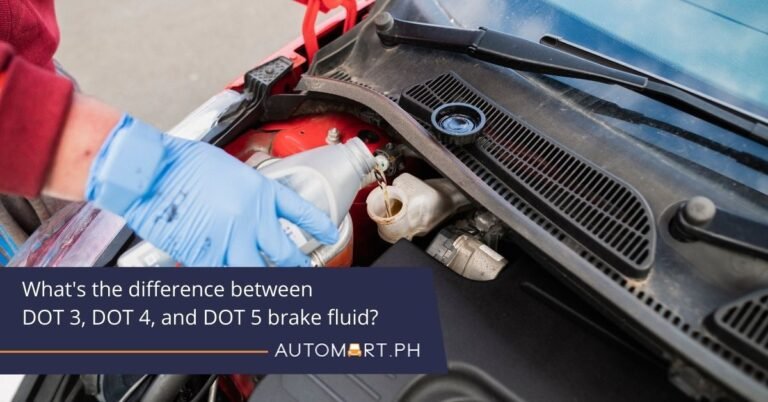
The reservoir is commonly mounted on or near the brake master cylinder.
In many vehicles, it is near the rear of the engine compartment on the driver’s side.
It is often made of translucent plastic.
However, reservoir placement varies by vehicle.
Consult the owner’s manual if it is difficult to locate.
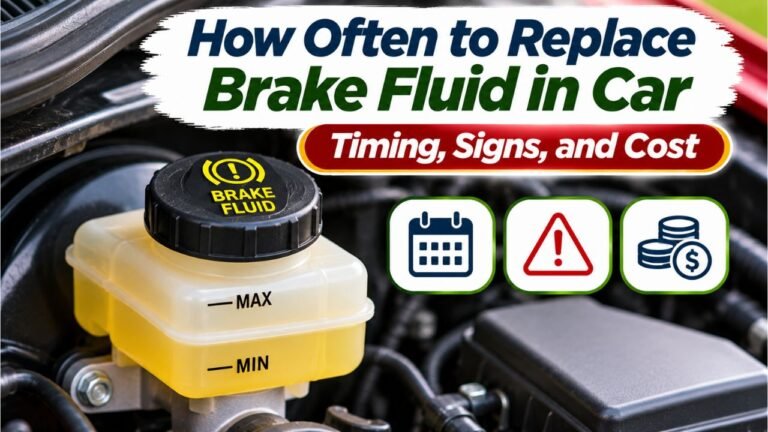
Step 3: Check the MIN and MAX Marks
Look at the fluid level through the reservoir wall.
Most reservoirs have minimum and maximum indicators.
If the level is within the specified range, no additional fluid may be required.
If it is below MIN, do not assume the solution is simply adding more.
Investigate the cause.
Step 4: Confirm the Correct DOT Specification
Check the reservoir cap and owner’s manual.
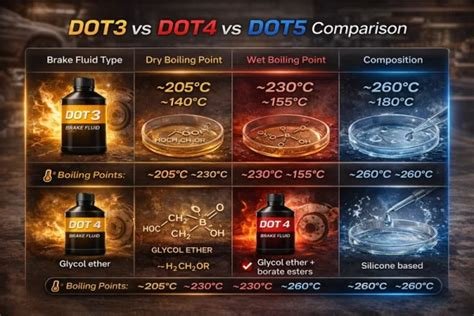
Common brake-fluid classifications include:
- DOT 3
- DOT 4
- DOT 5
- DOT 5.1
These fluids are not all interchangeable.
Use the exact specification required or approved for the vehicle.
Step 5: Use Fresh Brake Fluid
Choose fluid from a clean, sealed container.
Avoid using a bottle that has been left open.
Glycol-based brake fluids absorb moisture from the air.
Contaminated fluid may have reduced boiling resistance.
Step 6: Clean the Reservoir Cap
Before opening the reservoir, clean the cap and surrounding area with a suitable clean cloth.
This reduces the risk of dirt, dust, or water entering the hydraulic system.
Do not allow cleaning chemicals or other automotive fluids into the reservoir.
Step 7: Add a Small Amount if Permitted
If the owner’s manual permits topping off and the cause of the low level has been addressed, add the correct brake fluid carefully.
Keep the level within the manufacturer’s specified range.
Do not exceed MAX.
Avoid spilling fluid onto painted surfaces.
Step 8: Secure the Cap
Replace the cap or reservoir cover according to the manufacturer’s instructions.
Make sure it is properly sealed.
Do not leave the reservoir exposed to air longer than necessary.
Step 9: Check for Problems
Review the brake warning indicators and pedal condition.
If the warning remains active, the level continues dropping, or the pedal feels abnormal, do not treat the top-up as a completed repair.
Arrange professional service.
Important Safety Precautions
Brake fluid can damage paint and is harmful if mishandled.
Use suitable gloves and eye protection.
Keep it away from children and pets.
If compatible glycol-based brake fluid contacts a painted surface, promptly rinse it with water according to the vehicle manufacturer’s guidance.
Never add engine oil, transmission fluid, power steering fluid, water, or other substitutes to the brake reservoir.
Key Takeaway: A permitted top-up is relatively simple, but correct fluid selection, cleanliness, accurate filling, and investigation of low fluid are essential.
When Should You Flush Brake Fluid Instead of Adding More?
A complete fluid replacement becomes appropriate when the fluid is old, contaminated, or due for scheduled service.
Topping off does not restore the condition of fluid already circulating throughout the hydraulic system.
1. The Brake Fluid Is Past Its Service Interval
Many vehicles require brake-fluid replacement on a time-based schedule.
Some manufacturers specify approximately two years, while others use different intervals.
The correct schedule depends on the vehicle.
If replacement is due, simply adding fresh fluid does not satisfy the maintenance requirement.
2. Moisture Has Accumulated
Most passenger vehicles use glycol-based brake fluid.
DOT 3, DOT 4, and DOT 5.1 fluids absorb moisture over time.
As moisture increases, their boiling resistance decreases.
This can raise the risk of vapor formation during sustained heavy braking.
A professional can assess the fluid’s condition and follow the manufacturer’s replacement requirements.
3. The Fluid Is Contaminated
Brake fluid may become contaminated with dirt, water, or incompatible substances.
Contamination can damage hydraulic components or impair braking.
Depending on the type of contamination, a simple flush may not be sufficient.
Certain contamination problems require component replacement and specialized repair.
4. The Wrong Brake Fluid Was Added
An incompatible brake-fluid product can create serious problems.
Stop using the vehicle if incorrect or non-brake fluid was added and arrange professional assessment.
Do not assume diluting the wrong fluid with the correct product will solve the problem.
5. Hydraulic Repairs Require Fluid Replacement
Some brake-system repairs require fluid draining, refilling, and bleeding.
The exact procedure depends on the components involved and the manufacturer’s instructions.
6. Brake Fluid Condition Is Uncertain
A vehicle with no documented fluid-service history may benefit from professional inspection and replacement.
Fluid appearance alone is not a reliable way to establish its boiling point or moisture content.
When a Flush Is Not Automatically Necessary
A complete flush is not required simply because:
- The reservoir cap was opened briefly.
- A properly approved fluid was added under the manufacturer’s instructions.
- The fluid level is slightly below MAX but remains within the normal range.
- Brake pads have worn normally.
- You want the reservoir to look completely full.
Key Takeaway: Flush or replace brake fluid because of its age, contamination, service requirements, or specific repairs—not merely because a top-up is being considered.
Can You Mix New Brake Fluid With Old Brake Fluid?
New brake fluid can generally be added to existing fluid of the same approved specification when the manufacturer allows topping off.
However, the existing fluid must still be suitable for service.
Adding a small amount of fresh fluid does not make old fluid new again.
Does New Brake Fluid Improve Old Brake Fluid?
Only in a limited sense.
Fresh fluid may slightly change the average properties of the fluid in the reservoir.
However, most of the older fluid remains throughout the hydraulic system.
If the fluid is overdue for replacement, topping off does not provide the benefits of a complete fluid exchange.
Is It Okay to Mix Different Brake Fluid Brands?
Products of the same required specification are generally designed to meet applicable performance standards.
However, the vehicle may require particular viscosity or manufacturer approvals.
For example, some ABS and electronic stability control systems specify low-viscosity DOT 4 fluid.
Using another product labeled DOT 4 does not automatically prove that it meets those requirements.
Follow the exact vehicle specification.
Can You Mix DOT 3 and DOT 4?
DOT 3 and DOT 4 are generally glycol-based fluids, but they have different performance requirements.
They may be chemically miscible, yet that does not mean they should be substituted freely.
Mixing them can change the resulting fluid’s performance.
Use the type specified by the manufacturer.
Can You Mix DOT 4 and DOT 5.1?
Both are generally glycol-based brake fluids.
However, they have different specifications and may have different viscosity characteristics.
Do not substitute one for another without verifying vehicle compatibility.
Can You Mix DOT 5 With DOT 3 or DOT 4?
No. DOT 5 silicone-based brake fluid must not be mixed with conventional glycol-based DOT 3 or DOT 4 fluid.
DOT 5 and DOT 5.1 are not the same.
If an incompatible fluid has been added, obtain professional advice before operating the vehicle.
Brake Fluid Compatibility Chart
| Fluid Combination | Recommendation |
| Same approved fluid specification and compatible product | Generally suitable for a manufacturer-permitted top-up |
| DOT 3 added to DOT 4 system | Only if explicitly permitted by the manufacturer |
| DOT 4 added to DOT 3 system | Verify vehicle approval before substitution |
| DOT 4 and DOT 5.1 | Use only when specifications and manufacturer instructions permit |
| DOT 5 silicone with glycol-based fluid | Do not mix |
| Brake fluid mixed with engine oil or other petroleum fluid | Serious contamination; professional repair required |
Key Takeaway: The safest choice is the exact approved brake fluid. Chemical miscibility does not guarantee that a substitute meets your vehicle’s requirements.
Should You Bleed Brakes After Adding Brake Fluid?
No, not if you only performed a permitted reservoir top-up and no air entered the hydraulic system.
Bleeding is needed when air is trapped in the brake lines or other hydraulic components.
When Brake Bleeding May Be Necessary
Bleeding may be required after:
- Replacing a brake hose
- Opening a hydraulic brake line
- Replacing a caliper or wheel cylinder
- Certain master-cylinder repairs
- Allowing the reservoir to run dry during servicing
- Performing a full fluid exchange
- Specific ABS hydraulic repairs
The correct bleeding procedure varies by vehicle.
What Happens if Air Enters the Brake Lines?
Air is compressible.
When the brake pedal is pressed, part of the applied force may compress air rather than operating the brakes effectively.
This can create a soft or spongy pedal.
Adding more fluid to the reservoir does not automatically remove trapped air.
Can You Bleed Brakes Yourself?
Brake bleeding requires correct tools, procedures, and safety checks.
Modern ABS and electronically controlled brake systems may require diagnostic equipment or special service modes.
If you are not familiar with the vehicle’s procedure, use a qualified technician.
Improper bleeding can leave braking performance dangerously reduced.
Key Takeaway: A normal permitted top-up does not require bleeding. Bleeding is necessary when air must be removed from the hydraulic system.
How Full Should the Brake Fluid Reservoir Be?
The brake-fluid reservoir should remain within the range specified by the vehicle manufacturer.
Many reservoirs have clearly marked MIN and MAX indicators.
Brake Fluid Level Guide
| Fluid Level | General Meaning | Recommended Action |
| At MAX | Upper specified fill level | Do not add more |
| Between MIN and MAX | Usually normal | Monitor and follow scheduled maintenance |
| Near MIN | May reflect brake wear | Inspect pad wear and check service history |
| Below MIN | Requires attention | Investigate promptly and follow manufacturer guidance |
| Above MAX | Overfilled | Have excess corrected appropriately |
| Level dropping rapidly | Possible leak | Stop using vehicle if braking is compromised; seek professional service |
Should You Keep Brake Fluid at MAX?
Not necessarily.
A reservoir often holds less fluid as brake pads wear.
The level does not have to remain at MAX throughout the pad service interval.
Filling it unnecessarily may lead to overflow during brake repairs.
Can Too Much Brake Fluid Cause Problems?
Yes.
An overfilled reservoir can overflow when fluid returns during brake service or when operating conditions change.
Spilled brake fluid can damage vehicle paint.
Excess fluid should be corrected using proper service procedures rather than ignored.
Is Brake Fluid Below MIN Always a Leak?
No.
Worn brake pads can also reduce the reservoir level.
However, a level below MIN is not something to dismiss.
Have the braking system inspected to determine the cause.
Key Takeaway: Keep the fluid within the specified range. More fluid is not automatically better.
Can You Just Add Brake Fluid if the Brake Warning Light Is On?
A brake warning light should never be treated as a simple request to add fluid.
It may indicate several different conditions.
Possible causes include:
- Low brake fluid
- Hydraulic pressure problems
- Parking brake status
- Brake-system faults
- Electronic brake-system warnings
The meaning depends on the vehicle.
What Should You Do?
If the brake warning light appears while driving:
- Respond according to the vehicle’s warning instructions.
- Pull over safely when braking-system trouble is indicated.
- Check whether the parking brake is engaged.
- Do not continue driving if braking performance is reduced.
- Arrange professional inspection when necessary.
If the brake pedal is unusually soft, travels much farther than normal, or sinks toward the floor, have the vehicle towed rather than attempting to drive it to a repair shop.
Will Adding Brake Fluid Turn Off the Warning Light?
It may turn off a low-fluid indicator in some vehicles.
However, this does not prove that the underlying problem has been repaired.
A leaking brake line or defective hydraulic component remains dangerous even if the reservoir is refilled.
Key Takeaway: A brake warning light requires diagnosis. Adding fluid is not a reliable way to determine whether the system is safe.
Can You Top Off Brake Fluid if It Is Old or Dirty?
You should not use topping off as a substitute for replacing old brake fluid.
Brake fluid can absorb moisture and accumulate contaminants over time.
The existing fluid may have reduced boiling resistance even when the level is within the normal range.
What if the Fluid Looks Dark?
Dark fluid may indicate aging or contamination.
However, color alone does not determine whether brake fluid must be replaced.
Some fluids naturally appear darker than others.
The service history, required interval, and reliable fluid-condition testing are more useful.
What if the Moisture Reading Is High?
For glycol-based fluid, a high moisture reading can indicate a need for replacement.
However, inexpensive electronic testers may produce inaccurate results with different fluid formulations.
A professional can assess boiling-point performance and determine whether fluid exchange is appropriate.
Can Adding Fresh Fluid Reduce Moisture?
A small top-up may slightly dilute the fluid near the reservoir.
However, it does not remove moisture from the entire hydraulic system.
A proper fluid replacement is needed when contamination or moisture deterioration requires service.
How Often Should You Replace Brake Fluid?
Follow the manufacturer’s maintenance schedule.
Many vehicles use time-based intervals, with two years being common, but some specify different periods.
Brake fluid ages even when the vehicle is driven infrequently.
Key Takeaway: If brake fluid is overdue or contaminated, replace it properly instead of topping it off.
What Happens if You Add Brake Fluid Without Fixing a Leak?
A brake-fluid leak can cause dangerous hydraulic-pressure problems.
Adding more fluid may temporarily raise the reservoir level without correcting the underlying fault.
Why Is This Dangerous?
Brake fluid transfers pedal force to the wheel brakes.
A leak can reduce the system’s ability to maintain hydraulic pressure.
As the fluid escapes, braking response may become unpredictable or severely reduced.
Common Signs of a Brake Fluid Leak
Look for:
- A rapidly decreasing reservoir level
- Wetness near brake hoses or calipers
- Fluid around wheel cylinders
- A puddle beneath the vehicle
- A soft brake pedal
- Increased pedal travel
- A brake warning light
- Reduced braking performance
These symptoms can have other causes, so professional diagnosis is important.
Can You Drive After Adding Fluid to a Leaking System?
Do not rely on a top-up to make a leaking brake system safe.
If a hydraulic leak is suspected or braking performance is abnormal, arrange towing and professional repair.
A qualified technician must identify the fault, repair the affected components, and restore the hydraulic system according to the manufacturer’s requirements.
Key Takeaway: A brake-fluid leak requires repair. Topping off only replaces lost fluid temporarily and does not restore a damaged system.
Common Mistakes When Adding More Brake Fluid
Several mistakes can turn a simple maintenance check into an expensive or unsafe situation.
Adding Fluid Without Checking Brake Pads
A low level may result from worn brake pads.
Filling the reservoir to MAX can cause overflow when the pads are replaced.
Ignoring the Manufacturer’s Instructions
Some vehicles permit limited topping off.
Others advise against routine topping off.
Follow the exact maintenance guidance for your vehicle.
Using the Wrong DOT Fluid
Using an unapproved fluid can compromise braking performance and damage hydraulic components.
Match the required specification.
Mixing DOT 5 With DOT 3 or DOT 4
Silicone-based DOT 5 must not be mixed with glycol-based DOT 3 or DOT 4 fluids.
The similar numbering does not make them compatible.
Using Brake Fluid From an Open Bottle
Glycol-based brake fluid absorbs moisture from the air.
A bottle that has been open or improperly stored may contain unwanted moisture.
Overfilling the Reservoir
Excess fluid can overflow and damage painted surfaces.
Do not exceed the specified maximum level.
Failing to Clean the Reservoir Cap
Dirt and water can enter the hydraulic system when the reservoir is opened.
Keep the cap and surrounding area clean.
Assuming Adding Fluid Removes Air
A top-up does not bleed air from hydraulic lines.
If air is trapped in the system, proper bleeding is required.
Repeatedly Adding Fluid to Hide a Leak
A recurring drop in fluid level is a warning sign.
Have the system inspected instead of continuously adding fluid.
Skipping Scheduled Brake Fluid Replacement
Fresh fluid added to the reservoir does not replace aging fluid throughout the system.
Follow the specified replacement schedule.
Key Takeaway: The most important precautions are checking why the level is low, using the correct fluid, preventing contamination, and avoiding unnecessary overfilling.
How to Decide Between Adding, Bleeding, and Flushing
Use this guide when deciding what type of brake-fluid service may be needed.
| Brake System Condition | Best Next Step |
| Fluid within normal range and service current | No additional fluid needed |
| Fluid low because pads are worn | Inspect and service pads; follow manufacturer instructions |
| Fluid below MIN with unknown cause | Arrange prompt inspection |
| Manufacturer permits topping off after cause is addressed | Add the exact approved fluid carefully |
| Fluid is past replacement interval | Schedule complete fluid replacement |
| Fluid contains excessive moisture | Professional assessment and replacement |
| Air entered hydraulic lines | Bleed using vehicle-specific procedure |
| Wrong fluid or petroleum product entered system | Urgent professional repair assessment |
| Brake pedal feels soft or braking response is reduced | Do not drive; arrange assistance |
| Level continues dropping after being filled | Inspect for leaks immediately |
The correct service is based on the condition of the entire braking system, not only the amount of fluid visible in the reservoir.
Conclusion
So, do you have to flush brake fluid before adding more? In most situations where the vehicle manufacturer permits topping off, the answer is no.
Adding a small amount of fresh, approved brake fluid does not automatically require a full flush or brake bleeding.
However, the reason for the low fluid level matters.
Worn brake pads can cause the reservoir level to decrease naturally. Adding fluid unnecessarily may create an overfilled reservoir when new pads are installed.
A leak can also cause fluid loss, and topping off does not repair it.
If the brake fluid is old, contaminated, or due for replacement, a complete fluid exchange is more appropriate than simply adding more.
If air has entered the hydraulic system, proper bleeding may be required.
Always use the brake-fluid specification approved by the manufacturer, keep the reservoir clean, and avoid overfilling.
Most importantly, do not continue driving with a soft brake pedal, a suspected hydraulic leak, or reduced braking performance.
The safest approach is to inspect the system first, follow the vehicle’s maintenance instructions, and use professional service whenever the condition of the brakes is uncertain.
FAQs About Flushing Brake Fluid Before Adding More
Can You Add New Brake Fluid to Old Brake Fluid?
Yes, when the manufacturer permits topping off and the new fluid meets the required specification. However, adding fresh fluid does not restore the condition of old or contaminated fluid throughout the hydraulic system. If a fluid replacement is due, perform the complete service.
Do You Have to Bleed Brakes After Adding Brake Fluid?
No, not when you simply perform a permitted reservoir top-up and no air has entered the hydraulic lines. Bleeding becomes necessary when air is trapped in the system, such as after certain repairs or when the reservoir has run dry.
Can You Just Top Off Brake Fluid Instead of Flushing?
Only when topping off is appropriate and a complete fluid replacement is not due. Topping off corrects fluid level but does not remove moisture or contamination from the hydraulic system. Follow the manufacturer’s service interval.
What Happens if You Add Brake Fluid Without Flushing?
If the fluid is compatible, the manufacturer permits topping off, and the system is otherwise healthy, no problem should result solely from adding a small amount. However, it does not remove old fluid, correct leaks, or eliminate trapped air.
Should You Flush Brake Fluid When Replacing Brake Pads?
Not automatically. Brake-pad replacement does not always require a complete fluid exchange. However, check whether fluid replacement is due. The reservoir level may rise as caliper pistons are retracted, so avoid unnecessary topping off beforehand.
Can You Mix DOT 3 and DOT 4 Brake Fluid?
DOT 3 and DOT 4 are generally glycol-based and chemically miscible, but they have different performance specifications. Do not substitute or mix them unless the vehicle manufacturer permits it. Use the exact approved specification whenever possible.
Why Does Brake Fluid Keep Getting Low?
The level can decrease as brake pads wear, or fluid may be escaping through a hydraulic leak. A continuing or sudden drop requires inspection. Repeatedly topping off the reservoir does not solve a leaking brake system.
How Do You Know When Brake Fluid Needs Flushing?
Follow the vehicle’s maintenance schedule. Replacement may also be needed when reliable testing indicates deterioration, the fluid is contaminated, or certain hydraulic repairs require it. A soft pedal or poor braking response needs immediate diagnosis and should not automatically be attributed to old fluid.