What Happens if You Don’t Change Brake Fluid? Risks and Signs
If you don’t change brake fluid, it can gradually absorb moisture, lose boiling-point performance, and increase the risk of corrosion inside your vehicle’s braking system. Over time, neglected brake fluid can contribute to a soft brake pedal, reduced braking effectiveness, expensive component damage, and, in severe cases, brake failure. However, missing one scheduled replacement does not mean your brakes will immediately stop working.
Most vehicles use glycol-based DOT 3, DOT 4, or DOT 5.1 brake fluid. These fluids naturally absorb moisture over time, even when the hydraulic braking system appears sealed. As moisture and contaminants accumulate, the fluid may become less reliable under high temperatures and contribute to internal corrosion.
One concern is that deterioration often occurs without obvious warning signs. Your brakes may feel normal during everyday driving but become less effective during repeated hard braking or long downhill trips.
In this article, I explain what happens when brake fluid is not replaced, how moisture affects braking performance, and which components may suffer damage. I also cover replacement intervals, warning signs, fluid testing, repair costs, and what to do if your brake fluid is several years overdue.
What Happens if You Don’t Change Brake Fluid? Main Problems
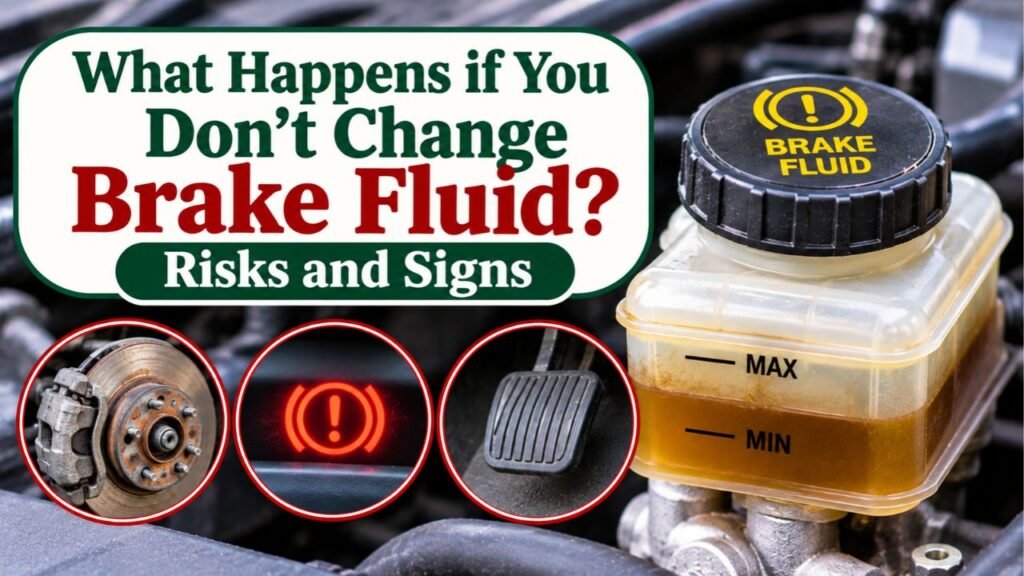
Neglecting brake fluid replacement can create several problems, ranging from gradual fluid deterioration to serious hydraulic-system faults.
The consequences depend on the type of brake fluid, driving conditions, contamination, and overall brake-system maintenance.
Problems Caused by Old Brake Fluid
| Potential Problem | Why It Happens | Possible Consequence |
| Moisture accumulation | Glycol-based brake fluid absorbs moisture | Reduced boiling-point performance |
| Lower boiling point | Water contamination affects fluid behavior at high temperatures | Greater risk of vapor formation |
| Soft or spongy brake pedal | Vapor or air compresses under hydraulic pressure | Reduced braking response |
| Internal corrosion | Moisture and degraded fluid affect metal components | Damaged calipers, lines, or cylinders |
| ABS hydraulic problems | Corrosion or contamination affects hydraulic components | Malfunctions and costly repairs |
| Deposits and contamination | Aging fluid and internal deterioration introduce unwanted material | Restricted or malfunctioning components |
| Reduced braking effectiveness | Hydraulic pressure may not transmit consistently | Increased stopping distance under some conditions |
| Brake failure | Severe hydraulic malfunction or vapor formation | Partial or substantial loss of braking |
These problems do not develop at the same rate in every vehicle.
Some cars may operate without obvious symptoms long after their recommended fluid-change interval.
Others may develop problems sooner, particularly when the braking system is exposed to demanding temperatures or contamination.
According to Bosch Car Service’s brake fluid replacement guide, aging brake fluid absorbs moisture, loses boiling-point performance, and can contribute to internal corrosion and inconsistent braking.
Key Takeaway: Neglecting brake fluid replacement increases long-term risk, even when the reservoir is full and the brakes appear to work normally.
Why Does Brake Fluid Need to Be Changed?
Brake fluid performs an essential function in a hydraulic braking system.
When you press the brake pedal, the master cylinder generates hydraulic pressure.
The fluid transfers this pressure through the brake lines to the wheel brakes.
This allows the calipers or wheel cylinders to apply braking force.
How Brake Fluid Works
A simplified braking process is:
- The driver presses the brake pedal.
- The master cylinder develops hydraulic pressure.
- Brake fluid transmits the pressure through hydraulic lines.
- Brake calipers or wheel cylinders activate.
- Brake pads or shoes press against the rotating braking surfaces.
- The vehicle slows down.
For consistent operation, the fluid needs to withstand temperature changes and transmit pressure reliably.
Why Brake Fluid Ages
Unlike engine oil, brake fluid is not used primarily to lubricate moving engine parts.
However, it still deteriorates over time.
Common contributing factors include:
- Moisture absorption
- Temperature exposure
- Chemical aging
- Contamination
- Corrosion products
- Deterioration of internal components
The fluid does not need to disappear from the reservoir to become less effective.
A braking system can contain the correct amount of fluid while the fluid itself needs replacement.
Does Brake Fluid Wear Out Even if You Don’t Drive?
Yes, conventional glycol-based brake fluid can deteriorate with age even in a vehicle that is driven very little.
Moisture can enter the hydraulic system over time through seals, hoses, and other pathways.
Therefore, brake fluid maintenance is often based on time rather than mileage alone.
A car driven 2,000 miles annually may still require brake fluid replacement according to its manufacturer’s schedule.
1. Old Brake Fluid Absorbs Moisture
One of the most important reasons to replace brake fluid is moisture absorption.
Most passenger vehicles use glycol-based brake fluids.
These fluids are hygroscopic, meaning they absorb moisture from their surroundings.
How Does Water Enter Brake Fluid?
The hydraulic brake system is designed to contain brake fluid and prevent contamination.
However, it is not necessarily completely impermeable to moisture over many years.
Moisture may enter through:
- Flexible hydraulic components
- Seals
- Reservoir venting arrangements
- Service procedures
- Improperly handled replacement fluid
Repeatedly opening the reservoir can create additional opportunities for contamination.
What Happens When Water Enters Brake Fluid?
Water affects several important fluid characteristics.
It can:
- Reduce boiling-point performance
- Contribute to internal corrosion
- Affect long-term hydraulic-system reliability
- Increase the potential for problems during demanding braking
A small amount of moisture does not automatically cause immediate brake failure.
However, increasing contamination reduces the margin available for safe operation.
Can Brake Fluid Absorb Moisture in a Sealed System?
Yes.
A system can prevent obvious liquid leaks while still allowing gradual moisture migration over time.
The rate depends on the brake system, fluid, materials, and environment.
This is why having a full reservoir does not prove that the fluid is still in good condition.
Does Humid Weather Make Brake Fluid Deteriorate Faster?
Humidity can influence moisture exposure, but the rate of contamination varies.
A vehicle used in a humid climate may experience different conditions from one operated in a dry environment.
However, it is not possible to assign a reliable fluid-change interval based on climate alone.
Follow the manufacturer’s schedule and have the fluid assessed when its history or condition is uncertain.
2. The Brake Fluid Boiling Point Can Decrease
One of the most serious consequences of neglected brake fluid is reduced resistance to boiling under high temperatures.
During braking, friction generates heat at the wheels.
Some of this heat transfers into the calipers and brake fluid.
Fresh brake fluid is formulated to withstand high temperatures.
However, absorbed moisture reduces the boiling-point performance of glycol-based fluids.
Dry vs. Wet Brake Fluid Boiling Points
Brake fluid standards distinguish between dry and wet boiling-point performance.
Dry boiling point refers to the performance of fluid tested under specified conditions before standardized humidification.
Wet boiling point is measured after the fluid has undergone a controlled moisture-conditioning procedure.
These are standardized laboratory measurements, not exact predictions of how a particular vehicle’s fluid changes with age.
DOT 3 vs. DOT 4 Boiling Point Chart
| Brake Fluid | Minimum Dry Boiling Point | Minimum Wet Boiling Point |
| DOT 3 | 401°F (205°C) | 284°F (140°C) |
| DOT 4 | 446°F (230°C) | 311°F (155°C) |
These minimum values are specified under U.S. Federal Motor Vehicle Safety Standard No. 116.
The federal brake fluid standard, 49 CFR § 571.116, provides the required dry and wet boiling-point specifications.
The wet boiling-point figure does not mean that every two-year-old or three-year-old brake fluid will have exactly that boiling point.
Actual performance depends on the specific fluid and its condition.
Why Does a Lower Boiling Point Matter?
Imagine driving down a long mountain road.
Repeated braking heats the brakes.
If moisture-contaminated fluid becomes hot enough to boil, vapor can form within the hydraulic system.
Vapor behaves differently from liquid brake fluid.
Instead of transmitting pedal pressure effectively, the vapor can compress.
This may cause the brake pedal to feel soft or travel farther than normal.
Can Old Brake Fluid Cause Brake Fade?
Yes.
Old moisture-contaminated brake fluid can contribute to a form of brake fade associated with vapor formation.
However, not all brake fade results from brake fluid.
Brake pads and friction materials can also lose effectiveness when overheated.
These are different mechanisms.
A vehicle may experience reduced braking because of overheated friction components, boiling brake fluid, or a combination of problems.
3. Your Brake Pedal May Become Soft or Spongy
A soft brake pedal is a possible symptom of hydraulic-system problems.
It can occur when air or vapor is present in the braking system.
Why Does Vapor Make the Pedal Feel Soft?
Brake fluid is relatively resistant to compression during normal braking.
However, gas bubbles are compressible.
When you press the pedal, some of the applied force may compress the gas instead of producing the expected hydraulic pressure.
This can cause:
- Increased pedal travel
- A soft pedal
- A spongy feeling
- Delayed or inconsistent braking response
- Reduced braking effectiveness
In severe cases, the pedal may travel much farther than expected.
Does Old Brake Fluid Always Cause a Spongy Pedal?
No.
Brake fluid may be overdue for replacement while the pedal still feels normal.
A spongy pedal can also result from other conditions, including:
- Air introduced during improper brake bleeding
- Hydraulic leaks
- Faulty master-cylinder components
- Flexible hose problems
- Other brake-system faults
Do not assume a fluid change alone will repair every soft-pedal complaint.
What if the Brake Pedal Goes to the Floor?
Treat this as a serious safety problem.
Stop the vehicle safely and do not continue driving.
A pedal that sinks unusually far may indicate significant hydraulic failure.
Arrange professional diagnosis and towing rather than trying to drive to a repair shop.
4. Internal Brake Components May Corrode
Moisture-contaminated brake fluid can contribute to corrosion inside the hydraulic system.
This is particularly concerning because corrosion may develop where you cannot see it.
Which Brake Components Can Be Affected?
Potentially affected parts include:
- Brake calipers
- Wheel cylinders
- Master-cylinder internal components
- Hydraulic brake lines
- ABS hydraulic components
- Metal fittings and connections
The extent of damage depends on the fluid condition, materials, and exposure.
Brake Caliper Corrosion
Brake calipers contain pistons and hydraulic passages.
Corrosion can interfere with normal component operation.
Depending on where it occurs, it may contribute to sticking components or hydraulic sealing problems.
However, not every sticking brake caliper is caused by old fluid.
Corroded slide pins and other mechanical problems can produce similar symptoms.
Master Cylinder Damage
The master cylinder generates hydraulic pressure when the brake pedal is pressed.
Internal corrosion or damaged components can interfere with its operation.
Possible symptoms include an abnormal pedal feel or loss of hydraulic pressure.
A master-cylinder fault requires proper diagnosis.
Brake Line Corrosion
Metal brake lines may corrode because of environmental exposure or internal conditions.
Brake fluid contamination can contribute to internal corrosion.
External road salt, moisture, and debris are also major causes of brake-line damage.
A brake line weakened by corrosion may eventually leak or fail.
Can Changing Fluid Remove Existing Rust?
No.
Replacing contaminated fluid helps reduce further exposure to unwanted moisture and contaminants.
However, it does not restore metal that has already been damaged.
If a caliper, line, or master cylinder is corroded or malfunctioning, additional repair or replacement may be necessary.
5. Neglected Brake Fluid Can Affect ABS Components
Modern vehicles often use anti-lock braking systems.
ABS helps prevent wheel lockup during certain braking conditions by regulating hydraulic pressure.
The system can contain valves, pumps, passages, and control components.
Why ABS Hydraulic Units Need Clean Fluid
An ABS hydraulic control unit may contain relatively small internal passages and precision components.
Contamination or corrosion can interfere with hydraulic operation.
This can make repairs more complicated.
Can Old Brake Fluid Damage the ABS Pump?
It can contribute to conditions that affect ABS hydraulic components.
However, not every ABS pump failure results from neglected brake fluid.
Electrical failures, sensor problems, internal mechanical faults, and other causes are possible.
Will an ABS Warning Light Come On if Fluid Is Old?
Not necessarily.
Old brake fluid does not automatically activate an ABS warning light.
The system generally monitors particular electrical and hydraulic conditions rather than measuring fluid age.
A fluid replacement interval may be overdue for years without producing a warning.
Can Changing Brake Fluid Fix an ABS Light?
Only if the fault is directly related to a condition corrected during the service.
Many ABS warnings require diagnosis of sensors, wiring, hydraulic equipment, or control modules.
Do not treat a brake fluid flush as a guaranteed solution for an ABS warning.
Why Professional Service Matters
Some vehicles require specialized diagnostic equipment or manufacturer-specific bleeding procedures to service the ABS hydraulic unit properly.
Incorrect bleeding can leave air trapped in parts of the system.
If you are unfamiliar with the procedure, professional brake service is the safer option.
6. Stopping Distance May Increase Under Demanding Conditions
Old brake fluid does not necessarily cause longer stopping distances during every normal stop.
In a properly functioning system, hydraulic pressure may remain sufficient even when the fluid is overdue for replacement.
The problem becomes more serious when the system operates under conditions that expose the fluid’s reduced performance.
When Stopping Distance Can Become a Problem
Examples include:
- Repeated hard braking
- Long downhill driving
- Heavy traffic requiring frequent braking
- Towing
- Track driving
- Other conditions that generate substantial brake heat
If the brake fluid boils and vapor forms, pedal response may become inconsistent.
The driver may need more pedal travel or experience reduced braking effectiveness.
Does Old Brake Fluid Reduce Braking Power Immediately?
Not necessarily.
A vehicle with old fluid may feel normal during low-demand driving.
That does not establish that the fluid still meets the manufacturer’s recommended condition.
Reduced boiling-point performance can remain unnoticed until braking temperatures become unusually high.
Can Brakes Fail Without Warning?
Severe hydraulic problems can develop with limited warning.
However, the consequences of neglected brake fluid vary, and complete failure is not inevitable.
The important point is that scheduled fluid replacement reduces avoidable risks.
7. Brake Repairs Can Become More Expensive
Brake fluid replacement is preventive maintenance.
If fluid deterioration contributes to hydraulic corrosion or component problems, repairs can become more involved.
Brake Fluid Change vs. Component Repair
| Maintenance or Repair | General Complexity |
| Routine brake fluid replacement | Relatively straightforward |
| Brake inspection and fluid testing | Usually straightforward |
| Brake hose replacement | Requires hydraulic-system service |
| Brake caliper replacement | More involved |
| Master cylinder replacement | More involved |
| Corroded brake-line replacement | May require extensive labor |
| ABS hydraulic unit replacement | Can be particularly complex |
The actual cost depends on the vehicle, location, and repair shop.
A professional brake fluid service is generally less involved than replacing multiple hydraulic components.
However, neglected fluid does not guarantee that expensive damage will occur.
Will Changing Old Fluid Prevent All Brake Problems?
No.
Brake pads, rotors, hoses, caliper mechanisms, sensors, and other components still require inspection and maintenance.
Brake fluid replacement is one part of keeping the braking system in good condition.
How Long Can You Go Without Changing Brake Fluid?
There is no universal maximum period for every vehicle.
Some manufacturers specify two-year intervals.
Others specify three years or another maintenance schedule.
Certain vehicles use different requirements.
General Brake Fluid Replacement Intervals
| Service Situation | Practical Guidance |
| Manufacturer specifies 2 years | Follow the 2-year interval |
| Manufacturer specifies 3 years | Follow the 3-year interval |
| No known service history | Arrange inspection and determine whether replacement is due |
| Car has been stored for several years | Check the time-based requirement |
| Fluid is contaminated | Have the system inspected and serviced |
| Hydraulic system has been repaired | Follow the required bleeding and replacement procedure |
| Brake pedal is abnormal | Immediate diagnosis, not routine scheduling |
Bosch Car Service identifies two years as a common recommended interval.
However, this is not a universal rule.
For example, the official Ford Mustang Mach-E maintenance schedule specifies replacing the brake fluid every three years.
The correct interval for your own car is the one provided in its service documentation.
What Happens if You Don’t Change Brake Fluid for 2 Years?
Two years may be the scheduled replacement interval for certain vehicles.
If your manufacturer requires replacement at that point, the fluid is due for service.
However, reaching two years does not mean the fluid suddenly becomes unsafe overnight.
Its condition depends on several factors.
What Happens if You Don’t Change Brake Fluid for 3 Years?
At three years, fluid may have absorbed enough moisture to reduce its high-temperature performance.
Some manufacturers specify replacement by this age.
Other vehicles may have a different schedule.
If the service history shows that replacement is overdue, arrange the recommended maintenance.
What Happens if You Don’t Change Brake Fluid for 5 Years?
Five-year-old brake fluid may be well beyond the replacement interval for many vehicles.
Risks include increased moisture contamination, reduced boiling-point performance, and possible internal corrosion.
However, age alone does not tell you exactly how much the fluid has deteriorated.
If the fluid has not been changed in five years, reviewing the owner’s manual and arranging a professional brake inspection is advisable.
What Happens if You Never Change Brake Fluid?
If conventional glycol-based brake fluid remains in service indefinitely, moisture and contamination can accumulate over time.
The risk of reduced boiling-point performance and internal component damage increases.
Eventually, problems may develop that require more than a fluid replacement.
However, there is no single year or mileage at which every vehicle will experience brake failure.
Waiting for the brakes to feel bad is not a dependable maintenance strategy.
Does Brake Fluid Need Changing if You Don’t Drive Much?
Yes, if the manufacturer specifies a time-based replacement interval.
Unlike maintenance items driven mainly by usage, brake fluid can age while the vehicle is parked.
What About a Low-Mileage Car?
Suppose a vehicle has driven only 8,000 miles over three years.
That does not automatically mean the brake fluid is still suitable.
If the manufacturer specifies a three-year replacement interval, the service may be due despite the low mileage.
What About a Car Stored in a Garage?
Garage storage can protect a vehicle from some environmental conditions.
However, it does not guarantee that brake fluid will remain unaffected by age.
Follow the manufacturer’s time-based maintenance requirements.
Do Electric Vehicles Need Brake Fluid Changes?
Yes, electric vehicles with hydraulic braking systems still require brake fluid maintenance.
Regenerative braking can reduce the use of friction brakes, but it does not eliminate the hydraulic brake system.
For example, some electric vehicles have time-based brake fluid replacement intervals.
The manufacturer’s maintenance schedule determines when service is required.
Do Hybrid Vehicles Need Different Fluid Maintenance?
Some hybrids use electronically controlled hydraulic systems.
Their fluid requirements and service procedures may differ from conventional systems.
Do not assume that low friction-brake usage means fluid replacement is unnecessary.
Follow the vehicle-specific procedure.
How Do You Know if Brake Fluid Needs Changing?
A vehicle may need brake fluid replacement without showing obvious symptoms.
However, several signs justify inspection.
Signs of Possible Brake Fluid or Hydraulic Problems
| Warning Sign | Possible Meaning | Recommended Action |
| Brake fluid change overdue | Scheduled maintenance required | Arrange fluid service |
| Soft or spongy brake pedal | Air, vapor, or hydraulic malfunction | Stop driving and seek diagnosis |
| Pedal travels unusually far | Possible hydraulic problem | Do not continue driving |
| Braking weakens when hot | Possible brake fade | Stop safely and arrange inspection |
| Dark or cloudy fluid | Possible contamination | Have fluid evaluated |
| Visible fluid leak | Hydraulic-system leak | Do not drive |
| Fluid below MIN | Wear or possible leak | Have system inspected |
| Brake warning light | Brake-system fault or another warning condition | Follow manual and seek diagnosis |
| ABS warning light | Possible ABS-system fault | Obtain proper diagnosis |
These symptoms are not specific proof of old brake fluid.
For example, a spongy pedal can result from air introduced during improper bleeding.
A leaking hose can cause fluid loss even when the fluid was recently replaced.
Can Old Brake Fluid Cause a Brake Warning Light?
Not simply because it is old.
Most ordinary brake systems do not have a sensor that directly measures fluid age.
A warning light may illuminate because of low fluid, hydraulic faults, or another monitored condition.
Do not expect a warning light to tell you when routine fluid replacement is due.
Can Old Brake Fluid Cause Squeaking or Grinding?
Not directly in most cases.
Squeaking and grinding commonly involve brake pads, rotors, hardware, or other mechanical conditions.
Neglected fluid may contribute to hydraulic problems, but it is not a typical direct explanation for squeaky brakes.
A grinding noise should be inspected because it can indicate excessive friction-material wear.
Can Brake Fluid Look Clean but Still Be Bad?
Yes.
Brake fluid color is not a reliable measurement of its moisture content or boiling-point performance.
Fresh DOT 3 and DOT 4 brake fluids are commonly clear to amber.
However, appearance varies with formulation and age.
Does Dark Brake Fluid Always Need Replacing?
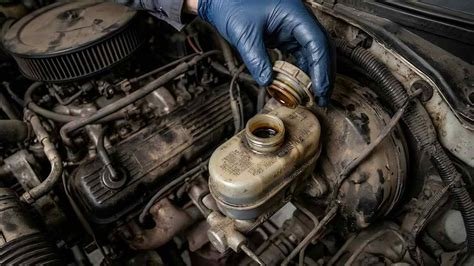
Dark or cloudy fluid can indicate contamination or aging.
It deserves inspection.
However, color alone cannot establish the full condition of the fluid.
Likewise, clear-looking fluid is not necessarily free from moisture.
Can You Check Brake Fluid by Looking at the Reservoir?
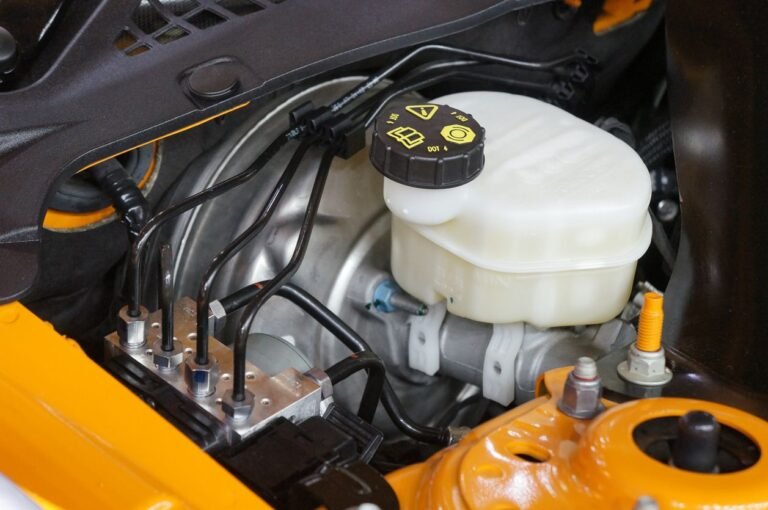
A translucent reservoir allows you to inspect fluid level.
It does not reliably tell you:
- Moisture concentration
- Boiling point
- Internal corrosion
- Chemical condition
- Whether contamination exists elsewhere in the hydraulic circuit
A proper fluid evaluation may require testing.
Are Brake Fluid Testers Accurate?
Different testing tools measure different characteristics.
Some inexpensive electronic testers estimate moisture-related properties through electrical measurements.
Professional equipment may use other testing methods.
However, a simple conductivity-style reading does not directly measure the fluid’s actual boiling point.
Testing should be interpreted according to the tool’s specifications and the correct brake fluid type.
Can You Smell Bad Brake Fluid?
Smell is not a dependable method of evaluating brake fluid.
Do not open the reservoir merely to smell it.
Unnecessary opening increases contamination risk.
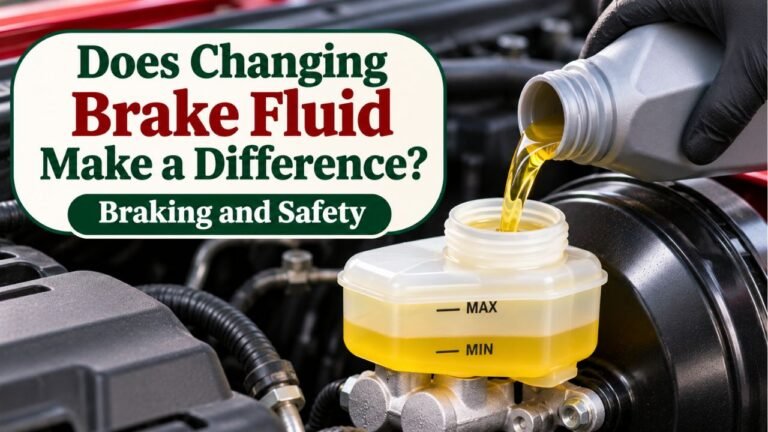
Can You Just Add New Brake Fluid Instead of Changing It?
No.
Adding new fluid does not remove moisture and contaminants from the fluid already inside the brake lines, calipers, master cylinder, and other components.
Topping Up vs. Brake Fluid Replacement
| Procedure | What It Does | Does It Replace Old Fluid Throughout the System? |
| Checking fluid level | Measures visible reservoir quantity | No |
| Topping up | Adds a small amount of fluid | No |
| Removing fluid only from reservoir | Removes fluid from the reservoir | No |
| Proper brake fluid replacement | Exchanges old fluid using the required service procedure | Yes, when completed correctly |
| Brake bleeding | Removes air and may exchange fluid during service | Depends on the procedure |
Why a Reservoir-Only Change Is Incomplete
Much of the hydraulic fluid is distributed throughout the braking system.
Removing fluid from the reservoir alone leaves old fluid inside the brake lines and wheel-brake components.
These areas may experience significant thermal stress.
A proper replacement follows the manufacturer’s procedure for the entire system.
Can You Mix Fresh and Old Brake Fluid?
A small amount of compatible new fluid may be introduced during an approved service procedure.
However, merely mixing new fluid into old fluid does not reverse contamination.
Use only the fluid specification approved for your vehicle.
What if the Reservoir Level Is Low?
Low fluid is a separate safety concern.
The level may decrease as brake pads wear, but it can also indicate a hydraulic leak.
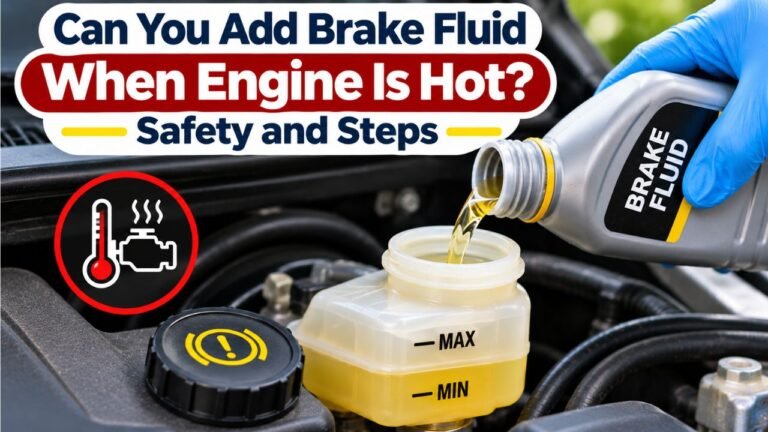
Do not automatically fill the reservoir to MAX.
If the level is below MIN, decreases unexpectedly, or is accompanied by abnormal braking, have the system inspected before driving.
DOT 3 vs. DOT 4 vs. DOT 5.1: Do They All Need Changing?
DOT 3, DOT 4, and DOT 5.1 are generally glycol-based brake fluids.
They can absorb moisture over time.
However, their performance requirements differ.
Brake Fluid Types
| Brake Fluid | General Chemistry | Moisture Behavior | Maintenance Guidance |
| DOT 3 | Glycol-based | Hygroscopic | Follow manufacturer interval |
| DOT 4 | Glycol-based | Hygroscopic | Follow manufacturer interval |
| DOT 5 | Silicone-based | Not hygroscopic in the same way | Follow system-specific requirements |
| DOT 5.1 | Glycol-based | Hygroscopic | Follow manufacturer interval |
Does DOT 4 Last Longer Than DOT 3?
Not automatically.
DOT 4 has higher minimum boiling-point requirements than DOT 3.
However, the actual replacement interval depends on the manufacturer’s requirements and the fluid formulation.
Do not assume DOT 4 can safely remain in every braking system longer than DOT 3.
Does DOT 5.1 Last Forever?
No.
Despite the similar name, DOT 5.1 is not the same as silicone-based DOT 5.
DOT 5.1 is generally glycol-based and requires appropriate maintenance.
Does Silicone DOT 5 Absorb Moisture?
Silicone-based DOT 5 is not hygroscopic in the same way as DOT 3, DOT 4, and DOT 5.1.
However, that does not mean a DOT 5 braking system is maintenance-free.
Water contamination, trapped moisture, and other system concerns can still require attention.
Never substitute silicone-based DOT 5 into a system designed for glycol-based fluid unless the manufacturer explicitly permits it.
Can You Change DOT 3 to DOT 4?
Only if the vehicle manufacturer approves the specification.
Do not assume a higher DOT number is always a better choice.
The brake system’s material compatibility and operating requirements matter.
Can Old Brake Fluid Damage Rubber Seals?
Contaminated or chemically unsuitable brake fluid can affect hydraulic seals and other components.
However, the exact damage depends on the fluid chemistry, contamination, and materials.
How Brake Seals Work
Hydraulic seals help maintain pressure and prevent fluid leakage.
They are designed to work with specified brake fluids.
Why Contamination Matters
Foreign materials can affect the performance of brake-system seals.
Examples include:
- Petroleum-based fluids
- Incorrect hydraulic oils
- Water contamination
- Dirt
- Incompatible brake fluid
Some contaminants can cause seal swelling, deterioration, or other damage.
Does Old Fluid Automatically Destroy Seals?
No.
A brake seal does not necessarily fail simply because fluid replacement is overdue.
However, long-term contamination and corrosion can increase the risk of hydraulic-system problems.
What if the Wrong Fluid Was Added?
If an incompatible fluid was introduced, do not assume a routine flush will necessarily restore the system.
Some contaminants can damage seals and other components.
Have the vehicle professionally assessed before driving.
What Happens During a Brake Fluid Change?
A proper brake fluid replacement involves exchanging old hydraulic fluid for fresh fluid that meets the vehicle manufacturer’s requirements.
The exact procedure depends on the vehicle.
Step 1: Confirm the Specification
The technician identifies the correct brake fluid.
The specification may be listed:
- In the owner’s manual
- On the reservoir cap
- In manufacturer service information
The correct DOT classification and any additional requirements must be followed.
Step 2: Inspect the Brake System
The technician may inspect the reservoir, hydraulic lines, calipers, hoses, and related components.
Existing leaks or damage should be addressed.
Step 3: Remove the Old Fluid
The service procedure replaces the old fluid throughout the relevant hydraulic circuits.
This may require pressure-bleeding or other specialized equipment.
Step 4: Bleed the System Correctly
The technician follows the manufacturer-specified sequence and procedure.
The goal is to prevent trapped air and ensure correct hydraulic operation.
Some ABS and electronically controlled systems require diagnostic equipment or additional steps.
Step 5: Set the Correct Fluid Level
After the service, the reservoir should be within the manufacturer’s specified MIN-to-MAX range.
It should not be overfilled.
Step 6: Verify Brake Operation
The technician checks the pedal response, inspects for leaks, and performs any required functional checks.
A proper fluid change should not leave the pedal unusually soft.
Step 7: Dispose of Used Fluid Properly
Used brake fluid should be collected and handled as automotive waste according to local requirements.
Do not pour it into drains, onto soil, or into household trash containers where spills can occur.
Can You Change Brake Fluid Yourself?
Brake fluid replacement can be performed by someone with the correct tools, technical knowledge, and manufacturer service instructions.
However, it is a safety-critical maintenance procedure.
Improper bleeding can leave air in the hydraulic system and reduce braking performance.
Why DIY Brake Fluid Changes Can Be Risky
Potential mistakes include:
- Using the wrong fluid
- Introducing air into the hydraulic system
- Allowing the reservoir to run dry
- Contaminating the fluid
- Damaging bleeder screws
- Following the wrong bleeding sequence
- Failing to activate required ABS service procedures
- Leaving a hydraulic connection leaking
Do All Cars Use the Same Bleeding Procedure?
No.
Some vehicles have conventional hydraulic systems.
Others use advanced ABS, integrated brake-control units, or electronically controlled braking systems.
A procedure that works for one vehicle may not be suitable for another.
Is Professional Service Worth It?
For drivers who do not have the necessary equipment or experience, professional replacement is the safer choice.
It also allows the braking system to be inspected for problems that might not be obvious from a visual reservoir check.
What if You Haven’t Changed Brake Fluid in 5 or 10 Years?
If brake fluid has remained in service for several years beyond the manufacturer’s interval, the safest next step is to have the braking system inspected and serviced.
Do not assume that the entire brake system must be replaced.
However, do not assume that a routine fluid change will repair damage that has already developed.
What to Do First
- Check the vehicle’s maintenance records.
- Confirm the manufacturer’s replacement interval.
- Inspect the reservoir level without opening it unnecessarily.
- Look for brake warning lights or abnormal pedal behavior.
- Arrange a professional brake-system inspection.
- Have the fluid condition and hydraulic components evaluated.
- Complete the required fluid replacement or repair.
- Record the service date for future maintenance.
Should You Flush Very Old Brake Fluid?
When replacement is overdue, a complete manufacturer-approved fluid service is generally appropriate.
However, if severe corrosion or hydraulic problems are present, other repairs may be necessary.
A qualified technician should evaluate the system before or during service.
Can Changing Very Old Brake Fluid Cause Problems?
A properly performed brake fluid change using the specified fluid should not inherently damage a healthy hydraulic system.
However, problems can occur when:
- Incorrect fluid is used.
- Contaminants enter the system.
- Bleeding is incomplete.
- Existing components are severely deteriorated.
- Improper service techniques are used.
If a component fails during or after service, the cause should be diagnosed rather than assuming that fresh brake fluid itself was harmful.
Is a Ten-Year-Old Brake Fluid System Automatically Unsafe?
Not every vehicle with ten-year-old fluid will have identical damage.
However, such a long interval is far beyond the replacement schedule of many manufacturers.
Professional inspection and appropriate maintenance should not be postponed.
Can You Drive With Old Brake Fluid?
The answer depends on how overdue the service is and whether the braking system is operating properly.
A vehicle that is slightly overdue for routine replacement is not necessarily experiencing an immediate hydraulic failure.
However, continued neglect increases avoidable risk.
When Routine Service Is Overdue
If the brakes operate normally but the fluid replacement date has passed, arrange the recommended service promptly.
Do not rely on the absence of symptoms as proof that the fluid is still suitable.
When Braking Performance Changes
Do not continue driving if you experience:
- A sinking brake pedal
- A soft or spongy pedal
- Substantially reduced braking
- A visible hydraulic leak
- Brake fluid below the specified minimum
- A serious brake-system warning accompanied by abnormal braking
Stop safely and arrange assistance.
What if the Brakes Feel Normal?
Normal pedal feel does not prove that the fluid still has adequate boiling-point performance.
A fluid-related problem may become apparent only after substantial brake heating.
Follow the manufacturer-recommended replacement schedule.
Is Highway Driving More Dangerous With Old Brake Fluid?
The risk is not determined simply by highway speed.
Ordinary highway cruising may involve less repeated braking than stop-and-go driving.
However, high-speed emergency stops, long descents, and heavy loads can generate substantial brake heat.
Moisture-contaminated fluid may be more vulnerable under these conditions.
How to Prevent Brake Fluid Problems
Preventive maintenance is more reliable than waiting for symptoms.
Follow the Maintenance Schedule
Check the owner’s manual for the required replacement interval.
Record the date of each brake fluid change.
Use the Correct Fluid
Only use the brake fluid specification approved by the manufacturer.
Do not substitute engine oil, transmission fluid, power-steering fluid, or another automotive liquid.
Keep the Reservoir Closed
Most vehicles have a translucent reservoir that allows the fluid level to be checked without removing the cap.
Unnecessary opening increases contamination risk.
Avoid Old Opened Containers
Glycol-based brake fluid can absorb moisture while stored.
Use fresh fluid from a properly sealed container during service.
Inspect the Brakes Regularly
Routine inspections can identify:
- Worn pads
- Leaking hoses
- Corroded lines
- Damaged calipers
- Abnormal pedal behavior
- Fluid-level changes
These problems should be addressed independently of the fluid replacement schedule.
Investigate Unusual Fluid Loss
Brake fluid should not require frequent refilling.
A gradual reservoir-level reduction may be associated with brake-pad wear.
A sudden or repeated drop can indicate a hydraulic leak.
Have the cause identified.
Avoid Unnecessary Fluid Mixing
Use the approved product and follow the manufacturer’s procedure.
If an unknown fluid has been added, arrange professional evaluation.
Common Mistakes About Brake Fluid Replacement
Several misunderstandings can cause owners to postpone necessary maintenance.
“Brake Fluid Lasts Forever Because the System Is Sealed”
Conventional glycol-based brake fluid can absorb moisture over time.
The hydraulic system is not necessarily completely impermeable to moisture.
“I Only Drive a Few Miles, So It Doesn’t Need Changing”
Time-based maintenance may still apply.
Low mileage does not automatically prevent fluid deterioration.
“My Brake Pedal Feels Normal, So the Fluid Must Be Good”
The brakes may feel normal during ordinary use while the fluid has reduced high-temperature performance.
“I Can Just Add New Fluid to the Reservoir”
Topping up does not remove old fluid from the brake lines and wheel components.
“Dark Fluid Always Means Failure”
Dark fluid can indicate contamination, but color alone does not determine hydraulic safety or exact moisture content.
“DOT 4 Never Needs Changing”
DOT 4 is commonly glycol-based and can absorb moisture.
Follow the manufacturer’s service requirements.
“A Higher DOT Number Is Always Better”
Brake fluid compatibility depends on more than a numerical classification.
Use the specified fluid.
“Changing Brake Fluid Will Fix Every Brake Problem”
A fluid replacement cannot automatically repair worn brake pads, hydraulic leaks, corroded components, or electronic faults.
“Brake Fluid Replacement Is Only About Stopping Power”
It also helps manage moisture contamination and protect the hydraulic system’s long-term reliability.
Is Changing Brake Fluid Really Necessary?
For vehicles with manufacturer-specified fluid replacement intervals, the answer is yes.
Brake fluid replacement helps maintain the hydraulic system’s intended performance and reduces the risks associated with aging fluid.
However, the appropriate timing is vehicle-specific.
Why Preventive Replacement Matters
Replacing brake fluid before severe contamination develops can help:
- Maintain appropriate boiling-point performance
- Reduce moisture accumulation
- Limit corrosion risk
- Support consistent hydraulic operation
- Protect expensive components
- Reduce the likelihood of fluid-related braking problems
Will New Brake Fluid Make Brakes Feel Better?
Sometimes.
If the old fluid has contributed to vapor formation or another fluid-related issue, proper service may improve braking consistency.
However, in a healthy system with no trapped air, replacing overdue fluid may not produce a noticeable change in pedal feel.
That does not make the maintenance unnecessary.
The benefit may be preserving performance under demanding conditions and reducing long-term corrosion risk.
Does New Brake Fluid Improve Stopping Distance?
Not automatically.
Stopping distance depends on many factors, including:
- Tire condition
- Road surface
- Brake-pad condition
- Brake temperatures
- Vehicle weight
- Hydraulic performance
- ABS operation
New brake fluid helps maintain reliable hydraulic operation, particularly when braking temperatures become high.
It does not compensate for worn tires or damaged brakes.
Conclusion
So, what happens if you don’t change brake fluid? Over time, conventional glycol-based brake fluid can absorb moisture, lose boiling-point performance, and increase the risk of corrosion inside the hydraulic braking system.
Under demanding braking conditions, moisture-contaminated fluid may boil and form vapor. This can cause a soft brake pedal, reduced braking effectiveness, and potentially serious safety problems.
Long-term contamination can also contribute to damage in calipers, master cylinders, brake lines, and ABS hydraulic components.
However, brake fluid does not suddenly fail on a universal expiration date. The rate of deterioration varies by vehicle, fluid type, and operating conditions.
I recommend following the manufacturer’s replacement schedule rather than waiting for visible symptoms. Many vehicles specify intervals of approximately two or three years, but the correct requirement is the one listed for your specific model.
If the service history is unknown or the fluid is several years overdue, arrange a professional inspection and appropriate replacement.
If the pedal feels soft, the fluid is leaking, or braking performance has changed, do not continue driving until the system has been assessed.
Changing brake fluid on schedule is a relatively simple preventive service that helps protect braking performance and reduces the risk of expensive hydraulic-system problems.
FAQs About What Happens if You Don’t Change Brake Fluid
What Happens if You Never Change Brake Fluid?
Conventional glycol-based brake fluid can gradually absorb moisture and accumulate contamination. This may reduce its boiling-point performance and contribute to internal corrosion. Over time, neglected fluid increases the risk of hydraulic problems, reduced braking effectiveness under demanding conditions, and costly repairs. Complete failure is possible in severe cases but is not inevitable.
Can Old Brake Fluid Cause Brake Failure?
Yes. Moisture-contaminated brake fluid can boil during demanding braking, producing compressible vapor that reduces hydraulic pressure transmission. Severe corrosion or component failures can also compromise the system. However, many braking problems have other causes, so professional diagnosis is important.
Is It Bad to Go Five Years Without Changing Brake Fluid?
For many vehicles, five years is longer than the recommended replacement interval. The fluid may have absorbed moisture and lost some high-temperature performance. The exact condition cannot be determined from age alone. Check your owner’s manual and arrange professional inspection and replacement if the service is overdue.
Does Brake Fluid Really Need to Be Changed Every Two Years?
Some manufacturers recommend two-year intervals, while others specify three years or different schedules. The correct interval depends on your vehicle. Follow the owner’s manual rather than assuming every car needs the same replacement frequency.
Can Old Brake Fluid Cause a Spongy Brake Pedal?
Yes, particularly if moisture-contaminated fluid boils and vapor forms. However, a spongy pedal may also indicate trapped air, a leak, or another hydraulic fault. Do not assume a simple fluid change will resolve the problem. Have the brakes inspected before driving.
Can You Just Add Brake Fluid Instead of Changing It?
No. Adding fresh fluid to the reservoir does not remove old or contaminated fluid from the hydraulic lines and brake components. A proper fluid replacement follows the manufacturer’s procedure for the hydraulic system. Unexplained low fluid also requires inspection for worn brakes or leaks.
Can You Tell if Brake Fluid Is Bad by Its Color?
Not reliably. Dark or cloudy fluid may indicate contamination, but clear-looking fluid can still contain moisture. Color does not directly measure boiling-point performance. Maintenance history, manufacturer requirements, and appropriate professional testing provide a better basis for replacement decisions.
Does Old Brake Fluid Damage ABS?
Moisture and contamination can contribute to corrosion or malfunction inside ABS hydraulic components. However, not every ABS fault is caused by neglected fluid. Sensors, wiring, valves, pumps, and electronic controls can also fail for other reasons. Follow the service schedule and have ABS warnings diagnosed properly.