What Is DOT 3 Brake Fluid? Properties, Uses, and Differences
DOT 3 brake fluid is a glycol-based hydraulic fluid used in vehicle braking systems to transfer pressure from the brake pedal to the brakes at the wheels. It is formulated to resist high temperatures, lubricate compatible hydraulic components, and help protect against corrosion. Under U.S. standards, DOT 3 fluid must have a minimum dry boiling point of 401°F (205°C) and a minimum wet boiling point of 284°F (140°C).
The “DOT 3” label is a performance classification established by the U.S. Department of Transportation, not a brand or a measurement of fluid quality by color. Many passenger cars, light trucks, and motorcycles have used it, but not every vehicle is designed for DOT 3. Using a different brake fluid simply because it has a higher number may violate the manufacturer’s requirements.
DOT 3 also absorbs moisture over time. That can reduce boiling-point protection and contribute to corrosion, which is why scheduled maintenance matters even when the brakes feel normal.
In this guide, I explain what DOT 3 contains, how it works, and how its specifications compare with DOT 4, DOT 5, and DOT 5.1. I also cover safe topping off, fluid changes, warning signs, and common compatibility mistakes.
What Is DOT 3 Brake Fluid and What Is It Used For?

DOT 3 is a type of hydraulic brake fluid designed for automotive braking systems that specifically require or permit its use.
Its primary function is to transmit hydraulic pressure.
When the driver presses the brake pedal, the master cylinder pressurizes the brake fluid.
That pressure moves through the brake lines and activates the wheel-end braking components.
The brake pads then press against the rotors, or the brake shoes press against the drums, slowing the vehicle.
Without a properly functioning hydraulic fluid system, the brakes cannot operate as designed.
What Does DOT 3 Mean?
DOT stands for the United States Department of Transportation.
The number 3 identifies a particular set of brake-fluid performance requirements.
These requirements are established under Federal Motor Vehicle Safety Standard (FMVSS) No. 116.
The standard defines performance characteristics including:
- Minimum boiling points.
- Low-temperature viscosity.
- Corrosion protection.
- Fluid stability.
- Compatibility with specified rubber components.
- Water tolerance.
- Packaging and labeling requirements.
DOT 3 is not a brand name.
Different manufacturers can produce DOT 3 brake fluid as long as their products meet the applicable requirements.
DOT 3 Brake Fluid Specifications
| Property | DOT 3 specification |
| DOT classification | DOT 3 |
| General chemical base | Glycol-based |
| Minimum dry boiling point | 401°F (205°C) |
| Minimum wet boiling point | 284°F (140°C) |
| Maximum viscosity at −40°F | 1,500 mm²/s |
| Standard color | Colorless to amber |
| Moisture absorption | Hygroscopic |
| Common applications | Compatible hydraulic brakes and clutches |
| Suitable for ABS | Yes, when manufacturer-approved |
| Compatible with silicone DOT 5 | No |
These values come from the U.S. federal brake-fluid standard, 49 CFR § 571.116.
The temperatures are minimum performance requirements, not fixed boiling points for every commercially available DOT 3 product.
Some premium DOT 3 fluids exceed the minimum specifications.
Where Is DOT 3 Brake Fluid Commonly Used?
DOT 3 may be used in:
- Passenger cars.
- Pickup trucks.
- SUVs.
- Light commercial vehicles.
- Certain motorcycles.
- Hydraulic clutch systems that specify DOT 3.
- Disc brake systems.
- Drum brake systems.
- ABS-equipped vehicles designed for DOT 3.
However, the vehicle manufacturer’s requirements take priority.
Never assume a vehicle uses DOT 3 simply because it has hydraulic brakes.
What Is DOT 3 Brake Fluid Made Of?
DOT 3 brake fluid is generally manufactured using glycol ethers and related compounds.
These chemicals are combined with specialized additives.
The formulation is designed to support hydraulic performance across changing temperatures and operating conditions.
Main Ingredients in DOT 3 Brake Fluid
Typical formulation components include:
Glycol ethers: Provide the main hydraulic fluid base and help maintain suitable flow characteristics.
Lubricating additives: Support the operation of compatible moving components within the hydraulic system.
Corrosion inhibitors: Help protect internal metal surfaces from deterioration.
Antioxidants and stabilizers: Help the fluid resist unwanted chemical changes during its service life.
The exact ingredients and concentrations vary by manufacturer.
Is DOT 3 Brake Fluid Oil-Based?
No, not in the same sense as engine oil or petroleum-based hydraulic oil.
DOT 3 is generally glycol-based.
It is chemically different from:
- Engine oil.
- Transmission fluid.
- Power steering fluid.
- Mineral hydraulic oil.
- Engine coolant.
These fluids should never be substituted for DOT 3 brake fluid.
Is DOT 3 Brake Fluid Synthetic?
DOT 3 brake fluid is commonly described as synthetic because its glycol-based ingredients are chemically manufactured.
However, the word synthetic does not establish compatibility with a particular braking system.
The important requirement is that the product meets the manufacturer’s specified brake-fluid standard.
Is DOT 3 Brake Fluid Corrosive?
DOT 3 fluid contains additives intended to help protect compatible brake-system metals from corrosion.
However, the fluid may damage automotive paint and certain finishes.
It should also be handled carefully to avoid skin or eye exposure.
Brake fluid contaminated with water or other substances can contribute to internal corrosion.
How Does DOT 3 Brake Fluid Work?
A hydraulic braking system relies on fluid to transmit pressure.
DOT 3 brake fluid serves as the pressure-transfer medium.
Step 1: You Press the Brake Pedal
When the driver presses the brake pedal, mechanical force is transmitted to the master cylinder.
A brake booster may assist this force, depending on the vehicle.
Step 2: The Master Cylinder Creates Pressure
The master-cylinder piston moves and increases hydraulic pressure.
The brake fluid transfers that pressure through the system.
Because liquid brake fluid is only slightly compressible under normal conditions, hydraulic pressure can be transmitted effectively.
Step 3: Pressure Reaches the Wheels
Brake fluid moves through the hydraulic circuits.
At the wheels, it acts on:
- Brake caliper pistons in disc brake systems.
- Wheel-cylinder pistons in drum brake systems.
Step 4: The Brakes Slow the Vehicle
The hydraulic pressure causes the friction components to contact the rotors or drums.
Friction slows wheel rotation.
Step 5: Pressure Decreases When You Release the Pedal
When the brake pedal is released, hydraulic pressure decreases.
The components return toward their normal operating positions.
The system is ready for the next braking event.
Why Is the Fluid’s Boiling Point Important?
Braking generates heat.
Some of that heat can reach the brake calipers and hydraulic fluid.
If the fluid becomes hot enough to boil, vapor may form.
Unlike liquid brake fluid, vapor can compress relatively easily.
This can create a soft or spongy brake pedal and reduce braking effectiveness.
High boiling-point performance helps protect against that problem.
What Is the Boiling Point of DOT 3 Brake Fluid?
DOT 3 brake fluid has two important standardized boiling-point measurements.
These are known as the dry boiling point and wet boiling point.
DOT 3 Dry Boiling Point
The minimum dry boiling point is:
401°F (205°C)
This measurement represents the boiling-point performance of brake fluid under the specified dry-fluid test.
It is especially relevant to fresh fluid before significant moisture exposure.
DOT 3 Wet Boiling Point
The minimum wet boiling point is:
284°F (140°C)
This measurement is determined after the fluid undergoes a standardized moisture-conditioning procedure.
It is intended to represent the effect of water contamination on boiling-point performance.
The wet boiling point is not a guarantee that fluid reaches exactly 284°F after a particular number of years.
Actual performance depends on the specific product and its condition.
DOT 3 Boiling Point Comparison
| Fluid condition | Minimum boiling point |
| DOT 3 dry | 401°F (205°C) |
| DOT 3 wet | 284°F (140°C) |
The difference between the two illustrates why moisture control matters.
What Happens When DOT 3 Boils?
If brake fluid boils inside the hydraulic system, vapor bubbles may form.
These bubbles can compress during braking.
Possible symptoms include:
- A soft brake pedal.
- Increased pedal travel.
- Inconsistent braking response.
- Reduced braking effectiveness.
If the brake pedal becomes abnormally soft or sinks toward the floor, stop driving as soon as it is safe.
Do not assume a routine fluid change will correct every hydraulic problem.
The braking system needs professional inspection.
Does DOT 3 Have a Lower Boiling Point Than DOT 4?
Under the U.S. minimum specifications, yes.
DOT 4 has higher minimum dry and wet boiling points.
However, premium individual products can exceed their required minimums.
The correct fluid is still the one specified for the vehicle.
DOT 3 vs DOT 4 Brake Fluid: What’s the Difference?
DOT 3 and DOT 4 are both generally glycol-based hydraulic brake fluids.
They share several characteristics, but they have different performance requirements.
DOT 3 vs DOT 4 Comparison Chart
| Feature | DOT 3 | DOT 4 |
| General chemical base | Glycol-based | Glycol-based |
| Minimum dry boiling point | 401°F (205°C) | 446°F (230°C) |
| Minimum wet boiling point | 284°F (140°C) | 311°F (155°C) |
| Maximum viscosity at −40°F | 1,500 mm²/s | 1,800 mm²/s |
| Absorbs moisture | Yes | Yes |
| Standard color | Colorless to amber | Colorless to amber |
| Suitable for ABS | If manufacturer-approved | If manufacturer-approved |
| Interchangeable in every vehicle | No | No |
| Primary selection rule | Vehicle specification | Vehicle specification |
Is DOT 4 Better Than DOT 3?
DOT 4 has higher minimum boiling-point requirements.
That gives it a higher standardized thermal-performance threshold.
However, this does not mean DOT 4 is automatically better for every braking system.
Some vehicles require particular fluid characteristics beyond the basic DOT classification.
For example, certain modern ABS and electronic stability systems require specified low-viscosity fluids.
Can DOT 4 Replace DOT 3?
Only when the vehicle manufacturer approves the substitution or the product meets the vehicle’s complete required specification.
DOT 3 and DOT 4 are generally chemically miscible because they are glycol-based.
However, chemical compatibility does not guarantee that a mixture meets the required braking-system performance.
Adding DOT 4 to a DOT 3 system without confirming approval is not a recommended general practice.
Can You Put DOT 3 Into a DOT 4 System?
Do not do so without manufacturer approval.
DOT 3 has lower minimum boiling-point requirements.
Introducing it into a system designed for DOT 4 could reduce the mixture’s boiling-point protection.
This is particularly important if the manufacturer requires a specific high-performance or low-viscosity fluid.
Which One Should You Buy?
Check:
- The owner’s manual.
- The brake fluid reservoir cap.
- The manufacturer’s service specifications.
- The product’s stated compliance and approvals.
When in doubt, ask a qualified technician before adding fluid.
DOT 3 vs DOT 5 vs DOT 5.1 Brake Fluid
The numbering can cause confusion.
DOT 5 and DOT 5.1 are not the same fluid.
DOT 5 Is Silicone-Based
Conventional DOT 5 brake fluid is silicone-based.
It does not absorb water into the fluid in the same way as glycol-based DOT 3.
It also has different chemical and performance characteristics.
DOT 5 silicone fluid must not be mixed with DOT 3 brake fluid.
If the wrong fluid has been added, do not drive the vehicle until the braking system has been professionally evaluated.
DOT 5.1 Is Glycol-Based
DOT 5.1 is generally glycol-based.
It has higher minimum boiling-point requirements than DOT 3 and DOT 4.
However, it is not universally interchangeable with those fluids in every vehicle.
The manufacturer’s specification remains essential.
DOT Brake Fluid Comparison
| Fluid | General base | Minimum dry boiling point | Minimum wet boiling point |
| DOT 3 | Glycol | 401°F | 284°F |
| DOT 4 | Glycol | 446°F | 311°F |
| DOT 5 | Silicone | 500°F | 356°F |
| DOT 5.1 | Glycol | 500°F | 356°F |
The values are minimum performance specifications.
They should not be interpreted as a recommendation to install the fluid with the highest number.
Can You Mix DOT 3 and DOT 5.1?
The fluids are generally glycol-based, but that does not mean every vehicle approves the mixture.
Check the manufacturer’s fluid requirements before substituting or mixing products.
What Color Is DOT 3 Brake Fluid?
DOT 3 brake fluid is normally colorless to amber.
When fresh, it often appears clear or light yellow.
However, the precise appearance can vary among products.
DOT 3 Brake Fluid Color Guide
| Appearance | Possible explanation |
| Clear or pale amber | Common appearance of fresh DOT 3 |
| Yellowish or light brown | May be normal depending on product and age |
| Dark brown | Aging or contamination may be present |
| Cloudy | Possible contamination |
| Visible particles | Requires inspection |
| Unusual color | Confirm fluid identity and condition |
Does Dark DOT 3 Mean It Needs Replacing?
Darkening may indicate aging or contamination.
However, color alone is not a reliable measure of moisture content or boiling-point performance.
A fluid can appear relatively clean while still having absorbed moisture.
Similarly, discoloration may result from causes other than water contamination.
Follow the maintenance schedule and have the fluid inspected when necessary.
Should DOT 3 Be Clear?
Fresh DOT 3 generally falls within the colorless-to-amber range.
However, the correct method of identifying brake fluid is through its labeled specification, not visual color alone.
Never identify an unknown automotive fluid only by its appearance.
Does DOT 3 Brake Fluid Absorb Water?
Yes.
DOT 3 is hygroscopic.
This means it absorbs moisture from its surroundings.
Moisture can gradually enter a braking system through certain seals, hoses, and service-related exposure.
Why Does Moisture Matter?
As water accumulates in glycol-based brake fluid, the boiling point can decrease.
This reduces the fluid’s ability to resist vapor formation under high braking temperatures.
Moisture may also contribute to internal corrosion.
Can DOT 3 Become Contaminated in a Sealed System?
Yes.
Automotive hydraulic systems are designed to limit contamination, but they are not necessarily completely isolated from moisture over their entire service life.
Fluid aging can occur even when the vehicle is driven infrequently.
What Happens if Water Gets Into DOT 3?
Possible consequences include:
- Reduced boiling-point protection.
- Increased corrosion risk.
- Deterioration of fluid properties.
- Potential damage to hydraulic components.
- Increased risk of braking problems under severe conditions.
The effects depend on the quantity of moisture, the fluid’s condition, and the hydraulic system.
Can You Remove Water From DOT 3?
A routine brake fluid service replaces aging or contaminated fluid with fresh approved fluid.
There is no recommended household additive that safely removes water from DOT 3 inside a vehicle’s brake system.
Do not add alcohol, antifreeze, or other chemicals.
How Is DOT 3 Moisture Tested?
A professional may assess fluid condition using appropriate moisture or boiling-point testing equipment.
According to HELLA’s technical guide to brake fluid testing and maintenance, absorbed moisture reduces brake fluid boiling-point performance, and fluid changes must follow manufacturer-specific bleeding requirements.
Testing can support a maintenance decision, but it should not automatically replace a scheduled service requirement.
How Often Should You Change DOT 3 Brake Fluid?
The correct replacement interval depends on the vehicle manufacturer.
Many cars use a two- or three-year brake-fluid maintenance schedule.
However, there is no single DOT 3 replacement interval that applies to every vehicle.
Is DOT 3 Good for Two Years?
DOT 3 may remain in service for the time specified by the manufacturer.
A two-year replacement interval is a common preventive maintenance schedule, but it is not universal.
Always follow the requirements for the exact vehicle.
Can DOT 3 Last Three Years?
Some vehicles specify three-year brake-fluid replacement intervals.
If your vehicle uses DOT 3 and its manufacturer requires replacement every three years, follow that schedule unless testing, contamination, or a braking-system repair calls for earlier service.
Does DOT 3 Expire After One Year?
Not automatically.
The service life depends on the vehicle, fluid condition, and manufacturer’s requirements.
Some fluid manufacturers recommend more frequent replacement, but that does not establish a universal annual rule for all DOT 3 systems.
Should DOT 3 Be Changed Based on Mileage?
Many brake-fluid schedules emphasize time because moisture absorption can occur even during low-mileage use.
For example, a car driven only 4,000 miles per year may still require brake fluid replacement after its specified service interval.
Replacement Interval Guide
| Situation | Recommended action |
| Manufacturer specifies 2 years | Replace every 2 years |
| Manufacturer specifies 3 years | Replace every 3 years |
| Manufacturer specifies another schedule | Follow that schedule |
| Used vehicle with unknown history | Arrange inspection and consider replacement |
| Fluid contaminated | Diagnose and service as required |
| Brake hydraulic system opened for repair | Follow required bleeding and fluid procedures |
| Low-mileage vehicle | Follow the time-based schedule |
| Soft or sinking brake pedal | Stop driving and seek immediate diagnosis |
Key Takeaway: DOT 3 absorbs moisture, but the fluid’s DOT rating alone does not determine its exact replacement schedule.
How Do You Check DOT 3 Brake Fluid?
A basic reservoir inspection can help identify low fluid levels and obvious contamination.
However, it cannot confirm every aspect of fluid condition.
Step 1: Park on Level Ground
Park the vehicle safely on a level surface.
Turn the engine off.
Follow the owner’s manual for the required inspection conditions.
Step 2: Locate the Brake Fluid Reservoir
The reservoir is commonly located on or near the brake master cylinder.
In many vehicles, it is near the rear of the engine compartment.
Some hybrid and electric vehicles use different configurations.
Step 3: Read the Reservoir Markings
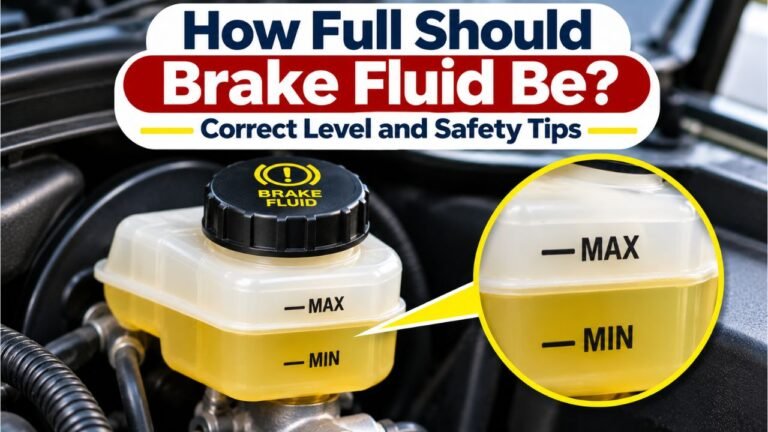
Most reservoirs have MIN and MAX markings.
Check the fluid level through the translucent wall if possible.
Avoid opening the cap unnecessarily.
Step 4: Consider Brake Pad Wear
As disc brake pads wear, caliper pistons extend.
More brake fluid remains inside the calipers, and the reservoir level can gradually decrease.
A lower level does not automatically mean fluid has leaked.
However, an unexpected or rapid decrease must be investigated.
Step 5: Look for Contamination
Fluid that appears unusually dark, cloudy, or contains visible particles requires inspection.
Do not rely on color alone to determine whether the fluid is safe.
Step 6: Check Maintenance History
Look for the last brake fluid replacement date.
Compare it with the manufacturer’s service interval.
When Should You Seek Professional Inspection?
Arrange prompt inspection if:
- The reservoir is below MIN.
- The fluid level repeatedly drops.
- The brake pedal feels soft.
- The pedal sinks unusually far.
- A brake warning light remains on.
- Braking performance changes.
- A hydraulic leak is suspected.
Do not drive with an unreliable brake pedal or unexplained significant brake fluid loss.
Can You Add DOT 3 Brake Fluid Without Flushing?
In certain situations, the correct fresh DOT 3 fluid can be added to a compatible system according to the manufacturer’s instructions.
However, topping off is not a substitute for diagnosing why the fluid level is low.
Is It Safe to Top Off DOT 3?
If the vehicle requires DOT 3, the system is otherwise functioning correctly, and the manufacturer instructs you to add fluid, use fresh approved DOT 3.
However, a low fluid level can indicate worn brake pads or a leak.
Do not automatically add fluid whenever the level decreases.
What Happens if You Overfill the Reservoir?
Excess fluid can overflow during brake maintenance when caliper pistons are retracted.
Brake fluid can damage paint and surrounding finishes.
The correct fluid level also depends on the vehicle’s inspection procedure and brake-pad condition.
Can You Mix New DOT 3 With Old DOT 3?
Fresh DOT 3 may be added to existing compatible DOT 3 fluid when the manufacturer’s instructions permit it.
However, adding fresh fluid does not restore the condition of old contaminated fluid throughout the hydraulic system.
If a fluid change is due, a proper fluid replacement service is required.
Can You Add DOT 3 While the Engine Is Hot?
The brake fluid reservoir should be handled according to the vehicle’s service instructions.
It is generally safer to perform routine inspection and maintenance with the vehicle parked and components cool enough to work around safely.
Avoid touching hot engine or brake parts.
Never open or service the system unnecessarily.
What Does AAA Recommend?
AAA’s brake fluid maintenance guidance advises using only fluid approved for the vehicle and checking the owner’s manual or reservoir cap before adding brake fluid.
This is important because using an incorrect fluid can damage braking components or compromise brake performance.
How Much DOT 3 Brake Fluid Does a Car Need?
The required quantity depends on the vehicle and the service being performed.
A small top-off uses less fluid than a complete hydraulic fluid exchange.
DOT 3 Fluid Quantity by Service
| Service | Fluid quantity consideration |
| Small approved top-off | Only enough to reach the specified level |
| Brake bleeding after repair | Depends on the repaired circuit and bleeding procedure |
| Complete fluid flush | Depends on total hydraulic volume and required flushing |
| ABS hydraulic service | May require additional fluid and specialized bleeding |
| Empty hydraulic system | Requires the manufacturer’s complete filling procedure |
Is 12 Ounces of DOT 3 Enough?
A 12-fluid-ounce bottle may be sufficient for certain limited services.
However, it may not provide enough fluid for a complete brake-system flush.
Do not assume one small bottle is enough for every vehicle.
Is One Quart Enough for a Brake Flush?
One quart may be sufficient for many ordinary passenger-car brake-fluid services.
However, the exact amount depends on the hydraulic system and bleeding requirements.
Additional fluid may be necessary.
Follow the manufacturer’s service information.
Should You Buy Extra DOT 3?
Having enough fluid is important because the reservoir must not run dry during bleeding.
However, avoid opening more containers than necessary.
Unused fluid in an opened container may absorb moisture during storage.
Can You Use DOT 3 Brake Fluid in ABS Brakes?
Yes, when the vehicle manufacturer specifies or permits DOT 3.
The presence of ABS does not automatically prohibit DOT 3.
However, some ABS and electronic stability control systems require specific DOT 4 or low-viscosity formulations.
Why Does ABS Fluid Specification Matter?
ABS hydraulic systems rapidly control brake pressure.
Their valves and passages are designed to operate with fluid meeting specified viscosity and performance requirements.
Incorrect fluid may affect the intended operation.
Can DOT 3 Damage ABS?
Correctly specified DOT 3 should not damage a braking system designed to use it.
However, inappropriate fluid, contamination, or improper bleeding can create problems.
Does an ABS Brake Fluid Change Require Special Tools?
Sometimes.
Certain vehicles require electronic diagnostic equipment to cycle ABS hydraulic components during bleeding.
Others allow particular routine fluid services without such procedures.
Follow the exact factory service instructions.
Do not assume a generic brake bleeding method works for every ABS system.
Is DOT 3 Brake Fluid Used in Motorcycles?
Yes.
Some motorcycles specify DOT 3 brake fluid.
Others require DOT 4, DOT 5.1, or a different approved fluid.
The correct fluid is determined by the motorcycle manufacturer.
Is DOT 3 Suitable for Motorcycle Disc Brakes?
It may be, provided the braking system is designed for DOT 3.
Do not use DOT 3 in a motorcycle that explicitly requires another fluid.
Can DOT 3 Be Used in a Motorcycle Clutch?
Some motorcycles use hydraulic clutch systems with glycol-based brake fluid.
DOT 3 is appropriate only if the manufacturer specifies it.
Other hydraulic clutches use mineral oil and must never be filled with DOT 3.
What About High-Performance Motorcycles?
Some performance motorcycles require fluids with higher boiling-point or specific viscosity characteristics.
Follow the exact requirement rather than selecting DOT 3 solely because it is commonly available.
What Happens if You Use the Wrong Brake Fluid?
Using an incorrect fluid can create serious braking-system problems.
The type of damage depends on the fluid and system design.
Using DOT 3 in a DOT 4-Only System
The mixture may not meet the manufacturer’s required boiling-point or viscosity specification.
This can reduce the intended performance margin.
Mixing DOT 3 With Silicone DOT 5
These fluids are not suitable for mixing.
Silicone-based DOT 5 has different chemistry from glycol-based DOT 3.
If the wrong fluid is introduced, the vehicle requires professional assessment.
Adding Power Steering Fluid
Power steering fluid is not a substitute for DOT 3.
Petroleum-based fluids may damage the seals used in conventional glycol-based braking systems.
Adding Engine Oil
Engine oil must never be added to a brake fluid reservoir.
It can damage hydraulic components and create unsafe brake performance.
Adding Water
Water reduces the fluid’s boiling-point protection and contributes to corrosion.
Never dilute brake fluid with water.
What Should You Do After Adding the Wrong Fluid?
Do not drive the vehicle.
Have the braking system evaluated by a qualified professional.
Depending on the substance and how far it has spread, repair may require more than an ordinary fluid flush.
Does DOT 3 Brake Fluid Go Bad?
Yes.
DOT 3 can deteriorate over time.
Its ability to maintain appropriate boiling-point performance and protect internal components may decrease as contamination accumulates.
Does DOT 3 Expire in the Bottle?
A factory-sealed container may have a manufacturer-specified shelf life.
The correct storage period depends on the product and packaging.
Check the label or technical data sheet.
Do not assume that all DOT 3 products have the same expiration period.
How Long Does DOT 3 Last After Opening?
DOT 3 is hygroscopic.
Once a container is opened, it can absorb moisture from the surrounding air.
The rate depends on storage conditions, packaging, and exposure.
There is no universal safe storage period for every opened bottle.
For critical brake service, using fresh fluid from a properly sealed container is preferable.
Can You Reuse Old Brake Fluid?
No.
Do not return drained brake fluid to the hydraulic system.
Used fluid may contain moisture, corrosion products, dirt, or other contaminants.
Does DOT 3 Freeze in Cold Weather?
Proper DOT 3 is designed to remain fluid in severe cold.
The U.S. standard includes low-temperature performance requirements.
However, viscosity increases as temperatures fall.
Use only the approved brake fluid specification.
Advantages and Disadvantages of DOT 3 Brake Fluid
DOT 3 offers useful performance for vehicles designed around its characteristics.
However, it has limitations.
Advantages of DOT 3
- Widely established automotive brake fluid standard.
- Designed for compatible disc and drum brake systems.
- Provides hydraulic pressure transmission.
- Contains additives for corrosion protection.
- Provides lubrication for compatible hydraulic components.
- Meets specified high- and low-temperature performance requirements.
- Available from many automotive fluid manufacturers.
- Suitable for compatible ABS systems.
Disadvantages of DOT 3
- Absorbs moisture over time.
- Requires periodic maintenance.
- Has lower minimum boiling-point requirements than DOT 4.
- Can damage automotive paint.
- Must not be mixed with silicone-based DOT 5.
- Is not suitable for every modern braking system.
- Can cause serious problems if contaminated with petroleum-based fluid.
Is DOT 3 Still a Good Brake Fluid?
Yes, for vehicles designed to use it.
DOT 3 is not inherently an unsafe or obsolete fluid.
It is a recognized automotive hydraulic-fluid classification.
The important requirement is matching the fluid to the vehicle’s specifications and maintaining it properly.
How to Store and Handle DOT 3 Brake Fluid Safely
Correct handling helps prevent contamination and accidental damage.
Keep the Container Closed
Brake fluid can absorb moisture from the air.
Store unused fluid in its original container with the cap secured.
Avoid Contamination
Do not use containers previously filled with other chemicals.
Never transfer brake fluid into an unlabeled bottle.
Dirt, oil, water, and other materials can compromise brake-system performance.
Protect Painted Surfaces
DOT 3 can damage paint and some finishes.
Avoid spills near the engine compartment or bodywork.
If a spill occurs, follow the product manufacturer’s cleanup instructions immediately.
Wear Protective Equipment
Use gloves and eye protection when handling brake fluid.
Avoid contact with skin and eyes.
Read the product safety information.
Store Away From Children and Pets
Keep brake fluid in a suitable storage location.
Do not place it in beverage bottles or food containers.
Dispose of Used Brake Fluid Properly
Collect used fluid in an appropriate labeled container.
Do not pour it down drains, onto soil, or into stormwater systems.
Use an appropriate automotive waste or household hazardous-waste collection service.
Common Mistakes When Using DOT 3 Brake Fluid
Avoid these mistakes when maintaining a hydraulic brake system.
Assuming DOT 3 and DOT 4 Are Always Interchangeable
They are generally glycol-based, but that does not guarantee every mixture meets the vehicle’s required specification.
Mixing DOT 3 With DOT 5
Silicone-based DOT 5 is incompatible with ordinary glycol-based DOT 3.
Choosing Fluid Based on Color
Color alone does not establish a brake fluid’s type or condition.
Read the product label.
Using Old Fluid From an Open Bottle
Opened DOT 3 may absorb moisture.
Use suitable fresh fluid.
Ignoring Brake Fluid Replacement
DOT 3 deteriorates over time and must be serviced according to the manufacturer’s schedule.
Topping Off Without Checking for Leaks
A low reservoir may indicate pad wear or a hydraulic leak.
Repeatedly adding fluid can hide a serious problem.
Overfilling the Reservoir
Excess fluid can overflow when caliper pistons are retracted during brake service.
Using DOT 3 in Power Steering or Hydraulic Jacks
DOT 3 is not a universal hydraulic fluid.
These systems may use mineral oil or other specialized fluids.
Assuming New Fluid Fixes a Soft Brake Pedal
A soft pedal can indicate air, leaks, or defective hydraulic components.
Brake fluid replacement alone does not repair every problem.
Attempting ABS Bleeding Without the Correct Procedure
Some ABS systems require specialized tools and bleeding steps.
Improper work can leave trapped air and unsafe braking performance.
Conclusion
DOT 3 brake fluid is a glycol-based hydraulic fluid designed for braking systems that require or permit its use.
Its primary role is to transfer pressure from the brake pedal to the wheel brakes while providing lubrication and helping protect compatible components.
Under U.S. safety standards, DOT 3 must have a minimum dry boiling point of 401°F and a minimum wet boiling point of 284°F.
DOT 3 differs from DOT 4 mainly in its minimum performance requirements. Both are generally glycol-based, but they should not be substituted without checking the vehicle’s specifications.
DOT 5 is silicone-based and must not be mixed with DOT 3, while DOT 5.1 is glycol-based despite its similar name.
Because DOT 3 absorbs moisture, it requires periodic inspection and replacement according to the manufacturer’s schedule.
My recommendation is to use DOT 3 only when approved for your vehicle, purchase fresh fluid from a reputable manufacturer, and never treat an incorrect fluid or a falling reservoir level as a minor issue.
Correct brake fluid selection and maintenance are essential for reliable hydraulic braking performance.
FAQs About What Is DOT 3 Brake Fluid
What Is DOT 3 Brake Fluid Used For?
DOT 3 brake fluid transfers hydraulic pressure in compatible braking systems. It is used in certain passenger cars, trucks, motorcycles, and hydraulic clutch systems. It also helps lubricate compatible components and protect against corrosion.
Is DOT 3 Brake Fluid the Same as DOT 4?
No. Both are generally glycol-based, but DOT 4 has higher minimum dry and wet boiling-point requirements. They are not universally interchangeable in every vehicle. Use the brake fluid specification approved by the manufacturer.
Can You Mix DOT 3 and DOT 4 Brake Fluid?
DOT 3 and DOT 4 are generally chemically miscible, but mixing them does not guarantee the result meets the vehicle’s required performance. Follow the owner’s manual and use the approved fluid. Never mix either with silicone-based DOT 5.
How Often Should DOT 3 Brake Fluid Be Changed?
The correct interval depends on the manufacturer. Many vehicles specify brake fluid replacement approximately every two or three years, but others have different requirements. Follow the maintenance schedule and arrange earlier service if contamination or a hydraulic fault is identified.
Is DOT 3 Brake Fluid Synthetic or Mineral Oil?
DOT 3 is generally a synthetic glycol-based hydraulic fluid. It is not the same as mineral hydraulic oil or petroleum-based lubricants. Do not use DOT 3 in systems that require mineral oil.
What Happens if You Put DOT 3 in a DOT 4 System?
The mixture may not meet the system’s required boiling-point, viscosity, or other performance specifications. Whether any substitution is acceptable depends on the vehicle manufacturer. If you added an unapproved fluid, seek professional guidance before driving.
Is DOT 3 Brake Fluid Safe for ABS Brakes?
Yes, if the vehicle manufacturer specifies or permits DOT 3. Some ABS-equipped vehicles use DOT 3, while others require DOT 4 or a particular low-viscosity fluid. ABS compatibility depends on the complete fluid specification, not simply whether the fluid is labeled DOT 3.