How Much Brake Fluid Do I Need to Bleed Brakes? Amount Guide
You generally need about 16–32 US fluid ounces (approximately 500 mL–1 liter) of fresh brake fluid to bleed all four brakes on a typical passenger car. If you’re bleeding only one wheel after a minor repair, approximately 4–8 fluid ounces (120–240 mL) may be enough. A complete brake fluid flush often requires more, so purchasing 1–2 quarts provides a practical margin for many vehicles.
The actual quantity depends on the vehicle’s hydraulic system, the number of brake circuits being serviced, and whether you’re removing trapped air or replacing old fluid throughout the system.
For example, bleeding a single caliper after replacing a brake hose may require relatively little fluid. Replacing all the brake fluid in a vehicle with ABS may require considerably more, especially if air has entered the ABS hydraulic control unit.
Running out of fluid during bleeding can also create problems. If the master cylinder reservoir empties, additional air may enter the system and make the procedure more complicated.
In this article, I explain how much brake fluid you need to bleed brakes, with quantity charts for individual wheels, all four brakes, and complete fluid flushes. I also cover DOT fluid selection, ABS bleeding, fluid waste, reservoir capacity, and how to avoid common mistakes.
How Much Brake Fluid Do I Need to Bleed Brakes? Quick Answer

For most ordinary passenger cars, one quart (32 US fluid ounces, approximately 946 mL) of the correct brake fluid is a practical starting purchase for bleeding all four wheel circuits.
However, this isn’t a guaranteed quantity for every vehicle.
A full system flush, extensive repair, or repeated bleeding may require additional fluid.
Brake Fluid Quantity Chart
| Brake bleeding job | Approximate fluid used | Practical purchase amount |
| Bleeding one wheel after a minor repair | 2–8 fl oz (60–240 mL) | 8–16 fl oz |
| Bleeding two wheel circuits | 4–16 fl oz (120–475 mL) | 16–32 fl oz |
| Routine bleeding of all four brakes | 16–32 fl oz (475–950 mL) | About 1 US quart |
| Complete brake fluid flush | 32–64 fl oz (950 mL–1.9 L) | 1–2 US quarts |
| Extensive hydraulic repairs or ABS bleeding | Highly variable | Follow vehicle-specific service requirements |
These are general planning estimates, not fixed service capacities. Some routine bleeds use less than the ranges shown, and difficult repairs can use more.
For example, Disc Brakes Australia (DBA)’s brake bleeding guide recommends preparing approximately 500 mL of the correct fresh brake fluid for a conventional bleeding procedure.
The manufacturer also emphasizes keeping the master cylinder reservoir supplied with fluid throughout the process.
Key Takeaway: For a typical four-wheel passenger car bleed, buying one quart is usually a reasonable starting point. For a complete flush or uncertain repair, having additional sealed fluid available is sensible.
How Much Brake Fluid Do You Need to Bleed One Brake?
Bleeding a single wheel usually requires less fluid than servicing the entire braking system.
However, the quantity depends on how much air entered the circuit and which components were repaired.
Bleeding One Caliper
If a caliper was replaced or disconnected, the corresponding hydraulic circuit may contain air.
A small amount of fresh fluid may be sufficient when the repair is localized and the master cylinder reservoir has remained full.
For planning, approximately 4–8 fluid ounces is a reasonable allowance for many single-wheel bleeding jobs.
However, some systems require less, and others require more.
Bleeding After Brake Hose Replacement
When a brake hose is replaced, air may enter the affected hydraulic circuit.
The amount of fluid required depends on:
- Hose location.
- Length of the hydraulic circuit.
- Whether the reservoir ran low.
- Amount of trapped air.
- Manufacturer bleeding procedure.
A localized repair may require only one circuit to be bled.
However, some braking systems require additional circuits to be serviced.
Does Every Caliper Need the Same Amount?
No.
Front and rear brake circuits may have different hydraulic volumes.
Line lengths, caliper designs, and bleeding procedures also vary.
For example, the 2008 Saab 9-3 workshop brake bleeding procedure specifies approximately:
- 100 mL from the front-left caliper.
- 50 mL from the rear-right caliper.
- 100 mL from the front-right caliper.
- 50 mL from the rear-left caliper.
That totals approximately 300 mL for this specific procedure.
These are Saab’s service quantities, not universal recommendations for every car.
Should You Stop After a Certain Number of Ounces?
Not necessarily.
The correct stopping point depends on the prescribed procedure and whether air has been removed successfully.
A fixed fluid quantity cannot guarantee that a circuit is free of trapped air.
Follow the vehicle manufacturer’s bleeding instructions and confirm proper brake operation afterward.
How Much Brake Fluid Do You Need to Bleed All Four Brakes?
For many passenger vehicles, approximately 500 mL–1 liter is a useful planning range for an ordinary four-wheel brake bleed.
This is equivalent to approximately 17–34 US fluid ounces.
Is 16 Ounces Enough?
A 16-fluid-ounce bottle contains approximately 473 mL.
That may be enough for a straightforward bleeding procedure on some vehicles.
However, it provides limited extra fluid for repeated bleeding, spills, or unexpected complications.
If you’re uncertain about the amount required, purchasing a quart is more practical.
Is 32 Ounces Enough?
One US quart contains 32 fluid ounces, or approximately 946 mL.
For many ordinary passenger-car brake bleeding jobs, that is a useful quantity.
However, a quart isn’t guaranteed to be sufficient when the system requires extensive flushing or specialized bleeding.
Do Larger Vehicles Need More?
They can.
Brake system fluid requirements vary according to:
- Hydraulic circuit design.
- Vehicle configuration.
- Number and type of brake components.
- Hydraulic control units.
- Brake line routing.
- Service procedure.
A large truck may require more fluid than a compact car.
However, vehicle size alone does not establish the exact quantity.
Check the manufacturer’s service information whenever possible.
Should You Buy Extra Fluid?
Yes, when the required amount is uncertain.
Having one additional unopened bottle available can prevent a shortage during a full-system service.
However, don’t open every bottle unnecessarily.
Glycol-based brake fluids absorb moisture from the environment, so keeping spare containers sealed helps preserve their condition.
How Much Brake Fluid Is Needed for a Complete Brake Flush?
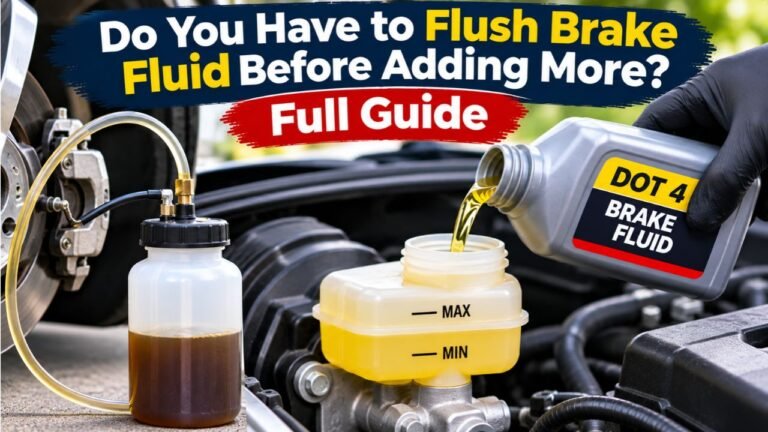
A full brake fluid flush generally requires more fluid than a simple air-bleeding procedure because the goal is to replace old fluid throughout the hydraulic circuits.
For many passenger cars, approximately 1 liter is a reasonable starting estimate.
Having up to 2 liters available may be appropriate for certain vehicles or more extensive work.
Brake Bleeding vs Brake Fluid Flush
Although people sometimes use the terms interchangeably, they describe different maintenance objectives.
| Feature | Brake bleeding | Brake fluid flushing |
| Primary purpose | Remove trapped air | Replace old or contaminated fluid |
| Fluid quantity | Often relatively small | Generally larger |
| When performed | After hydraulic work or air entry | Scheduled fluid maintenance |
| Main concern | Air remaining in the circuit | Old fluid remaining in the system |
| Completion | Correct bleeding procedure and normal hydraulic operation | Correct procedure and adequate replacement of old fluid |
A brake fluid flush normally includes bleeding, but removing a few air bubbles doesn’t necessarily replace the system’s old fluid.
How Much Fluid Does a Typical ABS Brake System Hold?
Torque Brake Fluid’s guide to flush and fill quantities estimates that many automotive brake systems with ABS contain approximately 500–750 mL of fluid.
The manufacturer notes that an experienced technician may complete a full flush using approximately 1 liter of fluid.
It recommends additional fluid for people performing the procedure themselves.
This distinction is important because the amount of fluid a system contains is not necessarily the amount required to flush it.
Some fresh fluid is discharged during replacement.
Additional fluid may also be needed to remove air or complete the manufacturer’s service procedure.
Is One Quart Enough for a Complete Brake Flush?
Sometimes.
One quart is approximately 946 mL, which is close to 1 liter.
That may be sufficient for an efficient flush on many passenger vehicles.
However, a complete flush may require additional fluid if:
- The system is unusually large.
- The old fluid is heavily contaminated.
- The procedure requires additional circulation.
- Air remains trapped.
- Specialized ABS bleeding is necessary.
- More than one bleeding attempt is required.
Should You Buy Two Quarts?
For a complete four-wheel fluid replacement, having two quarts available is a conservative purchasing approach when the exact service quantity is unknown.
You may not use the entire amount.
Keep unused fluid in unopened containers until needed.
Brake Fluid Quantity by Bottle Size
Brake fluid is commonly sold in different package sizes.
Understanding the conversions helps avoid purchasing too little.
Brake Fluid Bottle Conversion Chart
| Bottle size | Approximate milliliters | Liters |
| 4 US fl oz | 118 mL | 0.118 L |
| 8 US fl oz | 237 mL | 0.237 L |
| 12 US fl oz | 355 mL | 0.355 L |
| 16 US fl oz | 473 mL | 0.473 L |
| 32 US fl oz (1 quart) | 946 mL | 0.946 L |
| 1 liter | 1,000 mL | 1.000 L |
| 64 US fl oz (2 quarts) | 1,893 mL | 1.893 L |
Is 500 mL the Same as 16 Ounces?
Not exactly.
Five hundred milliliters equals approximately 16.9 US fluid ounces.
A 16-fluid-ounce bottle contains approximately 473 mL.
The difference is small for rough planning, but it matters when following an exact service specification.
Is One Liter the Same as One Quart?
No.
One liter contains approximately 33.8 US fluid ounces.
One US quart contains 32 fluid ounces.
A liter therefore provides slightly more fluid than a US quart.
Which Bottle Size Should You Buy?
For many jobs:
- One-wheel service: An 8–16-fluid-ounce bottle may be convenient.
- Four-wheel routine bleeding: A 1-quart bottle is a practical starting point.
- Complete flush: One or two 1-quart bottles may be appropriate.
Always check the vehicle’s exact fluid requirements before purchasing.
What Determines How Much Brake Fluid You Need?
Several factors influence brake fluid consumption during bleeding.
1. Number of Brake Circuits
Bleeding one wheel normally requires less fluid than bleeding all four.
However, the service procedure may require multiple circuits even when only one component was repaired.
2. Amount of Air in the System
A small amount of air near one caliper may be relatively easy to remove.
Air trapped higher in the system or inside certain hydraulic components can require a more involved procedure.
3. Type of Repair
Replacing a brake caliper, hose, master cylinder, or ABS hydraulic component can introduce different amounts of air.
A major repair may require more fluid than a routine bleed.
4. Brake System Design
Hydraulic brake systems vary.
Some use diagonal split circuits.
Others have different layouts and control systems.
These differences affect the correct bleeding sequence and procedure.
5. ABS Configuration
Some ABS systems require specialized procedures when air enters the hydraulic control unit.
Certain procedures need an appropriate diagnostic scan tool to operate internal valves or pumps.
6. Bleeding Method
Manual, pressure, vacuum, and gravity bleeding methods may use different amounts of fluid.
The technique can also affect how much fluid is discarded.
7. Technician Experience
Repeated bleeding attempts can increase fluid consumption.
Using the correct procedure and equipment helps reduce unnecessary waste.
8. Fluid Replacement Goal
A quick air bleed may require less fluid than a complete replacement of aged brake fluid.
Don’t confuse the two objectives.
Does DOT 3 or DOT 4 Affect How Much Fluid You Need?
The DOT brake fluid classification does not, by itself, determine the quantity needed for bleeding.
Fluid quantity depends mainly on the hydraulic system and service procedure.
However, choosing the correct type is essential.
DOT 3 Brake Fluid
DOT 3 is commonly used in compatible hydraulic braking systems.
It has minimum dry and wet boiling-point requirements established by federal standards.
Use it when the manufacturer specifies DOT 3 or explicitly approves it.
DOT 4 Brake Fluid
DOT 4 has higher minimum boiling-point requirements than DOT 3.
However, it isn’t automatically the correct fluid for every vehicle.
Some modern systems require particular low-viscosity formulations.
DOT 5 Brake Fluid
DOT 5 is silicone-based.
It is chemically different from glycol-based DOT 3, DOT 4, and DOT 5.1 fluids.
Do not substitute or mix it with incompatible brake fluids.
DOT 5.1 Brake Fluid
DOT 5.1 is glycol-based despite its similar name to DOT 5.
It has higher minimum boiling-point requirements than DOT 3 and DOT 4.
However, compatibility must still be confirmed.
Does Mixing Fluid Types Change the Required Amount?
A full fluid change involving a different approved specification can require more work than ordinary bleeding.
However, the correct procedure must be established before attempting a change.
Do not assume that flushing makes an otherwise incompatible brake fluid safe for the system.
Key Takeaway: Buy the quantity appropriate for the service, but always select the brake fluid specification required by the vehicle manufacturer.
How Much Brake Fluid Do You Need for ABS Brakes?
An ordinary ABS-equipped vehicle may use a similar amount of fluid to another passenger car during routine wheel bleeding.
However, the procedure can become more complicated when air enters the ABS hydraulic control unit.
Does ABS Always Require Special Bleeding?
No.
Some ABS-equipped vehicles can undergo routine wheel bleeding without electronically cycling the ABS unit, provided air has not entered the hydraulic control unit and the manufacturer permits that procedure.
Other situations require a special ABS bleed.
When Is an ABS Scan Tool Needed?
A compatible diagnostic tool may be required when:
- Air enters the ABS hydraulic control unit.
- The ABS unit is replaced.
- Certain hydraulic components are disconnected.
- The manufacturer’s service procedure specifies electronic bleeding.
The tool may activate internal solenoids or the ABS pump to help remove trapped air.
Does ABS Bleeding Use More Fluid?
It can.
Specialized procedures may involve additional bleeding cycles or fluid circulation.
However, there is no universal ABS fluid quantity.
The vehicle-specific repair manual determines the correct process.
What if the Reservoir Runs Dry?
If the reservoir empties during bleeding, air can enter the master cylinder or additional hydraulic circuits.
On certain ABS-equipped vehicles, removing that air may require specialized procedures.
This can increase both the complexity of the repair and the amount of brake fluid needed.
Important: If the vehicle requires an ABS bleeding procedure that you cannot perform correctly, have the work completed by a qualified technician. Incomplete bleeding can compromise braking safety.
How Much Brake Fluid Do You Need After Replacing a Caliper?
Replacing a brake caliper commonly requires bleeding the affected hydraulic circuit.
The exact amount depends on the vehicle and how much air entered the system.
If Only One Caliper Was Replaced
A single-wheel bleeding procedure may use approximately 4–8 fluid ounces as a practical planning allowance.
However, actual fluid use may be smaller or larger.
Some repairs require bleeding additional circuits.
If Two Calipers Were Replaced
More fluid may be required because two hydraulic circuits need servicing.
Approximately 8–16 fluid ounces can be a useful planning range for certain localized repairs.
However, it is not a guaranteed quantity.
If All Four Calipers Were Replaced
Replacing all four calipers can introduce substantial air.
A complete hydraulic bleeding procedure will be required.
One quart may be sufficient in some cases, but more fluid may be necessary.
If the reservoir or ABS unit was allowed to ingest air, the procedure may become more involved.
Does the New Caliper’s Size Matter?
Caliper design can influence internal fluid volume.
However, fluid consumption during bleeding depends more broadly on the hydraulic circuit and required procedure.
A larger caliper doesn’t automatically require a predictable additional number of ounces.
How Much Brake Fluid Do You Need After Replacing the Master Cylinder?
Master cylinder replacement often requires more careful bleeding than a simple wheel-level repair.
The replacement component may initially contain air.
Air can also enter connected hydraulic circuits.
Why Master Cylinder Replacement Is Different
The master cylinder generates hydraulic pressure for the braking system.
If air remains inside it, the brake pedal may feel soft or travel excessively.
Some replacement master cylinders require a specified bench-bleeding or on-vehicle priming procedure before the rest of the brake system is bled.
Will One Quart Be Enough?
Sometimes, but not always.
A master cylinder replacement may require repeated bleeding and additional fluid.
The safest approach is to obtain the exact service instructions and have enough fresh fluid available.
What About ABS?
If air enters the ABS hydraulic unit, a specialized bleed procedure may be required.
Do not assume conventional pedal bleeding is sufficient.
When Should a Professional Handle the Job?
Professional service is especially advisable if:
- The master cylinder was replaced.
- The hydraulic system ran dry.
- The brake pedal remains soft.
- ABS procedures are required.
- A brake warning light remains illuminated.
- The correct bleeding sequence is uncertain.
The braking system must be verified before the vehicle is returned to the road.
Does the Brake Fluid Reservoir Tell You How Much to Buy?
Not necessarily.
The master cylinder reservoir holds only part of the hydraulic system’s fluid.
Additional fluid is distributed through:
- Brake lines.
- Flexible hoses.
- Calipers.
- Wheel cylinders.
- ABS hydraulic components.
- Other hydraulic passages.
Reservoir Capacity vs System Capacity
The reservoir may hold only a few hundred milliliters, depending on the vehicle.
The complete system may hold considerably more.
Therefore, measuring the reservoir alone doesn’t reveal the total brake fluid capacity.
Can You Bleed Brakes With a Full Reservoir?
Yes, the reservoir needs an adequate supply of fresh fluid throughout the procedure.
However, the level decreases as fluid is released at the bleeder screws.
It must be monitored and replenished before air can enter.
Can You Overfill the Reservoir?
Yes.
After bleeding, adjust the level according to the manufacturer’s instructions.
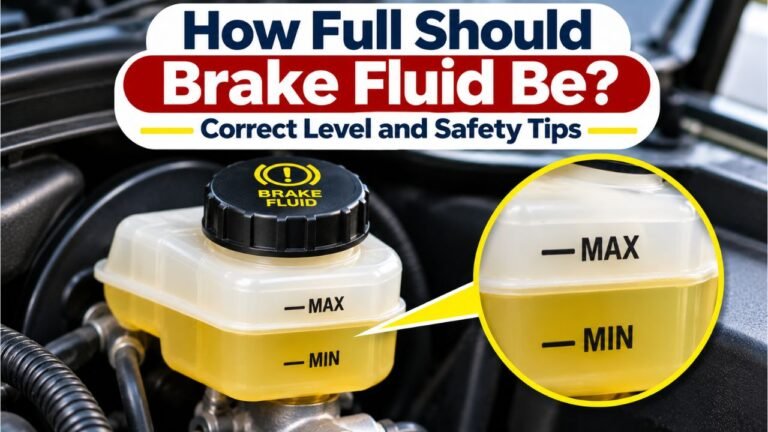
Do not exceed the specified maximum.
Brake fluid level also changes as brake pads wear and during brake component servicing.
How to Estimate Brake Fluid Quantity Before Bleeding
A useful estimate starts with identifying the exact job.
Step 1: Identify the Vehicle
Record:
- Make.
- Model.
- Model year.
- Engine or powertrain where relevant.
- Brake system configuration.
Different versions of the same vehicle may use different hydraulic components.
Step 2: Determine the Service Type
Ask whether the job involves:
- Bleeding one wheel.
- Bleeding two circuits.
- Bleeding all four brakes.
- Flushing old fluid.
- Replacing hydraulic components.
- Servicing an ABS control unit.
This is the most important distinction for estimating quantity.
Step 3: Check Manufacturer Service Information
Look for the specified fluid type, bleeding sequence, and any stated service quantities.
If the manual specifies a precise amount, follow it rather than using a generic estimate.
Step 4: Choose a Suitable Bottle Size
For an ordinary four-wheel bleed, one quart is a practical starting point.
For a complete flush or uncertain repair, additional unopened fluid may be useful.
Step 5: Account for Fluid Used by Equipment
Some pressure bleeders require a minimum amount of fluid in their tanks to operate correctly.
That amount may exceed the fluid actually consumed by the vehicle.
Don’t confuse the equipment’s required fill level with the brake system’s capacity.
Step 6: Avoid Opening Unnecessary Bottles
Keep spare brake fluid sealed until needed.
Opening multiple containers unnecessarily exposes the fluid to moisture.
Step 7: Do Not Reuse Drained Fluid
Collected brake fluid may contain moisture, dirt, or other contamination.
Never pour it back into the braking system.
Does Bleeding Method Affect Brake Fluid Quantity?
It can.
Different methods use different equipment and may result in different amounts of fluid being discharged.
Manual Two-Person Bleeding
This method uses a helper to operate the brake pedal while another person manages the bleeder valve.
Fluid is discharged in controlled cycles.
The reservoir must remain adequately filled.
The total quantity depends on the number of cycles and how much air needs to be removed.
Pressure Bleeding
A pressure bleeder supplies fluid under controlled pressure.
It can help maintain a consistent flow through the system.
However, pressure limits and adapters must match the vehicle manufacturer’s instructions.
The volume held in the bleeder tank isn’t necessarily the volume that will be consumed during the service.
Vacuum Bleeding
A vacuum bleeder draws fluid through a bleeder screw.
It can be useful for certain applications, but results vary.
Air drawn around bleeder screw threads can sometimes appear as bubbles in the collection tube, complicating interpretation.
Gravity Bleeding
Gravity bleeding allows fluid to flow through a circuit using the reservoir’s fluid head.
It may be suitable for some procedures but can be slow.
It isn’t universally appropriate for removing all trapped air or completing special ABS procedures.
Which Method Uses the Least Fluid?
There is no universal winner.
Fluid consumption depends on the vehicle, equipment, technique, and the amount of trapped air.
The best method is the one specified or approved for the particular braking system.
Why You Should Never Let the Brake Fluid Reservoir Run Dry
Running the master cylinder reservoir dry during bleeding is one of the most important mistakes to avoid.
When the fluid level drops too far, air may enter the hydraulic system.
What Happens When Air Enters the Lines?
Air is much more compressible than liquid brake fluid.
When you press the brake pedal, some of the movement may compress trapped air rather than producing the expected hydraulic pressure.
Possible symptoms include:
- Spongy brake pedal.
- Excessive pedal travel.
- Reduced braking response.
- Inconsistent pedal feel.
Does Air Enter Immediately Below the MIN Mark?
Not necessarily.
The exact point where air enters depends on the reservoir and hydraulic design.
However, the MIN mark is not a target to approach during bleeding.
Keep the fluid supplied according to the manufacturer’s instructions.
What If the Reservoir Already Ran Dry?
Stop the procedure and consult the vehicle-specific bleeding instructions.
Additional steps may be necessary.
Depending on the system, trapped air may have entered the master cylinder or ABS hydraulic components.
Don’t assume that adding fluid to the reservoir alone corrects the problem.
How to Know When You Have Used Enough Brake Fluid
The goal isn’t simply to discharge a particular number of ounces.
Successful bleeding requires removing trapped air and verifying normal brake operation.
Air Bubbles Stop Appearing
In an appropriate bleeding setup, fluid should flow without trapped air bubbles.
However, visible bubbles can sometimes enter around loose connections or bleeder threads.
Also, an absence of visible bubbles doesn’t guarantee that every internal hydraulic passage is free of air.
The Correct Procedure Is Completed
Follow the manufacturer-specified bleeding sequence and method.
Some vehicles require additional steps beyond conventional wheel bleeding.
Brake Pedal Feel Is Correct
A properly serviced brake system should have the pedal response specified by the manufacturer.
A pedal that feels soft, sinks unexpectedly, or travels excessively requires further diagnosis.
Pedal feel can differ with the engine running because of brake booster assistance.
No Hydraulic Leaks Are Present
Inspect the serviced areas for fluid leakage.
Any leakage must be corrected before the vehicle returns to service.
The Reservoir Is at the Correct Level
After completing the service, adjust the fluid level according to the vehicle’s instructions.
Avoid both low fluid and overfilling.
Brake Warnings Are Resolved
If brake or ABS warnings remain illuminated, diagnose them rather than assuming the system is ready.
Important: Brake bleeding is safety-critical. If the pedal response is abnormal, the procedure is incomplete, or the correct ABS bleeding process is uncertain, do not drive the vehicle until it has been professionally inspected.
Common Mistakes When Buying Brake Fluid for Bleeding
Buying Only a Very Small Bottle
A small bottle may be sufficient for localized work but inadequate for a full system bleed.
Estimate the job before purchasing.
Confusing Bleeding With Flushing
Bleeding air and replacing the entire fluid supply are different objectives.
A full flush often requires more fluid.
Assuming Every Car Needs Exactly One Quart
One quart is a useful general estimate, not a universal service capacity.
Follow manufacturer requirements.
Buying the Wrong DOT Specification
Fluid compatibility is more important than price or bottle size.
Use the correct specification.
Using Previously Opened Fluid Without Checking Its Condition
Glycol-based brake fluids absorb moisture.
Use fresh fluid from a properly sealed container, following manufacturer guidance.
Reusing Old Fluid From the Bleeder Bottle
Drained fluid may contain contaminants.
Do not put it back into the braking system.
Letting the Reservoir Run Empty
This can introduce additional air and complicate bleeding.
Following the Wrong Wheel Sequence
Some vehicles require a specific order that differs from the traditional farthest-wheel-first approach.
Use the vehicle’s service manual.
Assuming ABS Always Uses the Same Procedure
ABS hydraulic systems vary.
Specialized bleeding may be required when air enters certain components.
Driving With a Spongy Brake Pedal
A soft pedal after bleeding can indicate unresolved air or another hydraulic fault.
Do not return the vehicle to normal service until the braking system is functioning correctly.
How to Save Brake Fluid Without Compromising Safety
Brake fluid is relatively inexpensive compared with the cost of repairing a braking-system failure.
The goal should be avoiding unnecessary waste without sacrificing proper bleeding.
Buy the Correct Amount for the Job
For a minor localized bleed, a smaller bottle may be sufficient.
For four-wheel bleeding or a full flush, purchasing a quart or additional sealed bottles may be more practical.
Follow the Correct Procedure
Using the appropriate bleeding sequence and equipment reduces repeated attempts.
Keep the Reservoir Supplied
Preventing the reservoir from running dry can save considerable additional work.
Avoid Unnecessary Fluid Discharge
Follow manufacturer instructions instead of continuing to bleed indefinitely after the procedure is complete.
Keep Unused Fluid Sealed
Don’t open extra bottles until needed.
Store them according to the product instructions.
Dispose of Used Fluid Properly
Collect drained brake fluid in a suitable container.
Do not pour it into drains or onto the ground.
Follow local hazardous-waste or automotive-fluid disposal requirements.
Conclusion
For most passenger cars, approximately 16–32 fluid ounces (500 mL–1 liter) is a practical planning range when bleeding all four brakes. A single-wheel bleed may use considerably less fluid, while a complete system flush can require 1–2 quarts or more depending on the vehicle and procedure.
If you’re unsure how much brake fluid to buy, one quart is a sensible starting purchase for an ordinary four-wheel bleed.
For a complete fluid replacement or a job involving significant hydraulic repairs, additional sealed fluid may be necessary.
The correct quantity depends on the system’s design, the amount of trapped air, the bleeding method, and whether ABS components require special service.
I recommend checking the vehicle manufacturer’s service procedure before beginning, using the exact specified brake fluid, and keeping the master cylinder reservoir adequately filled throughout the work.
Never reuse drained brake fluid or assume that a fixed amount guarantees successful bleeding.
The goal is not simply to use enough fluid. It is to remove trapped air, maintain the correct fluid level, and verify that the braking system operates safely.
FAQs About How Much Brake Fluid Do I Need to Bleed Brakes
Is 16 Ounces of Brake Fluid Enough to Bleed Brakes?
It may be enough for certain ordinary bleeding procedures, particularly when only one or two circuits require service.
However, 16 fluid ounces is approximately 473 mL.
For bleeding all four brakes, one quart provides a more practical margin.
Is One Quart of Brake Fluid Enough for All Four Brakes?
Often, yes.
One quart contains approximately 946 mL, which is sufficient for many routine passenger-car bleeding procedures.
However, a complete flush, extensive hydraulic repair, or specialized ABS bleed may require additional fluid.
How Much Brake Fluid Do I Need to Bleed One Caliper?
Approximately 4–8 US fluid ounces is a reasonable planning allowance for many localized single-caliper bleeding jobs.
Actual fluid use may be lower or higher.
Follow the vehicle-specific procedure rather than stopping at a fixed amount if air remains.
How Much Brake Fluid Is Needed for a Full Flush?
Many passenger-car brake fluid flushes can be completed using approximately 1 liter.
For planning, having 1–2 quarts available is reasonable when the exact quantity is unknown.
Larger or more complex systems may require more.
Does ABS Require More Brake Fluid to Bleed?
Not always.
Routine wheel bleeding on some ABS-equipped vehicles uses similar quantities to conventional systems.
However, if air enters the ABS hydraulic control unit, a specialized procedure may be needed and fluid consumption may increase.
Can You Bleed Brakes With Only 8 Ounces of Fluid?
Possibly, if the job is limited to a single circuit and the procedure requires only a small amount.
However, 8 ounces generally provides insufficient margin for a complete four-wheel flush.
Always keep the reservoir supplied and follow the manufacturer’s instructions.
Do You Have to Use New Brake Fluid When Bleeding Brakes?
Yes.
Use fresh brake fluid meeting the vehicle manufacturer’s required specification.
Do not reuse fluid collected from bleeder screws because it may contain moisture, air, or other contamination.
Keep unused fluid properly sealed.