What Is the Difference Between Parking Brake and Foot Brake?
The foot brake slows or stops a moving car, while the parking brake holds the car in place after it has stopped. The foot brake is the main pedal drivers use in traffic. The parking brake is a separate system activated by a hand lever, a small pedal, or an electronic switch. They can share some wheel-end parts, but their jobs are different.
This distinction matters because shifting an automatic transmission into Park is not the same as applying the parking brake. It also explains why a car can have normal stopping power but a weak parking brake, or why a parking brake may still hold a car when its hydraulic service brakes have a problem.
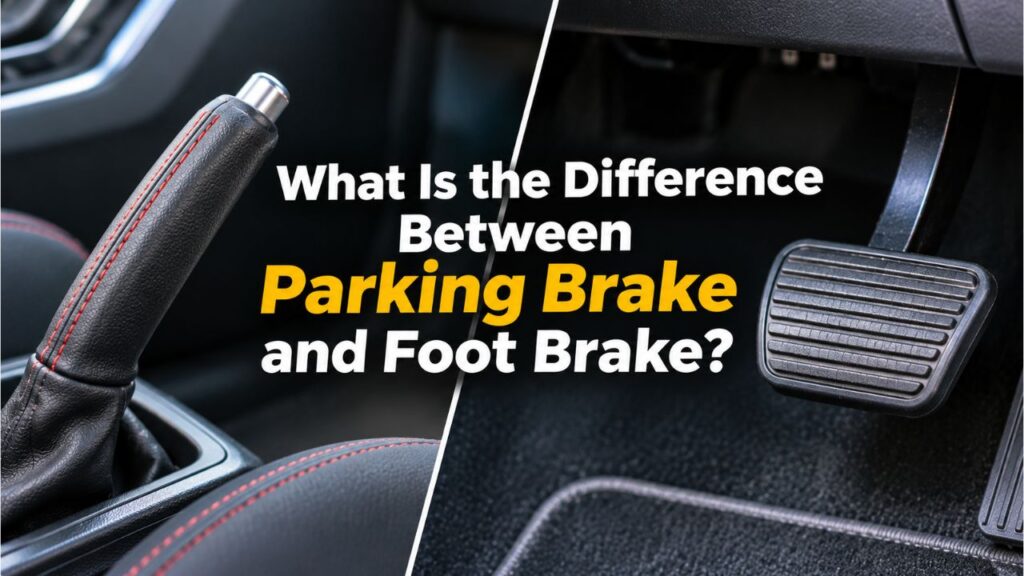
There is one confusing exception to the terminology: some cars have a foot-operated parking brake. That smaller pedal is not the foot brake used to stop while driving.
This guide compares how the two brakes operate, which wheels they affect, when to use each, what happens during a failure, and the habits that keep a parked vehicle secure.
What Is the Difference Between Parking Brake and Foot Brake?
The main difference is dynamic stopping versus stationary holding. The foot brake controls speed; the parking brake restrains a stopped vehicle.
| Feature | Foot Brake (Service Brake) | Parking Brake |
| Primary job | Slow and stop a moving vehicle | Hold a stationary vehicle |
| Driver control | Main brake pedal | Lever, separate pedal, or switch |
| Typical wheels affected | All four wheels | Usually rear wheels |
| Common operation | Hydraulic pressure, often with electronic control | Cable or electrically operated holding mechanism |
| When used | Repeatedly while driving | When securing a parked vehicle |
| Holding without pedal pressure | Normally releases when pedal is released | Stays engaged until released |
| ABS relationship | Usually integrated with ABS | Separate holding function; emergency behavior varies |
U.S. light-vehicle rules reinforce this distinction. Federal Motor Vehicle Safety Standard No. 135 requires a service brake acting on all wheels and a separate parking brake control. It allows the parking brake to be hand- or foot-operated and requires a mechanical means to retain its engagement. The regulation applies to specified vehicle classes and manufacture dates, rather than every vehicle worldwide.
What Is a Foot Brake and What Does It Do?
The foot brake is the regular brake pedal positioned in front of the driver, generally left of the accelerator in an automatic car. It operates the service brake system, allowing the driver to regulate speed, stop at intersections, slow for turns, and respond to hazards.
The Foot Brake Controls Moving-Vehicle Speed
Light pedal pressure provides gentle deceleration, while more pressure increases braking. In a conventional system, the master cylinder sends hydraulic pressure to calipers or wheel cylinders. Pads or shoes then create friction to slow the wheels.
Brake boosters commonly reduce the effort needed at the pedal. Anti-lock braking systems (ABS) help manage wheel slip during hard braking. These features assist the service brakes; they do not turn them into parking brakes.
The Foot Brake Normally Releases When You Lift Your Foot
Once the pedal is released, hydraulic pressure falls and the wheel brakes return toward their released condition. The vehicle can then move again. Certain cars have brake-hold functions that temporarily maintain service braking after a stop, but those functions have their own operating conditions.
That temporary holding behavior is not a replacement for securing an unattended car with the parking brake and appropriate transmission setting.
What Is a Parking Brake and What Is It Used For?
The parking brake is a dedicated holding system intended to restrain a vehicle after it comes to rest. Its everyday uses include parking in a driveway, securing a car on a grade, and providing additional protection when a manual-transmission car is left in gear or an automatic is placed in Park.
It remains applied without the driver continuing to hold down the regular brake pedal. Most passenger-car systems act at the rear wheels, although specific layouts vary. A mechanical cable, rear-caliper mechanism, or electronic actuator produces the holding force.
The names handbrake and emergency brake are commonly used for the parking brake. However, those names do not mean it should replace normal pedal braking while the car is moving.
Where Are the Foot Brake and Parking Brake Controls Located?
The regular foot brake is the large pedal used by the right foot in typical U.S. passenger vehicles. The parking-brake control can be harder to spot, especially in an unfamiliar car.
Foot-Operated Parking Brakes Are Separate Pedals
Some vehicles have a smaller parking-brake pedal at the far left of the driver’s footwell. It may be operated with the left foot while the right foot holds the regular service brake. Certain designs release with another push; others use a separate release handle.
Toyota’s driver guide to parking-brake types describes pedal-operated, lever-operated, and electronic parking brakes. Its pedal-type instructions specifically show the regular brake and separate parking-brake pedal being used together. That is why the words foot brake should not automatically be interpreted as foot-operated parking brake.
Hand Levers and Electronic Switches
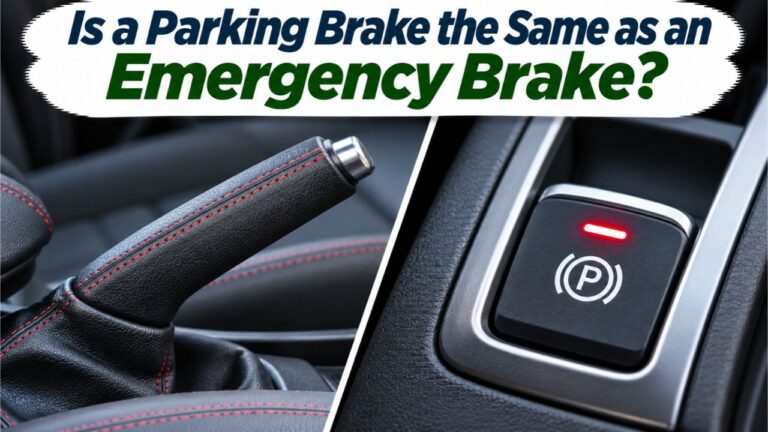
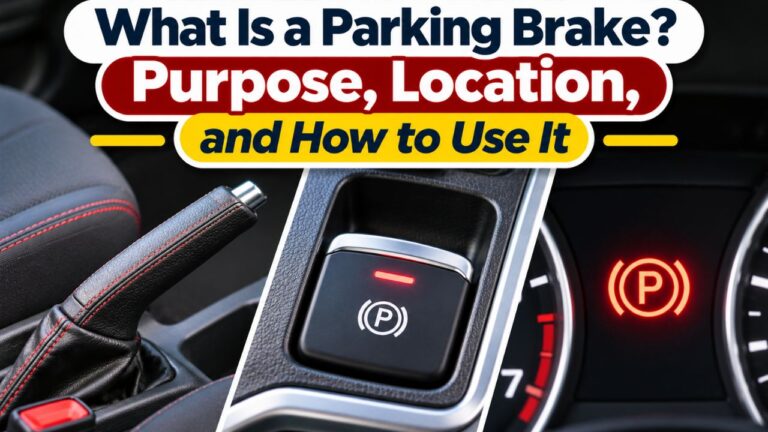
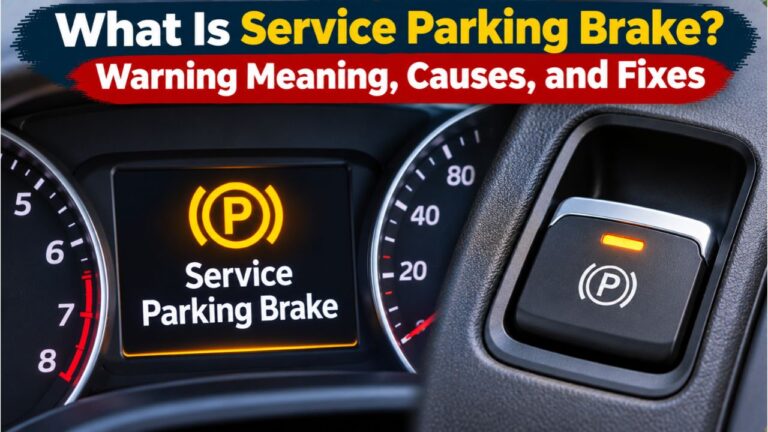
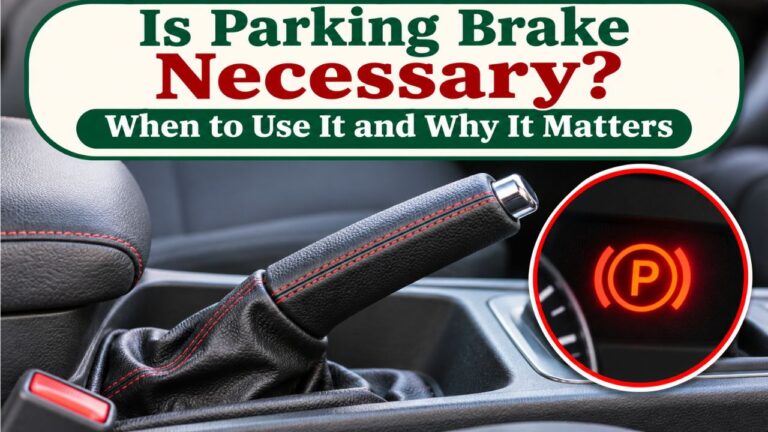
A traditional handbrake lever usually sits between the front seats. An electronic parking-brake switch may be beside the gear selector or on the dashboard and often has a circled P symbol. Some systems apply automatically when the transmission is placed in Park or the vehicle is switched off.
Use the specific owner’s manual to identify the control and release conditions. A button labeled P may select the transmission’s Park position rather than directly operating the parking brake.
How the Foot Brake and Parking Brake Work Differently
The Foot Brake Uses Controllable Braking Pressure
In most conventional passenger vehicles, hydraulic fluid transmits pressure from the brake pedal to the wheel brakes. Disc brakes squeeze pads against rotors, while drum brakes press shoes against a drum. The system is designed for repeated, variable stopping while the wheels turn.
Modern hybrids and electric cars may blend friction braking with regenerative braking or use electronically controlled hydraulic pressure. Those differences change the equipment, not the basic job of the service brake.
The Parking Brake Uses a Sustained Holding Mechanism
A conventional hand- or foot-operated parking brake uses mechanical linkage and cables to apply friction at the wheel brakes. An electronic parking brake uses an electric command to operate an actuator. The design maintains the applied brake after the driver releases the switch or lever.
Because both systems can use the rear brake pads or caliper, a parking-brake fault does not always mean the vehicle has separate parking-brake shoes. Other cars have separate shoes inside the rear rotors.
Do the Parking Brake and Foot Brake Use the Same Wheels?
The foot brake ordinarily acts on all four wheels; the parking brake usually holds the rear wheels. Using all four wheels gives the service brake the stopping capability and balance needed during travel. Weight shifts toward the front axle as a car slows, so front brakes often handle a substantial share of braking effort.
Rear-only parking brakes are common because their job is holding a stationary vehicle, not controlling high-speed deceleration. Some older or specialized vehicles use a different arrangement, including driveline-mounted holding brakes. Wheel coverage should never be assumed from the shape of the parking-brake control.
Does the Parking Brake Use Brake Fluid Like the Foot Brake?
On a typical hydraulic car, the service brake relies on brake fluid, while the traditional parking brake is operated mechanically and does not depend on sustained hydraulic pressure to remain engaged. This distinction can allow a parking brake to hold a car even when a hydraulic component has a problem.
An electric parking brake generally uses electricity to command its actuator, but does not require continuous electrical power to maintain its mechanical holding force. Some integrated designs involve more complex components, so the exact operation depends on the model.
Do not assume a functioning parking brake makes a car with leaking brake fluid safe to drive. The parking brake is not a substitute for reliable service brakes.
When Should You Use the Foot Brake or Parking Brake?
While Driving, Use the Foot Brake
Use the main pedal to slow for a traffic light, stop behind another vehicle, control speed approaching a curve, or make a sudden stop. It is the brake designed for controlled deceleration and, where equipped, ABS operation.
Do not pull a mechanical handbrake to slow down in routine traffic. Locking rear wheels can make a vehicle unstable. Certain electronic parking brakes have a controlled emergency function when the switch is held, but the behavior is model-specific and reserved for emergencies.
While Parked, Use the Parking Brake
Once the vehicle has come to a complete stop, keep the foot brake applied while engaging the parking brake and securing the transmission. For an automatic, use Park. For a manual, select the parking gear recommended in the owner’s manual.
On hills, the direction of the front wheels adds protection. The California DMV’s hill-parking guidance advises using the parking brake and placing an automatic in Park or a manual in gear. It also explains turning the front wheels toward the curb downhill and away from the curb uphill when a curb is present.
During a Short Traffic Stop, Keep Using the Foot Brake
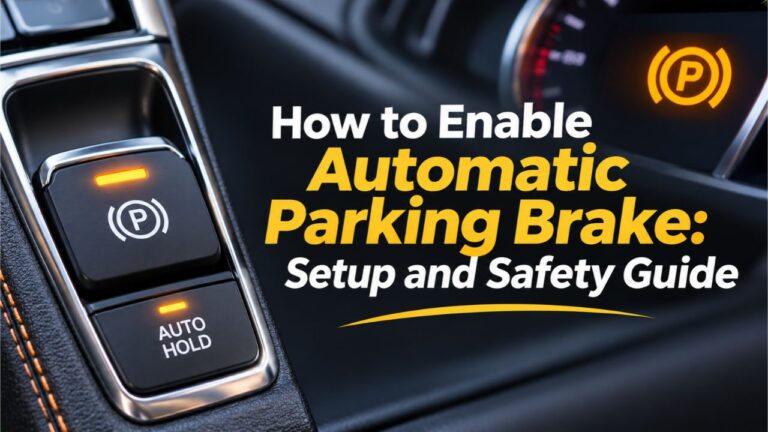
At a normal red light, the service brake holds the stopped vehicle while the driver remains in control. A vehicle’s Auto Hold feature may perform that temporary holding task, depending on the model. The parking brake is most relevant when the driver is securing the vehicle for parking or the owner’s manual specifies its use.
Can You Stop a Moving Car With the Parking Brake?
A parking brake may offer some emergency deceleration if the service brakes fail, but it is not designed to replace normal foot-brake operation. Sudden application of a cable-operated parking brake can lock the rear wheels and create a skid. Emergency features on electric parking brakes vary by vehicle.
If the main brake pedal fails unexpectedly, follow the vehicle manufacturer’s emergency instructions, maintain steering control, and seek a safe stopping location. Do not experiment with parking-brake stopping on public roads or continue driving after a braking fault.
Parking Brake vs. Foot Brake Failure Symptoms
A problem with the service brakes often changes pedal feel or stopping performance. Examples include a pedal that sinks, a low fluid level, pulling during braking, or a longer stopping distance. Such symptoms require immediate attention because they affect the vehicle’s primary means of stopping.
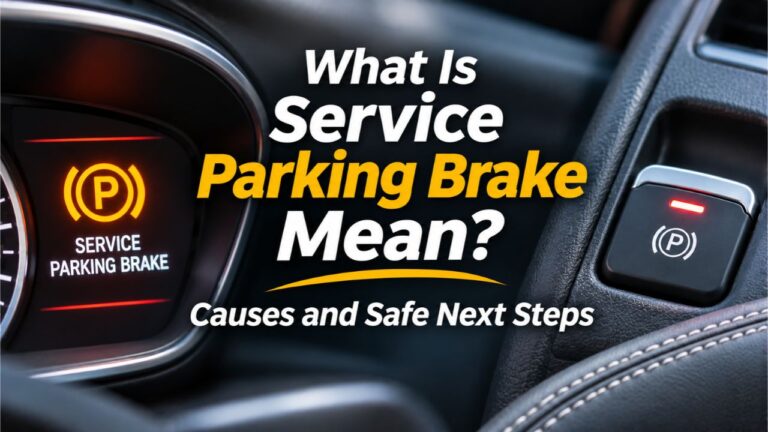
Parking-brake faults may appear differently: a lever travels too far, the car will not remain stationary, a release mechanism sticks, or an electronic parking-brake warning appears. A partially released parking brake may cause rear brake drag, excess heat, or a burning smell while driving.
Some symptoms overlap because the two systems can share rear brake components. If either system is unreliable, have it inspected before relying on the vehicle. Do not drive with questionable service-brake performance.
How Maintenance and Repairs Differ Between the Two Brakes
Regular service-brake inspections focus on pads, rotors, calipers, hoses, hydraulic lines, fluid condition, and related electronic controls. A technician may also evaluate pedal travel, leaks, and brake-assist operation.
Parking-brake inspection focuses on holding ability, release operation, cable condition, rear brake mechanisms, and electric actuators where fitted. Electronic systems can require a special service mode during rear brake maintenance. A parking brake that will not hold may need adjustment or repair, depending on its design.
One repair can affect both systems when they share rear calipers or friction material. That does not make them interchangeable; they still require separate functional checks.
Mistakes Drivers Make When Using Both Brakes
One mistake is relying only on the transmission’s Park position. Another is releasing the foot brake before securing the vehicle on an incline.
Driving with the parking brake applied can overheat components. A brake warning light may also indicate low fluid or another serious problem, not merely an engaged parking brake.
Stop with the foot brake, set the parking brake, secure the transmission, and release the parking brake before driving.
FAQs About What Is the Difference Between Parking Brake and Foot Brake
Is a Foot Brake the Same as a Parking Brake Pedal?
No. The term foot brake usually means the main service brake used while driving. A foot-operated parking brake is a separate, smaller pedal that activates the parking brake and stays engaged after the driver’s foot is removed.
Can a Parking Brake Work if the Foot Brake Fails?
Sometimes a mechanically operated parking brake can still hold a stationary vehicle after a hydraulic service-brake failure. That does not guarantee safe stopping while moving. Do not drive until the service-brake defect is repaired.
Do Both Brakes Use the Same Brake Pads?
Some vehicles use the rear service-brake pads for parking, while others have separate parking-brake shoes. The arrangement depends on the rear brake design, so check the vehicle’s service information.
Is the Parking Brake Stronger Than the Foot Brake?
No. The service brake is designed for controlled, repeated stopping of a moving vehicle using all wheels. The parking brake is designed primarily to hold a stopped vehicle and is not an equivalent substitute for stopping performance.
Is Auto Hold the Same as a Parking Brake?
No. Auto Hold commonly maintains braking during temporary stops, while the parking brake secures a vehicle for parking. Some cars transfer from Auto Hold to the parking brake automatically, but the operating conditions differ by model.
Should You Use Both Brakes When Parking on a Hill?
Yes. Keep the service brake applied while setting the parking brake and securing the transmission. Turn the front wheels appropriately for the curb and slope. Follow the owner’s manual for the correct sequence on your car.
Why Both Brakes Matter for Safe Driving and Parking
The clearest answer to what is the difference between parking brake and foot brake is their purpose: the foot brake controls speed and stops the moving car, while the parking brake keeps that car from rolling once parked. Their controls and mechanisms may differ, even when they share rear brake hardware.
Use the service brake whenever you need to slow or stop, and make the parking brake part of your routine when leaving the vehicle. Learning where both controls are and recognizing signs of failure helps avoid rollaways, brake damage, and unsafe stopping situations.