What Is the Primary Purpose of a Parking Brake? Safety and Use
The primary purpose of a parking brake is to keep a vehicle stationary after it has stopped, preventing it from rolling forward or backward while parked. It provides a holding mechanism separate from the normal brake pedal and helps secure the vehicle on hills as well as level surfaces.
A parking brake is sometimes called a handbrake, emergency brake, or e-brake. Despite those names, it is not mainly designed for stopping a moving car. Its everyday job begins when the driver finishes braking and prepares to leave the vehicle. The parking brake can hold the car without someone keeping a foot on the brake pedal.
This matters even in an automatic car with a Park position. Park locks part of the transmission, while the parking brake applies a holding force through the designated brakes. Using both gives the parked vehicle two different means of restraint. This guide explains the parking brake’s main purpose, how it holds a car, when drivers should use it, why it differs from other braking controls, and what to do if it no longer holds securely.
What Is the Primary Purpose of a Parking Brake?
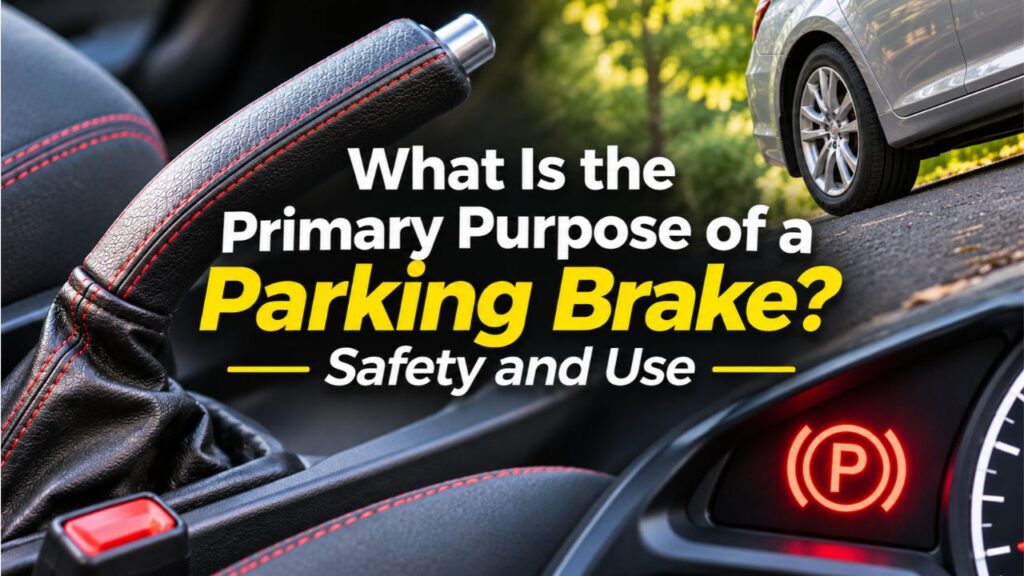
A parking brake exists to prevent unintended movement of a stopped vehicle. Once engaged, it maintains braking force without requiring continuous pressure on the regular brake pedal. That makes it a safeguard against rolling when you switch off the engine, exit the car, unload cargo, or park on a slope.
This function is reflected in the National Highway Traffic Safety Administration’s parking-brake interpretation, which describes a parking brake as a mechanism that prevents a stationary motor vehicle from moving. For vehicles covered by the cited U.S. light-vehicle standard, the system must hold through friction and retain engagement mechanically. An electric switch may command its operation, but the system cannot depend on continuous electrical power simply to stay applied.
The purpose is not to keep a moving car from speeding up, increase normal stopping power, or replace worn service brakes. It is to maintain the stopped condition after the driver takes their foot off the pedal. A properly operating parking brake should remain applied until the driver or an approved automatic function releases it.
Why Keeping a Parked Vehicle From Rolling Matters
A Hill Creates a Constant Rolling Force
On a driveway or sloped street, gravity pulls a parked vehicle downhill. If the holding system cannot oppose that force, the car may roll into traffic, a parked vehicle, a building, or someone nearby. The risk becomes more serious when the driver has already exited.
The parking brake places friction at the designated wheel brakes to resist that movement. Turning the front wheels correctly at a curb and selecting the proper transmission position provide additional protection. None of these measures replaces the others; together they help reduce the chance of an unintended rollaway.
Level Ground Does Not Eliminate the Risk
A parking lot may look flat but have a slight grade for drainage. The vehicle may also be parked on uneven pavement, gravel, or a surface that changes under load. A small amount of movement can matter when another car, a person, or a wall is immediately behind it.
Applying the parking brake every time you park builds a consistent routine. You do not have to estimate whether a slope is steep enough to justify using it. The holding function is useful even if the vehicle would probably stay still without it.
It Adds Protection Beyond the Transmission
In an automatic transmission, selecting Park usually engages a parking pawl, a mechanical device that prevents part of the transmission from rotating. It is not the same mechanism as the parking brake. On a slope, the vehicle may settle against the pawl if the parking brake is not already holding its weight.
That can make shifting out of Park feel harder and can place unnecessary load on the parking mechanism. A parking brake provides an additional holding method at the brakes rather than relying only on the transmission. In a manual-transmission car, leaving the vehicle in an appropriate gear adds resistance, but the parking brake should still be applied.
How a Parking Brake Keeps the Vehicle Stationary
The driver’s lever, pedal, or switch activates a mechanism that applies friction to designated brake components. Many passenger vehicles use the rear wheels, although the specific layout varies. Once engaged, the holding mechanism remains in place until it is released.
Mechanical Handbrake and Foot Pedal
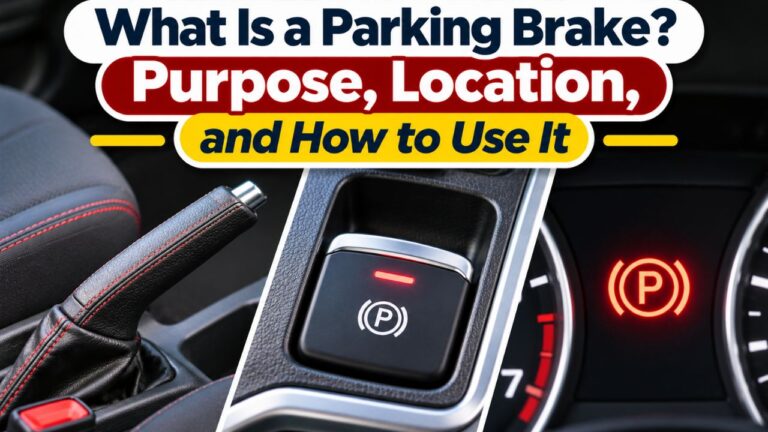
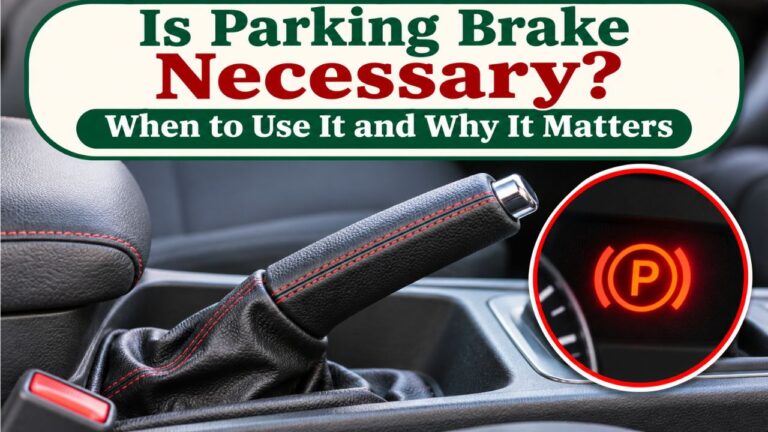
A traditional handbrake lever pulls a cable or linkage to operate the parking brakes. A ratchet or other mechanical retaining arrangement keeps the force applied after you let go. A foot-operated parking brake performs a similar task through a separate pedal, often near the driver’s left foot.
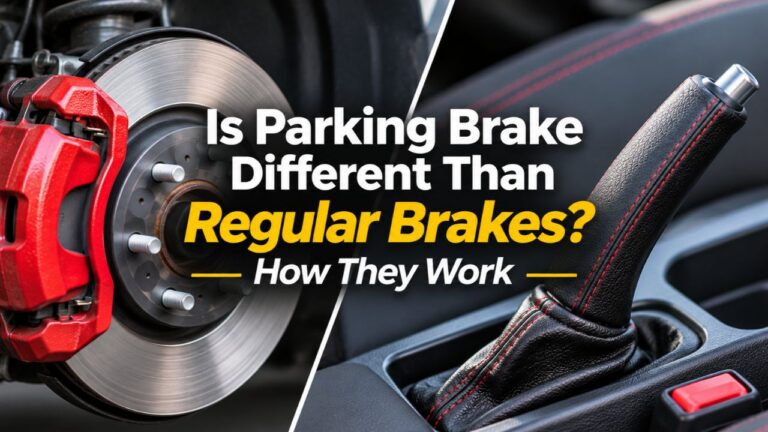
The braking hardware may use the regular rear drum-brake shoes, a small parking drum inside the rear disc rotor, or a mechanical mechanism in a rear caliper. The control’s location does not tell you exactly which arrangement is fitted. The owner’s manual or vehicle-specific service information does.
Electronic Parking Brake
An electronic parking brake, often abbreviated EPB, uses a switch or automatic command to activate electric actuators. On many designs, a motor applies the rear calipers and a self-holding mechanical arrangement maintains the clamp force. Some systems instead use a motor to tension a parking cable.
An EPB serves the same primary purpose as a hand lever: holding a stopped vehicle. It may engage automatically when the vehicle is shifted into Park or switched off, but automatic behavior varies by manufacturer and model. Confirm that the appropriate parking-brake indicator shows engagement rather than assuming every car applies it on its own.
Parking Brake vs. Service Brake vs. Transmission Park
These three systems can all help keep a car from moving, but they are built for different duties. Confusing them can lead to poor parking habits or an unsafe response to a brake problem.
| System | Main Job | How It Acts | Needs Driver to Keep Pressing? |
| Parking brake | Hold a stopped vehicle | Applies and retains friction at designated brakes | No |
| Service brake | Slow and stop a moving vehicle | Applies braking through the normal pedal-operated system | Usually yes |
| Automatic transmission Park | Lock part of the drivetrain when parked | Engages a mechanical parking lock | No |
Why the Regular Brake Pedal Is Not Enough
The service brakes are the brakes you use to slow for traffic and stop at intersections. In a conventional car, pressing the pedal creates hydraulic pressure that moves caliper pistons or wheel cylinders. Releasing the pedal normally releases that commanded stopping force.
You cannot depend on the regular pedal to hold a car after you leave unless another system is designed to maintain the pressure. A parking brake is intended to stay applied on its own. It can share some rear-brake friction parts with the service brakes while using a different application or retaining mechanism.
Why Park Is Not a Replacement for the Parking Brake
Park helps immobilize the drivetrain, but it does not directly apply the wheel brakes. If the vehicle is jostled or is resting against a substantial incline, relying only on the parking pawl leaves a single holding point responsible for restraint.
As AAA Club Alliance’s parking-brake guidance explains, using the parking brake whenever you park, including on level ground, helps reduce reliance on the transmission’s parking pawl. The two functions are complementary, not interchangeable.
When Should You Apply the Parking Brake?
Every Time You Park and Leave the Vehicle
A simple routine is to stop completely with the normal brake pedal, engage the parking brake, select the manufacturer’s required transmission position, and confirm the vehicle is secured before stepping out. The recommended order may differ depending on electronic controls, so follow your owner’s manual.
For an automatic, the final transmission position is generally Park. For a manual, it is typically an appropriate gear with the engine off, as specified by the manufacturer. Do not leave the car unattended in Neutral merely because the parking brake seems strong.
When Parking Uphill or Downhill
A slope makes the parking brake’s job especially important. Keep the foot brake applied until the parking brake and transmission are securing the car. Turn the front wheels according to the curb and direction of travel so that a rolling vehicle is directed toward a curb or safe road edge instead of into traffic.
The California Driver’s Handbook’s hill-parking instructions explain the familiar rules: downhill wheels toward the curb, uphill wheels away from the curb where a curb exists, and suitable wheel positioning toward the road edge when there is no curb. Follow local rules and the vehicle manual for the exact situation.
On unusually steep, slippery, or unstable surfaces, do not assume the parking brake can secure the vehicle under every condition. Find safer parking or use additional approved measures when necessary.
When Loading, Unloading, or Working Around a Parked Car
Opening the trunk, loading heavy items, helping passengers get out, or attaching a trailer can shift the vehicle’s load. Secure the car first so an ordinary change in weight or a light push does not cause unexpected movement. This is particularly important when children or other people are close to the vehicle.
When changing a tire, applying the parking brake is one precaution, but it is not enough on its own. Follow the lifting instructions, use the correct wheel chocks where specified, and never treat a parking brake as a substitute for safe jack support. A car supported by a jack can still shift if the setup is wrong.
Is Emergency Stopping the Parking Brake’s Main Purpose?
No. The name emergency brake comes from the system’s possible secondary use when normal brakes fail. Its primary purpose remains holding a parked vehicle. A conventional cable-operated parking brake commonly acts on the rear wheels and is not designed to replace the normal four-wheel service braking system during everyday driving.
Applying a mechanical handbrake sharply at speed can lock wheels, cause a skid, or make steering difficult, especially on wet or icy pavement. Some electronic parking brakes have model-specific emergency deceleration behavior when the switch is held. Their response should not be assumed to match a traditional lever.
If service braking fails while driving, follow the vehicle’s emergency instructions and focus on maintaining control and reaching a safe place to stop. Do not experiment with emergency-brake application on public roads. After any braking failure, have the car towed and inspected rather than attempting to continue driving.
What Can Stop a Parking Brake From Doing Its Job?
Weak Holding Force or Excessive Lever Travel
A vehicle that creeps after the parking brake has been properly applied may have worn or misadjusted parking-brake components. Depending on the design, the cause can be stretched or seized cables, damaged linkages, worn shoes or pads, or a caliper mechanism that does not apply enough force.
A lever that travels much farther than normal is worth inspecting, but the number of clicks by itself is not a universal test. Different designs have different acceptable travel and adjustment procedures. Do not tighten cables until a problem seems to disappear without checking the condition of the brakes they operate.
Brake Fails to Release or Drags
A cable can corrode and stick, a lever can bind, or an electronic actuator can fail to release normally. Driving with a partially engaged parking brake may overheat the friction parts, increase wear, and affect vehicle control.
If the brake remains engaged, do not force the vehicle to move against the resistance. Check the applicable warning indicators and release instructions, then arrange repair. Cold weather can also contribute to frozen cables or moisture-related binding on certain mechanical systems.
Electronic Warnings or Incorrect Automatic Operation
An EPB warning may point to a switch, motor, wiring, power-supply, sensor, or control problem. The system may need diagnostic equipment and a prescribed service mode, particularly if rear caliper work is required.
If the parking brake will not hold, choose a safe location and use the manufacturer’s instructions for securing the vehicle until it can be repaired. Never count on the transmission alone when the vehicle’s restraint is uncertain, especially on a slope.
FAQs About What Is the Primary Purpose of a Parking Brake?
Is the Parking Brake Only Needed on Hills?
No. It is intended to hold a vehicle whenever parked. Even nearly flat roads can have slight slopes, and using the brake consistently adds protection beyond the transmission.
Does the Parking Brake Stop All Four Wheels?
Not necessarily. Many passenger cars apply the parking brake at the rear wheels, but designs vary. Its purpose is to hold the vehicle stationary, not to reproduce the service brakes’ normal four-wheel stopping action.
Is the Parking Brake the Same as the Emergency Brake?
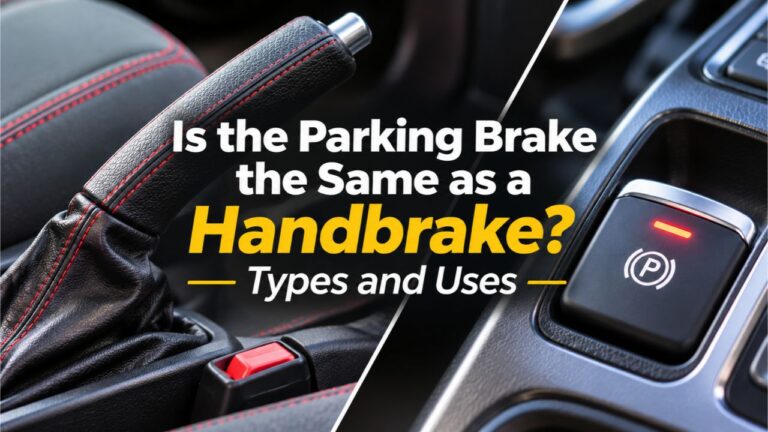
Usually, yes. Emergency brake, e-brake, and handbrake are common names for the parking brake, although a handbrake specifically describes a hand-operated version. Emergency stopping is a secondary function, not its main job.
Do You Need the Parking Brake if the Car Is in Park?
Yes, using it is good practice. The transmission’s Park position and the parking brake rely on different mechanisms. Applying the parking brake reduces reliance on the parking pawl, particularly on slopes.
Does an Electronic Parking Brake Work With the Engine Off?
Most systems are intended to remain engaged after the engine is switched off, but application and release behavior differs by model. Use the indicator and owner’s manual to confirm it is set.
Keep Your Vehicle Secure Every Time You Park
If you’re wondering what is the primary purpose of a parking brake, it is to prevent a stopped vehicle from rolling while it is parked. A lever, foot pedal, or electric switch may operate the system, but all three are intended to maintain holding force without someone continuously pressing the regular brake pedal.
Using the parking brake alongside the correct transmission position helps secure a vehicle on both level ground and slopes. On hills, proper wheel positioning adds another layer of protection. The parking brake is not a replacement for the service brakes, and its emergency role does not change its everyday holding purpose.
Make applying and confirming the parking brake part of your routine whenever you park. If it slips, drags, or displays a fault, have the system inspected before trusting it to hold an unattended vehicle.