What Is Service Parking Brake? Warning Meaning, Causes, and Fixes
“Service Parking Brake” is a dashboard warning that means your vehicle has detected a problem with its parking brake system and needs inspection or repair. It most often appears in vehicles with an electronic parking brake (EPB), although the exact wording and causes depend on the manufacturer. The warning does not simply mean that the parking brake is switched on or that a routine maintenance interval has arrived.
A parking brake is designed to help keep a stopped vehicle from rolling. If its electrical controls, actuator, wiring, or mechanical parts malfunction, the brake might fail to apply, refuse to release, or operate with limited functionality. Some faults leave the ordinary foot brakes working, but that does not mean the vehicle is safe to park or drive without checking what happened.
This guide explains what the message means, how parking brakes work, the most likely reasons the warning appears, and how it differs from similar dashboard alerts. It also covers safe first checks, professional diagnosis, repair options, and when the vehicle should be towed instead of driven.
What Is Service Parking Brake and Why Does It Appear?
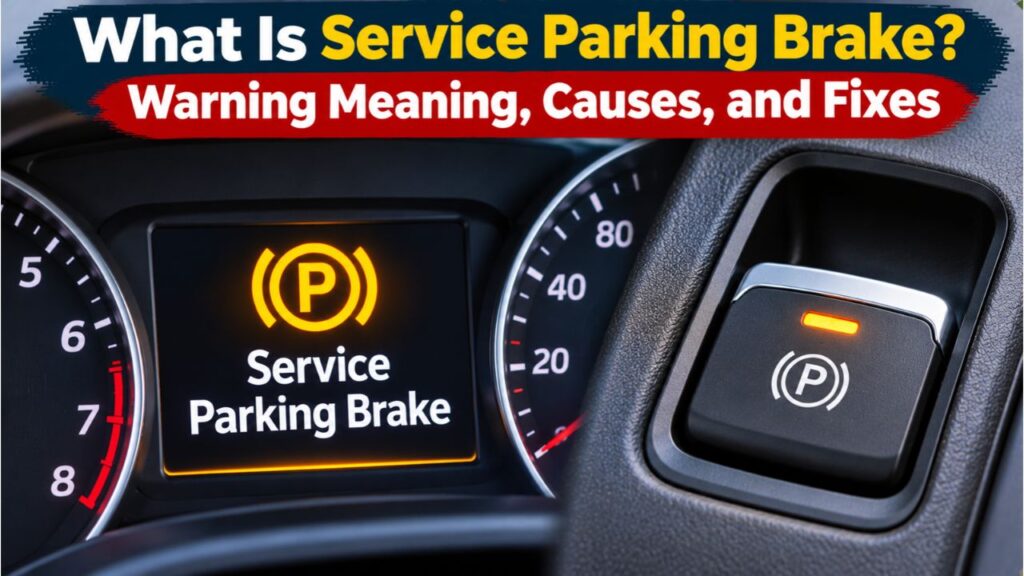
“Service Parking Brake” is a fault message, not the name of a special parking-brake component. The word service means the system has detected a condition that may require a technician’s attention. On many vehicles, a control module displays the message after recognizing an electrical or mechanical problem during operation or a self-check.
The 2015 Chevrolet SS owner’s manual directly identifies “SERVICE PARKING BRAKE” as a message displayed when the parking brake has a problem and advises dealer service. That description establishes the basic meaning, but the diagnostic procedure for a different make or model may not be the same.
The warning does not prove that the parking brake is physically stuck. It may have stopped applying, lost part of its function, or registered a sensor or control problem. The only reliable way to identify the failed part is to match the warning with the vehicle’s behavior and appropriate fault-code or mechanical checks.
How Does a Parking Brake System Work?
The parking brake holds a stationary vehicle in place, especially on slopes. It is separate in purpose from the service brakes used for normal slowing and stopping, even though the systems may share rear brake components.
Mechanical Parking Brakes
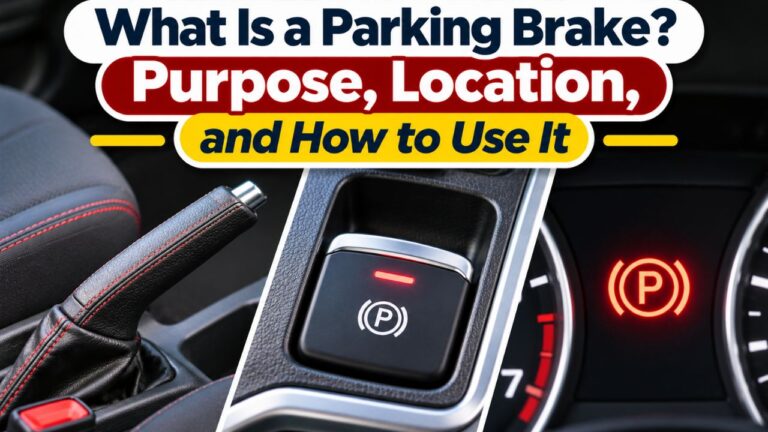
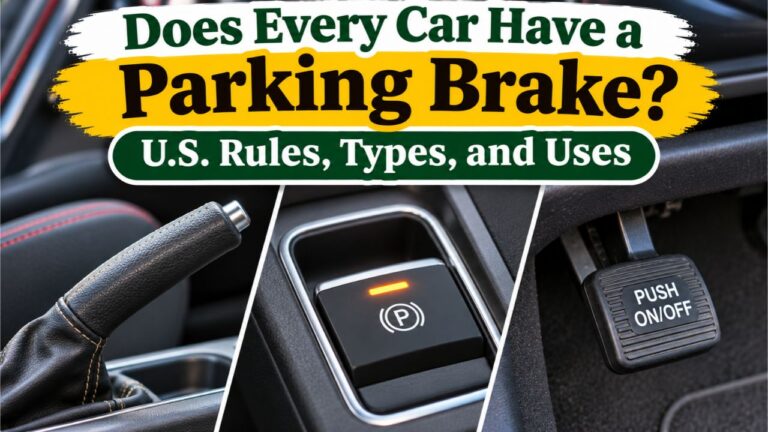
An older or simpler system uses a hand lever or foot-operated pedal connected by cables to rear brake hardware. Pulling the lever or pressing the pedal creates mechanical holding force. A damaged cable, seized linkage, or worn hardware can stop it from engaging or releasing fully.
Electronic Parking Brakes
An electronic parking brake (EPB) uses a switch and electrical control system to command the parking-brake mechanism. Depending on the design, electric motors may act on rear calipers or pull a cable mechanism. Sensors and control modules monitor commands and operating conditions.
What Causes the Service Parking Brake Warning?
Several faults can trigger the alert, and there is no universal diagnosis based on the message alone. The following possibilities are worth checking in a vehicle with an electronic parking brake.
Weak Battery or Charging-System Problems
An EPB needs adequate electrical power to operate and communicate with other modules. A weak 12-volt battery, poor charging, or a major voltage drop may interfere with operation or leave a stored fault. This is worth considering if the warning appeared after a dead battery, jump-start, or battery replacement.
Faulty Electric Parking Brake Actuator
An actuator is the motor-driven device that applies or releases the parking brake. Motor wear, a jammed mechanism, internal damage, or excessive resistance can prevent it from completing the command. Some vehicles use an actuator at each rear caliper; others use a centralized unit.
Damaged Wiring, Connectors, or Switches
Electrical faults may interrupt the command between the parking-brake switch, controller, and actuators. Broken wiring near moving suspension components, corrosion at connectors, blown fuses, or a defective switch are possible examples.
Seized Rear Brake Hardware or Cable Problems
The electrical controls may be functioning while the mechanical brakes cannot move correctly. Corrosion, a sticking caliper mechanism, damaged cable, or poorly installed components can create excess resistance or prevent full release.
Problems After Rear Brake Service
Some electronic systems require a specific maintenance mode before rear brake pads or calipers are serviced. An incomplete procedure, connector left unplugged, incorrectly fitted part, or missing recalibration may leave the parking brake unable to operate normally.
In Ford’s electric parking brake information messages for the 2025 Transit, the manufacturer distinguishes malfunctions, incomplete application or release, and brake maintenance mode. These messages are not interchangeable, so recent service history should be compared with the exact warning shown.
Sensor or Control-Module Faults
An EPB controller can also register inconsistent position, force, switch, or communication information. Related ABS or electronic stability-control faults may sometimes affect what the dashboard reports. Such warnings require model-specific diagnostic information rather than guesses about one particular sensor.
Service Parking Brake vs. Other Dashboard Brake Messages
Similar wording can describe very different conditions. Read the entire message and identify the accompanying light before assuming that the parking brake has failed.
| Dashboard Message or Light | Usual Meaning | Appropriate Response |
| Service Parking Brake | Parking-brake fault detected | Arrange diagnosis; confirm safe apply and release |
| Parking Brake On or red PARK light | Parking brake is engaged, on many vehicles | Follow normal release procedure before driving |
| Release Parking Brake | Brake remains applied when movement is attempted | Stop and follow the owner’s manual |
| Park Brake Not Applied | System could not confirm full application | Do not rely on it to hold the parked vehicle |
| Park Brake Not Released | System could not confirm full release | Do not force the vehicle to move |
| Service Brake Assist | Problem with brake-assist function | Treat as a separate braking-system issue |
| ABS or stability-control light | Fault in those monitored systems | Diagnose the specific warning and related codes |
One important point: the parking brake is not the transmission’s Park position. Selecting P on an automatic transmission engages a parking mechanism in the transmission; it does not repair an EPB that fails to hold. Both systems have roles in safely securing a parked vehicle.
Symptoms That May Accompany the Parking Brake Warning
- Parking brake will not apply: The switch is operated, but the expected confirmation lamp or holding action does not occur.
- Parking brake will not release: The car remains restrained, or the dashboard reports that release was unsuccessful.
- Flashing warning lamp: Some vehicles use a flashing parking-brake light to indicate incomplete operation or a fault.
- Grinding, clicking, or unusual motor sounds: Repeated or prolonged actuator noise can indicate a mechanism struggling to move.
- Brake drag or burning smell: A rear brake may remain applied and produce dangerous heat if the vehicle moves.
- Related electrical warnings: Low-voltage, ABS, or stability-control messages can provide additional diagnostic context.
None of these signs identifies a particular actuator, switch, or control module without testing.
What Should You Do When Service Parking Brake Appears?
The safest response depends on whether the parking brake is released, applied, or behaving unpredictably. These are basic checks, not a repair procedure for a failed EPB.
Step 01: Stop Somewhere Safe and Read the Full Warning
If the message appears while driving, pull over where it is safe to stop. Watch for changes in ordinary brake-pedal response, unusual resistance, smoke, or a burning odor. If normal braking is affected or the vehicle appears to be dragging a brake, do not continue driving.
Step 02: Secure the Vehicle Against Rolling
Choose level ground whenever possible and keep the foot brake applied while deciding what to do. On an automatic vehicle, select Park; with a manual transmission, use the appropriate gear as described in the owner’s manual. Do not assume the parking brake will hold if the warning questions its operation.
Step 03: Check for a Simple Operating Requirement
Some EPB systems require the ignition to be in a particular mode and the brake pedal to be pressed before the switch will release the brake. Other features may depend on closed doors or a fastened seat belt. Refer to your vehicle’s instructions and try only the normal operating procedure they specify.
Step 04: Note Battery and Recent Repair History
Tell the service shop if the battery recently went flat, electrical components were disconnected, or the rear brakes were serviced. Also report whether the fault appeared after washing, heavy rain, freezing temperatures, or a prolonged period of storage.
Step 05: Arrange Diagnosis if the Warning Remains
If the message persists, returns, or is paired with failed application or release, have the vehicle inspected. A technician with a compatible scan tool can read parking-brake module faults, inspect the electrical supply and components, and verify mechanical movement.
Can You Drive With a Service Parking Brake Warning?
Do not drive if the parking brake is stuck on, will not fully release, causes drag, or appears alongside abnormal regular braking. A wheel restrained by the parking brake can overheat, and a problem with the service brakes presents a separate immediate risk.
If the regular brakes feel normal, the EPB is confirmed released, and the manufacturer’s manual permits limited operation with the specific warning, a controlled trip for prompt service may be possible. This varies by model and warning severity; it should never be assumed from the message alone.
The Hyundai electronic parking brake owner’s-manual guidance warns against driving with the EPB applied and advises flatbed transport when the EPB cannot be released normally. It also notes that an EPB warning can sometimes accompany an electronic stability-control warning without establishing a separate parking-brake failure. The exact instructions for your model take priority.
How Mechanics Diagnose an Electronic Parking Brake Fault
A repair shop normally starts by confirming the message, reading the appropriate module’s diagnostic trouble codes, and checking battery voltage and charging condition. A basic engine-code reader may not access the parking-brake module, so the scan tool must support the vehicle’s brake electronics.
The next checks depend on the codes and symptoms. They may include the EPB switch, fuses, wiring, connectors, motor supply, actuator movement, rear calipers, and any required calibration. A technician should also check whether the rear wheels are actually released rather than treating a cleared warning as proof of a successful repair.
Common Service Parking Brake Repairs and Costs
Repair expenses vary widely by make, model, labor rate, and which part failed. An electrical connection is not comparable in cost to replacing an integrated rear caliper or control module. Without the vehicle details and confirmed diagnosis, a single price estimate would be misleading.
Typical repair categories include:
- Repairing a damaged wire, connector, fuse circuit, or switch.
- Testing or replacing an EPB actuator or compatible rear caliper assembly.
- Correcting seized mechanical parts or a damaged cable mechanism.
- Restoring proper battery or charging-system performance.
- Completing the required electronic maintenance-mode exit, initialization, or calibration after brake service.
Will Resetting the Warning Fix the Parking Brake?
Sometimes a temporary alert disappears after normal operation resumes, but clearing a fault code is not the same as repairing the cause. If a motor is jammed or wiring is damaged, the warning can return immediately or the brake may still fail to apply.
Avoid following a generic online reset sequence without confirming the vehicle model and service procedure. Some parking brakes require special steps during pad replacement, and incorrect commands can move an actuator unexpectedly or damage components.
How to Reduce the Chance of Another Parking Brake Fault
Have rear brake hardware inspected and serviced at the intervals appropriate for the vehicle, especially where corrosion or road salt is common. Keep the battery and charging system in sound condition, since electric parking brakes depend on reliable voltage.
When replacing rear pads or calipers, use technicians familiar with the model’s EPB service mode and calibration requirements. Address water-damaged wiring, unusual actuator noises, and warning messages promptly rather than waiting for the brake to become stuck.
FAQs About What Is Service Parking Brake
Does Service Parking Brake Mean the Brake Is On?
No. It means a problem has been detected with the parking-brake system. A separate status light normally indicates whether the brake is applied, but fault conditions can make that status unreliable.
Is Service Parking Brake the Same as Service Brake Assist?
No. Service Parking Brake relates to the system that holds a stopped vehicle. Service Brake Assist concerns assistance with normal braking and can have different safety implications and repair procedures.
Can a Weak Battery Trigger This Warning?
Yes, on some electronic parking brake systems. Low voltage can affect control modules and actuators. The battery and charging system should be tested, but a persistent warning still needs a full diagnosis.
Can I Release the Parking Brake Manually if the Motor Fails?
Some vehicles provide a model-specific emergency or service procedure, while others require specialist equipment or transport. Never force an actuator, disconnect a motor, or improvise a release method without the manufacturer’s instructions.
Is It Safe to Park on a Hill With This Warning?
Do not rely on an unconfirmed parking brake to secure the vehicle on a hill. Choose level ground and follow the vehicle’s approved parking procedure. Arrange assistance if the car cannot be secured against rolling.
Service Parking Brake Warning: What It Means for Your Next Stop
When asking what is service parking brake, the main point is that it is a warning about a fault, not an ordinary reminder to set the brake or an automatic call for routine maintenance. The problem may involve the electronic controls, power supply, actuator, wiring, or the rear brake mechanism, and the message alone cannot identify the failed part.
Confirm that the parking brake has released before considering any movement, and never trust an unverified system to hold the vehicle on a slope. If the brake is stuck, ordinary braking feels abnormal, or the warning persists, arrange appropriate diagnosis and towing when needed. The goal is to restore reliable parking-brake application and release, not merely turn off the message.