Is a Parking Brake the Same as an Emergency Brake? Uses and Risks
Yes, a parking brake and an emergency brake are generally the same system in a passenger vehicle. Both names refer to the secondary brake controlled by a hand lever, foot pedal, or electronic switch. Its main job is to hold a stationary vehicle in place, although certain designs can also help slow the vehicle if the regular brakes fail.
The difference is mostly in the name, not a second set of hardware. Drivers often say emergency brake or e-brake because the system can provide a backup stopping method. Automakers and owner’s manuals usually call it a parking brake because preventing a parked vehicle from rolling is its everyday purpose.
That distinction matters when parking on a hill, driving a car with an electronic parking brake, or responding to a brake warning. The parking brake is not the same as the regular brake pedal or the transmission’s Park setting, and it does not always work the same way while moving. Understanding its mechanical and electronic versions helps you park securely, avoid accidental brake drag, and recognize when emergency use may be appropriate.
Is a Parking Brake the Same as an Emergency Brake on Every Car?
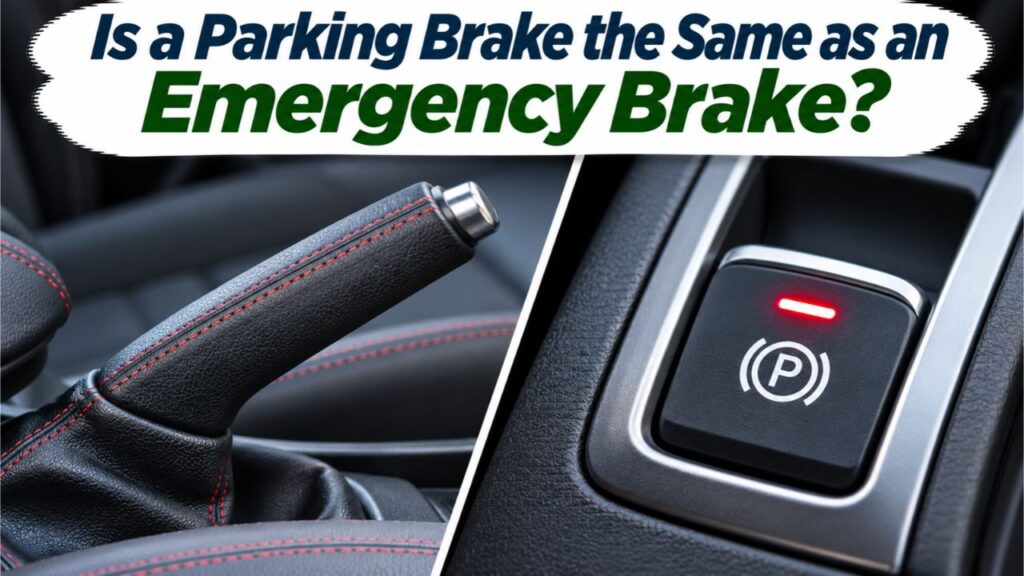
For ordinary passenger-car terminology, parking brake, emergency brake, e-brake, and handbrake often describe the same function. The first two names emphasize different situations in which the system may be useful. A handbrake specifically describes a lever-operated version, so the term is not literally accurate for every foot-pedal or switch-operated design.
The AAA Club Alliance guide to emergency brakes confirms that the two names commonly refer to the same equipment and recommends using the parking brake even on level ground. Its emergency role does not mean it should be ignored between emergencies.
There are exceptions to how the controls operate. An electronic parking brake may apply mechanically to hold a parked car but use electronically managed braking during an emergency. Commercial vehicles can have different parking and emergency brake arrangements, particularly with air-brake systems. For a typical car or light truck, though, you generally are not looking for two separate controls labeled parking and emergency.
How Parking and Emergency Brakes Actually Work
Mechanical Parking Brakes Use Cables and Friction
In a traditional setup, pulling the hand lever or pressing a dedicated pedal tensions a cable. That cable operates a linkage at the brakes, usually at the rear wheels. A ratchet or locking mechanism holds the cable under tension until the driver releases it.
The friction may come from drum brake shoes, a parking mechanism built into a rear disc caliper, or small parking shoes housed inside a rear disc rotor’s hat section. The exact arrangement varies by model. Because the brake is mechanically applied, it can usually hold the car without the engine running or normal hydraulic pedal pressure.
The locking mechanism matters just as much as the brake shoes. If a cable is stretched, corroded, or misadjusted, the lever might move without generating enough clamping force to hold the vehicle.
Electronic Parking Brakes Use an Electric Actuator
An electronic parking brake (EPB) replaces the familiar long lever or foot pedal with a switch and control electronics. An electric motor may act on a cable or drive a mechanism inside the rear brake calipers. Some vehicles automatically apply the parking brake when certain conditions are met, such as shifting into Park or switching off the ignition.
Electric activation does not mean the vehicle depends on continuous electrical power to remain parked. The NHTSA interpretation of Federal Motor Vehicle Safety Standard No. 135 explains the parking brake’s required friction-based holding function and mechanical retention for vehicles covered by that standard. Electronic systems can meet these requirements through appropriate mechanical locking arrangements.
An EPB system may also coordinate with other vehicle electronics. However, the motor, control strategy, release method, and response while moving depend on the manufacturer. A switch that looks similar across two vehicles does not guarantee identical emergency behavior.
Parking Brake vs. Regular Brake Pedal vs. Transmission Park
These three controls can help prevent movement, but they work differently and should not be treated as substitutes.
| Control | Main Purpose | How It Holds or Slows the Vehicle |
| Regular brake pedal | Slow and stop the vehicle while driving | Usually applies hydraulic braking at all four wheels, often with ABS |
| Parking or emergency brake | Keep the vehicle stationary; provide limited backup braking where designed | Uses a dedicated mechanical holding mechanism, commonly at the rear brakes |
| Automatic transmission Park (P) | Lock the transmission output against rotation | Engages a mechanical parking pawl or another manufacturer-specified parking lock |
| Brake Hold or Auto Hold | Temporarily hold a stopped vehicle in traffic | Typically maintains service-brake pressure or uses another controlled holding strategy |
The service brakes operated by the normal brake pedal provide the braking performance and control intended for everyday stops. They usually use hydraulic pressure, with electronic assistance on some modern vehicles. The parking brake may use some of the same friction components, but its control and holding mechanism are separate.
Selecting Park in an automatic transmission does not engage every vehicle’s parking brake. It usually locks the transmission, leaving the vehicle’s weight supported by a parking pawl when the car settles on a slope. Using the actual parking brake helps avoid that load. Auto Hold is different again: it may keep the vehicle from creeping at a stoplight, but it is not necessarily a substitute for engaging the parking brake before leaving the car.
Where to Find the Parking Brake Control
Hand Lever Between the Seats
Many older cars and some newer sports or economy models have a hand lever near the center console. The driver pulls it upward to engage the brake and operates a release button or another mechanism to lower it. On these designs, the amount of lever travel can give a clue about cable adjustment, though the correct range is vehicle-specific.
Foot-Operated Parking Brake Pedal
Some cars, trucks, and SUVs use a small additional pedal on the far left side of the driver’s footwell. Depending on the design, pressing it again releases the brake, or a separate release handle does. This is not the regular brake pedal and should not be confused with it.
Electronic Parking Brake Switch
An electronic control typically shows a circled P or a parking brake symbol. It may be on the console or dashboard. Many systems engage when the switch is pulled and release when it is pushed while the proper conditions are met, but the direction and requirements vary. Read the owner’s manual rather than experimenting while the car moves.
How to Use the Parking Brake Correctly When Parking
Using the parking brake each time you park establishes a consistent habit, whether the road is flat or sloped. The sequence below suits many conventional passenger vehicles, but follow the manufacturer’s instructions if the car automatically applies or releases its parking brake.
Step 01: Bring the Vehicle to a Complete Stop
Use the normal brake pedal to stop in a safe parking spot. Keep your foot firmly on the pedal so the car cannot move while you prepare the parking controls. On an incline, maintain pedal pressure rather than allowing the transmission to catch the vehicle as it rolls.
Step 02: Engage the Parking Brake
While holding the service brake, fully engage the hand lever, parking pedal, or electronic switch as directed in the owner’s manual. Verify the expected dashboard indication when equipped. If the control feels unusually loose, produces a fault warning, or fails to hold the car, do not assume it is secure.
Step 03: Select Park or Secure a Manual Transmission
In an automatic vehicle, shift to Park according to the manufacturer’s prescribed sequence while the foot brake is still applied. For a manual transmission, select the recommended gear and switch off the engine as instructed by the manufacturer. The parking brake should remain the primary means of holding the stationary car, with the transmission providing additional protection.
Step 04: Confirm the Car Is Stationary Before Leaving
Release the normal brake pedal carefully and make sure the vehicle remains still. If there is movement, apply the foot brake again and reassess. On an incline, orient the front wheels appropriately relative to the curb and use wheel chocks where necessary. Never leave an unattended vehicle if its parking brake cannot reliably hold it.
Can You Use the Emergency Brake If the Normal Brakes Fail?
Sometimes, yes, but using the parking brake to stop a moving vehicle is a backup emergency action, not a normal stopping method. Conventional cable-operated brakes usually act on the rear wheels, which have less traction during hard deceleration as weight transfers forward. Abrupt application can lock the rear wheels and cause a skid, particularly on wet or icy pavement.
If normal braking suddenly fails, stay focused on steering toward a safe place, ease off the accelerator, and use the manufacturer’s emergency procedure. Depending on the vehicle and circumstances, engine braking may help reduce speed. A mechanical hand or foot brake should be applied smoothly and progressively if its design permits controlled application. Do not yank a lever to its maximum position at road speed.
Electronic parking brakes can behave differently. For example, Ford’s 2024 F-150 instructions for emergency EPB operation describe pulling and holding the switch to slow or stop the vehicle; releasing it ends that particular emergency command. Ford also warns against applying it while moving except in an emergency. This is a model-specific example, not a universal switch procedure.
Avoid assuming that any EPB switch can safely replace the service-brake pedal. Some vehicles use electronically controlled braking during emergency activation, while others follow different operating rules. If a brake failure occurs, follow the vehicle’s published instructions, aim for a safe stopping location, and do not resume driving after stopping. Arrange a tow and inspection.
When Should You Avoid Using the Parking Brake?
Do not use it as a routine way to slow the car. Repeated use while moving can overheat friction components, wear out parking hardware, and compromise control. It is also risky to apply a traditional rear-wheel parking brake suddenly on ice, loose gravel, or a wet curve.
If the vehicle has been driven through deep water or its parking mechanism is frozen, a brake may fail to release normally. Certain manufacturer’s instructions advise particular precautions in freezing weather; follow the vehicle-specific guidance rather than avoiding the parking brake as a blanket rule.
A parking brake that sticks after release can produce dragging, burning smells, heat at a wheel, or poor acceleration. Do not keep driving to try to free it. A brake that cannot engage properly is also unsafe for parking on an incline.
Why Parking Brakes Sometimes Fail or Stick
Rusted Cables and Worn Linkages
In mechanical systems, water and road salt can enter cable housings and promote corrosion. The cable may then bind, fail to transmit enough force, or remain partly engaged after release. Worn levers, springs, and adjusters can cause similar problems. These defects require inspection and proper repair rather than repeated force on the control.
Rear Brake Wear or Incorrect Adjustment
Some rear drum and disc parking-brake arrangements need correct adjustment to hold effectively. Worn shoes, contaminated friction surfaces, faulty rear calipers, or damaged drum-in-hat mechanisms can reduce holding force. A long hand-lever travel does not identify a specific cause without further inspection.
Electronic Actuator and Control Faults
An EPB may display a warning when its motor, wiring, actuator, or control system has a fault. A weak battery can also interfere with some electric brake operations. Electronic rear calipers often require a prescribed service or maintenance mode before pad replacement; forcing their pistons back without following that procedure can damage the actuator.
If the parking brake warning stays on after the control is released, do not assume it is only a switch problem. The same red warning area may report a hydraulic brake fault or low fluid on some vehicles. Check the owner’s manual and have the system inspected before driving if the warning or braking behavior is abnormal.
FAQs About Is a Parking Brake the Same as an Emergency Brake
Is an E-Brake Different From a Handbrake?
Usually not in everyday speech. E-brake and handbrake commonly refer to the parking brake. Technically, a handbrake is the lever-operated type, while a foot pedal or electronic switch can perform the same parking function.
Does the Emergency Brake Work if the Engine Is Off?
A correctly functioning mechanical parking brake generally holds without the engine running. Electronic systems are also designed to retain the parked holding force, although engaging or releasing them may require electrical power or particular conditions.
Do You Need the Parking Brake if Your Car Has an Automatic Transmission?
Yes. Using the parking brake reduces reliance on the transmission’s Park lock, especially on slopes. Apply it according to the owner’s manual even when the transmission is in Park.
Does the Parking Brake Stop All Four Wheels?
Not usually. Many passenger-car parking brakes operate the rear brakes, although some designs use other arrangements. Emergency electronic braking while moving may use a different control strategy from static parking.
Is Auto Hold the Same as the Parking Brake?
No. Auto Hold generally keeps the vehicle stopped temporarily during driving, while the parking brake is intended to secure a parked vehicle. Some cars transition automatically between the two functions, but they are not identical.
Can You Drive With the Emergency Brake On?
You should not. Driving with the parking brake engaged can cause brake drag, overheating, and damage. If the warning remains lit after release or the car feels held back, stop and investigate rather than continuing.
One Brake System, Two Names, and Different Jobs
The answer to is a parking brake the same as an emergency brake is yes for most passenger vehicles: the terms describe the same secondary braking system. Parking brake highlights its primary purpose of preventing a stationary car from rolling, while emergency brake refers to its possible backup role if normal braking fails. Neither should be confused with the regular brake pedal or a transmission’s Park setting.
Use the parking brake whenever you secure the vehicle, learn its exact control and release method, and keep it maintained. For emergency stopping, follow the vehicle’s instructions instead of assuming all hand levers, pedals, and electronic switches behave alike. A correctly functioning parking brake is most useful when drivers understand both its everyday job and its limits.