Does Master Cylinder Affect Brakes? Symptoms, Safety, and Costs
Yes, the brake master cylinder directly affects your car’s braking power because it converts brake-pedal force into hydraulic pressure. That pressure travels through the brake lines to the calipers or wheel cylinders that apply the brakes. If the master cylinder cannot build or maintain pressure, the pedal may sink, braking can become unpredictable, and stopping ability may be seriously reduced.
A failing master cylinder does not always leave a puddle beneath the car. Worn internal seals can let fluid bypass the pistons while the fluid remains inside the system. Other failures can allow brake fluid to leak outside the cylinder or into a conventional vacuum brake booster. However, a spongy pedal, brake warning light, or unusual braking response is not proof of master-cylinder failure; air in the lines, leaks elsewhere, and other brake faults can produce similar symptoms.
Because the master cylinder is safety-critical, suspected failure requires professional diagnosis rather than repeated topping off or trial-and-error repairs.
In this guide, I explain how the master cylinder works, which brake symptoms it can cause, and how to distinguish it from a faulty brake booster or worn pads. I also cover inspections, replacement costs, maintenance, and when to stop driving.
Does Master Cylinder Affect Brakes? Quick Answer
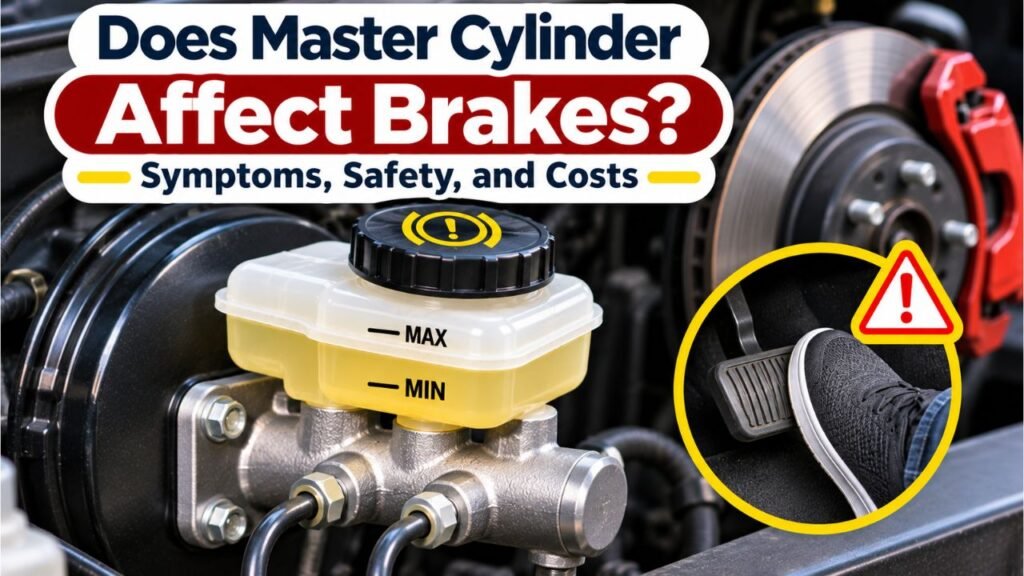
The brake master cylinder is one of the central components of a conventional hydraulic braking system.
When you press the brake pedal, the master cylinder creates hydraulic pressure that operates the brakes at the wheels.
If it fails, that pressure may decrease or become inconsistent.
Possible results include:
- A soft or sinking brake pedal.
- Increased pedal travel.
- Reduced braking effectiveness.
- Inconsistent braking response.
- Loss of hydraulic pressure.
- Brake fluid leakage.
- A brake-system warning light.
- Partial or severe brake failure.
However, these symptoms can also result from other components.
How Master Cylinder Problems Affect Braking
| Master cylinder problem | Possible effect on brakes | Safety concern |
| Worn internal piston seals | Pedal slowly sinks under pressure | Reduced hydraulic pressure |
| External fluid leak | Fluid level decreases | Air entry and possible brake failure |
| Rear seal leakage | Fluid may enter the brake booster | Hidden fluid loss |
| Internal corrosion | Poor piston or seal operation | Inconsistent braking |
| Damaged reservoir seal | Brake fluid may escape | Reduced fluid supply |
| Blocked compensation port | Hydraulic pressure may not release correctly | Brake dragging or overheating |
| Air introduced during replacement | Soft or spongy pedal | Reduced braking response |
| Incorrect master cylinder installation | Improper hydraulic operation | Unreliable braking |
According to Firestone Complete Auto Care’s guide to brake master cylinders, the master cylinder produces the hydraulic pressure needed to activate the brakes. Internal seal problems or fluid leaks can reduce stopping power and, in severe cases, contribute to complete brake failure.
Key Takeaway: A bad master cylinder can directly affect braking, but identifying the exact cause requires inspecting the entire hydraulic system.
What Does a Brake Master Cylinder Do?
A brake master cylinder converts mechanical force from the brake pedal into hydraulic pressure.
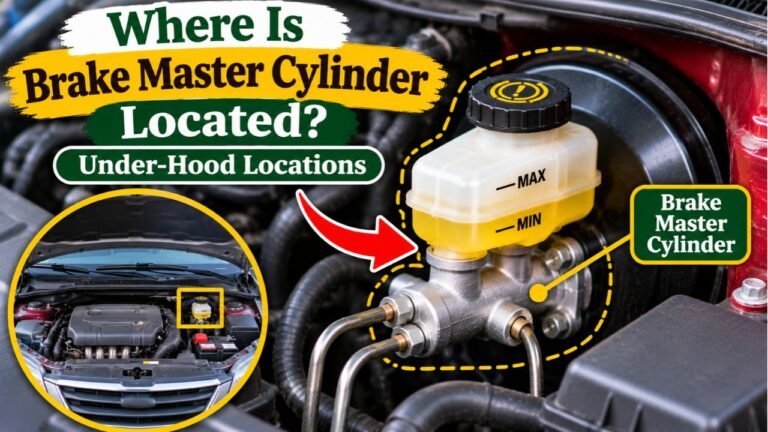
It is typically mounted near the firewall in the engine compartment.
On many vehicles, it is attached to a brake booster and positioned beneath a brake fluid reservoir.
However, some modern vehicles use integrated or electronically controlled brake systems with different component arrangements.
Main Functions of the Master Cylinder
The master cylinder performs several important tasks.
Creates hydraulic pressure: It converts brake-pedal movement into pressure inside the brake fluid.
Transfers braking force: It supplies hydraulic pressure to the wheel-end braking components.
Supports brake modulation: It allows hydraulic pressure to change as the driver presses or releases the pedal.
Works with separate brake circuits: Most modern passenger vehicles use a tandem arrangement that supports two hydraulic circuits.
Works with the brake reservoir: It receives the fluid needed to operate the hydraulic system.
What Parts Are Inside a Master Cylinder?
A conventional tandem master cylinder generally contains:
- Cylinder housing.
- Primary piston.
- Secondary piston.
- Internal seals.
- Return springs.
- Fluid passages.
- Hydraulic outlets.
- Reservoir connections.
The pistons and seals are especially important.
If the seals stop maintaining hydraulic pressure, braking performance may deteriorate.
Where Is the Master Cylinder Located?
In many conventional cars, it is located at the rear of the engine compartment on the driver’s side, near the firewall.
It is commonly mounted in front of the vacuum brake booster.
The brake fluid reservoir is usually attached to its upper section.
However, location and design vary by vehicle.
Use the owner’s manual or factory service information to identify the correct component.
How Does the Brake Master Cylinder Work?
The master cylinder uses hydraulic pressure to operate the brakes.
The process begins when the driver presses the pedal.
Step 1: You Press the Brake Pedal
The brake pedal transmits force through a pushrod or another manufacturer-designed mechanism.
On vehicles with power-assisted brakes, the booster helps reduce the amount of force required from the driver.
Step 2: The Master Cylinder Pistons Move
The pushrod moves the master cylinder pistons.
As the pistons move, they close the appropriate fluid passages and build hydraulic pressure.
Step 3: Hydraulic Pressure Travels Through the Brake Lines
The pressurized brake fluid transmits force through the hydraulic circuits.
Brake fluid is only slightly compressible under normal operating conditions.
This allows pressure to reach the braking components.
Step 4: Brake Calipers or Wheel Cylinders Operate
In disc brake systems, hydraulic pressure moves caliper pistons.
The pistons press brake pads against the rotors.
In drum brake systems, wheel cylinders press the brake shoes against the drums.
The resulting friction slows the wheels.
Step 5: You Release the Brake Pedal
Hydraulic pressure decreases as the system returns toward its released condition.
The brake components move back according to their design.
The system remains ready for the next braking event.
Why Does the Master Cylinder Need Good Seals?
The internal seals help maintain hydraulic pressure as the pistons move.
If those seals deteriorate, fluid may pass around the pistons rather than maintaining the intended pressure.
This is called internal hydraulic bypass.
It can cause the pedal to sink even when no external brake fluid leak is visible.
Signs of a Bad Brake Master Cylinder
A failing master cylinder can produce several symptoms.
However, none of these signs should be treated as a conclusive diagnosis without proper inspection.
1. Brake Pedal Slowly Sinks Toward the Floor
A slowly sinking pedal is an important warning sign.
You may initially feel normal brake-pedal resistance.
Then, while maintaining pressure, the pedal gradually moves farther downward.
This can happen when worn internal master-cylinder seals allow fluid to bypass the pistons.
The cylinder may no longer maintain stable hydraulic pressure.
However, external leaks and other hydraulic faults can produce similar behavior.
Do not drive a vehicle with a brake pedal that sinks abnormally.
2. Soft or Spongy Brake Pedal
A soft pedal may indicate a hydraulic braking problem.
Possible causes include:
- Air in the brake lines.
- Brake fluid leakage.
- Improper bleeding.
- Certain master-cylinder failures.
- Other hydraulic-component problems.
A soft pedal is not exclusive to a defective master cylinder.
Air trapped in the hydraulic system is another common explanation.
3. Brake Pedal Travels Farther Than Normal
If the brake pedal requires more movement before the brakes respond, hydraulic pressure may not be developing as expected.
Possible causes include:
- Master-cylinder internal bypass.
- Air in the hydraulic system.
- External leaks.
- Brake adjustment problems.
- Other mechanical or hydraulic faults.
The exact cause must be diagnosed.
4. Braking Feels Inconsistent
A failing hydraulic component can affect the response between pedal movement and braking force.
The brakes may feel normal during one application but weaker during another.
Inconsistent braking is a serious warning sign.
Do not continue driving to see whether it improves.
5. Brake Fluid Level Keeps Dropping
An external master-cylinder leak can cause the reservoir level to decrease.
Fluid may escape:
- Around the cylinder housing.
- Near hydraulic line connections.
- Around reservoir seals.
- Through the rear master-cylinder seal.
However, low reservoir fluid can also result from brake-pad wear or leaks elsewhere.
6. Brake Warning Light Appears
Some vehicles monitor brake fluid level or hydraulic-system conditions.
A warning light may appear if a fault is detected.
However, a brake warning light can also indicate:
- Parking brake engagement.
- Low brake fluid.
- Hydraulic pressure imbalance.
- Other braking-system faults.
A bad master cylinder does not always trigger a warning light.
7. Brake Fluid Appears Contaminated
Deteriorating seals or corrosion may contribute particles to the hydraulic fluid.
Possible warning signs include unusually dark fluid, cloudiness, or visible debris.
However, fluid color alone cannot confirm master-cylinder failure.
Brake fluid can deteriorate without a defective master cylinder.
8. Braking Power Becomes Weaker
A master cylinder that cannot maintain the required hydraulic pressure may reduce effective braking.
Possible symptoms include:
- Increased stopping distance.
- Excessive brake-pedal travel.
- Difficulty maintaining braking pressure.
- Unpredictable brake response.
These conditions require immediate professional inspection.
Bad Master Cylinder Symptoms Chart
| Symptom | Possible master-cylinder connection | Other possible causes |
| Pedal slowly sinks | Internal seal bypass | External hydraulic leak |
| Soft pedal | Pressure loss or associated hydraulic problem | Air in lines, leaking hose, caliper fault |
| Low brake fluid | External master-cylinder leak | Pad wear or leaks elsewhere |
| Hard pedal | Certain hydraulic restrictions | Brake booster or vacuum-assist problem |
| Brake warning light | Fluid loss or hydraulic fault | Parking brake, sensors, other defects |
| Brakes drag | Blocked compensation port or incorrect adjustment | Seized caliper or collapsed hose |
| Car pulls when braking | Hydraulic imbalance is possible | Caliper, pad, tire, or suspension problem |
| Grinding noise | Usually not a direct symptom | Worn pads or rotor damage |
| Inconsistent braking | Failure to maintain pressure | Air, leaks, ABS or other hydraulic faults |
The AutoZone guide to symptoms of a bad brake master cylinder describes low fluid, sinking pedals, contaminated brake fluid, and inconsistent braking as reasons to investigate master-cylinder condition.
Can a Bad Master Cylinder Cause Brakes to Fail?
Yes.
A severely defective master cylinder can reduce or eliminate the hydraulic pressure necessary to apply the brakes.
However, the consequences depend on the failure and braking-system design.
Can Brakes Fail Completely?
Severe master-cylinder failure can result in dangerously reduced or lost braking ability.
Potential failures include:
- Major hydraulic fluid loss.
- Severe internal seal damage.
- Loss of pressure in one or more circuits.
- Other serious hydraulic faults.
A vehicle may become unable to stop normally.
Does a Car Have Two Brake Circuits?
Most modern passenger cars use a split hydraulic braking system.
A tandem master cylinder commonly supports two separate circuits.
Depending on the vehicle, the circuits may be arranged diagonally or according to another manufacturer-designed configuration.
The purpose is to retain some braking capability if one circuit fails.
Will the Other Brake Circuit Still Work?
It may retain some braking ability, depending on the failure and system design.
However, the pedal may travel farther, stopping distances may increase substantially, and braking can become unstable.
Never rely on the remaining circuit to continue driving with a known hydraulic failure.
Can Master Cylinder Failure Happen Suddenly?
Yes.
Some master cylinders deteriorate gradually.
Others may develop a serious fault with little warning.
A driver may notice a slowly sinking pedal before complete failure, but warning signs are not guaranteed.
Regular maintenance and prompt diagnosis are important.
Can a Bad Master Cylinder Cause a Soft Brake Pedal?
Yes, although a soft pedal is not a master-cylinder-specific symptom.
The brake pedal should provide consistent resistance when the hydraulic system is operating correctly.
If the pedal becomes unusually soft, pressure transmission may be compromised.
Master Cylinder Seal Problems
Worn internal seals can allow hydraulic fluid to bypass the pistons.
The master cylinder may struggle to maintain pressure.
This can cause excessive pedal travel or a sinking sensation.
Air in the Brake Lines
Air is more compressible than liquid brake fluid.
If air becomes trapped inside the system, the pedal may feel spongy.
Possible causes include:
- Improper brake bleeding.
- Hydraulic leaks.
- A reservoir that has run too low.
- Certain hydraulic repairs.
- Other system defects.
How Can You Tell the Difference?
Pedal behavior can provide clues.
For example, a pedal that gradually sinks while steady pressure is maintained may suggest a pressure-loss problem.
A consistently springy or spongy pedal may suggest trapped air.
However, these are not reliable enough to identify the defective component.
A mechanic needs to inspect and test the hydraulic system.
Will Bleeding the Brakes Fix a Bad Master Cylinder?
Not if the cylinder has failed internally.
Bleeding removes trapped air.
It does not repair worn piston seals or a damaged cylinder bore.
If the master cylinder cannot maintain pressure, the defective component requires repair or replacement.
Can a Bad Master Cylinder Cause a Hard Brake Pedal?
A hard brake pedal is more commonly associated with a brake-assist problem than with ordinary master-cylinder seal failure.
However, hydraulic restrictions or other mechanical problems may also affect pedal feel.
What Causes a Hard Brake Pedal?
Possible causes include:
- Failed vacuum brake booster.
- Vacuum supply problem.
- Damaged booster check valve.
- Certain electronically controlled brake-assist faults.
- Mechanical pedal linkage problems.
- Hydraulic restrictions.
- Other braking-system defects.
Does the Master Cylinder Make the Pedal Easier to Press?
Not by itself.
The master cylinder creates hydraulic pressure.
The brake booster or another power-assist system reduces the driver’s required pedal effort.
These components perform different functions.
Can a Master Cylinder Cause Brake Drag?
In some cases.
A blocked compensation port or incorrect master-cylinder/pushrod adjustment can prevent hydraulic pressure from releasing properly.
The brakes may remain partially applied.
This can lead to overheating or dragging.
However, seized calipers, damaged hoses, and other mechanical problems are more common explanations for localized brake drag.
Can a Bad Master Cylinder Cause Grinding Brakes?
Not usually.
Grinding noise is more commonly associated with friction components.
Possible causes include:
- Severely worn brake pads.
- Metal backing plates contacting rotors.
- Damaged rotors.
- Foreign material caught in braking components.
- Certain mechanical brake faults.
The master cylinder does not directly create normal brake friction.
Can a Master Cylinder Indirectly Contribute to Brake Damage?
Yes, under certain conditions.
For example, a hydraulic fault that prevents brake pressure from releasing could cause persistent brake drag.
This may overheat or damage friction components.
However, grinding noise alone does not establish a master-cylinder problem.
What if the Brakes Grind and the Pedal Feels Soft?
These may be related or separate problems.
A vehicle could have worn pads and a hydraulic fault at the same time.
Both conditions require inspection.
Do not assume that replacing the master cylinder will eliminate grinding.
Can a Bad Master Cylinder Cause Brake Fluid Loss?
Yes.
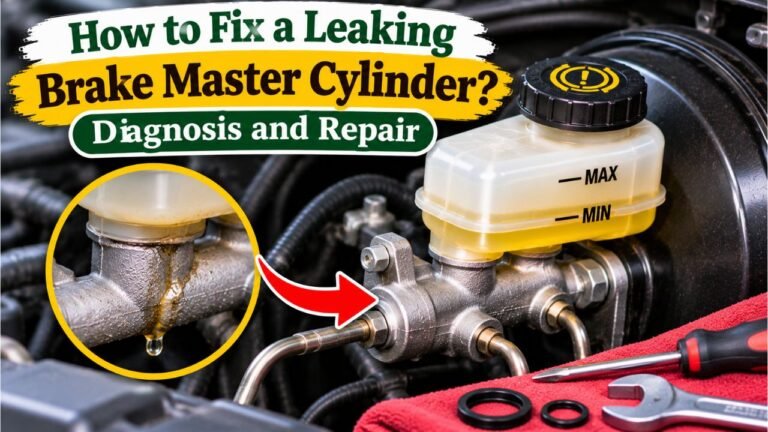
A master cylinder can develop external leaks.
However, it can also fail internally without losing fluid from the hydraulic system.
This distinction is important.
External Master Cylinder Leak
An external leak allows brake fluid to escape from the intended hydraulic circuit.
Possible leak points include:
- Cylinder seals.
- Hydraulic fittings.
- Reservoir grommets.
- Damaged connections.
- The rear master-cylinder seal.
A continuing external leak can lower the fluid reservoir level.
Internal Master Cylinder Bypass
Internal bypass occurs when fluid passes around worn piston seals.
The fluid may remain inside the master cylinder or connected hydraulic system.
Therefore, a sinking pedal caused by internal bypass does not necessarily mean fluid is disappearing from the reservoir.
Can Brake Fluid Leak Into the Brake Booster?
Yes.
On vehicles with a conventional vacuum booster, a damaged rear master-cylinder seal can allow brake fluid into the booster housing.
The fluid may remain concealed.
There may be no visible puddle beneath the car.
Signs of a Hidden Master Cylinder Leak
Possible clues include:
- Repeated reservoir-level decline.
- Wetness between the master cylinder and booster.
- Fluid inside the booster.
- Changes in pedal response.
- No visible fluid near the wheels.
A qualified mechanic must inspect the system to confirm the problem.
Does Every Falling Reservoir Level Mean a Leak?
No.
As disc brake pads wear, caliper pistons extend outward.
This increases the fluid volume held inside the calipers.
The reservoir level can gradually decrease without any fluid escaping.
However, significant or repeated fluid loss still requires professional inspection.
Master Cylinder vs. Brake Booster: What’s the Difference?
The master cylinder and brake booster work together on many conventional vehicles, but they have different functions.
Master Cylinder vs. Brake Booster Comparison
| Feature | Brake master cylinder | Brake booster |
| Primary function | Generates hydraulic pressure | Reduces pedal effort |
| Main operating principle | Hydraulic pistons and seals | Vacuum, electric, or another assist method |
| Typical failure symptom | Sinking pedal or hydraulic pressure loss | Hard pedal or increased pedal effort |
| Can cause fluid loss? | Yes, if externally leaking | Not normally by itself |
| Can affect stopping power? | Yes | Yes |
| Common location | Near reservoir and booster | Behind master cylinder on conventional systems |
| Repair approach | Diagnose and replace or repair defective unit | Diagnose assist system and repair fault |
What Happens When the Brake Booster Fails?
A faulty booster may require the driver to apply much greater force to the brake pedal.
The pedal may feel unusually hard.
However, the hydraulic braking circuit may still be capable of generating pressure with sufficient manual force, depending on the vehicle and fault.
That does not make driving with failed brake assist safe.
What Happens When the Master Cylinder Fails?
A faulty master cylinder may not generate or maintain the required hydraulic pressure.
The brake pedal may travel too far or sink.
Even with a functioning booster, braking can be seriously compromised.
Can Both Fail Together?
Yes.
For example, a leaking rear master-cylinder seal may allow brake fluid into a vacuum booster.
This may damage the booster and require additional repairs.
The mechanic must inspect both components.
Does the Master Cylinder Affect ABS Brakes?
Yes.
A conventional ABS-equipped hydraulic braking system still depends on appropriate hydraulic pressure.
The master cylinder is part of the pressure-generating system.
ABS uses additional hydraulic and electronic components to control brake pressure during certain conditions.
How Does ABS Work With the Master Cylinder?
During ordinary braking, the master cylinder generates pressure through the braking system.
When ABS intervenes, its control system adjusts brake pressure according to wheel-speed information and vehicle conditions.
The exact design varies.
Can a Bad Master Cylinder Cause an ABS Warning Light?
Possibly, but not every master-cylinder fault triggers an ABS warning.
ABS warning lights may also result from:
- Wheel-speed sensor faults.
- Wiring problems.
- Hydraulic control faults.
- Electronic control problems.
- Other system-specific issues.
The warning light cannot identify a failed master cylinder by itself.
Can a Bad ABS Module Feel Like a Master Cylinder Problem?
Yes.
Certain hydraulic control faults can produce unusual pedal behavior.
Air trapped in an ABS hydraulic unit after improper servicing may also cause a soft pedal.
Professional diagnosis may require a manufacturer-specific scan tool.
What About Modern Brake-by-Wire Systems?
Some modern hybrid, electric, and other vehicles use integrated electronic braking systems.
Their hydraulic and pedal-control arrangements may differ from a conventional vacuum-booster and master-cylinder setup.
Follow the manufacturer’s diagnostic and repair instructions.
Do not apply a generic master-cylinder replacement or bleeding procedure to every vehicle.
How Does a Mechanic Diagnose a Bad Brake Master Cylinder?
A master-cylinder diagnosis should involve more than observing a soft pedal.
A qualified mechanic checks the hydraulic system to determine where pressure is being lost.
Step 1: Inspect the Brake Fluid Reservoir
The technician checks the fluid level and condition.
Low fluid may indicate:
- Worn brake pads.
- A hydraulic leak.
- A leaking master cylinder.
- Another brake-system fault.
The reservoir level alone does not identify the failure.
Step 2: Inspect for External Leaks
The hydraulic system is checked for wet or damaged components.
Inspection areas may include:
- Master cylinder.
- Reservoir seals.
- Brake lines.
- Flexible hoses.
- Calipers.
- Wheel cylinders.
- ABS hydraulic unit.
- Hydraulic connections.
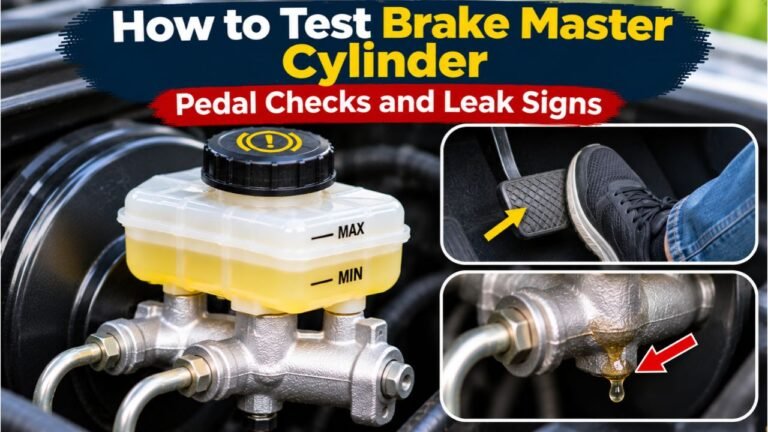
Step 3: Evaluate Pedal Behavior
The technician checks whether the pedal develops and maintains normal resistance under the specified test conditions.
A sinking pedal may suggest hydraulic pressure loss.
However, the exact test procedure depends on the vehicle and braking-system design.
Step 4: Check for Internal Bypass
A technician may use manufacturer-approved hydraulic isolation or pressure tests to determine whether the master cylinder can maintain pressure.
These tests can help distinguish internal seal failure from leaks elsewhere.
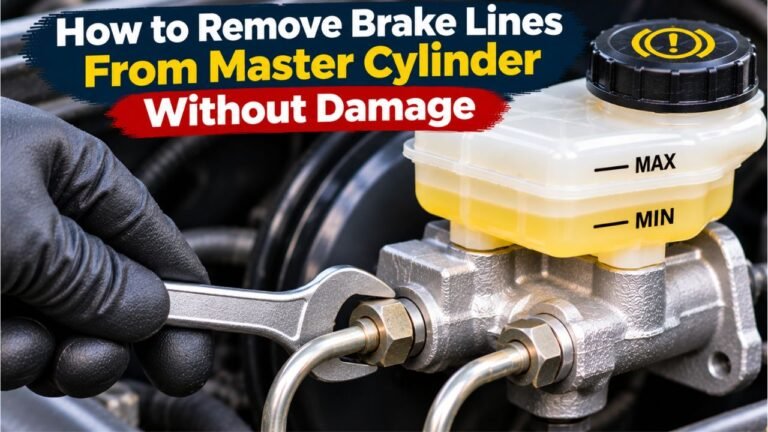
This work should not be attempted with improvised line plugs or clamping tools.
Damaging a brake hose or incorrectly blocking a hydraulic port can create serious safety problems.
Step 5: Inspect the Brake Booster
If the vehicle uses a conventional vacuum booster, the mechanic may inspect the master-cylinder mounting area for hidden leakage.
A rear seal leak may allow fluid to enter the booster.
Step 6: Inspect for Air in the Hydraulic System
Air trapped in the lines can cause a soft pedal.
The mechanic checks whether improper bleeding, recent repairs, or a leak has introduced air.
Step 7: Check the ABS System if Necessary
Certain vehicles require a scan tool to perform electronic brake-system tests.
If the hydraulic system has been opened or run dry, a manufacturer-specific bleeding process may be necessary.
The O’Reilly Auto Parts guide to brake pedal problems explains how master-cylinder failures, air in brake lines, hydraulic leaks, and booster faults can produce overlapping symptoms.
Step 8: Confirm the Actual Fault
The technician identifies whether the problem involves the master cylinder or another brake component.
Replacing parts without diagnosis can leave the original problem unresolved.
Can You Drive With a Bad Brake Master Cylinder?
No. A confirmed failing brake master cylinder makes the vehicle unsafe to drive.
A master cylinder that cannot maintain hydraulic pressure can cause unpredictable braking.
The problem may worsen without warning.
What if the Brake Pedal Still Works?
A partially failing master cylinder may still provide some braking response.
However, the ability to stop once does not guarantee reliable braking during the next application.
Do not continue driving to test whether the problem becomes worse.
Can You Drive a Short Distance to a Repair Shop?
Towing is the safer option when master-cylinder failure is suspected.
Driving a vehicle with unreliable hydraulic brakes can endanger the driver and others.
When Should You Stop Driving Immediately?
Do not continue driving if:
- The brake pedal sinks abnormally.
- The pedal becomes unusually soft.
- The pedal travels close to the floor.
- Braking force decreases.
- A red brake warning light remains on.
- Brake fluid is leaking.
- The reservoir is below its specified minimum.
- Braking becomes inconsistent.
Arrange professional assistance or towing.
Can Master Cylinder Failure Cause an Accident?
Yes.
Loss of hydraulic braking pressure can increase stopping distance or prevent the vehicle from stopping normally.
This is why suspected failures require immediate attention.
How Much Does It Cost to Replace a Brake Master Cylinder?
Master-cylinder replacement costs depend on the vehicle, part design, labor rates, and additional service requirements.
For U.S. drivers, published repair estimates vary considerably.
A broad planning range is approximately 250–900 or more for many conventional vehicle repairs.
AutoZone describes many replacements in roughly the 250–600 range, while Firestone cites examples around 600–900 or higher.
These are general references rather than guaranteed prices.
What Affects the Cost?
| Cost factor | Why it matters |
| Vehicle make and model | Parts and access vary |
| Master-cylinder design | Conventional and integrated systems differ |
| Original equipment vs. replacement part | Parts prices differ |
| Labor rates | Costs vary by location |
| Brake booster condition | Additional damage may require more repairs |
| ABS bleeding procedure | Some systems need diagnostic equipment |
| Brake fluid | Correct fluid is needed during servicing |
| Additional hydraulic leaks | Related components may require repair |
Is Master Cylinder Replacement Expensive?
It can be more expensive than a routine brake fluid flush.
However, the cost is justified when the defective component affects braking safety.
The final bill depends on the actual repair.
Does Replacement Include Brake Bleeding?
Proper replacement generally involves removing trapped air and restoring hydraulic operation.
The technician must follow the vehicle’s service procedure.
Some master cylinders require bench bleeding or another approved preparation method before installation.
Certain ABS-equipped vehicles also require specialized bleeding steps.
Should the Brake Booster Be Replaced Too?
Not automatically.
If the booster is functioning properly and has not been damaged, it may not need replacement.
However, fluid leakage into the booster can create additional problems.
The technician should inspect it when appropriate.
Can You Replace Only the Master Cylinder Seals?
Some master cylinders have manufacturer-approved rebuild procedures.
However, many modern units are replaced as assemblies rather than rebuilt during ordinary repairs.
The correct approach depends on the design, condition, and availability of approved repair parts.
How Long Does a Brake Master Cylinder Last?
There is no universal mileage or age at which every master cylinder must be replaced.
Some master cylinders remain functional for the life of a vehicle.
Others fail earlier because of wear, contamination, corrosion, or component defects.
What Causes Master Cylinder Failure?
Common causes include:
- Worn piston seals.
- Internal corrosion.
- Contaminated brake fluid.
- Moisture accumulation.
- Damaged cylinder surfaces.
- Incorrect brake fluid.
- Age-related deterioration.
- Improper installation.
- Manufacturing defects.
Does High Mileage Cause Master Cylinder Failure?
High mileage can contribute to component wear.
The master-cylinder pistons and seals operate repeatedly as the brakes are applied.
However, mileage alone cannot determine whether a cylinder is defective.
A properly maintained high-mileage vehicle may still have a functioning original master cylinder.
Can Old Brake Fluid Damage the Master Cylinder?
Yes.
Most vehicles use glycol-based brake fluid, which gradually absorbs moisture.
Moisture contamination can promote internal corrosion.
Contamination and corrosion may damage seals or cylinder surfaces.
This can contribute to hydraulic pressure loss.
Should You Replace the Master Cylinder During Every Brake Job?
No.
Routine brake-pad replacement does not require replacing a properly functioning master cylinder.
Replace the component when inspection or diagnosis establishes that it is defective or when a specific manufacturer procedure requires it.
Can You Fix a Master Cylinder by Changing Brake Fluid?
Not if the master cylinder has failed internally.
A brake fluid change replaces aging or contaminated hydraulic fluid.
It does not restore damaged seals or a worn cylinder bore.
When Does a Brake Fluid Flush Help?
A scheduled brake fluid flush can help maintain fluid condition and limit moisture-related problems.
It may be appropriate when:
- The fluid has reached its replacement interval.
- The fluid is contaminated.
- Hydraulic repairs require fluid service.
- The manufacturer specifies replacement.
Will a Brake Flush Fix a Sinking Pedal?
Only if the actual cause is corrected by the service—for example, a specific issue involving trapped air that is properly removed.
A leaking master-cylinder seal will not be repaired by fresh fluid.
A sinking pedal requires diagnosis.
Will Bleeding the Brakes Repair Internal Master Cylinder Failure?
No.
Bleeding removes air from the hydraulic system.
It cannot restore a seal that no longer maintains pressure.
What if the Master Cylinder Is New but the Pedal Is Soft?
Possible causes include:
- Air trapped during installation.
- Incomplete master-cylinder bleeding.
- Incorrect hydraulic bleeding sequence.
- Air in ABS components.
- Leaks at hydraulic connections.
- Incorrect or defective replacement parts.
- Another unresolved brake-system fault.
Do not return the vehicle to normal driving until a qualified technician verifies the repair.
How to Prevent Brake Master Cylinder Problems
Although every component can eventually fail, proper brake maintenance may reduce unnecessary deterioration.
Follow Brake Fluid Replacement Intervals
Many manufacturers recommend brake fluid replacement at specified time intervals.
For numerous passenger vehicles, this is approximately every two or three years.
However, the correct schedule depends on the vehicle.
Use the owner’s manual.
Use the Correct Brake Fluid
Common specifications include DOT 3, DOT 4, and DOT 5.1.
Conventional DOT 5 is silicone-based and must not be mixed with ordinary glycol-based brake fluids.
Use the manufacturer’s required specification.
Avoid Contaminating the Reservoir
Keep the reservoir properly closed.
Do not open it unnecessarily.
Avoid introducing dirt, water, oil, or other fluids.
Check Brake Fluid Levels
Inspect the reservoir according to the manufacturer’s instructions.
An unexpected drop requires attention.
However, a gradual change can occur as disc brake pads wear.
Repair Hydraulic Leaks Promptly
A leaking brake hose, line, caliper, or wheel cylinder can compromise the entire system.
Do not repeatedly add fluid without correcting the cause.
Maintain the Braking System
Regular inspections should include:
- Brake pads and shoes.
- Rotors and drums.
- Calipers.
- Wheel cylinders.
- Brake lines.
- Flexible hoses.
- Master cylinder.
- Brake fluid condition.
- Relevant warning indicators.
Do Not Ignore Pedal Changes
A soft, hard, sinking, or unusually long brake pedal stroke should be investigated.
These symptoms can indicate problems beyond ordinary pad wear.
Common Mistakes When Diagnosing Master Cylinder Problems
Avoid these mistakes when troubleshooting braking issues.
Assuming Every Soft Brake Pedal Means a Bad Master Cylinder
Air in the lines, hydraulic leaks, and other faults can cause similar symptoms.
A complete inspection is necessary.
Assuming a Hard Pedal Means the Master Cylinder Has Failed
A hard pedal is often associated with a brake booster or power-assist problem.
Do not replace the master cylinder without diagnosis.
Assuming No Fluid Leak Means the Master Cylinder Is Good
Internal seal bypass may cause pressure loss without visible fluid loss.
Assuming a Sinking Pedal Is Normal
A pedal that sinks abnormally can indicate a serious hydraulic fault.
Do not ignore it.
Replacing Brake Pads to Fix Hydraulic Pressure Loss
New brake pads cannot repair a master cylinder that fails to maintain pressure.
Flushing Brake Fluid Instead of Repairing Damaged Seals
Fresh fluid cannot restore defective hydraulic components.
Using an Incorrect Brake Fluid
The wrong fluid can damage seals and compromise braking performance.
Ignoring Brake Booster Damage
Fluid leaking through a rear master-cylinder seal may affect the vacuum booster.
Both components may require inspection.
Skipping Proper Bleeding After Replacement
Air trapped in the hydraulic system can cause a soft pedal and reduced braking performance.
Some vehicles require special ABS procedures.
Driving With Unreliable Brakes
Do not drive a car with suspected hydraulic brake failure to test whether it still stops.
Arrange professional assistance.
Conclusion
So, does master cylinder affect brakes? Yes. The brake master cylinder is responsible for creating the hydraulic pressure that allows conventional braking systems to operate.
When it works correctly, pressing the brake pedal produces pressure that activates the calipers or wheel cylinders.
When it fails, that pressure may decrease or become inconsistent.
A failing master cylinder can cause a soft pedal, a sinking pedal, excessive pedal travel, fluid loss, and reduced braking performance. In severe cases, braking may fail.
However, similar symptoms can result from air in the lines, brake hoses, leaks, calipers, or brake booster problems.
My recommendation is to have any suspected master-cylinder failure professionally diagnosed, avoid replacing parts based on one symptom, and never drive with a brake pedal that sinks or braking that feels unreliable.
Proper brake fluid maintenance and regular inspections can help protect the hydraulic system, but prompt repair is essential when a fault develops.
FAQs About Does Master Cylinder Affect Brakes
Can a Bad Master Cylinder Cause Brakes to Stop Working?
Yes. A bad master cylinder can fail to generate or maintain the hydraulic pressure needed to apply the brakes. Severe failure may cause dangerously reduced stopping power or loss of braking capability. Do not drive with a confirmed master-cylinder fault.
Does a Bad Master Cylinder Cause a Soft Brake Pedal?
It can. Worn master-cylinder seals may allow hydraulic pressure to escape internally, producing excessive pedal travel or a sinking sensation. However, air in the brake lines and external hydraulic leaks can also cause a soft pedal.
Can a Bad Master Cylinder Cause Brakes to Lock Up?
In certain cases, yes. A blocked compensation port or incorrect master-cylinder adjustment can prevent hydraulic pressure from releasing properly, contributing to brake drag or lockup. However, seized calipers and damaged brake hoses are other possible causes.
Can a Bad Master Cylinder Cause Grinding Brakes?
Not usually. Grinding commonly results from worn brake pads, damaged rotors, or other friction-component problems. Certain hydraulic faults can cause brake drag and secondary damage, but grinding noise alone does not identify a master-cylinder failure.
Can a Master Cylinder Fail Without Leaking Brake Fluid?
Yes. Internal seal bypass can prevent the master cylinder from maintaining hydraulic pressure while the fluid remains inside the system. The brake pedal may slowly sink even though there is no puddle or visible external leak.
How Much Does It Cost to Replace a Brake Master Cylinder?
Many U.S. repair estimates fall broadly between approximately $250 and $900 or more, depending on the vehicle, component design, labor rates, and bleeding requirements. Complex brake systems or additional damaged components may increase the cost.
Is It Safe to Drive With a Failing Brake Master Cylinder?
No. A failing master cylinder can produce unpredictable hydraulic pressure and seriously reduce braking ability. If the pedal sinks, feels unusually soft, or braking becomes inconsistent, do not drive. Arrange towing and professional diagnosis.