How Much Brake Fluid Is in a Typical Master Cylinder? Capacity
A typical passenger-car master-cylinder reservoir holds roughly 6–12 U.S. fluid ounces (about 180–355 mL), but no single capacity fits every vehicle. Some compact or specialty reservoirs are smaller, and larger braking systems may use more. Reservoir capacity also differs from the quantity held throughout the vehicle’s brake lines and calipers.
The master cylinder converts pedal movement into hydraulic pressure. Its reservoir supplies extra fluid as brake pads wear and system volume changes. Most passenger cars have a translucent reservoir marked MIN and MAX. The correct operating level matters more than how much the container could hold when completely full.
Don’t add a fixed quantity just because the reservoir looks partly empty. Gradual fluid-level changes can reflect normal brake-pad wear, while a sudden drop may indicate a leak. Overfilling can cause trouble when the caliper pistons are retracted during service.
In this guide, I explain reservoir capacity, what the master-cylinder bore holds, and how much fluid a complete brake system may require. You’ll also learn how to check levels, estimate a permitted top-up, select approved fluid, and recognize warning signs.
How Much Brake Fluid Is in a Typical Master Cylinder?
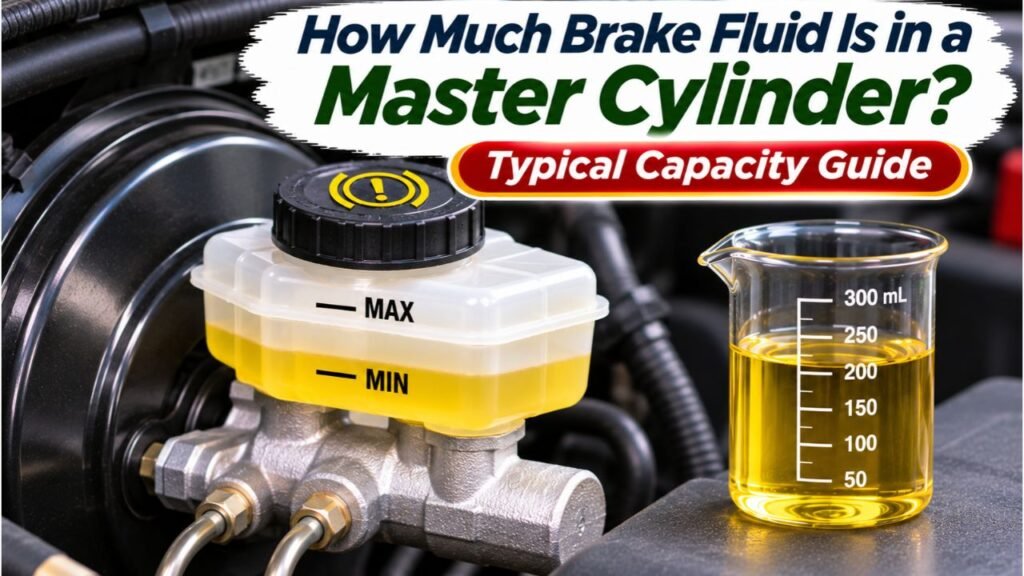
For a typical passenger car, approximately 6–12 U.S. fluid ounces (180–355 mL) is a useful rough estimate of master-cylinder reservoir capacity. However, the exact amount depends on the vehicle’s braking system and reservoir design.
The reservoir is only one part of the hydraulic braking system.
Fluid is also present inside the master-cylinder passages, brake lines, hoses, calipers, wheel cylinders, and ABS hydraulic components.
Typical Brake Master Cylinder Fluid Capacity Chart
| Reservoir Capacity | Equivalent in Milliliters | Equivalent in Liters |
| 4 US fl oz | 118 mL | 0.118 L |
| 6 US fl oz | 177 mL | 0.177 L |
| 8 US fl oz | 237 mL | 0.237 L |
| 10 US fl oz | 296 mL | 0.296 L |
| 12 US fl oz | 355 mL | 0.355 L |
| 16 US fl oz | 473 mL | 0.473 L |
These are volume conversions, not factory capacity specifications for particular vehicles.
Small specialty reservoirs may hold only a few ounces, while some vehicles have substantially larger fluid reservoirs.
Real Master Cylinder Capacity Example
A useful manufacturer example comes from Wilwood.
Its high-volume master cylinder, part number 260-6764, has:
- Reservoir capacity: 8.2 US fluid ounces
- Metric equivalent: Approximately 243 mL
- Master cylinder bore: ¾ inch
- Full-stroke fluid displacement: Approximately 0.62 cubic inch, or 10.2 mL
These specifications appear on Wilwood’s official high-volume master cylinder product page.
Notice that reservoir capacity and piston displacement are very different measurements.
The reservoir holds reserve fluid, while the master-cylinder piston moves a much smaller volume during its stroke.
Does Every Master Cylinder Hold the Same Amount?
No.
Reservoir capacity depends on:
- Vehicle size and weight
- Brake caliper design
- Brake-pad wear allowance
- Number of hydraulic circuits
- ABS and brake-assist configuration
- Reservoir shape and construction
- Whether the clutch shares a reservoir
Even two similarly sized cars may have different reservoir capacities.
Key Takeaway: Approximately 180–355 mL is a useful planning range for many passenger-car reservoirs, but the correct fluid level and manufacturer specifications matter more than an estimated capacity.
Master Cylinder vs. Brake Fluid Reservoir: What’s the Difference?
The master cylinder and its reservoir work together, but they perform different functions.
What Is the Brake Master Cylinder?
The master cylinder converts mechanical force from the brake pedal into hydraulic pressure.
Many conventional systems use a tandem master cylinder with separate hydraulic circuits.
This arrangement helps preserve partial braking capability if one circuit develops certain types of failures.
What Is the Brake Fluid Reservoir?
The reservoir stores additional brake fluid for the hydraulic system.
It is usually mounted directly on the master cylinder.
In many modern vehicles, it is made from translucent plastic so the fluid level can be checked without removing the cap.
Master Cylinder and Reservoir Comparison
| Component | Main Function | Fluid Quantity |
| Master-cylinder bore | Generates hydraulic pressure through piston movement | Relatively small internal volume |
| Brake fluid reservoir | Stores reserve fluid for the hydraulic circuits | Often several fluid ounces |
| Brake lines and hoses | Carry pressurized brake fluid | Depends on length and internal diameter |
| Brake calipers and wheel cylinders | Convert hydraulic pressure into brake actuation | Depends on component design |
| ABS hydraulic unit | Controls braking pressure electronically | Depends on the system |
How Much Brake Fluid Does the Master Cylinder Piston Move?
The volume moved by a master-cylinder piston depends on its bore diameter and stroke.
For a simplified single-bore master cylinder:
Fluid displacement = Piston area × Piston stroke
A larger bore moves more fluid over the same stroke.
However, displacement per stroke is not the same as the amount of fluid stored in the reservoir.
For example, the Wilwood master cylinder described earlier lists approximately 10.2 mL of full-stroke displacement but holds about 243 mL in its reservoir.
The amount of fluid inside the cylinder’s internal passages is a separate measurement.
Key Takeaway: When people ask how much fluid a master cylinder holds, they usually mean the reservoir, not the internal piston chamber.
Why Does Master Cylinder Reservoir Capacity Vary?
Manufacturers design brake fluid reservoirs around the needs of the braking system.
A reservoir must provide an adequate supply as the brakes operate and components wear.
Brake Pad Wear
As disc brake pads wear, the caliper pistons move outward.
Additional brake fluid occupies space behind those pistons.
This can gradually lower the fluid level in the reservoir without an external leak.
A system with larger calipers or greater total piston displacement may require more reserve fluid.
Separate Hydraulic Circuits
Modern passenger vehicles generally have divided hydraulic braking circuits.
The reservoir may contain internal compartments that help maintain the required fluid supply for each circuit.
The design influences the reservoir’s size and shape.
Vehicle-Specific Requirements
A compact sedan and a heavy pickup may have different braking components.
However, vehicle size alone does not establish reservoir capacity.
The specific brake-system design is more important.
Brake System Safety Requirements
The National Highway Traffic Safety Administration’s interpretation of brake reservoir capacity requirements explains that reservoir sizing is related to the fluid displacement required as brake linings wear.
The purpose is to ensure that sufficient fluid remains available to operate the brakes through their intended wear range.
This helps explain why reservoir capacities are not identical across vehicles.
Key Takeaway: Reservoir size is determined by hydraulic-system requirements rather than a universal quantity of brake fluid.
How Much Brake Fluid Does the Entire Braking System Hold?
The entire braking system holds more fluid than the master-cylinder reservoir alone.
For many ordinary passenger cars, a rough planning estimate is approximately 0.5–1.0 liter of fluid for a brake-fluid service.
Some vehicles require less or more.
The exact quantity depends on the hydraulic layout, components, and service procedure.
Master Cylinder Reservoir vs. Complete Brake System
| Measurement | Illustrative Quantity |
| Passenger-car master-cylinder reservoir | Roughly 180–355 mL |
| Example Wilwood reservoir | 243 mL |
| Passenger-car brake-fluid service | Often approximately 500–1,000 mL |
| Full flush requiring extra fluid | May exceed the static system capacity |
The ranges are general estimates rather than universal specifications.
During a brake-fluid flush, additional fluid may be required to displace the old fluid completely and perform any necessary bleeding.
Therefore, the amount purchased for a flush can exceed the quantity actually retained in the system.
Where Is the Brake Fluid Stored?
Brake fluid is distributed through several components.
These include:
- Master-cylinder reservoir
- Internal master-cylinder chambers
- Rigid brake lines
- Flexible brake hoses
- ABS hydraulic control unit
- Front brake calipers
- Rear brake calipers or wheel cylinders
The exact distribution varies.
It is not possible to determine total system capacity simply by looking at the reservoir.
Does ABS Increase Brake Fluid Capacity?
An ABS-equipped vehicle has additional hydraulic passages and components.
However, the effect on total fluid quantity depends on the particular ABS design.
Some braking systems include more complex hydraulic control units.
Do not assume every ABS vehicle needs the same additional amount of fluid.
How Much Brake Fluid Should You Buy for a Flush?
A 32-US-fluid-ounce bottle contains approximately 946 mL.
That may be adequate for many routine passenger-car fluid changes, but it is not a guarantee.
Some vehicles require more, and certain service procedures consume additional fluid.
Check the factory service instructions before deciding how much to purchase.
Key Takeaway: Reservoir capacity and full-system fluid requirements are different. A complete brake-fluid exchange usually requires substantially more fluid than a simple top-up.
How Full Should the Brake Master Cylinder Reservoir Be?
The correct reservoir level is usually indicated by MIN and MAX markings.
The fluid should remain within the manufacturer’s specified operating range rather than being filled to the top of the container.
Brake Fluid Level Chart
| Fluid Level | General Interpretation | Recommended Action |
| At MAX | Upper specified level | Do not add more |
| Between MIN and MAX | Usually normal | Continue routine inspection |
| Near MIN | May reflect brake-pad wear | Check service history and brake condition |
| At or below MIN | Requires attention | Arrange prompt inspection |
| Above MAX | Overfilled | Correct according to service instructions |
| Decreasing rapidly | Possible leak | Do not ignore; inspect immediately |
Is It Normal for Brake Fluid to Be Below MAX?
Yes.
Brake fluid may gradually move from the reservoir into the calipers as brake pads wear.
This means the reservoir level does not necessarily remain at MAX throughout the life of the brake pads.
Should You Always Fill the Reservoir to MAX?
No.
Unnecessary topping off can cause problems during brake-pad replacement.
When caliper pistons are retracted, fluid can return toward the reservoir.
If the reservoir has been overfilled, it may overflow.
What Do Manufacturers Recommend?
Honda’s 2026 Pilot brake-fluid maintenance instructions state that the level should be between the MIN and MAX marks.
Honda also recommends having the braking system inspected for leaks or worn brake pads when the level is at or below MIN.
Other manufacturers may have different topping-up instructions.
Always follow the vehicle’s manual.
Key Takeaway: A reservoir does not need to be completely full. The correct level depends on the manufacturer’s markings and the condition of the brakes.
How to Check Brake Fluid in the Master Cylinder Reservoir
Checking the fluid level is usually straightforward.
However, the reservoir should not be opened unnecessarily.
Step 1: Park the Vehicle on Level Ground
Park safely on a level surface.
Turn off the vehicle and follow the owner’s manual for checking brake fluid.
Step 2: Locate the Master Cylinder Reservoir
In many vehicles, the reservoir is located near the rear of the engine compartment.
It is commonly mounted on the brake master cylinder.
The exact location varies.
Step 3: Identify the MIN and MAX Marks
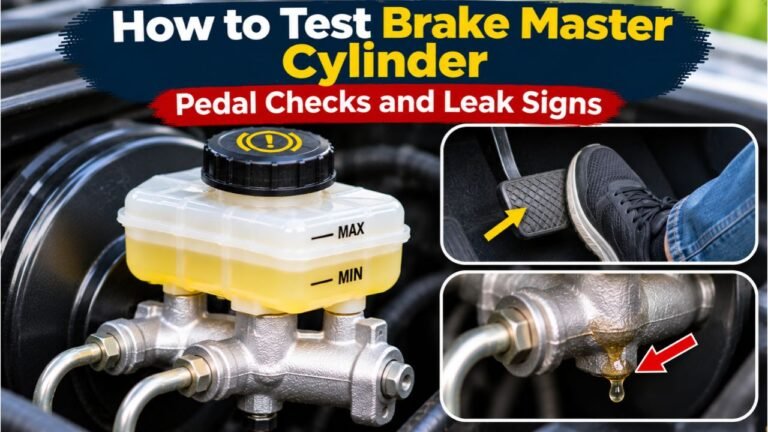
Look at the side of the translucent reservoir.
The markings indicate the acceptable operating range.
If the reservoir is difficult to see through, consult the owner’s manual rather than opening it unnecessarily.
Step 4: Compare the Fluid Level
Check whether the level is:
- Near MAX
- Between MIN and MAX
- Near MIN
- Below MIN
If the level is within the designated range, adding fluid may be unnecessary.
Step 5: Investigate Unexpected Low Fluid
A low level may be associated with brake-pad wear or a hydraulic leak.
Check the maintenance history and arrange an inspection when necessary.
Do not assume that topping off automatically solves the problem.
Step 6: Follow Manufacturer Instructions
Use only the approved brake-fluid type.
Some manufacturers permit adding the correct fluid under specific conditions.
Others advise against routine topping off because the level changes as the brake pads wear.
Key Takeaway: Check the reservoir markings first. Do not add brake fluid based only on an estimated reservoir capacity.
How Much Brake Fluid Do You Need to Top Off a Master Cylinder?
The amount required for topping off depends on the current level and the reservoir’s design.
There is no universal top-up quantity.
For example, one vehicle may need only a small amount, while another may require substantially more after a repair.
However, a reservoir that is unexpectedly low requires inspection before fluid is added.
Can You Add 2 Ounces of Brake Fluid?
If the manufacturer permits a top-up and the cause of the low fluid has been assessed, a small amount such as 2 fluid ounces may be sufficient in some cases.
Two U.S. fluid ounces equal approximately 59 mL.
But this is not a recommended quantity for every vehicle.
Adding 59 mL to a reservoir that is already near MAX could overfill it.
Can You Add 4 Ounces of Brake Fluid?
Four fluid ounces equal approximately 118 mL.
For a reservoir holding roughly 240 mL, that amount represents nearly half its nominal capacity.
Therefore, adding four ounces without checking the level could result in significant overfilling.
Can You Fill the Entire Reservoir With New Fluid?
During appropriate repairs or fluid servicing, the reservoir may need to be filled with fresh approved fluid.
However, the correct filling and bleeding procedures depend on the vehicle.
If the reservoir has run dry, simply adding fluid may not be enough because air can enter the hydraulic system.
Quick Brake Fluid Conversion Chart
| Brake Fluid Amount | Milliliters |
| 1 US fl oz | 29.6 mL |
| 2 US fl oz | 59.1 mL |
| 4 US fl oz | 118.3 mL |
| 6 US fl oz | 177.4 mL |
| 8 US fl oz | 236.6 mL |
| 12 US fl oz | 354.9 mL |
| 16 US fl oz | 473.2 mL |
| 32 US fl oz | 946.4 mL |
Key Takeaway: Use the reservoir’s markings, not a predetermined number of ounces, to determine whether an approved top-up is necessary.
Why Does Brake Fluid in the Master Cylinder Get Low?
Brake fluid level can decrease for several reasons.
Some are related to ordinary brake operation, while others indicate a safety problem.
1. Worn Brake Pads
As the brake pads become thinner, the caliper pistons move farther outward.
Fluid moves from the reservoir into the calipers.
This can lower the reservoir level gradually.
2. Brake Fluid Leaks
A leak can occur in the hydraulic system.
Potential locations include:
- Master cylinder
- Brake lines
- Flexible hoses
- Calipers
- Wheel cylinders
- ABS hydraulic components
A leak can reduce the system’s ability to maintain hydraulic pressure.
3. Improper Previous Service
The reservoir may have been left at an incorrect level after earlier repairs.
However, this should not be assumed without inspection.
4. Hydraulic Component Problems
Some faults involving master-cylinder seals or other components can affect braking performance.
An internal master-cylinder bypass may cause a sinking pedal without necessarily producing an external fluid-level drop.
Therefore, pedal symptoms and reservoir-level changes must be diagnosed separately.
How Do You Know if the Master Cylinder Is Leaking?
Possible signs include:
- Fluid collecting near the master cylinder
- Wetness around hydraulic connections
- Unexplained reservoir-level reduction
- A brake warning light
- Soft or sinking brake pedal
- Reduced braking effectiveness
These symptoms can also have other causes.
A professional inspection is necessary to identify the fault.
Important: If braking performance is reduced, the pedal sinks unusually far, or a hydraulic leak is suspected, stop driving as soon as safely possible and arrange professional assistance.
Key Takeaway: A low reservoir can indicate brake-pad wear or a leak. The level alone does not establish which condition exists.
Can Too Much Brake Fluid Damage the Master Cylinder?
Overfilling the reservoir can create problems.
The reservoir is designed to operate with fluid within its specified range.
What Happens if the Reservoir Is Overfilled?
Possible consequences include:
- Brake fluid overflowing during service
- Damage to painted surfaces
- Fluid escaping around the cap or diaphragm
- Improper reservoir filling conditions
- Additional cleanup or repair requirements
The exact effects depend on the reservoir design and vehicle.
Why Does Fluid Level Rise During Brake Pad Replacement?
When worn brake pads are replaced, the caliper pistons are generally moved back to accommodate the new, thicker pads.
This can push fluid toward the reservoir.
If the reservoir was unnecessarily topped up beforehand, the returned fluid may cause overflow.
Does Too Much Brake Fluid Cause Brakes to Lock?
Overfilling alone is not the usual cause of locked brakes.
However, incorrect service procedures or faults that prevent normal hydraulic pressure release can cause dragging or locking.
An overfilled reservoir should be corrected, but abnormal brake operation requires a complete diagnosis.
How Do You Remove Excess Brake Fluid?
Follow the manufacturer’s service instructions.
Use appropriate clean equipment and avoid contaminating the hydraulic system.
If the reservoir was overfilled during brake servicing, the technician should correct the level using the approved procedure.
Do not open hydraulic brake lines simply to remove a small amount of excess reservoir fluid.
Key Takeaway: Brake fluid should remain within the designated range. Filling beyond MAX does not improve braking performance.
What Type of Brake Fluid Goes Into the Master Cylinder?
The required brake-fluid specification depends on the vehicle.
Common classifications include DOT 3, DOT 4, DOT 5, and DOT 5.1.
However, they are not all interchangeable.
Brake Fluid Type Comparison
| Brake Fluid | General Chemistry | Important Consideration |
| DOT 3 | Glycol-based | Used in compatible hydraulic brake systems |
| DOT 4 | Glycol-based | Higher minimum boiling-point requirements than DOT 3 |
| DOT 5 | Silicone-based | Not suitable for routine mixing with glycol-based fluids |
| DOT 5.1 | Glycol-based | Different from silicone DOT 5 |
| Specialized mineral hydraulic fluid | Mineral-oil-based | Only for systems specifically designed for it |
Can You Mix DOT 3 and DOT 4?
DOT 3 and DOT 4 are generally chemically miscible.
However, that does not mean every vehicle permits substitution.
Follow the manufacturer’s specified fluid type and performance requirements.
Can You Put DOT 5 in a DOT 3 or DOT 4 Reservoir?
No.
DOT 5 is silicone-based and should not be used as a routine replacement for glycol-based brake fluid.
Mixing incompatible fluids can create serious hydraulic-system problems.
What Happens if Power Steering Fluid Is Added?
Power steering fluid, engine oil, and automatic transmission fluid can damage seals in conventional glycol-based brake systems.
If the wrong fluid was added, do not operate the vehicle.
Arrange professional inspection.
Depending on the contamination, replacing fluid alone may not be sufficient.
Key Takeaway: Always use the exact brake-fluid specification required by the vehicle manufacturer.
How Much Brake Fluid Is Needed After Replacing a Master Cylinder?
Replacing a master cylinder is different from simply topping off the reservoir.
A new master cylinder may need to be filled and bled according to the manufacturer’s procedure.
Additional brake fluid may be required to service the hydraulic circuits.
Why Does Master Cylinder Replacement Require Bleeding?
Air can enter the hydraulic system when the old master cylinder is removed.
Air is compressible, unlike the brake fluid used for hydraulic pressure transfer.
Trapped air can cause a soft or spongy brake pedal and reduce braking effectiveness.
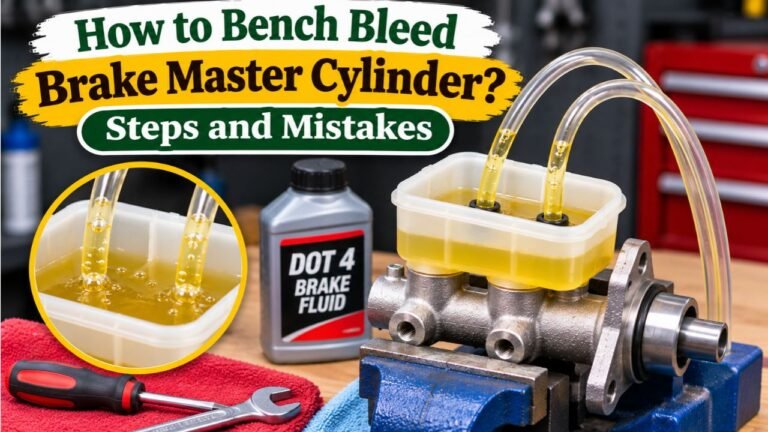
What Is Bench Bleeding?
Bench bleeding is a procedure used on certain replacement master cylinders to remove trapped air before installation.
However, the exact procedure depends on the component and vehicle.
Not every modern brake system uses the same method.
How Much Fluid Should You Have Available?
A reservoir may hold only a few hundred milliliters, but master-cylinder replacement and brake bleeding can require considerably more fluid.
For planning purposes, approximately 500 mL to 1 liter may cover some conventional passenger-car procedures.
However, some vehicles or repairs require more.
The exact amount depends on the manufacturer’s procedure and the work performed.
Do ABS Brakes Need Special Bleeding?
Some ABS-equipped and electronically controlled braking systems require specialized bleeding procedures or scan-tool functions.
Improper bleeding can leave air trapped in the hydraulic system.
For a safety-critical repair such as master-cylinder replacement, qualified service is important.
Key Takeaway: Replacing a master cylinder can require much more fluid than the reservoir holds because the hydraulic system must be serviced and bled correctly.
How to Find the Exact Master Cylinder Capacity for Your Vehicle
A general estimate is useful for understanding the system, but it should not replace model-specific technical information.
Check the Owner’s Manual
The owner’s manual usually identifies:
- Correct brake-fluid specification
- Reservoir location
- Normal operating level
- Relevant inspection instructions
- Brake-fluid maintenance requirements
However, many owner’s manuals do not specify the reservoir’s physical volume.
Check the Factory Service Manual
A factory service manual may contain more detailed hydraulic-system information.
Look under:
- Brake master cylinder
- Hydraulic brake system
- Brake fluid
- Brake bleeding
- Fluid capacities
The manual may specify an approximate fluid requirement for a replacement or bleeding procedure rather than an exact reservoir capacity.
Check the Master Cylinder Part Number
Component manufacturers sometimes publish technical specifications for individual master cylinders.
These may include reservoir volume, piston bore, and fluid displacement.
This is especially common for racing and specialty brake components.
Ask a Qualified Service Technician
If the exact quantity is needed for a repair, a technician can reference the vehicle’s service information.
Provide the year, make, model, and brake-system configuration.
Avoid Guessing by Reservoir Appearance
A reservoir may have internal partitions or an irregular shape.
Its capacity cannot be calculated reliably from its external dimensions alone.
The MIN and MAX marks are more useful for normal fluid-level checks.
Key Takeaway: For an exact capacity, use manufacturer or component specifications. General estimates are not precise enough for hydraulic brake repairs.
Common Mistakes About Master Cylinder Fluid Capacity
Several misunderstandings can lead to unnecessary or unsafe brake maintenance.
Assuming the Reservoir Holds All the Brake Fluid
The hydraulic system includes lines, hoses, calipers, and other components.
The reservoir is only one part of the system.
Filling the Reservoir to the Top
The MAX mark is the upper specified level.
Do not fill above it.
Assuming Low Fluid Always Means a Leak
Normal disc-brake pad wear can lower the reservoir level.
However, low fluid still requires assessment.
Assuming Low Fluid Is Always Normal Pad Wear
A sudden decrease or repeated need for refilling may indicate a hydraulic leak.
Buying Fluid Based Only on Reservoir Capacity
A full brake-fluid exchange may require much more than the reservoir can hold.
Confusing Reservoir Capacity With Piston Displacement
The reservoir holds reserve fluid.
The master-cylinder piston moves a relatively small volume during each stroke.
Adding the Wrong Brake Fluid
An incorrect specification can damage components or compromise hydraulic performance.
Letting the Reservoir Run Dry During Bleeding
Air may enter the system, requiring additional bleeding procedures.
Assuming Fresh Fluid Repairs a Bad Master Cylinder
Adding or replacing brake fluid does not correct worn internal seals, leaks, or mechanical defects.
Continuing to Drive With a Sinking Brake Pedal
A sinking pedal can indicate a serious hydraulic problem.
Stop using the vehicle and arrange professional diagnosis when braking is abnormal.
Key Takeaway: Correct brake-fluid quantity is only one part of maintaining a safe hydraulic braking system.
Conclusion
A typical passenger-car master-cylinder reservoir may hold roughly 6–12 U.S. fluid ounces, or approximately 180–355 mL, although actual capacities vary considerably.
Some specialty reservoirs are smaller, while certain braking systems require larger reserve volumes.
The master-cylinder body itself moves only a small amount of fluid during each piston stroke, and its internal displacement should not be confused with reservoir capacity.
The complete hydraulic braking system holds significantly more fluid than the reservoir alone.
A routine full-system fluid change may require approximately 500 mL to 1 liter or more, depending on the vehicle and service procedure.
For everyday maintenance, the most important measurement is the fluid level between the MIN and MAX marks.
Do not automatically add brake fluid when the level drops slightly, because normal brake-pad wear can explain some of the change.
A sudden drop, an illuminated brake warning light, or abnormal pedal feel may indicate a more serious problem.
Always use the manufacturer-approved fluid and follow the vehicle’s service instructions.
When an exact capacity is required, consult the factory service manual or the master-cylinder manufacturer’s specifications rather than relying on an average.
FAQs About How Much Brake Fluid Is in a Typical Master Cylinder
How Many Ounces of Brake Fluid Does a Master Cylinder Hold?
A common rough estimate for many passenger-car master-cylinder reservoirs is approximately 6–12 U.S. fluid ounces. However, some reservoirs hold less, while others hold more. The exact capacity depends on the braking-system design and should be checked using manufacturer information.
Is 8 Ounces of Brake Fluid Enough for a Master Cylinder?
Eight fluid ounces equals approximately 237 mL, which is close to the reservoir capacity of some master cylinders. However, it is not enough for every design and may not be sufficient for a complete brake-fluid exchange. Follow the vehicle’s specified fluid level and service requirements.
How Much Brake Fluid Does a Master Cylinder Piston Move?
The quantity depends on piston bore diameter and stroke length. For example, one Wilwood master cylinder lists approximately 0.62 cubic inch, or 10.2 mL, of full-stroke displacement. This is different from its much larger reservoir capacity.
How Much Brake Fluid Does an Entire Car Need?
Many conventional passenger-car brake-fluid services require approximately 500 mL to 1 liter, although the exact quantity varies. A complete fluid exchange may use more fluid than the system retains. Check the factory service instructions before purchasing fluid.
Should the Master Cylinder Reservoir Be Completely Full?
No. The fluid should remain within the manufacturer’s specified operating range, typically between MIN and MAX. Filling above MAX is unnecessary and can cause overflow during brake servicing.
Why Does the Master Cylinder Reservoir Lose Fluid?
Fluid level can decrease as brake pads wear because caliper pistons extend farther outward. A hydraulic leak can also cause fluid loss. If the level drops suddenly or falls below MIN, arrange an inspection rather than simply adding fluid.
Can You Add Brake Fluid Without Bleeding the Brakes?
A manufacturer-permitted reservoir top-up does not automatically require brake bleeding when no air has entered the hydraulic system. However, if the reservoir has run dry or hydraulic connections have been opened, proper bleeding may be necessary.
How Much Brake Fluid Do I Need After Replacing a Master Cylinder?
The amount depends on the vehicle and the required bleeding procedure. More fluid may be needed than the reservoir’s stated capacity because the hydraulic circuits must be serviced. Follow the factory repair instructions, particularly on vehicles with ABS or electronically controlled brakes.