How to Tell if Brake Master Cylinder Is Bad: Symptoms and Tests
A brake master cylinder may be bad if the brake pedal slowly sinks while you hold steady pressure, braking feels inconsistent, or brake fluid leaks from the cylinder. An internal seal can lose pressure without leaving a puddle, so a normal fluid level does not rule out failure. However, trapped air, leaking lines, and ABS hydraulic faults can create similar symptoms.
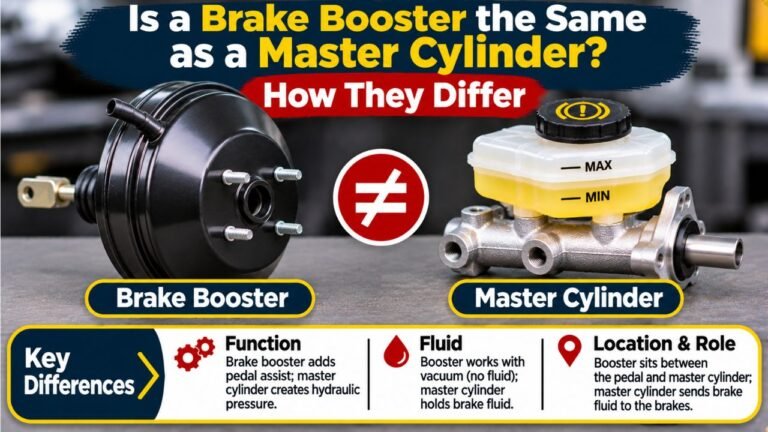
The master cylinder converts pedal force into hydraulic pressure. Its seals must maintain that pressure while you brake. When they fail, the vehicle may require more pedal movement or become difficult to stop. Because braking problems can worsen without warning, avoid driving a vehicle with a sinking pedal, active fluid leak, or unreliable stopping response.
This guide explains the warning signs, then walks through safe, stationary checks labeled step by step. It also shows how to separate likely master-cylinder problems from brake-booster issues, air in the lines, and other faults, and when professional testing or replacement is necessary.
Signs of a Bad Brake Master Cylinder
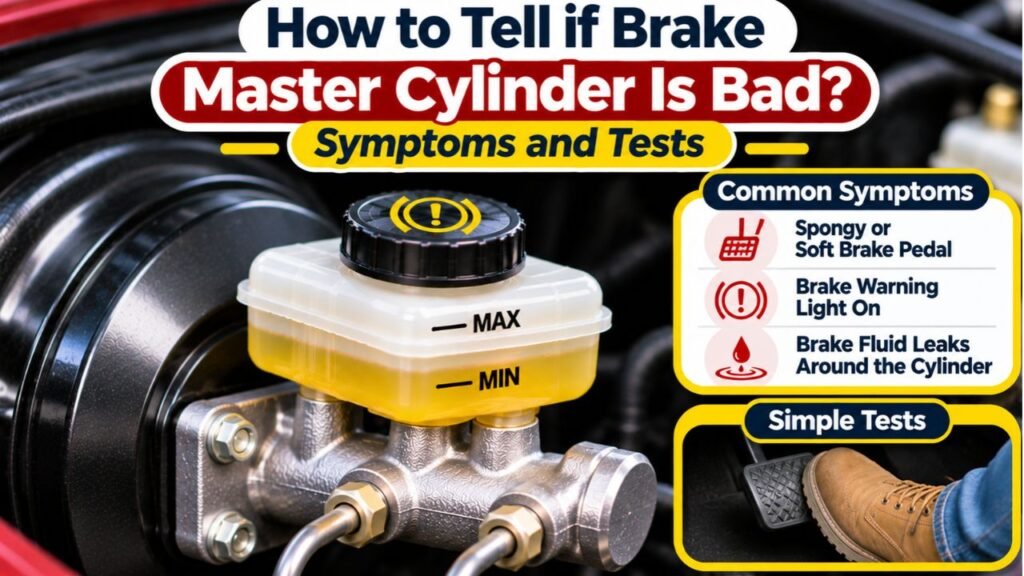
A failing cylinder does not always announce itself with a single obvious symptom. Look for a pattern, particularly if the pedal changes while you maintain the same pressure.
Brake Pedal Slowly Sinks Under Steady Pressure
The most telling symptom is a pedal that initially resists your foot but gradually moves downward while you continue holding it. Worn piston seals can allow fluid to bypass internally instead of maintaining pressure. The reservoir may still look full because the fluid has not escaped the system.
An external leak or a fault in the ABS hydraulic control unit can produce comparable behavior. A sinking pedal calls for immediate diagnosis, not an automatic master-cylinder replacement.
Soft, Spongy, or Unusually Low Brake Pedal
A spongy pedal typically points toward compressible air in the hydraulic system, although an external leak or mechanical movement can contribute. A low pedal that becomes firmer after repeated applications can also result from excessive rear-drum shoe clearance or caliper piston movement.
These sensations may accompany master-cylinder trouble, but they cannot identify the failed component on their own. Note whether the pedal is soft from the first press or sinks only after pressure is held.
Brake Fluid Around the Cylinder or Booster
Wetness at the master-cylinder body, reservoir seals, or brake-line fittings may signal an external leak. A rear master-cylinder seal can also leak into the vacuum brake booster, where the fluid may be hidden from view. Sometimes paint damage or dampness below the master-cylinder mounting area offers a clue.
Avoid touching unidentified fluid with bare hands. Brake fluid can damage painted surfaces, and any suspected hydraulic leak needs prompt inspection.
Brake Warning Light or Reduced Braking Response
A red brake warning light may accompany low reservoir fluid or a hydraulic pressure problem. It can also indicate an engaged parking brake or another system condition. An ABS warning lamp points to a fault that needs diagnosis but does not, by itself, prove the master cylinder is defective.
Unexpected changes in stopping response are more concerning than the lamp alone. Do not road-test a vehicle just to reproduce a brake failure.
How to Tell if Brake Master Cylinder Is Bad: Step-by-Step Checks
These checks help narrow the cause without opening brake lines or disassembling the system. They are intended for a stationary vehicle with a conventional hydraulic brake setup. Follow the owner’s manual if the vehicle has an integrated electronic brake unit, a pressure accumulator, or special inspection instructions.
Step 01: Park Safely and Identify the Exact Pedal Problem
Park on level ground, switch the engine off, secure the parking brake, and keep the transmission in Park or in gear as appropriate. If the pedal was nearly reaching the floor or stopping was unpredictable, arrange towing instead of driving to a repair shop.
Think about what changed. Did the pedal suddenly become soft after brake-line work? Does it start firm and gradually sink at a stop? Is there visible fluid loss? Did the problem begin after a caliper or master-cylinder replacement? Record these details because they point toward different diagnoses.
A sinking pedal under constant pressure suggests hydraulic pressure loss; a pedal that feels hard throughout its travel more often suggests insufficient brake assistance. Neither symptom by itself identifies the faulty part.
Step 02: Check the Brake Fluid Reservoir Without Opening It
Locate the brake-fluid reservoir, commonly mounted on the master cylinder near the firewall. With the vehicle level, compare the fluid height with the MIN and MAX marks. Use a flashlight if the translucent plastic is difficult to read.
If fluid is below MIN, treat that as a reason for inspection. Worn brake pads can cause a gradual level decrease, but a leak may also be responsible. Do not repeatedly top off the reservoir to hide an unexplained loss. Never use a fluid merely because its DOT number sounds higher; follow the vehicle’s specified brake-fluid type.
Do not remove the cap just to check an easily visible level. Keeping dirt and moisture out of the hydraulic system matters.
Step 03: Inspect the Master Cylinder for External Leakage
Look at the metal cylinder body, the reservoir-to-cylinder connections, and the brake-line outlet fittings. Check for wet areas, staining, or peeling paint below the assembly. A small leak may collect around fittings without forming a puddle beneath the car.
Inspect the junction between the master cylinder and the brake booster. Fluid there may indicate a rear-seal leak. A leak into the booster can remain concealed, so an exterior that appears dry is not absolute proof that the rear seal is sound.
Keep this inspection visual. Do not loosen mounting nuts, disconnect hydraulic fittings, or pry the cylinder away from the booster. Those actions can create more problems and require proper service procedures.
Step 04: Look for Leaks Elsewhere in the Brake System
A master cylinder is only one possible source of lost hydraulic pressure. Look from a safe position for fresh wetness near accessible brake hoses, line junctions, calipers, and rear drum-brake areas. Check for stains on the ground near the wheels.
Do not crawl beneath an unsupported vehicle or remove wheels without proper equipment and training. A corroded metal line, damaged hose, leaking caliper, or wheel cylinder can make the pedal drop and lower the reservoir level even when the master cylinder is healthy.
If you spot an obvious leak, stop the check and arrange repair. The priority is locating and fixing the leak, not proving that another component is also defective.
Step 05: Perform a Stationary Brake Pedal Hold Check
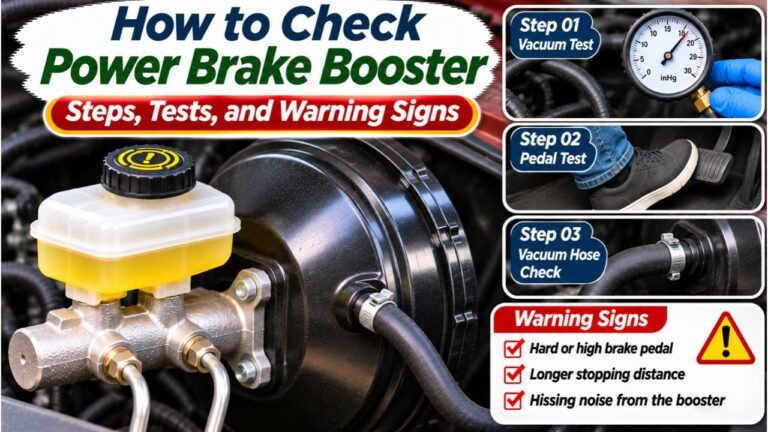
Only if the vehicle is secure and the pedal has not already shown dangerous travel, sit in the driver’s seat with the engine off. On a conventional vacuum-assisted system, several normal pedal presses can exhaust stored booster vacuum, making pedal feel more consistent for this comparison. Do not use this method on vehicles whose manual specifies another procedure.
Apply firm, even pressure to the brake pedal and hold it for about 20 to 30 seconds. Avoid increasing foot pressure throughout the hold. A pedal that remains at a stable height is reassuring; a pedal that continues moving downward suggests pressure loss or another fault needing investigation.
NAPA’s master-cylinder testing guide explains how pedal movement under sustained pressure can help identify hydraulic problems. This check does not confirm the master cylinder by itself: a leak elsewhere or an ABS hydraulic fault may behave similarly. If the pedal drops abnormally, stop and have the brakes inspected.
Step 06: Distinguish a Brake Booster Problem From Hydraulic Trouble
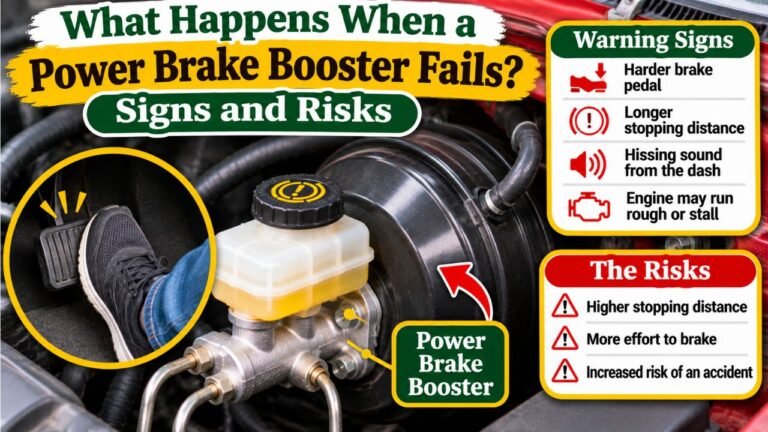
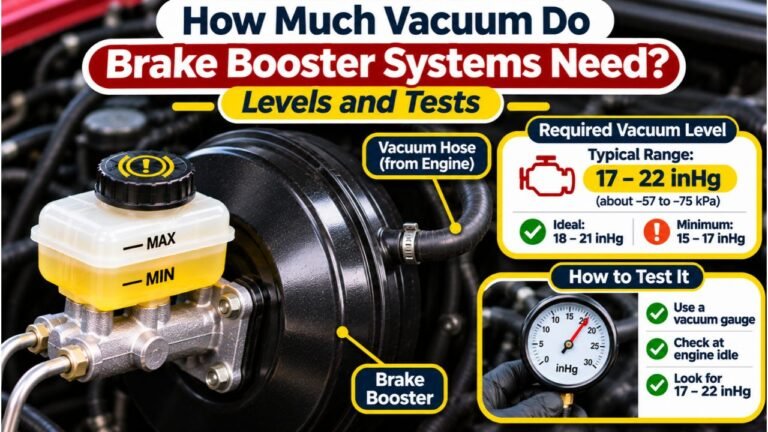
Consider how the pedal feels, not simply how hard you have to push. A failed vacuum booster or lost vacuum supply often causes a very firm pedal that requires unusually high effort. Master-cylinder bypass more commonly produces abnormal travel or an inability to hold pressure.
In a conventional vacuum-booster system, the pedal may dip slightly when the engine starts and assistance becomes available while steady foot pressure is applied. That initial dip alone is not evidence of a bad master cylinder. Continuous sinking, by contrast, warrants hydraulic investigation.
Avoid these generic tests on electronically controlled systems without service information. Modern hybrids and vehicles with brake-by-wire features may have different normal pedal behavior.
Step 07: Consider Recent Brake Work, Air, and Mechanical Clearance
If the complaint began immediately after changing a caliper, hose, brake line, or master cylinder, trapped air or incomplete bleeding becomes an important possibility. Air compresses under pressure, creating a soft or springy feeling. Some ABS-equipped systems require a scan-tool-assisted bleeding procedure.
A pedal that improves temporarily when pumped may indicate air or extra movement at the wheel brakes. Rear drum adjustment, caliper alignment, worn hardware, and rotor-related piston knock-back can also increase pedal travel. These causes require different repairs from internal master-cylinder seal failure.
Do not attempt to solve an unknown problem by repeatedly bleeding the system without checking for leaks. Air may reenter through an unrepaired defect, and incorrect bleeding can introduce additional air.
Step 08: Have a Technician Confirm Internal Bypass
If the brake pedal sinks under steady pressure and no external leak is evident, professional diagnosis should include the master cylinder and other hydraulic pressure-control components. A technician may use manufacturer-approved isolation procedures, pressure measurements, and ABS diagnostics to identify where pressure is escaping.
The MOTOR technical article on abnormal brake pedal diagnosis discusses how mechanical clearance, air, internal hydraulic leakage, and ABS control-unit problems can imitate one another. This is why replacing the master cylinder on pedal feel alone may not fix the issue.
Leave hydraulic line-plugging, bench pressure tests, and control-unit actuation to qualified personnel. Improperly sealed lines can cause a sudden loss of brakes, and some electronically assisted systems require special depressurization steps.
Bad Master Cylinder vs. Other Brake Problems
The symptom pattern can suggest where to start, but several faults overlap. Use this comparison as a troubleshooting guide rather than a final diagnosis.
| What You Notice | Possible Cause | Useful Distinction |
| Pedal slowly sinks while held | Master-cylinder bypass, external leak, ABS hydraulic fault | Check for visible fluid loss and confirm with professional hydraulic tests |
| Pedal feels spongy immediately | Trapped air, leak, flexible hose expansion | Often worsens after hydraulic work; proper bleeding and leak checks matter |
| Pedal becomes very hard | Booster or vacuum-assist problem | Usually requires more force rather than slowly losing pedal height |
| Pedal pumps up temporarily | Air or excess wheel-brake clearance | Inspect recent repairs, drum adjustment, caliper movement |
| Reservoir fluid repeatedly falls | External leak or wear-related fluid movement | Rapid or unexplained loss requires full inspection |
| ABS light appears | Electronic or hydraulic system fault | Scan codes; lamp alone does not diagnose master-cylinder seals |
Can a Master Cylinder Fail Without Leaking Brake Fluid?
Yes. Internal bypass allows fluid to pass a worn piston seal inside the master cylinder rather than maintaining the pressure intended for the brake circuits. Because the fluid can remain inside the assembly, reservoir level may not noticeably change.
A dry exterior and normal-looking reservoir therefore do not rule out a defect. Still, only a complete diagnosis can separate internal bypass from pressure loss within another hydraulic component.
Does a Hard Brake Pedal Mean the Master Cylinder Is Bad?
Usually not as the first suspicion. A hard pedal is often linked to reduced booster assistance, a vacuum supply issue, or a problem with the pedal mechanism. Binding components or other hydraulic faults may also contribute.
If the pedal is hard and braking effort has changed, the vehicle still requires prompt inspection. Do not assume that a hard pedal is safe because it does not sink.
What Causes a Brake Master Cylinder to Go Bad?
The most common internal concerns involve worn piston seals, a damaged or corroded cylinder bore, or contamination that affects rubber components. Moisture absorbed by compatible glycol-based brake fluids can contribute to corrosion over time. Incorrect fluids, especially petroleum-based liquids, may severely damage brake-system seals.
An external leak may develop at the rear seal, reservoir grommets, or body connections. Manufacturing defects and installation damage are also possible, although no single mileage predicts failure across all vehicles.
Firestone Complete Auto Care’s master-cylinder overview identifies sinking pedals, visible leaks, and fluid contamination among the clues that deserve professional inspection. Dark fluid alone is not conclusive evidence of failed master-cylinder seals; fluid age and contamination require separate evaluation.
What to Do if the Master Cylinder Is Bad
If testing confirms an internal or external master-cylinder defect, replacement is commonly the appropriate repair. The new assembly must match the vehicle’s bore, mounting, pushrod interface, hydraulic ports, and braking configuration. ABS-equipped or integrated systems may need special tools or calibration.
A replacement typically requires correct bench bleeding when specified, installation according to the service manual, and complete system bleeding with the approved brake fluid. The technician should also inspect the booster if brake fluid entered its housing and check for faults that may have damaged the original cylinder.
Before the vehicle returns to service, verify leak-free connections, appropriate pedal travel, reliable pressure retention, and proper brake release. If symptoms remain after replacement, the rest of the hydraulic and mechanical system still needs diagnosis.
FAQs About How to Tell if Brake Master Cylinder Is Bad
Can a Bad Master Cylinder Cause the Pedal to Go to the Floor?
Yes. Internal bypass can prevent the cylinder from maintaining hydraulic pressure, allowing excessive pedal movement. External leaks, air, and other hydraulic faults can cause similar symptoms. Stop driving until the cause is repaired.
Will Pumping the Brakes Help Diagnose a Bad Master Cylinder?
Temporary improvement after pumping can provide a clue, but it does not identify the master cylinder. Air, drum-brake adjustment, or abnormal caliper movement may also cause a low pedal that pumps up.
Can a Bad Master Cylinder Trigger the ABS Light?
It may be associated with some brake-system warnings, depending on vehicle design. However, an ABS warning normally requires fault-code diagnosis and does not establish that the master-cylinder seals have failed.
Can a Brake Master Cylinder Be Bad With a Full Reservoir?
Yes. An internal seal may allow pressure to bypass without significant external fluid loss. The reservoir can remain full even though the pedal cannot maintain the expected position.
How Much Does It Cost to Diagnose a Bad Master Cylinder?
Diagnostic cost depends on labor rates, vehicle complexity, and whether hydraulic or electronic testing is needed. Ask the shop for a diagnosis estimate before authorizing parts replacement; replacing an unconfirmed cylinder may cost more than identifying the real cause.
Recognize Master Cylinder Failure Before Driving Again
Knowing how to tell if brake master cylinder is bad starts with observing the pedal, checking the fluid level, and looking for visible hydraulic leaks. A pedal that sinks under constant pressure is an important warning, especially when combined with inconsistent braking, but it does not prove which component has failed.
The safest approach is to perform only stationary, noninvasive checks and have a qualified technician confirm the source of pressure loss. If the pedal reaches the floor, the vehicle leaks fluid, or stopping response is uncertain, do not drive it. Repairing the actual fault and verifying the entire brake system matters more than replacing one suspected part.