What Is a Brake Booster Used For? Functions and Failure Signs
A brake booster is used to reduce the force a driver must apply to the brake pedal to slow or stop a vehicle. It adds power assistance between the pedal and the master cylinder, allowing the driver to develop the hydraulic brake pressure needed for normal braking with less physical effort.
Without a working booster, many vehicles can still generate braking force, but pressing the pedal may require much greater effort. That difference is especially noticeable in stop-and-go traffic or when a sudden stop demands a firm pedal application. A hard pedal does not always mean the brake pads or master cylinder have failed; the problem may be the system that helps your foot apply pressure.
Understanding the booster also prevents confusion with other components. The booster does not hold the brake fluid, operate the brake calipers directly, or replace the anti-lock braking system. This guide explains what the booster actually does, how vacuum and alternative designs provide assistance, where the unit sits, which symptoms suggest failure, and how to distinguish booster trouble from other brake problems.
What Is a Brake Booster Used For in a Car?
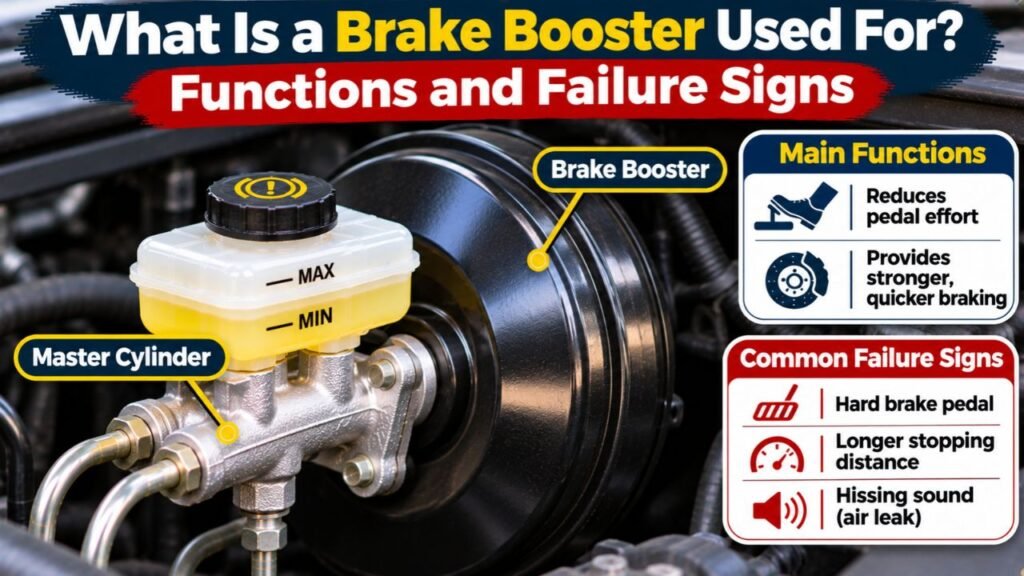
The main purpose of a power brake booster is to help the driver apply the brakes without having to push as hard on the pedal. It supplies additional force to the master cylinder in response to the driver’s input. That assistance makes routine braking more manageable and helps the driver request substantial braking force when needed.
Reducing the Force Needed at the Pedal
For the same pedal effort, a properly assisted system can move the master cylinder pistons more forcefully than one without assistance.
The booster cannot improve tire grip or repair worn brakes; it only makes the hydraulic system easier to operate. Manual-brake systems can be designed to stop safely without a booster, but their pedal ratios and hydraulic components are selected for that purpose. Removing power assist from a vehicle designed around it is a different matter.
Making Braking Feel More Predictable
Power assistance lets drivers vary pedal pressure for gradual slowing or stronger braking without relying entirely on leg strength.
A conventional booster responds to pedal input and releases assistance as the pedal returns. Its available assistance depends on the design and power source.
How a Vacuum Brake Booster Works
A vacuum booster commonly contains a flexible diaphragm, valves, a return spring, and pushrods that transfer force toward the master cylinder.
Vacuum Supply and the Diaphragm
The booster uses a pressure difference across its diaphragm. Many gasoline engines supply intake vacuum; other vehicles use a pump.
With the pedal released, reduced pressure exists on both sides of the diaphragm. Pressing the pedal changes pressure on one side so the diaphragm can add force to the output rod.
Atmospheric pressure, rather than vacuum pulling a piston, provides the assisting force by acting across the diaphragm. This distinction helps explain why a vacuum leak can reduce braking assistance.
What Happens When You Press the Pedal
When the pedal moves, the booster’s control valve admits atmospheric air to one chamber while vacuum remains on the other side. The pressure difference moves the diaphragm toward the master cylinder, adding force to the driver’s input.
Bosch Mobility’s explanation of vacuum brake boosters describes this two-chamber arrangement and how the diaphragm supports the driver’s force. When the pedal is released, internal valves restore the pressure balance and the return mechanism moves the assembly back toward its resting position.
Why the One-Way Check Valve Matters
A vacuum check valve is commonly fitted in the hose or at the booster connection. It helps retain vacuum inside the booster when engine vacuum drops or the engine stops. This can preserve a limited amount of assistance for subsequent pedal applications, depending on the design and its condition.
That reserve is limited. Repeated pedal presses with the engine off use it up, making the pedal firmer. A defective valve or hose can also reduce assistance.
How the Brake Booster Works With the Master Cylinder
The booster adds mechanical assistance, while the master cylinder converts that force into hydraulic pressure by moving pistons against brake fluid.
Brake fluid carries that pressure to calipers or wheel cylinders, which apply pads or shoes against rotors or drums to slow the wheels.
| Component | Main Job | Uses or Contains |
| Brake booster | Adds force to the driver’s pedal input | Vacuum, hydraulic pressure, or electrical assistance |
| Master cylinder | Generates brake-fluid pressure | Brake fluid and internal pistons |
| Brake lines and hoses | Carry hydraulic pressure | Brake fluid |
| Calipers or wheel cylinders | Apply the friction brakes | Hydraulic pistons |
| ABS control system | Helps prevent wheel lockup during braking | Sensors, electronics, and hydraulic control |
A conventional vacuum booster should not contain brake fluid. If brake fluid is found inside its vacuum housing, a leaking master cylinder rear seal is a possible cause and both components need inspection.
The booster is also not the same as ABS: power assistance reduces pedal effort, while ABS regulates wheel-brake pressure under particular traction conditions.
Where Is the Brake Booster Located?
In many cars, the booster sits against the firewall behind the master cylinder. It often looks like a large round metal housing, with a brake-fluid reservoir ahead of it and a vacuum hose attached.
A pushrod connects it to the pedal. Integrated electronic systems may not have a recognizable round booster.
The booster is generally larger than the master cylinder and is often partly concealed by the reservoir or engine-bay components. On right-hand-drive vehicles or models with unusual packaging, its position may differ. Consult a vehicle-specific diagram before disconnecting any line.
Different Types of Brake Boosters and Their Uses
Booster design depends on the available power source and braking architecture.
Vacuum Brake Boosters
These use a diaphragm pressure difference and commonly appear as round housings connected to a vacuum source.
Hydraulic or Hydro-Boost Systems
A hydro-boost system uses pressurized hydraulic fluid, often supplied by a power-steering pump, to assist pedal force. It is used in some trucks and diesel vehicles where vacuum assistance is unsuitable.
Hydro-boost plumbing and fluid requirements differ from those of the brake-fluid circuit. A hydraulic assist leak may affect steering assistance as well as braking assistance on a shared system.
The brake master cylinder still has a separate hydraulic job: converting the assisted pedal force into pressure at the wheel brakes.
Vacuum Boosters With Electric Pumps
An electric pump can supply or supplement vacuum on some turbocharged, diesel, hybrid, or stop-start vehicles.
HELLA’s technical guide to electric vacuum pumps explains how electrically driven pumps maintain vacuum for brake boosting under operating conditions that do not provide a sufficient natural vacuum source. The booster itself still operates using vacuum.
Electromechanical and Integrated Brake Assistance
Some hybrids and EVs use motor-driven or integrated electronic systems that coordinate friction braking with regeneration and driver assistance.
An EV does not necessarily use a vacuum pump; electronic faults may require scan-tool diagnosis.
Why Brake Boosting Helps During Everyday Driving
In stop-and-go traffic, assistance reduces repeated pedal effort and supports smooth speed changes.
During firm braking, assistance helps the driver request hydraulic pressure without excessive effort. Stopping distance still depends on traction, brake condition, speed, and driver reaction.
Pedal leverage, master-cylinder sizing, and booster output are designed together. Bypassing the booster can leave the original pedal arrangement unsafe.
A booster also helps explain why a pedal can feel harder after the engine shuts off: stored assistance gradually disappears as vacuum is consumed. That change is not the same as brake fluid disappearing.
Signs That a Brake Booster Is Not Working Properly
Booster faults often change pedal effort. No single symptom proves the booster itself failed.
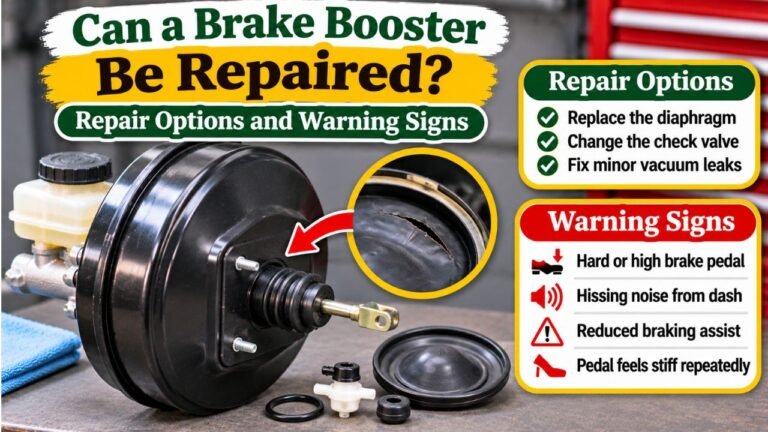
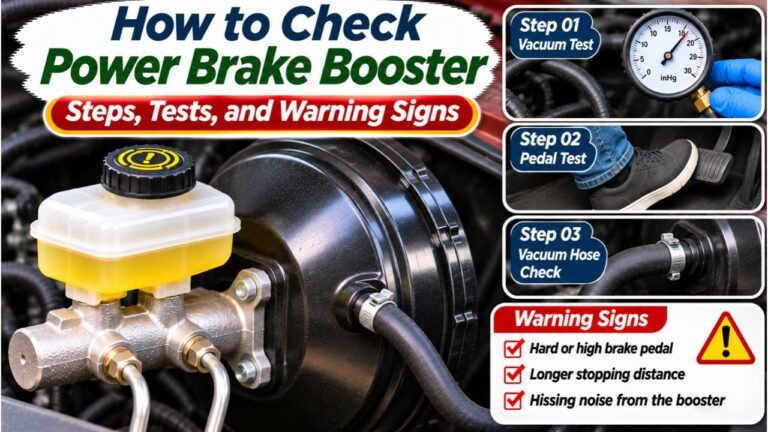
A Hard Pedal That Takes More Effort
The classic warning sign is an unusually firm pedal that requires much more pressure to slow the vehicle. Some failures cause a consistently hard pedal; others appear as vacuum supply changes.
Drivers may notice the difference most during repeated braking, when the available vacuum reserve is depleted faster than the system can replenish it.
Hissing Near the Pedal or Firewall
A persistent hissing sound during brake application can indicate air leaking through a vacuum booster, hose, grommet, or control valve.
A new persistent hiss with altered pedal feel is more concerning than brief normal airflow.
Rough Engine Idle or Brake-Related Warning Lights
On an engine-vacuum system, a significant leak can affect engine operation, possibly causing rough idle or stalling when the brakes are applied. Electrically controlled assist systems may instead illuminate brake, ABS, or other warning indicators.
RepairPal’s guide to failing brake boosters identifies hard pedal effort, increased stopping difficulty, hissing, and system-specific warning symptoms. These symptoms still require diagnosis.
Brake Booster Problems Versus Other Brake Faults
A hard pedal suggests lost assistance; a soft, spongy, or sinking pedal suggests air, leaks, or master-cylinder trouble. Worn brakes or poor tires can also reduce stopping performance.
| What You Notice | Possible Area to Investigate |
| Pedal suddenly becomes very hard | Booster assistance, vacuum supply, or hydraulic assist source |
| Pedal feels spongy or travels too far | Air, fluid loss, or hydraulic components |
| Pedal slowly sinks while held | Hydraulic leakage or master-cylinder issue |
| Hissing with changes in pedal effort | Vacuum hose, check valve, or booster seal |
| Brake warning or ABS light comes on | System fault requiring code and service diagnosis |
A sticking caliper may cause pulling or heat while the booster remains fine. Inspect the entire braking system before replacing parts.
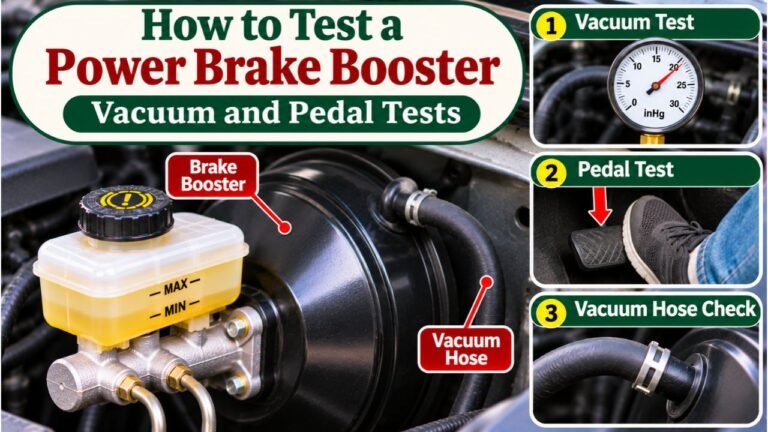
How to Check Whether a Vacuum Booster Is Helping
A stationary test can suggest whether a conventional vacuum booster works. It is not a full safety test and does not apply to every electronic system.
- Park securely, turn the engine off, and keep the vehicle stationary.
- Press the brake pedal several times to use up stored vacuum assistance. The pedal typically becomes firmer.
- Hold steady pressure on the pedal and start the engine, if safe and consistent with the vehicle’s instructions.
- A modest downward pedal movement can indicate that vacuum assistance has become available. No change may point to a problem, but the result is not conclusive.
A technician can measure vacuum, check the valve and hoses, or use pressure measurements and diagnostic tools for other booster types.
Do not road-test suspected brake failure. A pedal-drop test alone cannot establish roadworthiness.
What Causes a Brake Booster to Lose Assistance?
Several connected components can interrupt the assist function:
- Cracked or collapsed vacuum hose: Air leaks or restrictions can reduce the vacuum supplied to the booster.
- Defective check valve: Stored vacuum may escape too quickly after the engine stops.
- Damaged diaphragm or internal control valve: The booster may fail to create or maintain the pressure difference it needs.
- Weak vacuum source or failed pump: The booster may be functional but receive insufficient vacuum.
- Hydraulic assist problem: Low supply pressure or a leak can reduce hydro-boost assistance.
- Electrical fault: Wiring, sensors, control electronics, or an electric assist motor may affect newer systems.
A failed hose or removable check valve may be replaced separately. Internal booster damage commonly requires replacing a sealed assembly.
A mechanic should confirm the vacuum source before condemning the booster: replacing a sound unit will not fix a pump that cannot supply adequate vacuum.
Can You Drive With a Bad Brake Booster?
Do not continue driving a vehicle with suspected brake booster failure. Conventional brakes may retain mechanical operation, but the extra pedal force can prevent effective emergency braking.
The fault may also involve hydraulics, electronics, or shared steering assistance.
If the pedal becomes hard, braking performance changes, or a brake-system warning appears, pull over safely if you are already moving, stop the vehicle, and arrange professional inspection and towing as appropriate.
Brake Booster Maintenance and Replacement Decisions
Vacuum boosters often lack a separate routine service interval. Inspect hoses, fittings, check valves, and the master-cylinder junction as specified or when symptoms appear.
Confirmed internal failure generally calls for a compatible replacement. Installation may involve pushrod clearance, pedal linkage, and model-specific torque requirements.
Incorrect pushrod adjustment can cause dragging brakes or excessive pedal travel, so matching the replacement and verifying adjustment matter as much as fitting it securely.
Some designs allow the master cylinder to move without disconnecting brake lines. If hydraulics are opened, follow the specified bleeding procedure; always verify pedal operation and leaks.
FAQs About What Is a Brake Booster Used For
Does a Brake Booster Make Your Brakes Stronger?
It helps generate hydraulic pressure with less foot effort. It cannot improve tire traction or repair worn brakes.
Does a Brake Booster Work When the Engine Is Off?
A vacuum booster may provide limited stored assistance before the pedal hardens. Other designs behave differently.
Is a Brake Booster the Same as a Master Cylinder?
No. The booster assists pedal force; the master cylinder generates brake-fluid pressure.
Does a Brake Booster Need Brake Fluid?
A vacuum booster does not use brake fluid. Hydro-boost uses a separate hydraulic assist supply, and fluid inside a vacuum booster may indicate a master-cylinder leak.
Can a Bad Brake Booster Cause a Soft Brake Pedal?
A hard pedal is more typical. A soft or sinking pedal suggests hydraulic trouble, while integrated systems require model-specific testing.
Why the Brake Booster Matters Every Time You Slow Down
The answer to what is a brake booster used for is straightforward: it makes hydraulic braking easier to command by adding force to the driver’s pedal input. Whether the assistance comes from vacuum, hydraulic pressure, or an electric motor, the purpose is to reduce the physical effort required for predictable braking.
The booster works alongside the master cylinder; it does not replace brake fluid, wheel brakes, or ABS. A hard pedal, new hissing noise, or sudden change in braking effort deserves prompt attention, especially when other warning signs appear.
If braking feels different from normal, avoid guessing which part has failed. Have the complete assist and hydraulic systems checked before putting the vehicle back on the road.