What Happens When a Power Brake Booster Fails? Signs and Risks
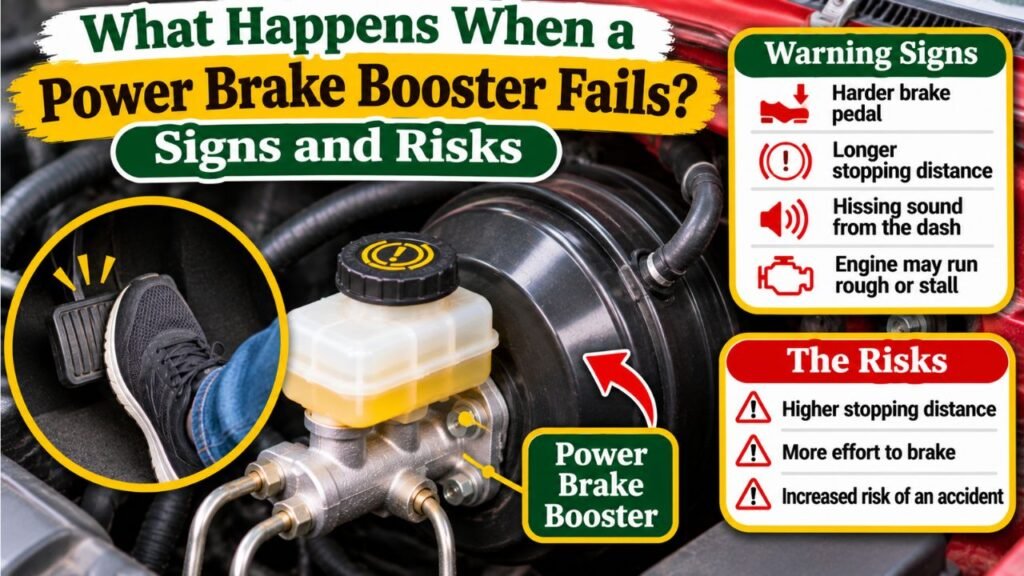
When a power brake booster fails, the brake pedal usually becomes much harder to press because the vehicle loses some or all of its braking assistance. The brakes may still work if the hydraulic system is intact, but stopping can require far more foot pressure and may take longer, especially in an emergency.
A brake booster does not create the friction that slows the wheels. Instead, it helps the driver apply enough force to the master cylinder without excessive effort. When that assistance disappears, a familiar pedal can suddenly feel stiff and unresponsive.
The symptoms also depend on the design. Many cars use engine vacuum or a vacuum pump, while certain trucks use pressurized power steering fluid.
Understanding what changes at the pedal is essential because a hard pedal and a sinking pedal often point to different problems. This article explains the warning signs, what happens while driving, how to distinguish booster trouble from hydraulic faults, what commonly fails, and how to approach a safe diagnosis and repair.
What Happens When a Power Brake Booster Fails During Braking?
The main change is loss of power assist. With a healthy conventional booster, the driver’s foot and the booster both help push the master-cylinder piston. If assistance disappears, the driver must provide much more of that force alone. The pedal commonly feels high, firm, and difficult to move.
The wheel-brake hardware remains in place, and an intact master cylinder can still create hydraulic pressure. However, the force needed to produce effective braking may exceed what a driver can comfortably apply. The vehicle may slow less than expected for the usual amount of pedal pressure.
A vacuum booster may also retain a small reserve of assistance after the vacuum supply fails. One early brake application might feel nearly normal, followed by a noticeably harder pedal as the reserve is depleted.
Do not assume that the brakes are safe simply because the pedal still moves. Any substantial change in required braking effort calls for stopping the vehicle safely and arranging an inspection.
Symptoms of a Failing Power Brake Booster
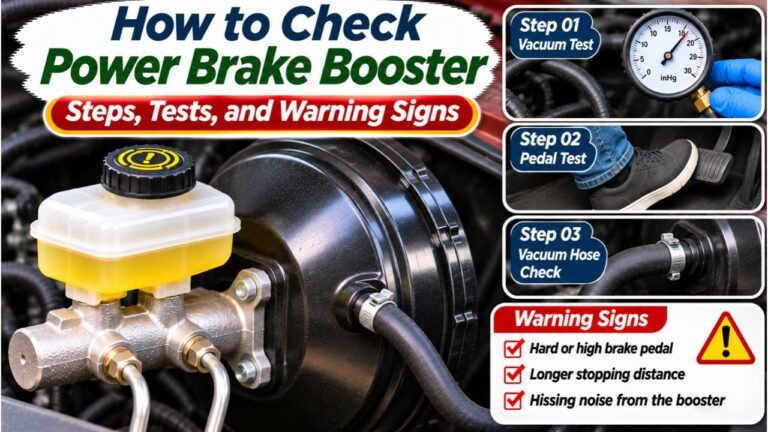
A Hard Brake Pedal That Needs More Leg Force
A stiff pedal is the most recognizable symptom of lost vacuum assistance. Pressing it feels more like pushing against a solid resistance than using the familiar, lighter power-assisted pedal.
O’Reilly Auto Parts’ brake pedal troubleshooting guide explains that a damaged booster, vacuum hose, or check valve can make the pedal unusually firm.
Longer Stops and Unpredictable Pedal Effort
The stopping distance may increase because the driver cannot generate the usual hydraulic pressure with the same foot effort. It is not accurate to claim every failed booster automatically produces a fixed increase in stopping distance; vehicle speed, road grip, remaining assist, and driver force all affect the outcome.
A pedal may feel normal during one stop and abnormally hard during the next if vacuum supply is unstable or a one-way valve is leaking.
Hissing or a Change in Engine Idle
A leaking vacuum booster, hose, or internal control valve can cause a noticeable hissing sound, especially when the pedal is pressed or released.
On vehicles drawing vacuum from the engine intake, a significant leak can admit unwanted air and contribute to rough idling or stalling. Those engine symptoms are not universal, particularly on vehicles with independent vacuum pumps.
Brake Pedal Feels Different After Engine Shutdown
A conventional vacuum booster normally stores a limited amount of assistance after the engine stops. If a check valve or booster seal leaks, that reserve may disappear quickly. The pedal can become hard almost immediately instead of offering a few assisted applications.
Why Brake Booster Failure Makes Braking Harder
In a typical vacuum booster, a diaphragm and control valve use a pressure difference between vacuum and outside air to help move a pushrod. That pushrod adds force to the master cylinder when the driver applies the brakes.
If the diaphragm tears, the control valve sticks, or vacuum cannot reach the booster, the extra force is reduced or lost.
This distinction explains why loss of brake assist is not identical to loss of hydraulic pressure. An assist failure usually produces a hard pedal. A failed master-cylinder seal, external fluid leak, or air in the lines may instead produce a low, soft, or sinking pedal. Some faults overlap, and modern integrated brake systems need different diagnostic procedures.
Can You Still Stop if the Power Brake Booster Fails While Driving?
Sometimes, yes, but the vehicle should be treated as unsafe. In many conventional systems, the hydraulic brakes still function without boost, provided the master cylinder, lines, and wheel brakes are sound. The driver may need much greater pedal force than expected. Other booster designs can have backup assistance or different failure behavior, so there is no universal guarantee.
If the pedal suddenly becomes hard while moving, release the accelerator, look ahead for a safe place to stop, and apply firm, steady brake-pedal pressure. Avoid repeatedly pumping the pedal in an attempt to restore power assist; pumping can consume any remaining vacuum reserve. Increase space from other traffic as conditions permit, use hazard lights when appropriate, and steer toward a safe stopping area.
Do not switch off the ignition while the vehicle is moving. That can remove other assistance or affect steering and vehicle controls. If braking response is dangerously weak, follow the vehicle owner’s emergency stopping guidance and prioritize avoiding a collision. Once stopped, do not continue driving or attempt a road test to confirm the problem.
Arrange towing or roadside assistance. A driver cannot determine the safety of the entire brake system from pedal feel alone, especially when another hydraulic fault may be present.
Brake Booster Failure Versus a Bad Master Cylinder
The brake booster assists pedal force; the master cylinder turns that force into hydraulic pressure.
| What You Notice | Possible Booster or Assist Fault | Possible Hydraulic Fault |
| High, unusually hard pedal | Common with lost assist | Possible with binding components or other faults |
| Pedal gradually sinks under steady pressure | Not the typical vacuum-booster symptom | Master-cylinder bypass or fluid leakage is more likely |
| Spongy or unusually low pedal | Not the usual isolated booster symptom | Air, leakage, adjustment, or excessive component travel |
| Persistent hiss near firewall | Possible vacuum leak | Not a typical hydraulic symptom |
| Brake fluid level falls | Not caused by vacuum loss alone | Inspect master cylinder, lines, hoses, and wheel brakes |
Moss Motors’ brake servo diagnosis guide emphasizes that a slight initial pedal drop when the engine starts is normal on a conventional vacuum-assisted system. A pedal that continues toward the floor, however, warrants hydraulic diagnosis rather than automatically blaming the booster.
Brake fluid can also leak from the back of a master cylinder into a nearby vacuum booster. That is a master-cylinder leak that may contaminate the booster, not evidence that a vacuum booster normally stores brake fluid. A qualified technician should inspect both parts when that type of leak is suspected.
What Causes a Power Brake Booster to Fail?
Internal Diaphragm or Control Valve Damage
A vacuum booster relies on internal seals, a diaphragm, and a valve that controls airflow as the pedal moves. Age, deterioration, contamination, or mechanical damage can allow vacuum to leak or the valve to operate incorrectly. Internal failures often require replacing the booster assembly rather than making an improvised repair.
Cracked Vacuum Hose or Faulty Check Valve
A split hose, loose connection, collapsed line, or defective one-way check valve can prevent the booster from receiving or retaining vacuum. These faults can mimic a failed booster even when its housing and diaphragm are sound.
Inspecting the external supply first can prevent an unnecessary booster replacement.
Weak Vacuum Supply From the Engine or Pump
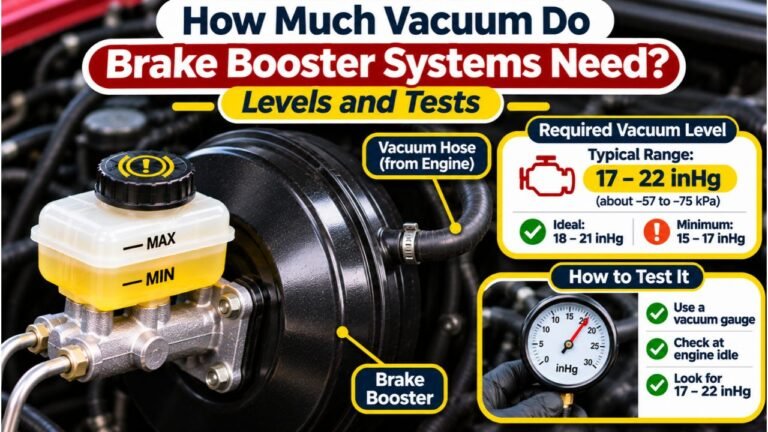
A conventional booster needs an adequate vacuum source. Problems with a vacuum pump, its drive or controls, or the engine’s vacuum supply can reduce assistance. Engine operating conditions and vehicle design matter, so a technician should compare actual readings with the correct service specification rather than a generic number.
Hydraulic Booster or Steering-Fluid Problems
Some trucks and other vehicles use a hydraulic booster powered by the power steering system. A restriction, leak, low fluid supply, steering-pump problem, or failed hydraulic booster may reduce assistance. Certain designs have pressure reserves or electrically powered backup systems, but these must not be assumed to work on every vehicle.
Cardone’s hydraulic power brake booster technical guide identifies hard pedals, longer stops, fluid leaks, slow pedal return, and brake dragging among possible symptoms. It also recommends inspecting hoses, restrictions, and fluid condition before installing a replacement.
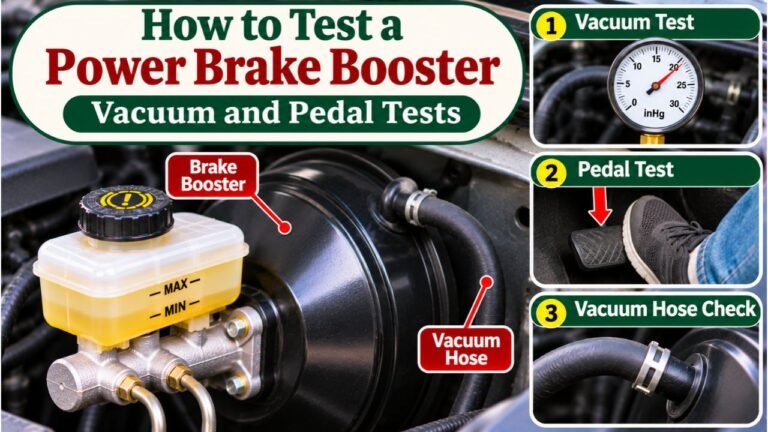
How to Check for Power Brake Booster Problems While Parked
Simple stationary observations can help identify a vacuum-assist problem, but they cannot prove a booster needs replacement. These checks apply primarily to conventional vacuum boosters and should not be used as a substitute for manufacturer procedures on hydraulic, electric, or brake-by-wire systems.
Step 01: Secure the Vehicle and Inspect the Vacuum Connection
Park on level ground, select Park or a suitable gear, engage the parking brake, and keep the wheels secured. Turn off the engine before looking around the booster. On many cars, it is the large round housing behind the master cylinder near the firewall.
Check visible vacuum hoses for cracks, disconnections, or damage. Do not pull off fittings or open the brake hydraulic system for this initial inspection. Any brake-fluid leakage, severe pedal abnormality, or brake warning indicator calls for professional evaluation before further testing.
Step 02: Observe the Pedal With the Engine Off
With the vehicle stationary and the engine off, press and release the pedal several times. On a healthy conventional vacuum-assisted system that had stored vacuum, the first applications may feel lighter and later presses become firmer as reserve assist runs out.
If every press feels hard immediately, the booster may not be retaining vacuum, or it may never have received sufficient vacuum in the first place. This observation alone cannot distinguish the booster from its hose, check valve, or supply pump.
Step 03: Observe What Happens When Assistance Returns
After depleting stored assistance, hold light to moderate pressure on the pedal and start the engine, but only when the vehicle can be started safely and its manufacturer permits this check. On a conventional vacuum system, the pedal normally moves downward slightly as vacuum assistance develops, then holds position.
No noticeable change can indicate missing assistance. A pedal that continues sinking toward the floor points toward another potentially serious fault. Do not use excessive pedal force or conclude that the booster itself is defective without checking the vacuum supply and hydraulic system.
Will a Failed Brake Booster Trigger a Warning Light?
Not always. A mechanical vacuum leak or failed diaphragm may produce no dedicated brake-booster dashboard warning. The first indication may be increased pedal effort. A major intake vacuum leak can sometimes cause an engine-related warning, depending on the vehicle.
Hydraulic and electronic assist systems may monitor fluid pressure, pump operation, or other inputs and display a brake-system warning. An ABS light may also appear for certain faults, but it is not a universal booster-failure indicator. Never wait for a warning light before acting on a hard pedal or unexpectedly weak brakes.
If the red brake warning lamp illuminates, the pedal changes sharply, or stopping becomes unreliable, stop safely and have the vehicle inspected.
Repairing a Failed Brake Booster and Preventing Repeat Problems
The correct repair depends on which part actually failed. A damaged vacuum hose or check valve may be replaced without replacing the booster. If the diaphragm or internal valve has failed, replacement of the booster assembly is generally the practical repair on modern passenger vehicles. A qualified technician must also verify the brake pedal linkage and correct pushrod setup.
For hydraulic boosters, servicing may involve power steering hoses, pump output, fluid condition, and the assist unit. Using an incorrect fluid can damage components. Never mix power steering fluid with brake fluid; the assist and brake hydraulic circuits have different jobs.
After repair, a technician should confirm that the booster operates normally, the brake pedal holds correctly, and there are no leaks. If any brake hydraulic connections were opened, bleeding must follow the manufacturer’s procedure, including any required ABS steps.
FAQs About What Happens When a Power Brake Booster Fails
Will the Brakes Stop Working Completely?
Not necessarily. In many conventional vehicles, the basic hydraulic brakes remain connected, but pedal effort rises sharply without assistance. Other braking faults can coexist, so continued stopping ability should never be assumed.
Can a Bad Brake Booster Cause the Engine to Stall?
It can on some vacuum-assisted vehicles. A substantial vacuum leak connected to the engine intake may disturb idle quality or contribute to stalling. Independent vacuum pumps and other booster types behave differently.
Can a Bad Booster Make the Pedal Go to the Floor?
A failed vacuum booster more commonly causes a hard pedal. A sinking or very low pedal suggests a master-cylinder problem, fluid leak, trapped air, or another hydraulic issue, though some mechanical and integrated-system faults can complicate the picture.
Does a Bad Brake Booster Affect ABS?
ABS and brake assistance perform different functions. A conventional booster fault does not automatically disable ABS, but reduced pedal force can still make braking unsafe. Integrated systems may report additional faults or alter multiple functions.
Should You Drive to a Repair Shop With a Bad Brake Booster?
No. A hard pedal, lost assist, or uncertain stopping response makes driving risky. Park in a safe location and arrange towing or professional assistance rather than attempting a road test.
Treat a Failing Brake Booster as an Immediate Safety Problem
Understanding what happens when a power brake booster fails starts with the pedal: assistance drops, braking becomes much harder, and the familiar stopping response can change without warning. A stiff pedal, hissing, or rapid loss of stored assist deserves attention, even if the vehicle can still slow down.
The important next step is identifying whether the problem lies in the booster itself, its vacuum or hydraulic supply, or a separate master-cylinder fault. Those differences determine the correct repair and prevent unnecessary parts replacement.
If braking effort suddenly increases or stopping feels uncertain, stop safely, avoid further driving, and arrange an inspection before the vehicle returns to the road.