How to Flush Brake Fluid With ABS: Safe Steps and Scan Tools
You can flush brake fluid on many ABS-equipped cars using a conventional pressure, vacuum, or manual bleeding method, provided the vehicle manufacturer permits it and no air has entered the ABS hydraulic control unit. However, if air is trapped inside the ABS module, or the manufacturer’s service procedure requires it, a compatible diagnostic scan tool may be necessary to operate the ABS pump and valves during bleeding.
An anti-lock braking system (ABS) uses electronically controlled hydraulic valves to help prevent wheel lockup during hard braking. Although ABS adds complexity to the braking system, a routine brake fluid replacement does not automatically require a special electronic bleeding procedure.
The main challenge is keeping air out of the hydraulic system while replacing old fluid with fresh, manufacturer-approved brake fluid. Allowing the reservoir to run dry, using the wrong bleeding sequence, or opening hydraulic components incorrectly can cause serious braking problems.
Some modern vehicles, especially hybrids and models with electronically controlled braking, also have special precautions that make ordinary DIY methods unsuitable.
In this article, I explain how to flush brake fluid with ABS, the equipment required, and the general bleeding procedure. I also cover when an ABS scan tool is necessary, pressure versus manual bleeding, brake fluid selection, common mistakes, and how to verify braking safety after service.
How to Flush Brake Fluid With ABS: Quick Answer
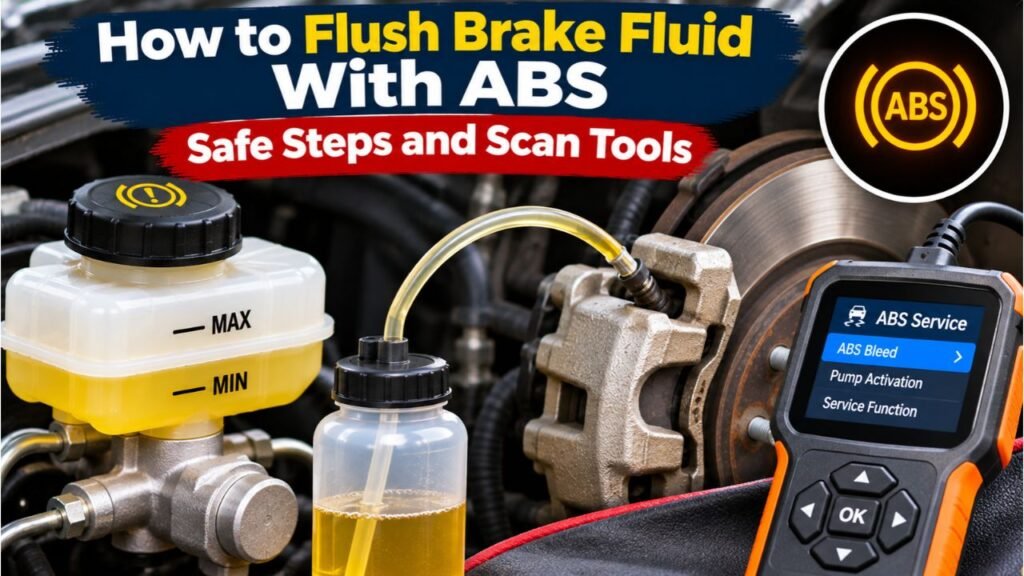
For a routine fluid exchange on an ABS-equipped vehicle, fresh brake fluid is passed through the specified hydraulic circuits while the reservoir remains adequately filled. An electronic ABS bleeding procedure is performed only when required by the vehicle’s service instructions.
The exact method depends on the design and condition of the braking system.
ABS Brake Fluid Flush Requirements
| Situation | Conventional Fluid Flush | ABS Scan Tool |
| Routine brake fluid replacement, no air introduced | Often sufficient | Not always required |
| Brake caliper replaced | Model-specific bleeding required | Sometimes required |
| Brake hose replaced | Hydraulic bleeding required | Depends on system and whether ABS unit contains air |
| Brake reservoir ran empty | Complete system assessment and bleeding | May be required |
| ABS hydraulic control unit replaced | Special bleeding procedure | Frequently required |
| Air suspected inside ABS module | Conventional bleeding alone may be insufficient | Often required |
| Brake pedal remains spongy after bleeding | Further diagnosis required | May be required |
| Hybrid or electronically controlled braking system | Special procedure may apply | Frequently requires dedicated service functions |
The HELLA technical guide to changing and bleeding brake fluid explains that some ABS and stability-control systems require diagnostic equipment to activate valves inside the hydraulic control unit.
The Basic Fluid Exchange Process
For a conventional hydraulic braking system where a standard exchange is authorized:
- Verify the exact vehicle-specific service procedure.
- Obtain the correct brake fluid and suitable bleeding equipment.
- Secure the vehicle safely.
- Clean the reservoir cap and surrounding area.
- Establish a clean, uninterrupted fluid supply.
- Bleed the wheel circuits in the manufacturer’s specified order.
- Prevent the reservoir from running dry.
- Perform an ABS scan-tool bleed if required.
- Repeat conventional bleeding if directed.
- Check fluid level, leaks, warning lights, and brake-pedal operation.
These are general stages, not a universal substitute for the manufacturer’s instructions.
Key Takeaway: Most routine ABS brake fluid changes do not automatically require scanner activation, but air inside the ABS hydraulic unit may require a special diagnostic bleeding routine.
What Makes Flushing Brake Fluid With ABS Different?
A conventional hydraulic braking system uses brake fluid to transfer pressure from the master cylinder to the brakes.
An ABS-equipped system adds electronically controlled hydraulic components.
How Does ABS Work?
A typical ABS includes:
- Wheel-speed sensors
- ABS electronic control module
- Hydraulic control unit
- Solenoid valves
- Return or circulation pump
- Hydraulic brake circuits
During certain hard-braking conditions, the ABS controller monitors wheel speeds and regulates hydraulic pressure to help prevent wheel lock.
This process can improve steering control during emergency braking, although it cannot overcome poor tire traction or unsafe driving conditions.
Why Is ABS Bleeding More Complicated?
The ABS hydraulic control unit may contain internal passages, valves, and chambers that are not fully flushed through an ordinary wheel bleeding procedure.
During regular braking, some ABS valves remain in their normal positions.
If air becomes trapped in a normally isolated passage, simply opening the wheel bleeder screws may not remove it.
A compatible diagnostic scan tool can command particular valves or pumps to operate according to the vehicle manufacturer’s procedure.
Does ABS Change the Brake Fluid Type?
Not automatically.
The vehicle may require DOT 3, DOT 4, a specialized low-viscosity DOT 4 formulation, or another approved product.
Some ABS and stability-control systems require specific fluid viscosity characteristics, particularly at low temperatures.
Always follow the vehicle manufacturer’s fluid specification.
Does Every ABS Car Require a Different Bleeding Order?
Not necessarily, but the sequence is vehicle-dependent.
Brake circuit layouts differ between manufacturers.
A conventional rear-right-first sequence is not appropriate for every car.
Key Takeaway: ABS introduces additional hydraulic passages and electronically controlled valves. Whether these require special bleeding depends on the system and the work performed.
What Tools Do You Need to Flush Brake Fluid With ABS?
Proper equipment helps reduce contamination, fluid spills, and the chance of introducing air into the braking system.
Recommended Tools and Materials
| Tool or Material | Purpose |
| Manufacturer-approved fresh brake fluid | Replaces the old hydraulic fluid |
| Vehicle service manual | Specifies bleeding order, precautions, and procedures |
| Pressure brake bleeder | Supplies controlled fluid pressure |
| Compatible reservoir adapter | Connects a pressure bleeder to the reservoir |
| Clear brake bleeding hose | Directs fluid into a collection container |
| Brake fluid catch bottle | Collects waste fluid |
| Correct bleeder-screw wrench | Opens and closes bleeder screws |
| Protective gloves and safety glasses | Reduces exposure to brake fluid |
| Clean, lint-free cloths | Cleans the reservoir exterior |
| Fender protection | Protects nearby painted surfaces |
| Suitable jack and rated jack stands | Supports the vehicle when wheel removal is necessary |
| ABS-capable diagnostic scan tool | Operates hydraulic valves when required |
| Appropriate diagnostic battery support | Maintains voltage during specified electronic bleeding procedures |
Not every job requires every tool.
A simple authorized fluid exchange may not require an ABS scan tool.
However, the tool and procedural requirements must be determined before opening the hydraulic system.
How Much Brake Fluid Do You Need?
The exact amount varies by vehicle.
Many passenger cars may use approximately 1–2 quarts during a typical exchange, but that is only a planning estimate.
Some systems require more or less fluid, especially when additional bleeding is necessary.
Consult the service information and have enough new fluid available before beginning.
Can You Use a Regular OBD2 Scanner?
Most basic OBD2 code readers cannot perform ABS hydraulic bleeding.
A suitable scan tool needs the specific bidirectional service function supported by the vehicle’s ABS control module.
Do not assume that a scanner can perform ABS bleeding merely because it can read ABS fault codes.
What About a One-Person Bleeder Kit?
A pressure or vacuum bleeding kit can make certain jobs easier for a single technician.
However, it does not replace the need for an ABS electronic bleed when that procedure is required.
Key Takeaway: Correct brake fluid, compatible bleeding equipment, and vehicle-specific service instructions are essential. A scan tool is necessary only when the system or repair procedure requires it.
Before You Start: Important ABS Brake Bleeding Safety Checks
Brake fluid replacement is a safety-critical maintenance procedure.
Incorrect service can reduce braking ability.
1. Identify the Exact Vehicle
Find the:
- Make
- Model
- Model year
- Engine or powertrain configuration
- Brake system type
Use the corresponding service procedure.
Different model years may have different hydraulic arrangements and electronic bleeding requirements.
2. Confirm the Brake Fluid Specification
Check the owner’s manual and service documentation.
Common fluid types include:
- DOT 3
- DOT 4
- DOT 4 LV
- DOT 5.1
These specifications are not universally interchangeable.
Never add engine oil, power steering fluid, mineral oil, or unapproved cleaning products to the brake reservoir.
3. Check for Existing Brake Problems
Inspect the system for:
- Brake fluid leaks
- Damaged hoses
- Corroded brake lines
- Damaged calipers
- Low reservoir level
- Brake warning lights
- Abnormal pedal behavior
If the reservoir is unexpectedly low or the pedal is already soft, diagnose the cause before treating the job as routine maintenance.
4. Check for Electronic Brake System Precautions
Some hybrids, electric vehicles, and electronically controlled brake systems can operate a hydraulic pump independently of ordinary pedal input.
Opening a hydraulic connection without following the correct shutdown or depressurization instructions may be dangerous.
Do not assume switching off the ignition is sufficient to disable every electronically controlled brake system.
5. Support the Vehicle Correctly
If removing wheels is necessary, use the manufacturer’s specified lifting points and properly rated support equipment.
Never work beneath a vehicle supported only by a hydraulic jack.
6. Protect Yourself and the Vehicle
Brake fluid can irritate skin and eyes and damage automotive paint.
Wear gloves and eye protection.
Keep fluid away from painted surfaces.
Avoid reusing containers that previously held petroleum products.
7. Prepare for Waste Fluid Disposal
Collect drained brake fluid in a suitable container.
Never pour used brake fluid onto the ground or into drains.
Follow local hazardous-waste disposal requirements.
Key Takeaway: Verify the service procedure, fluid specification, and electronic-system precautions before beginning. Do not open an unfamiliar brake hydraulic system without the required information.
How to Flush Brake Fluid With ABS: Step-by-Step Procedure
The following process describes a general conventional fluid exchange for an ABS-equipped vehicle where the manufacturer permits a standard hydraulic flush.
It does not replace a vehicle-specific service manual.
If the brake system requires an electronic service mode, special pressurization procedure, or scan-tool bleed, those instructions take priority.
Step 1: Park the Vehicle and Prepare the Work Area
Park on a stable, level surface.
Secure the vehicle according to the manufacturer’s instructions.
Make sure the appropriate braking-system operating mode has been disabled.
If wheel access is required, lift and support the vehicle using approved methods.
Keep the area clean and free from unnecessary tools or contamination sources.
Step 2: Locate the Brake Fluid Reservoir
Open the hood and locate the brake fluid reservoir.
It is often mounted above the master cylinder.
However, the reservoir location and arrangement vary.
Certain vehicles have separate hydraulic reservoirs or additional service requirements.
Step 3: Clean the Reservoir Exterior
Before opening the cap, wipe dust and dirt from:
- Reservoir top
- Cap
- Reservoir neck
- Surrounding components
Use a clean, lint-free cloth.
Prevent debris and moisture from entering the hydraulic fluid.
Step 4: Verify Fluid Level and Condition
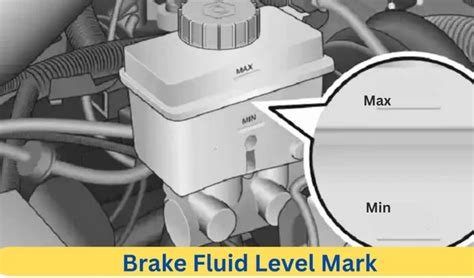
Check the existing level against the manufacturer’s reference marks.
If the reservoir is unexpectedly empty or significantly below its permitted level, stop and investigate.
Do not assume the level dropped because the fluid evaporated.
Brake wear or hydraulic leakage may be responsible.
Step 5: Prepare the Approved Bleeding Equipment
If using a pressure bleeder:
- Confirm the equipment is compatible with the reservoir.
- Inspect the adapter and seals.
- Follow the manufacturer’s setup instructions.
- Use fresh brake fluid of the correct specification.
- Check the equipment for leaks.
- Apply only the pressure specified for the vehicle and bleeding equipment.
Do not use a universal pressure setting without verifying it against the applicable service instructions.
Some brake systems have special limitations.
Step 6: Maintain the Correct Reservoir Fluid Supply
During flushing, the master cylinder must maintain an adequate supply of brake fluid.
If the reservoir runs dry, air can enter the hydraulic system.
This can turn a routine fluid change into a more complicated bleeding job.
A correctly configured pressure bleeding system may maintain the fluid supply automatically.
Manual methods require careful monitoring and replenishment.
Step 7: Identify the Correct Bleeding Order
Before opening any wheel bleeder screw, find the order specified by the manufacturer.
For example, some vehicles use:
- Right rear
- Left rear
- Right front
- Left front
Other vehicles use different sequences because of diagonally split hydraulic circuits or other design features.
Do not assume the farthest wheel always goes first.
The NAPA technical article on brake bleeding basics explains that ABS-equipped vehicles may require manual, pressure, or scan-tool procedures depending on the manufacturer’s instructions.
Step 8: Connect the Bleeding Hose
At the first wheel specified by the manual:
- Access the bleeder screw.
- Clean dirt from the surrounding area.
- Fit the correct wrench.
- Attach a suitable clear bleeding hose.
- Route the other end into an appropriate waste-fluid container.
Make sure the hose is secure.
Keep drained brake fluid away from painted surfaces and other components.
Step 9: Flush the First Wheel Circuit
Using the selected and approved bleeding method, allow old brake fluid to pass through the bleeder.
Monitor the discharged fluid.
Depending on the procedure, the process may continue until:
- Fresh fluid is reaching the outlet
- No visible air bubbles remain
- The required amount of fluid has passed
- The manufacturer specifies completion
Fluid color alone does not guarantee all old fluid or moisture has been removed.
Close the bleeder using the required procedure and tightening specification.
Step 10: Continue With the Other Wheel Circuits
Repeat the approved procedure at each wheel in the specified sequence.
Throughout the process:
- Maintain adequate brake fluid supply.
- Keep tools clean.
- Prevent air entry.
- Watch for leaks.
- Avoid overpressurizing the system.
- Do not reuse drained brake fluid.
If a bleeder screw is seized or damaged, stop rather than forcing it.
Step 11: Perform the ABS Electronic Bleed if Required
If the service procedure requires activation of the ABS hydraulic control unit, perform the specified scan-tool procedure.
This may involve operating pump motors and valves.
The exact order varies.
Some vehicles require:
- Conventional hydraulic bleeding
- Electronic ABS bleeding
- Another conventional bleeding pass
Other systems use different sequences.
Do not assume that the scan-tool function always comes last.
Step 12: Recheck Fluid Level and System Integrity
After the procedure:
- Disconnect equipment according to instructions.
- Restore the correct reservoir fluid level.
- Secure the cap.
- Inspect for leaks.
- Confirm bleeder screws are properly closed.
- Reinstall any removed components.
- Check warning lights and diagnostic requirements.
Step 13: Verify Brake Pedal Operation
Carry out the manufacturer’s post-service checks.
The brake pedal should operate as specified for that vehicle.
If it feels spongy, sinks excessively, or behaves abnormally, the braking system is not ready for normal driving.
Step 14: Complete the Required Final Tests
A qualified technician should verify hydraulic integrity, braking operation, and any required ABS functions before returning the vehicle to service.
Only after the required safety checks have passed should the vehicle undergo the manufacturer’s prescribed low-speed functional test.
Key Takeaway: Keep the hydraulic system supplied with fresh fluid, follow the correct bleeding sequence, and perform the ABS electronic procedure when required. Proper verification is essential before driving.
Do You Need a Scan Tool to Flush Brake Fluid With ABS?
Not always. A routine brake fluid change may be possible without a scan tool when no air has entered the ABS hydraulic control unit and the manufacturer authorizes conventional bleeding.
However, a scan tool may be essential after certain hydraulic repairs.
When a Scan Tool May Not Be Necessary
Examples include:
- Routine brake fluid replacement
- A completely sealed system with no air introduced
- Vehicles that specifically permit conventional pressure bleeding
- Certain wheel-circuit bleeding procedures
These situations still depend on the service manual.
When a Scan Tool May Be Required
Examples include:
- ABS hydraulic control unit replacement
- Air suspected inside the ABS unit
- Reservoir emptied and air entered the system
- Certain master cylinder replacements
- Persistent spongy pedal after correct base bleeding
- Manufacturer-required automated brake bleeding
- Certain electronic brake-by-wire or hybrid systems
What Does the ABS Scan Tool Actually Do?
A compatible bidirectional diagnostic tool communicates with the ABS module.
Depending on the system, it may:
- Activate hydraulic valves
- Operate the ABS pump
- Open normally closed hydraulic passages
- Guide the technician through a bleeding sequence
- Perform related system initialization
This allows trapped air to be moved out of passages that conventional bleeding may not reach.
Can a Basic Code Reader Do This?
Usually not.
A simple OBD2 reader may support engine fault codes and limited diagnostic data.
Electronic ABS bleeding generally requires model-specific bidirectional service functionality.
Does an ABS Warning Light Mean the System Needs Bleeding?
No.
An ABS warning light can appear because of wheel-speed sensor problems, wiring faults, control-module issues, hydraulic faults, or other conditions.
Bleeding should not be performed merely because an ABS light is illuminated.
Diagnose the actual fault first.
Key Takeaway: A scan tool is necessary when the vehicle requires ABS hydraulic activation, not simply because the dashboard has an ABS feature.
How to Bleed the ABS Module With a Scan Tool
When an ABS module contains trapped air, conventional wheel bleeding alone may not remove it.
The hydraulic control unit may require a manufacturer-specific electronic bleeding sequence.
General ABS Scan-Tool Bleeding Workflow
For many systems, the overall process involves:
- Checking the exact vehicle service procedure.
- Confirming all hydraulic connections are correctly installed.
- Filling the reservoir with the correct fluid.
- Performing the initial base brake bleeding when instructed.
- Connecting a compatible diagnostic scan tool.
- Selecting the correct ABS service function.
- Following the tool’s guided instructions to operate valves and pumps.
- Repeating wheel bleeding if required.
- Checking fluid level and system pressure response.
- Verifying braking operation and relevant warning indicators.
The exact sequence must come from the vehicle manufacturer’s service information.
What Happens During ABS Activation?
The scan tool may command electrically operated valves and pumps within the hydraulic control unit.
These operations can move trapped air into parts of the hydraulic circuit where it can be removed using the appropriate bleeding procedure.
Why Might You Need to Bleed the Wheels Again?
Activating ABS valves may move trapped air out of internal passages and into the normal hydraulic circuits.
Another wheel bleeding pass may then be necessary.
However, not every system uses the same sequence.
Should the Engine Be Running?
That depends on the vehicle.
Some electronic bleeding functions require ignition ON with the engine stopped.
Others have special power, battery support, or system-state requirements.
Do not guess.
Can You Activate ABS by Driving on Gravel?
Do not intentionally trigger ABS on a public road or slippery surface as a substitute for an approved scan-tool bleed.
This is not a reliable or manufacturer-approved universal service procedure.
It also creates unnecessary driving risk.
Is ABS Module Bleeding a DIY Job?
It may be possible for an experienced person with the exact service instructions and appropriate diagnostic equipment.
For most owners, an ABS hydraulic module bleed is better handled by a qualified technician.
Key Takeaway: Scan-tool ABS bleeding operates the hydraulic unit’s internal valves or pump. It must follow the specific vehicle procedure and may require conventional bleeding before and afterward.
Pressure Bleeding vs. Manual Bleeding vs. Vacuum Bleeding
Several methods can replace old brake fluid.
The best method depends on the vehicle, equipment, and service instructions.
Bleeding Method Comparison
| Method | How It Works | Main Advantage | Main Limitation |
| Pressure bleeding | Pressurized equipment pushes fluid through circuits | Consistent controlled flow | Requires approved pressure and sealed adapter |
| Manual bleeding | Brake pedal moves fluid through hydraulic system | Simple equipment | Requires careful coordination and technique |
| Vacuum bleeding | Vacuum equipment draws fluid from a bleeder | Convenient on some systems | Can draw air around bleeder threads |
| Gravity bleeding | Fluid moves through circuit under gravity | Minimal equipment | Can be slow and unsuitable for some procedures |
| Electronic ABS bleeding | Scan tool operates ABS valves or pump | Accesses certain internal passages | Requires compatible diagnostics and service instructions |
Is Pressure Bleeding Better for ABS?
Pressure bleeding is often preferred for a routine brake fluid exchange because it can provide a controlled supply of fresh fluid.
However, pressure bleeding is not automatically appropriate for every system.
Some vehicles specify a particular method or restrict certain procedures.
Is Manual Bleeding Safe on ABS Brakes?
Manual bleeding can be suitable when expressly permitted.
However, incorrect pedal operation may introduce air or cause other problems.
Some service procedures limit pedal travel to protect components.
Follow the vehicle instructions rather than repeatedly pushing the pedal to the floor.
Does Vacuum Bleeding Work With ABS?
It may work for certain systems.
However, vacuum equipment can sometimes draw air around loose bleeder-screw threads, making it difficult to interpret bubbles in the hose.
Certain vehicle manufacturers may prohibit vacuum bleeding for particular hydraulic systems.
Which Method Should Beginners Choose?
A qualified service shop with the proper equipment is the most reliable choice when the vehicle’s ABS requirements are uncertain.
For an experienced DIY technician, pressure bleeding may be practical when the manufacturer’s procedure permits it.
Key Takeaway: Pressure bleeding is often convenient, but no method works universally. Use the bleeding technique authorized for the exact vehicle.
What Is the Correct Brake Bleeding Order for ABS?
There is no single wheel sequence that applies to every ABS-equipped vehicle.
Why Is Bleeding Order Important?
Hydraulic circuits may be arranged in different configurations.
Common layouts include:
- Front/rear split systems
- Diagonally split systems
- Individually controlled circuits
- Systems with special ABS or stability-control arrangements
The manufacturer specifies the order based on the design.
Is Right Rear First Always Correct?
No.
Although right rear, left rear, right front, left front is a commonly discussed sequence, it is not appropriate for every vehicle.
Following the wrong sequence may leave air in certain parts of the system.
What if the Vehicle Has Multiple Bleeder Screws per Caliper?
Some high-performance brake calipers have more than one bleeder screw.
The correct sequence may require bleeding specific locations in a particular order.
Do not assume bleeding one screw is sufficient.
Can You Bleed Only One Wheel?
Sometimes, after an isolated repair, the manufacturer may permit bleeding only an affected circuit.
However, this is different from performing a complete brake fluid exchange.
A full flush generally involves the circuits specified by the service procedure.
Key Takeaway: Use the manufacturer’s wheel order. A universal bleeding sequence can be wrong for ABS-equipped vehicles.
Can You Flush ABS Brake Fluid Without Removing the Wheels?
Sometimes.
Wheel removal depends on the accessibility of the bleeder screws and the approved service procedure.
When Wheel Removal May Not Be Necessary
Some vehicles provide access to the bleeder screws through or around the wheels.
However, working access must still be adequate and safe.
When Wheel Removal Is Better
Removing wheels may provide:
- Clear access to bleeder screws
- Better visibility of leaks
- Room for attaching hoses and tools
- Easier inspection of calipers and hydraulic fittings
What About Jacking Up the Vehicle?
Use the correct lifting points and rated support equipment.
Never work beneath a vehicle held only by a jack.
If lifting or wheel removal is necessary and you lack suitable equipment, professional service is the safer option.
Should the Parking Brake Be Applied?
Parking brake requirements vary with the procedure.
Certain electronically controlled parking brake systems may require a service mode.
Follow the vehicle-specific instructions.
Key Takeaway: Wheel removal is not always required, but safe access and correct vehicle support are essential.
Which Brake Fluid Should You Use in an ABS System?
The correct fluid is determined by the vehicle manufacturer.
Do not select fluid solely because the vehicle has ABS.
Common Brake Fluid Specifications
| Brake Fluid | General Characteristics | Important Consideration |
| DOT 3 | Glycol-based | Use when approved |
| DOT 4 | Glycol-based, higher minimum boiling points | Must meet vehicle requirements |
| DOT 4 LV | Low-viscosity glycol-based formulation | Often specified for certain advanced brake systems |
| DOT 5 | Silicone-based | Not interchangeable with glycol-based fluids |
| DOT 5.1 | Glycol-based | Different chemistry from DOT 5 |
Does ABS Require DOT 4?
No.
Some ABS-equipped cars specify DOT 3.
Others require DOT 4 or a specialized low-viscosity formulation.
Why Does Low Viscosity Matter?
ABS and electronic stability-control systems may need brake fluid to flow rapidly through hydraulic valves, including at low temperatures.
An incorrect fluid viscosity may affect system operation.
Can You Mix DOT 3 and DOT 4?
These glycol-based fluids are generally chemically miscible.
However, mixing does not guarantee that the result meets the vehicle’s required boiling-point, viscosity, or manufacturer-specific specification.
Use the approved fluid.
Why Should Brake Fluid Come From a Sealed Bottle?
Glycol-based brake fluids absorb moisture from the air.
Using fresh fluid from a newly opened, properly sealed container helps reduce contamination risk.
Key Takeaway: ABS does not determine the fluid grade by itself. Follow the exact vehicle specification, including any low-viscosity requirements.
How to Know When an ABS Brake Fluid Flush Is Complete
Successful service requires more than simply seeing clean-looking fluid in the bleeding hose.
What Should Be Checked?
The required verification normally includes:
- Correct brake fluid installed
- Specified hydraulic circuits serviced
- Correct fluid level
- No external hydraulic leaks
- Bleeder screws properly secured
- Brake pedal behavior consistent with manufacturer specifications
- No unresolved brake-system warnings
- Completion of required diagnostic service functions
- Successful manufacturer-prescribed functional checks
Does Clear Fluid Mean the System Is Fully Flushed?
Not necessarily.
Color cannot confirm that every internal passage has been flushed or that all trapped air has been removed.
Some brake fluids naturally have different colors.
Does a Firm Pedal Prove the ABS Is Properly Bled?
Not by itself.
The pedal can feel relatively firm even when a special hydraulic passage has not been serviced as required.
Follow the exact post-service verification procedure.
Should You Test the Brakes on a Public Road?
Only after the manufacturer-required checks have been completed and the vehicle has been confirmed safe.
If braking performance is abnormal or service requirements remain incomplete, do not drive the vehicle.
Key Takeaway: A properly completed flush is confirmed through the correct procedure and safety checks, not fluid color or pedal feel alone.
Why Does the Brake Pedal Feel Spongy After an ABS Fluid Flush?
A soft or spongy brake pedal after brake service may indicate trapped air, hydraulic leakage, an incomplete bleeding procedure, or another system fault.
It should not be treated as a normal outcome.
Common Causes
| Possible Cause | Why It Matters | Recommended Action |
| Reservoir ran dry | Air entered the hydraulic system | Follow full service bleeding procedure |
| Incorrect wheel bleeding sequence | Air may remain in certain circuits | Recheck manufacturer procedure |
| Air trapped inside ABS module | Conventional bleeding may be insufficient | Perform required electronic bleeding |
| Hydraulic leak | Air may enter or fluid may escape | Repair leak and verify system |
| Loose bleeder screw | May permit leakage or air entry | Inspect and correct |
| Incorrect manual bleeding technique | Can create or retain air | Follow specified method |
| Master cylinder problem | May affect pedal pressure | Diagnose component condition |
| Electronic braking fault | May require specialized service | Perform manufacturer-directed diagnosis |
Can You Fix It by Pumping the Pedal Repeatedly?
No reliable repair can be assumed from repeated pedal pumping.
The cause must be diagnosed.
A pedal that temporarily firms up after pumping can indicate a problem, but it does not identify a clogged ABS module or prove that bleeding is the only solution.
Can Driving Activate the ABS and Remove Air?
Do not use deliberate hard braking or wheel lockup as an improvised bleeding procedure.
An approved scan-tool function is the proper method when electronic ABS bleeding is required.
Should You Drive With a Spongy Pedal?
No.
If the pedal behaves abnormally after service, have the braking system inspected and corrected before normal driving.
Key Takeaway: A spongy pedal means the job may be incomplete or another fault is present. Further diagnosis and proper bleeding are required before using the vehicle.
How Often Should You Flush Brake Fluid on an ABS Car?
ABS-equipped vehicles require periodic brake fluid service according to their maintenance schedules.
The presence of ABS does not automatically create a universal replacement interval.
Typical Service Intervals
Some manufacturers specify replacement approximately every two years.
Others specify three years, a different maintenance interval, or a condition-based schedule.
Always follow the applicable owner’s manual.
Why Does Brake Fluid Need Replacing?
Glycol-based brake fluid gradually absorbs moisture.
Excessive moisture can lower its boiling point.
Under heavy braking, this can contribute to vapor bubbles and reduced hydraulic pressure transmission.
Moisture may also promote corrosion inside the braking system.
Does ABS Make Brake Fluid Deteriorate Faster?
Not automatically.
Moisture exposure, operating conditions, fluid formulation, and maintenance history matter more than ABS presence alone.
Can You Judge Fluid Condition by Color?
Not reliably.
Dark or cloudy fluid may indicate deterioration or contamination, but color alone does not establish moisture content or boiling point.
What Does a Professional Brake Fluid Change Include?
The Bosch Car Service guide to brake fluid changes describes verifying the specified fluid, replacing old fluid through the required circuits, removing trapped air, and checking the pedal and system for leaks.
It also notes that ABS-equipped vehicles may need special diagnostic procedures when air enters the hydraulic unit.
Key Takeaway: Follow the manufacturer’s replacement interval. An ABS car needs the same attention to brake fluid condition as any other hydraulic brake system.
Can You Flush ABS Brake Fluid by Yourself?
The answer depends on your mechanical experience, tools, and the vehicle’s specific brake system.
When DIY May Be Reasonable
A conventional brake fluid exchange may be suitable for an experienced DIY technician when:
- The service manual allows it.
- The hydraulic system is functioning normally.
- No air has entered the ABS unit.
- The correct bleeding equipment is available.
- The fluid specification is known.
- The correct bleeding order is documented.
- Post-service safety checks can be performed.
When Professional Service Is Preferable
Use a qualified technician when:
- ABS module bleeding is required.
- The vehicle has brake-by-wire or electronic hydraulic systems.
- The vehicle requires a special scan-tool service mode.
- The reservoir ran dry.
- A master cylinder or ABS hydraulic component was replaced.
- The pedal remains soft.
- Hydraulic leaks are present.
- Required equipment or instructions are unavailable.
Can You Perform the Job With a Helper?
Some manufacturers permit manual bleeding with an assistant.
One person operates the pedal according to the procedure, while another manages the bleeder.
However, incorrect coordination can introduce air.
Pressure bleeding equipment may be more practical when approved for the system.
Is a Basic DIY Kit Enough?
A basic kit may be sufficient for a conventional hydraulic exchange on a compatible vehicle.
It is not a substitute for manufacturer-specific electronic service functions.
Key Takeaway: DIY brake fluid replacement is possible on some ABS vehicles, but electronically controlled hydraulic systems and trapped ABS air often require professional equipment.
How Much Does an ABS Brake Fluid Flush Cost?
The cost depends on the service required and the vehicle’s hydraulic design.
What Affects the Price?
Important factors include:
- Vehicle make and model
- Required brake fluid type
- Brake fluid quantity
- Labor rates
- Bleeding method
- Whether ABS scan-tool activation is required
- Brake system accessibility
- Existing leaks or damaged components
Routine Flush vs. ABS Bleeding
| Service Type | Work Involved | Cost Complexity |
| Routine brake fluid exchange | Replace fluid through required circuits | Usually lower |
| Fluid exchange with wheel bleeding | Replace fluid and verify hydraulic bleeding | Moderate |
| Scan-tool ABS bleeding | Additional electronic hydraulic procedure | Potentially higher |
| ABS hydraulic module replacement | Component replacement and special bleeding | Significantly higher |
| Leak diagnosis and hydraulic repair | Identify and repair damaged components | Variable |
A routine flush is generally less involved than bleeding a hydraulic system after ABS module replacement.
Is an ABS Scan Tool Always an Extra Charge?
Not necessarily.
Some repair facilities include relevant diagnostics within the service price.
Others charge separately for specialized procedures.
Ask the shop whether the quote includes any required ABS electronic bleed and final system verification.
Is Cheap Brake Fluid Flushing Worth It?
A lower price is useful only when the correct procedure is performed.
The wrong fluid or incomplete bleeding can create far greater costs and safety risks.
Key Takeaway: Compare what the service includes, not simply the advertised price. ABS module bleeding may require additional equipment and labor.
Common Mistakes When Flushing Brake Fluid With ABS
1. Assuming Every ABS Car Needs a Scan Tool
Many routine fluid exchanges can use conventional bleeding methods when authorized by the manufacturer.
2. Assuming No ABS Car Needs a Scan Tool
Some systems require electronic valve and pump activation to remove trapped air.
3. Letting the Reservoir Run Dry
This may introduce air into the hydraulic system and ABS unit.
4. Using a Universal Bleeding Order
Not every vehicle uses the same hydraulic circuit arrangement.
5. Selecting the Wrong Brake Fluid
Incorrect viscosity or fluid chemistry can affect braking performance.
6. Mixing DOT 5 With Glycol-Based Fluid
Silicone DOT 5 must not be treated as interchangeable with DOT 3, DOT 4, or DOT 5.1.
7. Using Excessive Pressure
Pressure bleeding must remain within the vehicle and equipment limits.
8. Using Unapproved Vacuum Bleeding
Some manufacturers restrict certain bleeding methods.
9. Pushing the Pedal Beyond the Permitted Travel
Incorrect manual bleeding techniques can damage or compromise certain components.
10. Opening Brake Lines Without Disabling Electronic Systems
Some electronically controlled brakes can create hydraulic pressure unexpectedly.
11. Reusing Drained Brake Fluid
Used fluid may contain moisture, debris, and other contamination.
Never return it to the brake system.
12. Using Fluid From a Contaminated Container
Brake fluid must remain clean and compatible with the system.
13. Assuming Clear Fluid Means No Air Remains
Air may still be trapped inside hydraulic passages.
14. Driving With a Soft Brake Pedal
An abnormal pedal may indicate incomplete bleeding or a serious hydraulic fault.
15. Intentionally Activating ABS on a Slippery Road
This is not an acceptable replacement for a manufacturer-approved ABS bleeding procedure.
Key Takeaway: The most serious mistakes involve introducing air, using incorrect procedures, and returning a vehicle to the road without confirming safe hydraulic operation.
Standard Brake Fluid Flush vs. ABS Module Bleeding
These two services are related but not identical.
What Is a Standard Brake Fluid Flush?
A standard flush replaces aged brake fluid throughout the specified hydraulic circuits.
Its main purpose is to maintain fluid quality and remove moisture and contamination.
What Is ABS Module Bleeding?
ABS module bleeding is a procedure intended to remove air from hydraulic passages within the ABS control unit.
It may require commanding valves and pumps through a diagnostic tool.
Comparison Table
| Feature | Standard Brake Fluid Flush | ABS Module Bleeding |
| Main purpose | Replace old fluid | Remove trapped air from ABS hydraulic passages |
| Usually scheduled maintenance | Yes, per manufacturer | No, performed when required |
| Fresh brake fluid required | Yes | Yes |
| Wheel bleeding involved | Usually | Often before or after activation |
| Electronic scan tool | Depends on vehicle | Frequently necessary |
| Main trigger | Age, condition, maintenance interval | Hydraulic repairs or trapped air |
| Vehicle-specific procedure | Required | Essential |
Can You Need Both Procedures?
Yes.
For example, if an ABS hydraulic unit was replaced, the vehicle may require conventional brake bleeding, electronic ABS activation, and further bleeding.
Does a Normal Flush Clean Every Internal ABS Passage?
Not necessarily.
A routine exchange may follow the normal hydraulic flow paths.
A special ABS procedure may be necessary when internal passages contain trapped air.
Key Takeaway: Flushing replaces old fluid. ABS bleeding removes trapped air from special hydraulic passages. Some repairs require both.
What If Brake Fluid Flush Goes Wrong?
Brake service should not be considered complete when warning signs remain.
If the Reservoir Runs Dry
Stop the procedure.
Do not continue as though the system remains air-free.
Follow the manufacturer’s full air-removal procedure, which may require ABS electronic bleeding.
If a Bleeder Screw Breaks
Do not force the remaining fitting or attempt an improvised leak repair.
A damaged caliper or wheel cylinder may require professional repair or replacement.
If Brake Fluid Leaks
Stop and correct the leak.
Do not continue operating the vehicle simply because the reservoir is full.
If the Pedal Feels Soft
The system may contain air or have another hydraulic problem.
Do not drive.
If the ABS Warning Light Remains On
Use the correct diagnostic equipment to determine the cause.
An ABS warning light does not automatically mean another fluid flush will solve the issue.
If the Wrong Fluid Was Added
Stop the service and determine the exact substance used.
Petroleum-based fluid contamination can damage seals and may require extensive component replacement.
If Braking Performance Is Abnormal
Do not operate the vehicle on public roads.
Arrange appropriate inspection and repair.
Key Takeaway: Stop when the system behaves abnormally. Hydraulic brakes must be correctly repaired and verified before normal driving.
Conclusion
Flushing brake fluid with ABS is often similar to a conventional brake fluid exchange, but the procedure becomes more complex when air enters the ABS hydraulic control unit.
For many vehicles undergoing routine maintenance, the fluid can be replaced using a manufacturer-approved pressure, vacuum, or manual bleeding method without electronically activating the ABS system.
However, some systems require a diagnostic scan tool after specific hydraulic repairs or when air is trapped inside the ABS module.
The most important precautions are using the correct brake fluid, following the proper bleeding sequence, preventing the reservoir from running dry, and complying with the manufacturer’s service instructions.
Modern ABS, electronic stability-control, hybrid, and brake-by-wire systems may require additional precautions.
If a scan-tool bleed is necessary, the technician must use equipment that can operate the relevant hydraulic valves and pumps. A basic OBD2 reader usually cannot perform this function.
I recommend confirming the exact service requirements before opening the brake hydraulic system. For an experienced person with the proper equipment, a conventional ABS brake fluid exchange may be manageable.
For trapped air inside the ABS module, unfamiliar electronically controlled systems, or any abnormal brake-pedal behavior, professional service is the safer choice.
A successful brake fluid flush is not simply about replacing dirty fluid. It must leave the entire braking system properly filled, free from harmful trapped air, leak-free, and functioning according to the manufacturer’s specifications.
FAQs About How to Flush Brake Fluid With ABS
Can you flush brake fluid with ABS without a scan tool?
Yes, many ABS-equipped vehicles allow a conventional brake fluid exchange without a scan tool when no air has entered the ABS hydraulic unit. However, some manufacturers require special electronic bleeding procedures. Check the service manual before beginning because a standard flush is not sufficient for every braking system.
Do you have to bleed the ABS module when changing brake fluid?
Not always. A routine fluid change may require only conventional hydraulic bleeding. ABS module bleeding becomes necessary when specified by the manufacturer, particularly after certain hydraulic repairs or when air is trapped inside the ABS unit. The exact procedure varies by vehicle.
What is the correct bleeding order for ABS brakes?
There is no universal bleeding order for all ABS-equipped vehicles. Some systems use right rear, left rear, right front, and left front, while others use different sequences. The correct order depends on the hydraulic circuit design and must come from the manufacturer’s service information.
Can you use a pressure bleeder on ABS brakes?
Yes, pressure bleeding is suitable for many ABS-equipped vehicles when the manufacturer approves the method. Use compatible equipment and the correct specified pressure. Some vehicles require additional electronic bleeding, while others have special pressure or procedural limitations.
What happens if air gets into the ABS module?
Air trapped inside the ABS hydraulic control unit may cause a soft brake pedal or incomplete hydraulic response. Conventional wheel bleeding may not remove air from certain internal passages. A compatible diagnostic scan tool may be required to operate valves and pumps as part of a manufacturer-approved bleeding procedure.
Can you bleed ABS brakes by pumping the brake pedal?
Manual pedal bleeding is permitted on some vehicles. However, it must follow the correct procedure and may not remove air trapped inside the ABS hydraulic control unit. Certain vehicles require electronic service functions or restrict the amount of pedal travel during bleeding.
How do you know when an ABS brake fluid flush is complete?
The flush is complete when the required hydraulic circuits have been serviced with the correct fluid, any necessary ABS bleeding has been performed, fluid level and leak checks have passed, and brake-pedal and system operation meet the manufacturer’s requirements. Clear fluid alone does not confirm a successful procedure.