How to Fix Stuck Parking Brake: Safe Release and Repair Steps
To fix a stuck parking brake, first secure the vehicle, check the release mechanism, and identify whether a frozen cable, seized brake component, or electronic parking brake fault is preventing release. Some problems can be resolved by following the correct release procedure or restoring electrical power. Others require cable replacement, brake repairs, or professional diagnosis.
A stuck parking brake can prevent your vehicle from moving even after you lower the handbrake lever or press the electronic release switch. It commonly happens after freezing weather, extended parking, moisture exposure, or mechanical wear. In some cases, the dashboard indicator turns off while the rear brakes remain partially engaged.
Driving against a stuck parking brake can overheat the brakes, damage friction components, and cause unpredictable vehicle movement. The safest approach is to identify the cause before attempting to move the car.
This guide explains how to release a stuck parking brake step by step, recognize different failure symptoms, handle frozen components, troubleshoot electronic systems, and determine when replacement or professional repair is necessary.
Why Does a Parking Brake Get Stuck?
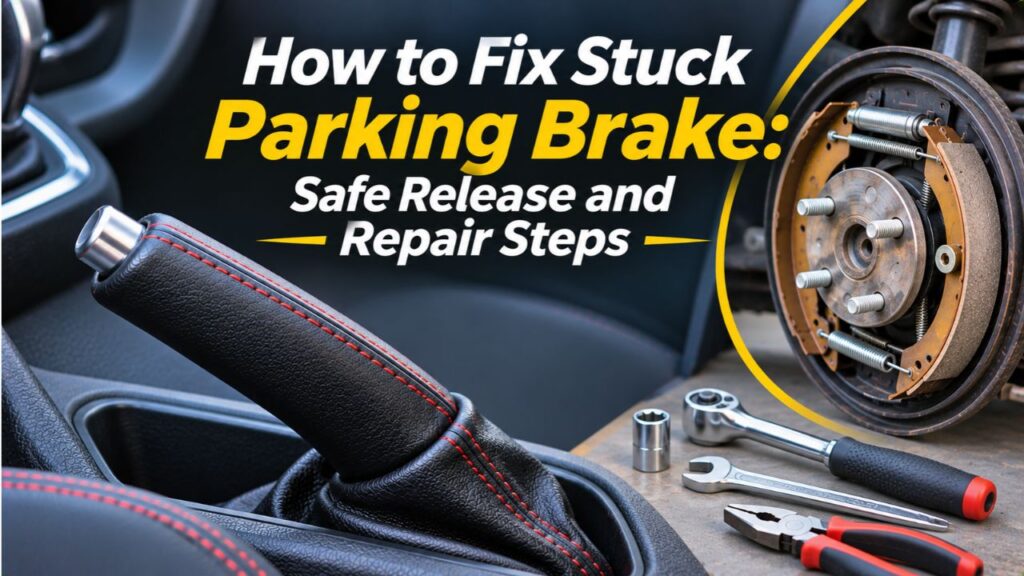
A parking brake can remain engaged because its control mechanism, connecting cables, or wheel-end brake components cannot return to their released positions.
Rusted or Seized Parking Brake Cable
Mechanical parking brakes use steel cables to transfer force from a lever or pedal to the rear brakes. Over time, damaged protective coatings and moisture entering the cable housing can cause corrosion.
The cable may become difficult to move or remain under tension after the driver releases the control. This is particularly common when the vehicle sits unused for extended periods.
Frozen Parking Brake Components
Water can accumulate around the rear brakes or inside cable housings. During freezing temperatures, ice may prevent the cable, brake shoes, or caliper mechanism from returning normally.
A frozen parking brake is more likely after driving through snow, washing the vehicle, or parking with wet brakes overnight.
Seized Rear Brake Hardware
Parking brake shoes can become stuck against a drum, particularly after prolonged storage. On vehicles with disc brakes, the parking-brake mechanism within the rear caliper may also seize.
Damaged return springs, excessive corrosion, and worn components can prevent the brake from disengaging even when the cabin control moves normally.
Electronic Parking Brake Malfunction
Modern electronic parking brakes (EPBs) use electrically operated actuators. Low battery voltage, faulty switches, damaged wiring, or actuator problems may prevent release.
An electronic system may also refuse a release command because the required ignition, brake-pedal, or other operating conditions have not been met.
How to Fix Stuck Parking Brake: Step-by-Step Instructions
The following procedure starts with checks a vehicle owner can perform without dismantling the braking system. More complicated mechanical and electrical repairs require suitable tools and model-specific service instructions.
Step 01: Secure the Vehicle Before Working
Park on a stable, level surface whenever possible. Keep the regular brake pedal pressed and place an automatic transmission in Park or a manual transmission in the appropriate gear.
Position wheel chocks to prevent movement if the parking brake suddenly releases. This is especially important when the car is on a slope.
Turn off the engine unless a specific diagnostic procedure requires it to run.
Safety Note: Never crawl underneath a vehicle supported only by a jack. If the car is on a steep slope or cannot be secured properly, arrange professional assistance instead of attempting repairs.
Step 02: Identify Which Parking Brake System Your Car Uses
Before trying to release anything, identify the parking-brake control.
Most passenger vehicles use one of three arrangements:
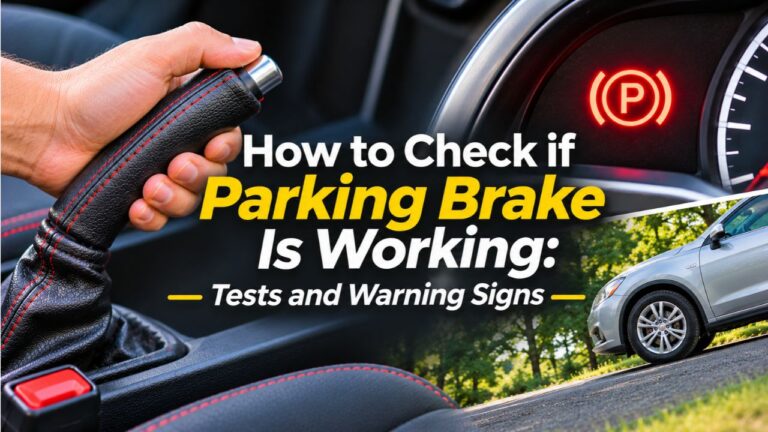
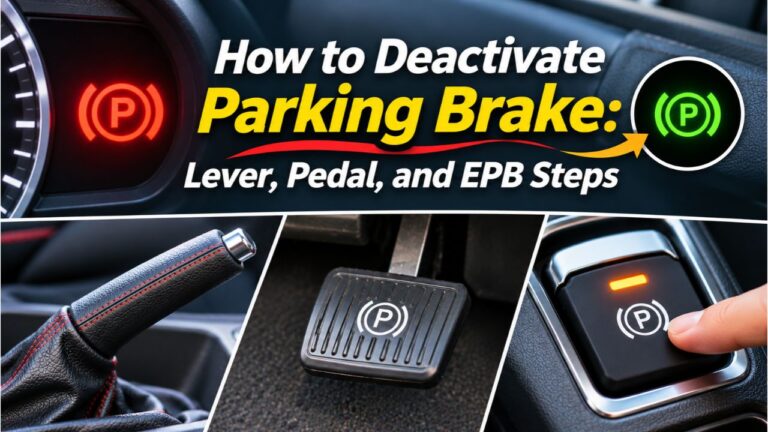
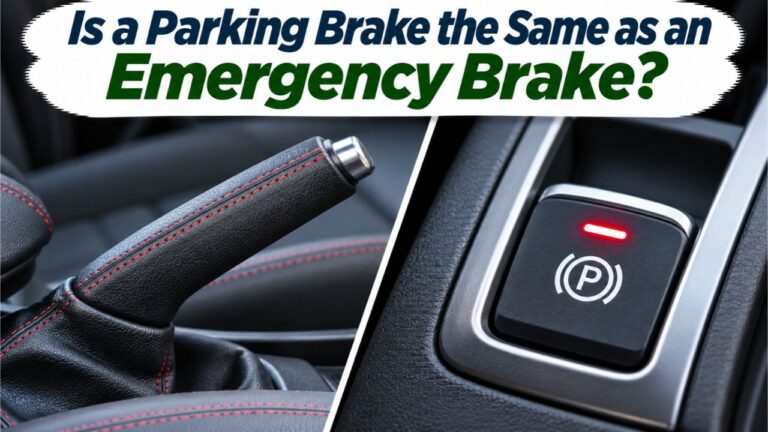
- Hand-operated parking brake: A lever commonly located between the front seats.
- Foot-operated parking brake: A separate pedal near the driver’s left foot.
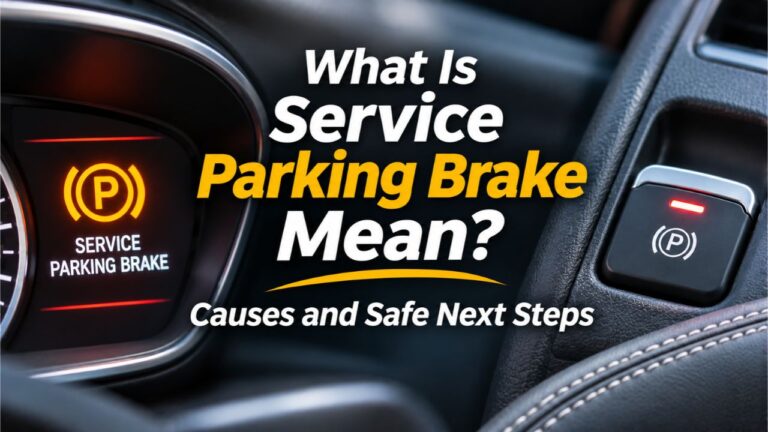
- Electronic parking brake: A switch generally marked with a circled P symbol.
A mechanical system may have a stuck cable or linkage. An electronic system could instead have a control or electrical fault.
Check the owner’s manual if the release procedure is unfamiliar. Do not assume that every parking brake releases using the same action.
Step 03: Try Releasing a Stuck Handbrake Lever
If your vehicle uses a hand-operated parking brake, keep the regular brake pedal pressed.
Gently lift the handbrake lever slightly to reduce pressure on its locking mechanism. Press the release button and lower the lever completely.
If the button sticks, check whether the lever is under excessive tension or the release mechanism is damaged.
Do not strike the lever, pull it forcefully, or use tools to pry open the mechanism.
If the lever moves down normally but the vehicle’s parking brake remains engaged, the problem may be in the cable or rear braking components rather than the lever itself.
Step 04: Check the Foot-Operated Parking Brake Release
Some cars and trucks use a separate parking-brake pedal.
Depending on the model, releasing it may involve pulling a dashboard-mounted handle or pressing the parking-brake pedal again.
Follow the manufacturer’s instructions while keeping the regular brake pedal pressed.
Observe whether the parking-brake pedal returns to its normal resting position. A pedal that remains depressed may indicate a damaged return spring, release mechanism, or cable.
Do not repeatedly stomp on the pedal to free it. Excessive force can damage the linkage without releasing the rear brakes.
Step 05: Release an Electronic Parking Brake Correctly
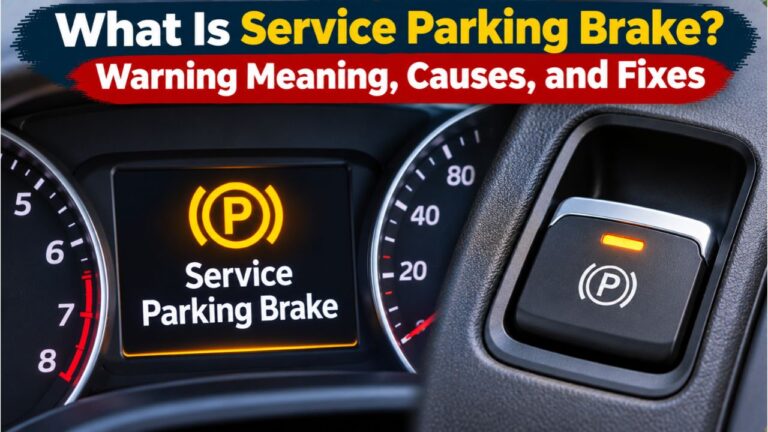
If your vehicle has an electronic parking brake, check the dashboard for an EPB malfunction warning.
Many vehicles require the ignition to be on and the regular brake pedal pressed before the electronic parking brake will release.
For example, Ford’s official electric parking brake instructions describe switching on the ignition, holding the brake pedal, and pushing the parking-brake switch downward.
Other manufacturers may require different procedures.
After operating the switch, check whether the parking-brake indicator turns off. If it flashes or a malfunction message remains, stop repeated attempts and investigate the fault.
Never apply external voltage directly to an electronic parking brake motor without an approved service procedure.
Step 06: Check the Battery if the Electronic Brake Will Not Release
A weak or discharged 12-volt battery can prevent an electronic parking brake actuator from operating.
Look for signs such as dim dashboard lights, slow engine cranking, or multiple electrical warnings.
If the battery is discharged, consult the owner’s manual for the approved jump-starting procedure. Some vehicles allow the parking brake to release after proper electrical power is restored.
Hybrids and electric vehicles may have specific requirements for external power connections.
If adequate power is available but the brake remains engaged, a technician may need to inspect the EPB fuse, wiring, control module, or actuator.
Do not replace a fuse with one rated for higher current or attempt to bypass the electronic controls.
Step 07: Check Whether the Parking Brake Is Frozen
If the parking brake became stuck after freezing weather, ice may be holding the cable or rear brake mechanism.
Look for visible snow or ice around the rear wheels without reaching into hidden braking components.
Toyota’s winter driving instructions warn that damp brakes can freeze and prevent parking-brake release. For the covered vehicle, Toyota also describes special cold-weather parking precautions, including securing the wheels when the parking brake is not applied.
If freezing is suspected, allow the affected components to thaw naturally in a suitably heated location when safe transportation is available.
Avoid using boiling water, open flames, or direct high heat on the brake assembly. These methods may damage nearby parts or create additional hazards.
Once the brake releases, inspect it for corrosion or moisture-related damage before returning to normal driving.
Step 08: Inspect the Parking Brake Cable for Corrosion
On a mechanical system, visually inspect accessible cable sections and connections.
Look for damaged protective coverings, heavy rust, broken strands, or signs that the cable remains under tension after the control releases.
A cable may seize internally even when its outer housing appears normal.
Applying penetrating oil to an exposed linkage does not necessarily repair corrosion inside the cable housing. Keep all lubricants away from brake friction surfaces.
If the cable is frayed, severely corroded, or seized inside its housing, replacement is generally more dependable than repeated attempts to free it.
Detailed cable removal and adjustment should follow the vehicle-specific repair manual.
Step 09: Check for Stuck Rear Brake Shoes or Calipers
If the parking-brake control releases but the wheels remain restrained, the problem may be at the rear brakes.
Depending on the design, possible causes include:
- Parking brake shoes rusted against a drum.
- A seized parking-brake lever on a rear caliper.
- Damaged shoe return springs.
- A binding drum-brake adjustment mechanism.
- An electronic parking brake actuator that has not retracted.
A technician can safely lift and support the vehicle, check which wheel remains restrained, and inspect the appropriate hardware.
Do not force a seized wheel to rotate using engine power. Likewise, avoid striking the brake drum or attempting to turn an adjustment mechanism without identifying the correct service procedure.
Step 10: Check Parking Brake Cable Adjustment
An incorrectly adjusted cable can prevent the brake from releasing fully.
Excessive cable tension may keep the rear braking components partially applied even after the lever or pedal returns.
However, adjusting cable tension is not the correct solution for every stuck parking brake.
In its guide to repairing parking brakes, NAPA explains that adjustment locations vary between vehicles and may be near the control mechanism or beneath the car.
The correct setting depends on the parking-brake design.
A technician should first establish that the cable and rear brake hardware move freely. Adjusting a seized mechanism can hide the actual problem and reduce holding performance.
Step 11: Diagnose Electronic Parking Brake Actuator Problems
If an EPB still refuses to release after the correct control procedure and battery checks, a diagnostic scan may be necessary.
A technician can read parking-brake fault codes and inspect the switch, wiring, actuator motors, and relevant control modules.
Some rear calipers require an electronic service mode during maintenance. This allows the actuator to move into a specified position for approved repair procedures.
Service mode is not a universal emergency release method.
Forcing an electronic caliper piston backward or disconnecting actuator wiring without instructions can damage the system.
A failed actuator may require replacement, followed by calibration or initialization specified by the manufacturer.
Step 12: Confirm the Brake Releases and Holds Properly
After the fault has been repaired, verify that the parking brake operates normally.
The release control should respond correctly, and the indicator should behave as described in the owner’s manual.
A technician should confirm that the affected wheels rotate freely when released and that the parking brake holds the vehicle under the manufacturer’s specified test conditions.
Check for unusual noises, brake drag, excessive heat, or warning messages.
If the service brakes were disturbed during repairs, their operation must also be verified.
Do not return the vehicle to normal driving until the parking brake releases completely and can securely hold the vehicle when applied.
How to Identify the Cause of a Stuck Parking Brake
Different symptoms help narrow the diagnosis.
| Symptom | Possible Cause | Recommended Action |
| Handbrake lever will not lower | Jammed release button or lever mechanism | Inspect the control and latch |
| Lever lowers but brake remains stuck | Seized cable or rear brake hardware | Inspect cable and wheel-end mechanism |
| Brake sticks after freezing weather | Ice around cable, shoes, or caliper | Arrange safe thawing and inspection |
| Brake sticks after long storage | Corrosion bonding friction components | Professional brake inspection |
| EPB switch does not respond | Low battery voltage or electrical fault | Verify power and check diagnostic warnings |
| One rear wheel remains locked | Seized caliper or parking-brake hardware | Repair the affected wheel assembly |
These symptoms provide diagnostic clues, not definite proof of a particular failure.
Should You Replace or Repair a Stuck Parking Brake Cable?
A parking brake cable with minor external surface corrosion may not require replacement if it operates freely and remains structurally sound.
However, a cable that is internally seized, frayed, or damaged should generally be replaced.
Repeatedly lubricating a sticking cable can provide temporary movement without correcting corrosion inside its housing.
Replacement should use a compatible cable installed and adjusted according to the vehicle manufacturer’s requirements.
Rear calipers, parking-brake shoes, and return springs should also be inspected because a new cable will not correct seized wheel-end hardware.
Can You Drive With a Stuck Parking Brake?
No. Driving with a parking brake that remains applied can damage the braking system and compromise vehicle control.
Even partial brake drag produces friction and heat.
Possible consequences include accelerated pad or shoe wear, overheated rotors or drums, damaged calipers, and reduced braking performance.
A severely stuck parking brake can prevent a wheel from rotating normally.
If the brake will not release, arrange towing. Tell the towing operator which wheels appear locked and whether the vehicle has all-wheel drive.
A suitable flatbed or wheel dollies may be needed to prevent additional damage.
Do not assume a dashboard light turning off proves the mechanical components have released.
How to Prevent a Parking Brake From Getting Stuck Again
Regular inspection and proper use help reduce the likelihood of another failure.
- Use the parking brake regularly: Normal operation helps reveal developing cable or linkage problems.
- Inspect cables and protective coverings: Damaged housings can allow moisture and road salt to reach internal components.
- Maintain rear brake hardware: Corrosion and damaged return springs should be corrected promptly.
- Follow cold-weather instructions: Wet brakes may freeze, and some manufacturers specify special parking procedures.
- Maintain the 12-volt battery: Electronic parking brake systems need adequate electrical power for normal operation.
- Address warning lights promptly: An intermittent EPB fault may become a complete release failure.
Avoid leaving known parking-brake problems unresolved. A component that sticks occasionally may eventually fail to release altogether.
FAQs About How to Fix Stuck Parking Brake
Can a Stuck Parking Brake Release Itself?
Sometimes ice may thaw or a temporarily binding component may release. However, the underlying problem can remain and cause the brake to stick again. Inspect the system before normal use.
Can You Use WD-40 to Fix a Stuck Parking Brake?
Lubricating certain exposed linkage points may help when approved by the manufacturer, but it cannot reliably repair an internally corroded cable. Never spray lubricant onto brake pads, shoes, drums, or rotors.
Can a Dead Battery Cause a Parking Brake to Stick?
Yes. A discharged 12-volt battery can prevent some electronic parking brakes from releasing. Follow the manufacturer’s approved power-restoration procedure rather than bypassing the actuator.
Can You Release a Stuck Parking Brake by Driving Backward?
Driving backward against an engaged parking brake is not recommended. It may damage brake components or cause sudden vehicle movement if the mechanism releases. Have the brake freed safely instead.
How Much Does It Cost to Fix a Stuck Parking Brake?
Repair costs depend on the failed component and the vehicle. A cable replacement is generally different in complexity from replacing an electronic actuator or rear caliper. Obtain a diagnosis and itemized repair estimate before replacing parts.
Why Does My Parking Brake Keep Getting Stuck?
Recurring problems often involve cable corrosion, binding caliper mechanisms, moisture, incorrect adjustment, or electronic faults. Repeated sticking usually means the original cause was not fully corrected.
Getting Your Parking Brake Working Safely Again
Knowing how to fix stuck parking brake begins with identifying whether the problem involves the release control, frozen components, seized cables, rear brake hardware, or an electronic malfunction. Simple checks may resolve an incorrect release procedure or a temporary electrical issue, but mechanical seizure often requires repair or replacement.
Avoid forcing the vehicle to move while the parking brake remains applied. Confirm that the brake releases completely, the rear wheels are no longer dragging, and the system can still hold the vehicle securely when parked.
If the cause cannot be established safely, arrange professional inspection and towing rather than risking damage or unreliable braking. A complete repair should restore both proper release and dependable parking-brake operation.