How to Check if Parking Brake Is Working: Tests and Warning Signs
To check if a parking brake is working, apply it while the vehicle is stopped, confirm that its control engages normally, and verify that it can hold the vehicle without help from the transmission. A warning light or clicking handbrake lever alone is not proof: the brake must actually resist rolling and release fully afterward.
A weak parking brake can let a car move on a slope, even when its lever or electronic switch appears normal. Some drivers also mistake the automatic transmission’s Park position for evidence that the parking brake works. Park can hold a vehicle through a separate transmission mechanism, masking a failed parking brake.
A basic inspection is possible without removing wheels or using specialized tools. A meaningful holding test, however, requires a carefully controlled setting and the procedure recommended for the specific vehicle. This guide covers hand levers, foot-operated parking brakes, and electronic parking brakes (EPBs), with step-by-step checks, signs of failure, and guidance on when a shop should measure actual holding force.
What a Working Parking Brake Should Do
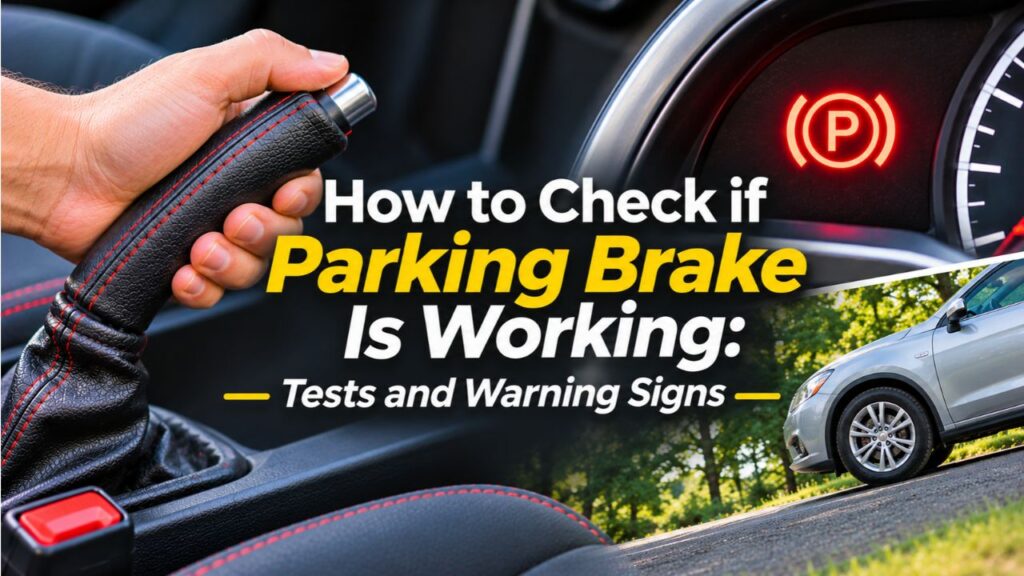
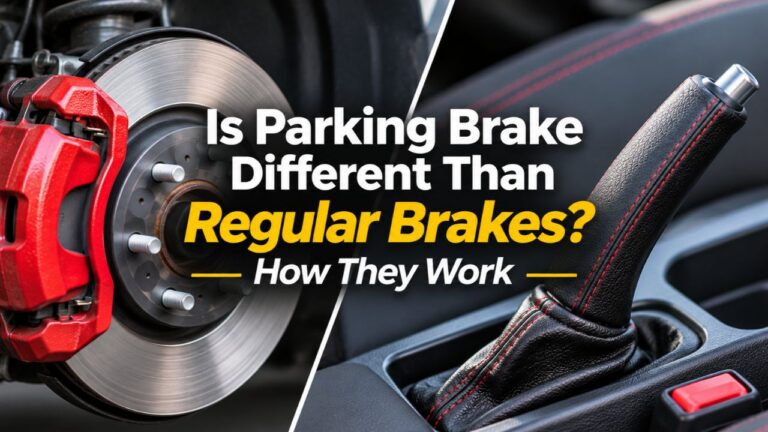
A parking brake is designed to keep a stationary vehicle from rolling. Most passenger cars apply braking force at the rear wheels using cables, rear brake caliper mechanisms, separate drum-style shoes, or motorized actuators. The exact mechanism varies, but a properly operating system should engage securely, remain applied, and release without dragging.
An automatic transmission’s parking pawl is not part of the parking brake. Likewise, selecting first gear or reverse in a manual-transmission vehicle provides additional resistance but does not prove that the parking brake holds. A functioning dashboard indicator shows that a control or sensor has recognized application; it does not measure the force at the wheels.
For a complete assessment, distinguish three checks: control operation, actual holding ability, and full release. All three matter.
Safety Precautions Before Checking Parking Brake Operation
Perform the initial checks on firm, level ground with enough clear space around the vehicle. Keep other people outside its possible path. Stay in the driver’s seat whenever you change gear or release the service brake, and keep your foot ready to stop any movement.
Read the owner’s manual before using Neutral or attempting a slope test. Some electronic parking brakes apply or release automatically when the gear selector, seat belt, door, or power mode changes. If the parking brake already seems defective, do not attempt a hill test; have its holding force checked professionally.
You generally need only the owner’s manual, a flashlight, and a safe parking location. A technician may need a lift, scan tool, or calibrated brake tester for a conclusive diagnosis.
How to Check if Parking Brake Is Working Step by Step
Step 01: Identify the Parking Brake Type
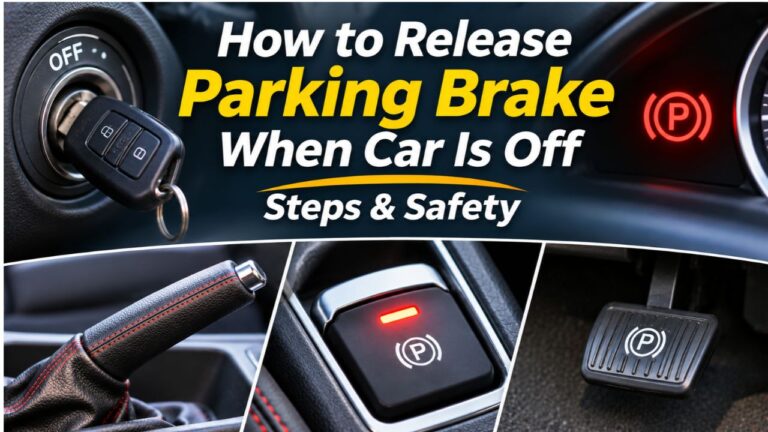
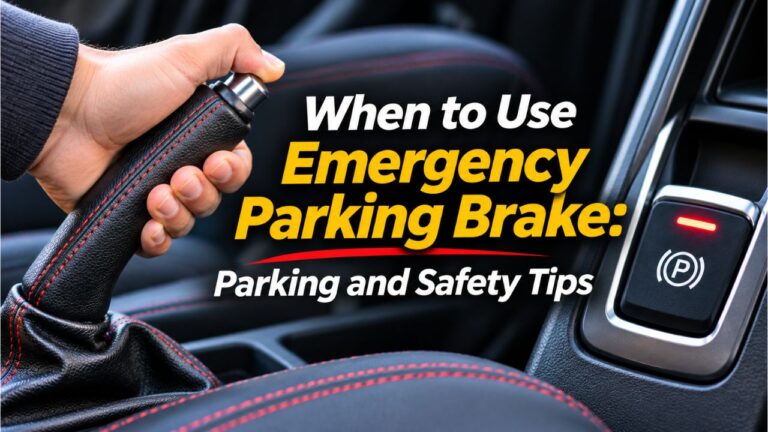
Locate the parking brake control. A hand-operated lever usually sits between the front seats. A foot-operated parking brake has a separate pedal near the driver’s left foot. An electronic parking brake uses a switch, often marked with a circled P.
Check which wheels and mechanisms the parking brake operates, especially on an older or unusual vehicle. If the car has an EPB, review its automatic application and release conditions. Auto Hold is not the same function as the parking brake, even though some vehicles can transfer a temporary hold to the EPB.
Step 02: Choose a Safe Place and Prepare the Vehicle
Start on level, dry pavement rather than a public road or steep driveway. Stop completely and keep the service brake depressed. Select Park for an automatic or the appropriate gear for a manual transmission while preparing the stationary inspection.
Do not place anyone in front of or behind the car. Avoid testing near a garage door, wall, or other obstacle. If there are visible leaks, damaged brake components, or an existing warning that suggests serious failure, stop here and arrange a professional inspection.
Step 03: Inspect the Lever, Pedal, or EPB Switch
Before applying the brake, look for broken trim, bent controls, loose mounting, or anything obstructing movement. A handbrake lever should not wobble excessively. A foot-operated parking brake should move through its intended range without binding. An EPB switch should respond normally and should not be damaged or loose.
Also check for frayed or visibly damaged parking brake cable sections where they can be seen safely without getting under the vehicle. Never crawl underneath a car that has not been correctly lifted and supported.
Step 04: Apply the Parking Brake and Feel for Normal Engagement
Keep the service brake firmly depressed. Pull the handbrake, press the parking brake pedal, or operate the EPB switch according to the owner’s manual. A manual control should develop resistance and remain in its applied position without slipping back.
The UK Driver and Vehicle Standards Agency’s brake inspection guidance identifies a parking brake ratchet that fails to hold, excessive lever travel, and defective controls as faults. There is no universal correct number of handbrake clicks: compare travel and effort with the specification for your model instead of an arbitrary figure.
Step 05: Check the Parking Brake Warning Light
With the ignition or vehicle power in the appropriate mode, confirm the expected parking brake indicator appears when the brake is applied. A red brake or circled-P indicator is common, but symbols differ. A separate amber EPB warning may indicate a malfunction rather than normal engagement.
For example, Ford’s 2024 F-150 electric parking brake warning-lamp guidance distinguishes normal red application status from an amber electronic parking brake fault. A light that fails to illuminate, flashes unexpectedly, or stays on after release needs diagnosis. A normal light does not prove the parking brake can hold the vehicle.
Step 06: Check That the Parking Brake Stays Engaged
With the vehicle stationary, confirm the manual lever or pedal remains latched after you stop applying force. A lever that slowly lowers or a foot pedal that releases by itself may have a worn holding mechanism. Do not keep pulling harder to compensate.
For an EPB, listen for the normal brief actuator sound if the manufacturer’s instructions describe one, and check the cluster for confirmation. A silent motor isn’t automatically defective because vehicle designs differ. Repeated warning chimes, fault messages, or a switch that cannot complete application are reasons to stop testing.
Step 07: Decide Whether a Holding Test Is Safe
An actual holding test must separate the parking brake’s effect from the automatic transmission’s Park mechanism. A car that stays stationary while in Park could be held by the transmission even if its parking brake does nothing. Flat ground can also disguise weak holding force because a vehicle may not roll there without any brake applied.
Only consider a controlled stationary holding test if the brake has passed the earlier checks, the vehicle manual allows the procedure, and you have a safe, clear test area. Otherwise, request a professional brake-force test. Never test the parking brake by accelerating against it or applying it while driving.
Step 08: Perform a Controlled Holding Test if the Manual Allows It
Use a suitable mild incline in a private, clear area, not a steep hill or busy roadway. Stay behind the wheel with your seat belt fastened and foot firmly on the service brake. Apply the parking brake fully. Follow the owner’s manual for the required power mode and gear position; on some conventional vehicles, Neutral is used so the transmission does not hold the vehicle.
If that procedure is permitted, ease service-brake pressure gradually while ready to press it again immediately. The vehicle should remain stationary under the conditions specified. If it starts to move, reapply the service brake at once and end the test. Do not repeat the test with greater engine power or on a steeper hill. If you’re uncertain about rollback room, gear behavior, or EPB operation, leave this test to a technician.
Step 09: Restore the Vehicle to a Secure Parking Condition
After any holding test, fully depress the regular brake pedal before changing the gear selector. Return an automatic transmission to Park or a manual transmission to its recommended parking gear, with the parking brake still applied. Switch off the engine or power system as directed.
Do not exit the vehicle while it is in Neutral. Some electronically controlled cars may automatically apply or release a parking brake when gear selection or power mode changes; check the actual status. If the brake slipped during the test, arrange a safe recovery or professional repair rather than relying on it to secure the vehicle.
Step 10: Release the Parking Brake and Check for Drag
While stationary, keep the service brake depressed and release the hand lever, foot pedal, or EPB switch using its normal procedure. Confirm the control returns fully and the application indicator goes off. If a brake warning remains lit, it may indicate an EPB fault, low brake fluid, or another braking issue, depending on the vehicle.
A released parking brake should not hold the vehicle back, produce constant scraping, or leave an unusual burning odor. If the brake sticks or won’t release, do not force the vehicle to move. Driving against an applied parking brake can overheat and damage brake components.
Step 11: Record Any Abnormal Result and Arrange the Right Repair
Note what you observed: excessive lever travel, no warning light, unusual actuator noises, rolling on the controlled test, or resistance after release. These details help a mechanic choose between cable inspection, shoe adjustment, caliper service, electronic diagnostics, and a formal brake performance test.
Avoid adjusting cables blindly to compensate for a weak brake. The actual cause may be worn friction material, seized linkage, or a rear caliper problem. Any failure to hold the car or release normally should be corrected before the parking brake is relied on again.
How to Interpret Parking Brake Test Results
| Observation | Likely Meaning or Next Check |
| Lever or pedal latches normally | Control works, but holding force is still unproven |
| Dashboard brake light illuminates | Application is detected, not necessarily strong enough |
| Vehicle holds during approved test | Encouraging result under those conditions only |
| Vehicle creeps or rolls | Parking brake holding force may be inadequate |
| Manual lever travels unusually far | Adjustment, cable, or friction-component issue possible |
| EPB fault message or amber warning | Electronic diagnosis required |
| Brake remains engaged after release | Binding cable, mechanism, or actuator possible |
A single home test cannot measure how evenly the brake works on both sides or whether it meets the applicable performance specification. Professional inspections use dedicated equipment to measure braking effort and identify imbalance.
Why a Parking Brake Can Fail Even When the Light Works
Stretched, Seized, or Misadjusted Cables
On cable-operated systems, cable corrosion, damage, or excessive slack may reduce force at the brake shoes or caliper mechanism. A seized cable may instead prevent full release. The lever can still click and the dashboard light may still turn on even when braking force is weak.
Worn or Contaminated Parking Brake Shoes
Drum brakes and drum-in-hat parking brakes depend on friction material contacting the drum surface. Worn, glazed, or contaminated shoes cannot produce the expected holding force. Incorrect adjustment can also allow excessive movement before the shoes contact the drum.
Rear Caliper or Electronic Actuator Faults
Some rear disc calipers have an integrated parking brake mechanism. Mechanical seizure or internal wear can interfere with application or release. On EPB-equipped cars, low 12-volt battery power, damaged wiring, actuator faults, or system errors may prevent proper operation.
Hyundai’s official electronic parking brake instructions explain that EPB application, release, and warning indications depend on system conditions; the manufacturer also advises inspection if relevant warnings persist. Automatic release behavior is another reason not to assume that every EPB can be tested in Neutral using the same steps.
When to Have the Parking Brake Professionally Tested
Book an inspection if the vehicle moves during a properly conducted holding test, the control doesn’t remain applied, the lever has excessive travel, or a brake remains stuck after release. Also seek help if you notice damaged cables, uneven brake operation, warning messages, or unusual heat and odor around a wheel.
A shop can inspect the parking brake linkage and friction components, follow the manufacturer-specific adjustment procedure, and test actual holding force with suitable brake-testing equipment. This matters after parking brake repairs and when a vehicle is used regularly on steep driveways. A level-ground check or illuminated dash light is not enough to certify safe holding performance.
Do not attempt an emergency-braking test on the road to evaluate parking brake effectiveness. On electronic systems, holding the switch while moving may activate a special emergency braking function rather than an ordinary parking operation.
FAQs About How to Check if Parking Brake Is Working
Can You Test a Parking Brake Without Driving?
Yes. You can inspect the control, apply and release it, and check warning indications with the vehicle stationary. Confirming actual holding strength may require a controlled stationary grade test or professional brake tester.
How Many Clicks Should a Handbrake Have?
There is no single correct click count for every car. Check the manufacturer’s specified lever travel and application force. Excessive movement or little resistance can indicate a fault.
Does the Red Parking Brake Light Mean It Works?
No. The light normally confirms a switch or sensor detected application. It does not measure whether the brakes grip hard enough to hold the vehicle.
Can You Test the Parking Brake While in Park?
You can check its control and dashboard indicator in Park, but you cannot prove its independent holding force that way. The transmission’s parking pawl may prevent movement even if the brake is weak.
What if My Electronic Parking Brake Makes Noise?
A brief actuator sound during normal application or release may be expected. Repeated grinding, fault messages, failure to engage, or failure to release requires inspection.
Is It Safe to Test a Parking Brake on a Steep Hill?
Not as a casual home check. A failed brake can allow sudden rolling. Use only the manufacturer’s approved controlled procedure, and choose professional testing when holding ability is uncertain.
Make Sure Your Parking Brake Holds, Not Just Engages
Knowing how to check if parking brake is working means checking more than the lever, switch, or dashboard light. Start on level ground, inspect application and release, and look for abnormal travel, noises, and warnings. Holding strength is a separate question that requires a safe, vehicle-appropriate test.
If the car moves during a permitted stationary holding check, the parking brake cannot stay engaged, or its electronic system reports a fault, have the problem diagnosed before relying on it for parking. The safest outcome is a brake that applies fully, holds under the specified conditions, and releases cleanly every time.