How to Know if Parking Brake Is Stuck: Signs and Safe Checks
You can tell if your parking brake is stuck when the vehicle resists moving after you release it, the parking brake lever or pedal does not return normally, or you notice dragging, grinding, or a burning smell near the rear wheels. A parking brake warning light that stays on or flashes can also indicate a problem, particularly on vehicles with an electronic parking brake.
However, a warning light alone does not prove the brake is mechanically stuck. A damaged parking brake switch, low brake fluid, seized caliper, or electronic control fault can produce similar symptoms. Sometimes the parking brake control returns to its normal position while the cable or rear brake mechanism remains engaged.
A stuck parking brake can overheat brake components and make the vehicle difficult or unsafe to move. Identifying the problem early helps prevent additional damage to the pads, rotors, drums, or cables.
This guide explains the symptoms of a stuck parking brake, how to check it step by step, the differences between mechanical and electronic failures, and what to do before driving.
How to Know if Parking Brake Is Stuck: Main Warning Signs
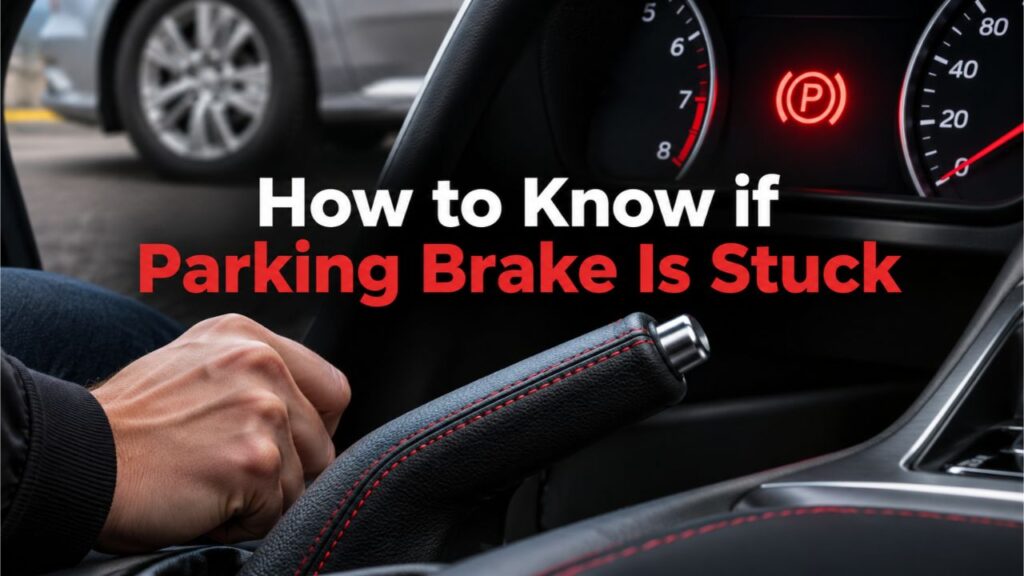
A parking brake that stays engaged may produce several noticeable symptoms. The signs depend on whether your vehicle uses a handbrake lever, foot-operated parking brake, or electronic parking brake (EPB).
The most common warning signs include:
- Vehicle refuses to move normally: The engine develops power, but the car feels restrained after the parking brake is released.
- Parking brake warning light stays on: The dashboard may continue displaying a red parking brake indicator or an EPB malfunction message.
- Burning smell near the wheels: Brake friction components may overheat when a parking brake remains partly applied.
- Unusual dragging or scraping noises: A stuck mechanism can keep brake shoes or pads in contact with rotating components.
- Parking brake lever or pedal feels abnormal: The control may become unusually stiff, loose, or difficult to release.
- One rear wheel becomes unusually hot: A stuck parking brake or another dragging brake component may generate excessive heat.
- Vehicle pulls or feels sluggish: Uneven brake drag can create resistance and affect how the vehicle moves.
According to AutoZone’s guide to stuck parking brakes, unusual parking brake control resistance, difficulty moving, burning smells, and warning lights are common indicators of a sticking system.
Important: You do not need to experience every symptom. A single confirmed problem, such as a wheel that remains locked after the control is released, is enough to justify an inspection.
How to Check if Your Parking Brake Is Stuck Step by Step
The following procedure focuses on checks that drivers can perform without dismantling the braking system.
These steps help identify signs of a stuck parking brake, but they cannot replace a complete mechanical or electronic diagnosis.
Step 01: Park the Vehicle Safely Before Checking
Begin by positioning the vehicle on firm, level ground.
If you have already noticed resistance, dragging, smoke, or a burning smell while driving, stop in a safe location and switch off the engine.
Keep the transmission in Park for an automatic vehicle. For a manual transmission, use the appropriate stationary gear and follow the manufacturer’s parking instructions.
Prevent unintended movement before attempting to release the parking brake. Use properly positioned wheel chocks when appropriate.
Avoid performing checks on a steep driveway or unstable surface.
Do not accelerate against a suspected stuck parking brake to determine whether it will release. Excessive force can damage brake parts or cause unexpected movement if the mechanism suddenly frees itself.
Step 02: Identify Your Parking Brake Type
Locate the parking brake control inside your vehicle.
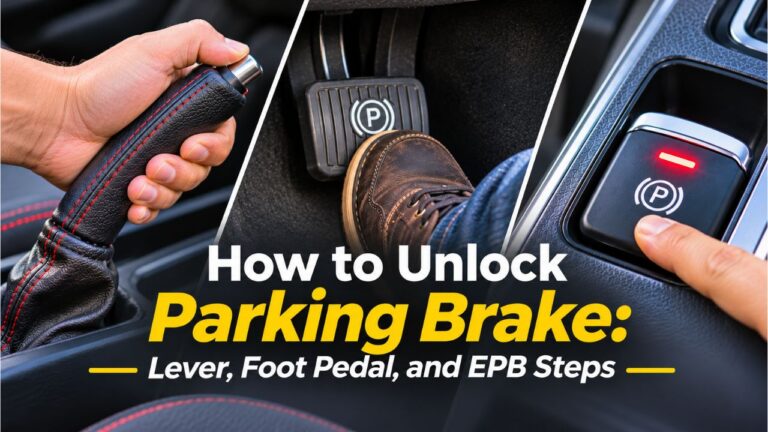
A traditional handbrake usually has a lever between the front seats. A foot-operated parking brake uses a separate pedal near the driver’s left footwell.
An electronic parking brake normally uses a dashboard or center-console switch marked with a parking brake symbol.
Identifying the system matters because each design has different release mechanisms and possible failure points.
For example, a mechanical handbrake can stick because of a corroded cable, while an electronic system may fail because of an actuator or electrical problem.
Check the owner’s manual if the release mechanism is unfamiliar.
Step 03: Check Whether the Parking Brake Control Releases Completely
Hold the regular brake pedal firmly before operating the parking brake.
For a manual handbrake, lift the lever slightly, press the release button, and lower the lever completely.
For a foot-operated parking brake, use the designated release handle or push-to-release mechanism specified by the manufacturer.
For an electronic parking brake, follow the manual release procedure, typically involving the service brake pedal and EPB switch.
Observe the control carefully.
A handbrake that refuses to lower, a foot pedal that remains depressed, or an electronic switch that cannot complete its release command may indicate a problem.
However, a control that returns normally does not guarantee that the parking brake has released at the wheels. A seized cable or mechanical actuator can remain engaged.
Step 04: Examine the Parking Brake Warning Light
Look at the instrument cluster after releasing the parking brake.
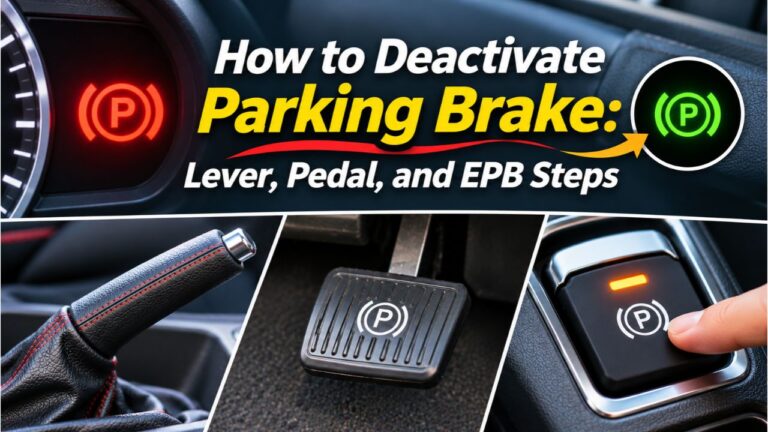
On many vehicles, the red circled-P parking brake indicator should turn off when the system releases successfully.
If it remains illuminated, the parking brake may still be engaged, or the vehicle may have another brake-system fault.
Some vehicles use a shared red BRAKE warning light for low brake fluid or hydraulic problems. Therefore, do not assume the parking brake is stuck based only on that symbol.
Electronic parking brakes may display messages such as:
- Parking Brake Not Released
- Parking Brake Malfunction
- Park Brake Fault
- Electronic Parking Brake Service Required
Ford’s official electric parking brake troubleshooting instructions distinguish incomplete release messages from system malfunction warnings.
These are examples from a specific Ford manual. Your vehicle may use different symbols or wording.
Step 05: Notice Whether the Vehicle Previously Resisted Moving
Think about what happened the last time you attempted to move the vehicle after releasing the parking brake.
Did the engine respond normally while the car felt unusually heavy or restrained?
Did you notice resistance immediately after shifting into gear?
Did the vehicle appear unable to move despite the parking brake control being fully released?
These observations can suggest that one or more brakes remained engaged.
A severely stuck parking brake may prevent movement entirely. A partially engaged brake may create less obvious resistance.
However, problems involving the transmission, drivetrain, brake calipers, or automatic brake-hold system can create similar symptoms.
Do not perform another driving test to reproduce resistance. If the vehicle already showed signs of brake drag, have the system inspected while stationary.
Step 06: Listen for Grinding, Scraping, or Abnormal Release Sounds
Consider whether you heard unusual sounds while the vehicle was moving before you stopped.
A stuck parking brake can cause friction between brake shoes and drums or between pads and rotors.
Depending on the design and severity, the noise may resemble continuous scraping, dragging, squealing, or grinding.
For electronic parking brakes, a brief motor sound during normal engagement or release may be expected.
However, repeated clicking, continued motor operation, or an unusual sound accompanied by a malfunction message may indicate an actuator problem.
Sounds alone cannot establish which component has failed.
Worn brake pads, damaged backing plates, wheel bearings, and ordinary service-brake faults may produce similar noises.
If a grinding sound appeared together with movement resistance, avoid further driving until the braking system has been checked.
Step 07: Check for Burning Smells or Signs of Excessive Heat
An engaged parking brake creates friction when its affected wheels rotate.
If the vehicle was driven while the brake was dragging, the rear brake components may become excessively hot.
You might notice a sharp burning smell around the rear of the vehicle or see smoke near a wheel.
A single affected wheel may also indicate a seized rear caliper or another brake problem rather than a parking brake cable failure.
If you notice smoke, keep people away from the affected area and arrange assistance. Follow emergency procedures if there are signs of fire.
Never touch a brake rotor, drum, caliper, wheel hub, or nearby component to check its temperature. These parts can cause serious burns.
Do not intentionally drive the vehicle to generate heat for comparison. The smell or heat already observed is sufficient reason for inspection.
Step 08: Inspect Visible Parking Brake Components
With the engine off and the vehicle securely parked, perform a basic visual inspection from safe, accessible areas.
Look around the parking brake lever or pedal for damaged release hardware or objects preventing normal movement.
If the parking brake uses cables, visible sections may show corrosion, damaged protective coverings, or disconnected attachments.
However, much of the cable system may run underneath the vehicle or behind the rear wheels.
Do not crawl underneath an unsupported vehicle, pull cables by hand, or disconnect any brake linkage to test whether the wheels release.
A parking brake that appears normal inside the cabin can still have a cable seized inside its protective housing.
A qualified technician can inspect cable movement and rear brake operation using a lift or properly supported vehicle.
Step 09: Consider Whether Cold Weather or Long Parking Caused the Problem
Think about when the symptoms first appeared.
Did the parking brake become stuck after freezing temperatures?
Was the vehicle washed before being parked overnight?
Has the vehicle remained unused outdoors for several weeks or months?
Moisture can enter parking brake cables and freeze. Corrosion can also develop around brake shoes, cables, or rear brake mechanisms during extended inactivity.
If the problem appeared after freezing weather, allow the components to thaw in a suitable warmer environment if the vehicle can be moved there safely without dragging locked wheels.
Avoid applying an open flame, boiling water, or uncontrolled heat.
Even if warming allows the brake to release, damaged or moisture-contaminated components may stick again.
Step 10: Have the Rear Brakes Checked for Actual Release
The final confirmation is whether the parking brake mechanism has fully released its holding force.
A qualified technician can safely support the vehicle and check wheel rotation, cable movement, caliper lever return, and parking brake actuator operation.
On electronic systems, diagnostic equipment may be necessary to read fault codes and command specified service tests.
The technician can also distinguish parking brake problems from service brake faults that produce similar symptoms.
For example, a rear wheel that remains difficult to rotate after its parking brake mechanism is confirmed released may have a seized caliper or another mechanical restriction.
Do not drive until the cause of any confirmed brake drag has been corrected and normal brake operation verified.
What Causes a Parking Brake to Stay Stuck After Release?
Several mechanical and electrical conditions can prevent a parking brake from returning to its normal released position.
Corroded or Seized Parking Brake Cable
Cable corrosion is a common cause of mechanical parking brake problems.
A parking brake cable contains a movable inner cable protected by an outer housing. When dirt, moisture, or corrosion interferes with movement, the cable may remain partially tensioned.
The handbrake lever can return to its normal position while the rear brake mechanism remains applied.
Cables exposed to road salt, water, or damaged protective boots are especially vulnerable.
A severely seized cable generally needs replacement rather than repeated force or temporary lubrication.
Frozen Parking Brake Mechanism
During freezing weather, trapped moisture can restrict movement inside the cable housing or around rear brake components.
The parking brake may work normally during the day and refuse to release the following morning.
This problem is more likely when water remains in the assembly after rain, washing, or wet-road driving.
Frozen components should not be forced apart.
If freezing repeatedly affects the parking brake, inspect the cable seals and related components for damage.
Stuck Rear Brake Shoes or Calipers
Some parking brakes use drum shoes, while others operate rear disc-brake calipers.
Corrosion, worn hardware, damaged return springs, or sticking caliper mechanisms can prevent complete release.
A brake may also stick after long storage because friction surfaces have developed rust.
The parking brake cable may operate correctly while a rear brake component remains mechanically seized.
Replacing or repairing the affected component is more reliable than repeatedly trying to break the brake free with engine power.
Electronic Parking Brake Actuator Problems
Electronic parking brakes rely on electric motors, switches, wiring, sensors, and control functions.
A faulty actuator can fail to retract fully, leaving a parking brake applied.
Low battery voltage may also prevent successful operation on certain systems.
Electronic problems may require diagnostic scanning and manufacturer-specific procedures.
Never attempt to force an EPB motor backward or disconnect its mechanism without the correct service instructions.
Stuck Parking Brake vs. Seized Brake Caliper
A stuck parking brake is not the only cause of wheel drag.
A seized service-brake caliper can keep a brake pad pressed against the rotor even when the parking brake is completely released.
Haynes Manuals’ guide to diagnosing seized brake calipers explains that sticking pistons, slide pins, or pads can cause resistance, pulling, excessive heat, and burning smells. It also identifies parking brake cables and mechanisms as possible causes of rear brake binding.
| Symptom | Possible Stuck Parking Brake | Possible Seized Service Brake |
| Problem begins immediately after parking brake use | Common clue | Also possible |
| Handbrake lever or pedal will not release | Strong clue | Less likely |
| Lever releases but rear wheel remains restrained | Possible cable or actuator problem | Possible caliper problem |
| Burning smell near one wheel | Possible | Possible |
| Wheel remains hot after normal driving | Possible | Possible |
| Brake warning light remains illuminated | Sometimes | Depends on the fault |
| Problem occurs without using the parking brake | Possible | Common alternative |
These patterns help narrow the diagnosis but do not confirm which component is defective.
For example, a mechanical parking brake cable may stick inside its housing even when the dashboard light turns off. A rear caliper can also seize independently of the parking brake.
A proper inspection determines whether the parking brake linkage is holding the brakes applied or whether another brake component is causing drag.
What Should You Do if Your Parking Brake Is Stuck?
If you suspect the parking brake is stuck, do not attempt to overpower it.
Start by confirming that the correct release procedure has been followed. Keep the regular brake pedal applied and make sure the vehicle is secure.
If the brake remains engaged, follow these precautions:
- Do not accelerate against locked brakes. This can damage friction components and cause unexpected movement.
- Do not repeatedly apply and release a malfunctioning EPB. Excessive cycling can overheat the actuator.
- Do not force stuck cables or levers. Mechanical parts can break without freeing the wheel.
- Do not touch overheated brake components. Allow them to cool naturally.
- Do not ignore a persistent brake warning. It may indicate an electronic or hydraulic fault.
- Arrange appropriate towing when necessary. Inform the towing provider if a wheel is locked.
Repair depends on the actual cause.
A corroded cable may require replacement. Damaged drum-brake hardware or sticking calipers may need repair or replacement. An electronic actuator problem may require electrical diagnosis and a manufacturer-approved service procedure.
After repair, confirm that the parking brake holds securely when applied and releases completely afterward.
How to Reduce the Chance of a Stuck Parking Brake
Routine maintenance helps prevent cable corrosion and mechanical binding.
Use the parking brake according to the manufacturer’s instructions rather than leaving a mechanical system unused for extended periods.
During regular brake inspections, have the cables, linkages, return mechanisms, and rear brake components checked for corrosion or restricted movement.
If you frequently drive through snow, road salt, mud, or standing water, pay attention to damaged cable coverings and recurring sticking symptoms.
Follow the manufacturer’s lubrication and adjustment recommendations. Adding excessive lubricant or tightening a cable without diagnosing the problem can create new faults.
For electronic parking brakes, use the correct maintenance mode when performing rear brake service. Incorrect procedures can damage the actuators.
If your vehicle repeatedly develops parking brake problems after freezing weather, address the moisture entry or mechanical defect rather than relying on temporary thawing.
FAQs About How to Know if Parking Brake Is Stuck
Can a Parking Brake Be Stuck Even if the Light Is Off?
Yes. A parking brake cable, caliper mechanism, or brake shoe can remain engaged after the indicator turns off. Many mechanical systems monitor the lever position rather than measuring whether the rear brakes have completely released.
Will a Stuck Parking Brake Prevent the Car From Moving?
Yes. A severely stuck parking brake can prevent normal movement. A partially engaged brake may allow movement while creating resistance, heat, and excessive wear. Neither condition should be ignored.
Can a Parking Brake Get Stuck Overnight?
Yes. Moisture can freeze around cables or brake components during cold weather. Rust can also contribute to sticking after extended parking, particularly in damp environments.
Why Is My Rear Wheel Hot After Releasing the Parking Brake?
A dragging brake can generate excessive heat. Possible causes include a stuck parking brake cable, seized caliper, or another rear brake fault. Do not touch the wheel or continue driving to investigate.
Can an Electronic Parking Brake Get Stuck?
Yes. A failed actuator, electrical fault, low battery voltage, or mechanical problem can prevent an EPB from releasing. Some systems display warnings or store diagnostic codes.
Will a Stuck Parking Brake Release by Itself?
Sometimes a temporary moisture-related restriction disappears after thawing, but that does not establish that the system is safe. Corrosion, damaged cables, and seized components may continue causing problems until repaired.
Is It Safe to Drive With a Partially Stuck Parking Brake?
No. Even partial brake drag can overheat the friction components, reduce braking performance, and damage surrounding parts. Have the problem identified and repaired before returning to normal driving.
Recognize a Stuck Parking Brake Before It Causes More Damage
Understanding how to know if parking brake is stuck begins with checking whether the brake control releases normally and watching for resistance, warning lights, dragging noises, or burning smells. A parking brake can remain mechanically engaged even when its lever or dashboard indicator appears normal.
The most likely causes include seized cables, frozen components, sticking rear brake mechanisms, and electronic actuator faults. Because these symptoms can overlap with other brake problems, a stationary inspection and proper diagnosis are more reliable than attempting to move the vehicle against resistance.
If you suspect the parking brake is stuck, avoid forcing the control or continuing to drive. Have the rear brakes inspected, repair the confirmed fault, and verify that the system releases completely before returning the vehicle to the road.