Can a Master Cylinder Cause Brakes to Stick? Symptoms and Fixes
Yes, a faulty brake master cylinder can cause brakes to stick by keeping hydraulic pressure trapped after you release the pedal. A blocked compensating port, a piston that does not return fully, or an incorrectly adjusted booster pushrod can prevent brake fluid from flowing back into the reservoir. The brake pads then remain pressed against the rotors, causing brake drag or even wheel lockup.
One clue is that several brakes begin dragging after repeated pedal applications or as the vehicle warms up. However, a single hot wheel is more often associated with a sticking caliper, restricted flexible brake hose, or parking brake problem. The affected-wheel pattern provides useful clues but is not a diagnosis by itself.
Dragging brakes can overheat rotors, damage friction materials, reduce fuel economy, and affect stopping performance. If the vehicle pulls, smells like burning brakes, or struggles to move, stop driving safely and arrange inspection or towing.
In this article, I explain how the master cylinder releases pressure, why it can keep brakes applied, and how its symptoms differ from caliper and hose failures. I also cover professional diagnostic checks, repair options, and when the vehicle is unsafe to drive.
Can a Master Cylinder Cause Brakes to Stick? How It Happens
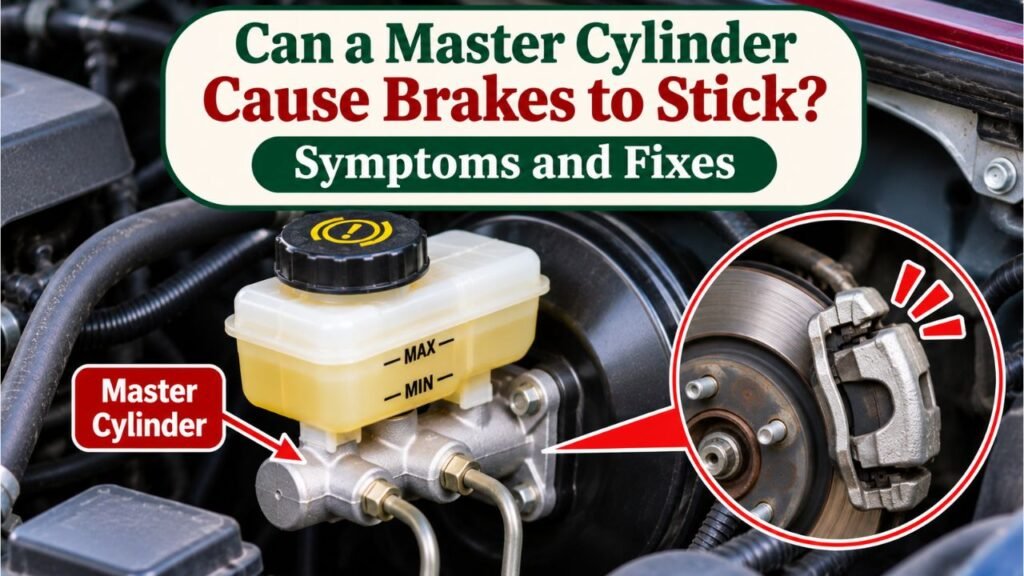
A master cylinder can cause sticking brakes when it fails to release hydraulic pressure after the brake pedal returns to its resting position.
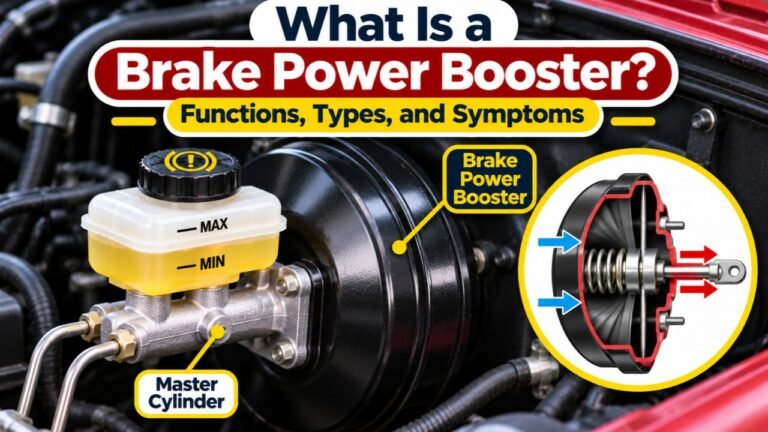
The brake master cylinder converts pedal movement into hydraulic pressure.
When you press the brake pedal, the master-cylinder pistons push brake fluid through the hydraulic lines.
That pressure operates the brake calipers or wheel cylinders.
When you release the pedal, the system should release the applied pressure so the brakes can disengage.
A malfunction can interrupt this process.
How a Normal Master Cylinder Releases Brakes
The process involves several steps:
- The driver presses the brake pedal.
- The pedal or booster pushrod moves the master-cylinder piston.
- The piston closes the compensating port and creates hydraulic pressure.
- Pressure travels through the brake lines.
- Brake calipers or wheel cylinders apply braking force.
- The driver releases the pedal.
- The master-cylinder piston returns to its resting position.
- The compensating port reopens, allowing hydraulic pressure to equalize with the reservoir.
Disc brake caliper piston seals help retract the pistons slightly as hydraulic pressure is released.
Drum brake assemblies use return springs and other components to help release the shoes.
What Happens When Pressure Cannot Return?
If the compensating port remains blocked, some hydraulic pressure may stay trapped.
This can prevent the brakes from fully releasing.
As the brake components become hotter, the trapped brake fluid expands.
Without an open return path to the reservoir, the additional expansion can increase hydraulic pressure.
The brakes may then drag more severely.
According to UnderhoodService’s technical guide to master-cylinder diagnosis, incorrect booster pushrod adjustment or brake-pedal switch adjustment can prevent the master-cylinder piston from uncovering its compensating port, resulting in dragging or locked brakes.
Does This Affect All Four Wheels?
It can affect multiple wheels, but not necessarily all four.
Many modern vehicles use a tandem master cylinder with two separate hydraulic circuits.
Depending on the brake-system design, the circuits may be arranged:
- Front and rear
- Diagonally across the vehicle
A problem affecting one hydraulic circuit may cause only the wheels connected to that circuit to drag.
A return problem affecting both circuits can produce more widespread brake dragging.
Key Takeaway: When a master cylinder causes brakes to stick, the central problem is often residual hydraulic pressure—not simply worn brake pads.
What Causes a Master Cylinder to Keep Brakes Applied?
Several conditions can prevent a master cylinder from releasing pressure normally.
Some involve internal damage, while others involve the pedal, brake booster, or installation.
1. Blocked Compensating Port
The compensating port is a small passage connecting the master-cylinder bore to the brake-fluid reservoir.
When the brake pedal is released, this port allows pressure to equalize.
However, the opening can become obstructed by:
- Corrosion
- Sludge
- Contaminated brake fluid
- Rubber debris
- Internal component deterioration
If the passage is blocked, brake fluid may be unable to return normally.
The brakes can remain partially applied.
This condition may become more noticeable as the system warms up.
2. Master-Cylinder Piston Not Returning
The master-cylinder piston must return to its designed resting position.
If it sticks inside the bore, hydraulic pressure may remain trapped.
Possible causes include:
- Corrosion inside the bore
- Damaged piston seals
- Internal debris
- Mechanical binding
- Faulty internal components
A sticking piston can create intermittent or persistent brake problems.
However, not every master-cylinder failure causes sticking brakes.
Some failures produce the opposite symptom: a sinking brake pedal or reduced hydraulic pressure.
3. Incorrect Brake Booster Pushrod Adjustment
The brake booster pushrod transfers force to the master-cylinder piston.
If the pushrod is too long or otherwise incorrectly adjusted, it may keep the piston slightly depressed.
This can prevent the compensating port from opening.
The result may be brakes that remain applied even though the driver’s foot is off the pedal.
This problem can appear after:
- Master-cylinder replacement
- Brake booster replacement
- Incorrect installation
- Adjustment of related components
The pushrod must meet the vehicle manufacturer’s clearance specifications.
4. Brake Pedal Not Returning Completely
Sometimes the master cylinder itself is functional, but the pedal mechanism prevents full piston return.
Potential causes include:
- Binding pedal linkage
- Damaged pedal bushings
- Incorrect brake-light switch adjustment
- Improper pedal stop adjustment
- Objects or aftermarket equipment interfering with pedal movement
A small amount of unintended pedal movement can affect the master-cylinder piston’s resting position.
This can lead to brake drag.
5. Swollen Internal Rubber Seals
Using contaminated or incompatible brake fluid can damage internal rubber components.
For example, petroleum-based contamination may cause certain brake-system seals to swell.
Swollen seals can interfere with piston movement and hydraulic pressure release.
Contamination may affect the master cylinder, brake hoses, calipers, and other hydraulic components.
Correcting this condition may require more than simply replacing the master cylinder.
6. Incorrect Replacement Master Cylinder
Brake master cylinders are not universally interchangeable.
Different vehicles may require specific:
- Bore dimensions
- Piston configurations
- Pushrod clearance
- Hydraulic connections
- Residual pressure arrangements
An incorrectly specified or improperly installed replacement may create brake-release problems.
Always verify the part number and installation procedure.
Symptoms of a Master Cylinder Causing Sticking Brakes
A malfunctioning master cylinder may produce several symptoms.
However, no single symptom confirms the diagnosis.
Master Cylinder Sticking Brake Symptoms Chart
| Symptom | How it may appear | Other possible causes |
| Brakes remain applied | Vehicle feels as if the brake pedal is partly pressed | Caliper, hose, parking brake |
| Multiple wheels drag | Two or more brakes remain engaged | Pedal, booster, ABS hydraulic fault |
| Brakes worsen when hot | Drag increases after driving | Restricted hose, caliper |
| Unusually high or hard pedal | Less pedal movement than normal | Pedal linkage, booster, hydraulic restriction |
| Burning brake smell | Hot friction materials produce an odor | Any dragging brake |
| Reduced acceleration | Vehicle struggles against braking resistance | Transmission, engine, parking brake |
| Premature brake-pad wear | Pads wear faster than expected | Caliper or hardware problems |
| Brake rotors overheat | Excessive heat develops at affected wheels | Caliper, hose, parking brake |
| Brakes release after cooling | Drag temporarily decreases | Heat-related hydraulic restriction |
| Wheels become difficult to rotate | Brakes remain applied after pedal release | Hydraulic or mechanical binding |
1. Brakes Stay Applied After Releasing the Pedal
This is one of the strongest warning signs.
The driver releases the pedal, but braking force remains.
The vehicle may feel sluggish or require more throttle than normal.
The condition may affect one or several wheels.
2. Brakes Begin Sticking After Driving
Some master-cylinder pressure-release problems become more noticeable after several brake applications.
As heat builds, trapped hydraulic fluid can expand.
The braking force may increase gradually.
A vehicle may initially drive normally and then become increasingly difficult to move.
3. Brake Pedal Feels Unusually Hard or High
A brake pedal that does not return correctly may contribute to residual hydraulic pressure.
In some cases, the pedal may feel unusually firm or have reduced travel.
However, a hard pedal can also result from a brake booster or vacuum-assist problem.
It does not automatically mean the master cylinder is defective.
4. Burning Smell From the Brakes
Sticking brakes create continuous friction.
The resulting heat can produce a sharp, unpleasant odor.
This may be accompanied by smoke or unusual wheel-area temperatures.
If you notice smoke or a strong burning smell, stop driving safely. Do not touch the wheels, rotors, or calipers because they may be extremely hot.
5. Vehicle Loses Acceleration
A vehicle with dragging brakes must overcome additional resistance.
It may feel underpowered or struggle to maintain speed.
Fuel consumption may also increase.
However, poor acceleration has many possible causes, so the braking system needs inspection.
6. Brakes Release After the Vehicle Sits
A pressure-related brake problem may temporarily improve as components cool.
This can make the issue appear intermittent.
However, cooling does not repair a blocked compensating port or incorrectly adjusted pushrod.
The problem may return during the next drive.
Can a Bad Master Cylinder Cause All Four Brakes to Stick?
Yes, a master-cylinder pressure-release problem can cause all four brakes to drag, but the affected-wheel pattern depends on the hydraulic-system design and the exact fault.
A tandem master cylinder normally controls separate hydraulic circuits.
If both circuits fail to release pressure, widespread brake drag is possible.
However, brake booster or pedal linkage problems can produce similar symptoms.
When All Four Brakes Stick
Potential causes include:
- Master-cylinder compensating ports remaining closed
- Pistons not returning completely
- Brake booster pushrod holding the pistons forward
- Brake pedal linkage binding
- Incorrectly adjusted pedal stops
- Certain other upstream hydraulic problems
When every wheel appears to drag after brake applications, an upstream hydraulic or pedal problem deserves particular attention.
When Only Two Wheels Stick
Two-wheel brake dragging may indicate a problem affecting one hydraulic circuit.
However, the wheel arrangement depends on the vehicle.
For example, some vehicles use diagonally split circuits.
A single hydraulic circuit problem might affect the left-front and right-rear brakes.
A different system may split front and rear braking.
When Only One Wheel Sticks
A single dragging wheel more commonly points toward a localized problem.
Possible causes include:
- Seized caliper piston
- Sticking caliper slide pins
- Restricted flexible brake hose
- Binding brake pads
- Faulty wheel cylinder
- Parking brake mechanism problem
A single-wheel problem does not completely exclude an upstream fault, but it makes local components particularly important to inspect.
Affected-Wheel Diagnostic Chart
| Wheels affected | Common diagnostic suspects |
| One front wheel | Caliper, slide pins, hose, pad hardware |
| One rear wheel | Caliper, wheel cylinder, parking brake, hose |
| Two wheels on one hydraulic circuit | Master cylinder, hydraulic restriction, ABS components |
| Both front wheels | Shared hydraulic circuit or separate front brake faults |
| All four wheels | Master cylinder, booster pushrod, pedal return mechanism |
| Brakes only stick after warming up | Trapped pressure, heat-related expansion, local mechanical binding |
These patterns are clues, not conclusive diagnostic tests.
Master Cylinder vs Sticking Caliper: How to Tell the Difference
A sticking brake caliper is another common cause of brake drag.
It is important to distinguish the two problems before replacing parts.
Master Cylinder Problems
Master-cylinder-related brake dragging often involves hydraulic pressure remaining applied upstream.
Signs may include:
- More than one affected wheel
- Dragging after repeated braking
- Symptoms worsening with heat
- Incorrect pedal return
- Recent master-cylinder or booster installation
Caliper Problems
Caliper problems often affect one wheel.
A caliper may stick because of:
- Corrosion around the piston
- Damaged piston seals
- Dry or seized slide pins
- Binding brake pads
- Damaged mounting hardware
According to PowerStop’s brake caliper troubleshooting guide, a seized caliper piston can prevent brake pads from releasing the rotor, potentially causing pulling, excessive heat, and accelerated wear.
Master Cylinder vs Caliper Symptoms
| Symptom | Master cylinder more likely | Caliper more likely |
| Several wheels dragging | Yes | Less typical |
| One wheel significantly hotter | Possible | Common |
| Pulling toward one side | Possible | Common |
| Brakes worsen after repeated applications | Possible | Possible |
| Recently replaced master cylinder | Important clue | Not necessarily |
| Corroded caliper piston | No | Strong clue |
| Abnormal pedal return | Important clue | Less specific |
| Pad wear isolated to one wheel | Less typical | Common |
Can Both Problems Happen Together?
Yes.
A hydraulic-system problem may coexist with worn calipers or deteriorated hoses.
A severely overheating brake may also damage adjacent components.
Therefore, finding one fault does not eliminate the need to inspect the rest of the braking system.
Can a Bad Brake Hose Make Brakes Stick Like a Master Cylinder?
Yes. A restricted flexible brake hose can trap hydraulic pressure and cause brake dragging.
This is an important alternative diagnosis.
How a Brake Hose Causes Dragging
A flexible hose can deteriorate internally.
A damaged inner lining may obstruct fluid movement.
Pressure from the master cylinder may still push fluid toward the caliper when the pedal is pressed.
However, the fluid may not return freely when the pedal is released.
The caliper can remain applied.
This can resemble a master-cylinder pressure-release problem.
Signs of a Restricted Brake Hose
Common clues include:
- One wheel dragging
- Excessive heat at the affected wheel
- Brakes worsening after driving
- Temporary release after cooling
- Normal-looking hose exterior despite internal damage
A hose does not need to show an obvious external bulge to have an internal restriction.
How Is It Distinguished From the Master Cylinder?
A qualified technician may evaluate where hydraulic pressure remains trapped.
Pressure-release testing at the appropriate hydraulic points can help determine whether the restriction is near the wheel or farther upstream.
However, opening brake hydraulic connections can release hot fluid, introduce air, and compromise braking.
These tests belong in a controlled repair environment using the vehicle manufacturer’s procedures.
Can a Brake Booster Cause Brakes to Stick?
Yes.
A brake booster or its associated pushrod and linkage can prevent the master-cylinder piston from returning fully.
However, the booster is not necessarily defective whenever this occurs.
How the Booster Pushrod Affects the Master Cylinder
The booster pushrod acts on the master-cylinder piston.
When adjusted correctly, it allows the master cylinder to return to its intended resting position.
If it holds the piston slightly forward, the compensating port may remain closed.
This can trap pressure.
Why It May Happen After Replacement
Problems can occur when:
- The wrong replacement part is installed.
- Pushrod clearance is incorrect.
- The booster linkage binds.
- Components were assembled incorrectly.
- The brake pedal does not return fully.
A vehicle may develop dragging brakes shortly after a master-cylinder replacement even when the new master cylinder itself is not defective.
Does a Bad Booster Always Make Brakes Stick?
No.
Many brake booster problems cause reduced power assistance, creating a harder brake pedal and requiring greater pedal effort.
Other failures may interfere with proper pedal or piston return.
The actual symptom depends on the failure.
Can Adjusting the Pushrod Fix the Problem?
Only when an incorrect adjustment has been confirmed and the component is designed for that adjustment.
The pushrod must meet the vehicle manufacturer’s clearance requirements.
An incorrect adjustment can create insufficient braking or persistent brake drag.
Do not adjust the booster pushrod by guesswork.
Why Do Brakes Stick After Replacing the Master Cylinder?
Brake dragging after master-cylinder replacement is an especially important diagnostic clue.
A new master cylinder may not be defective, but its installation can create a pressure-release problem.
Possible Causes
- Incorrect booster pushrod clearance
- Wrong master-cylinder part
- Improper installation
- Binding pedal mechanism
- Brake-light switch interference
- Faulty replacement component
- Contaminated hydraulic fluid
How This Creates Brake Drag
If the replacement master cylinder is held slightly applied, the compensating port may remain blocked.
The hydraulic pressure cannot fully return to the reservoir.
As the system warms up, the brakes may begin dragging or locking.
Why Replacing the Master Cylinder Again May Not Help
If the underlying cause is an incorrectly adjusted booster pushrod, installing another master cylinder without correcting the clearance may reproduce the same problem.
A technician should confirm the source of pressure retention before replacing parts.
What if the Brakes Were Working Before Replacement?
That history matters.
If brake dragging began immediately after master-cylinder or booster service, review the installation and component compatibility first.
However, a coincidental caliper or hose problem is also possible.
Do not assume the most recently replaced part must be the cause.
How to Diagnose a Master Cylinder That Causes Brakes to Stick
A proper diagnosis determines whether the brakes are being held by trapped hydraulic pressure or by mechanical binding at the wheels.
Because the braking system is safety-critical, invasive testing should be performed by a qualified technician.
Step 1: Identify the Symptoms
Record what happens when the brakes stick.
Useful observations include:
- Whether the problem occurs when cold or warm
- Whether it begins after repeated braking
- Whether the vehicle pulls to one side
- Whether several wheels appear affected
- Whether the brake pedal returns fully
- Whether the problem started after recent brake work
Do not deliberately drive a vehicle with known brake dragging to reproduce dangerous symptoms.
Step 2: Inspect the Pedal Return
A technician checks whether the pedal returns to its intended resting position.
Possible problems include:
- Binding linkage
- Incorrect pedal free play
- Interfering brake-light switch
- Improper pedal stop adjustment
This helps distinguish a master-cylinder problem from an external mechanism holding the piston forward.
Step 3: Inspect the Hydraulic System
A qualified technician examines:
- Master cylinder
- Reservoir and brake fluid
- Hydraulic lines
- Flexible brake hoses
- Brake booster
- Calipers
- Wheel cylinders
- Parking brake components
Visible leaks, corrosion, fluid contamination, or damaged components may provide useful clues.
Step 4: Determine Which Wheels Are Dragging
In a properly equipped workshop, the vehicle can be safely lifted and the wheel resistance evaluated.
The technician determines whether:
- One wheel is affected
- Both wheels on an axle are affected
- A diagonal pair is affected
- All four wheels are affected
Some disc brakes normally produce slight pad contact.
The purpose is to identify abnormal drag, not to assume every small amount of resistance is a fault.
Step 5: Evaluate Residual Hydraulic Pressure
When brakes remain applied after pedal release, a professional may use hydraulic pressure measurements or controlled pressure-release tests.
These can help determine whether pressure is trapped upstream or near an individual wheel.
Important: Do not loosen brake lines or bleeder screws as a roadside troubleshooting shortcut. Doing so can introduce air or cause fluid loss, leaving the vehicle unsafe to drive.
Step 6: Check Master-Cylinder Return and Pushrod Clearance
If the symptoms point upstream, the technician evaluates:
- Master-cylinder piston return
- Compensating port function
- Booster pushrod clearance
- Pedal stop position
- Relevant linkage adjustment
These checks should follow manufacturer service procedures.
Step 7: Inspect the Affected Brake Components
Overheated or dragging brakes may require inspection of:
- Brake pads
- Rotors
- Calipers
- Brake hoses
- Wheel bearings
- Related hardware
Correcting the hydraulic cause without checking heat-damaged parts may leave other problems unresolved.
Professional Diagnostic Flow
| Finding | What it suggests | Next diagnostic focus |
| All wheels drag | Possible upstream pressure-retention problem | Master cylinder, pushrod, pedal, booster |
| One wheel drags | Possible localized fault | Caliper, hose, parking brake |
| Two wheels on one circuit drag | Possible circuit-specific hydraulic fault | Master cylinder and circuit components |
| Brakes tighten as the system warms | Possible trapped pressure | Compensating port or restriction |
| Brakes began sticking after master-cylinder replacement | Possible installation problem | Pushrod clearance and part compatibility |
| Pedal does not return fully | Mechanical interference | Pedal linkage, switches, booster |
| Pedal slowly sinks while held | Possible internal bypass or leak | Master cylinder and hydraulic integrity |
| One caliper remains mechanically seized | Local binding | Piston, sliders, hardware |
Does Opening a Bleeder Screw Confirm a Bad Master Cylinder?
No.
If brake drag releases when a technician opens a bleeder screw, that indicates trapped hydraulic pressure may be involved.
However, it does not automatically identify the master cylinder.
A restricted hose or another upstream hydraulic component may also trap pressure.
The pressure-retention location must be diagnosed.
Can a Master Cylinder Be Bad Without Leaking?
Yes.
A master cylinder may malfunction internally without showing an external brake-fluid leak.
A blocked compensating port or sticking piston can create a pressure-release problem while the reservoir remains full.
How Do You Fix a Master Cylinder That Causes Sticking Brakes?
The repair depends on the confirmed cause.
Replacing the master cylinder can fix the problem when the master cylinder itself is defective, but it will not correct every cause of brake dragging.
Repair 1: Replace a Defective Master Cylinder
Replacement may be necessary when the master cylinder has:
- Internal binding
- Damaged piston components
- Corrosion
- A blocked passage that cannot be reliably restored
- Other internal defects
The replacement must match the vehicle’s specifications.
Repair 2: Correct Pushrod Clearance
If an incorrectly adjusted booster pushrod is holding the master-cylinder piston forward, correcting the installation may resolve the problem.
However, this must follow the exact manufacturer procedure.
Replacing the master cylinder without addressing the pushrod may not help.
Repair 3: Fix Pedal Linkage Problems
Binding pedal components, damaged return mechanisms, or incorrectly adjusted switches may require repair.
The brake pedal must return correctly.
Repair 4: Replace Damaged Brake Hoses
If a flexible brake hose is internally restricted, replacing the affected hose may be necessary.
The technician should also check whether other hoses show age-related deterioration or damage.
Repair 5: Repair or Replace Sticking Calipers
When the problem is mechanical binding at a wheel, repairing or replacing the affected caliper may resolve the drag.
Depending on its condition, related pads, mounting hardware, and rotors may also require attention.
Repair 6: Address Brake Fluid Contamination
If the brake fluid contains petroleum products or other incompatible substances, replacing the master cylinder alone may not be sufficient.
Contamination can affect rubber seals throughout the hydraulic system.
A qualified technician must determine the required component replacement and system cleaning.
Repair 7: Bleed and Verify the Brake System
Opening or replacing hydraulic brake components introduces the possibility of air entering the system.
After appropriate repairs, the system must be bled according to the manufacturer’s procedure.
Some ABS-equipped vehicles require specialized scan-tool bleeding functions.
Normal pedal feel, pressure release, and braking performance must be confirmed before the vehicle returns to service.
Master Cylinder Brake Drag Repair Chart
| Confirmed cause | Typical repair direction |
| Internally damaged master cylinder | Replace correct master cylinder |
| Blocked compensating port | Repair or replace as approved by manufacturer |
| Incorrect booster pushrod adjustment | Correct clearance to specification |
| Binding brake pedal | Repair linkage or interference |
| Restricted flexible hose | Replace affected hose |
| Seized caliper | Repair or replace caliper |
| Parking brake binding | Repair parking brake mechanism |
| Contaminated brake fluid | Correct contamination and affected components |
| ABS hydraulic fault | Diagnose and repair according to service procedures |
Will Replacing the Master Cylinder Fix Sticking Brakes?
It can, but only if the master cylinder is responsible for the problem.
For example, replacement may resolve brake dragging caused by an internally sticking piston or damaged compensating port.
However, it will not repair a seized caliper or collapsed brake hose.
When Replacement Makes Sense
A master-cylinder replacement is more likely to be necessary when diagnosis confirms:
- Internal piston binding
- Damaged hydraulic components inside the cylinder
- Pressure that cannot return because of an internal defect
- Severe internal corrosion
When Replacement May Be Unnecessary
Another repair may be needed when:
- The booster pushrod is misadjusted.
- The pedal mechanism is binding.
- Only one caliper is seized.
- A flexible hose is restricted.
- The parking brake fails to release.
The correct diagnosis helps avoid replacing expensive components unnecessarily.
Can a New Master Cylinder Also Be Defective?
Yes.
New replacement parts can have manufacturing defects or installation-related problems.
However, if brake drag begins immediately after a replacement, inspect pushrod clearance, pedal return, and part compatibility before assuming the replacement itself is defective.
Can Old Brake Fluid Cause the Master Cylinder to Stick?
Old or contaminated brake fluid can contribute to master-cylinder problems.
DOT 3, DOT 4, and DOT 5.1 brake fluids are generally glycol-based and absorb moisture over time.
Moisture and contamination can contribute to corrosion and deterioration of hydraulic components.
How Corrosion Affects the Master Cylinder
Corrosion may damage internal surfaces or interfere with moving components.
Debris and sludge may also affect small hydraulic passages.
A compensating port is particularly important because it must allow pressure to equalize when the pedal is released.
Can a Brake Fluid Flush Fix Sticking Brakes?
Sometimes a fluid service is part of the repair, but flushing alone is not a reliable fix for a defective master cylinder.
If a piston is mechanically stuck or a port is damaged, the part may need replacement.
If fluid contamination has damaged rubber seals, further repairs may be necessary.
What If the Brake Fluid Is Dark?
Dark fluid can suggest aging or contamination.
However, color alone does not identify the exact cause of brake drag.
A technician should evaluate the fluid and hydraulic components.
Can the Wrong Brake Fluid Cause Sticking?
Yes.
Using incompatible fluid can damage rubber seals and cause hydraulic malfunctions.
For example, petroleum-based power steering fluid should not be introduced into a brake system designed for conventional glycol-based brake fluid.
If the wrong fluid has been added, stop driving and have the system inspected.
Can a Bad Master Cylinder Make Brakes Lock Up?
Yes. A serious master-cylinder pressure-release problem can cause brakes to remain applied strongly enough to restrict wheel rotation or lock them.
This may occur when hydraulic pressure remains trapped and increases with heat.
Why Lockup Can Get Worse Over Time
The process can develop gradually:
- The driver applies the brakes.
- Hydraulic pressure is generated.
- The master cylinder fails to release pressure fully.
- Pads continue contacting the rotors.
- Friction creates heat.
- Trapped fluid expands.
- Additional pressure increases braking force.
This can lead to progressive brake dragging.
However, severe mechanical caliper or parking brake failures can also cause wheel lockup.
Will the Brake Warning Light Turn On?
Not necessarily.
A dragging-brake problem may occur without a dashboard warning.
Many warning systems monitor issues such as low fluid, parking brake application, or certain ABS faults.
They do not necessarily detect every mechanical or hydraulic release problem.
Never rely solely on warning lights to decide whether the brakes are safe.
Is It Safe to Drive With Brakes Sticking?
No. A vehicle with significant brake dragging should not be driven until the fault has been diagnosed and repaired.
Continuing to drive can cause excessive heat and affect vehicle control.
What Can Happen if You Keep Driving?
Possible consequences include:
- Brake rotor overheating
- Damaged brake pads
- Reduced braking effectiveness
- Brake fluid overheating
- Wheel bearing damage
- Increased stopping distance
- Uneven braking
- Vehicle pulling
- Tire or nearby component heat damage
- In severe cases, fire
The seriousness depends on how strongly the brakes are dragging and how long the condition continues.
What Should You Do if the Brakes Begin Sticking?
If the vehicle develops signs of severe brake drag:
- Reduce speed and find a safe place to stop.
- Avoid unnecessary hard braking where possible.
- Park away from combustible material if overheating is suspected.
- Turn off the vehicle once safely parked.
- Do not touch hot brake components.
- Do not pour water onto overheated rotors.
- Arrange professional assistance and towing when needed.
Do not attempt to free the brakes by opening a hydraulic line at the roadside.
What if the Brakes Release After Cooling?
The vehicle still needs inspection.
Temporary release does not mean the fault has disappeared.
A pressure-retention problem may return after the next series of brake applications.
How to Prevent Master Cylinder and Brake Drag Problems
Routine brake maintenance can reduce some risks, although it cannot prevent every mechanical failure.
Use the Correct Brake Fluid
Follow the vehicle manufacturer’s specified fluid type.
Do not mix incompatible fluid chemistries.
Use fresh brake fluid from a properly sealed container.
Replace Brake Fluid as Recommended
Brake-fluid service intervals vary by vehicle.
Follow the maintenance schedule rather than assuming one interval applies to every car or truck.
Inspect Pedal Operation
The pedal should return normally after braking.
An unusual return position or mechanical interference should be evaluated.
Check Brake Hoses
Flexible brake hoses can deteriorate internally or externally.
Inspect them according to the manufacturer’s maintenance recommendations.
Service Brake Calipers Properly
During brake service, inspect:
- Piston movement
- Slide pins
- Mounting hardware
- Pad movement
- Boots and seals
Use only suitable brake-component lubricants in the approved locations.
Verify Master-Cylinder Installation
After master-cylinder or booster replacement, proper part compatibility, pushrod clearance, and pedal return are important.
The installation must follow the vehicle-specific procedure.
Investigate Abnormal Heat
An unusually hot wheel, burning smell, or repeated brake dragging should not be ignored.
Prompt diagnosis can prevent additional damage.
Common Mistakes When Diagnosing a Sticking Master Cylinder
| Mistake | Why it is a problem | Better approach |
| Assuming every sticking brake is caused by the master cylinder | Calipers and hoses commonly cause drag | Diagnose the affected system |
| Replacing a master cylinder without checking pushrod clearance | Installation problem may remain | Verify pedal and booster operation |
| Assuming one hot wheel proves a master-cylinder problem | Local wheel faults are more common | Inspect caliper, hose, and hardware |
| Believing a full reservoir proves the master cylinder is good | Internal faults may occur without fluid loss | Evaluate hydraulic pressure release |
| Ignoring brake drag that disappears after cooling | Heat-related faults may return | Diagnose before driving |
| Opening a bleeder screw and assuming the master cylinder is bad | A hose can also trap pressure | Locate the restriction properly |
| Adjusting the booster pushrod by guesswork | Can create dangerous braking behavior | Follow exact specifications |
| Replacing only the master cylinder after fluid contamination | Other seals may be damaged | Assess the complete hydraulic system |
| Driving with overheated brakes | Can cause serious component failure | Stop and arrange safe repair |
| Ignoring ABS bleeding requirements | Air may remain in hydraulic components | Follow manufacturer procedures |
Does a Sinking Brake Pedal Mean the Brakes Are Sticking?
Not necessarily.
A slowly sinking pedal more commonly suggests a hydraulic pressure-loss problem, including possible internal master-cylinder bypass or an external leak.
Brake dragging generally involves pressure that fails to release or mechanical components that remain applied.
These are different failure patterns.
Can a Master Cylinder Cause Intermittent Brake Sticking?
Yes.
A sticking piston or pressure-release restriction may cause intermittent symptoms.
Heat, pedal movement, and component position can affect how the problem appears.
However, intermittent brake dragging may also come from a caliper, hose, parking brake, or booster.
Can a Master Cylinder Cause One Front Brake to Stick?
It is possible, but a localized fault is generally more likely when only one front wheel drags.
Inspect the caliper, flexible hose, and brake hardware before concluding that the master cylinder is defective.
Is Brake Drag Normal After Installing New Pads?
Slight initial contact between disc brake pads and the rotor can be normal.
However, significant resistance, burning smells, excessive heat, pulling, or difficulty moving the vehicle is not normal.
New pads do not justify continued driving with a sticking brake.
Conclusion
A bad master cylinder can cause brakes to stick when hydraulic pressure fails to release after the brake pedal is released.
Common causes include a blocked compensating port, internal piston binding, and incorrect booster pushrod adjustment.
These problems can keep the brake pads applied, leading to heat buildup, accelerated wear, and potentially severe brake dragging.
However, not every sticking-brake problem originates in the master cylinder.
A seized caliper, internally restricted brake hose, or parking brake fault can produce similar symptoms.
I recommend paying attention to how many wheels are affected, whether the drag increases as the vehicle warms up, and whether the problem began after master-cylinder or brake booster replacement.
Those clues can help guide diagnosis, but they do not replace proper hydraulic testing.
If the brakes remain applied, the vehicle pulls, or burning odors develop, stop driving safely and arrange professional inspection.
Replacing the master cylinder can correct an internal defect, but only an accurate diagnosis will identify the repair needed to restore reliable braking.
FAQs About a Master Cylinder Causing Brakes to Stick
Can a Bad Master Cylinder Cause Brakes to Stick?
Yes.
A faulty master cylinder can trap hydraulic pressure if its compensating port is blocked or its piston fails to return fully.
This can keep the brakes partially or fully applied after releasing the pedal.
Can a Master Cylinder Cause All Four Brakes to Lock Up?
Yes, when pressure-release problems affect both hydraulic circuits.
However, a binding brake pedal, booster pushrod problem, or other upstream fault can create similar symptoms.
The hydraulic system must be diagnosed.
Can a Master Cylinder Cause Only One Brake to Stick?
It is possible, but a single sticking wheel is more commonly associated with a caliper, brake hose, wheel cylinder, or parking brake mechanism.
The affected-wheel pattern is an important diagnostic clue.
Why Do My Brakes Stick After I Replace the Master Cylinder?
Possible causes include incorrect booster pushrod clearance, improper installation, a binding pedal mechanism, or a defective replacement part.
A new master cylinder may be held slightly applied, preventing hydraulic pressure from returning normally.
How Do You Know if the Master Cylinder Is Keeping Brakes Applied?
Multiple wheels dragging after brake applications, increasing resistance as the system warms up, and abnormal pedal return can suggest a master-cylinder pressure-release problem.
A qualified technician must confirm the cause through appropriate inspection and hydraulic testing.
Will Replacing the Master Cylinder Fix Sticking Brakes?
Yes, if the master cylinder itself is defective.
However, replacement will not correct a seized caliper, restricted hose, parking brake fault, or incorrect booster pushrod adjustment.
Diagnose the cause before replacing parts.
Can a Bad Brake Booster Cause Brakes to Stick?
Yes.
A booster pushrod that holds the master-cylinder piston forward may prevent the compensating port from opening.
This can trap hydraulic pressure.
However, not every brake booster failure causes dragging brakes.
Can Old Brake Fluid Cause Sticking Brakes?
Yes.
Moisture, sludge, corrosion, and incompatible fluid contamination can damage hydraulic components.
These conditions may contribute to sticking pistons or restricted compensating ports.
A fluid flush alone may not repair damaged components.
Can a Master Cylinder Cause Brakes to Stick When Hot?
Yes.
If hydraulic pressure cannot return to the reservoir, fluid expansion as the braking system warms can increase brake drag.
However, heat-related caliper and brake hose problems can produce similar symptoms.
Why Do My Brakes Release After the Car Cools Down?
Cooling can reduce pressure associated with trapped, expanding fluid.
However, the underlying restriction may remain.
The problem may return when the brakes heat up again.
Do not treat temporary release as proof that the brakes are safe.
Can a Bad Master Cylinder Make the Brake Pedal Hard?
Sometimes.
A pressure-release or piston-return problem may create unusual pedal feel.
However, a hard pedal often points toward a brake booster or power-assist problem.
Proper diagnosis is necessary.
Can a Master Cylinder Cause a Spongy Brake Pedal and Sticking Brakes?
Different master-cylinder faults can cause different symptoms.
Internal leakage may contribute to a sinking or soft pedal, while pressure-release restrictions can cause dragging.
Air in the hydraulic system can also make the pedal spongy.
The exact cause must be identified.
Can You Drive With a Sticking Master Cylinder?
No.
Significant brake dragging can overheat components, reduce braking performance, and affect vehicle control.
Stop driving safely and arrange professional inspection or towing.
Does Opening a Brake Bleeder Fix Sticking Brakes?
Opening a bleeder may temporarily release trapped hydraulic pressure, but it does not fix the underlying fault.
It may also introduce air or allow fluid loss.
This is a professional diagnostic procedure, not a safe roadside repair.
Can a Brake Hose Cause the Same Symptoms as a Bad Master Cylinder?
Yes.
A damaged flexible hose can restrict returning brake fluid and trap pressure at the caliper.
This can cause dragging, overheating, and temporary release after cooling.
A technician must determine where the pressure restriction occurs.