Can a Brake Master Cylinder Be Repaired? Repair vs Replacement
Yes, a brake master cylinder can sometimes be repaired or rebuilt, but it depends on the component’s design, internal condition, and manufacturer instructions. Older, serviceable master cylinders may accept replacement seals or piston assemblies, while many modern units are designed to be replaced as complete assemblies when they fail. A damaged, corroded, or deeply scored cylinder bore generally makes replacement the safer option.
A brake master cylinder creates the hydraulic pressure needed to operate a vehicle’s brakes. When its internal seals wear out or its components become damaged, the brake pedal may feel spongy, slowly sink toward the floor, or fail to produce the expected braking response.
Although rebuilding can sometimes cost less than buying a new assembly, repairing a safety-critical hydraulic component requires the correct parts, specialized knowledge, and proper testing. Simply changing a seal without checking the cylinder bore may leave the original problem unresolved.
For most modern passenger vehicles, replacing a confirmed faulty master cylinder is usually the more practical approach.
In this article, I explain when a brake master cylinder can be repaired, which problems may be repairable, and when complete replacement is necessary. I also cover rebuild kits, symptoms, diagnosis, repair costs, replacement procedures, ABS bleeding, and how to choose a safe, reliable solution.
Can a Brake Master Cylinder Be Repaired Instead of Replaced?
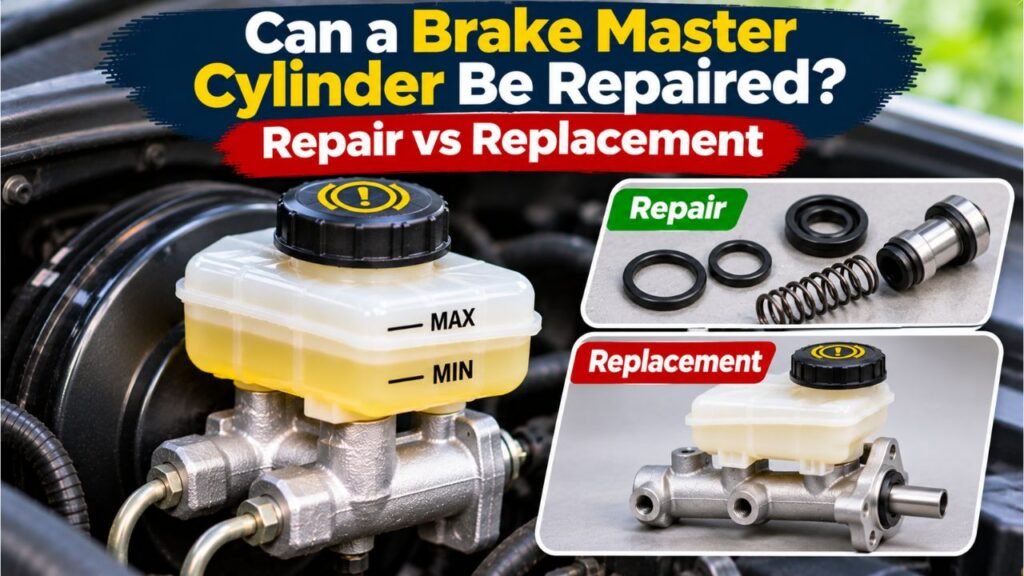
A brake master cylinder can be rebuilt if the manufacturer permits internal servicing, compatible replacement components are available, and the cylinder’s internal surfaces remain within specification.
However, not every master cylinder is rebuildable.
Some designs have serviceable pistons, seals, and internal components. Others are manufactured as non-serviceable assemblies.
Even when a rebuild is technically possible, complete replacement may be more economical or dependable.
When Repair May Be Possible
Rebuilding may be appropriate when:
- The manufacturer provides an approved repair procedure.
- A compatible rebuild kit is available.
- The cylinder bore is free from unacceptable scoring or corrosion.
- Internal components are serviceable or replaceable.
- The housing is not cracked.
- The repair can be properly inspected and tested.
When Replacement Is Necessary
Replacing the complete master cylinder is generally appropriate when:
- The manufacturer prohibits disassembly.
- The cylinder bore is damaged beyond specification.
- Internal components are severely corroded.
- The housing is cracked or structurally damaged.
- A suitable rebuild kit is unavailable.
- The assembly has sustained extensive contamination damage.
- A reliable repair cannot be verified.
Brake Master Cylinder Repair vs Replacement
| Condition | Rebuilding may be possible | Replacement generally preferred |
| Worn internal seals | Yes, if serviceable | Often |
| Worn piston assembly | If approved parts are available | Often |
| Damaged cylinder bore | Generally no | Yes |
| Severe internal corrosion | Generally no | Yes |
| Cracked housing | No | Yes |
| Leaking reservoir seal | Often a separate repair | Not always necessary |
| Internal leakage in non-serviceable unit | No | Yes |
| Manufacturer prohibits rebuilding | No | Yes |
| Older serviceable master cylinder | Possibly | Depends on condition |
| Integrated modern brake-control assembly | Only approved service operations | Follow manufacturer instructions |
Key Takeaway: A worn seal doesn’t automatically mean the complete master cylinder must be replaced, but rebuilding is appropriate only when the design and manufacturer allow it.
What Parts of a Brake Master Cylinder Can Be Repaired?
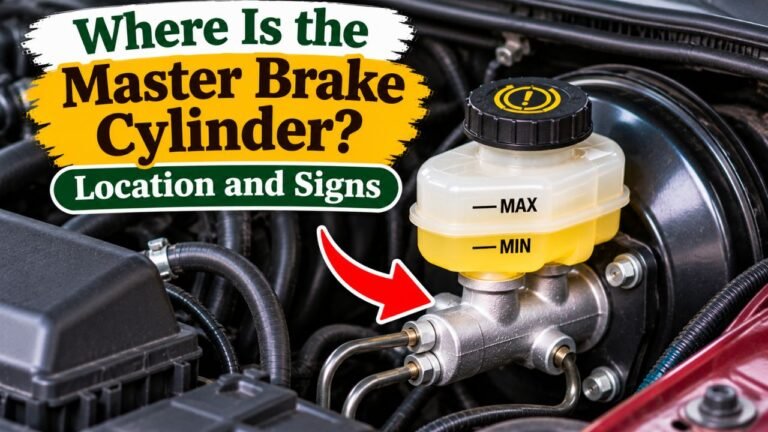
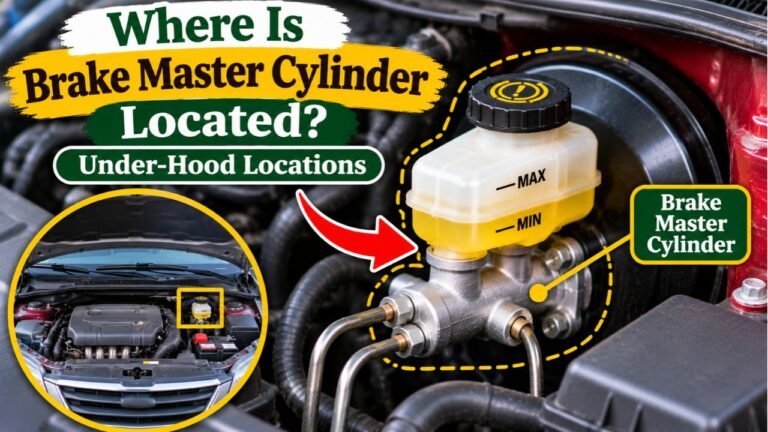
A conventional master cylinder contains several internal and external components.
Some may be replaceable, depending on the assembly.
1. Internal Piston Seals
The piston seals help maintain hydraulic pressure inside the cylinder bore.
When they wear or become damaged, fluid may bypass the piston internally.
This can cause pressure loss and unusual brake pedal behavior.
In a serviceable master cylinder, replacing the approved piston or seal assembly may restore proper operation if the bore and other components remain within specification.
However, replacing seals cannot correct a damaged sealing surface.
2. Primary and Secondary Piston Assemblies
Most modern conventional passenger vehicles use tandem master cylinders.
These contain primary and secondary pistons operating separate hydraulic circuits.
Some older designs allow piston assemblies to be removed and replaced.
For example, the 2003 Hyundai Tiburon master cylinder service procedure describes disassembly, inspection, and reassembly of the cylinder.
The manual specifically instructs technicians to replace the complete assembly if the cylinder bore is damaged.
It also warns against disassembling the individual primary and secondary piston assemblies themselves.
This is an example of a manufacturer permitting certain internal service operations, not permission to rebuild every master cylinder.
3. Return Springs
Return springs help move the pistons back toward their resting positions after braking.
A damaged spring can affect operation.
In some rebuildable designs, replacement springs may be included with an approved repair kit.
However, individual spring replacement is not universally authorized.
4. Brake Fluid Reservoir
The reservoir stores brake fluid and supplies the master cylinder.
If the plastic reservoir cracks, the problem may be limited to the reservoir rather than the internal hydraulic cylinder.
Some vehicles allow separate reservoir replacement.
Other assemblies may require replacing additional components.
5. Reservoir Grommets and Seals
Rubber grommets may seal the reservoir connections to the metal master cylinder body.
Over time, these seals can deteriorate and leak.
Replacing the grommets may correct the leak if the manufacturer provides the appropriate parts and procedure.
However, fluid leaking from the rear of the master cylinder is a different issue and requires careful diagnosis.
6. Fluid-Level Sensor
Some brake fluid reservoirs have a level sensor.
A faulty sensor may produce an incorrect warning even when hydraulic operation is normal.
Depending on the vehicle, the sensor or reservoir may be separately replaceable.
A sensor problem shouldn’t be confused with failure of the master cylinder’s pressure-generating mechanism.
When Should a Brake Master Cylinder Be Replaced Completely?
Many modern master cylinders are not intended for internal rebuilding.
Their manufacturers specify complete replacement when a hydraulic fault is confirmed.
Non-Serviceable Master Cylinder Design
Some manufacturers explicitly prohibit disassembling the internal assembly.
For example, the 2012 Subaru Impreza master cylinder service manual states that the master cylinder assembly cannot be disassembled and must be replaced as a complete unit.
It also requires brake-system bleeding after installation.
This illustrates why a generic rebuild kit or online repair procedure should never override vehicle-specific service instructions.
Damaged Cylinder Bore
The internal bore provides the precision surface against which the piston seals operate.
If this surface becomes damaged, the seals may no longer maintain hydraulic pressure correctly.
Possible bore defects include:
- Deep scratches.
- Scoring.
- Pitting.
- Severe corrosion.
- Excessive wear.
- Deformation.
Replacing the seals alone will not restore an unacceptable bore.
Can a Master Cylinder Bore Be Honed?
Some older cast-iron master cylinders were designed to permit limited honing under specific service procedures.
However, many modern cylinders must not be honed.
Some aluminum master cylinders have specialized internal finishes that can be damaged by abrasive machining.
Honing can also change the bore diameter or surface finish.
Never assume that a cylinder is safe to hone simply because it is made from metal.
Follow the exact manufacturer’s procedure. If honing is prohibited or the bore exceeds its limits, replace the assembly.
Cracked or Damaged Housing
A structural crack or other significant housing defect generally requires replacement.
The master cylinder operates under substantial hydraulic pressure.
A compromised housing cannot be considered safe merely because it appears to hold fluid while the vehicle is parked.
Severe Fluid Contamination
Contamination from incompatible hydraulic fluids or petroleum-based products can damage seals.
The problem may also affect other parts of the braking system.
Replacing only the master cylinder may not correct widespread contamination.
A qualified technician must determine the complete repair requirements.
Repeated Internal Leakage
If a previously rebuilt master cylinder develops internal pressure loss again, inspect the complete assembly.
Repeated failure may indicate bore wear, unsuitable parts, or another unresolved problem.
A replacement assembly may be more dependable than attempting another rebuild.
What Causes a Brake Master Cylinder to Fail?
Master cylinder failure can result from wear, contamination, corrosion, or mechanical damage.
Worn Rubber Seals
Internal piston seals experience repeated movement during braking.
Over time, they can deteriorate.
Worn seals may allow hydraulic fluid to bypass internally.
Moisture-Contaminated Brake Fluid
DOT 3, DOT 4, and DOT 5.1 glycol-based brake fluids absorb moisture.
Excessive moisture can reduce boiling resistance and contribute to hydraulic-system corrosion.
Corrosion inside the master cylinder may damage the bore and sealing surfaces.
Incorrect Brake Fluid
Using incompatible brake fluid can damage hydraulic components.
For example, petroleum-based fluids can severely affect rubber components in many glycol-based braking systems.
This can lead to swelling, leakage, or other failures.
Lack of Maintenance
Brake fluid left in service beyond the manufacturer’s recommended interval may develop moisture or contamination problems.
However, fluid condition depends on more than time alone.
Internal Corrosion
Corrosion can create rough surfaces that damage the seals during piston movement.
It can also interfere with smooth piston operation.
Mechanical Damage
Improper repairs, excessive force, damaged connections, or incorrect components may cause additional problems.
Manufacturing or Material Defects
Although less common, component defects can contribute to premature failure.
A qualified diagnosis is necessary to identify the cause.
Signs Your Brake Master Cylinder May Need Repair
A failing master cylinder can produce several warning signs.
However, none of these symptoms proves the master cylinder is defective without further diagnosis.
1. Brake Pedal Slowly Sinks
A pedal that gradually moves toward the floor while steady pressure is applied may indicate internal hydraulic leakage.
If fluid bypasses a worn master cylinder seal, the assembly may fail to maintain pressure.
However, an external leak or another hydraulic fault can cause similar behavior.
2. Soft or Spongy Brake Pedal
A soft pedal may indicate:
- Air in the brake lines.
- Hydraulic leakage.
- Fluid boiling.
- A master cylinder problem.
- Another braking-system fault.
Bleeding the brakes may help when trapped air is the cause, but it cannot repair worn internal seals.
3. Excessive Pedal Travel
If the pedal travels farther than usual, there may be a hydraulic or mechanical problem.
The master cylinder is one possible source.
4. Visible Brake Fluid Leakage
Fluid may escape near:
- Reservoir seals.
- Hydraulic outlet fittings.
- The rear of the master cylinder.
- Damaged housing areas.
Fluid leakage can also originate from brake lines or nearby components.
The source must be identified.
5. Brake Fluid Level Keeps Dropping
A falling reservoir level may indicate an external leak.
However, the level can also decrease as brake pads wear.
Repeatedly topping off the reservoir without inspection is not a proper repair strategy.
6. Brake Warning Light
Some hydraulic faults can trigger a dashboard warning.
However, brake warning lights may also indicate parking brake status, low fluid, or other problems.
7. Reduced Braking Performance
A master cylinder that cannot generate or maintain the intended pressure may reduce braking effectiveness.
This is a serious safety concern.
Brake Master Cylinder Failure Symptoms Chart
| Symptom | Possible master cylinder problem | Other possible cause |
| Pedal slowly sinks | Internal seal leakage | External hydraulic leak |
| Spongy pedal | Hydraulic pressure problem | Air or fluid boiling |
| Fluid around cylinder | External seal or fitting leak | Damaged reservoir or brake line |
| Low brake fluid | External leak | Worn pads or other leaks |
| Hard brake pedal | Less typical of internal master cylinder failure | Brake booster or assist-system fault |
| Brakes remain partially applied | Piston-return or compensation problem | Sticking caliper, hose, or linkage |
| Brake warning light | Hydraulic system fault | Other brake or sensor issue |
Important: If braking performance is abnormal, do not drive the vehicle until the system has been properly inspected and repaired.
How to Tell if the Master Cylinder Is Bad or Another Brake Component Is Failing
Correct diagnosis matters because replacing a functioning master cylinder won’t solve problems caused by other components.
Master Cylinder vs Brake Booster
A failing master cylinder can cause hydraulic pressure loss.
A failing brake booster often causes unusually high pedal effort.
These are common patterns, not absolute rules.
Master Cylinder vs Air in Brake Lines
Air trapped in the hydraulic system can create a spongy pedal.
Proper bleeding may remove trapped air.
A worn master cylinder seal, however, requires an appropriate repair or replacement.
Master Cylinder vs External Leak
A leaking caliper, hose, wheel cylinder, or brake line can cause pressure loss.
A master cylinder may still be functioning correctly.
Repairing the actual leak and following the required bleeding procedure is necessary.
Master Cylinder vs ABS Hydraulic Unit
Certain ABS hydraulic faults can affect pedal feel or pressure control.
Some systems may also require electronic bleeding procedures when air enters the hydraulic control unit.
Diagnosing these problems may require manufacturer-specific testing equipment.
Master Cylinder vs Brake Pad Wear
Worn brake pads can lower reservoir fluid level as caliper pistons extend.
That does not automatically mean the master cylinder is leaking.
Brake pad condition should be inspected as part of the diagnosis.
Why Visual Inspection Isn’t Enough
Internal master cylinder seal failure may occur without an obvious external leak.
A clean, dry cylinder body doesn’t prove that the internal hydraulic chambers are working correctly.
Professional diagnosis may involve:
- Inspecting the complete hydraulic system.
- Checking for external leaks.
- Evaluating pedal response.
- Testing hydraulic pressure when specified.
- Inspecting brake fluid condition.
- Checking the booster and ABS system.
Brake hydraulic testing should follow vehicle-specific procedures.
How Is a Brake Master Cylinder Rebuilt?
Rebuilding involves restoring an approved serviceable master cylinder using compatible replacement components.
It is different from simply changing the brake fluid.
Because the master cylinder controls a safety-critical system, internal rebuilding should be performed only by a qualified technician following the correct service documentation.
Step 1: Confirm That Rebuilding Is Permitted
The technician first checks the vehicle’s service information.
If the manufacturer prohibits internal disassembly, the correct approach is replacement.
Step 2: Remove and Inspect the Assembly
A serviceable master cylinder may be removed for inspection.
The technician examines the housing, reservoir connections, and hydraulic components.
The exact procedure varies by vehicle.
Step 3: Inspect the Internal Bore
The bore is checked for wear, corrosion, scoring, and other damage.
This is a critical decision point.
If the bore is outside its allowable specifications, the assembly should be replaced.
Step 4: Evaluate Internal Components
The piston assemblies, springs, and other serviceable parts are inspected according to the manufacturer’s instructions.
Some designs permit replacing complete piston assemblies but prohibit disassembling those pistons further.
Step 5: Install Approved Repair Components
When rebuilding is authorized, the technician uses the correct repair kit.
It may include:
- Piston seals.
- Complete piston assemblies.
- Return springs.
- Retaining components.
- Reservoir grommets.
Kit contents depend on the specific application.
Step 6: Reassemble According to Specifications
The cylinder must be reassembled using the correct components, procedures, and approved lubricants.
Brake-system components must remain free of contamination.
Ordinary petroleum grease and incompatible cleaning solvents can damage some brake hydraulic seals.
Step 7: Test the Rebuilt Assembly
The assembly must be inspected and tested according to the applicable specifications.
A rebuilt master cylinder should not be installed merely because its pistons move when pushed by hand.
Step 8: Install and Bleed the Brake System
After installation, trapped air must be removed using the correct bleeding procedure.
Certain ABS-equipped vehicles require additional steps.
Step 9: Verify Brake Operation
Before the vehicle returns to service, the technician should verify:
- Correct pedal response.
- No hydraulic leaks.
- Proper fluid level.
- Correct hydraulic operation.
- Completion of required ABS procedures.
- No unresolved brake warning conditions.
Key Takeaway: A successful rebuild depends on the serviceability of the cylinder, the condition of its bore, approved replacement parts, and proper hydraulic testing.
Can You Repair a Brake Master Cylinder With a Rebuild Kit?
Yes, when the manufacturer permits rebuilding and a correct kit is available.
However, a rebuild kit doesn’t make an otherwise non-serviceable master cylinder repairable.
What Is a Master Cylinder Rebuild Kit?
A rebuild kit contains replacement components for a specific master cylinder.
Depending on the design, it may include seals, pistons, springs, or retaining components.
Can a Rebuild Kit Fix a Sinking Brake Pedal?
Sometimes.
If the master cylinder is confirmed to have worn serviceable seals and the bore remains suitable, an approved rebuild may restore hydraulic sealing.
However, a sinking pedal can result from other faults.
A rebuild kit is not a universal solution.
Can a Kit Repair a Scratched Cylinder Bore?
No.
Replacement seals cannot correct unacceptable scoring, pitting, or other damage to the bore.
If the manufacturer requires replacement under those conditions, the complete assembly must be changed.
Are Universal Rebuild Kits Safe?
Brake master cylinders vary in internal dimensions and component design.
A kit must match the exact assembly.
Generic components that appear to fit may not meet the required hydraulic specifications.
Is Rebuilding Better for Older Vehicles?
It can be useful when new replacement components are difficult to obtain.
Classic car restoration may involve professional rebuilding of serviceable original components.
However, the process must still follow suitable technical requirements.
Preserving an original part does not justify compromising braking safety.
Brake Master Cylinder Rebuild vs Replacement: Which Is Better?
The best option depends on compatibility, cost, condition, and long-term reliability.
Rebuilding Advantages
Potential advantages include:
- Retaining an original serviceable housing.
- Lower parts expense in some cases.
- Supporting restoration of older vehicles.
- Avoiding replacement when only approved internal components are worn.
Rebuilding Disadvantages
Possible disadvantages include:
- Limited availability of correct kits.
- Additional inspection and specialist labor.
- Risk of discovering bore damage after disassembly.
- Difficulty verifying repair quality.
- Manufacturer restrictions.
- Limited warranty coverage in some cases.
Replacement Advantages
Replacing the complete assembly can provide:
- A new or professionally remanufactured hydraulic unit.
- No need to rebuild the original internal mechanism.
- More predictable repair procedures.
- Manufacturer-approved service options.
- Potentially stronger parts warranty coverage.
Replacement Disadvantages
Possible disadvantages include:
- Higher parts cost.
- Limited availability for rare vehicles.
- Possible core charges on remanufactured units.
- Need to verify exact compatibility.
Rebuild vs Replace Comparison
| Factor | Rebuild | Complete replacement |
| Suitable for every vehicle | No | Usually the specified remedy for non-serviceable units |
| Requires internal disassembly | Yes | No internal rebuilding of old unit |
| Depends on bore condition | Yes | New replacement has its own finished bore |
| Parts availability | May be limited | Depends on vehicle |
| Specialist labor | Often higher | Generally more straightforward |
| Cost predictability | Can vary after inspection | Often easier to estimate |
| Common for modern passenger cars | Less common | More common |
| Useful for classic vehicles | Sometimes | Depends on parts availability |
| Safety verification | Essential | Essential |
| ABS bleeding may be required | Yes | Yes |
Which Would I Recommend?
For a modern passenger car with confirmed internal master cylinder failure, I generally recommend a high-quality, vehicle-approved replacement assembly.
For an older vehicle with a rebuildable cylinder and a good bore, professional rebuilding can be reasonable.
The final decision should follow the manufacturer’s instructions and a qualified inspection.
How Much Does Brake Master Cylinder Repair Cost?
The cost depends on the vehicle, type of repair, labor rates, and replacement-part availability.
A simple reservoir seal repair is different from rebuilding the internal master cylinder.
A complete assembly replacement may also involve additional fluid service and diagnostic work.
Brake Master Cylinder Replacement Cost
According to RepairPal’s brake master cylinder replacement cost estimate, updated September 3, 2026, the estimated average U.S. repair cost is:
| Cost category | Estimated amount |
| Parts | 450–493 |
| Labor | 206–303 |
| Total replacement | 656–796 |
These figures are general U.S. estimates.
They exclude taxes, location-specific differences, and additional repairs.
Actual costs can be substantially higher or lower depending on the vehicle.
How Much Does Rebuilding Cost?
There is no dependable universal rebuilding price.
The cost may include:
- Removal and installation.
- Disassembly.
- Inspection.
- Replacement kit.
- Specialist labor.
- Testing.
- Brake fluid.
- Bleeding.
In some cases, rebuilding costs less than replacement.
In others, the added specialist labor can make a complete replacement more economical.
Can a Reservoir Seal Repair Be Cheaper?
Yes.
If the problem is limited to a replaceable reservoir grommet or another approved external component, the work may be less extensive than replacing the master cylinder.
However, the source of the leak must be confirmed.
Does ABS Increase Repair Cost?
It can.
Some vehicles require a diagnostic scan tool or specialized hydraulic bleeding after master cylinder service.
The exact procedure depends on the vehicle.
What Else May Increase Cost?
Additional expenses may arise from:
- Corroded brake lines.
- Damaged fittings.
- Contaminated fluid.
- Master cylinder-to-booster leakage.
- ABS bleeding requirements.
- Additional hydraulic component failures.
How to Get an Accurate Estimate
Ask the repair shop for an itemized quote covering:
- Diagnosis.
- Master cylinder or repair components.
- Labor.
- Brake fluid.
- Bleeding.
- Additional repairs, if needed.
The shop should explain why rebuilding or replacement is recommended.
Is a Remanufactured Brake Master Cylinder a Good Option?
A professionally remanufactured master cylinder can be an alternative to a new assembly when it is approved and compatible.
What Is a Remanufactured Master Cylinder?
A remanufactured unit generally begins as an existing component that is inspected, reconditioned, and rebuilt according to a remanufacturer’s process.
Its worn components may be replaced.
However, the exact remanufacturing process varies by supplier.
Is It the Same as Rebuilding at Home?
No.
Professional remanufacturing may involve dedicated inspection equipment, standardized processes, and testing.
A home rebuild may not have the same quality controls.
What Should You Check Before Buying?
Look for:
- Exact vehicle compatibility.
- Reputable manufacturer.
- Published quality standards.
- Warranty terms.
- Correct bore size.
- Proper hydraulic port arrangement.
- Reservoir compatibility.
- Any required core return.
New vs Remanufactured Master Cylinder
| Feature | New assembly | Remanufactured assembly |
| Basic construction | New manufactured component | Reconditioned existing core |
| Cost | Depends on vehicle | May be lower |
| Quality | Depends on manufacturer | Depends on remanufacturing process |
| Warranty | Varies | Varies |
| Availability | May be limited for older vehicles | May be available for certain older applications |
| Installation requirements | Vehicle-specific | Vehicle-specific |
Both options must meet the correct application requirements.
Don’t assume that every remanufactured part is lower quality or that every new aftermarket part is automatically better.
What Happens During Brake Master Cylinder Replacement?
Replacing a master cylinder generally involves removing the defective assembly and installing a compatible replacement.
Because the work affects the hydraulic brake circuits, it requires care and proper testing.
Diagnosis Comes First
A technician confirms the source of the braking problem.
This helps avoid replacing the master cylinder when the actual problem is an external leak, brake booster fault, or another issue.
Old Assembly Removal
The appropriate connections and mounting hardware are removed according to the vehicle’s service instructions.
Care is required to avoid damaging brake pipes and introducing contamination.
Replacement Preparation
Some new or remanufactured master cylinders require bench bleeding or another specified preparation procedure.
The goal is to remove trapped air from the replacement component.
Installation
The correct assembly is installed using the manufacturer’s specifications.
Brake line fittings, reservoir connections, and mounting components must be correct.
Brake System Bleeding
The hydraulic circuits are bled using the required procedure.
Some vehicles require specialized ABS bleeding.
Final Inspection
The technician checks:
- Hydraulic leakage.
- Brake fluid level.
- Pedal travel.
- Pedal firmness.
- Warning indicators.
- Correct braking operation.
A vehicle should not be returned to road use until the braking system has been verified safe.
Does a Repaired Master Cylinder Need to Be Bled?
Yes.
When a master cylinder is removed, rebuilt, or replaced, air can enter its hydraulic chambers and the connected brake lines.
Proper bleeding is required.
Why Is Air Dangerous?
Brake fluid transmits hydraulic pressure because it is only slightly compressible under normal conditions.
Air compresses much more readily.
When air becomes trapped inside the hydraulic system, some pedal movement may compress the air instead of producing the expected pressure.
This can create:
- A soft pedal.
- Excessive pedal travel.
- Reduced braking response.
- Inconsistent pedal feel.
What Is Bench Bleeding?
Bench bleeding is a manufacturer-specified preparation procedure used on certain master cylinders before installation.
It helps remove air from the cylinder chambers.
However, the correct method varies by assembly.
Does Bench Bleeding Replace Wheel Bleeding?
No.
Removing air from the master cylinder doesn’t guarantee that the rest of the hydraulic system is free from air.
The wheel circuits must be serviced as specified.
What About ABS?
Some ABS hydraulic control units can trap air in passages that require electronically controlled bleeding.
If the manufacturer’s service procedure requires a diagnostic tool, ordinary manual bleeding may not be sufficient.
Can You Drive With a Spongy Pedal After Repair?
No.
A persistent soft or sinking pedal indicates that the system may not be functioning correctly.
The vehicle needs further inspection before road use.
Can You Repair a Brake Master Cylinder Without Removing It?
It depends on the problem.
Some external components may be serviceable without complete master cylinder replacement.
However, internal piston or bore repairs generally require removing and disassembling a serviceable assembly.
External Reservoir Problems
Some vehicles allow separate repair of:
- Reservoir.
- Reservoir seals.
- Fluid-level sensor.
- Certain external components.
Follow the manufacturer’s procedure.
Internal Seal Problems
Internal pressure-seal repair usually requires access to the piston assemblies.
A master cylinder cannot generally be rebuilt correctly by simply pouring an additive into the reservoir.
Can a Brake Fluid Flush Repair a Bad Master Cylinder?
No.
Fresh fluid can improve maintenance condition and restore the specified fluid properties.
However, it cannot repair torn piston seals, a cracked housing, or a damaged bore.
Can Brake Cleaner Repair a Master Cylinder?
No.
Brake cleaner is not a hydraulic repair product.
Using incompatible solvents inside the braking system can damage seals and contaminate fluid.
Never pour brake cleaner into a brake fluid reservoir.
Do Brake Seal Conditioners Work?
Additives claiming to swell or condition hydraulic brake seals should not be used unless explicitly approved by the vehicle manufacturer.
Unknown chemicals can affect seal compatibility and braking performance.
Mechanical defects require proper repair.
How Long Does a Repaired Brake Master Cylinder Last?
There is no guaranteed lifespan for a rebuilt master cylinder.
Its reliability depends on the original condition, repair quality, replacement components, and operating environment.
Condition of the Cylinder Bore
The bore is essential to hydraulic sealing.
If it remains within specification, approved replacement seals may function properly.
If the bore is damaged, new seals may fail prematurely.
Quality of Repair Components
The replacement parts must match the original assembly and meet the correct specifications.
Poor-quality or incompatible components can create problems.
Technician Skill
Correct inspection, assembly, and testing are important.
Even small errors can compromise hydraulic pressure.
Brake Fluid Condition
Clean, specified brake fluid helps maintain hydraulic performance.
Contaminated or incorrect fluid can damage the repaired assembly.
Maintenance History
Following the brake fluid replacement schedule and correcting leaks can help protect the hydraulic system.
Is a Rebuilt Master Cylinder as Reliable as a New One?
A professionally rebuilt, properly approved assembly can provide dependable service.
However, reliability depends on the rebuilding process and condition of the reused components.
There is no universal guarantee that every rebuild will match every new assembly.
Compare manufacturer quality, warranty, and application suitability.
Can You Drive With a Bad Brake Master Cylinder?
No. A vehicle with a suspected master cylinder failure or compromised hydraulic braking should not be driven.
A defective master cylinder can cause unpredictable pedal behavior and reduced braking performance.
What If the Pedal Still Works Sometimes?
Intermittent braking problems are still dangerous.
A hydraulic failure may become more severe without warning.
The fact that the vehicle stopped successfully once doesn’t guarantee the brakes will function normally during the next stop.
Does a Tandem Master Cylinder Provide Backup Braking?
Most modern conventional cars use two hydraulic circuits.
If one fails, the other may retain some braking ability.
However, this is an emergency redundancy feature.
It doesn’t make continued driving safe.
What Should You Do?
If braking performance changes unexpectedly:
- Reduce speed safely.
- Stop in a safe location.
- Avoid normal driving.
- Arrange professional inspection.
- Have the vehicle towed when braking safety is uncertain.
Never treat a temporary improvement after pumping the pedal as proof that the problem is fixed.
How to Prevent Brake Master Cylinder Problems
Not every master cylinder failure can be prevented, but appropriate maintenance can reduce some risks.
Replace Brake Fluid on Schedule
Follow the manufacturer’s service interval.
Moisture-contaminated glycol-based brake fluid can contribute to corrosion and reduced boiling resistance.
Use the Correct Brake Fluid
Check the reservoir cap and owner’s manual.
Don’t substitute incompatible hydraulic fluids.
Keep the Reservoir Clean
Avoid introducing dirt, water, or other contaminants.
Use clean equipment when adding fluid.
Inspect for Leaks
Brake fluid leaks can compromise hydraulic operation.
Have unexplained fluid loss investigated promptly.
Avoid Ignoring Brake Warnings
A brake warning light may indicate a serious hydraulic problem.
Identify the cause instead of assuming the sensor is faulty.
Monitor Brake Pedal Changes
Unusual pedal travel, sinking, softness, or inconsistent response requires attention.
Avoid Unnecessary Hydraulic Disassembly
Opening brake lines or removing hydraulic components can introduce air and contamination.
Perform brake repairs only with the correct tools, instructions, and expertise.
Use Suitable Replacement Parts
When replacement is necessary, choose the exact application-specific assembly.
Master cylinders that look similar may have different internal dimensions or hydraulic arrangements.
Common Mistakes When Repairing a Brake Master Cylinder
Assuming Every Master Cylinder Can Be Rebuilt
Some are explicitly non-serviceable.
Follow manufacturer instructions.
Replacing Seals Without Inspecting the Bore
A damaged bore can prevent new seals from working correctly.
Honing a Cylinder Without Authorization
Honing may damage special bore finishes or change critical dimensions.
Using an Incorrect Rebuild Kit
Master cylinder components must match the exact design.
Reusing Contaminated Brake Fluid
Only use fresh fluid meeting the specified requirements.
Ignoring External Hydraulic Leaks
A sinking pedal can result from leaks elsewhere in the system.
Confusing Booster Failure With Master Cylinder Failure
A hard pedal may indicate loss of brake assistance rather than internal master cylinder leakage.
Skipping Brake Bleeding
Trapped air can seriously affect hydraulic braking.
Ignoring ABS Service Requirements
Some vehicles require specialized bleeding equipment.
Buying a Replacement Based Only on Appearance
Bore size, circuit arrangement, hydraulic ports, and mounting details must match.
Failing to Test the Repaired System
Brake pedal feel and hydraulic operation must be verified before road use.
Continuing to Drive With Known Brake Problems
Hydraulic brake faults can create dangerous stopping conditions.
Is It Worth Rebuilding a Brake Master Cylinder?
Rebuilding can make sense in certain circumstances.
However, it is not automatically the best financial or mechanical choice.
Rebuilding May Be Worthwhile When
- The vehicle is older or collectible.
- The original cylinder is serviceable.
- The bore remains within specification.
- Approved rebuild parts are available.
- An experienced specialist can perform the work.
- A suitable replacement assembly is unavailable or unusually expensive.
Replacement Is Often Better When
- The vehicle is a modern passenger car.
- The manufacturer prohibits rebuilding.
- The cylinder bore is damaged.
- Labor costs make rebuilding uneconomical.
- A quality replacement unit is available.
- The original assembly has extensive corrosion or contamination.
Consider the Total Cost
Don’t compare only the price of a rebuild kit with the price of a replacement cylinder.
Include labor, inspection, testing, brake fluid, bleeding, and any additional repairs.
A low-cost rebuild kit can become expensive if the repair requires substantial specialist labor.
Consider Long-Term Reliability
Braking components should be selected for correct performance and reliability.
Saving a relatively small amount of money isn’t worthwhile if the repaired assembly cannot be verified to meet specifications.
My recommendation: For most modern vehicles, replacing a confirmed faulty master cylinder with an approved new or professionally remanufactured assembly is the more practical choice. Rebuilding is best reserved for designs specifically intended to be serviced.
Conclusion
A brake master cylinder can sometimes be repaired, but many modern vehicles require complete assembly replacement when internal hydraulic failure occurs.
Rebuilding may be possible when the manufacturer provides an approved procedure, suitable replacement seals or piston assemblies are available, and the internal cylinder bore remains in acceptable condition.
However, severe corrosion, scoring, housing damage, or a non-serviceable design usually makes replacement necessary.
I recommend diagnosing the braking problem before purchasing parts because a sinking or spongy pedal can have several causes beyond the master cylinder.
When repair is possible, it should be performed by a qualified technician using the correct parts and procedures. When replacement is required, use a vehicle-compatible assembly and complete the specified brake bleeding process.
A repaired or replaced master cylinder must be checked for leaks, proper pedal response, and normal braking performance before the vehicle returns to service.
The safest choice isn’t simply the cheapest repair. It’s the option that restores reliable hydraulic braking and meets the vehicle manufacturer’s specifications.
FAQs About Can a Brake Master Cylinder Be Repaired
Can You Repair a Brake Master Cylinder Without Replacing It?
Yes, some serviceable master cylinders can be rebuilt using approved seals or piston assemblies.
However, many modern master cylinders are non-serviceable and must be replaced as complete units when they fail.
Is It Better to Rebuild or Replace a Brake Master Cylinder?
For most modern passenger vehicles, replacement is often more practical.
Rebuilding may be appropriate for older serviceable designs when the bore is in good condition and compatible repair parts are available.
Always follow the manufacturer’s instructions.
Can You Replace Just the Seals in a Brake Master Cylinder?
Sometimes, if the assembly is designed for internal servicing and the correct replacement parts are available.
However, new seals won’t repair a damaged cylinder bore.
Many manufacturers prohibit internal disassembly entirely.
How Much Does It Cost to Fix a Brake Master Cylinder?
Repair costs depend on the vehicle and required work.
RepairPal’s September 2026 U.S. estimate places typical master cylinder replacement at approximately 656–796, excluding taxes and additional repairs.
A rebuild or external seal repair may cost less, but there is no universal price.
Can a Bad Brake Master Cylinder Be Fixed by Bleeding the Brakes?
No, not if the master cylinder has worn internal seals, a damaged bore, or another mechanical defect.
Bleeding removes trapped air.
It doesn’t restore damaged components.
However, trapped air can cause symptoms similar to master cylinder failure, so diagnosis matters.
How Long Does a Rebuilt Brake Master Cylinder Last?
There is no guaranteed lifespan.
Durability depends on the cylinder’s condition, repair quality, replacement components, brake fluid maintenance, and operating conditions.
A properly rebuilt approved assembly can provide reliable service, but a damaged bore may cause premature failure.
Is It Safe to Drive With a Bad Brake Master Cylinder?
No.
A failing master cylinder can reduce or unpredictably affect hydraulic braking pressure.
If the brake pedal sinks, braking response deteriorates, or hydraulic leakage is suspected, stop safely and arrange professional inspection before driving again.