How Does a Car Lose Brake Fluid? Why It Drops and What to Do
A car can lose brake fluid through leaks in the brake lines, flexible hoses, calipers, wheel cylinders, master cylinder, or other hydraulic components. However, a gradual drop in the brake fluid reservoir can also occur naturally as brake pads wear down, even when no fluid is leaking. Unlike engine oil or gasoline, brake fluid is not normally consumed during vehicle operation.
The braking system uses hydraulic pressure to transfer force from the brake pedal to the brakes at each wheel. When the system is functioning properly, brake fluid remains within the hydraulic circuit. A leak allows fluid to escape, reducing the pressure available for braking.
Low brake fluid can cause a dashboard warning, a soft brake pedal, longer stopping distances, or complete brake failure in severe cases. Sometimes, however, a car loses fluid without leaving an obvious puddle.
In this article, I explain how a car loses brake fluid, why the reservoir level can decrease without a leak, and which components commonly fail. I also cover warning signs, safe inspection methods, what to do when fluid is low, and how to prevent further brake system problems.
How Does a Car Lose Brake Fluid? Main Causes
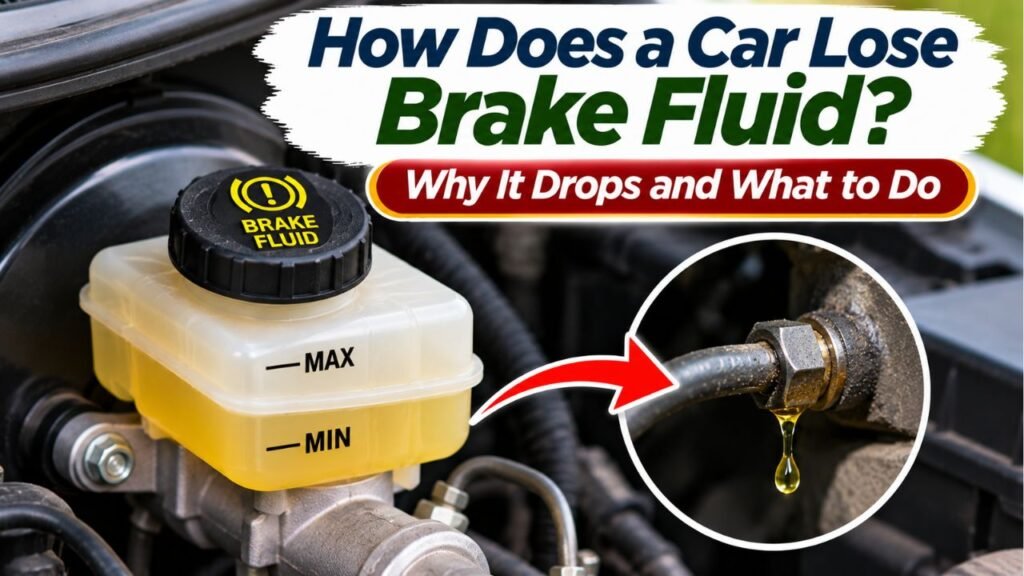
There are two main reasons the brake fluid level in a car’s reservoir decreases:
- Normal brake pad wear: Fluid moves from the reservoir into the brake calipers as the pads become thinner.
- A hydraulic system leak: Fluid escapes through a damaged component, deteriorated seal, or loose connection.
Other situations, including recent brake service and problems in certain shared hydraulic systems, may also explain an unexpected fluid level.
The distinction is important because a lower reservoir level does not always mean fluid has physically escaped from the car.
Common Causes of Low Brake Fluid
| Cause | What Happens | Does Fluid Leave the System? |
| Worn brake pads | Caliper pistons extend and retain more fluid | No |
| Leaking brake line | Fluid escapes through a damaged or corroded pipe | Yes |
| Damaged brake hose | Fluid escapes through cracks or connection failures | Yes |
| Leaking brake caliper | Fluid escapes past a seal or damaged component | Yes |
| Leaking wheel cylinder | Fluid escapes inside a drum brake assembly | Yes |
| Master cylinder external leak | Fluid escapes through a seal or housing | Yes |
| Master cylinder internal bypass | Hydraulic pressure leaks past an internal seal | Not necessarily |
| Reservoir or connection leak | Fluid escapes through the reservoir or its seals | Yes |
| ABS hydraulic unit leak | Fluid escapes through the unit or its connections | Yes |
| Recent brake service | Fluid may have been removed or improperly refilled | Possibly |
The most important clue is how quickly the fluid level decreases.
A gradual reduction over thousands of miles may be associated with normal brake wear.
A sudden drop, repeated need for refilling, or fluid level below the minimum mark requires prompt investigation.
1. Worn Brake Pads Can Lower Brake Fluid Without a Leak
One of the most common reasons for a gradual decrease in the brake fluid reservoir is normal brake pad wear.
This does not mean the fluid has disappeared.
Instead, more of it is being held inside the brake calipers.
How Brake Pad Wear Changes Fluid Level
Disc brakes use hydraulic pistons to push the brake pads against the brake rotors.
When the pads are new, the pistons remain relatively retracted.
As the pads wear thinner, the pistons must extend farther to maintain the proper position.
This additional piston extension creates more space inside the calipers.
Brake fluid from the reservoir fills that space.
As a result, the fluid level in the reservoir gradually decreases.
According to Wagner Brake’s technical guide to checking brake fluid, this movement of fluid from the reservoir to the calipers is a normal consequence of brake pad wear.
Does This Mean the Car Is Losing Brake Fluid?
Not in the usual sense.
The fluid remains within the sealed hydraulic system.
It has simply moved to another location.
When worn brake pads are replaced, a technician typically retracts the caliper pistons.
This pushes fluid back toward the reservoir, causing the level to rise.
How Much Can the Level Drop?
There is no universal amount.
The change depends on:
- Caliper design.
- Number and size of pistons.
- Brake pad thickness.
- Amount of pad wear.
- Reservoir capacity.
- Vehicle design.
A gradual decrease between the MAX and MIN markings may be normal.
However, a level below MIN should never be assumed to result from ordinary pad wear without inspection.
Should You Add Fluid When the Pads Wear?
Not automatically.
If the decrease is caused only by normal wear, topping the reservoir up to MAX may create an overfilled condition when the pistons are pushed back during a future brake pad replacement.
The correct action is to inspect the brake pads and hydraulic system first.
Key Takeaway: Brake pad wear can lower the reservoir level without any fluid leaving the car. A leak must still be ruled out.
2. Leaking Brake Lines
Brake lines are one of the main components that carry hydraulic fluid through the braking system.
Most vehicles use rigid metal brake pipes for much of the hydraulic circuit.
Over time, these lines can corrode or become damaged.
What Causes Brake Line Leaks?
Common causes include:
- Rust and corrosion.
- Exposure to road salt.
- Physical damage from road debris.
- Improper installation.
- Damaged fittings.
- Previous collision damage.
- Wear caused by contact with other components.
Vehicles regularly driven in regions where roads are treated with salt may face greater corrosion exposure.
What Happens When a Brake Line Leaks?
When the brake pedal is pressed, hydraulic pressure rises.
Fluid may escape through a corroded section, crack, or damaged connection.
Depending on the leak’s location and severity, the brake pedal may feel soft or travel farther than normal.
A severe leak can significantly reduce braking capability.
Signs of a Leaking Brake Line
Possible clues include:
- Wet areas along the underbody.
- Fluid dripping beneath the vehicle.
- A falling brake fluid level.
- Visible corrosion on brake pipes.
- A soft or sinking brake pedal.
- A brake warning light.
However, not every corroded line is already leaking, and not every leak is visible from outside the vehicle.
Important: A suspected leaking brake line requires professional repair. Do not drive the vehicle until the braking system has been made safe.
3. Damaged Flexible Brake Hoses
Flexible brake hoses connect rigid hydraulic lines to brake components that move with the suspension or steering.
They are designed to withstand movement and hydraulic pressure.
However, they can deteriorate or become damaged.
Common Causes of Brake Hose Failure
Potential causes include:
- Aging rubber.
- Cracking.
- Abrasion.
- Incorrect routing.
- Twisting during brake repairs.
- Damage from road debris.
- Corrosion at hose fittings.
Brake hoses may also fail internally without producing a visible external fluid leak.
For example, an internal restriction can interfere with brake pressure release and cause dragging brakes.
That condition differs from actual fluid loss.
How to Recognize a Leaking Brake Hose
Possible signs include:
- Moisture around the hose.
- Fluid at the hose connection.
- Visible cracking or abrasion.
- Fluid accumulating behind a wheel.
- A decreasing reservoir level.
- Abnormal brake pedal response.
Because the hose moves with the suspension, a leak may not be obvious while the vehicle is stationary.
A mechanic should inspect suspicious hoses and connections.
4. Leaking Brake Calipers
Disc brake calipers contain pistons that move in response to hydraulic pressure.
The pistons use seals to retain brake fluid.
If a seal becomes damaged or deteriorates, fluid may escape.
Why Brake Calipers Leak
Possible causes include:
- Damaged piston seals.
- Corroded pistons.
- Improperly installed replacement parts.
- Physical damage.
- Deterioration around hydraulic connections.
- Loose or damaged bleeder screws.
A caliper leak can develop gradually or become more serious over time.
What Does a Caliper Leak Look Like?
Fluid may appear:
- Around the caliper piston area.
- Behind the wheel.
- On the inner wheel surface.
- Near the brake hose connection.
- Around a bleeder screw.
- On nearby suspension components.
Brake fluid should not be present on brake pad friction surfaces or rotors.
Contaminated friction components may need replacement as part of a proper repair.
Can a Caliper Leak Cause Uneven Braking?
Yes.
If a hydraulic circuit loses pressure, braking performance may be reduced.
However, pulling to one side can also result from a seized caliper, damaged hose, or other brake problems.
A vehicle pulling during braking is not proof of a fluid leak.
5. Leaking Wheel Cylinders in Drum Brakes
Some vehicles use drum brakes on the rear wheels.
Drum brakes commonly contain hydraulic wheel cylinders.
These cylinders push brake shoes outward against the drum.
How a Wheel Cylinder Loses Fluid
Each wheel cylinder contains pistons and seals.
When the seals deteriorate, brake fluid may escape into the drum assembly.
Unlike a leak from an exposed brake line, this fluid may remain hidden inside the drum.
Symptoms of a Leaking Wheel Cylinder
Possible signs include:
- A gradual reduction in brake fluid.
- Moisture near a rear wheel.
- Fluid inside the brake drum.
- Reduced brake performance.
- Abnormal rear braking.
- Contaminated brake shoes.
A leaking wheel cylinder may not leave a visible puddle under the car.
A technician may need to remove the drum to identify the problem.
Key Takeaway: When a car loses brake fluid without an obvious external leak, drum brake wheel cylinders are one possible hidden source.
6. A Leaking Brake Master Cylinder
The brake master cylinder converts brake pedal movement into hydraulic pressure.
It is usually located in the engine compartment near the brake fluid reservoir and brake booster.
The master cylinder contains seals that control hydraulic pressure and prevent external leakage.
External Master Cylinder Leaks
A damaged seal may allow brake fluid to escape from the master cylinder.
Possible leak locations include:
- Hydraulic line fittings.
- The rear master cylinder seal.
- The connection to the brake booster.
- Other external sealing surfaces.
On certain vehicles, fluid leaking from the rear master cylinder seal can enter the brake booster area.
As a result, fluid may disappear without leaving a puddle beneath the car.
Internal Master Cylinder Failure
A master cylinder can also develop an internal hydraulic bypass.
This happens when pressure moves past a worn internal seal rather than being maintained properly.
The brake pedal may slowly sink under steady pressure.
However, an internal bypass does not necessarily reduce the total brake fluid level.
This distinction is important when diagnosing a low reservoir versus a sinking brake pedal.
Signs of Master Cylinder Problems
Possible symptoms include:
- Brake pedal sinking under steady pressure.
- Fluid loss.
- Wetness near the master cylinder.
- Abnormal pedal travel.
- Brake warning indicators.
- Reduced braking performance.
These symptoms can have other causes.
Professional diagnosis is needed to identify the failed component.
7. Brake Fluid Reservoir or Seal Leaks
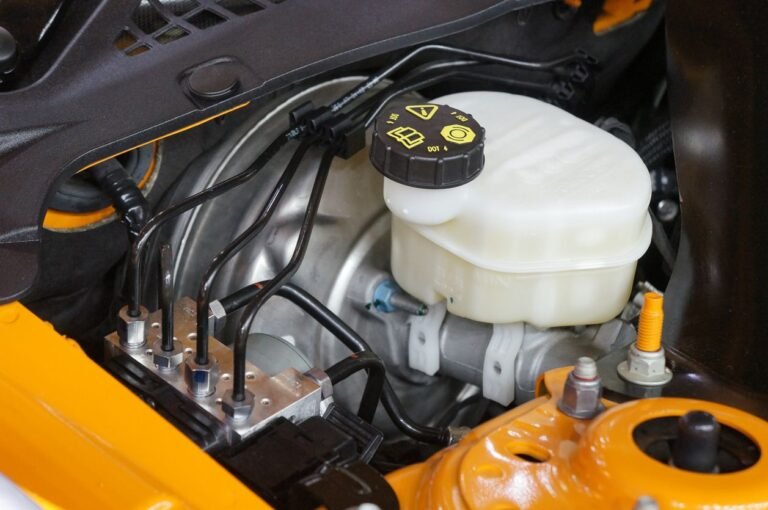
The brake fluid reservoir stores a reserve supply of hydraulic fluid.
On many vehicles, it is a translucent plastic container mounted on the master cylinder.
The reservoir itself can sometimes develop a leak.
Possible Leak Locations
Fluid may escape through:
- Cracks in the reservoir.
- Deteriorated reservoir seals.
- Damaged mounting connections.
- Incorrectly installed components.
- Loose fittings after service.
- Certain cap or sealing problems.
A reservoir cap is not normally intended to function as a permanently airtight pressure seal in every design.
Therefore, do not assume every trace of moisture around the cap proves a hydraulic leak.
However, visible fluid escaping from the reservoir or a persistently falling level requires inspection.
Can an Overfilled Reservoir Leak?
Yes.
Overfilling may cause fluid to escape during temperature changes or brake servicing, depending on the reservoir design.
For example, retracting caliper pistons during brake pad replacement can push fluid back into the reservoir.
If the reservoir was previously topped up excessively, it may overflow.
Brake fluid can damage vehicle paint and certain other surfaces.
Avoid overfilling and follow the manufacturer’s specified level.
8. Leaks Around the ABS Hydraulic Unit
Vehicles equipped with an anti-lock braking system use additional hydraulic components to control brake pressure.
An ABS hydraulic control unit may contain internal valves, passages, connections, and a pump.
Although leaks in these units are less commonly encountered than some other brake system problems, they can occur.
How the ABS System Can Lose Fluid
Possible causes include:
- Damaged hydraulic connections.
- Corrosion.
- Seal failures.
- Physical damage.
- Problems introduced during previous repairs.
A leak near the ABS hydraulic unit may be difficult to see because it is often positioned among other components in the engine compartment.
Does an ABS Warning Light Mean Brake Fluid Is Leaking?
No.
An ABS warning light can illuminate because of electrical, sensor, module, or hydraulic-system faults.
It does not specifically identify a fluid leak.
Likewise, a brake fluid leak may occur without immediately triggering an ABS warning.
A qualified technician may need diagnostic equipment to identify the problem.
9. Fluid Loss After Brake Repairs or Maintenance
A brake fluid level may change after servicing.
Some fluid may have been removed during repairs, bleeding, or replacement of hydraulic components.
However, a continuing decrease after service is not normal.
Possible Service-Related Problems
Examples include:
- A loose hydraulic fitting.
- A damaged brake hose.
- An improperly seated seal.
- A bleeder screw that is not correctly tightened.
- Incomplete hydraulic-system repair.
- Incorrect reservoir filling.
- Fluid spilled during service.
What If the Fluid Drops After a Brake Fluid Change?
A small initial level difference may reflect how the reservoir was filled, but an ongoing decrease requires investigation.
A brake fluid flush should not cause continuing fluid loss.
If the pedal feels soft or the level drops after servicing, the system may contain air or have a leak.
Have the vehicle inspected before driving.
Can a Car Lose Brake Fluid Without a Visible Leak?
Yes.
This is a common source of confusion.
You can notice a lower brake fluid reservoir without finding any fluid underneath the vehicle.
Several explanations are possible.
Normal Brake Pad Wear
Fluid moves into the calipers as the brake pads become thinner.
This does not require any external leak.
Fluid Hidden Inside a Brake Drum
A leaking wheel cylinder can release fluid inside the drum assembly.
The fluid may not immediately reach the ground.
Fluid Leaking Into the Brake Booster Area
A rear master cylinder seal failure may allow fluid to enter a concealed area near the brake booster.
Small Leaks Along Hidden Components
Fluid may collect on protective panels or other components before dripping onto the ground.
Shared Brake and Clutch Hydraulic Systems
Some manual-transmission vehicles share a fluid reservoir between the brake and hydraulic clutch systems.
A leak in the clutch hydraulic circuit may reduce the shared reservoir level.
This depends on the vehicle’s design.
Recent Service
A previous brake service may have changed the quantity of fluid in the reservoir.
However, this does not explain continued loss.
How to Interpret the Symptoms
| Observation | Possible Explanation |
| Gradual level drop over many miles | Normal pad wear or slow leak |
| Sudden level drop | Hydraulic leak or service-related problem |
| Repeated need to add fluid | Leak should be suspected |
| Low level with worn pads | Fluid displacement from pad wear may contribute |
| Low level with little pad wear | Investigate a leak or other abnormal condition |
| Sinking brake pedal with normal fluid level | Possible internal hydraulic problem |
| Fluid near a rear wheel | Possible wheel cylinder or rear caliper leak |
| Fluid near the master cylinder | Possible master cylinder or reservoir leak |
A brake system can have a dangerous leak even when the pavement beneath the vehicle remains dry.
Does Brake Fluid Evaporate or Get Used Up?
Brake fluid is not normally burned, consumed, or depleted during braking.
This is different from engine oil, which may be consumed in small quantities during engine operation.
Does Brake Fluid Evaporate?
Brake fluid is formulated to function at elevated braking temperatures.
It should not normally evaporate out of a properly functioning hydraulic system.
A substantial reservoir-level decrease is not explained by ordinary evaporation.
Does Brake Fluid Boil?
Under severe conditions, brake fluid can reach temperatures high enough for vapor formation.
This is particularly concerning when the fluid contains excessive moisture.
Vapor can compress much more easily than liquid brake fluid, reducing the effectiveness of hydraulic pressure transmission.
However, this is a brake performance problem, not a normal explanation for fluid disappearing from the reservoir.
Does Brake Fluid Absorb Water?
Yes.
Most modern glycol-based brake fluids are hygroscopic, meaning they absorb moisture.
Over time, moisture contamination can lower the fluid’s boiling point and contribute to corrosion.
According to HELLA Tech World’s guide to brake fluid maintenance, brake fluid should be inspected for level and condition, and the manufacturer’s specified replacement intervals should be followed.
Moisture absorption does not mean the car is normally consuming brake fluid.
Can Old Brake Fluid Cause a Leak?
Old, moisture-contaminated fluid can contribute to internal corrosion over time.
Corrosion may eventually damage hydraulic components.
However, fluid age alone does not prove that a particular leak was caused by moisture.
Key Takeaway: Brake fluid should not routinely disappear through normal operation. A falling level usually reflects brake wear, leakage, or a service-related issue.
Warning Signs Your Car Is Losing Brake Fluid
Some brake fluid leaks produce obvious symptoms.
Others develop gradually.
Recognizing warning signs can help you avoid a serious braking failure.
1. Brake Fluid Warning Light
Many vehicles use a brake warning indicator to alert the driver to low fluid or certain brake system problems.
A red brake warning light may also indicate that the parking brake is engaged.
Check the owner’s manual for the meaning of the specific warning.
Do not assume the light is harmless.
2. Soft or Spongy Brake Pedal
Air in the hydraulic system can make the pedal feel soft or spongy.
A leak may allow fluid to escape and air to enter.
However, a soft pedal can have other causes, including improper bleeding or other hydraulic problems.
3. Brake Pedal Going to the Floor
An unusually low or sinking pedal is a serious warning sign.
It may indicate a major hydraulic leak or another brake system failure.
Do not continue driving to test whether the condition improves.
4. Longer Stopping Distance
Reduced hydraulic pressure can reduce braking effectiveness.
However, longer stopping distances may also result from worn friction components, poor tire traction, or other problems.
5. Fluid Under the Vehicle
Brake fluid is often clear, pale yellow, or amber when relatively fresh.
Older fluid may become darker.
A puddle near a wheel or under the engine compartment may indicate a hydraulic leak.
However, color alone cannot reliably identify the fluid.
Do not touch or taste unidentified vehicle fluids.
6. Fluid Around a Wheel
Wetness behind a wheel may indicate leakage from a caliper, wheel cylinder, or hydraulic connection.
However, other vehicle fluids can also appear in wheel areas.
7. Repeated Brake Fluid Refilling
If the reservoir keeps becoming low after being refilled, a leak should be suspected.
A properly functioning brake system should not require regular topping up.
8. Uneven or Unpredictable Braking
A hydraulic failure may cause abnormal braking performance.
However, pulling to one side or unusual pedal behavior can have several possible causes.
According to AAA’s guide to warning signs that brakes need service, leaking brake fluid and a soft brake pedal can signal a serious brake-system problem, and a vehicle with weak brakes should be towed rather than driven.
How to Check if Your Car Is Losing Brake Fluid
You can perform a basic visual inspection without opening hydraulic lines or dismantling the brakes.
However, this inspection cannot reliably rule out every leak.
Step 1: Park on Level Ground
Park the vehicle on a flat surface.
Follow the manufacturer’s instructions for checking the brake fluid level.
Turn the vehicle off and secure it before inspecting the engine compartment.
Step 2: Locate the Brake Fluid Reservoir
Open the hood.
On many vehicles, the reservoir is mounted near the rear of the engine compartment on the driver’s side.
It is often attached to the brake master cylinder.
However, location varies by model.
Use the owner’s manual if you are unsure.
Step 3: Find the MIN and MAX Marks
Most modern reservoirs have markings showing the recommended fluid level range.
The fluid should normally remain within the manufacturer’s specified limits.
Inspect the level through the translucent reservoir when possible.
Avoid opening the cap unnecessarily.
Step 4: Check for Visible Moisture
Look around:
- The brake fluid reservoir.
- The master cylinder.
- Nearby hydraulic connections.
- Accessible brake hoses.
- Visible brake lines.
- Areas near the wheels.
Look for unusual wetness or fluid accumulation.
Do not crawl under a vehicle supported only by a jack.
Step 5: Consider Brake Pad Wear
If the fluid level has decreased gradually, worn brake pads may explain part of the change.
However, pad thickness should be inspected properly rather than estimated from reservoir level alone.
A mechanic can determine whether pad wear or a leak is responsible.
Step 6: Check for Warning Signs
Consider whether the vehicle has:
- A brake warning light.
- Unusually long pedal travel.
- A soft brake pedal.
- A sinking pedal.
- Fluid spots under the car.
- Reduced braking performance.
If any of these symptoms suggest a hydraulic problem, do not continue driving.
Step 7: Arrange Professional Diagnosis
A visual inspection can identify obvious leaks, but some failures are hidden.
A qualified technician can inspect the full hydraulic system using appropriate service procedures.
Important: Never rely on repeated test drives to determine whether a suspected brake fluid leak is serious.
How to Tell Brake Fluid Apart From Other Vehicle Fluids
Fluid under a vehicle does not automatically mean the brakes are leaking.
Several automotive fluids can appear beneath the car.
Common Fluid Characteristics
| Fluid | Common Appearance | Possible Location |
| Brake fluid | Clear to amber; may darken with age | Near wheels, brake lines, or master cylinder |
| Engine oil | Amber to dark brown or black | Under engine |
| Coolant | May be green, orange, pink, yellow, or another color | Under engine compartment |
| Transmission fluid | Red, amber, or brown, depending on type | Transmission area |
| Power steering fluid | Varies by vehicle and fluid specification | Steering components |
| Air-conditioning condensate | Clear water | Often beneath passenger-side area |
These are only clues.
Vehicle fluids can overlap in color and location.
Do not use color alone to make a definite diagnosis.
A mechanic should identify the fluid when a safety-critical leak is suspected.
Is It Safe to Drive a Car That Is Losing Brake Fluid?
No. If your car is actively leaking brake fluid, the level is below the specified minimum, or the brake pedal feels abnormal, you should not drive it.
Brake fluid is essential for hydraulic braking.
A leak may worsen suddenly when hydraulic pressure increases during braking.
Even if the vehicle currently stops, braking performance may deteriorate without warning.
What Happens if Brake Fluid Gets Too Low?
If the fluid level falls sufficiently, air may enter part of the hydraulic system.
This can reduce pressure transmission and cause a soft or sinking pedal.
Modern vehicles often have split hydraulic circuits intended to preserve some braking capability after certain failures.
However, remaining braking performance may be severely reduced.
Do not rely on the backup circuit to drive to a repair shop.
What if You Notice a Problem While Driving?
If the brake pedal suddenly feels abnormal or a serious brake warning appears:
- Remain focused on controlling the vehicle.
- Reduce speed as safely as possible.
- Avoid unnecessary acceleration.
- Move toward a safe stopping location when possible.
- Follow the vehicle manufacturer’s emergency braking instructions.
- Activate hazard lights when appropriate.
- Arrange roadside assistance or towing.
Do not continue driving simply because the vehicle still appears capable of stopping.
Can You Drive After Adding Brake Fluid?
Adding fluid does not repair a leak.
A leaking brake line, caliper, master cylinder, or hose can continue losing fluid.
Air may also be present in the hydraulic system.
Therefore, refilling the reservoir does not establish that the car is safe to drive.
Key Takeaway: Suspected active brake fluid loss is a safety issue. The appropriate response is professional inspection and repair, not repeated topping up.
Should You Add Brake Fluid if the Reservoir Is Low?
The first step is determining why the fluid is low.
Adding fluid without identifying the cause can conceal an important warning.
When the Level Drops Because of Brake Pad Wear
The fluid may have moved into the calipers as the pads became thinner.
If a technician adds fluid to the MAX mark without considering pad wear, the reservoir may overflow when the caliper pistons are retracted during brake service.
When the Level Drops Because of a Leak
Adding fluid will not repair the damaged component.
The system may continue losing pressure.
The vehicle needs proper diagnosis and repair before being driven.
Which Brake Fluid Should You Use?
Use only the type specified by the vehicle manufacturer.
Common brake fluid specifications include:
- DOT 3.
- DOT 4.
- DOT 5.1.
- DOT 5.
DOT 5 silicone-based brake fluid is not interchangeable with conventional glycol-based DOT 3, DOT 4, and DOT 5.1 fluids.
Do not assume a higher DOT number is automatically suitable for your vehicle.
Also, certain vehicles use specialized hydraulic fluids that are not interchangeable with ordinary DOT brake fluid.
Check the owner’s manual and reservoir markings.
Can You Mix Different Brake Fluid Types?
Only use combinations explicitly permitted by the vehicle manufacturer and relevant fluid specifications.
Do not mix silicone DOT 5 with glycol-based DOT brake fluid.
Never add engine oil, power steering fluid, or other petroleum-based fluids to a conventional brake hydraulic system.
Using the wrong fluid can damage seals and reduce braking performance.
Should You Use Brake Fluid From an Open Bottle?
Fresh brake fluid from a properly sealed container is generally preferred.
Glycol-based brake fluids absorb moisture from the atmosphere.
An old, improperly stored bottle may contain excess moisture or contaminants.
Follow the vehicle manufacturer’s instructions for fluid handling and replacement.
How Mechanics Find and Repair Brake Fluid Leaks
Brake system repairs depend on the source of the fluid loss.
A qualified technician may inspect the reservoir, brake pipes, hoses, master cylinder, calipers, wheel cylinders, and hydraulic connections.
Brake Line Repair
A corroded or damaged brake pipe may require replacement.
The replacement must use suitable brake-line materials, fittings, routing, and connections.
Improper repairs can result in hydraulic failure.
Brake Hose Replacement
A leaking or damaged flexible hose is generally replaced.
The technician checks the hose routing and connections to ensure it does not rub, stretch, or twist during normal suspension and steering movement.
Brake Caliper Repair or Replacement
A leaking caliper may require seal repair or complete replacement, depending on the component and manufacturer guidance.
Fluid-contaminated friction components must also be evaluated.
Wheel Cylinder Replacement
A leaking drum brake wheel cylinder commonly requires replacement or appropriate rebuilding.
The brake shoes and drum are inspected for contamination.
Master Cylinder Repair or Replacement
A faulty master cylinder may require replacement.
The technician checks for external leakage, internal bypass, and related hydraulic problems.
ABS Hydraulic Unit Repair
Problems involving the ABS hydraulic control unit may require specialized diagnosis.
Some vehicles need manufacturer-specific procedures and diagnostic equipment during brake bleeding.
Brake System Bleeding
When a hydraulic circuit has been opened or air has entered the system, the brakes must be bled according to the manufacturer’s procedure.
A fluid leak repair is not complete simply because the visible leak has stopped.
The braking system must be checked for proper hydraulic operation.
Can You Repair a Brake Fluid Leak Yourself?
Some brake service procedures are possible for experienced technicians.
However, hydraulic brake failures can cause serious accidents.
Incorrect fittings, damaged seals, contaminated fluid, or improper bleeding can leave the vehicle unsafe.
For most drivers, professional repair is the safer choice.
How to Prevent Brake Fluid Loss
Although not every failure can be prevented, routine maintenance can help identify problems before they become severe.
Inspect Brake Components Regularly
Have the braking system inspected according to the vehicle manufacturer’s maintenance schedule.
Check for:
- Brake pad wear.
- Hose deterioration.
- Brake pipe corrosion.
- Leaking connections.
- Damaged calipers.
- Wheel cylinder leakage.
- Master cylinder problems.
Replace Worn Brake Pads
Replacing brake pads at the proper time helps maintain the braking system.
It also prevents excessive wear-related piston extension and related component damage.
Maintain Brake Fluid Condition
Replace brake fluid according to the vehicle manufacturer’s schedule.
Moisture contamination can contribute to corrosion and reduced boiling-point performance.
Do not rely on fluid color alone to judge its condition.
Address Corrosion
If your vehicle operates in a region where road salt is used, pay attention to underbody corrosion.
Brake pipes and fittings are particularly important safety components.
Use the Correct Fluid
Never substitute an incompatible fluid.
Use the specified brake fluid from a suitable sealed container when service requires it.
Check After Brake Repairs
If brake components have recently been serviced, watch for abnormal pedal behavior, dashboard warnings, or signs of leakage.
A continuing fluid-level drop after service requires inspection.
Don’t Ignore Small Leaks
A small hydraulic leak can become more serious.
Do not wait for a large puddle or complete brake failure before arranging repairs.
Common Mistakes When Dealing With Low Brake Fluid
Assuming Brake Fluid Is Normally Consumed
Brake fluid does not burn away during ordinary braking.
A falling level must be explained by fluid displacement, leakage, or another identifiable condition.
Adding Fluid Without Inspecting the Brakes
Repeated topping up may hide a hydraulic leak or worn brake pads.
Identify the cause before making adjustments.
Ignoring a Brake Warning Light
A brake warning may indicate low fluid or another significant problem.
Check the owner’s manual and have the issue diagnosed.
Assuming No Puddle Means No Leak
Some leaks remain hidden within brake drums, near the brake booster, or behind vehicle components.
Confusing Brake Fluid With Other Fluids
Color alone is not enough to identify a fluid.
Avoid making assumptions based on a wet spot under the car.
Using the Wrong Brake Fluid
Incompatible fluid can damage hydraulic seals and other components.
Always follow the manufacturer’s specification.
Overfilling the Reservoir
Adding fluid to MAX when brake pads are heavily worn may cause overflow during later pad replacement.
Driving With a Soft Brake Pedal
A soft, sinking, or unusually low brake pedal may signal a serious braking problem.
Do not continue driving to see if the issue resolves itself.
Attempting to Stop a Leak With Additives
Do not add generic stop-leak products or sealants to the brake hydraulic system.
These products are not an appropriate substitute for repairing damaged brake components and may interfere with hydraulic operation.
Ignoring Brake Fluid Contamination
Brake fluid can absorb moisture and become contaminated over time.
Follow the recommended service schedule even when the reservoir level appears normal.
Conclusion
So, how does a car lose brake fluid? The two main explanations are normal brake pad wear, which moves fluid from the reservoir into the calipers, and hydraulic leaks, which allow fluid to escape from the braking system.
Common leak locations include brake lines, flexible hoses, brake calipers, wheel cylinders, the master cylinder, reservoir connections, and ABS hydraulic components.
A car may also lose fluid without leaving a visible puddle because some leaks occur inside concealed areas.
Brake fluid is not normally consumed or evaporated during regular braking. A sudden or continuing decrease should therefore be investigated rather than dismissed as normal.
If the brake fluid level falls below the specified minimum, the brake pedal feels soft, or you suspect an active leak, do not drive the vehicle. Arrange professional inspection and repair.
Avoid repeatedly topping up the reservoir without identifying the cause, and use only the manufacturer-specified fluid during authorized maintenance.
The safest approach is to treat unexplained brake fluid loss as a potential hydraulic failure until the braking system has been properly inspected.
FAQs About How Does a Car Lose Brake Fluid
Why Is My Car Losing Brake Fluid but There Is No Leak?
The reservoir level may decrease gradually as the brake pads wear and caliper pistons extend.
However, a hidden hydraulic leak is also possible.
Common concealed locations include rear drum brake assemblies, the area behind the master cylinder, and underbody components.
If the level continues to fall, have the system inspected.
Is It Normal for Brake Fluid to Get Low?
A gradual decrease within the specified reservoir range can occur as brake pads wear.
However, a level below MIN, a sudden drop, or repeated need for topping up is not something to ignore.
The brakes should be inspected to determine the cause.
Does Brake Fluid Run Out Naturally?
No.
Brake fluid is not normally consumed like fuel or burned like small amounts of engine oil.
In a properly functioning hydraulic system, it remains within the braking circuit.
Normal pad wear can change the reservoir level without fluid leaving the system.
Can Worn Brake Pads Cause Low Brake Fluid?
Yes.
As brake pads become thinner, caliper pistons extend farther.
Additional brake fluid moves from the reservoir into the calipers.
This can reduce the reservoir level without an external leak.
Can a Brake Master Cylinder Lose Fluid Internally?
A master cylinder may leak fluid externally through a failed seal, sometimes into the area near the brake booster.
It can also develop an internal pressure bypass without necessarily losing fluid from the hydraulic system.
Both problems require proper diagnosis.
Why Does My Brake Fluid Keep Disappearing After I Refill It?
Repeated fluid loss strongly suggests a leak or another unresolved hydraulic-system problem.
Possible sources include brake lines, hoses, calipers, wheel cylinders, the master cylinder, or related connections.
Do not continue driving or repeatedly topping up the fluid.
Can Brake Fluid Evaporate From a Car?
Brake fluid should not noticeably disappear through evaporation during normal vehicle operation.
High temperatures and moisture-contaminated fluid can create braking problems, but a falling reservoir level should be evaluated for pad wear, leaks, or service-related causes.
Can a Car Lose Brake Fluid Overnight?
Yes, if a hydraulic component leaks while the vehicle is parked.
A noticeable overnight drop is not explained by normal brake pad wear.
Do not drive the vehicle until the cause has been identified and the brakes are confirmed safe.
What Color Is Leaking Brake Fluid?
Fresh brake fluid is often clear to pale yellow or amber.
Older fluid may appear darker.
However, color alone cannot reliably identify brake fluid because other automotive liquids can look similar.
Can Low Brake Fluid Cause a Soft Brake Pedal?
Yes.
If a leak causes air to enter the hydraulic system, the pedal may become soft or spongy.
However, a soft pedal can also result from other hydraulic problems.
An abnormal brake pedal requires prompt professional attention.
Can I Drive if the Brake Fluid Is Below MIN?
No. A level below the manufacturer’s specified minimum requires investigation before driving.
It may indicate significant brake wear or a hydraulic leak.
A leak can cause sudden loss of braking ability.
Arrange professional inspection and towing when necessary.
Will Adding Brake Fluid Fix a Leak?
No.
Adding fluid may temporarily raise the reservoir level, but it does not repair a damaged brake pipe, hose, seal, caliper, or master cylinder.
The failed component must be repaired or replaced, and the brake system must be properly serviced.
How Often Should Brake Fluid Need Topping Up?
A properly maintained brake system should not require routine topping up as if brake fluid were a consumable.
Gradual reservoir changes can result from brake pad wear.
If the system repeatedly needs fluid, have it inspected for leaks and other problems.
Can Bad Brake Fluid Cause a Leak?
Old or moisture-contaminated brake fluid may contribute to corrosion over time, potentially damaging hydraulic components.
However, the age or color of the fluid alone does not establish the cause of a particular leak.
Inspection is needed to identify the failed component.