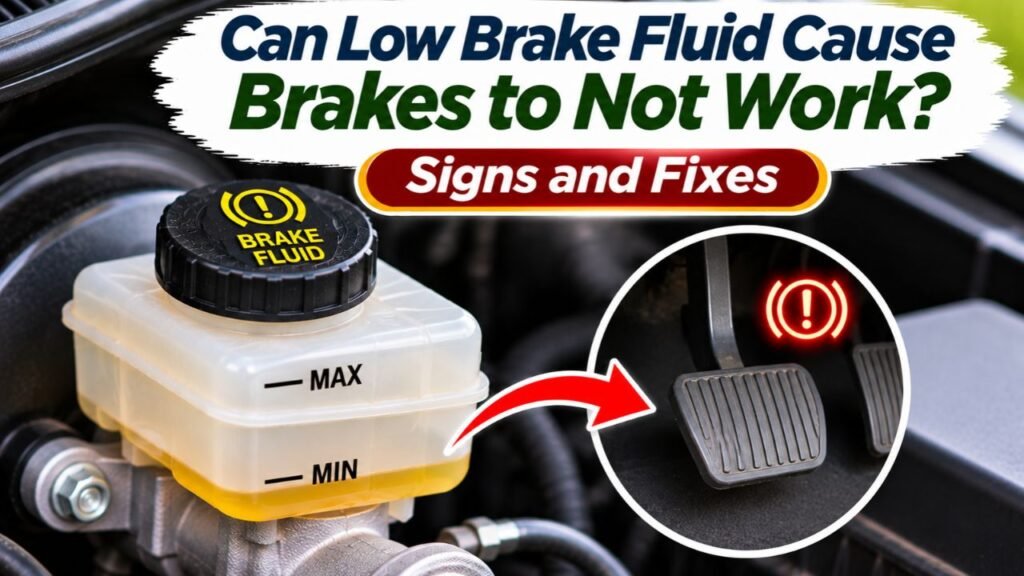
Can Low Brake Fluid Cause Brakes to Not Work? Signs and Fixes
Yes, low brake fluid can cause your brakes to work poorly or stop working, especially if a leak allows air into the hydraulic system or prevents it from maintaining pressure. The brake pedal may feel soft, travel farther than normal, or sink toward the floor. Severe fluid loss can leave a vehicle with little braking ability, even though many modern vehicles have two hydraulic circuits designed to retain some braking if one circuit fails.
A slightly lower reservoir level does not always mean immediate brake failure. As disc brake pads wear, the caliper pistons extend and the reservoir level can fall. A sudden drop, repeated need for fluid, visible leakage, or a brake warning light is more concerning. Adding fluid without addressing the cause can temporarily hide a problem without making the vehicle safe.
If you suspect a brake fluid leak, have a sinking pedal, or notice reduced stopping power, do not continue driving. Stop safely and arrange a tow.
In this article, I explain how low fluid affects hydraulic braking, which symptoms are serious, why fluid levels fall, and how to check the reservoir safely. I also cover repair options, emergency actions, and ways to prevent brake failure.
Can Low Brake Fluid Cause Brakes to Not Work Completely?
Yes. Severe brake fluid loss can cause partial or, in some circumstances, nearly complete or complete loss of hydraulic braking.
However, the relationship between fluid level and braking performance is not as simple as assuming that every low reservoir reading means the brakes have already failed.
The condition of the hydraulic system matters.
A brake system may continue functioning normally when the fluid level has decreased slightly because of ordinary brake pad wear.
But a leak can cause the system to lose pressure, even when some fluid remains in the reservoir.
What Happens at Different Brake Fluid Levels?
| Brake Fluid Condition | Possible Effect on Braking | Recommended Action |
| Fluid within the specified range | Braking may operate normally | Continue routine maintenance |
| Fluid lower than before but still within range | May reflect normal pad wear or another issue | Check pad condition and monitor as directed |
| Fluid below the MIN marking | Potential hydraulic system problem | Do not drive until the cause is assessed |
| Fluid level dropping rapidly | Possible active leak | Stop driving and arrange professional inspection |
| Reservoir nearly empty | High risk of pressure loss or air entering the system | Do not operate the vehicle |
| Reservoir empty | Serious risk of brake failure | Tow the vehicle for repair |
These are general guidelines.
The actual response depends on the vehicle’s braking system and the cause of fluid loss.
The important point is that a brake fluid leak can create dangerous pressure loss before the reservoir becomes completely empty.
How Does Low Brake Fluid Affect the Braking System?
Most conventional passenger vehicles use hydraulic service brakes.
When you press the brake pedal, a master cylinder generates pressure in the brake fluid.
That pressure travels through hydraulic lines and hoses to the wheel brakes.
In a disc brake system, the pressure moves caliper pistons that squeeze brake pads against rotating discs, called rotors.
In a drum brake system, hydraulic wheel cylinders push the brake shoes toward the drum.
This friction slows the vehicle.
Why Brake Fluid Is Necessary
Brake fluid is designed to transmit hydraulic pressure while operating under changing temperatures and pressures.
Because liquids are relatively incompressible, properly filled and bled brake systems can transfer pedal force effectively.
A functioning system depends on:
- The correct brake fluid
- Adequate fluid volume
- Hydraulic components that can maintain pressure
- Properly sealed brake lines and hoses
- Minimal trapped air
- Working master cylinder and wheel brake components
A serious problem with any of these components may reduce braking performance.
What Happens When Brake Fluid Leaks?
When brake fluid escapes through a damaged component, the hydraulic system may no longer maintain the pressure needed for effective braking.
For example, a damaged brake hose can release fluid when you press the pedal.
Instead of maintaining adequate hydraulic pressure at the affected wheel brakes, the system loses some of that pressure through the leak.
The driver may notice unusually long brake pedal travel or reduced braking response.
The severity depends on the leak and the vehicle’s hydraulic design.
Why Air in the Brake Lines Is Dangerous
Air behaves differently from brake fluid.
Air is compressible.
When air becomes trapped in a hydraulic brake circuit, some pedal movement compresses that air instead of producing the expected braking pressure.
This can cause:
- A soft brake pedal
- A spongy pedal sensation
- Excessive pedal travel
- Reduced braking responsiveness
Low fluid can allow air to enter the system, particularly when the reservoir becomes too low or a leak exposes part of the circuit to air.
However, air may also enter during improperly performed brake repairs.
A brake system containing air requires appropriate diagnosis and bleeding after the underlying problem is corrected.
Can Brakes Fail Even When Fluid Is Still in the Reservoir?
Yes.
A visible fluid level does not guarantee that the system is holding hydraulic pressure.
A damaged brake line or master cylinder may cause substantial braking problems while some fluid remains.
Therefore, checking the reservoir alone is not enough to confirm that the braking system is safe.
Key Takeaway: Low fluid can contribute to brake failure, but the immediate danger often comes from the leak, air, or hydraulic fault responsible for the fluid loss.
What Are the Symptoms of Low Brake Fluid?
Low brake fluid may produce several warning signs.
However, some symptoms can also indicate problems unrelated to the fluid level.
For example, a soft pedal may result from air in the lines or a failing master cylinder.
The symptoms should be evaluated together.
Low Brake Fluid Warning Signs
| Symptom | Possible Explanation | Urgency |
| Red brake warning light | Low fluid, parking brake status, or system fault | Check immediately and follow the owner’s manual |
| Soft or spongy pedal | Air, leak, or other hydraulic problem | Do not continue driving |
| Pedal sinks toward the floor | Hydraulic pressure loss or master cylinder fault | Stop safely and arrange a tow |
| Longer stopping distance | Reduced braking effectiveness | Immediate inspection |
| Visible fluid under vehicle | Possible external hydraulic leak | Do not drive |
| Brake fluid level drops repeatedly | Leak or another unresolved issue | Professional diagnosis required |
| Brakes pull to one side | Uneven braking, caliper issue, or hydraulic fault | Prompt inspection |
| Brake pedal changes suddenly | Potential hydraulic or mechanical failure | Stop safely and obtain assistance |
1. Brake Warning Light Comes On
Many vehicles have a red brake warning light.
It may display the word BRAKE or a brake-related symbol.
Depending on the vehicle, the light can indicate:
- Parking brake engaged
- Low brake fluid
- Hydraulic brake system problem
- Electronic parking brake or other braking-system fault
A red brake warning is not always caused by fluid loss.
However, it should never be ignored.
If it remains illuminated after the parking brake is fully released, stop safely and follow the owner’s manual.
2. Brake Pedal Feels Spongy
A spongy pedal feels softer than usual.
It may require more travel before the brakes begin slowing the vehicle.
This can happen when air is trapped inside the hydraulic system.
A leak, improper bleeding, or another hydraulic fault may be responsible.
Do not assume that adding fluid will remove the trapped air.
3. Brake Pedal Goes to the Floor
A brake pedal that sinks unusually far or reaches the floor is a serious warning.
It may indicate that the hydraulic system cannot maintain adequate pressure.
Possible causes include:
- Major brake fluid leak
- Air in the hydraulic circuit
- Failing master cylinder
- Other serious hydraulic faults
A pedal that reaches the floor does not prove the reservoir is empty.
However, it means the vehicle requires immediate attention.
4. Braking Distance Increases
A vehicle that takes longer than normal to stop may have reduced braking effectiveness.
Low hydraulic pressure is one possible cause.
Other possibilities include worn friction components, overheating, or mechanical faults.
According to AAA’s guide to signs your brakes need service, leaking brake fluid can weaken hydraulic pressure, while a pedal that travels unusually far or sinks toward the floor can signal a serious braking problem.
AAA advises against driving a vehicle with weakened brakes and recommends arranging a tow.
5. Fluid Appears Under the Vehicle
A brake fluid leak may leave liquid beneath a wheel, along a brake line, or near the master cylinder.
However, not every puddle is brake fluid.
Water from an air-conditioning drain is common, and other automotive fluids can also leak.
Do not identify a potentially hazardous fluid by tasting or handling it unnecessarily.
A suspected hydraulic leak requires professional inspection.
6. Braking Feels Uneven
A problem affecting one hydraulic circuit or wheel brake may create uneven braking.
The vehicle may pull toward one side or react differently than normal.
However, pulling can also result from tire, suspension, or mechanical brake problems.
The exact cause requires diagnosis.
Why Does Brake Fluid Get Low?
Brake fluid is not consumed in the same way as gasoline or engine oil.
The hydraulic brake system is designed to retain its fluid.
However, the reservoir level can change as brake components wear.
Fluid loss can also occur through leaks.
1. Normal Brake Pad Wear
As disc brake pads wear down, the caliper pistons gradually extend farther to maintain contact with the rotor.
More brake fluid occupies the caliper behind the extended pistons.
As a result, the fluid level in the reservoir may gradually decrease.
This does not necessarily indicate a leak.
However, the relationship between reservoir level and pad wear varies by vehicle.
A low reading still needs appropriate inspection.
According to AAA’s guide to caring for car brakes, a declining reservoir level may result from worn brake pads or a leak. The article recommends inspecting the braking system when its operation changes or fluid must be added repeatedly.
2. Leaking Brake Lines
Brake lines carry hydraulic fluid under pressure.
Metal lines can deteriorate because of corrosion, physical damage, or other problems.
A leaking brake line may allow fluid to escape whenever pressure develops.
The leak can worsen with time.
A corroded or damaged line requires proper repair or replacement.
3. Damaged Brake Hoses
Flexible brake hoses connect parts of the hydraulic system that move relative to the vehicle.
Over time, hoses may deteriorate or become damaged.
A leaking hose can reduce pressure and allow fluid to escape.
Some hose failures may also interfere with normal fluid movement without producing a large visible leak.
The affected hose requires professional inspection.
4. Leaking Brake Caliper
A disc brake caliper contains hydraulic pistons and seals.
Damaged seals or corrosion can allow brake fluid to leak.
Fluid may appear around the caliper or wheel assembly.
In some cases, it may contaminate brake pads and rotors.
A technician must address both the hydraulic leak and any affected friction components.
5. Wheel Cylinder Leakage
Vehicles equipped with drum brakes often use hydraulic wheel cylinders.
A damaged wheel cylinder seal can allow brake fluid to leak inside the brake drum.
The leak may not immediately produce an obvious puddle beneath the vehicle.
Inspection may reveal fluid inside the drum or contamination of the brake shoes.
6. Master Cylinder Problems
The master cylinder generates hydraulic braking pressure.
It contains pistons and seals.
A master cylinder can develop an external leak.
Its internal seals may also deteriorate, allowing fluid to bypass internally.
An internal bypass can cause a sinking brake pedal even without a large visible loss of fluid.
This is why a full reservoir does not guarantee that the master cylinder works correctly.
7. Problems After Brake Repairs
Brake fluid may become low following an improperly completed brake service.
Possible issues include:
- Loose hydraulic fittings
- Incomplete bleeding
- Incorrect filling
- Damaged seals
- Fluid leaking from recently serviced components
A change in brake pedal feel immediately after service should be investigated before the vehicle is driven normally.
Can Low Brake Fluid Cause Sudden Brake Failure?
Yes, particularly when fluid loss results from a sudden hydraulic leak.
For example, a severely corroded brake line may rupture.
A damaged hose may also release fluid when hydraulic pressure rises.
The driver can experience a sudden change in pedal travel and braking response.
However, modern vehicles commonly include safety features that reduce the chance of complete loss of service brakes from a single hydraulic circuit failure.
Do Cars Have Two Brake Circuits?
Many modern passenger vehicles have dual-circuit hydraulic braking systems.
These divide the hydraulic brakes into two sections.
If one circuit fails, the other may retain some braking capability.
However, the remaining braking performance can be substantially reduced.
The driver may need to press the pedal farther or harder.
Stopping distance may increase significantly.
A dual-circuit system is a safety feature, not a reason to continue driving with a known hydraulic failure.
Can Both Brake Circuits Fail?
Yes.
Although dual circuits reduce the risk of total braking loss, serious failures can still occur.
The effect depends on the vehicle’s design and the nature of the fault.
Do not assume that a vehicle will always retain sufficient braking to stop normally.
Can Brakes Stop Working Without Warning?
Yes.
Some failures develop gradually and produce warning signs.
Others may occur suddenly because of a component rupture or severe hydraulic fault.
Routine inspections can reduce risks, but they cannot guarantee that every unexpected failure will be prevented.
How to Check Brake Fluid Level Safely
Checking the brake fluid reservoir can help identify an abnormal fluid level.
However, it is not a substitute for a complete brake inspection.
If the brake pedal is already abnormal or the vehicle has reduced braking performance, arrange a tow rather than trying to diagnose the problem through a test drive.
Step 1: Park on Level Ground
Park the vehicle on a level surface.
Follow the manufacturer’s instructions for shutting down the vehicle and checking brake fluid.
The recommended procedure may vary by model.
Step 2: Locate the Brake Fluid Reservoir
In many conventional vehicles, the brake fluid reservoir is located in the engine compartment near the master cylinder.
It is often a translucent plastic container.
Some vehicles have a different arrangement.
Consult the owner’s manual for the correct location.
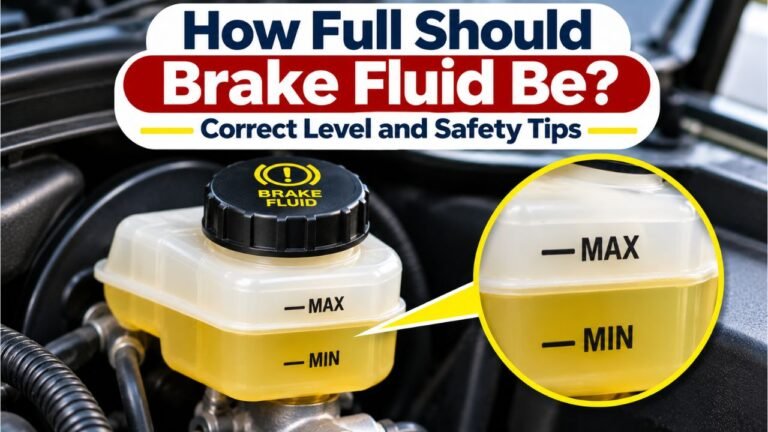
Step 3: Find the MIN and MAX Markings
Look at the outside of the reservoir.
Many reservoirs have minimum and maximum fluid-level markings.
Check whether the fluid is within the specified range.
Do not assume the reservoir should always be filled to its maximum marking.
The correct level can depend partly on brake pad condition and the manufacturer’s instructions.
Step 4: Inspect for an Abnormal Drop
If the fluid is below the minimum marking, do not drive until the cause has been assessed.
Also take a sudden or repeated decline seriously.
Even when the level remains above the minimum mark, an ongoing leak can become dangerous.
Step 5: Avoid Unnecessary Reservoir Opening
Many reservoirs can be checked through the translucent plastic without removing the cap.
Avoid opening the system unnecessarily.
Brake fluid can absorb moisture and become contaminated by dirt.
If the cap must be opened according to the manufacturer’s procedure, keep the surrounding area clean.
Step 6: Arrange Inspection if Something Looks Wrong
A low reservoir reading does not identify the specific fault.
The technician may need to inspect the pads, lines, hoses, calipers, master cylinder, and other components.
Never use a normal-looking reservoir level as proof that a vehicle with an abnormal brake pedal is safe to drive.
Should You Add Brake Fluid if the Brakes Are Not Working?
Adding brake fluid alone is not a reliable repair for brakes that are failing.
It may raise the level in the reservoir, but it will not necessarily restore safe hydraulic operation.
If fluid leaked out, the system may still have an active leak.
If air entered the lines, adding fluid does not automatically remove it.
If a master cylinder has failed, filling the reservoir will not restore damaged internal seals.
When Adding Fluid May Be Appropriate
Adding the correct brake fluid may be part of:
- Manufacturer-directed routine service
- A properly performed brake repair
- A hydraulic bleeding procedure
- Correcting a verified fluid-level issue
However, the reason for low fluid must be understood.
Do not treat topping off as a way to make a vehicle with compromised brakes safe for driving.
What if the Fluid Was Low Because of Worn Pads?
As brake pads wear, the reservoir level can decline.
When new pads are installed, technicians normally push the caliper pistons back toward their original positions.
This returns fluid toward the reservoir.
If the reservoir was unnecessarily topped off, it could become overfilled during brake service.
That is another reason to investigate pad wear before adding fluid.
Can Adding Fluid Temporarily Restore Brakes?
In some circumstances, adding fluid may temporarily change pedal behavior.
However, that does not mean the underlying hydraulic problem has been corrected.
An active leak can continue.
Air can remain trapped.
Braking performance may fail again without warning.
A vehicle with suspected hydraulic brake failure should be professionally repaired and tested before returning to the road.
What if the Brake Fluid Reservoir Is Empty?
An empty brake fluid reservoir is a serious safety warning.
It may indicate substantial fluid loss or an improperly serviced hydraulic system.
Do not attempt to drive the vehicle.
Can the Brakes Still Work With an Empty Reservoir?
The answer depends on the hydraulic circuit design and how much fluid remains elsewhere in the system.
However, an empty reservoir creates a serious risk of air entering the hydraulic circuits.
It can lead to loss of pressure and ineffective braking.
Even if the pedal produces some resistance, the vehicle should not be considered safe to drive.
Do You Need to Bleed the Brakes After Running Out of Fluid?
If air entered the hydraulic system, appropriate bleeding is necessary after the underlying fault has been corrected.
Some modern vehicles require manufacturer-specific procedures.
Vehicles equipped with ABS may require diagnostic equipment to operate particular hydraulic components during bleeding.
Simply filling the reservoir does not guarantee that trapped air has been removed.
What Should Be Inspected?
A qualified technician may check:
- Master cylinder
- Brake lines
- Flexible hoses
- Calipers
- Wheel cylinders
- Hydraulic connections
- ABS hydraulic components
- Brake pads and shoes
The technician should repair the source of fluid loss and verify proper hydraulic operation.
What to Do if Your Brakes Stop Working While Driving
Brake failure is an emergency.
The safest response depends on the vehicle and whether any service braking remains.
The immediate goal is to maintain control and reduce speed without creating additional hazards.
According to the Pennsylvania Department of Transportation’s emergency driving guidance, drivers experiencing brake failure should use appropriate lower gears, attempt to restore pressure when needed, apply the parking brake cautiously if necessary, and steer toward a safe stopping area.
Step 1: Release the Accelerator
Take your foot off the accelerator.
Keep control of the steering wheel.
Avoid abrupt movements that could destabilize the vehicle.
Step 2: Try the Brake Pedal
Apply firm pressure.
If the pedal drops toward the floor and does not provide effective braking, several quick pedal applications may temporarily build pressure in some hydraulic failure situations.
However, this is different from normal emergency braking with a functioning ABS system.
When ABS is operating normally during hard braking, maintain firm, continuous pedal pressure rather than pumping the pedal.
If the brakes are completely unresponsive, follow the vehicle-specific emergency procedures where possible.
Step 3: Shift to a Lower Gear
Where appropriate, progressively select a lower gear to use engine braking.
Avoid abruptly selecting a very low gear at high speed.
Doing so may create instability or damage the drivetrain.
For an automatic transmission, use the vehicle’s supported lower-range or manual-shift function when suitable.
Do not shift into Park while the vehicle is moving.
Step 4: Apply the Parking Brake Carefully if Necessary
If the service brakes are ineffective, the parking brake may provide an alternative way to slow the vehicle.
Apply it progressively where the system permits.
A sudden application at speed can lock wheels and cause a skid.
Some vehicles have electronic parking brakes with manufacturer-specific emergency operating procedures.
Do not assume every electronic parking brake behaves like a traditional hand lever.
Step 5: Warn Other Road Users
Activate the hazard lights when safe to do so.
Use the horn if necessary to warn nearby road users.
Keep your attention on steering and finding a safe place to stop.
Step 6: Steer Toward a Safe Stopping Area
Look for a clear shoulder, open space, or suitable uphill area.
Avoid sudden steering inputs.
Do not turn off the ignition or power system while moving unless the vehicle manufacturer’s emergency procedure specifically requires it, because doing so may reduce steering or braking assistance.
Step 7: Do Not Drive Again
Once stopped, secure the vehicle safely.
Arrange roadside assistance and towing.
Do not continue driving simply because the brake pedal temporarily feels normal again.
A vehicle that has experienced brake failure needs professional diagnosis and repair before being driven again.
How Do Mechanics Diagnose Low Brake Fluid and Brake Failure?
A brake inspection should identify why the fluid level is low and whether the hydraulic system can function safely.
The repair depends on the actual fault.
Inspecting for External Leaks
The technician may examine:
- Brake hoses
- Metal brake lines
- Hydraulic fittings
- Caliper seals
- Wheel cylinders
- Master cylinder
- ABS hydraulic components
A leak may be visible only when the system is pressurized.
The technician must use appropriate service procedures.
Checking Brake Pad and Shoe Wear
Brake friction material is also inspected.
Worn pads can explain some reservoir-level decline.
However, pad wear should not be used to dismiss a suspected hydraulic leak.
Both conditions can occur together.
Testing the Master Cylinder
A master cylinder can fail internally without creating an obvious external leak.
The technician may assess pedal behavior and hydraulic pressure.
A sinking pedal can be associated with internal pressure bypass, although other causes must also be considered.
Checking for Air in the System
If air is suspected, the hydraulic system may require bleeding.
However, any leak or other defect must be repaired first.
Otherwise, air may enter again or fluid may continue escaping.
Inspecting Brake Fluid Condition
The technician may evaluate fluid condition and maintenance history.
Moisture-contaminated or otherwise unsuitable fluid may require replacement.
However, dirty fluid alone does not prove that the low level was caused by a leak.
Verifying the Repair
After replacing damaged components, the braking system should be filled, bled, and inspected according to the manufacturer’s service procedures.
The repair must restore correct pedal feel and braking performance.
Do not consider the problem solved solely because the fluid reservoir is full.
Is Low Brake Fluid the Same as Air in the Brake Lines?
No.
Low brake fluid and air in the lines are related but different conditions.
| Condition | Main Problem | Possible Symptom |
| Low brake fluid | Reservoir contains less fluid than specified | Warning light or increased risk of hydraulic problems |
| Air in brake lines | Compressible gas trapped in hydraulic circuit | Soft or spongy pedal |
| External fluid leak | Fluid escaping from hydraulic system | Falling fluid level and pressure loss |
| Bad master cylinder | Internal or external hydraulic failure | Pedal sinking or poor pressure |
| Brake booster failure | Reduced power assistance | Unusually hard pedal |
| Worn brake pads | Reduced friction material thickness | Noise, reduced pad thickness, gradual reservoir decline |
| Contaminated brake fluid | Unsuitable hydraulic fluid condition | Potential high-temperature or component problems |
Can Air Enter Without a Visible Leak?
Yes.
Air may enter during incomplete or improperly performed brake service.
In some systems, an extremely low reservoir can also allow air into the hydraulic circuit.
The absence of a visible puddle does not mean there is no air-related problem.
Can Low Brake Fluid Cause a Hard Pedal?
Low brake fluid more commonly raises concern about soft pedal travel or pressure loss.
An unusually hard pedal may suggest a problem with power-brake assistance.
For example, a vacuum brake booster or related system fault can make the pedal difficult to press.
Some modern braking systems use different assistance technologies.
A hard pedal should be diagnosed according to the vehicle’s design.
Can You Have a Soft Pedal With a Full Reservoir?
Yes.
A full reservoir does not rule out air, internal master cylinder problems, hose issues, or other hydraulic faults.
Do not assume that a full reservoir confirms a healthy braking system.
Does Low Brake Fluid Affect ABS?
It can.
ABS, or the anti-lock braking system, uses braking-system components to help control wheel slip during certain braking conditions.
On conventional hydraulic systems, ABS works with the existing hydraulic brake circuits.
A serious hydraulic fault can interfere with the system’s ability to control braking as intended.
Will the ABS Warning Light Come On?
Possibly.
Some vehicles illuminate an ABS warning light when the control system detects a relevant fault.
However, an ABS warning light and a red brake warning light can indicate different problems.
An ABS warning alone does not always mean the basic hydraulic brakes have failed.
A red brake warning, particularly with an abnormal pedal, is more concerning.
Consult the vehicle owner’s manual for the specific warning-light meanings.
Can ABS Fix a Loss of Brake Pressure?
No.
ABS is not a substitute for a functioning hydraulic system.
It cannot repair a ruptured line, restore missing brake fluid, or correct an internal master cylinder failure.
If hydraulic braking is compromised, the vehicle requires appropriate repair.
What Type of Brake Fluid Should You Use?
Brake fluid must meet the specifications required by the vehicle manufacturer.
Using the wrong fluid can damage hydraulic components or affect performance.
Common classifications include:
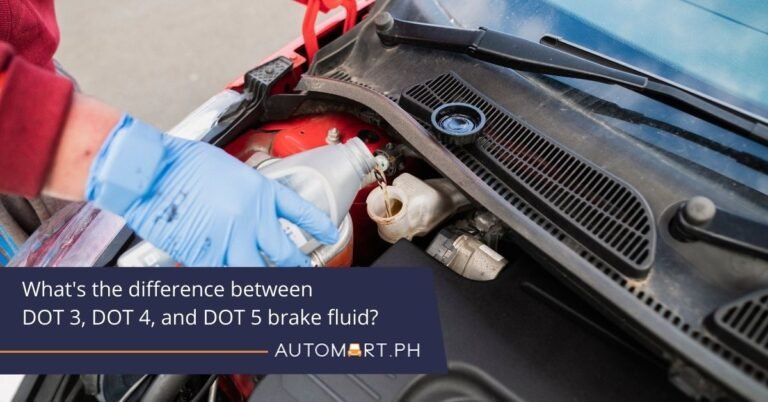
| Brake Fluid Type | General Characteristics |
| DOT 3 | Glycol-based fluid used in many conventional brake systems |
| DOT 4 | Glycol-based fluid with different performance requirements |
| DOT 5 | Silicone-based fluid, not generally interchangeable with glycol-based fluids |
| DOT 5.1 | Glycol-based fluid meeting a different performance classification |
DOT 5 and DOT 5.1 are not the same type of fluid.
The number alone should not be used to determine compatibility.
Can You Use DOT 4 Instead of DOT 3?
Some hydraulic systems permit more than one fluid specification, but compatibility must be verified for the particular vehicle.
Follow the owner’s manual.
Do not substitute fluid merely because it has a higher DOT number.
Can Mixing Brake Fluids Cause Failure?
Mixing incompatible fluids can create serious hydraulic problems.
Silicone-based DOT 5 fluid should not be treated as interchangeable with conventional glycol-based DOT 3, DOT 4, or DOT 5.1 fluids.
Some vehicles also require specialized formulations.
If an incorrect fluid has been added, obtain professional advice before operating the vehicle.
Should You Use an Opened Bottle?
Brake fluid packaging and storage instructions matter.
Most conventional glycol-based fluids absorb moisture from the atmosphere.
Use the manufacturer’s recommended storage practices and a clean, suitable supply of the correct fluid.
Do not introduce water, oil, or other substances into the brake system.
How to Prevent Low Brake Fluid and Brake Failure
Routine maintenance helps identify problems before they become dangerous.
However, no maintenance routine can guarantee that unexpected component failures will never occur.
1. Follow the Vehicle’s Maintenance Schedule
Check the owner’s manual for brake fluid inspection and replacement recommendations.
Maintenance schedules vary by manufacturer.
2. Inspect Brake Pads Before They Become Severely Worn
Worn pads can contribute to reservoir-level changes.
They may also damage rotors if allowed to wear excessively.
Use the manufacturer’s service limits.
3. Investigate Any Sudden Fluid-Level Drop
A rapid change may indicate a leak or another hydraulic problem.
Do not repeatedly top off the reservoir without diagnosis.
4. Replace Damaged Brake Hoses and Lines
Corrosion, physical damage, and deterioration can compromise hydraulic components.
Have these parts inspected during regular brake service.
5. Use the Correct Brake Fluid
Follow the manufacturer’s required specification.
Keep the hydraulic system free from contamination.
6. Do Not Ignore Warning Lights
Understand the difference between a parking brake indicator, red brake warning, and ABS warning.
If a warning indicates a possible hydraulic fault, stop safely and follow the vehicle’s instructions.
7. Pay Attention to Pedal Feel
A sudden change in pedal travel, resistance, or responsiveness needs immediate investigation.
Do not rely on sound alone to judge brake condition.
8. Have Brake Repairs Performed Correctly
Improperly installed hydraulic components or incomplete bleeding can create serious hazards.
Use qualified technicians and manufacturer-approved procedures for safety-critical repairs.
Common Mistakes When Dealing With Low Brake Fluid
Several common mistakes can make a dangerous situation worse.
Assuming a Low Reservoir Always Means Worn Pads
Brake pad wear can lower fluid level, but leaks can also cause it.
Inspect both.
Adding Fluid Without Finding the Cause
Topping off does not repair a damaged line, hose, caliper, or master cylinder.
Driving Because the Pedal Still Feels Normal
An active leak can worsen unexpectedly.
Normal pedal feel at one moment does not guarantee that the hydraulic system will remain functional.
Ignoring a Red Brake Warning Light
A red brake warning may indicate low fluid or another system problem.
It should be addressed immediately according to the vehicle’s instructions.
Using the Wrong Brake Fluid
Incompatible fluid can damage seals or create other serious problems.
Always verify the correct specification.
Assuming an Empty Reservoir Only Needs Refilling
Air may have entered the hydraulic system.
The leak or other cause must be repaired, and the system may require proper bleeding.
Confusing Brake Fluid With Brake Cleaner
Brake fluid belongs inside the hydraulic circuit.
Brake cleaner is a cleaning product for appropriate components.
They are not interchangeable.
Assuming ABS Will Compensate for Brake Failure
ABS does not restore hydraulic pressure lost through a leak.
Attempting a Test Drive With a Sinking Pedal
A vehicle with a sinking or unresponsive brake pedal should not be driven to see whether it improves.
Arrange professional assistance.
Conclusion
So, can low brake fluid cause brakes to not work? Yes. Low brake fluid can contribute to serious braking problems, including partial or complete hydraulic brake failure.
The most dangerous situations involve leaks, pressure loss, or air entering the hydraulic system.
A slightly reduced reservoir level may occur as brake pads wear, but a sudden drop, low-fluid warning, soft pedal, or increased stopping distance requires immediate attention.
Adding brake fluid alone is not a reliable repair. The underlying fault must be identified and corrected, and the hydraulic system must be verified before the vehicle returns to service.
I recommend checking brake fluid according to the manufacturer’s maintenance instructions and having the brakes inspected promptly whenever the fluid level changes unexpectedly.
If the pedal sinks, braking power decreases, or a leak is suspected, do not continue driving. Stop safely and have the vehicle towed.
Brake fluid is a small part of the vehicle by volume, but proper hydraulic operation is essential for safe stopping.
FAQs About Can Low Brake Fluid Cause Brakes to Not Work
Can Your Brakes Completely Stop Working if Brake Fluid Is Low?
Yes. Severe fluid loss or a hydraulic leak can cause partial or complete brake failure.
Many vehicles have dual hydraulic circuits that may retain some braking when one circuit fails, but stopping performance can be severely reduced.
Do not drive with a suspected hydraulic failure.
Will Adding Brake Fluid Make My Brakes Work Again?
Not necessarily.
Adding fluid may restore the reservoir level, but it will not repair a leak, remove trapped air, or fix a failing master cylinder.
The cause must be identified and corrected before the vehicle is safe to drive.
How Low Does Brake Fluid Have to Be Before Brakes Fail?
There is no universal fluid level at which brakes suddenly fail.
A leak can cause hydraulic pressure loss while some fluid remains in the reservoir.
If the fluid is below the manufacturer’s minimum marking, do not drive until the cause is assessed.
Can Low Brake Fluid Cause a Brake Pedal to Go to the Floor?
Yes, especially when fluid loss is associated with a leak or air in the hydraulic system.
However, a sinking pedal may also result from a failing master cylinder or another hydraulic problem.
This requires immediate professional diagnosis.
Can Brakes Still Work With an Empty Brake Fluid Reservoir?
Some residual braking may remain depending on the system and circumstances, but an empty reservoir creates a serious risk of air entering the circuits and loss of hydraulic pressure.
Do not attempt to drive.
Arrange towing and proper repair.
Can Worn Brake Pads Cause Low Brake Fluid?
Yes.
As disc brake pads wear, caliper pistons extend farther and more fluid occupies the calipers.
This can gradually lower the reservoir level without an external leak.
However, low fluid should still be evaluated to rule out hydraulic problems.
Can Low Brake Fluid Trigger the ABS Light?
A hydraulic problem may trigger brake-related warning lights depending on the vehicle.
However, an ABS light and a red brake warning light do not always indicate the same fault.
Follow the owner’s manual and have the system inspected.
Is It Safe to Drive if the Brake Fluid Is Low but the Brakes Still Work?
Do not assume it is safe.
If the level is below the specified minimum, dropping unexpectedly, or a leak is suspected, the braking system needs inspection before driving.
A pedal that feels normal does not guarantee that an active leak will not worsen.
Can Air in the Brake Lines Cause Complete Brake Failure?
Air can reduce hydraulic braking effectiveness because it compresses when pressure is applied.
Severe air contamination can produce excessive pedal travel and inadequate braking.
The source of air entry must be corrected, and the hydraulic system must be properly bled.
Can Low Brake Fluid Cause Brakes to Lock Up?
Low fluid more commonly raises concern about reduced hydraulic pressure and inadequate braking.
Brake dragging or locking can result from caliper, hose, master cylinder, or other mechanical and hydraulic faults.
A technician should identify the cause rather than assuming the reservoir level is responsible.