What Is Dot 5 Brake Fluid Used for: Clear Answers and Key Facts
When a vehicle sits for long periods or has freshly restored paint near the master cylinder, the choice of brake fluid matters. DOT 5 brake fluid is a silicone-based fluid mainly used in certain collector, classic, military, and specialty vehicles when the manufacturer specifically permits it.
What is dot 5 brake fluid used for is best answered by looking at the vehicle’s design and service requirements. It is used in compatible hydraulic brake systems where low moisture absorption, long storage, and protection of painted surfaces are priorities. It is not a universal replacement for DOT 3, DOT 4, or DOT 5.1 fluid.
What DOT 5 Brake Fluid Is Used For
DOT 5 brake fluid is used in hydraulic brake systems designed for silicone-based brake fluid. Its most common applications include:
- Classic and collector cars that are driven infrequently
- Restored vehicles where protecting painted surfaces is important
- Some military and specialty vehicles
- Vehicles whose service manual specifically lists DOT 5
- Brake systems that need fluid with minimal moisture absorption during storage
The fluid transfers pressure from the brake pedal through the master cylinder, brake lines, calipers, wheel cylinders, and other hydraulic components. Like other approved brake fluids, its basic job is to transmit pedal force so the brakes can apply.
Its distinguishing feature is its silicone chemistry. DOT 5 does not readily absorb water from the atmosphere. That characteristic can be helpful for a vehicle that spends much of the year parked, but it also creates handling and maintenance considerations that do not apply in the same way to glycol-based fluids.
Why Some Vehicles Use DOT 5
Low moisture absorption
DOT 5 is generally described as non-hygroscopic, meaning it does not readily pull water vapor into the fluid. Glycol-based fluids such as DOT 3, DOT 4, and DOT 5.1 gradually absorb moisture through hoses, seals, vents, and normal exposure to air.
Reduced moisture absorption can help a stored vehicle retain more consistent fluid properties over time. It may also reduce the risk of water-laden fluid collecting at low points in the brake system. This is one reason DOT 5 is associated with collector cars and vehicles that are not driven daily.
However, “does not absorb water” does not mean the system is immune to water contamination. Water can still enter through an open reservoir, a loose cap, damaged seals, service work, or condensation. Because water does not mix readily with silicone fluid, it may collect in separate pockets. Those pockets can contribute to corrosion or freezing in cold conditions.
Protection around painted surfaces
Silicone brake fluid is less likely than glycol-based brake fluid to damage automotive paint when spilled. That can be valuable on a freshly restored vehicle, where a brake-fluid spill near the master cylinder can create expensive cosmetic damage.
This is a practical advantage, not a reason to treat DOT 5 as harmless. It should still be cleaned promptly, and the product label should be followed. Brake fluid can affect finishes, rubber components, and other materials in unexpected ways, particularly if the wrong fluid is used in the wrong system.
Long storage periods
A vehicle that is driven every day experiences regular braking, heat cycles, and fluid circulation. A collector car may sit for months between uses. DOT 5 can suit some of these applications because it resists absorbing atmospheric moisture while the vehicle is stored.
Even so, storage-friendly fluid does not eliminate the need for inspection. Before driving a long-stored vehicle, I would check the reservoir level, look for leaks, inspect flexible hoses, and test the pedal before entering traffic. A firm pedal and clean fluid do not by themselves prove that every brake component is safe.
DOT 5 Versus Other Brake Fluid Types
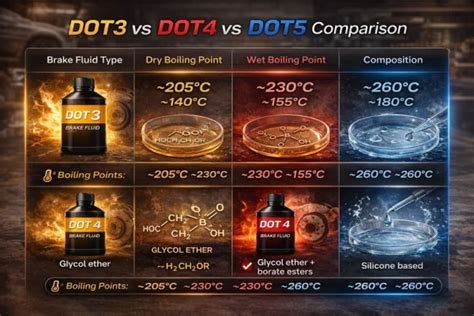
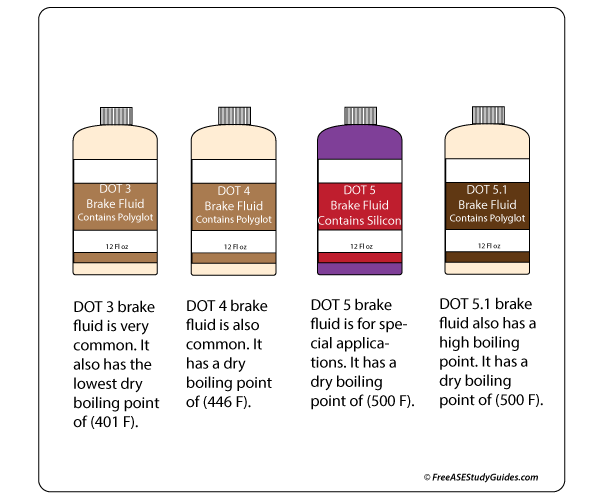
The DOT number identifies performance requirements and chemistry, not a simple quality ranking. DOT 5 is silicone-based, while DOT 3, DOT 4, and DOT 5.1 are typically glycol-based. The numbers should never be used alone to decide whether fluids can be mixed.
| Fluid type | General chemistry | Typical use | Can it be mixed with DOT 5? |
|---|---|---|---|
| DOT 3 | Glycol-based | Many conventional vehicles | No |
| DOT 4 | Glycol-based | Many newer and performance-oriented systems | No |
| DOT 5 | Silicone-based | Specified classic and specialty applications | Only with compatible DOT 5 products |
| DOT 5.1 | Glycol-based | Systems requiring that specification | No |
DOT 5.1 is not the same as DOT 5. The similar numbering causes frequent mistakes. DOT 5.1 is generally glycol-based and is chemically different from silicone DOT 5. It should not be added to a DOT 5 system unless the vehicle manufacturer has provided specific instructions for that exact setup.
DOT 5 is also not automatically better because it has a higher number. The correct fluid is the one specified for the vehicle’s seals, hoses, valves, brake hardware, and operating conditions.
Important DOT 5 Compatibility Rules
Do not mix DOT 5 with glycol fluid
DOT 5 should not be mixed with DOT 3, DOT 4, or DOT 5.1. The different fluid chemistries can separate or react in ways that reduce braking performance. Mixing can also make it difficult to determine the fluid’s actual properties and may damage seals or interfere with proper bleeding.
If a system currently contains glycol-based fluid, simply topping it off with DOT 5 is not a conversion. A proper conversion normally requires removing the old fluid and addressing contamination throughout the hydraulic system. The vehicle manufacturer, brake-system supplier, or a qualified technician should determine whether conversion is appropriate.
Follow the vehicle manufacturer’s specification
The owner’s manual, service manual, master-cylinder instructions, or component manufacturer’s documentation should identify the approved fluid. If the specification is unclear, I would not rely on the fluid already sitting in an unmarked container or reservoir.
Some older systems may be compatible with DOT 5, while others may have seals, hoses, or components intended only for glycol-based fluid. A vehicle’s age alone does not prove that DOT 5 is suitable.
Consider ABS requirements
Anti-lock braking systems can have specific fluid and bleeding requirements. Some ABS-equipped vehicles may permit silicone fluid, but many applications require a particular glycol-based specification or prohibit DOT 5. Silicone fluid can also behave differently during rapid valve operation and may retain small air bubbles if handled poorly.
For an ABS-equipped vehicle, the service information should be treated as controlling. Do not select DOT 5 merely because the vehicle is a classic or because the fluid is less harmful to paint.
Practical Characteristics of DOT 5
It does not absorb water into the same mixture
The low moisture absorption that makes DOT 5 attractive for storage can also create a maintenance risk. With glycol-based fluid, absorbed water becomes distributed through the fluid. With silicone fluid, water may remain separate and settle in low areas such as calipers or wheel cylinders.
Those areas can corrode internally even when the reservoir appears clean. Regular inspection and correct fluid replacement remain important, especially on vehicles that operate in humid environments or see occasional use.
It can retain air bubbles
DOT 5 can be more prone to holding tiny air bubbles when it is poured aggressively, shaken, or circulated through a system with an unsuitable bleeding procedure. Air in the hydraulic circuit can produce a soft or spongy pedal.
The fluid should be handled carefully, and the bleeding procedure should match the vehicle’s service instructions. If the pedal remains soft after bleeding, the cause may include trapped air, a leak, incorrect adjustment, a failing master cylinder, or an incompatible component. Adding more fluid is not a solution to a spongy pedal.
It is not intended for every high-performance application
Silicone brake fluid is sometimes assumed to be the best choice for racing or severe braking because of its DOT 5 designation. That assumption is unsafe. Vehicle manufacturers and racing applications may require other formulations because of temperature, pedal feel, ABS operation, or fluid behavior under repeated heavy braking.
Use the specification intended for the vehicle rather than selecting a fluid based on the number printed on the container.
When DOT 5 May Be the Wrong Choice
DOT 5 may be the wrong choice when:
- The owner’s or service manual calls for DOT 3, DOT 4, or DOT 5.1
- The vehicle has an ABS system that does not approve silicone fluid
- The system already contains glycol-based fluid and has not been properly converted
- The vehicle manufacturer warns against silicone brake fluid
- The brake system has components that are not compatible with DOT 5
- The vehicle is used in conditions where a different approved fluid is required
Using the wrong brake fluid can cause seal problems, poor pedal feel, leaks, corrosion, or reduced braking performance. A fluid that appears clean and remains at the correct level can still be chemically wrong for the system.
How to Use DOT 5 Correctly
Correct use begins before the bottle is opened. Confirm the vehicle specification and purchase fluid from a sealed container with the correct DOT 5 labeling. Do not assume that a bottle marked “synthetic” is silicone-based; synthetic glycol fluids are also sold for automotive brake systems.
- Verify that the vehicle and all brake components approve DOT 5.
- Keep the work area and tools clean and dry.
- Inspect the reservoir, lines, hoses, calipers, and wheel cylinders for leaks or damage.
- Use the manufacturer’s bleeding or filling procedure.
- Avoid shaking the container or introducing unnecessary air into the fluid.
- Dispose of old fluid according to local requirements.
- Confirm a firm pedal and check for leaks before driving.
If a system is being changed from another fluid type, the conversion should be planned as a complete brake-system service rather than a top-off. Old fluid can remain in lines, valves, calipers, wheel cylinders, and the master cylinder. A qualified brake professional may need to inspect or replace components before the correct fluid is installed.
Key Safety Point
Brake fluid selection is a safety decision. Never rely on color alone, since color is not a dependable way to identify chemistry or compatibility. Never mix fluids simply because both containers display a DOT rating, and never test an unfamiliar brake system on public roads until the pedal, leaks, and braking operation have been checked.
When the correct specification cannot be confirmed, the safest step is to consult the vehicle manufacturer or a technician who understands the specific brake system. The cost of identifying the correct fluid is small compared with the consequences of hydraulic brake failure.
Conclusion
What is dot 5 brake fluid used for? It is used in manufacturer-approved hydraulic brake systems, especially certain classic, collector, military, and specialty vehicles that benefit from low moisture absorption and reduced risk of paint damage. It must not be mixed with DOT 3, DOT 4, or DOT 5.1, and it is not automatically suitable for ABS or modern vehicles. The vehicle’s service specification—not the fluid’s higher number—should always determine the correct choice.