Can Old Brake Fluid Cause Spongy Brakes? Causes and Solutions
Yes, old brake fluid can cause spongy brakes when absorbed moisture lowers its boiling point and heat creates compressible vapor bubbles in the hydraulic system. The risk rises after repeated hard braking, towing, or a long downhill drive. However, fluid age alone does not make the liquid compressible, and a soft pedal when the brakes are cold often has another cause.
Most cars use glycol-based DOT 3, DOT 4, or DOT 5.1 brake fluid, which absorbs moisture over time. When contaminated fluid boils, vapor bubbles absorb pressure meant to operate the brakes. Air trapped after a repair, a hydraulic leak, a damaged hose, or a failing master cylinder can cause similar symptoms. These faults need attention because braking can become unreliable.
A flush may help when deteriorated fluid or trapped gas is responsible, but it won’t repair a leak. If the pedal sinks toward the floor or stopping power is reduced, do not drive.
In this article, I explain why old brake fluid can cause spongy brakes, how to distinguish heat-related vapor from trapped air or leaks, and which symptoms require immediate action. I also cover testing, flushing, replacement intervals, and repair options.
Can Old Brake Fluid Cause Spongy Brakes? How It Happens
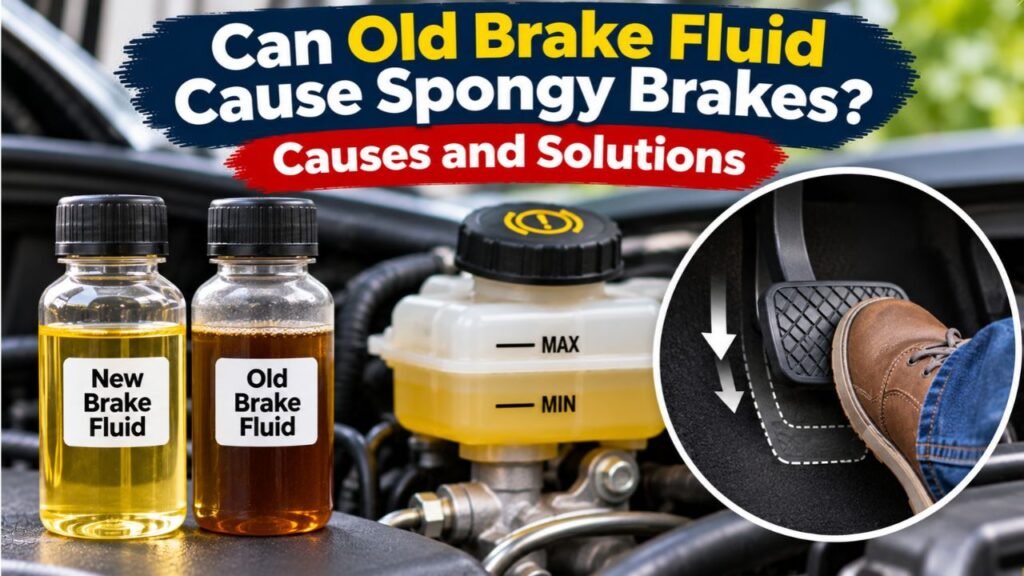
Old brake fluid can contribute to a spongy brake pedal, particularly when it becomes contaminated with moisture and is exposed to high temperatures.
The important distinction is that aging fluid doesn’t normally become highly compressible simply because it is old. The dangerous change occurs when accumulated moisture lowers the boiling point enough for vapor to form during braking.
How Old Brake Fluid Affects Pedal Feel
A typical hydraulic braking system transfers force from the brake pedal through the master cylinder and brake lines to the wheel brakes.
Liquid brake fluid is relatively incompressible under normal operating conditions.
When you press the pedal, hydraulic pressure acts on the caliper pistons or wheel cylinders, applying the brakes.
However, vapor bubbles behave differently.
They compress when pressure is applied.
As a result, more pedal movement may be required before the system develops sufficient braking pressure.
The pedal can feel:
- Soft
- Springy
- Spongy
- Lower than normal
- Inconsistent during braking
In severe cases, braking effectiveness may decrease substantially.
What Happens as Brake Fluid Ages?
The process generally develops over time.
- Glycol-based brake fluid absorbs moisture.
- Its boiling point gradually decreases.
- Braking generates heat around the calipers and wheel brakes.
- Under sufficiently demanding conditions, moisture-contaminated fluid may boil.
- Vapor bubbles form inside the hydraulic circuit.
- The bubbles compress when the brake pedal is pressed.
- Brake pedal travel increases and braking response may deteriorate.
This condition is commonly called vapor lock.
According to Brembo’s technical explanation of brake fluid and vapor lock, moisture absorption lowers the fluid’s boiling point, allowing vapor bubbles to form under high temperatures and creating a potentially dangerous spongy brake pedal.
Can Old Fluid Cause Spongy Brakes When Cold?
Not usually through the boiling mechanism alone.
If the brakes are cold and the fluid remains completely liquid, the age-related reduction in boiling point doesn’t by itself explain a large increase in pedal travel.
A consistently soft pedal at normal temperatures more strongly suggests problems such as trapped air, a leak, damaged hoses, or another hydraulic fault.
However, old fluid may have contributed to corrosion or component damage that creates those problems.
Key Takeaway: Old brake fluid can cause sponginess through moisture-related vapor formation. A soft pedal when cold needs a broader diagnosis rather than an automatic fluid replacement.
Old Brake Fluid vs. Other Causes of Spongy Brakes
Several braking-system problems can produce similar pedal symptoms.
Identifying the actual cause matters because replacing fluid alone won’t fix every hydraulic failure.
Spongy Brake Pedal Causes Comparison
| Possible Cause | Common Pattern | Will a Fluid Flush Fix It? |
| Moisture-contaminated fluid boiling | Pedal becomes soft after heavy or prolonged braking | Often, if no other damage is present |
| Air trapped in brake lines | Pedal may feel spongy even when cold | Proper bleeding may resolve it |
| Hydraulic fluid leak | Low or sinking pedal; fluid level may decrease | No, the leak must be repaired |
| Failing master cylinder | Pedal may slowly sink under steady pressure | No |
| Damaged flexible brake hose | Excessive pedal travel or unusual response | No, damaged parts need replacement |
| Air trapped in ABS hydraulic unit | Soft pedal after certain repairs or incorrect bleeding | May require specialized ABS bleeding |
| Brake caliper or wheel-cylinder problem | Abnormal pedal feel or braking behavior | Depends on the actual fault |
| Excessive brake component movement | May cause unusual pedal travel | Requires mechanical diagnosis |
| Overheated pads or rotors | Reduced friction braking, sometimes with a firm pedal | No |
The symptom pattern may help a technician prioritize inspections, but it cannot prove the cause by itself.
Why the Difference Matters
Suppose the pedal becomes soft only after descending a mountain.
Moisture-contaminated brake fluid and vapor formation are possible explanations.
Now suppose the pedal is soft immediately after replacing a brake caliper.
Trapped air or an incomplete bleeding procedure becomes a stronger possibility.
If the pedal slowly moves toward the floor while holding steady pressure, a hydraulic leak or internal master-cylinder fault must be considered.
These situations require different repairs.
Why Does Old Brake Fluid Absorb Moisture?
Most passenger vehicles use glycol-based brake fluid.
Common types include DOT 3, DOT 4, and DOT 5.1.
These fluids are hygroscopic, meaning they absorb moisture from their surroundings.
How Does Water Enter a Closed Brake System?
Automotive hydraulic braking systems are designed to contain their fluid.
However, they are not completely isolated from moisture over many years.
Moisture may enter gradually through:
- Flexible brake hoses
- Reservoir venting arrangements
- Seals
- Fluid handling during maintenance
- Improperly stored brake fluid
This process can occur even when no obvious external leak exists.
Does Driving More Make Brake Fluid Absorb Water Faster?
Not necessarily in direct proportion to mileage.
Moisture absorption depends on time, environmental conditions, system design, fluid condition, and maintenance.
A vehicle driven infrequently may still accumulate moisture.
That’s one reason brake fluid replacement intervals are commonly based on time rather than mileage alone.
Does Humid Weather Affect Brake Fluid?
Humidity can influence the amount of moisture available to enter the hydraulic system.
However, it doesn’t mean every car operated in a humid climate will develop spongy brakes.
Vehicle condition, fluid type, service history, and operating temperatures remain important.
Does Water Make Brake Fluid Compressible?
A small amount of dissolved water doesn’t suddenly make liquid brake fluid behave like air.
The more important problem is its effect on the boiling point.
When the fluid becomes hot enough to form vapor, the gas bubbles can compress under pedal pressure.
That is the critical mechanism behind moisture-related sponginess.
How Brake Fluid Boiling Point Affects Spongy Brakes
Brake fluid must tolerate substantial heat without forming vapor.
During braking, friction converts the vehicle’s kinetic energy into heat.
Some of that heat transfers through the brake hardware to the hydraulic fluid.
Dry and Wet Boiling Points
Brake fluid classifications specify minimum boiling-point performance.
The dry boiling point applies to fresh fluid under specified test conditions.
The wet boiling point reflects performance after standardized moisture exposure.
Brake Fluid Boiling Point Chart
| Brake Fluid Type | Minimum Dry Boiling Point | Minimum Wet Boiling Point |
| DOT 3 | 401°F (205°C) | 284°F (140°C) |
| DOT 4 | 446°F (230°C) | 311°F (155°C) |
| DOT 5.1 | 500°F (260°C) | 356°F (180°C) |
These are minimum specifications, not guaranteed boiling points for every individual product.
Some formulations exceed these requirements.
Why Is the Wet Boiling Point Lower?
Moisture reduces the temperature at which the fluid can begin to boil under the relevant conditions.
The effect is important because braking components can reach high temperatures during severe use.
The standardized wet boiling point is a laboratory measure, not an instruction to replace the fluid at a fixed water percentage in every vehicle.
Example: Moisture-Contaminated DOT 4
Fresh DOT 4 must meet a minimum dry boiling point of 446°F.
Its standardized minimum wet boiling point is 311°F.
That difference demonstrates the loss of heat resistance associated with moisture.
If the fluid reaches its actual boiling temperature during demanding braking, vapor bubbles may form.
When Is Brake Fluid Most Likely to Overheat?
High-temperature situations include:
- Long downhill drives
- Repeated emergency stops
- Heavy towing
- Driving with substantial vehicle loads
- Performance driving
- Brake components dragging because of a mechanical problem
However, brake fluid doesn’t need to boil during ordinary driving for a vehicle to be overdue for replacement.
Scheduled maintenance is intended to preserve its performance before a dangerous symptom appears.
What Does a Spongy Brake Pedal Feel Like?
A spongy pedal usually feels softer or springier than the normal pedal response.
The pedal may travel farther before braking force builds.
Common Symptoms
A driver may notice:
- The pedal feels less firm.
- Braking requires more pedal travel.
- The pedal response changes after repeated stops.
- The pedal feels temporarily better after cooling.
- The vehicle takes longer to slow down.
- The pedal feels inconsistent from one stop to another.
Not every symptom means the fluid is old.
Spongy vs. Soft vs. Sinking Brake Pedal
These descriptions overlap, but they can suggest different problems.
| Pedal Symptom | Description | Possible Causes |
| Spongy | Springy or compressible feeling | Air or vapor in hydraulic system |
| Soft | Less resistance than normal | Air, vapor, leak, or other hydraulic fault |
| Low pedal | Travels farther before braking | Hydraulic or mechanical problem |
| Sinking pedal | Continues moving under steady pressure | Possible internal or external hydraulic leakage |
| Hard pedal | Requires unusually high effort | Possible brake assist problem |
| Pulsating pedal | Vibration or repeated movement | ABS activity or other brake-system condition |
These are clues for professional diagnosis, not definitive tests.
Can a Spongy Pedal Feel Normal Again?
Yes.
For example, a pedal affected by heat-related vapor formation may become firmer after the brakes cool.
However, temporary recovery does not mean the vehicle is safe.
The condition may return the next time the brakes become hot.
Can Spongy Brakes Cause Complete Brake Failure?
A serious hydraulic fault can cause substantial loss of braking performance.
Vapor formation, a severe leak, or component failure can become dangerous quickly.
Do not continue driving a vehicle with unexplained spongy brakes.
Can Air in Brake Lines Cause the Same Symptoms?
Yes.
Trapped air is one of the most common causes of a spongy brake pedal.
Air can enter during hydraulic repairs or through certain system faults.
How Does Air Enter Brake Lines?
Possible situations include:
- A brake line was disconnected.
- A caliper was replaced.
- A wheel cylinder was serviced.
- The reservoir ran dry during bleeding.
- A hydraulic leak developed.
- The bleeding procedure was incomplete.
Why Does Air Make Brakes Spongy?
Air compresses much more readily than brake fluid.
When the pedal is pressed, some movement is used to compress trapped air.
This can make the pedal travel farther before adequate hydraulic pressure develops.
How Is Air Different From Vapor?
Air may remain trapped in the system even when the brakes are cool.
Vapor caused by boiling is associated with high temperatures.
However, the symptoms can overlap, and a brake pedal cannot reliably identify the gas source.
Will New Brake Fluid Remove Air?
Simply pouring fresh fluid into the reservoir will not remove trapped air.
The hydraulic system must be bled correctly.
According to PowerStop’s guide to diagnosing a soft or spongy brake pedal, air in the brake system, fluid leaks, damaged hoses, and contamination are among the possible causes. The guide also explains why some ABS-equipped vehicles require specialized bleeding procedures.
Key Takeaway: Air in the lines may cause a spongy pedal even with fresh fluid. Proper diagnosis and bleeding are necessary to determine the correct repair.
Can a Brake Fluid Leak Feel Like Old Brake Fluid?
Yes.
A hydraulic leak can create a low or soft pedal and reduce braking effectiveness.
It may produce symptoms similar to air or vapor in the hydraulic system.
Common Brake Fluid Leak Locations
Possible leak points include:
- Brake lines
- Flexible brake hoses
- Caliper seals
- Wheel cylinders
- Master cylinder
- Hydraulic connections
- Certain ABS hydraulic components
Warning Signs of a Leak
Look for:
- Falling brake fluid level
- Wet areas around brake components
- Fluid near a wheel
- Unusual pedal travel
- Brake warning lights
- Reduced braking performance
However, not every leak is immediately visible.
An internal master-cylinder leak, for example, may not produce an obvious puddle.
Will a Fluid Flush Fix a Leak?
No.
Replacing the fluid doesn’t repair damaged seals, corroded lines, or leaking connections.
The failed component must be repaired or replaced.
Can You Just Top Up the Brake Fluid?
No, not as a substitute for diagnosing the problem.
The reservoir level can gradually decrease as brake pads wear.
However, a significant or unexpected decrease may indicate leakage.
If the cause is unknown, the system needs inspection.
Important: If a brake leak is suspected or the pedal sinks toward the floor, do not drive the vehicle. Arrange professional inspection or towing.
Can Old Brake Fluid Damage the Master Cylinder?
Moisture-contaminated fluid can contribute to internal hydraulic corrosion and deterioration over time.
This may affect the master cylinder and other braking components.
What Does the Master Cylinder Do?
The master cylinder converts brake pedal input into hydraulic pressure.
It contains internal pistons and seals that must maintain pressure.
How Can Old Fluid Contribute to Damage?
Moisture and contamination may promote corrosion or wear inside the hydraulic system.
However, a failing master cylinder is not automatically caused by old fluid.
Age, material condition, wear, and other factors can also contribute.
Signs of a Master Cylinder Problem
Possible signs include:
- A pedal that slowly sinks under steady pressure
- Inconsistent hydraulic response
- Reduced braking effectiveness
- Fluid leakage in some cases
These symptoms require immediate evaluation.
Will Changing Fluid Repair a Bad Master Cylinder?
No.
A damaged master cylinder generally requires appropriate repair or replacement.
A fluid exchange alone cannot restore failed internal seals.
Can a Bad Brake Hose Cause Spongy Brakes?
Yes.
Flexible brake hoses can deteriorate or become damaged.
Certain defects may contribute to abnormal pedal travel or braking response.
What Happens to Old Brake Hoses?
Hoses are exposed to:
- Heat
- Moisture
- Road debris
- Movement
- Age-related deterioration
Damaged hoses may leak, expand excessively, or restrict fluid movement.
Can Hoses Expand Under Pressure?
A deteriorated hose may deform abnormally when hydraulic pressure increases.
This can affect how pedal force is transmitted.
Can a Brake Fluid Flush Fix Hose Problems?
No.
A leaking or structurally damaged hose must be replaced.
The hydraulic system must then be serviced according to the vehicle manufacturer’s procedure.
Can Old Brake Fluid Cause Spongy Brakes Without a Leak?
Yes.
This is possible when moisture-contaminated fluid forms vapor under high temperatures.
An external leak is not required for vapor lock to occur.
Example: Driving Down a Mountain
Imagine a vehicle descending a long mountain road.
The driver repeatedly applies the brakes.
Heat builds up in the brake rotors, calipers, and surrounding components.
If the brake fluid has absorbed sufficient moisture, its reduced boiling point may allow vapor formation.
The pedal becomes soft, and braking effectiveness may decrease.
This can happen even if no fluid is leaking externally.
What if the Brakes Feel Fine the Next Morning?
The disappearance of the symptom doesn’t prove the system is healthy.
The fluid may still have poor boiling resistance.
An overheating or mechanical brake problem could also remain.
Have the vehicle inspected before further use.
Can New Brake Fluid Prevent This?
Fresh, manufacturer-approved fluid restores the intended resistance to boiling.
However, it doesn’t prevent every cause of brake overheating.
Dragging calipers, unsuitable braking components, or other faults still need correction.
Will a Brake Fluid Flush Fix Spongy Brakes?
A properly performed fluid exchange and bleeding procedure may fix spongy brakes when moisture-contaminated fluid or trapped air is the cause.
However, it is not guaranteed.
When a Flush May Help
A fluid flush may be appropriate when:
- The fluid is overdue for replacement.
- Testing shows deteriorated fluid performance.
- Heat-related vapor formation is suspected.
- Contaminated fluid needs replacement.
- Bleeding is required after hydraulic repairs.
When a Flush Won’t Solve the Problem
Replacing fluid alone will not repair:
- Leaking brake lines
- Damaged hoses
- Faulty caliper seals
- A failing master cylinder
- Mechanical faults affecting the brake system
A technician must identify and correct the actual problem.
Does Bleeding the Brakes Help?
Yes, when trapped air is present.
Brake bleeding removes air through the manufacturer’s specified procedure.
Some systems require specialized tools.
Brake Fluid Flush vs. Brake Bleeding
| Procedure | Main Purpose |
| Brake fluid top-up | Restores the specified level after the cause of fluid loss is assessed |
| Brake fluid flush | Replaces deteriorated hydraulic fluid |
| Brake bleeding | Removes trapped air or gas |
| Hydraulic repair | Fixes leaking or defective components |
A fluid replacement service commonly includes appropriate bleeding.
However, the terms describe different goals.
Can a Flush Make Brakes Feel Worse?
An incorrectly performed service can leave air in the system.
This may result in an abnormally soft pedal.
If the pedal feels worse after brake service, do not assume it will improve with driving.
The vehicle must be inspected before returning to normal use.
Does the ABS System Need Special Bleeding?
Some ABS-equipped vehicles require model-specific procedures.
Certain hydraulic units may need diagnostic equipment to operate valves during bleeding.
Follow the factory service instructions.
How to Check Whether Old Brake Fluid Is the Problem
Brake fluid condition can be evaluated, but a soft pedal requires inspection of the entire braking system.
Step 1: Review Service Records
Find the last brake fluid replacement date.
If the fluid is overdue, replacement may be appropriate.
However, being overdue doesn’t prove that old fluid is causing the pedal symptom.
Step 2: Check the Reservoir Level
With the vehicle safely parked and following the owner’s manual, inspect the reservoir through its translucent wall if possible.
Look for the MIN and MAX markings.
Avoid opening the cap unnecessarily.
A low level requires investigation.
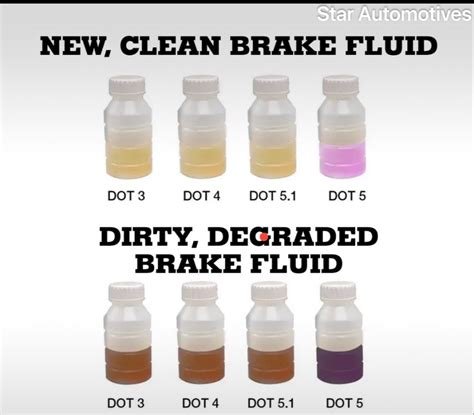
Step 3: Look for Visible Contamination
Cloudy fluid or debris may indicate deterioration.
However, dark color alone doesn’t establish that moisture is the cause of the problem.
Clear fluid may still contain absorbed water.
Step 4: Have the Fluid Tested
A technician may assess:
- Moisture-related properties
- Boiling-point performance
- Visible contamination
- Service history
- Manufacturer specifications
Testing helps determine whether the fluid needs replacement.
Step 5: Inspect the Hydraulic System
The inspection should consider:
- Master cylinder
- Brake lines
- Flexible hoses
- Calipers
- Wheel cylinders
- ABS hydraulic components
- Brake fluid level
- Evidence of leakage
Step 6: Confirm the Appropriate Repair
If the problem is old, moisture-contaminated fluid, replacement may be sufficient.
If air is trapped, proper bleeding is necessary.
If a component is leaking or damaged, repair must come first.
Is a Brake Fluid Tester Enough?
Not by itself.
Some inexpensive testers estimate moisture using electrical conductivity.
Their readings may depend on fluid chemistry and test conditions.
A boiling-point test or appropriate professional assessment can provide more relevant information about heat resistance.
In its technical guide to brake fluid testing and replacement, HELLA explains why fluid color alone is insufficient and why moisture, boiling-point performance, and correct bleeding procedures matter.
Key Takeaway: Testing old fluid can identify deterioration, but a soft pedal still requires checking for air, leaks, and defective hydraulic components.
How Much Moisture Is Too Much in Brake Fluid?
Moisture reduces the fluid’s boiling resistance.
However, the correct replacement decision should consider the vehicle manufacturer’s maintenance requirements and the fluid’s tested condition.
Is 1% Water in Brake Fluid Bad?
A small amount of absorbed moisture doesn’t automatically cause a spongy pedal.
However, it indicates that the fluid is no longer in its original dry condition.
The effect on boiling resistance depends on the formulation.
Is 2% Moisture Acceptable?
The answer depends on the fluid, the testing method, and the manufacturer’s recommendations.
Some service practices use approximate moisture thresholds, but a moisture percentage alone doesn’t establish whether a particular braking system is safe.
What About 3% Water?
Some professional service guidance treats approximately 3% moisture as a replacement indicator.
However, this should not be interpreted as a universal safety boundary.
A vehicle may require fluid replacement based on time, condition, or manufacturer instructions before reaching that value.
Does a Moisture Test Prove Why the Pedal Is Spongy?
No.
A fluid test can show that the fluid has deteriorated.
It cannot independently rule out trapped air, leaks, hose problems, or a defective master cylinder.
A proper brake diagnosis considers all of these possibilities.
How Often Should You Replace Brake Fluid to Prevent Spongy Brakes?
Many vehicles have a time-based brake fluid replacement schedule.
A commonly cited interval is approximately every two to three years.
However, the manufacturer’s instructions take priority.
General Brake Fluid Maintenance Guide
| Condition | Recommended Approach |
| Fluid within service interval and no symptoms | Follow routine maintenance schedule |
| Fluid overdue for replacement | Arrange service |
| Vehicle has unknown service history | Inspect fluid and braking system |
| Pedal becomes spongy when hot | Stop driving and arrange diagnosis |
| Pedal feels soft when cold | Arrange immediate brake inspection |
| Hydraulic system recently opened | Verify correct bleeding procedure |
| Brake fluid level suddenly drops | Investigate possible leak |
| Brake pedal sinks or stopping power decreases | Do not drive; obtain professional assistance |
Does Brake Fluid Need Changing Even Without Symptoms?
Yes, when the service schedule requires it.
Brake fluid may lose boiling resistance before the driver notices a change.
Preventive maintenance reduces the risk of heat-related problems developing later.
Does Low Mileage Make Brake Fluid Last Longer?
Not necessarily.
Moisture absorption can occur while the vehicle is parked.
A low-mileage vehicle can still need a time-based fluid replacement.
Should You Change Fluid More Often in Hot Weather?
Severe operating conditions may justify additional inspections or more frequent service.
However, hot weather alone doesn’t establish a universal shorter interval.
Follow the manufacturer’s recommendations.
Which Brake Fluid Is Best for Preventing Spongy Brakes?
The best brake fluid is the one that meets the vehicle manufacturer’s required specification.
Using an incompatible fluid can create additional problems.
DOT 3
DOT 3 is a glycol-based fluid used in many passenger vehicles.
It meets defined minimum boiling-point and performance requirements.
DOT 4
DOT 4 is also glycol-based.
It has higher minimum dry and wet boiling-point requirements than DOT 3.
However, that doesn’t automatically mean it should replace DOT 3 in every vehicle.
DOT 5
DOT 5 is silicone-based.
It differs chemically from conventional glycol-based fluids.
It should not be mixed with DOT 3, DOT 4, or DOT 5.1.
DOT 5.1
DOT 5.1 is glycol-based despite its similar name to DOT 5.
It has higher minimum boiling-point requirements than DOT 3 and DOT 4.
However, compatibility must be confirmed.
DOT 4 Low-Viscosity Fluids
Some vehicles with sophisticated ABS or stability-control systems require particular low-viscosity fluid specifications.
Use the exact fluid approved for the system.
Does Higher DOT Number Mean a Firmer Pedal?
No.
Choosing a fluid with a higher boiling point doesn’t automatically repair a spongy pedal.
If air is trapped or a leak is present, the correct repair is necessary regardless of the fluid’s rating.
Can Old Brake Fluid Cause Spongy Brakes After Replacing Pads?
Old fluid may contribute to heat-related sponginess, but a soft pedal appearing immediately after brake work often requires checking the repair procedure.
Why Brakes May Feel Different After Pad Replacement
Possible issues include:
- Improperly seated components
- Air introduced during hydraulic work
- A caliper installation problem
- Excessive mechanical movement
- An existing hydraulic fault becoming apparent
Normal pad replacement doesn’t necessarily require opening the hydraulic system.
Should Fluid Always Be Changed With Brake Pads?
Not automatically.
The replacement interval and fluid condition determine whether a fluid exchange is due.
However, if hydraulic connections were opened, the system generally requires appropriate bleeding.
What if the Pedal Is Spongy After a Brake Flush?
Air may remain trapped.
Alternatively, another hydraulic problem may be present.
Some modern vehicles require an ABS bleeding procedure using diagnostic equipment.
Do not drive until proper pedal function has been confirmed.
Can New Brake Pads Fix Sponginess?
New pads can correct problems caused by worn friction components.
However, they do not remove air, eliminate vapor, or repair hydraulic leaks.
If the pedal is spongy, inspect the hydraulic system.
Is It Safe to Drive With Spongy Brakes?
No. An unexplained spongy brake pedal should be treated as a potentially serious safety problem.
The vehicle may not develop the braking pressure expected by the driver.
A fault that seems minor can worsen without warning.
Warning Signs That Require Immediate Action
Do not continue driving if:
- The pedal sinks toward the floor.
- Braking power is reduced.
- Pedal travel suddenly increases.
- A brake fluid leak is suspected.
- The reservoir level drops unexpectedly.
- The vehicle requires repeated pedal pumping to slow down.
- The brakes become soft after overheating.
What if the Pedal Becomes Soft While Driving?
If this happens while the vehicle is moving:
- Remain focused on controlling the vehicle.
- Ease off the accelerator.
- Use a lower gear or appropriate regenerative braking to reduce speed when available and safe.
- Avoid abrupt maneuvers.
- Move toward a safe stopping location if sufficient control remains.
- Once stopped, do not resume driving.
- Arrange roadside assistance or towing.
Follow the vehicle owner’s manual for emergency braking procedures.
Do not rely on the parking brake as a normal replacement for a functioning service brake system.
What if the Brakes Feel Normal Again After Cooling?
The vehicle still needs inspection.
If vapor lock occurred, the fluid may remain vulnerable to boiling during the next demanding braking event.
Cooling does not remove moisture from the fluid or repair damaged components.
Should You Drive to a Repair Shop?
If the brakes are noticeably spongy, ineffective, or otherwise abnormal, towing is the safer option.
Do not perform an informal road test to determine how badly the brakes are affected.
Can You Prevent Spongy Brakes Caused by Old Fluid?
Regular maintenance helps reduce the risk of moisture-related brake problems.
Follow the Manufacturer’s Fluid Schedule
Replace brake fluid at the recommended interval.
Don’t wait for the pedal to become soft.
Use the Correct Fluid
Check the owner’s manual or reservoir-cap specification.
Avoid substituting an unapproved fluid.
Keep Brake Fluid Containers Properly Sealed
Glycol-based fluid absorbs moisture from the environment.
Use clean fluid from an appropriately stored container.
Avoid using old fluid that has been left exposed to air.
Inspect Brake Fluid Level
Monitor the reservoir according to the vehicle’s maintenance instructions.
A sudden or unexplained drop requires investigation.
Maintain Brake Hoses and Lines
Inspect flexible hoses and rigid lines for deterioration, corrosion, or leakage.
Replace damaged components according to the manufacturer’s requirements.
Avoid Excessive Brake Overheating
On long descents, use appropriate engine braking or regenerative braking where available.
Avoid prolonged unnecessary brake application.
If the brakes show signs of overheating or performance loss, stop safely and have the vehicle inspected.
Keep Brake Service Records
Record the:
- Replacement date
- Vehicle mileage
- Fluid specification
- Work performed
- Any related hydraulic repairs
These details help determine when the next service is due.
Common Mistakes When Diagnosing Spongy Brakes
Several assumptions can delay an important repair.
Assuming Old Fluid Is Always the Cause
A soft brake pedal can result from air, leaks, hoses, or master-cylinder faults.
Fluid age alone isn’t enough for diagnosis.
Assuming Moisture Makes Liquid Fluid Compress Like Air
The principal moisture-related risk is reduced boiling resistance.
The spongy sensation develops when compressible vapor forms or another hydraulic fault is present.
Topping Up Instead of Diagnosing
Adding fluid doesn’t remove trapped air, replace old fluid, or repair a leak.
Ignoring a Soft Pedal When the Brakes Are Cold
A consistently spongy pedal may indicate trapped air or a hydraulic problem.
Don’t dismiss it because the car hasn’t been driven hard.
Assuming Brake Fluid Color Proves Its Condition
Color can provide a clue, but clear fluid may still be moisture-contaminated.
Appropriate testing is more informative.
Choosing a Higher DOT Number as a Fix
An unapproved fluid type will not repair a defective hydraulic system.
Forgetting ABS Bleeding Requirements
Some vehicles need special procedures when air enters the ABS hydraulic unit.
Continuing to Drive After the Pedal Improves
A temporary improvement after cooling doesn’t mean the issue is resolved.
Attempting Repairs Without the Correct Procedure
Brake hydraulics are safety-critical.
Improper bleeding can leave air in the system and compromise braking.
Conclusion
Old brake fluid can cause spongy brakes when moisture contamination lowers its boiling point enough for vapor bubbles to form during high-temperature braking.
These bubbles compress under pedal pressure, creating a soft or springy pedal and potentially reducing braking effectiveness.
However, old fluid isn’t the only cause of sponginess.
Air trapped after repairs, hydraulic leaks, damaged hoses, ABS bleeding problems, and failing master-cylinder components can produce similar symptoms.
The timing of the problem offers useful clues. A pedal that becomes soft after prolonged hard braking may point toward heat-related fluid problems, while sponginess when cold may indicate trapped air or another hydraulic fault.
A properly performed brake fluid flush and bleeding procedure can help when degraded fluid or trapped gas is responsible. However, it cannot repair leaking or damaged components.
Follow the manufacturer’s fluid replacement schedule, use the correct DOT specification, and have abnormal pedal symptoms professionally diagnosed.
If your brakes feel spongy, don’t assume a simple fluid change will make the vehicle safe. Identify and correct the underlying cause before driving again.
FAQs About Can Old Brake Fluid Cause Spongy Brakes
Can Old Brake Fluid Really Make Brakes Feel Spongy?
Yes.
Moisture-contaminated brake fluid can boil under high temperatures, producing compressible vapor bubbles.
These bubbles can increase pedal travel and reduce braking effectiveness.
However, old fluid doesn’t automatically cause sponginess when it remains liquid.
Can Old Brake Fluid Cause a Soft Pedal When Cold?
Not usually through the vapor-lock mechanism alone.
A soft pedal when cold may be caused by trapped air, a leak, a damaged hose, or a failing hydraulic component.
Professional diagnosis is necessary.
Will Changing Brake Fluid Fix Spongy Brakes?
It may if moisture-contaminated fluid or trapped gas is the cause and the system is correctly serviced.
However, fluid replacement won’t repair leaking hoses, damaged calipers, or a faulty master cylinder.
Will Bleeding the Brakes Make the Pedal Firmer?
Yes, when trapped air is responsible.
Proper bleeding removes compressible gas from the hydraulic system.
However, the cause of any air entry or fluid loss must also be corrected.
Can Brake Fluid Be Bad Even if It Looks Clear?
Yes.
Color alone doesn’t reliably indicate moisture content or boiling resistance.
Fluid may require replacement based on service age or test results despite appearing clear.
Can Air Get Into Brake Lines Without a Visible Leak?
Yes.
Air may remain after an incomplete bleeding procedure or enter during hydraulic repairs.
Certain faults may also allow air to enter without an obvious puddle.
The system needs inspection.
Does Low Brake Fluid Cause Spongy Brakes?
Low fluid may be associated with a leak or another hydraulic problem.
If the system takes in air, the pedal can become spongy.
However, a gradual reservoir-level decrease can also occur as brake pads wear.
The cause must be identified.
How Long Can Brake Fluid Last Before Causing Problems?
There is no fixed age at which brake fluid suddenly becomes unsafe.
Many vehicles specify replacement approximately every two to three years, but the manufacturer’s schedule takes priority.
Moisture absorption, operating conditions, and fluid condition affect the risk.
Can Brake Fluid Cause Spongy Brakes Only When Hot?
Yes.
Moisture-contaminated fluid may remain functional during ordinary driving but form vapor under severe heat.
However, a pedal that becomes soft only when hot can also result from other braking-system problems.
Can Spongy Brakes Go Away on Their Own?
The symptom may temporarily improve after cooling, but the underlying problem generally remains.
Do not assume the brakes are safe simply because the pedal feels firmer again.
Does DOT 4 Prevent Spongy Brakes Better Than DOT 3?
DOT 4 has higher minimum boiling-point requirements than DOT 3.
However, the vehicle must use an approved fluid, and either type can deteriorate through moisture absorption.
Neither fluid prevents sponginess caused by trapped air or leaks.
Can I Mix DOT 3 and DOT 4 to Fix Spongy Brakes?
Mixing fluids isn’t a repair for a soft pedal.
Use the fluid approved by the vehicle manufacturer.
If the pedal is spongy, diagnose the hydraulic system rather than attempting to solve the problem by changing fluid classifications.
Can Old Brake Fluid Damage the ABS System?
Moisture and contamination can contribute to corrosion or deterioration of hydraulic components, including parts of the ABS hydraulic unit.
However, old fluid isn’t the cause of every ABS problem.
Why Is My Brake Pedal Spongy After a Brake Fluid Change?
Possible causes include trapped air, incomplete bleeding, an unaddressed leak, or a vehicle-specific ABS bleeding requirement.
Do not drive with abnormal pedal feel.
Have the service inspected and corrected.
Can a Bad Master Cylinder Feel Like Air in the Brake Lines?
Yes.
A failing master cylinder may cause excessive pedal movement or a pedal that sinks under steady pressure.
These symptoms can overlap with air-related problems.
A technician must determine the cause.
Does Pumping the Brake Pedal Help Diagnose Spongy Brakes?
A pedal that temporarily firms up after repeated applications may provide a diagnostic clue, but it doesn’t establish one specific cause.
Do not rely on pumping the pedal to make an unsafe vehicle drivable.
How Much Moisture in Brake Fluid Is Dangerous?
The effect depends on fluid chemistry, boiling-point performance, and vehicle requirements.
Some service guidelines use approximately 3% moisture as a replacement indicator, but no single moisture percentage proves that every braking system is safe or unsafe.
Is It Safe to Drive With Slightly Spongy Brakes?
No.
Even mild unexplained sponginess can indicate trapped air, leakage, or other hydraulic problems.
Arrange inspection before continuing to drive.
Does New Brake Fluid Improve Stopping Distance?
Fresh fluid can restore heat resistance and help prevent reduced braking performance caused by vapor formation.
However, it doesn’t automatically shorten stopping distance when the braking system is already functioning correctly.
Should I Replace Brake Fluid Before It Causes a Soft Pedal?
Yes.
Brake fluid maintenance is preventive.
Follow the manufacturer’s replacement interval rather than waiting for noticeable braking problems.