Do Brake Calipers Make a Difference: Which Option Fits and Why
After several hard stops, a car with overheated brakes may develop a long pedal, uneven braking, or vibration through the steering wheel. In that situation, better brake calipers can make a meaningful difference, but the upgrade only works when the caliper matches the vehicle, brake rotor, pads, tires, and intended use.
Do brake calipers make a difference? Yes, especially in braking consistency, heat management, pedal feel, and pad wear. However, a larger or more expensive caliper is not automatically better for a daily-driven vehicle.
How Brake Calipers Affect Braking
A brake caliper clamps the brake pads against the rotor when hydraulic pressure moves its piston or pistons. That friction slows the rotor and transfers braking force through the wheel to the road. The caliper itself does not create braking force alone; it controls how effectively the pads apply that force.
Caliper design affects several practical characteristics:
- Clamping consistency: The caliper must press the pad evenly against the rotor.
- Pedal feel: A rigid caliper can make braking feel more immediate and predictable.
- Heat control: The caliper must operate reliably as temperatures rise.
- Pad wear: Proper alignment helps both pads wear at a similar rate.
- Brake balance: Piston size and caliper capacity influence how much braking force reaches each axle.
A worn, seized, leaking, or poorly aligned caliper can reduce braking performance even when the pads and rotors are relatively new. A properly functioning factory caliper, by contrast, may already be completely adequate for normal street driving.
Floating Versus Fixed Calipers
Floating calipers
Most standard passenger vehicles use a floating caliper, also called a sliding caliper. It usually has one piston on the inside of the rotor. When the piston pushes the inner pad outward, the caliper slides on guide pins and pulls the outer pad against the opposite side.
This design is compact, affordable, and effective for commuting. It also keeps replacement parts and service costs relatively low. Its main weakness is that sticking guide pins, corrosion, or a seized piston can prevent even pad pressure. That can cause accelerated wear, pulling during braking, or excess heat at one wheel.
Fixed calipers
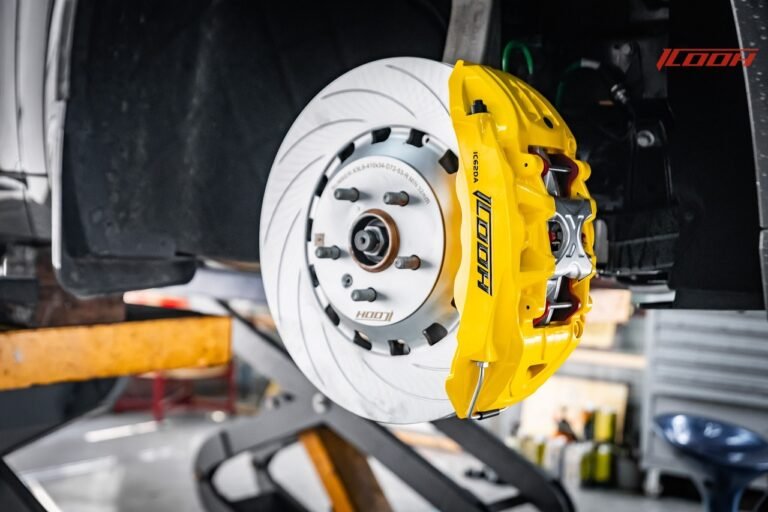
A fixed caliper stays mounted in position and uses pistons on both sides of the rotor. The pistons push the inner and outer pads toward the rotor without requiring the caliper body to slide.
Fixed calipers are generally more rigid and can provide a firmer, more consistent pedal response. They are common on performance vehicles because they can support larger pads, distribute pressure evenly, and manage repeated high-temperature stops effectively.
That does not mean every fixed caliper improves a street car in every way. It may add weight, require different mounting hardware, cost more to rebuild, and need a specific rotor and pad package. The improvement is most noticeable when the original braking system reaches its limits.
When an Upgrade Makes a Difference
Brake calipers matter most when the vehicle experiences conditions that demand more than the original system can consistently provide. Common examples include:
- Repeated high-speed braking
- Track driving or autocross use
- Heavy towing or hauling
- Steep mountain driving
- Large increases in vehicle power or weight
- Persistent brake fade with suitable pads and fresh fluid
Under these conditions, a performance caliper can improve heat distribution and maintain more stable pad contact. A larger pad may also provide greater friction material volume, which can help it tolerate repeated stops before overheating.
The upgrade may also improve pedal feel. A stiff multi-piston caliper flexes less than a small, heavily loaded sliding caliper. Less flex can make the pedal response feel more direct. The difference is usually about consistency and control rather than dramatically shorter stopping distances in a single emergency stop.
When Factory Calipers Are Enough
For ordinary commuting, a functioning factory caliper is usually sufficient. Most modern vehicles are engineered so the original brake system can stop the car safely under normal operating conditions. If braking feels weak, replacing the calipers may not be the right first step.
Before changing calipers, inspect the complete brake system. A soft pedal, noise, pulling, or vibration may result from air in the lines, contaminated brake fluid, worn pads, damaged rotors, restricted hoses, corroded slide pins, or a failing wheel bearing. Replacing calipers will not correct every braking problem.
Basic maintenance can restore much of the original performance:
- Replace worn or contaminated pads.
- Machine or replace rotors when they are below specification or damaged.
- Flush old brake fluid when appropriate.
- Clean and lubricate compatible caliper slide pins.
- Replace a caliper that leaks, binds, or fails to release.
A well-maintained factory system often provides better value than an oversized upgrade that is poorly matched to the vehicle.
Does More Pistons Mean Better Braking?
More pistons can improve pressure distribution, but piston count alone does not determine performance. A two-piston caliper can work better for a particular vehicle than a six-piston caliper if its pad size, piston area, stiffness, rotor size, and hydraulic requirements are better matched.
Multi-piston calipers can spread pressure across a longer pad. That may reduce uneven wear and help the pad maintain more consistent contact with the rotor. The caliper body can also be designed for high rigidity and better resistance to heat-related distortion.
There are tradeoffs. Larger piston area can change pedal travel and hydraulic leverage. If the total piston area is not compatible with the master cylinder, the pedal may feel different, and the front-to-rear balance may change. A caliper with more pistons is not automatically a bolt-on improvement.
Caliper Size, Rotor Size, and Stopping Force
A caliper upgrade is normally evaluated as part of a complete brake package. The rotor diameter determines the distance from the hub at which the pads apply force. Applying force farther from the center generally increases braking torque, provided the tires can use that force.
A larger rotor can also provide more thermal mass and surface area. That helps absorb and release heat during repeated stops. The caliper must fit the rotor’s diameter, thickness, swept area, and mounting position. A larger caliper installed with the original rotor may offer little benefit or may not fit at all.
Stopping distance is limited by more than caliper strength. Tire grip, road conditions, vehicle weight, suspension behavior, and the anti-lock braking system all matter. If the tires are already the limiting factor, installing stronger calipers may not shorten one maximum-effort stop. It can still improve control and repeatability during multiple stops.
Brake Balance and Master Cylinder Compatibility
Brake systems are designed around a specific front-to-rear balance. The front brakes usually handle more load during deceleration because weight transfers forward. Increasing front caliper capacity without considering the rear system can alter the vehicle’s brake balance.
The master cylinder is equally important. It supplies hydraulic pressure to the calipers, and its bore size affects pedal travel and effort. A caliper conversion with a substantially different piston area may create a pedal that feels too long, too hard, or less responsive than intended.
A compatible upgrade should account for:
- Front and rear piston areas
- Master-cylinder bore size
- Rotor diameter and thickness
- Pad friction characteristics
- Anti-lock brake system operation
- Wheel clearance and caliper position
For that reason, a complete vehicle-specific kit is generally safer to evaluate than mixing unrelated calipers, rotors, pads, and brackets.
Street Calipers Versus Performance Calipers
For street use, the best caliper is usually the one that delivers reliable braking, reasonable service costs, low noise, and predictable operation in a wide range of temperatures. A factory replacement or well-designed street upgrade may be more appropriate than a competition-oriented caliper.
Track-focused calipers prioritize stiffness, cooling, pad capacity, and resistance to repeated heat cycles. They may use specialized pads that perform poorly when cold or create more noise and dust. Some racing components also require frequent inspection and rebuilding.
A performance caliper can therefore be a poor fit for a daily driver if its operating conditions do not match the vehicle’s use. The right choice depends on the reason for the upgrade, not simply on the number of pistons or the visual size of the caliper.
Signs a Caliper Needs Replacement
A damaged or failing caliper should be repaired or replaced regardless of whether a performance upgrade is planned. Warning signs include:
- The vehicle pulls to one side when braking.
- One wheel becomes noticeably hotter than the others.
- A pad wears much faster on one side of the rotor.
- Brake fluid leaks around the caliper or piston seal.
- The brake remains partially applied after the pedal is released.
- The piston or slide pins are seized.
- The brake pedal feels inconsistent after other causes have been checked.
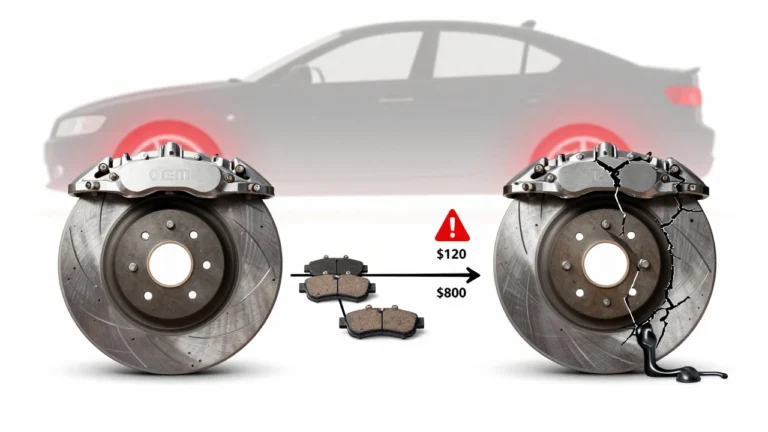
Heat from a dragging caliper can damage the pad, rotor, wheel bearing, and brake fluid. A seized caliper is a safety and reliability problem, not merely a performance concern.
What to Check Before Buying
Start by identifying the actual limitation. If the issue is fade during repeated stops, compare pad compound, rotor condition, cooling, and fluid before assuming the caliper is responsible. If the issue is uneven wear or a dragging brake, repair the existing system first.
For a genuine caliper upgrade, confirm that the kit includes or supports the required mounting brackets, rotors, pads, brake lines, and hardware. Check the manufacturer’s fitment information for wheel diameter and spoke clearance. A caliper can physically fit behind a wheel while still contacting the spokes or requiring a spacer.
It is also important to verify that replacement seals, pads, and rebuild parts are available. A high-performance caliper that cannot be serviced easily may create unnecessary cost later.
After installation, the brake system must be bled correctly, inspected for leaks, and bedded according to the pad and rotor manufacturer’s instructions. The first drive should include careful low-speed checks before normal traffic use. If the pedal is soft, the vehicle pulls, or a wheel heats excessively, stop driving and inspect the system.
Conclusion
So, do brake calipers make a difference? They do when the original calipers are worn, overheating, flexing excessively, or unable to support the vehicle’s demands. For normal street driving, properly maintained factory calipers are often enough. The most effective upgrade is a matched caliper, rotor, pad, fluid, and hydraulic package chosen for the vehicle and its actual use—not simply the largest or most expensive option.