Do You Need a Brake Booster? Manual vs. Power Brakes Explained
No, you do not need a brake booster on every vehicle. A properly designed manual brake system can stop a car safely without power assistance. However, if your vehicle was built with a brake booster, that booster is part of its intended braking system and should not simply be removed or ignored.
The difference comes down to how much force the driver must apply to the pedal and how the rest of the hydraulic brake system is designed. A booster reduces pedal effort; it does not replace the master cylinder, brake lines, calipers, or wheel cylinders. Removing assistance from a vehicle that depends on it can leave the driver struggling to generate enough braking force, especially during an emergency stop.
Older cars, custom builds, and some race vehicles use manual brakes successfully. Most everyday passenger vehicles use some form of braking assistance for predictable pedal effort and easier operation.
This guide explains what boosters do, when manual brakes make sense, why pedal ratio and master-cylinder sizing matter, and what to do if the booster on your current vehicle fails.
Do You Need a Brake Booster for Everyday Driving?
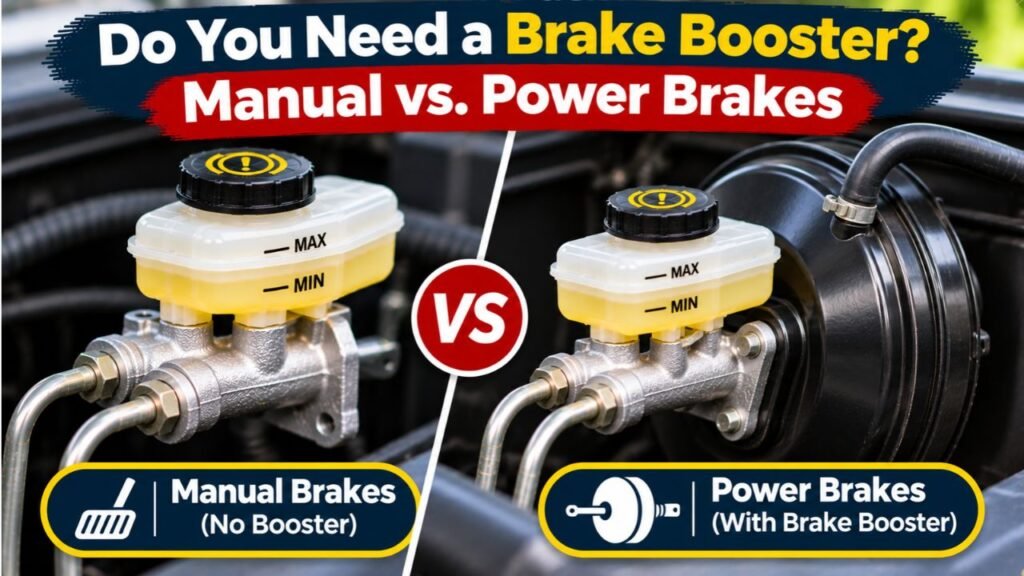
For most people driving a modern car or truck, keeping the factory-installed brake assistance is the correct choice. The braking system was engineered around a particular relationship between pedal movement, driver effort, hydraulic pressure, and assist force. Removing one part of that system changes how the vehicle responds.
That does not mean every road-legal vehicle must have a vacuum booster. Cars originally built with manual brakes can have effective stopping performance when their pedal linkage, master cylinder, and wheel brakes are correctly matched.
It helps to distinguish two questions: whether a vehicle can be designed without a booster, and whether a particular vehicle can safely operate after its existing booster is removed. The first answer is yes. The second requires a vehicle-specific engineering assessment, not a simple parts swap.
If you are asking because the pedal suddenly became extremely hard, treat that as a possible brake-assist failure. Do not assume the car is now equivalent to a purpose-built manual-brake vehicle.
What Does a Brake Booster Actually Do?
A brake booster increases the force transmitted from your foot to the master cylinder. The master cylinder then creates hydraulic pressure that applies the brakes at the wheels. Boosting allows a driver to achieve the required braking effect with less physical effort.
How a Vacuum Brake Booster Helps the Pedal
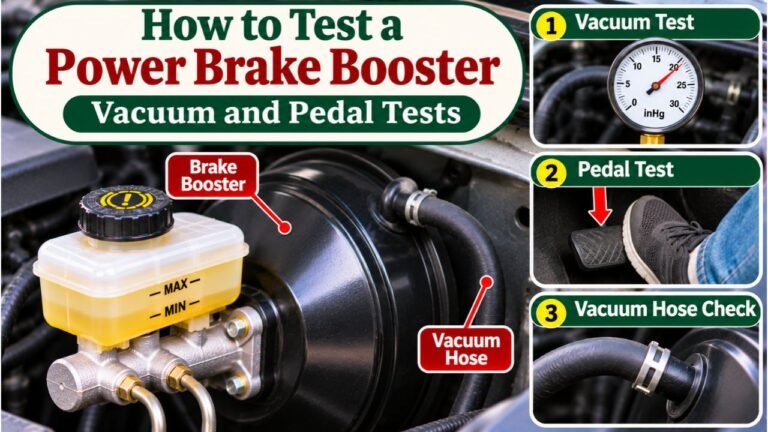
A conventional vacuum booster sits between the brake pedal linkage and master cylinder, usually on the firewall. Inside, a flexible diaphragm separates two chambers. When the pedal is pressed, a pressure difference across that diaphragm helps move the pushrod toward the master cylinder.
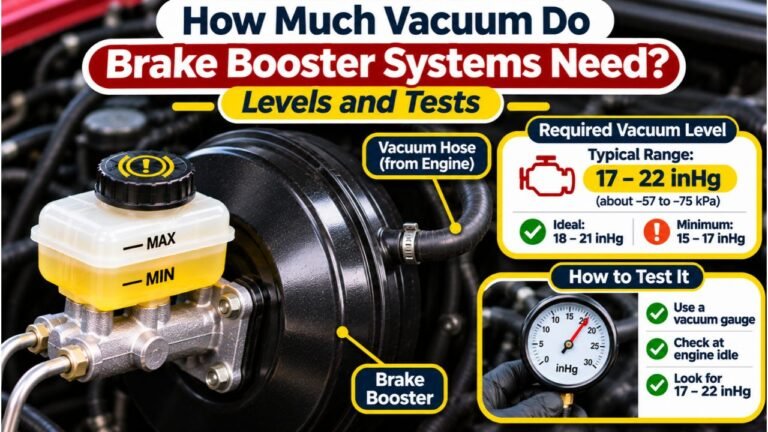
Bosch Mobility’s explanation of the vacuum brake booster describes this pressure-difference principle and its role in reducing driver pedal effort. The vacuum supply may come from engine intake vacuum or a dedicated pump, depending on the vehicle.
A check valve and stored vacuum can provide limited assistance after the engine stops, but that reserve is not unlimited. Once assistance is depleted, pressing the pedal can require substantially more force.
What the Booster Does Not Replace
The booster does not generate braking friction by itself. Calipers or wheel cylinders still apply pads or shoes against rotors or drums. The hydraulic system must remain sealed, properly bled, and mechanically sound.
A booster also cannot correct contaminated pads, air in brake lines, leaking fluid, or badly worn components. A soft or sinking pedal is not the same symptom as the unusually hard pedal commonly associated with lost brake assistance.
Manual Brakes vs. Power Brakes: Main Differences
Both systems ultimately rely on hydraulic pressure to operate the wheel brakes. Their biggest everyday difference is the driver’s required pedal effort.
| Feature | Manual Brakes | Power-Assisted Brakes |
| Booster | None | Vacuum, hydraulic, or electronic assistance |
| Pedal effort | Usually higher | Usually lower |
| Pedal linkage | Designed for greater mechanical leverage | Matched to the assist system |
| Master cylinder | Sized for unassisted operation | Sized for the vehicle’s assisted setup |
| Failure concerns | Hydraulic or mechanical faults | Hydraulic faults plus possible loss of assist |
| Typical applications | Certain classic, custom, and race vehicles | Most modern passenger vehicles |
Manual brakes are not automatically weak, and power brakes are not automatically better in every specialized application. Correctly designed systems can provide strong braking with either arrangement. But manual brakes often require more deliberate pedal pressure, particularly for someone accustomed to a modern assisted system.
Stopping performance depends on tires, available grip, brake condition, hydraulic sizing, vehicle load, and other factors.
When Can You Safely Use Brakes Without a Booster?
The strongest case for an unassisted system is a vehicle originally engineered with manual brakes, maintained with suitable replacement parts. A properly designed custom setup can also work, but it needs more than simply removing a booster.
Older Cars With Factory Manual Brakes
Many vintage vehicles were offered with manual braking arrangements. Their pedal geometry and master-cylinder dimensions were selected to provide useful hydraulic pressure without added assistance. Restoring one of these cars with the correct components is different from removing a booster from a later power-brake model.
Do not assume a factory manual-brake setup is safe merely because it is original. Age-related corrosion, deteriorated hoses, worn components, or incorrect prior repairs can still make it unsafe.
Race Cars and Purpose-Built Vehicles
Some race drivers prefer direct pedal feedback without assistance. Specialized braking systems can be designed around pedal leverage, master-cylinder size, caliper piston area, and the friction materials used. Such systems are tuned for the vehicle and intended operating conditions.
Wilwood’s discussion of power-boosted versus manual brakes explains why pedal and hydraulic ratios become especially important when a race or custom vehicle does not use a booster. A setup that performs well on a race car should not automatically be copied to a family SUV or commuter vehicle.
Disc Brakes Do Not Automatically Require a Booster
Four-wheel disc brakes can operate without power assistance when the entire system is designed for manual operation. Disc brakes do not mechanically require a vacuum booster simply because they use calipers rather than drums.
However, a disc-brake conversion may change fluid-volume requirements and the pedal force needed for adequate pressure. The existing master cylinder, pedal ratio, brake balance, and calipers must be evaluated together.
Why a Manual Brake System Needs the Correct Pedal Ratio
Pedal ratio describes the mechanical leverage between your foot on the pedal and the master-cylinder pushrod. It is calculated by dividing the distance from the pedal pivot to the footpad by the distance from the pivot to the pushrod attachment point, subject to any additional linkage geometry.
For example, if the distance from the pivot to the footpad is 12 inches and the distance to the pushrod is 2 inches, the ratio is 6:1. In that simple lever arrangement, 100 pounds of foot force produces approximately 600 pounds of pushrod force before friction and other losses. This is an illustration, not a universal design target.
Manual brake systems often use greater leverage than power-assisted systems. More leverage helps generate force but generally requires greater pedal movement for the same pushrod travel. Excess travel can create its own problems if the hydraulic system cannot develop adequate pressure before the pedal approaches the floor.
Master-Cylinder Bore Size Changes the Result
A larger master-cylinder piston moves more fluid for a given stroke but requires more input force to produce the same hydraulic pressure. A smaller bore can produce more pressure for the same pushrod force, but it displaces less fluid per inch of travel.
This tradeoff matters when selecting manual-brake components. Caliper piston sizes, required stroke, pad clearance, and total fluid demand must be compatible with the master cylinder. Choosing the smallest bore solely to make the pedal easier can result in too much pedal travel.
Holley’s guide to choosing a master cylinder and booster discusses matching pedal ratio and hydraulic components instead of selecting a booster or master cylinder in isolation.
Brake Balance and Pedal Travel Matter Too
A manual conversion must also maintain appropriate front-to-rear braking balance. Changing master-cylinder arrangements can affect how pressure is distributed, while different wheel brakes may require appropriate proportioning or other hydraulic components.
The pushrod must remain securely retained and aligned. Its free play, piston return, and pedal stop must follow the applicable design. Incorrect adjustment can hold pressure in the brakes or delay pressure buildup.
What Happens if You Drive With a Bad Brake Booster?
A failed vacuum booster may leave the hydraulic brakes mechanically connected, but that does not make the vehicle safe to keep driving. The pedal may become dramatically harder, making it difficult to reach the braking force the vehicle was designed to provide with normal driver effort.
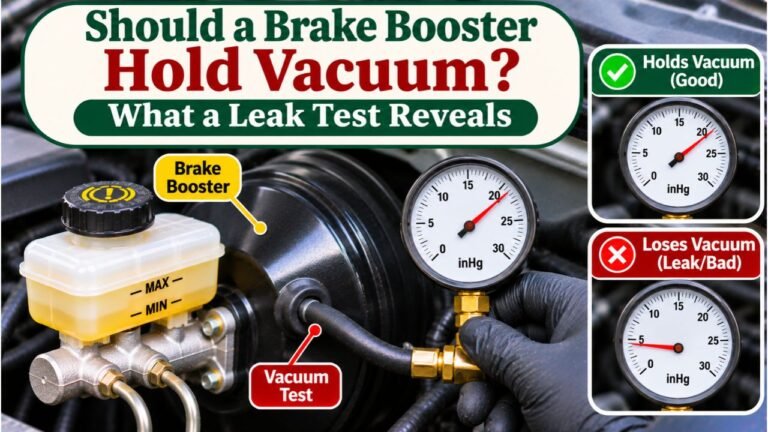
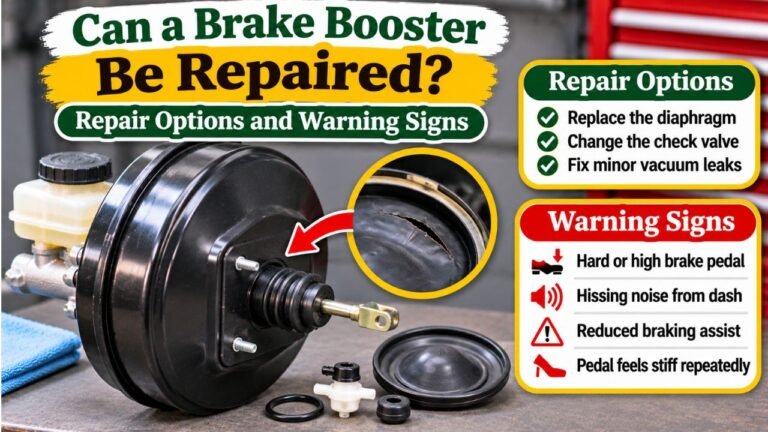
The loss can be especially noticeable during repeated stops, sudden braking, or downhill travel. Some failures produce a hissing sound or an engine-idle change caused by a vacuum leak. A damaged vacuum hose, check valve, or insufficient vacuum supply can mimic an internal booster fault.
Symptoms That Need Prompt Brake Inspection
- A brake pedal that suddenly feels unusually hard
- Much greater leg effort required to slow the vehicle
- Hissing near the pedal or firewall when braking
- A noticeable engine-idle change when the pedal is pressed, on some vacuum systems
- Brake-assist warnings on vehicles equipped with electronic monitoring
These symptoms are not exclusive to booster failure. A hydraulic restriction, mechanical binding, or other brake problem can also affect pedal feel. Have the vehicle diagnosed rather than buying a booster based only on one symptom.
If braking performance becomes abnormal while driving, reduce speed cautiously, increase your following distance, and stop in a safe location. Follow the vehicle’s emergency instructions and arrange towing. Do not use public-road driving to test whether greater leg force is enough.
How Can You Tell Whether Your Vehicle Has a Brake Booster?
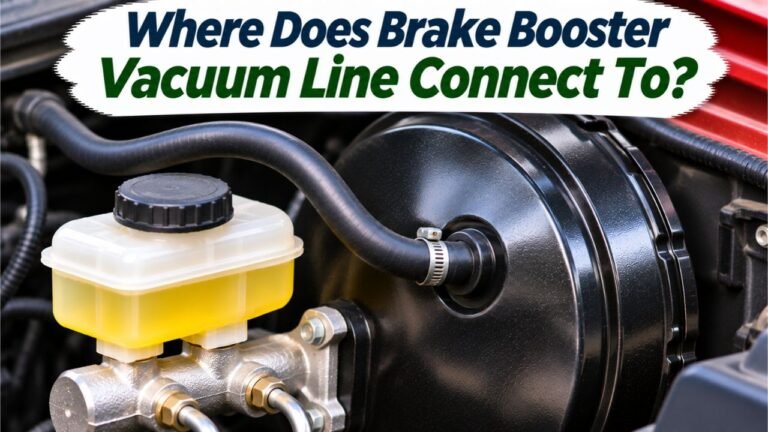
On many conventional gasoline vehicles, a vacuum booster appears as a large round housing mounted on the firewall behind the brake master cylinder. A vacuum hose and check valve may connect to it. The brake pedal acts on the assembly from inside the cabin.
A vehicle without that round canister is not necessarily a manual-brake vehicle. Hydraulic assist systems may have a different shape, and newer electronic or integrated braking units may combine components in unfamiliar housings.
Check the owner’s manual, service information, and original-equipment parts diagram for the specific model.
A technician can perform a stationary operational check suited to the system. For an older conventional vacuum booster, pedal feel may change after stored vacuum is depleted and the engine starts, but that familiar check is not valid for every modern brake system. Never disconnect vacuum lines or disable electronic assistance to experiment with braking performance.
Should You Add, Remove, or Replace a Brake Booster?
The appropriate decision depends on the vehicle’s original configuration and the problem you are trying to solve.
Adding Power Assistance to a Manual-Brake Classic
A properly engineered upgrade may reduce leg effort and improve everyday usability, especially in stop-and-go driving. Check available firewall space, pedal linkage geometry, master-cylinder compatibility, and vacuum supply before choosing a kit.
An engine with low or inconsistent intake vacuum may need a compatible vacuum pump or a different assist approach. Hydraulic assist can be an option on supported builds, but it introduces its own pump, plumbing, clearance, and reliability considerations. Use a system designed for the vehicle and verify local road-use requirements.
Removing a Booster for Engine-Bay Clearance
Removing the booster can free space for an engine, intake, or other custom components. But clearance alone is not a sufficient reason to convert to manual brakes.
A legitimate conversion may require changes to the pedal mounting point, pushrod retention, master cylinder, and hydraulic balance. The completed system must be evaluated for adequate braking performance and full piston return. Brake-system modifications are best designed and inspected by a qualified specialist.
Replacing a Failed Factory Booster
If the original booster is defective, restoring the factory assistance is generally the safest and simplest repair. Diagnosis should distinguish a failed booster from a cracked vacuum hose, defective check valve, failed pump, or other control problem. Replacing a good booster will not fix a damaged supply hose.
After repairs, confirm proper pedal operation, inspect surrounding components, and follow the manufacturer’s verification procedure. If hydraulic lines were opened, the brake system must also be bled correctly before returning the vehicle to service.
FAQs About Do You Need a Brake Booster
Can a Car Stop Without a Brake Booster?
Yes, if its manual braking system is correctly designed and functioning. A power-assisted car that loses its booster may still have some hydraulic braking, but the required pedal force can be much higher and safe stopping performance may be compromised.
Do Manual Disc Brakes Need a Vacuum Booster?
No. Disc brakes can work with a compatible manual master cylinder and pedal linkage. Their proper operation depends on the complete hydraulic design, not simply whether the wheels have discs or drums.
Is a Brake Booster the Same as a Master Cylinder?
No. The booster increases the driver’s effective input force, while the master cylinder converts mechanical force into hydraulic pressure. They often bolt together but serve different functions.
Can You Drive With a Brake Booster Vacuum Leak?
You should not continue driving with a suspected assist failure or abnormal braking. The leak may reduce assistance and, on some engines, affect idle quality. Have the vehicle inspected and towed if braking operation is uncertain.
Does a Bigger Brake Booster Always Mean Better Brakes?
No. A larger or stronger booster may reduce pedal effort, but it must be matched to the pedal geometry, master cylinder, and intended vehicle. Excessively sensitive pedal response is not an automatic improvement in control or stopping performance.
Choose Brake Assistance That Matches Your Vehicle
So, do you need a brake booster? Not if your vehicle has a properly engineered, serviceable manual-brake system. But when the manufacturer designed the car around power assistance, the booster or its equivalent is an intended part of the braking setup, not an optional comfort accessory to remove casually.
For a factory-equipped daily driver, repair failed assistance rather than trying to compensate with extra pedal force. For a classic or custom build, evaluate pedal ratio, master-cylinder sizing, hydraulic compatibility, and brake balance as one complete system.
The best choice is the arrangement that gives the vehicle reliable, controllable braking under the conditions in which it will actually be driven.