Does a Brake Booster Have Fluid in It? Leak Causes and Fixes
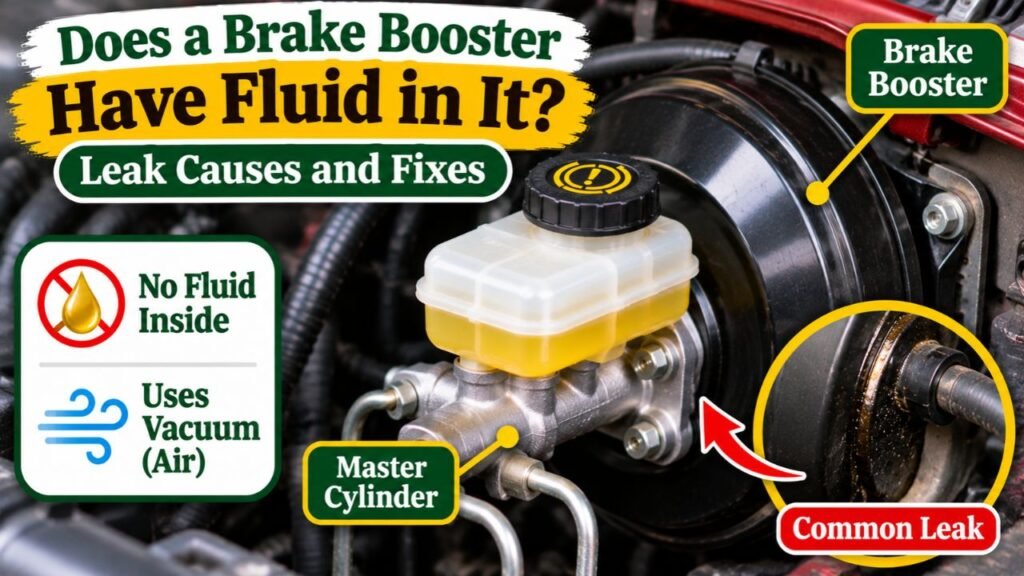
A conventional vacuum brake booster does not normally contain brake fluid. It uses a difference in air pressure to help you press the brake pedal. However, a hydraulic brake booster can contain pressurized power steering fluid, and brake fluid may enter a vacuum booster when the master cylinder leaks.
That distinction matters because the brake booster and brake master cylinder are mounted together on many vehicles. The brake fluid reservoir sits above the master cylinder, directly in front of the booster. A wet connection or disappearing fluid can make it seem as though the booster itself stores brake fluid, even though a vacuum unit is designed to work without it.
Finding fluid in the wrong place can signal a serious brake-system problem. Equally important, not every booster uses vacuum, and modern electrically assisted systems have additional variations. This guide explains what belongs inside each type of booster, how brake fluid can get into a vacuum housing, which symptoms deserve attention, how to inspect the system safely, and what a proper repair involves.
Does a Brake Booster Have Fluid in It? It Depends on the Design
The answer depends on the type of brake assist installed in the vehicle. In everyday conversation, people often call any brake-assist unit a brake booster, but the internal operation is not identical across designs.
| Booster Type | What Normally Powers It | Should Brake Fluid Be Inside the Booster? |
| Vacuum brake booster | Engine vacuum or a vacuum pump, acting against atmospheric pressure | No. Brake fluid inside usually indicates a fault. |
| Hydraulic Hydro-Boost unit | Pressurized power steering fluid or other specified hydraulic assist fluid | No brake fluid in the booster assist circuit; the specified hydraulic fluid normally flows through it. |
| Electromechanical brake booster | Electric motor and mechanical assistance | The assist mechanism generally does not use brake fluid, although the attached master cylinder does. |
| Integrated electrohydraulic brake unit | Electric pump, control valves, and hydraulic brake circuits | Brake fluid may be inside its hydraulic assembly by design; the exact layout varies. |
A conventional vacuum booster is common on many cars, while hydraulic systems appear in some trucks and other applications. Electrically assisted systems are increasingly found in vehicles with advanced brake controls. Check vehicle-specific service information to identify the design.
How a Vacuum Brake Booster Works Without Fluid
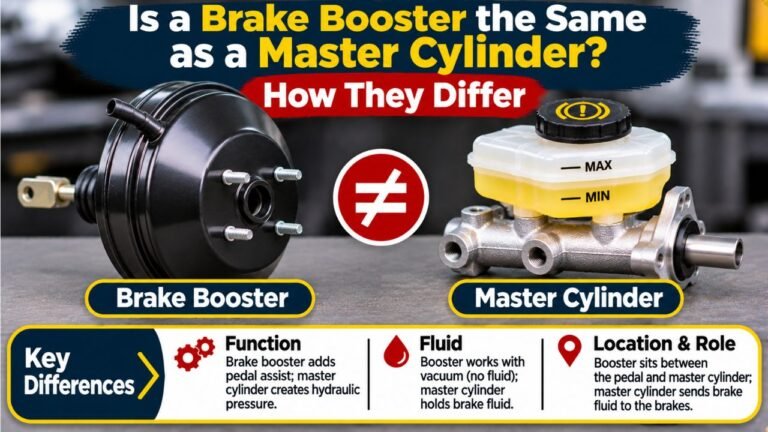
A vacuum booster typically looks like a large, round metal housing attached to the firewall behind the brake master cylinder. Its main purpose is to reduce the effort required at the brake pedal. It does not distribute brake fluid to the wheels or replace the master cylinder’s hydraulic function.
Vacuum, Air Pressure, and the Internal Diaphragm
Inside the housing, a flexible diaphragm or similar moving assembly separates air chambers. When the system is ready, vacuum is available on the appropriate sides of the diaphragm. Pressing the brake pedal changes the pressure in one chamber, allowing atmospheric pressure to help move the booster output toward the master cylinder.
The force is transmitted mechanically through a pushrod. The master cylinder then converts that movement into hydraulic pressure in the brake lines. According to Bosch Mobility’s explanation of vacuum brake booster operation, the pressure difference across the membrane supplies assistance to the driver’s pedal force.
The booster contains valves, seals, and a diaphragm, but brake fluid is not its working medium.
Why the Master Cylinder Sits Next to the Booster
The master cylinder must receive the booster’s output force, so the two components are often bolted together. The fluid reservoir and brake-line connections belong to the master cylinder. A booster vacuum hose, check valve, and associated vacuum supply belong to the assist system.
Fluid at that joint may originate at the rear of the master cylinder rather than the booster.
Why Brake Fluid Can Get Inside a Vacuum Booster
Brake fluid inside a vacuum booster is not normal. One possible route is a failure of the rear sealing area of the master cylinder, allowing fluid to escape toward the booster instead of remaining in the hydraulic cylinder and its reservoir.
Rear Master Cylinder Seal Leakage
The master cylinder contains pistons and seals that keep brake fluid where it belongs. If the relevant seals or sealing surfaces fail, fluid can escape from the back of the cylinder. Since the cylinder mounts directly against the booster, escaped fluid may run into the adjoining housing.
ADVICS Aftermarket’s brake-fluid leak troubleshooting guidance identifies damaged master-cylinder seals and booster input-seal or pushrod alignment issues among possible factors when brake fluid leaks from the rear of the master-cylinder bore. That is why the cylinder, mounting area, and related seals should be evaluated together.
Fluid may remain hidden inside the booster shell instead of forming a puddle.
Why the Reservoir Might Get Lower Without a Visible Puddle
If brake fluid enters the booster, the amount in the reservoir may gradually decrease. The underside of the car might stay dry because the fluid is being trapped at the master-cylinder-to-booster connection. It can sometimes reach a vacuum passage as well.
But a dropping reservoir level does not prove fluid is entering the booster. Worn brake pads can make the level fall as caliper pistons extend, while leaks at calipers, hoses, wheel cylinders, or lines can lose fluid elsewhere. The entire hydraulic system needs inspection.
Can the Fluid Damage the Brake Booster?
Yes. Brake fluid where it does not belong can affect internal materials and seals, depending on the booster design and how much fluid entered. A contaminated or damaged diaphragm can compromise vacuum assistance. Fluid accumulation also indicates that the hydraulic leak has not been repaired.
A technician must assess both components against manufacturer criteria. If contamination or damage cannot be corrected safely, the booster may need replacement.
How to Check Whether Brake Fluid Has Entered the Booster
A basic inspection can identify reasons to suspect an internal leak, but confirming fluid inside the housing may require separating the master cylinder from the booster. This requires appropriate service procedures.
Step 01: Identify the Booster and the Fluid Reservoir
With the engine off and vehicle securely parked, locate the brake fluid reservoir and the master cylinder beneath it. The large housing behind the master cylinder is often the vacuum booster. Check whether a vacuum hose or check valve is present.
Do not loosen hydraulic connections just to investigate.
Step 02: Check the Fluid Level and Visible Mounting Area
Read the reservoir’s MIN and MAX marks through the container, if visible. Then inspect around the reservoir grommets, brake-line connections, master-cylinder body, and the joint where the cylinder meets the booster. Investigate wetness or staining.
Avoid touching residue; brake fluid can damage paint. A dry flange does not rule out an internal leak.
Step 03: Observe Brake Pedal Behavior While Stationary
A conventional vacuum-assisted car often develops a firmer pedal after several presses with the engine off, as stored vacuum assistance is depleted. Holding steady pedal pressure while starting the engine can produce a small initial downward movement as assistance returns.
That movement is normally different from a pedal that continues sinking under steady pressure. Continued sinking suggests a hydraulic fault, but pedal feel cannot establish whether fluid has pooled inside the booster.
Step 04: Have the Hidden Area Inspected Properly
If the evidence points to the rear master-cylinder seal, a qualified technician can inspect the interface and any exposed booster cavity using the vehicle-specific procedure. Some designs permit inspection without opening brake lines; others do not.
The mechanic should determine the leak source, check for booster contamination, and verify whether the vacuum system remains sound. If lines are opened during the repair, the brake hydraulics must be bled correctly before the vehicle is used.
Does a Hydro-Boost Brake Booster Contain Fluid?
Yes, a Hydro-Boost-style hydraulic assist unit normally contains and circulates hydraulic fluid. However, that fluid is generally supplied by the power steering system, not by the brake fluid reservoir.
Power Steering Fluid Powers the Assist Unit
A hydraulic booster uses fluid pressure to move an assist piston and increase the force applied to the brake master cylinder. In many conventional Hydro-Boost systems, fluid flows from the power steering pump through the booster and onward through the steering system or return circuit.
The 2007 HUMMER H2 brake-assist service description explains that its hydraulic brake booster receives pressurized power steering fluid and uses that pressure to help move the master cylinder. That description applies to the specific system documented there, not to every vehicle carrying a hydraulic booster.
An accumulator may retain pressure after engine shutdown. Never disconnect fittings without the prescribed depressurization procedure.
Brake Fluid and Steering Fluid Stay Separate
The power steering or specified assist fluid operates the booster. Brake fluid stays in the master cylinder and the wheel-brake hydraulic circuit. The systems transfer force mechanically through the booster output, rather than mixing fluids.
Leaks may lower steering-fluid level or affect both steering and brake assist. Never pour DOT brake fluid into the power steering reservoir or pour power steering fluid into the brake fluid reservoir. Use only the fluid specified for each circuit.
What About Electric and Integrated Brake Boosters?
An electromechanical brake booster uses a motor-driven mechanism to provide assist without engine vacuum. Its attached master cylinder still contains brake fluid, but the motor and mechanical assist section are not normally filled with brake fluid.
An integrated electrohydraulic braking assembly is different. It may package an electric pressure generator, valves, hydraulic circuits, and control electronics into a compact module. In that design, brake fluid can be present in part of the assembly as intended, even when there is no traditional round vacuum booster.
For these systems, use model-specific service information rather than vacuum-booster tests.
Fluid-Leak Symptoms Versus Booster Assist Problems
Brake fluid leakage and loss of power assist can both change pedal feel. The symptoms overlap, but they often suggest different starting points for diagnosis.
| Symptom | Possible Area to Inspect |
| Brake fluid level keeps dropping | Hydraulic leaks, worn pads, or a possible master-cylinder leak into the booster |
| Wetness between master cylinder and booster | Rear master-cylinder seal area or connected components |
| Pedal gradually sinks under steady pressure | Master-cylinder bypass or another hydraulic leak |
| Pedal is unusually hard | Vacuum supply, check valve, booster, or other assist fault |
| Continuous hissing near the pedal | Possible vacuum leak at booster or related connections |
| Power steering fluid loss with reduced assist | Hydraulic booster, pressure hoses, steering pump, or related steering circuit |
Brief air sounds may be normal; persistent hissing can suggest a vacuum leak, not necessarily fluid inside.
A spongy pedal may indicate trapped air rather than booster failure. Diagnose the fault before replacing parts.
Can You Add Fluid Directly to a Brake Booster?
Do not add brake fluid to a vacuum booster. There is no normal brake-fluid fill port or fluid level to maintain inside it. Brake fluid belongs in the designated reservoir connected to the master cylinder, and only the manufacturer-specified grade should be used.
For a Hydro-Boost system, hydraulic fluid is maintained through its designated power steering or assist-system reservoir, not poured into an arbitrary opening on the booster. Some vehicles specify a particular power steering fluid or approved automatic transmission fluid, so fluid selection must follow the vehicle manual.
If the brake fluid reservoir is low, simply topping it off may conceal a leak. Check the likely cause and arrange repair, especially if the pedal has changed or the warning light has illuminated. Never use an unknown fluid to make the level appear normal.
What Repairs Are Needed if Fluid Is Found Inside the Booster?
First, locate the source. If brake fluid has escaped from the rear of the master cylinder, the master cylinder or its applicable sealing components may need replacement according to the manufacturer procedure. Inspect the booster for contamination, corrosion, damaged seals, and impaired operation.
The booster may also need replacement if contaminated or damaged. Fixing the actual leak prevents repeat failure.
After repairs, verify fluid type, bleeding, pedal response, and leak-free connections. Some vehicles require ABS-specific procedures.
Do not drive with a sinking pedal, confirmed hydraulic leak, or unreliable brake assist. The brakes may still respond after an assist failure, but stopping can require much more effort. Have the vehicle transported for diagnosis rather than testing it in traffic.
FAQs About Does a Brake Booster Have Fluid in It?
Is It Normal to Find Brake Fluid in a Vacuum Booster?
No. A vacuum booster is not designed to hold brake fluid. Fluid inside can indicate leakage from the nearby master cylinder and calls for inspection of both assemblies.
Can a Brake Booster Leak Without Losing Brake Fluid?
Yes. A vacuum booster may leak air through its diaphragm, housing, valve, or related hoses. Assistance may weaken without losing brake fluid.
Can a Bad Master Cylinder Fill a Brake Booster With Fluid?
It can. Depending on the failed seals and mounting design, fluid may escape from the rear of the master cylinder and collect inside the booster. Other failure modes do not cause this leak.
Is Hydro-Boost Fluid the Same as Brake Fluid?
No. A conventional Hydro-Boost unit generally uses specified power steering fluid for assistance, while the separate master cylinder uses the vehicle’s specified brake fluid. The two must not be mixed.
Can I Keep Driving if My Brake Booster Has Fluid in It?
No. Suspected brake fluid contamination indicates a problem that could affect braking or assist performance. Park the vehicle and arrange proper inspection rather than relying on an uncertain pedal.
What Fluid Inside a Brake Booster Really Means
So, does a brake booster have fluid in it? A conventional vacuum brake booster should not contain brake fluid because it operates through air-pressure differences. A hydraulic Hydro-Boost unit is different: it normally uses specified power steering or assist fluid to help the master cylinder, while the brake fluid remains in a separate circuit.
If you discover brake fluid near or inside a vacuum booster, look beyond the booster itself. The rear master-cylinder seal, mounting area, and rest of the brake system need attention, particularly if fluid is disappearing or pedal behavior has changed.
Identify the booster design, keep fluids separate, and repair any leak before driving.