Where Is Brake Master Cylinder Located? Under-Hood Locations
In most cars, the brake master cylinder is under the hood at the rear of the engine compartment, on the driver’s side of the firewall, directly in front of the brake booster. A brake fluid reservoir usually sits on top of the cylinder, making it the easiest part to identify.
For a typical left-hand-drive vehicle sold in the United States, stand in front of the car and look toward the back of the engine bay, near the area behind the steering wheel. You’ll often see a small translucent reservoir mounted on a metal hydraulic cylinder, with rigid brake lines extending from it. The reservoir may be more visible than the cylinder itself.
The location is not universal. Some vehicles have a remote fluid reservoir, an electronic brake actuator, or a master cylinder hidden behind covers. Older vehicles may even have one beneath the floor. This guide explains the usual position, how to recognize the assembly, the differences between common vehicle layouts, and what to check without disturbing the brake system.
Where Is Brake Master Cylinder Located in Most Cars?
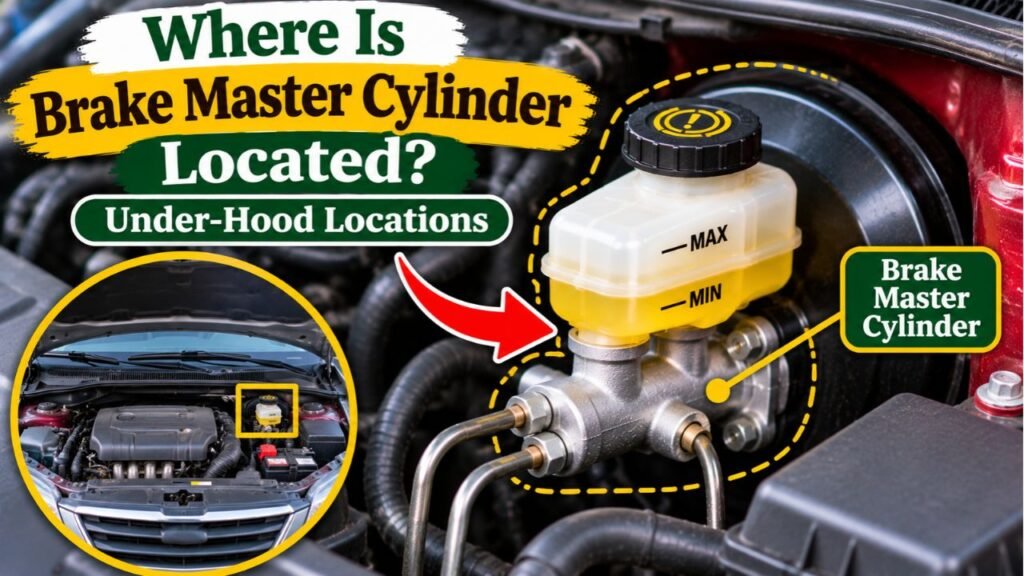
The standard position is high on the firewall, the partition separating the engine compartment from the passenger cabin. In a left-hand-drive car, it is usually on the driver’s side because the brake pedal and pushrod are in that area. This placement keeps the hydraulic cylinder close to the force coming from the pedal.
Look behind the engine rather than beside the front bumper or down by the wheels. The master cylinder commonly projects forward from a round brake booster mounted against the firewall. Its reservoir sits above it, and one or more rigid metal brake lines leave the cylinder and run toward other hydraulic components.
NAPA’s brake booster replacement guide describes this conventional arrangement: the booster sits between the master cylinder and firewall, with the fluid reservoir generally above the cylinder. That relationship is often more reliable for identifying the part than its color or size.
Standing in front of a left-hand-drive vehicle, the driver’s side is typically on your right, not your left. This simple change in perspective causes plenty of confusion when following instructions that say to look on the left side of the engine bay.
How to Find the Brake Master Cylinder Under the Hood
You usually need no tools to locate the assembly. Keep the vehicle parked on level ground, switch off the engine, apply the parking brake, and wait for hot engine components to cool. A flashlight can help where the firewall is crowded.
Step 01: Identify the Driver’s Side of the Firewall
Open the hood and look at the rear wall of the engine compartment, closest to the windshield. This is the firewall. On most US vehicles, the driver’s seat and brake pedal are on the vehicle’s left, so begin searching that side of the firewall.
Avoid confusing the firewall with a plastic windshield cowl. The master cylinder may sit below that cowl, but it is normally attached to a structural mounting area behind the engine rather than to the loose plastic trim.
Step 02: Look for the Brake Fluid Reservoir
Scan the upper rear portion of the engine bay for a small plastic container. It is commonly translucent white or pale yellow and has a dark cap. The cap may identify the required brake fluid, or display a brake symbol or fluid warning.
According to AutoZone’s brake fluid inspection guide, the reservoir is generally near the firewall and is often marked with visible fluid-level lines. Those marks help distinguish it from an unrelated fluid container. Do not assume every white reservoir belongs to the brakes.
Step 03: Follow the Reservoir Down to the Metal Cylinder
On a common design, the reservoir fits directly into the master cylinder through rubber seals. Look underneath it for a compact cast-metal body, usually aluminum or iron. Its shape may be cylindrical, rectangular, or partly obscured by hoses and wiring.
The container is the fluid supply; the metal part below contains the hydraulic pistons. Some reservoirs are connected by hoses and mounted elsewhere, so the part underneath a remote reservoir may not be the master cylinder.
Step 04: Find the Booster Behind the Cylinder
If the vehicle has a traditional vacuum brake booster, look for a large, round black housing between the cylinder and firewall. The booster is much wider than the metal master cylinder. A vacuum hose may attach to its housing.
The master cylinder is mounted to the front face of that booster, away from the cabin. Some trucks use hydraulic assist instead of a round vacuum booster, while electronically assisted braking systems may look entirely different. Do not reject a suspected master cylinder simply because there is no large black disk behind it.
Step 05: Confirm the Hydraulic Brake Line Connections
Look for small, rigid metal pipes attached to the cylinder’s outlet ports. They usually lead toward an ABS hydraulic unit, a distribution junction, or the vehicle’s brake circuits. The number and routing of lines depend on the design.
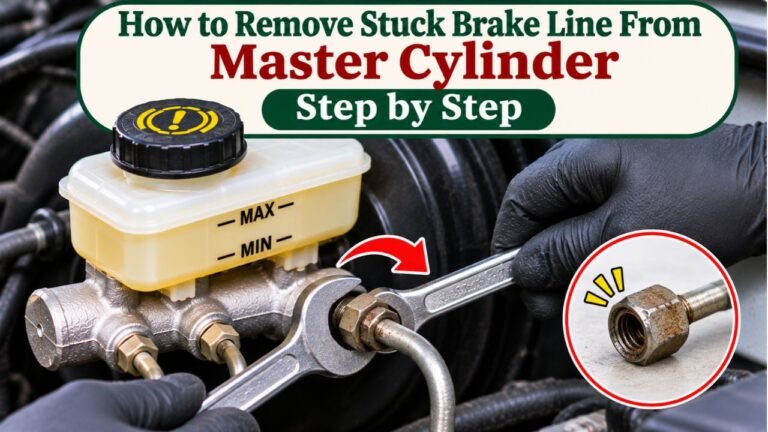
These hard lines are a strong identification clue, but do not bend them, pull on them, or loosen a fitting to confirm the part. An opened connection can leak brake fluid and introduce air into the system.
Step 06: Match What You Found to the Vehicle Manual
Compare the location with the owner’s manual’s brake fluid section or a model-specific repair diagram. This is especially useful when the reservoir is hidden, the vehicle has electronic braking, or several fluid tanks are close together.
For identification, stop once you have matched the reservoir, mounting position, and hydraulic connections. Removing covers, opening brake lines, or pressing on unfamiliar hydraulic parts is unnecessary for a simple location check.
What Does a Brake Master Cylinder Look Like?
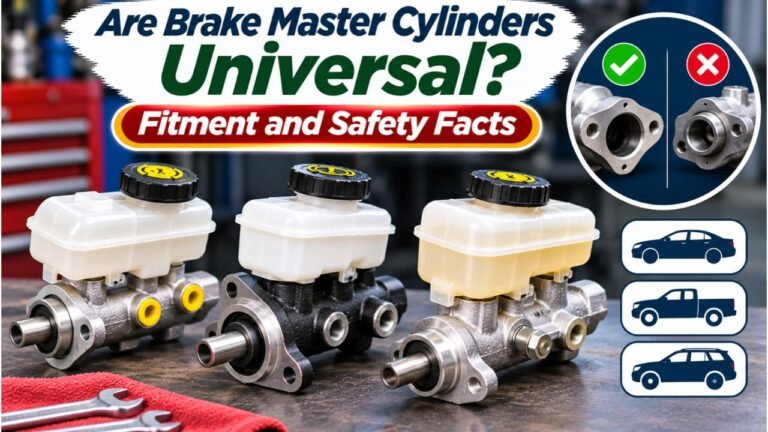
A brake master cylinder may be less obvious than its reservoir. Most modern passenger vehicles use a tandem master cylinder, with separate hydraulic circuits inside one body. From the outside, it appears as a short metal unit with mounting ears, fluid ports, and one or more brake line outlets.
Common visible features include:
- Brake fluid reservoir: A plastic tank above or near the cylinder, usually with MIN and MAX level markings.
- Reservoir cap: Often labeled with the specified brake fluid grade and a warning to keep contaminants out.
- Cylinder body: A metal housing beneath the reservoir where pedal force is converted into hydraulic pressure.
- Outlet fittings: Threaded connections where rigid metal brake lines attach.
- Mounting flange: The section that fastens the cylinder to its booster or support bracket.
- Level sensor connector: An electrical plug that may be fitted to the reservoir, not necessarily to the cylinder body.
The color is not a dependable guide. Replacement cylinders may have silver, dark, or painted finishes, and manufacturers use different reservoir shapes. Follow the physical connections instead of looking for one exact appearance.
Does the Brake Master Cylinder Location Change by Vehicle Type?
Yes. Firewall mounting is common, but vehicle layout and braking technology affect the position and appearance.
Left-Hand-Drive and Right-Hand-Drive Vehicles
In most conventional left-hand-drive cars, the master cylinder is near the left side of the firewall as viewed from the driver’s seat. Right-hand-drive models often place the pedal and cylinder on the opposite side. Some designs use linkages that allow a shared engine-bay arrangement across markets, so the actual location must be checked on the specific vehicle.
Cars and SUVs With Electronic Brake Assistance
Hybrid and electric vehicles may use an electric booster, integrated brake actuator, or remote reservoir. Their components can be hidden under engine-bay covers or near the windshield cowl. A familiar round vacuum booster may be absent even though the car still has a hydraulic braking circuit.
Electronic units can remain pressurized or activate their pumps under particular conditions. Follow model-specific safety instructions before servicing anything; simply identifying the reservoir does not mean the system is safe to open or disconnect.
Pickup Trucks and Large SUVs
Many pickups retain a firewall-mounted cylinder, but the power assist behind it can be a hydraulic booster rather than a vacuum booster. Additional hoses and steering-system connections make the area look different. The cylinder itself still has brake-fluid connections, which distinguish it from hydraulic steering components.
Older Cars, Vans, and Custom Vehicles
Some older vehicles mount the master cylinder beneath the floor, beneath an access plate, or along the chassis rather than high on the firewall. Haynes’ explanation of master cylinder systems specifically notes older cars, trucks, and vans with under-floor cylinders. Modified vehicles can also relocate the cylinder or fluid supply, so a universal under-hood search may fail.
Brake Master Cylinder vs. Brake Booster, ABS Module, and Clutch Master Cylinder
Several nearby components can be mistaken for the brake master cylinder. Their connections and jobs provide better clues than their names.
| Part | Typical Appearance and Location | Main Function |
| Brake master cylinder | Metal hydraulic body near the firewall or brake booster, with rigid brake lines | Creates brake-line pressure from pedal force |
| Brake booster | Large round housing behind the cylinder, or a hydraulic/electric assist unit | Reduces the pedal effort needed to brake |
| ABS hydraulic module | Metal block with several brake lines and an electrical control assembly | Regulates hydraulic pressure during ABS operation |
| Clutch master cylinder | Smaller cylinder near the clutch pedal on some manual-transmission vehicles | Operates the hydraulic clutch release system |
| Brake fluid reservoir | Plastic or metal fluid container attached to or connected with the cylinder | Stores the brake system’s fluid supply |
The ABS module is not the brake master cylinder, even though both have metal brake pipes connected to them. An ABS unit often has more pipe connections and a substantial electrical connector. A clutch master cylinder serves a different pedal and may have its own reservoir or share a fluid supply, depending on the vehicle.
Where to Look if You Cannot See the Brake Master Cylinder
A hidden cylinder does not necessarily mean a missing or unusual braking system. The reservoir may be accessible while the cylinder body sits under a panel or behind another component.
First, find the brake fluid reservoir using the owner’s manual. Follow its mounting or supply hoses visually, without disconnecting them. Check behind the engine, under the windshield cowl, and around the brake booster mounting area. A small inspection light may reveal a metal cylinder concealed below the tank.
If there is no obvious reservoir near the firewall, check for a remote tank mounted on a bracket. Do not confuse it with the clutch, coolant, power steering, or windshield washer reservoir. Labels, symbols, fluid specifications, and line routing help identify the correct one.
If your manual provides only a reservoir location, a vehicle-specific service diagram can identify the master cylinder itself. For an electronic brake system, avoid removing covers or loosening components just to investigate. Some procedures require a special depressurization or service mode.
What to Check After Locating the Master Cylinder
Finding the component also makes a basic visual inspection possible. You can do several checks without opening the hydraulic system.
Check the Brake Fluid Level
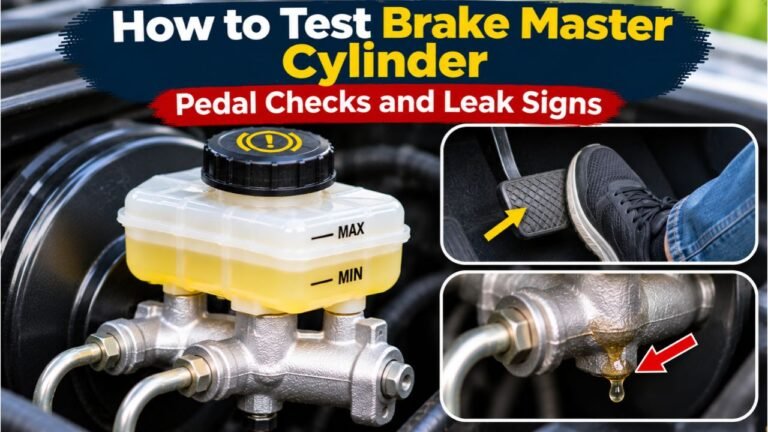
With the car on level ground, look for the MIN and MAX lines on a translucent reservoir. A level between the marks is usually expected, subject to the manual. Check fluid only when the vehicle is in the condition specified by its manufacturer.
A gradually lower level can occur as brake pads wear and caliper pistons extend, but an unexpectedly low or rapidly dropping level may indicate a leak. Do not treat repeated top-offs as a repair. Investigate the cause before driving if braking performance or fluid level is abnormal.
Look for Wetness Around the Master Cylinder
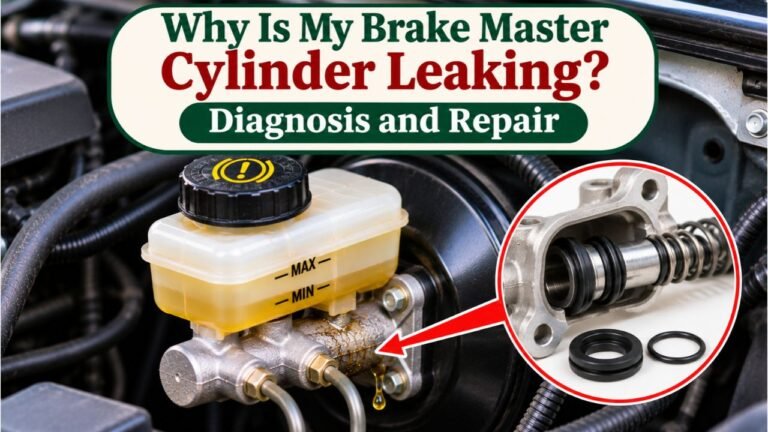
Inspect the outlet fittings, reservoir seals, and the area where the cylinder meets the booster. Fresh wet streaks or fluid collecting beneath the assembly deserve attention. A rear-seal leak may sometimes show up between the master cylinder and booster, though leakage can also remain concealed inside the booster.
Fluid from another component or a recent spill can mimic a leak. Identify the source carefully rather than assuming every damp spot proves the master cylinder has failed.
Pay Attention to Pedal Behavior
A pedal that slowly sinks under steady pressure, feels unusually spongy, or requires excessive travel can indicate a hydraulic problem. Possible causes include air, external leaks, worn internal seals, or faults elsewhere in the braking system.
The master cylinder’s location does not identify the cause by itself. If a brake warning light stays on, fluid is leaking, or the pedal behaves abnormally, do not drive the vehicle until the brakes have been properly inspected and repaired.
FAQs About Where Is Brake Master Cylinder Located
Is the Brake Master Cylinder Always on the Driver’s Side?
No. That is the usual arrangement on conventional US left-hand-drive vehicles, but right-hand-drive models, special linkages, older designs, and electronic brake systems may position it elsewhere. Your vehicle’s manual is the best guide.
Is the Master Cylinder Under the Brake Fluid Reservoir?
Usually. Most modern vehicles mount the reservoir directly above the master cylinder, with seals connecting them. If the reservoir is remote, it may connect to the cylinder through hoses instead.
Can You See the Brake Master Cylinder Without Removing Parts?
Often, yes. Opening the hood may reveal the reservoir, cylinder body, and brake lines. On tightly packed or electronically assisted layouts, the body may be partly concealed; a service diagram is safer than unnecessary disassembly.
Is the Brake Master Cylinder Inside the Brake Booster?
No, not in a conventional system. The master cylinder bolts to the booster, which sits behind it near the firewall. Some integrated electronic brake units combine several functions within one assembly, so their construction differs.
Is the Brake Master Cylinder the Same as the ABS Pump?
No. The master cylinder generates hydraulic pressure when the brake pedal is applied, while the ABS hydraulic unit adjusts pressure to help prevent wheel lockup. They are connected by brake lines but perform different jobs.
Finding the Brake Master Cylinder With Confidence
If you’re asking where is brake master cylinder located, begin at the rear of the engine bay near the driver’s-side firewall. On a conventional vehicle, the brake fluid reservoir, metal hydraulic body, and brake booster form a recognizable assembly. The rigid brake lines help confirm you’ve found the correct component.
Different vehicles can hide or relocate parts of that system, so match the assembly to the owner’s manual before touching it. A careful visual check is usually enough to identify the master cylinder; any leak, abnormal pedal feel, or repair involving hydraulic lines calls for proper diagnosis and a vehicle-specific service procedure.