Why Is My Brake Master Cylinder Leaking? Diagnosis and Repair
Your brake master cylinder is usually leaking because of a worn piston seal, damaged reservoir seal, or loose brake-line connection. A cracked housing is another possible cause. Fluid can also escape through the rear seal into the brake booster, where the leak may remain hidden. Any confirmed brake fluid leak needs prompt repair because it can reduce hydraulic pressure and braking performance.
The location of the fluid matters more than the size of the stain. Wetness beneath the reservoir suggests a different repair from fluid collecting where the master cylinder meets the brake booster. A sinking brake pedal may signal an internal hydraulic fault even when the outside of the assembly looks dry.
Even a small leak deserves attention because fluid loss can worsen without warning during repeated braking. The sections below explain the likely causes, how to recognize leak patterns, which checks are safe while parked, how repairs are performed, and when the vehicle must be towed instead of driven.
Why Is My Brake Master Cylinder Leaking? Main Failure Points
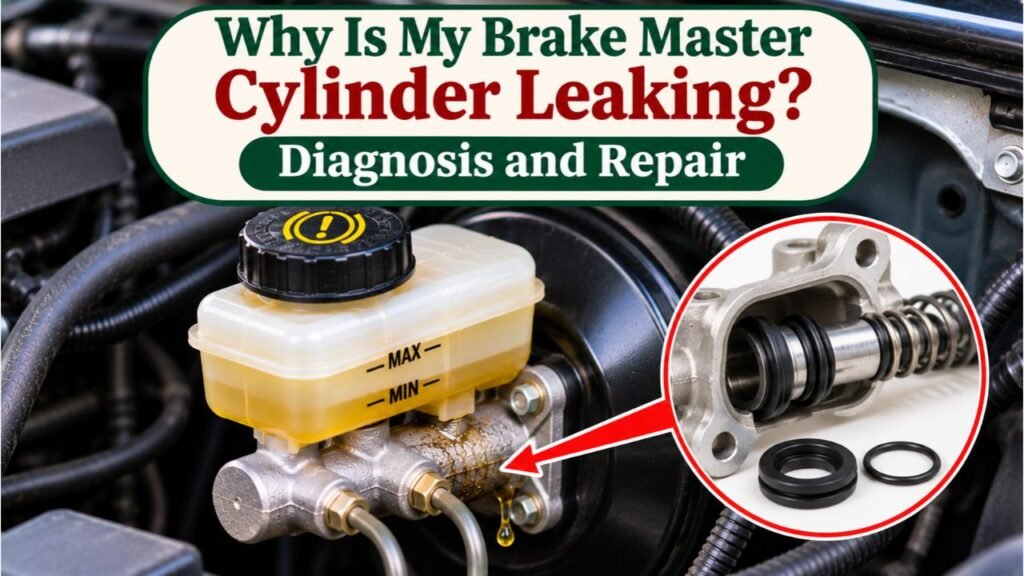
The master cylinder uses pistons and seals to pressurize the brake circuits. Leaks develop where a seal, connection, or housing fails.
Worn Rear Piston Seal Near the Brake Booster
A failed rear piston seal can allow brake fluid to escape from the back of the cylinder. On vehicles with a vacuum brake booster, the fluid may collect inside the booster rather than drip onto the ground. The reservoir level can fall without an obvious puddle.
Wetness at the master cylinder-to-booster joint is a clue, but spilled fluid or runoff can look similar. A technician may need to separate the parts and inspect inside the booster.
Brake manufacturer ADVICS’ guide to identifying and repairing brake fluid leaks identifies damaged seals and brake-booster pushrod misalignment as possible causes of leakage at the rear of the master cylinder.
Leaking Reservoir Grommets or a Cracked Reservoir
Many vehicles have a plastic brake fluid reservoir fitted into the metal master cylinder with rubber grommets. Those seals can harden, shrink, split, or become damaged during removal and installation. Fluid then seeps around the reservoir’s mounting points and runs down the outside of the cylinder.
A cracked reservoir can also drip near a seam or fitting. Ordinary glue is not a reliable repair for brake-fluid-contacting plastic.
If the master cylinder itself is sound, the correct replacement grommets or reservoir may solve the problem. The availability and approved repair depend on the vehicle’s design.
Loose Brake-Line Fittings or Damaged Flare Seats
Metal brake lines attach to the master cylinder through threaded flare fittings. A loose connection, damaged flare, cross-threaded fitting, or corroded sealing surface can let fluid escape, particularly when the brakes are applied.
Look for wetness centered around a line outlet rather than beneath the reservoir. Brake-line connections seal at the metal flare, not with thread tape. Overtightening a damaged fitting can deform the flare or port.
A qualified repair involves checking the fitting, line end, port condition, and vehicle-specific tightening specification. A cracked line or damaged flare generally requires proper line repair or replacement.
Corrosion, Bore Damage, and Contaminated Brake Fluid
Inside the cylinder, rubber cups travel against a carefully finished bore. Wear, scoring, corrosion, or damaged seal lips can interfere with the hydraulic seal. Contamination can accelerate deterioration, while moisture in conventional glycol-based brake fluid can contribute to corrosion over time.
A worn seal may allow internal bypass without visible leakage. Dark fluid alone cannot confirm cylinder failure.
Using an incompatible fluid or introducing petroleum products is especially concerning because hydraulic seals may swell or deteriorate. The resulting damage can extend beyond the master cylinder.
Misaligned Pushrod or Incorrect Installation
The brake booster pushes on the master cylinder piston through a pushrod. If its position or alignment is wrong, the piston may receive an unintended side load or fail to return correctly. That can contribute to rear-seal wear, leakage, or poor brake operation.
Check alignment when leakage begins after booster or cylinder replacement. Pushrod clearance is vehicle-specific; incorrect adjustment can create brake drag or insufficient braking.
Where Is the Brake Master Cylinder Leaking From?
Fluid can travel before becoming visible, so the wet spot is a clue, not a diagnosis.
| Where the Fluid Appears | Possible Cause | What Needs Checking |
| Under the plastic reservoir | Worn grommet or cracked reservoir | Reservoir seating and plastic condition |
| Around a brake-line outlet | Loose fitting or damaged flare | Line end, fitting, and master cylinder port |
| Between master cylinder and booster | Rear piston seal or fluid running from above | Rear seal and booster interior |
| Around the cylinder body | Housing damage or fluid from a higher point | Cleaned surface and original leak path |
| Nowhere visible, but the level drops | Hidden booster leak or another hydraulic leak | Entire brake system, including wheel ends |
How to Inspect the Leak Safely While Parked
A parked visual inspection may help identify the source but cannot establish that driving is safe.
- Park on level ground, switch off the engine, and secure the vehicle. Do not drive it to reproduce a suspected hydraulic leak.
- Check the reservoir through its translucent wall. Compare the fluid level with the MIN and MAX markings without opening the cap unnecessarily.
- Use a flashlight to examine the reservoir, its mounting seals, the metal cylinder, and brake-line connections. Look for a fresh wet trail, not just old dirt.
- Inspect the master cylinder-to-booster joint. Wetness there can suggest a rear-seal leak, but confirmation may require professional disassembly.
- Look for other brake-system leaks. Damp brake hoses, rusted lines, calipers, or rear wheel cylinders may explain fluid loss even if the master cylinder is dry.
Avoid loosening hydraulic fittings, removing the master cylinder, or repeatedly pumping a questionable brake system merely to pinpoint a leak. If brake fluid contacts paint, follow the vehicle’s cleaning guidance promptly; it can damage finishes.
External Leakage Versus Internal Seal Bypass
An external leak loses fluid from the hydraulic system. The reservoir may drop, wetness may appear, and air can enter the system. An internal bypass occurs when a worn piston seal allows fluid to move past it inside the master cylinder. Hydraulic pressure falls even though fluid may remain in the reservoir.
Both faults can cause a pedal that slowly sinks under steady pressure. That symptom can also result from a leak elsewhere, so it isn’t a stand-alone master cylinder test. UnderhoodService’s master cylinder inspection guide explains this distinction and describes how a leaking rear seal can allow fluid to enter the vacuum booster.
Warning Signs That a Master Cylinder Leak Is Affecting Your Brakes
A leak may be visible before pedal feel changes. On other vehicles, brake performance changes first because the leak is hidden or pressure is bypassing a worn seal.
Falling Brake Fluid Level or a Red Brake Warning Light
If the reservoir keeps losing fluid, investigate the entire hydraulic system. The red BRAKE warning lamp may illuminate when the reservoir falls below its warning threshold or when another brake-system fault is detected. An ABS light can have a different cause, so don’t assume all warning lights identify a master cylinder leak.
A modest, gradual fluid-level change can occur as disc brake pads wear. A sudden drop, a level below minimum, or repeated loss after topping off is not normal pad wear and needs immediate diagnosis.
A Soft, Low, or Slowly Sinking Brake Pedal
Air in a leaking hydraulic circuit can make the brake pedal feel spongy. Significant fluid loss may increase travel before the brakes respond. Internal piston-seal bypass can produce a pedal that slowly moves downward while steady pressure is applied.
These sensations overlap with faults in brake hoses, calipers, ABS hydraulic components, and other parts. The exact cause cannot be confirmed by pedal feel alone. An unusually low or sinking brake pedal is a reason to stop using the vehicle until the problem is diagnosed.
Longer Stops or Fluid Around the Booster
Reduced hydraulic pressure can affect braking force and stopping distance. A vehicle may also pull to one side if one wheel brake has a separate problem or is contaminated with fluid. Neither symptom should be dismissed just because the brakes still function during a gentle stop.
If the fluid is leaking into a vacuum booster, the outside of the engine bay may remain relatively clean. The booster itself may require replacement if its internal components are contaminated or damaged. A technician must assess that condition rather than assuming a new master cylinder alone will solve everything.
What Should You Do When Your Brake Master Cylinder Is Leaking?
Do not continue normal driving with a confirmed or strongly suspected brake fluid leak. Hydraulic pressure can deteriorate without much warning. Arrange towing and a brake-system inspection, especially when the pedal is soft, the fluid level is low, or the red brake warning light is on.
If a braking problem develops while moving, reduce speed carefully, leave extra space, and pull over where it is safe. Use the vehicle’s emergency guidance rather than relying on repeated hard braking. Once stopped, arrange assistance instead of attempting to drive to a shop.
Match the Repair to the Actual Leak Source
The correct repair depends on what failed:
- Rear seal, damaged bore, or internal piston seals: A compatible replacement master cylinder is generally the dependable repair. Rebuilding is appropriate only where the manufacturer supports it and the bore is serviceable.
- Reservoir grommets: Replace them with parts approved for the specific assembly, provided the reservoir and master cylinder are undamaged.
- Cracked plastic reservoir: Replace the reservoir or complete specified assembly rather than using a makeshift sealant.
- Brake-line flare or outlet damage: Repair or replace the defective connection and verify sealing using the correct service procedure.
- Misaligned booster pushrod: Correct the installation fault and inspect the master cylinder for resulting damage before returning it to service.
If fluid reached the booster, inspect it for damage rather than replacing only the cylinder.
Why Bleeding and Brake Fluid Selection Matter After Repair
Opening a brake line or replacing a master cylinder can introduce air into the hydraulic system. The replacement unit often requires bench bleeding as specified, followed by the vehicle’s correct system-bleeding procedure. Some ABS systems require a scan tool to operate hydraulic components during bleeding.
Use only the brake fluid specification required by the vehicle manufacturer. DOT 3, DOT 4, DOT 5, and DOT 5.1 are not interchangeable in every vehicle; in particular, silicone-based DOT 5 must not be substituted for glycol-based fluids without explicit manufacturer approval. Keep fluid containers sealed and prevent dirt, oil, or water from entering the reservoir.
AutoZone’s master-cylinder bleeding guide explains why trapped air must be removed after hydraulic service and how it can affect pedal feel and stopping performance.
After repair, a qualified technician should check for leaks under the prescribed conditions, verify proper pedal operation, confirm warning lights are resolved, and follow manufacturer procedures before the vehicle returns to the road.
Why Does a New Brake Master Cylinder Start Leaking?
A new cylinder may leak because of installation, not a defective part. Identify the leak at the fitting, reservoir, or booster joint.
Common possibilities include an improperly seated reservoir grommet, a damaged brake-line flare, a cross-threaded fitting, or a mounting surface that was not cleaned. Incorrect part selection or pushrod alignment can also create sealing problems. A component damaged during shipping or handling is another possibility, although it should not be assumed without inspection.
Check fit and installation against vehicle-specific service information before replacing the part again.
Can You Prevent Master Cylinder Leaks?
Not every age-related seal failure is preventable, but clean fluid and early inspection help.
Follow the manufacturer’s brake fluid replacement schedule and use the specified fluid type. Have the hydraulic system inspected when pads are serviced, particularly around the reservoir base, brake-line outlets, flexible hoses, and the master cylinder-to-booster connection. A reservoir that repeatedly needs fluid should never be treated as routine maintenance.
Keep the reservoir cap closed except during proper servicing, and never add power steering fluid, engine oil, or an unidentified liquid. If contamination is suspected, seek professional evaluation because changing only the reservoir contents may not remove fluid already distributed throughout the system.
Conclusion
If you’re asking why is my brake master cylinder leaking, the answer usually starts with failed seals, leaking reservoir connections, damaged brake-line fittings, or improper pushrod alignment. Fluid location and pedal feel provide clues, not a final diagnosis.
A hidden rear-seal leak can send fluid into the brake booster, while an internal bypass can produce a sinking pedal without obvious fluid loss. Repair the confirmed fault, inspect affected components, and bleed the system correctly. Until the cause is fixed and safe braking is verified, towing is the safer choice.
FAQs About Why Is My Brake Master Cylinder Leaking
Can a Master Cylinder Leak Without Leaving a Puddle?
Yes. Fluid may escape through the rear seal into the brake booster, where it is not visible on the ground. An internal seal can also bypass pressure without losing fluid externally. A falling fluid level and a sinking pedal suggest different problems that need diagnosis.
Can I Just Add Brake Fluid to Stop the Problem?
No. Topping up the reservoir does not repair a failed seal, cracked reservoir, or leaking line fitting. The leak can continue and braking may worsen. Have the source found and repaired before driving.
Does a Leaking Master Cylinder Always Need Replacement?
Not always. Some vehicles allow a damaged reservoir or its grommets to be replaced separately. If the master cylinder’s rear seal, piston seals, or bore have failed, complete cylinder replacement is commonly the more reliable choice.
Can a Brake Booster Cause a Master Cylinder Leak?
A misaligned booster pushrod or an installation problem can contribute to rear-seal damage. However, the booster usually does not create brake fluid pressure. The master cylinder and booster should both be inspected when fluid appears at their connection.
Will Bleeding the Brakes Fix a Leaking Master Cylinder?
No. Bleeding removes air from the hydraulic system; it does not restore damaged rubber seals or repair cracked metal and plastic. Bleeding is often necessary after the defective component has been repaired or replaced.