Are Brake Pads and Rotors the Same Thing? Key Differences Explained
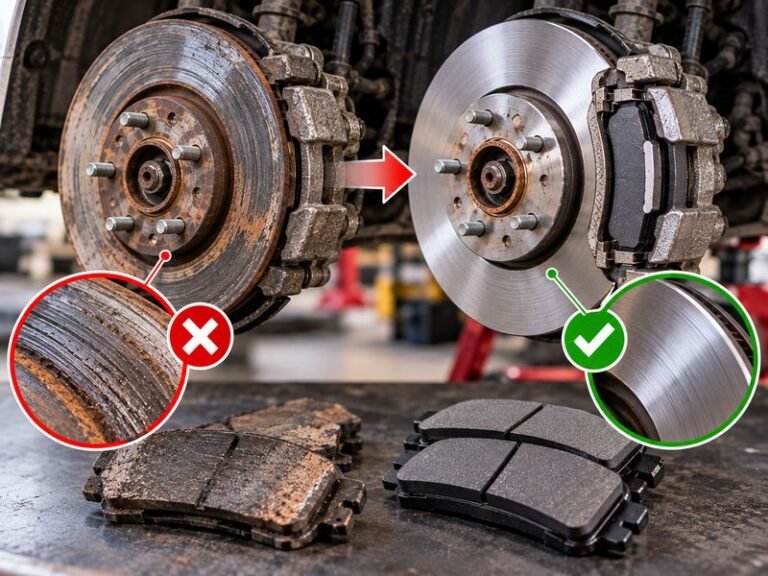
If you are learning about your vehicle’s braking system, you may wonder, are brake pads and rotors the same thing? The simple answer is no. Brake pads and brake rotors are two different components, although they work directly together every time you press the brake pedal.
Brake pads are friction materials that sit inside the brake caliper. When you press the brake pedal, the caliper pushes the pads against the brake rotor. The rotor is the round metal disc attached to the wheel hub. Friction between the pads and rotor slows the wheel and eventually stops the vehicle.
Because these parts constantly rub against each other during braking, both eventually wear out. However, brake pads normally wear faster and usually need replacement more frequently than rotors.
Understanding the difference between brake pads and rotors can help you recognize brake problems earlier, avoid unnecessary repairs, and maintain safe braking performance.
What Are Brake Pads?
Brake pads are relatively small components located inside the brake caliper. Their primary purpose is to create friction against the brake rotor.
When you push the brake pedal, hydraulic pressure travels through the braking system and activates the caliper. The caliper then squeezes the brake pads against both sides of the rotor.
This friction converts the vehicle’s motion into heat, slowing the wheel.
Most brake pads consist of a steel backing plate with friction material attached to it. The exact material varies depending on the type of brake pad.
Common brake pad types include:
- Ceramic brake pads
- Semi-metallic brake pads
- Organic brake pads
- Low-metallic brake pads
Each type offers a different balance of braking performance, noise, dust production, durability, and heat resistance.
Brake pads are considered normal wear items. Every time you stop your vehicle, a tiny amount of friction material wears away.
Eventually, the pads become too thin and must be replaced.
What Are Brake Rotors?
Brake rotors, also known as brake discs, are large circular metal discs mounted to the wheel hubs.
If you look through the openings of many alloy wheels, you can usually see the rotor behind the wheel.
When the brake caliper squeezes the pads against the rotor, friction slows the rotation of the rotor. Because the rotor is connected to the wheel hub, slowing the rotor also slows the wheel.
Rotors are normally made from cast iron, although some high-performance braking systems use different materials.
Several rotor designs are available, including:
Solid Rotors
Solid rotors are simple metal discs commonly found on lighter vehicles or rear braking systems.
Vented Rotors
Vented rotors contain internal passages that improve airflow and heat dissipation.
They are extremely common on front brakes because the front braking system typically handles a large portion of the vehicle’s stopping force.
Slotted Rotors
Slotted rotors have grooves machined into their surfaces. These grooves may help remove brake dust, gases, water, and debris from the contact area.
Drilled Rotors
Drilled rotors contain holes through the disc to improve cooling and provide a sporty appearance.
Drilled and Slotted Rotors
These combine both features and are often marketed for performance-oriented applications.
For normal daily driving, however, a good-quality standard or vented rotor is often more than sufficient.
Are Brake Pads and Rotors the Same Thing?
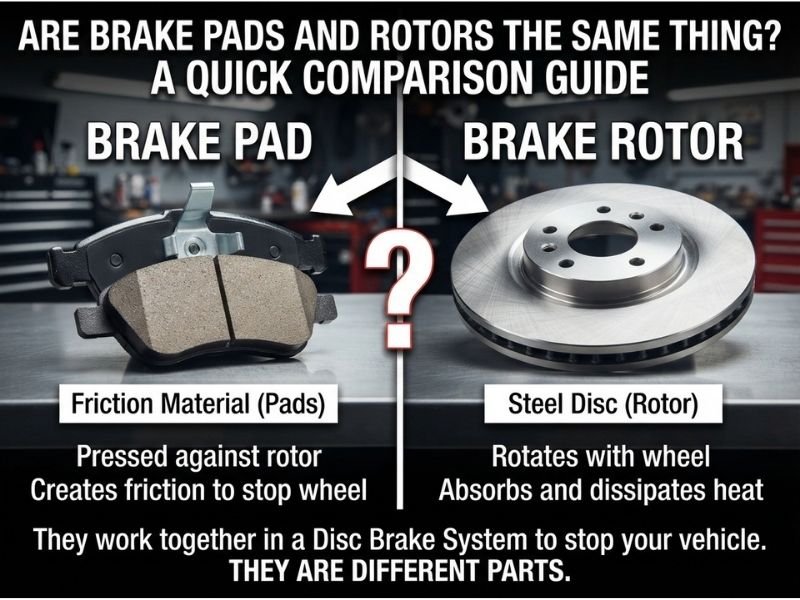
No. Brake pads and rotors are completely different components of a disc brake system.
The easiest way to understand the difference is to think about their roles.
The rotor rotates with the wheel, while the brake pads remain inside the caliper and squeeze against the rotor.
Here is a simple comparison:
| Feature | Brake Pads | Brake Rotors |
| Main purpose | Create friction | Provide braking surface |
| Location | Inside brake caliper | Attached to wheel hub |
| Movement | Mostly stationary | Rotates with wheel |
| Material | Friction compound with backing plate | Primarily metal |
| Wear rate | Usually faster | Usually slower |
| Shape | Small rectangular or curved pad | Large circular disc |
| Replacement | Usually more frequent | Usually less frequent |
Although they are different, pads and rotors depend heavily on each other.
A good brake pad cannot perform properly against a badly damaged rotor, and a new rotor may quickly develop problems when used with severely worn or defective brake pads.
How Do Brake Pads and Rotors Work Together?
The braking process happens extremely quickly.
When you press the brake pedal:
- The brake master cylinder creates hydraulic pressure.
- Brake fluid transfers that pressure through the brake lines.
- The brake caliper responds to the hydraulic pressure.
- Caliper pistons push the brake pads inward.
- The pads clamp against both sides of the spinning rotor.
- Friction slows the rotor.
- The wheel slows because it is connected to the rotor and hub.
- The vehicle slows or stops.
A significant amount of heat is produced during this process.
That is one reason brake components are designed from materials capable of tolerating high temperatures.
Hard braking, towing, mountain driving, racing, or repeatedly braking from high speeds can generate considerably more heat than ordinary city driving.
Do Brake Pads Wear Out Before Rotors?
In many vehicles, yes.
Brake pads are specifically designed to wear gradually. The friction material becomes thinner as you use the brakes.
Rotors also wear, but they typically lose material more slowly.
How long either component lasts depends on several factors, including:
- Vehicle weight
- Driving habits
- Brake pad material
- Rotor quality
- Highway versus city driving
- Towing frequency
- Mountain driving
- Stop-and-go traffic
- Environmental conditions
- Brake system condition
A driver who regularly brakes aggressively may wear through pads and rotors significantly faster than someone who drives smoothly on open highways.
Therefore, mileage alone should not determine whether your brakes need replacement.
Actual inspection is more reliable.
Signs Your Brake Pads May Be Worn
Worn brake pads can create several warning signs.
Squealing or Squeaking
Many brake pads contain wear indicators designed to create a high-pitched noise when the friction material becomes thin.
Occasional brake squeaking does not always mean the pads are worn. Moisture, dust, temperature, and pad material can also cause temporary noise.
Persistent squealing deserves inspection.
Grinding Noise
Grinding can indicate that the friction material has worn away, allowing metal components to contact the rotor.
Continuing to drive this way can rapidly damage the rotor and reduce braking performance.
Longer Stopping Distance
Severely worn or overheated brake components may reduce stopping effectiveness.
A noticeable change in braking performance should be inspected promptly.
Brake Warning Indicator
Some modern vehicles use electronic brake pad wear sensors that trigger a dashboard warning when the pads approach their replacement limit.
Thin Brake Pads
A technician can physically inspect the remaining friction material and determine whether the pads are still serviceable.
Signs Your Brake Rotors May Be Bad
Rotors can experience different problems than brake pads.
Steering Wheel Vibration While Braking
A vibration felt through the steering wheel during braking may indicate uneven rotor thickness, surface variation, or another suspension or brake problem.
It should be properly diagnosed rather than assuming the rotor is automatically responsible.
Brake Pedal Pulsation
If the pedal pulses while braking, uneven rotor surfaces may be involved.
However, other braking or ABS-related conditions can produce similar sensations.
Deep Grooves
Some light surface marks are normal.
Deep grooves, scoring, cracks, or severe surface damage may indicate that the rotor needs replacement.
Blue or Dark Discoloration
Severe overheating can change the appearance of a rotor and may affect its braking characteristics.
Excessive Rotor Wear
Manufacturers specify a minimum allowable rotor thickness.
A rotor below its minimum thickness must be replaced even if it appears reasonably smooth.
Can You Replace Brake Pads Without Replacing Rotors?
Yes, sometimes.
Brake pads do not automatically require new rotors every time they are replaced.
If the existing rotors are:
- Above minimum thickness
- Structurally sound
- Free from severe scoring
- Free from cracking
- Not causing excessive pulsation
- Wearing evenly
they may remain usable depending on the vehicle manufacturer’s service recommendations and the technician’s inspection.
However, installing new pads on badly worn rotors can create poor contact between the surfaces and potentially reduce braking quality.
That is why rotor condition should be inspected whenever brake pads are replaced.
Can You Replace Rotors Without Replacing Brake Pads?
Technically it may be possible in some situations, but replacing the brake pads when installing new rotors is often a better service approach.
Old pads develop wear patterns that match the previous rotor surfaces.
Installing those worn pads against perfectly new rotor surfaces may prevent ideal bedding and contact.
If the pads are nearly new and in excellent condition, a qualified technician may determine that they can be reused. But when the pads already have significant mileage or uneven wear, replacing them with the rotors is usually more sensible.
Should Brake Pads and Rotors Be Replaced Together?
They do not always need replacement at exactly the same time.
Brake pads typically require more frequent service.
For example, one vehicle may go through more than one set of pads before its rotors reach their wear limit. Another vehicle could require pads and rotors together because of aggressive driving, corrosion, overheating, or previous brake damage.
Instead of automatically replacing both, the braking system should be inspected for:
- Pad thickness
- Rotor thickness
- Rotor surface condition
- Uneven wear
- Heat damage
- Brake fluid leaks
- Caliper operation
Replacing components based on their actual condition can prevent both unnecessary spending and unsafe component reuse.
Do You Need to Replace Brake Pads in Pairs?
Brake pads should generally be replaced on both sides of the same axle.
For example, if the front-left pads require replacement, the front-right pads should normally be replaced at the same time.
The same principle applies to rear brakes.
Installing fresh pads on only one side can create differences in friction, wear, and braking behavior.
Brake rotors are also commonly replaced in axle pairs when replacement is necessary.
This helps maintain balanced braking characteristics between the left and right wheels.
Why Do Brake Pads Wear Unevenly?
A large difference in pad wear from one wheel to another may indicate another problem.
Possible causes include:
- Sticking brake caliper
- Seized caliper slide pins
- Corroded hardware
- Restricted brake hose
- Incorrect installation
- Damaged caliper piston
- Lack of lubrication at appropriate contact points
Simply installing new pads without correcting the underlying issue may cause the new pads to wear unevenly again.
Can Worn Brake Pads Damage Rotors?
Yes.
If brake pads wear beyond their usable friction material, the metal backing plate may contact the rotor.
Metal-to-metal contact can quickly create:
- Deep rotor grooves
- Excessive heat
- Scoring
- Reduced braking efficiency
- Increased stopping distance
- Grinding sounds
A relatively simple brake-pad replacement can therefore become a more expensive pad-and-rotor repair when worn pads are ignored for too long.
Regular inspection helps prevent this situation.
What Happens If Brake Rotors Are Bad?
A damaged or severely worn rotor can negatively affect how well the pads contact the braking surface.
Possible results include:
- Brake vibration
- Pedal pulsation
- Uneven pad wear
- Reduced braking consistency
- Excessive noise
- Overheating
- Poor braking feel
Rotors must also remain thick enough to safely absorb and dissipate braking heat.
Manufacturers specify a minimum thickness for this reason.
A rotor should not continue being used once it falls below its specified service limit.
Brake Pads vs. Rotors: Which Is More Important?
Neither component is more important because they operate as part of the same braking system.
High-quality pads cannot provide their intended braking performance without a suitable rotor surface.
Similarly, premium rotors cannot compensate for badly worn, contaminated, or inappropriate brake pads.
Effective braking depends on the complete system, including:
- Brake pads
- Brake rotors
- Brake calipers
- Brake fluid
- Master cylinder
- Brake hoses and lines
- ABS components
- Tires
Tires are especially important because the braking system can only slow the wheels effectively if the tires maintain traction with the road.
How Often Should Brake Pads and Rotors Be Replaced?
There is no universal replacement interval that applies to every vehicle.
Brake pads may last tens of thousands of miles, but actual lifespan varies considerably.
Rotors may last longer than one set of pads, although they can also require earlier replacement because of:
- Excessive wear
- Severe corrosion
- Heat damage
- Cracking
- Scoring
- Thickness variation
- Previous metal-to-metal braking
Instead of replacing brakes based only on mileage, follow your vehicle manufacturer’s maintenance information and have the braking system inspected periodically.
Your driving environment also matters.
Frequent stop-and-go driving generally wears brakes faster than steady highway driving because every stop requires the pads and rotors to create friction.
Front Brake Pads and Rotors vs. Rear Brakes
On many passenger vehicles, the front brakes perform a larger share of braking.
When a vehicle slows, weight transfers toward the front axle. This increases the braking demand placed on the front wheels.
As a result, front brake pads often wear more quickly than rear pads.
However, modern brake-force distribution, stability-control systems, vehicle design, and driving conditions can influence wear patterns.
Some vehicles may experience substantial rear brake wear as well.
The important point is that front and rear brake components should be inspected independently rather than assuming they wear at the same rate.
Are Brake Pads and Brake Shoes the Same?
No.
Brake pads are used with disc brakes, while brake shoes are generally used with drum brakes.
In a disc brake system:
Brake pads press against a rotor.
In a drum brake system:
Brake shoes press outward against the inside of a brake drum.
Some vehicles use disc brakes on all four wheels, while others may have front disc brakes and rear drum brakes.
How to Make Brake Pads and Rotors Last Longer
Braking components naturally wear out, but driving habits can significantly influence their lifespan.
Brake Smoothly
Avoid unnecessary hard braking whenever traffic conditions allow.
Gradual braking generates less extreme heat and reduces stress on braking components.
Maintain a Safe Following Distance
More space between your vehicle and the vehicle ahead gives you additional time to slow down gradually.
Avoid Riding the Brake Pedal
Keeping slight pressure on the brakes unnecessarily can create continuous friction and heat.
Reduce Unnecessary Vehicle Weight
Additional weight increases the amount of energy the braking system must control during every stop.
Maintain the Brake System
Properly operating calipers, fresh hardware when necessary, suitable brake fluid, and correctly installed parts help promote even wear.
Address Brake Problems Early
Ignoring squealing, grinding, pulling, vibration, or warning lights can turn a relatively minor issue into more extensive brake damage.
Frequently Asked Questions
Are brake pads and rotors the same thing?
No, brake pads and rotors are two separate parts of a disc braking system.
Brake pads sit inside the brake caliper, while rotors are circular metal discs connected to the wheel hubs. When you press the brake pedal, the pads squeeze against the spinning rotors. The resulting friction slows the rotors and wheels, allowing the vehicle to stop.
Do new brake pads require new rotors?
Not necessarily; usable rotors can sometimes remain in service with new brake pads.
The rotors should be inspected for thickness, scoring, cracking, corrosion, uneven wear, and other damage. If they meet the manufacturer’s service specifications and provide an appropriate braking surface, replacement may not be necessary.
Which wears out faster, brake pads or rotors?
Brake pads usually wear faster because their friction material is designed to gradually wear away.
Rotors also lose material over time, but they commonly last longer. Driving habits, vehicle weight, brake design, heat, corrosion, and component quality can substantially change the lifespan of both parts.
Can worn brake pads ruin rotors?
Yes, severely worn brake pads can cause significant rotor damage.
Once the pad’s friction material is gone, the metal backing plate may grind directly against the rotor. This can create deep grooves and excessive heat, often making rotor replacement necessary.
Why does my steering wheel shake when braking?
Brake vibration can result from uneven rotor surfaces, but several other problems can cause similar symptoms.
Thickness variation, excessive runout, suspension problems, wheel issues, or brake component problems may contribute. A proper inspection is the best way to identify the exact cause.
Do rotors need to be replaced in pairs?
Brake rotors are generally replaced in pairs on the same axle when replacement is necessary.
Keeping similar braking surfaces and rotor condition on both sides helps maintain consistent braking performance. Always follow the repair procedures and specifications appropriate for your vehicle.
Can I drive with grinding brakes?
Driving with grinding brakes can be unsafe and may cause additional brake damage.
Grinding may indicate that the brake pad friction material has worn away or that another component is contacting the rotor improperly. The vehicle should be inspected as soon as possible.
Are front and rear brake pads the same?
Usually not, because front and rear brake systems commonly use different pad sizes and designs.
Even when they look similar, they may have different dimensions, friction compounds, hardware, or fitment requirements. Always use brake components specifically designed for your vehicle and axle.
Can bad rotors damage new brake pads?
Yes, severely damaged or uneven rotors can cause new brake pads to wear improperly.
A rough, scored, or uneven rotor surface may prevent consistent pad contact and contribute to vibration, noise, or accelerated wear.
How do I know whether I need pads, rotors, or both?
A physical brake inspection is the most reliable way to determine which components require replacement.
The technician should examine brake-pad thickness, rotor thickness, rotor condition, caliper operation, wear patterns, and related brake hardware. Symptoms alone cannot always identify the exact faulty component.
Final Thoughts
So, are brake pads and rotors the same thing? No. They are separate components that perform different jobs but work together every time you stop your vehicle.
The brake rotor is the circular metal disc that rotates with the wheel. The brake pads sit inside the caliper and squeeze against that rotor when you press the brake pedal. Friction between the two components slows the vehicle.
Brake pads normally wear more quickly because their friction material is intentionally designed to wear during braking. Rotors usually last longer, but they can still become too thin, scored, corroded, cracked, overheated, or uneven.
Most importantly, do not assume you need new rotors simply because your brake pads need replacement—or assume the rotors are fine because they look acceptable from outside the wheel. Brake components should be measured and inspected against the manufacturer’s specifications.
If you notice persistent squealing, grinding, vibration, reduced braking performance, unusual pedal behavior, or a brake warning light, have the braking system inspected promptly. Because brake performance directly affects vehicle safety, any repair you are unsure about should be handled or verified by a qualified automotive technician.